Explore Any Narratives
Discover and contribute to detailed historical accounts and cultural stories. Share your knowledge and engage with enthusiasts worldwide.
The most important piece of technology I interacted with this morning wasn’t my phone. It was the autonomous mobile robot that glided past my table at the coffee shop, its sensor array blinking calmly as it navigated a maze of chair legs and preoccupied humans to bus a dirty cup. It didn’t look like a sci-fi prop. It looked like a tool, already at work. That quiet, mundane moment captures the seismic shift of 2026. The AI conversation has moved from our screens into our physical world, and the industry is scrambling to build the body and the security to match.
Forget vague promises. This year is defined by a brutal, beautiful pragmatism. The experiments of the past half-decade are over. The boardrooms have voted. The budgets are allocated. We are now in the era of deployment, integration, and—crucially—consequences. The data screams this pivot. A staggering 87% of tech leaders express confidence in their 2026 outlook, not because of untested hype, but because the path to ROI has crystallized. Investment growth in generative AI remains astronomical at 78%, but that’s now the established player. The new story is its sibling: agentic AI, systems that don’t just generate content but take multi-step actions toward a goal, is seeing 65% investment growth from a standing start. The industry isn't just buying a smarter pencil; it's hiring an autonomous employee.
The dominant trend of 2026 isn't a software update. It's the closing of a loop. For years, AI lived in the cloud, analyzing our data, generating our text, curating our playlists. This year, it is developing spatial awareness and motor skills. They call it Physical AI. It’s the convergence of advanced machine learning with robotics, drones, and IoT systems that can perceive, reason, and act in human environments. The investment numbers, while starting from a smaller base of 8-12%, are projected to explode by 22-65%. This isn't about novelty. It's about necessity.
Walk through a modern warehouse or a cutting-edge biolab, and you’ll see it. Robots are no longer just programmed arms repeating a single task. They are collaborative partners using computer vision and real-time learning to handle unpredictable variables—a fallen box, an unusual part, a patient’s slight movement. In March 2024, major partnerships between AI software firms and industrial robotics companies were announced, targeting healthcare logistics and retail inventory management. The goal is to move from thousands of isolated robots to interconnected, learning swarms.
According to Dr. Anya Sharma, a robotics ethicist at the Stanford Institute for Human-Centered AI, "The leap from digital to physical agency is the most consequential technological transition since the internet. We are granting machines not just intelligence, but influence. A bug in a text generator is an annoyance. A fault in a surgical or logistics robot is a tangible crisis. The entire investment surge in cybersecurity, up 77%, is a direct response to this new, physical vulnerability."
The implications ripple into daily life. Smart glasses are finally becoming useful, overlaying dynamic repair instructions for a technician’s field of view. Agricultural drones don’t just map fields; they identify individual plants under stress and deploy precise micro-doses of fertilizer. The barrier between the digital assistant and the physical helper is dissolving. We asked for hands-free help, and the industry is now building the hands.
Parallel to this physical awakening runs a quieter, but equally decisive, trend: the end of the "bigger is better" model arms race. 2026 is the year of efficiency. The frantic scaling of parameter counts—the billions and trillions that dominated headlines—has hit a wall of economic and physical reality. The new holy grail is performance per watt, not raw power. Why? Because the envisioned future of ubiquitous, agentic, and physical AI is impossible on today’s energy and hardware footprint.
The shift is both environmental and practical. Training a single massive model consumes energy on par with a small town. Deploying millions of efficient agents will require a complete rethinking of the underlying silicon. The industry response is a hardware renaissance. We’re seeing the rise of specialized chips (ASICs) designed not for broad AI tasks, but for the specific inferencing patterns of agentic workflows. Chiplet technology, which combines smaller, modular processor dies, allows for more flexible and cost-effective design. The goal is to make AI models "hardware-aware," training them to run optimally on the specific architecture they’ll inhabit, from a cloud server to a vehicle’s onboard computer.
Mikael Chen, CTO of silicon startup Aether Circuits, told me last week, "The conversation in 2025 was about how big we could build the brain. In 2026, it's about how many efficient, specialized brains we can distribute. The supply chain for advanced packaging is now the critical chokepoint, more so than the raw chips. Everyone is fighting for the same factory capacity."
This efficiency drive is fueling the maturation of edge AI. Processing data where it’s collected—on a phone, a camera, a robot’s sensor suite—reduces latency, saves bandwidth, and enhances privacy. It’s what makes real-time physical interaction possible. The dream of instant, context-aware computing no longer waits for a round-trip to a data center hundreds of miles away. It happens in the device in your hand or the machine in the corridor. The infrastructure is bending to serve the new AI reality, not the other way around.
What does this mean for you, right now? It means the devices you buy will start getting smarter in more useful, subtle ways without murdering your battery. It means the services you use will become more responsive and personalized, because the AI isn’t battling network lag. And it means the tech industry’s talent war has entered a new, brutal phase. With U.S. tech job postings hitting 1.1 million in 2025, the hottest roles are no longer just for AI researchers. They’re for the people who can bridge the digital and physical divide. Postings for AI, machine learning, and data science roles soared by 163% last year. But right behind them, up 124%, were cybersecurity roles. Every new physical point of intelligence is a new potential point of failure, or attack.
The coffee shop robot gets its empty cup. It maps its route back to the kitchen, avoiding a toddler’s sudden sprint. It does this using efficient, on-board processing, a sliver of the agentic AI future. This is 2026. The hype has solidified into engineering. The promise has been given a body. And the real work—securing it, powering it, and defining its role beside us—has only just begun.
January 21, 2026, is a date that will either mark a genuine inflection point or become a future footnote on the long road to automation. On that day, according to production logs reviewed by industry analysts, Tesla began mass production of its Optimus humanoid robot at its Fremont facility. Boston Dynamics, under Hyundai’s ownership, initiated its own production line within the same month. The long-promised era of the humanoid worker shifted from YouTube demo reels to factory manifests. The question for 2026 is no longer ‘when will humanoid robots arrive?’ but ‘how fast will they scale?’ The early answer is messy, fraught with overheating motors, executive departures, and a sobering reliance on human teleoperators lurking behind the curtain.
The automotive sector has emerged as the unequivocal beachhead. It makes brutal economic sense. These facilities are already highly structured, task-repeatable environments with clear ROI models for automating dangerous, dull, or physically taxing jobs. BMW and Mercedes-Benz aren't investing out of science fiction fascination; they're responding to demographic reality and workforce pressures. A report from IDTechEx released on March 3, 2026, frames this pivot with cold clarity.
"The humanoid robot industry is entering an early commercialization phase, with adoption expected to scale first in industrial environments. Automotive manufacturing is the first sector where humanoid robots scale in meaningful volumes." — IDTechEx, Market Research Report
The scale being discussed is not trivial. Tesla reportedly targets a capacity of 1 million units per year from Fremont and a staggering 4 million annually from its next-generation Giga Texas facility. Boston Dynamics and Hyundai aim for 30,000 yearly, with Agility Robotics targeting 10,000. These numbers represent a collective capital expenditure surge of over $20 billion for 2026 production alone. They are betting on a market forecast to reach $29.5 billion by 2036. The ambition is galactic. The current reality, however, is terrestrial and grinding.
Elon Musk himself called the development of Optimus's hands and actuators an "incredibly difficult engineering challenge." That difficulty has manifested in tangible delays. The 2025 goal of producing 5,000 to 10,000 units across the industry was missed, hampered by supply chain snarls and persistent technical issues like motor overheating. The exit of Tesla's humanoid robot program head, Milan Kovac, in late 2025 signaled internal turbulence. More revealing is the widespread, though rarely advertised, dependence on teleoperation. Many of the humanoids currently in pilot programs are not fully autonomous; they are often remotely guided by human workers for complex tasks or when they encounter an unscripted scenario. This isn't artificial general intelligence. It's sophisticated puppetry.
This gap between aspiration and execution creates a fascinating interim landscape dominated by less glamorous, but vastly more proven, technology: Autonomous Mobile Robots (AMRs). While humanoids capture headlines, companies like Denmark’s Mobile Industrial Robots (MiR) and Canada’s OTTO Motors are quietly moving the world’s goods. OTTO Motors, which accumulated over 10 million production hours by 2025 and won the IERA Innovation Award, specializes in heavy-duty AMRs for automotive plants. MiR’s fleet, with payloads from 100 to 1350 kg, thrives on collaborative logistics in factories and hospitals. Their sensors, LiDAR, and AI allow dynamic navigation around people and obstacles without fixed tracks. The global AMR market, valued at $2.75 billion in 2026, is projected to grow to $7.07 billion by 2032. These are the workhorses building the runway the humanoids hope to land on.
Hyundai’s strategic play illustrates the hybrid path forward. At Automobility World 2026, the Hyundai MobED Alliance launched to commercialize its award-winning mobile robot platform. The MobED, which won a Best of Innovation award at CES 2026, is a versatile, low-profile robot that auto-levels on uneven surfaces for indoor-outdoor delivery and security tasks. It’s not a humanoid. It’s a pragmatic solution for specific B2B and B2G needs, a stepping stone between a simple AMR and a complex anthropomorphic machine.
"Production is Real: Both Boston Dynamics and Tesla began mass production January 2026." — androids.com, Industry Analysis
The statement is factually correct, but its interpretation is the central drama of the year. Does "mass production" mean a trickle of highly assisted prototypes rolling off a line, or a flood of truly autonomous units? The data from the last three months shows a decisive shift from controlled demos to real-world pilot sites. But pilots are not deployments. The industry is in a phase of brutal, public beta testing, where every overheated motor and clumsy grip is a data point fueling both optimism and skepticism.
This technological sprint is not happening in a vacuum. It is a core front in a new industrial race, primarily between the United States and China. Chinese policy has explicitly targeted mass production goals for humanoids by 2025 and market dominance by 2027. The valuation trajectory of companies like Figure AI—from $2.6 billion to $39 billion in just 18 months—demonstrates the staggering financial fuel being injected. This isn't just business competition; it's perceived as a foundational element of future economic and military resilience. Sovereign AI ecosystems, where nations develop and control their own AI infrastructure, are a direct parallel. The robot building the car is seen as strategically vital as the chip powering its brain.
Europe, with its strong automotive base and regulatory caution, is taking a more measured approach. Its strength lies in specialized, collaborative robotics and a focus on human-centric design, principles embodied by the success of MiR. The global mobile robot market, currently at $18.49 billion$63.28 billion by 2035, and this pie will be divided along these philosophical and geopolitical fault lines. Will the winner be the company that produces the highest quantity of general-purpose humanoids, or the one that perfects reliable, specialized automation for specific, high-value tasks?
The labor narrative is equally charged. Proponents point to the 31% year-over-year increase in industrial automation robot deployments as an inevitable response to chronic labor shortages and an aging workforce in developed nations. Critics see a premature rush that could displace jobs before the economic and social frameworks exist to handle the transition. The truth, as always, resides in the nuance of the workfloor. These robots are initially targeting jobs companies already struggle to fill—repetitive material handling in harsh environments, overnight warehouse picking, sterile hospital supply logistics. But the trajectory from bolt-tightening to more complex assembly is clear, and its endpoint is a profound renegotiation of human work.
"Incredibly difficult engineering challenge." — Elon Musk, on Optimus hands and motors
That single quote, perhaps unintentionally, encapsulates the entire moment. The difficulty isn't just technical; it's systemic. It encompasses supply chains for advanced actuators, the development of "robot-grade" AI that can handle the infinite variability of the physical world, and the creation of safety standards for machines that share our oxygen. The roaring comeback of industrial automation to pre-pandemic levels, as noted in a GlobeNewswire report from March 6, 2026, shows the demand is insatiable. But demand does not guarantee elegant solutions.
Where does this leave us halfway through 2026? We are witnessing the great industrial squeeze. From one side, pressure from capital and competition pushes for breakneck scaling and dazzling announcements. From the other, the immutable laws of physics, software reliability, and real-world complexity apply a powerful counter-pressure. The humanoid robot has become the ultimate symbol of this tension—a mirror reflecting our highest ambitions and our most persistent engineering limitations. The factories are tooling up. The investors are all-in. The world is watching. But the most important activity isn't happening on the production line. It's happening in the quiet pilot corners of a BMW plant, where a robot is trying, and failing, and trying again, to pick up a strangely shaped tool. That iterative, unglamorous struggle is the real trend dominating the industry this year.
The significance of 2026’s tech trends extends far beyond supply chain optimization or quarterly earnings beats. We are witnessing the early stages of a human recalibration. For centuries, we have adapted our tools to our bodies and minds. Now, we are building tools that mimic our bodies and, in some cases, challenge our minds. This inversion forces a fundamental re-examination of value, skill, and purpose. The surge in cybersecurity investment, projected at 77% growth, isn't just about protecting data; it's about safeguarding the integrity of physical agents that share our workspace. The rise of sovereign AI isn't merely a trade policy; it's a declaration that the intelligence guiding national infrastructure is too critical to outsource. This year, technology stopped being a sector and started being the ecosystem in which all other sectors—and human society itself—must operate.
The cultural impact is already seeping into the mainstream. Narratives in film and literature are shifting from rogue superintelligences to more intimate, unsettling stories of workplace displacement and human-machine collaboration. The anxiety isn't about Skynet; it's about obsolescence. Conversely, there's a burgeoning fascination with craftsmanship and uniquely human creativity, a backlash against the algorithmic. This isn't a Luddite impulse but a search for redefinition. As physical AI handles more repetitive tasks, the premium on distinctly human skills—complex problem-solving with emotional intelligence, creative synthesis, ethical negotiation—will skyrocket. We are being pushed, unwillingly at times, up Maslow's hierarchy of needs by our own creations.
"We are not being replaced by machines. We are being forced to become more human. The greatest challenge of this integration won't be technical, but philosophical: deciding what we want to do once we no longer have to do so much." — Dr. Liana Torres, Sociologist of Technology at MIT
The industry legacy of 2026 will be the year the rubber met the road, literally and figuratively. It marked the end of the pure software era and the messy, glorious beginning of the cyber-physical age. The lessons learned from overheating robot motors and teleoperation failsafes will shape engineering curricula for a decade. The business models proven in automotive pilot programs will become the blueprints for retail, healthcare, and domestic services. This period will be looked back upon not for its polished products, but for its raw, ambitious proof that the integration was possible, however imperfectly.
For all the optimism, a critical perspective demands we stare directly at the looming shadows. The environmental calculus of this physical AI revolution remains dangerously fuzzy. The push for efficient hardware is driven as much by cost and performance as by sustainability, but the sheer scale of production—millions of new units containing rare earth minerals, advanced plastics, and complex electronics—poses a colossal e-waste and carbon footprint challenge. A truly efficient model isn't just one that uses less electricity; it's one designed for full-circle recyclability from the outset, a principle still largely absent from production roadmaps.
The labor narrative promoted by industry advocates often glosses over the transition trauma. While new roles in robot supervision, maintenance, and AI training are indeed being created—with U.S. tech job postings at a record 1.1 million—they are not geographically or skill-matched to the jobs being displaced. A warehouse picker in Nevada cannot seamlessly become a robotics technician in Silicon Valley. The projected $29.5 billion humanoid robot market by 2036 represents not just economic growth, but profound economic displacement. The policy frameworks to manage this shift, from retraining programs to potential forms of adaptation income, are lagging years behind the technology's deployment.
Furthermore, the "intelligence" in these systems is often a facade of pattern recognition, lacking true understanding or accountability. An agentic AI might successfully execute a 10-step logistics plan, but it cannot explain the ethical weight of laying off 50 workers as a result of its efficiency. The delegation of physical action to machines creates a moral diffusion, a buffer of silicon where responsibility becomes difficult to pin. We risk building a world that is efficient but incomprehensible, managed by systems whose decision-making processes are opaque even to their engineers.
The hype cycle also threatens to distort capital allocation. With investment growth in areas like blockchain and quantum computing declining by 16-21%, there's a danger of starving other vital, less-sexy technological avenues. The frenzy around humanoids echoes the early dot-com bubble, where vast sums chased a vision detached from immediate utility. The coming consolidation will be brutal, and its collateral damage will include legitimate innovations caught in the downdraft.
The next twelve months will separate theater from trajectory. Watch for the International Conference on Robotics and Automation (IROS) in Seattle this October 2026, where the academic research from the past three years will collide with the industrial deployment reports. The key metric won't be new prototype reveals, but peer-reviewed papers on failure rates and human-robot team fluency in real factory settings. By Q1 2027, the first annual reliability reports from early adopters like BMW and Mercedes will provide irrefutable data on total cost of ownership, shifting the conversation from capability to durability.
Prediction is folly, but projection based on evidence is necessary. The fragmentation of the cloud into hybrid, multi, and sovereign models will accelerate, driven by the data gravity of physical AI. We will see the first major public incident involving a physical AI security failure—not a Hollywood massacre, but a costly logistical or medical error—triggering a regulatory scramble that will define the 2030s. The companies that thrive will be those that master not just the engineering of robots, but the ecology of their integration: the training, the ethics, the maintenance, and the human partnerships.
Back in that coffee shop, the robot now navigates with a more confident gait. It avoids the toddler’s sprint with a subtle, pre-programmed sidestep, a line of code born from a million simulated collisions. It is both a marvel and a metric. Its smooth operation signifies countless solved engineering problems. Its very presence whispers a thousand unanswered social questions. It does not wonder about its purpose. We must. The dominant trend of this year, and every year that follows, is not the technology we build, but the humanity we choose to preserve around it.
In conclusion, the defining tech trend of 2026 is the tangible integration of AI into physical workflows, as embodied by practical robots. This shift from abstract intelligence to useful, autonomous tools marks a new era of seamless human-machine collaboration. Consider how this quiet revolution might soon reshape your own daily environment and responsibilities.

Your personal space to curate, organize, and share knowledge with the world.
Discover and contribute to detailed historical accounts and cultural stories. Share your knowledge and engage with enthusiasts worldwide.
Connect with others who share your interests. Create and participate in themed boards about any topic you have in mind.
Contribute your knowledge and insights. Create engaging content and participate in meaningful discussions across multiple languages.
Already have an account? Sign in here

The Architects of 2026: The Human Faces Behind Five Tech Revolutions On the morning of February 3, 2026, in a sprawling...
View Board
Autonomous AI agents quietly reshape work in 2026, slashing claim processing times by 38% overnight, shifting roles from...
View Board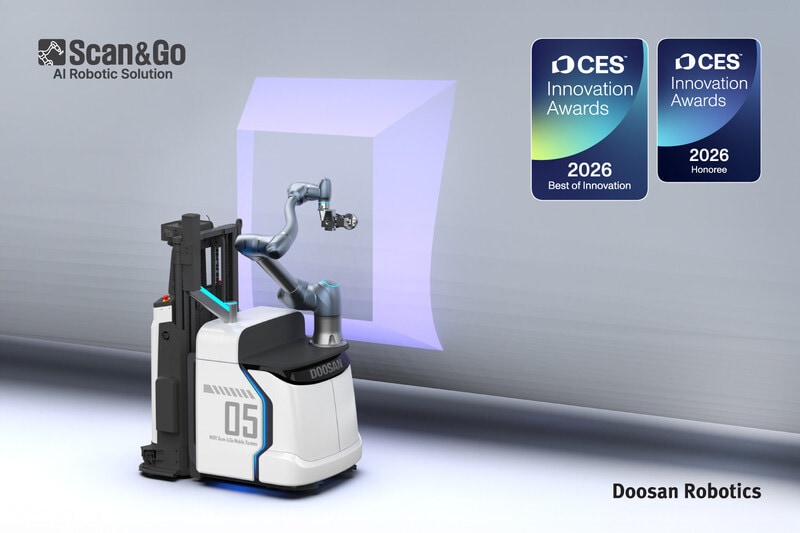
Hyundai's Atlas robot debuts at CES 2026, marking a shift from lab experiments to mass production, with 30,000 units ann...
View Board
The open AI accelerator exchange in 2025 breaks NVIDIA's CUDA dominance, enabling seamless model deployment across diver...
View Board
Depthfirst's $40M Series A fuels AI-native defense against autonomous AI threats, reshaping enterprise security with con...
View Board
In 2026, AI agents like Aria design, code, and test software autonomously, reshaping development from manual craft to st...
View Board
CES 2025 spotlighted AI's physical leap—robots, not jackets—revealing a stark divide between raw compute power and weara...
View Board
Tesla's Optimus Gen 3 humanoid robot now runs at 5.2 mph, autonomously navigates uneven terrain, and performs 3,000 task...
View Board
AI-driven networks redefine telecom in 2026, shifting from automation to autonomy with agentic AI predicting failures, o...
View Board
Microsoft's Copilot+ PC debuts a new computing era with dedicated NPUs delivering 40+ TOPS, enabling instant, private AI...
View Board
Nscale secures $2B to fuel AI's insatiable compute hunger, betting on chips, power, and speed as the new gold rush in te...
View Board
Smart glasses from Google and Apple are set to revolutionize how we interact with the world, but their impact on our liv...
View Board
CES 2026 unveiled stair-climbing vacuums, mmWave presence sensors, and local AI robots that act, sense, and reshape smar...
View Board
AI's explosive growth forces a reckoning with data center energy use, as new facilities demand more power than 100,000 h...
View Board
AI-driven digital twins simulate energy grids & cities, predicting disruptions & optimizing renewables—Belgium’s grid sl...
View Board
L'ascesa dell'agentic AI rivoluziona l'economia globale, con un mercato proiettato a 45 miliardi di dollari entro il 203...
View Board
Data centers morph into AI factories as Microsoft's $3B Wisconsin campus signals a $3T infrastructure wave reshaping gri...
View Board
ul researchers unveil paper-thin OLED with 2,000 nits brightness, 30% less power use via quantum dot breakthrough, targe...
View Board
XREAL unveils the 1S AR glasses at CES 2026, offering a lightweight, affordable $449 alternative for work and entertainm...
View Board
Linh Tran’s radical chip design slashes AI power use by 67%, challenging NVIDIA’s dominance as data centers face a therm...
View Board
Comments