



Explore Any Narratives
Discover and contribute to detailed historical accounts and cultural stories. Share your knowledge and engage with enthusiasts worldwide.
A plume of dust rises over Mount Pleasant, Wisconsin, not from a mine or a mill, but from a 315-acre construction site. The machinery is familiar: cranes, concrete trucks, rebar. The product is not. By 2026, this ground will hold a 1.2 million square foot facility owned by Microsoft, a cathedral of computation costing roughly $3 billion. They call it an "AI factory." The term is precise. This is not a server closet. It is the new industrial base.
Data centers have shed their image as anonymous, humming boxes on the edge of town. They are now the core physical infrastructure of the artificial intelligence economy, the indispensable factories where intelligence is forged and deployed. Their expansion is measured in gigawatts and trillions, their location dictated by power lines and politics as much as fiber optics. A supercycle of construction is underway, one that JLL, a global real estate services firm, frames as one of the largest infrastructure investment waves in the modern era. This is the story of how the digital age poured a foundation, and it looks a lot like heavy industry.
The shift happened quickly. For decades, data center capacity planning followed a predictable curve tied to corporate IT, e-commerce, and cloud storage. AI workloads, particularly the training of large language models, shattered that model. The numbers tell a story of inversion. In 2026, analysts project non-AI workloads will consume approximately 38 gigawatts (GW) of global data center power. AI workloads will already surpass them, demanding 44 GW.
By 2030, the disparity becomes a chasm. Global data center capacity is expected to nearly double from about 103 GW in 2025 to roughly 200 GW. AI will commandeer an estimated 50% to 70% of all that computing. The driver is changing, too. The immense, centralized clusters used for training models like GPT-4 will be outpaced by the distributed, incessant work of inference—the act of a model generating an answer to a user's query. Around 2027, inference becomes the dominant force, demanding not just colossal campuses but a new geography of regional hubs. Every chat, every image generation, every automated task will flow through this industrial base.
We are witnessing the creation of a global infrastructure class comparable to ports, railways, or power grids. The capital required and the physical footprint mean this is no longer just an IT or real estate niche. It is foundational to national economic strategy.
The financial scale is difficult to comprehend. JLL estimates up to $3 trillion in data center-related investment by 2030, encompassing real estate, debt, and the mind-boggling cost of fitting out these facilities with AI-specific hardware. Other projections are even more staggering, suggesting a base case of $5 trillion in total data center investment over the next five years, with AI responsible for more than $5 trillion of that spending. Deloitte notes that data center spending broadly could hit $1 trillion within three years. This is capital chasing the fundamental engine of a technological revolution.
The builders are the titans of technology: Microsoft, Google, Amazon, Meta. Their construction logs read like wartime production schedules. Microsoft, for instance, already operates 131 known data centers and has another 111 under construction. The Wisconsin "AI factory" is just one node. Another million-square-foot campus opened near Atlanta in late 2025. The strategy has moved decisively from bespoke builds to industrial-scale delivery.
Standardized modules are fabricated off-site. Construction processes mirror assembly lines. The goal is velocity, because the demand is insatiable. The generative AI market, projected to grow about 40% annually from $43.9 billion in 2023 to nearly $1 trillion by 2032, cannot wait. This build-out is non-optional; it is the prerequisite. As these facilities multiply, they are reshaping the market itself. Since 2020, more than $300 billion in data center mergers and acquisitions has closed. The sector is consolidating, financializing, and attracting infrastructure funds that once focused on toll roads and airports.
The capital markets have recognized this shift. We expect securitization for data centers—packaging their reliable, hyperscale-backed income into bonds—to reach $50 billion by 2026. This is the financial signature of an asset class that has matured into essential infrastructure.
Walk the perimeter of a site like Mount Pleasant. The activity feels historic. But the biggest challenge isn't the steel or the silicon. It's the electricity.
If data centers are the new factories, then the electrical grid is their sole supplier of raw material. And that supplier is straining. Deloitte offers a jarring projection: U.S. AI data center power demand could explode by more than 30 times, from 4 GW in 2024 to 123 GW by 2035. To contextualize, one gigawatt can power roughly 750,000 homes. The AI industry is, in real-time, annexing the capacity equivalent of millions of households.
This creates a brutal paradox. Hyperscalers have ambitious clean energy commitments. Yet, 95% of new generation projects waiting in interconnection queues are renewables and storage, which are often intermittent. An AI factory cannot run on intermittency. Its servers must be fed a constant, massive diet of electrons, 24 hours a day. So, a new pattern emerges: repurposing the past to power the future.
In Pennsylvania, a retired coal plant is being converted into the largest natural gas plant in the United States. It is not a nostalgia project. It is part of a $10 billion scheme to feed multiple AI data centers by 2027. The logic is industrial. The site already has transmission lines, a grid connection, and a legacy of handling huge loads. The fuel has changed, but the function—providing baseload power—is more critical than ever. Capital is now "chasing power-ready assets": pre-entitled land near substations, corridors with transmission access, any site that can bypass the multi-year logjam of permitting and interconnection.
This scramble is redefining geopolitics and local planning. National AI strategies, particularly in the United States, explicitly prioritize data center construction as a strategic capability. Yet, as noted by the Brookings Institution, tariffs on critical components and supply chain constraints are raising costs and slowing build-outs. The tension is palpable: between the urgency of national ambition and the gritty, slow reality of pouring concrete, laying fiber, and securing a power purchase agreement.
Local communities now find themselves in battles over land use, water consumption for cooling, and environmental impact. The data center is no longer an invisible neighbor. It is a major industrial applicant, asking for variances and tax breaks, promising jobs, and demanding enough electricity to light up a small city. The outcome of these zoning hearings is as consequential for the pace of AI as any breakthrough in an algorithm lab.
The narrative is set. The foundation is being poured, gigawatt by gigawatt. What emerges on this base—how it transforms business, society, and the very landscape—will define the next decade. This is Part 1 of the build.
The story of AI's new industrial base is not being written in Silicon Valley. It is being stamped into the clay and concrete of the American Midwest. Wisconsin, a state historically defined by dairy farming and manufacturing, has become the nation's most concentrated battleground for the construction of AI infrastructure. Here, the abstract concept of an "AI factory" becomes a physical reality, complete with construction cranes, labor disputes, and vehement community opposition. The scale is not just large; it is historically unprecedented.
Consider the numbers clustered in a single state. Microsoft is developing its Fairwater AI data center campus on 315 acres in Mount Pleasant. The plan calls for three buildings totaling 1.2 million square feet and, when fully built, a staggering 1,480 megawatts of IT capacity. The first phase, a $3.3 billion facility, is set to open in early 2026. In September 2025, Microsoft announced a second, $4 billion "advanced AI" data center on the same campus, slated for 2027, bringing their total Wisconsin investment to about $7.3 billion. At the peak of construction, over 3,000 workers swarmed the site daily.
"Microsoft calls the Mount Pleasant facility 'the world's most powerful data center.'" — PBS Wisconsin, reporting on utility filings, February 12, 2025
Forty miles north, in Port Washington, a different consortium broke ground on December 17, 2025. The 670-acre "Lighthouse" campus is a partnership between Vantage Data Centers, OpenAI, and Oracle, part of the rumored "Stargate" project. Meanwhile, QTS is proposing a hyperscale campus on up to 1,570 acres in DeForest, and Meta's presence in Beaver Dam, initially secured through a shell LLC called "Degas LLC," demonstrates the stealthy land acquisition tactics now commonplace. Wisconsin is not hosting data centers; it is being systematically reconfigured into a primary power substrate for generative AI.
This reconfiguration demands a parallel reconstruction of the power grid, exposing the raw economic and political tensions underlying the AI boom. The utility We Energies is seeking to add enough new energy generation to power over 2 million homes, primarily to feed the Microsoft and Port Washington campuses. This necessity collides with a bitter legacy. Wisconsin ratepayers are still paying off the debt on recently shuttered coal plants, a financial artifact known as a "stranded asset."
As of December 2024, the remaining book value on plants like the Pleasant Prairie coal facility was roughly $500 million. Ratepayers across the state will pay nearly $30 per year for 17 years to retire this debt, even as the plant itself sits silent. The Rocky Mountain Institute estimates closing Pleasant Prairie saved about $2.5 billion in future costs, but the past casts a long, expensive shadow. Now, utilities argue new data centers require massive new generation, the costs of which they promise won't be shifted to existing customers through special tariffs. Public interest groups are deeply skeptical.
"As artificial intelligence pervades society, it's hard to fathom how much more electricity will have to be generated to power all of the data centers under construction or being proposed in Wisconsin." — PBS Wisconsin
The emerging model is one of repurposing. A retired Pennsylvania coal plant being converted into the nation's largest gas plant to feed AI data centers is the template. It's a pragmatic, if environmentally fraught, solution: exploit existing transmission corridors and grid connections to bypass the decade-long queues for new renewable projects. The AI industry's public commitment to clean energy is running headlong into its insatiable, instantaneous need for baseload power. The result is a messy, hybrid energy strategy that looks less like a green revolution and more like a pragmatic industrial power play.
The arrival of this new industry has fractured communities, pitting the promise of economic investment against fears of cultural erasure. The playbook often involves secrecy. Companies routinely use Delaware-based limited liability companies with opaque names to quietly amass land, avoiding public scrutiny until deals are nearly finalized. In Brown County, residents received unsolicited offers as high as $120,000 per acre for farmland from entities like "Bear Creek DevCo LLC," later linked to larger data center developers.
This cloak-and-dagger approach breeds distrust. When a project near the community of Greenleaf emerged, the local LedgeStone Vineyards articulated a sentiment echoing across rural America.
"[This is an] attack on the community's identity by a 'nameless, faceless, megacorporation.'" — LedgeStone Vineyards, statement on a proposed Brown County data center
The promised jobs are a point of contention. The Microsoft campus will eventually support about 800 permanent operational jobs—a significant number, but dwarfed by the 3,000+ construction jobs at peak build. These are classic boom-town dynamics: a flood of high-paid but temporary construction work, followed by a smaller number of highly technical permanent positions that may not be filled locally. For towns built on agriculture or small manufacturing, the transformation feels alien and imposed.
Opposition toolkits from groups like Midwest Environmental Advocates detail other concerns: immense water usage for cooling, stormwater runoff from vast impervious surfaces, constant low-frequency noise, and the sheer visual scale of buildings spanning dozens of football fields. The data center is not a neighbor; it is a territorial claim.
While 2024 and 2025 were years of announcement and appropriation, 2026 is widely seen as an inflection point. Sequoia Capital has labeled 2026 the potential "Year of Delays." The logic is straightforward. AI data centers take approximately two years to build. The massive capital expenditure announced in the last two years must now materialize as physical capacity. Whether it does hinges on a fragile chain of logistics.
Bottlenecks are everywhere. The specialized electrical components, the switchgear, the transformers, and of course, the AI chips themselves, are all on constrained global supply lines. Skilled labor—electricians, pipefitters, crane operators—is in shortage. Most critically, the power infrastructure must be ready. A data center building completed without a guaranteed, massive power connection is a useless shell. The industry is racing against its own ambition, and the delays Sequoia warns of would have cascading effects, slowing the deployment of AI services and keeping costs artificially high.
"We are witnessing the creation of a global infrastructure class comparable to ports, railways, or power grids." — JLL Global Real Estate Outlook
The financial markets are betting heavily on this infrastructure's success. With over $300 billion in data center M&A since 2020 and securitization of these assets expected to hit $50 billion by 2026, Wall Street has fully anointed data centers as a core infrastructure asset class. The risk, however, is concentrated. Most new capacity is pre-sold to a handful of hyperscalers—Microsoft, Amazon, Google, Meta. Their continued capital expenditure is the only thing preventing a speculative bubble. The entire model assumes the AI revolution will generate enough economic value to justify the trillions spent housing its brain. It is a staggering gamble on a future of ubiquitous, profitable artificial intelligence.
What happens if the AI application revenue lags behind the infrastructure spend? The comparison to past industrial overbuilds, from railroads to fiber optics, is uncomfortable and rarely discussed in boardrooms currently drunk on expansion. The industry marches forward, convinced that in the race for AI supremacy, the only sin is to build too slow. The communities hosting these new factories of intelligence are left to grapple with a more immediate question: at what cost, and for whose benefit? The concrete is pouring. The clock is ticking.
The rise of the AI data center as an industrial base redraws the global map of influence and capital. This is not merely an expansion of the cloud; it is the creation of a new geography of power, literally and figuratively. The strategic assets are no longer just oil fields or deep-water ports, but tracts of entitled land near major electrical substations and fiber backbones. National security discussions now include semiconductor supply chains and compute capacity alongside traditional hardware. A country's AI potential is directly gated by its gigawatts.
This shift redefines regional economies. The massive investments in Wisconsin—over $10 billion from Microsoft alone when including the Port Washington and other projects—represent a form of economic development that bypasses traditional models. It does not create a diverse ecosystem of small and medium businesses. It anchors a monolithic, capital-intensive facility with a high-tech but relatively small permanent workforce. The true beneficiaries are the utility shareholders, the construction unions for a time, and the global tech shareholders in the long run. The community is left with a transformed landscape, a hefty new source of tax revenue, and a permanent, gargantuan neighbor with an unquenchable thirst for electricity.
"The capital required and the physical footprint mean this is no longer just an IT or real estate niche. It is foundational to national economic strategy." — JLL Global Real Estate Outlook
The cultural significance is profound. For a century, the factory smokestack was the icon of economic might. For the coming century, the icon will be the windowless, featureless, humming box of the hyperscale data center, surrounded by security fencing and transformer yards. Its output is not physical goods, but intelligence: translated languages, generated images, predictive analytics, automated decisions. The factory floor is a lattice of silicon, the raw material is electricity, and the product is intangible. This represents the final, complete divorce of economic value from physical form, yet it is entirely dependent on the most physical of infrastructures.
For all its scale and certainty, the AI industrial base rests on a series of precarious assumptions. The first is demand. Current projections of 50-70% of all data center compute being dedicated to AI by 2030 presume a continuous, explosive growth in AI applications that are both useful and profitable. What if the consumer and enterprise adoption curve flattens? What if the next breakthrough in AI requires a fundamentally different, less power-hungry architecture? The industry is building a vast, expensive fleet of specialized trucks on the assumption the highway will be forever packed. History is littered with such infrastructure overbets—from the dot-com fiber glut to the overbuilding of retail space.
The second assumption is financial. The model depends on the continued, open-ended capital expenditure of a few hyperscale giants. Their spending is fueled by investor faith in AI's future profits. Should stock valuations falter or interest rates climb, this capex supercycle could decelerate rapidly, leaving half-built campuses and stranded investments. The $300 billion in M&A and the rush to securitize data center assets smells of a gold rush, where the financiers often fare better than the miners.
Finally, there is the societal license to operate. The backlash in Wisconsin and elsewhere is not a fringe phenomenon. It is a rational response to an industrial invasion that consumes resources at a scale communities struggle to comprehend. The promise of "100% clean energy matching" rings hollow when the immediate need is met by fossil-fueled peaker plants or repurposed coal infrastructure. The secrecy and use of shell LLCs undermine trust. The data center industry, in its headlong rush, risks creating a powerful, grassroots environmental and political opposition that could slow or halt projects through regulation and litigation. The very communities providing the land and power may revolt against the terms of the deal.
Who bears the cost of the transition? The case of Wisconsin ratepayers footing a $1 billion bill for shuttered coal plants while being asked to fund new generation for AI factories is a stark parable. It illustrates a transfer of wealth and risk from corporate balance sheets to the public ledger. The AI industry enjoys the fruits of a grid built by and for the public, then demands its expansion on its own terms.
The current building frenzy is centralized, focused on massive training campuses. The next phase, already beginning, is distributive. By 2027, inference—the act of using an AI model—is predicted to surpass training as the dominant driver of compute demand. This changes the geographic calculus. Inference needs to be closer to the end-user to reduce latency, whether for a real-time translation app, an autonomous vehicle, or a customer service chatbot. The era of the "AI factory" will give way to the era of the "AI substation"—smaller, regional hubs scattered across population centers.
This redistribution will trigger a second wave of construction, different from the first. It will favor existing colocation providers with footprints in secondary markets. It will intensify the battle for edge computing locations. It will also complicate the energy equation, as optimizing thousands of smaller sites for power efficiency is a different challenge than wiring a single, massive campus. The focus on sustainability will become even more acute as the infrastructure proliferates.
The policy landscape will harden. 2026 and 2027 will see the first major regulatory frameworks specifically targeting AI infrastructure emerge, addressing water usage, power procurement disclosures, and community benefit agreements. The opaque land-buying tactics will face new scrutiny. The European Union's push for "sovereign AI" clouds will accelerate, prioritizing data localization and creating protected regional markets. The global AI infrastructure map will balkanize along political as much as technological lines.
On the ground in Mount Pleasant, Wisconsin, in early 2026, the first Microsoft "AI factory" will come online. Its 1,480 MW capacity will begin digesting electricity and producing intelligence. The cranes will move to the next plot. The debate over who powers the future, and who pays for it, will only grow louder. The dust from the construction site will settle, leaving in its place a permanent, silent engine of the 21st century, drawing power from a grid built for the 20th, and producing a world we are only beginning to imagine.
Will the new geography of power empower the many, or simply enrich the few who own the factories?
Your personal space to curate, organize, and share knowledge with the world.
Discover and contribute to detailed historical accounts and cultural stories. Share your knowledge and engage with enthusiasts worldwide.
Connect with others who share your interests. Create and participate in themed boards about any topic you have in mind.
Contribute your knowledge and insights. Create engaging content and participate in meaningful discussions across multiple languages.
Already have an account? Sign in here
Nscale secures $2B to fuel AI's insatiable compute hunger, betting on chips, power, and speed as the new gold rush in te...
View Board
AI's explosive growth forces a reckoning with data center energy use, as new facilities demand more power than 100,000 h...
View Board
The open AI accelerator exchange in 2025 breaks NVIDIA's CUDA dominance, enabling seamless model deployment across diver...
View Board
The Architects of 2026: The Human Faces Behind Five Tech Revolutions On the morning of February 3, 2026, in a sprawling...
View Board
Autonomous AI agents quietly reshape work in 2026, slashing claim processing times by 38% overnight, shifting roles from...
View Board
Hyundai's Atlas robot debuts at CES 2026, marking a shift from lab experiments to mass production, with 30,000 units ann...
View Board
AI-driven digital twins simulate energy grids & cities, predicting disruptions & optimizing renewables—Belgium’s grid sl...
View Board
Linh Tran’s radical chip design slashes AI power use by 67%, challenging NVIDIA’s dominance as data centers face a therm...
View Board
Microsoft's Copilot+ PC debuts a new computing era with dedicated NPUs delivering 40+ TOPS, enabling instant, private AI...
View Board
CES 2025 spotlighted AI's physical leap—robots, not jackets—revealing a stark divide between raw compute power and weara...
View Board
The EU AI Act became law on August 1, 2024, banning high-risk AI like biometric surveillance, while the U.S. dismantled ...
View Board
AI steps out of screens into factories, powering agents that move cups, pick parts and reshape jobs amid surging robot i...
View Board
Depthfirst's $40M Series A fuels AI-native defense against autonomous AI threats, reshaping enterprise security with con...
View Board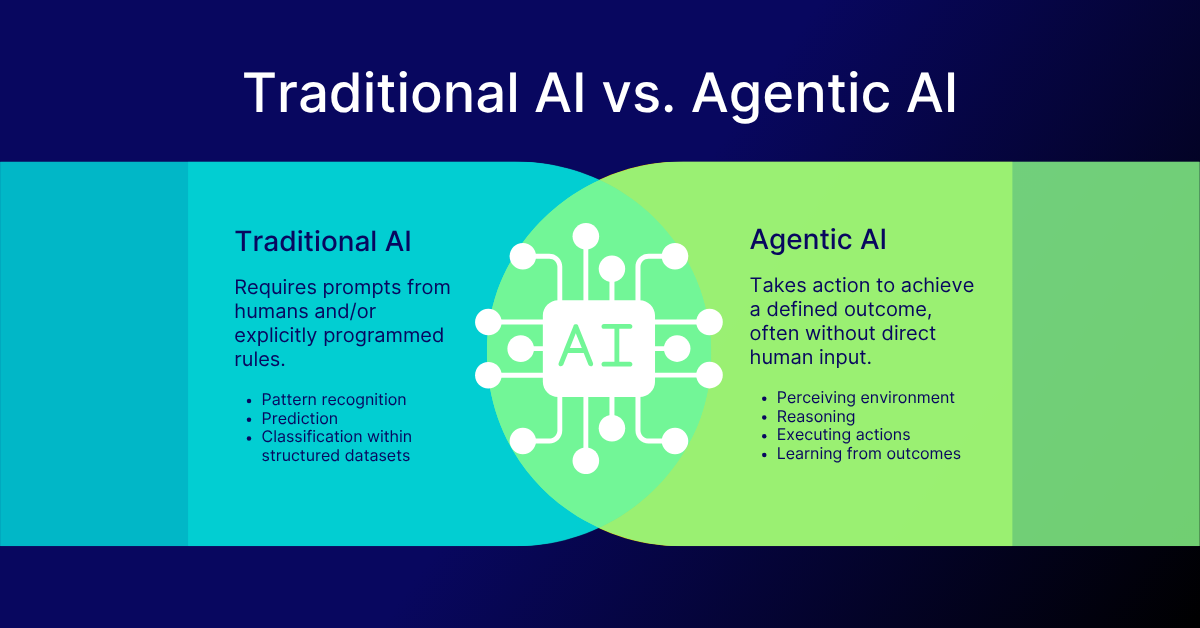
AI-driven networks redefine telecom in 2026, shifting from automation to autonomy with agentic AI predicting failures, o...
View Board
Tesla's Optimus Gen 3 humanoid robot now runs at 5.2 mph, autonomously navigates uneven terrain, and performs 3,000 task...
View Board
MIT researchers transform ordinary concrete into structural supercapacitors, storing 10x more energy in foundations, tur...
View Board
CES 2026 unveiled stair-climbing vacuums, mmWave presence sensors, and local AI robots that act, sense, and reshape smar...
View Board
ul researchers unveil paper-thin OLED with 2,000 nits brightness, 30% less power use via quantum dot breakthrough, targe...
View Board
In 2026, AI agents like Aria design, code, and test software autonomously, reshaping development from manual craft to st...
View Board
Julius Neubronner's 1907 pigeon camera revolutionized aerial photography, capturing the world from a bird's perspective ...
View Board
Comments