
Explore Any Narratives
Discover and contribute to detailed historical accounts and cultural stories. Share your knowledge and engage with enthusiasts worldwide.
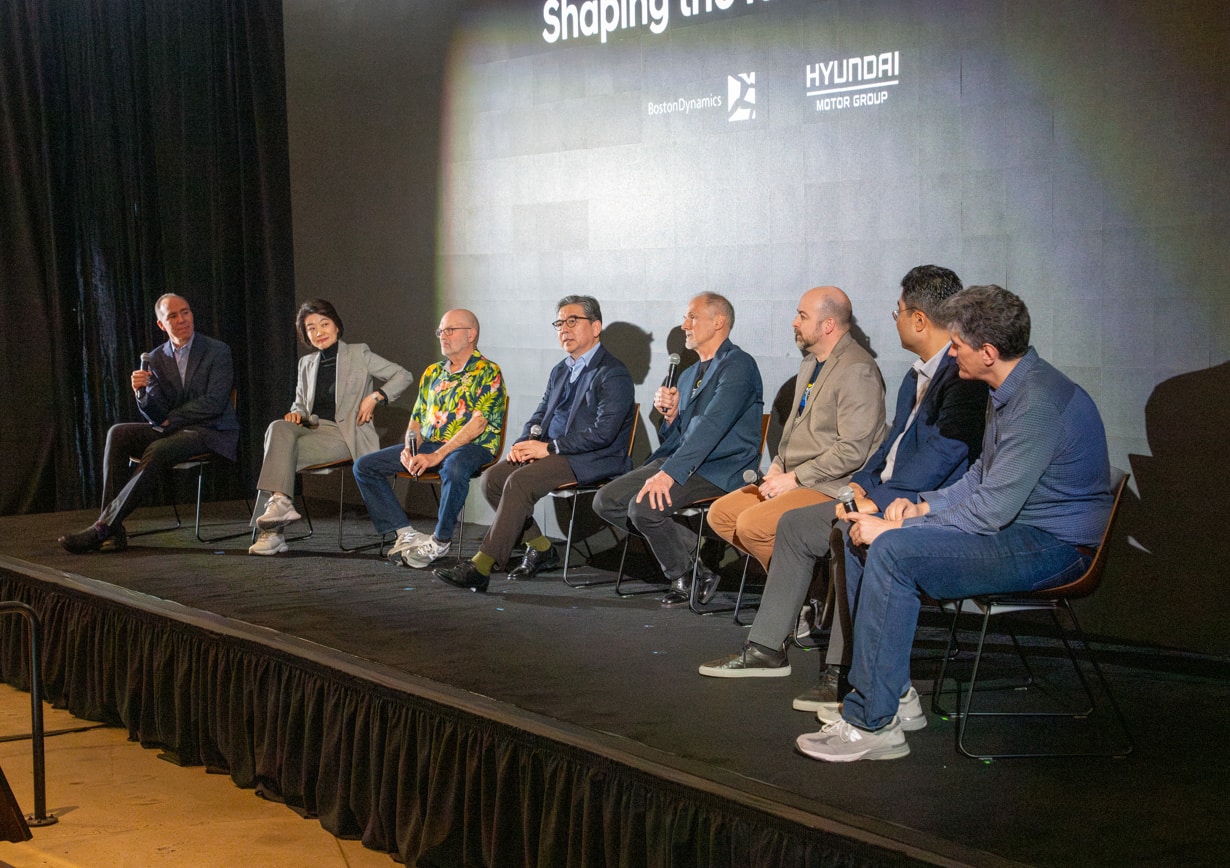
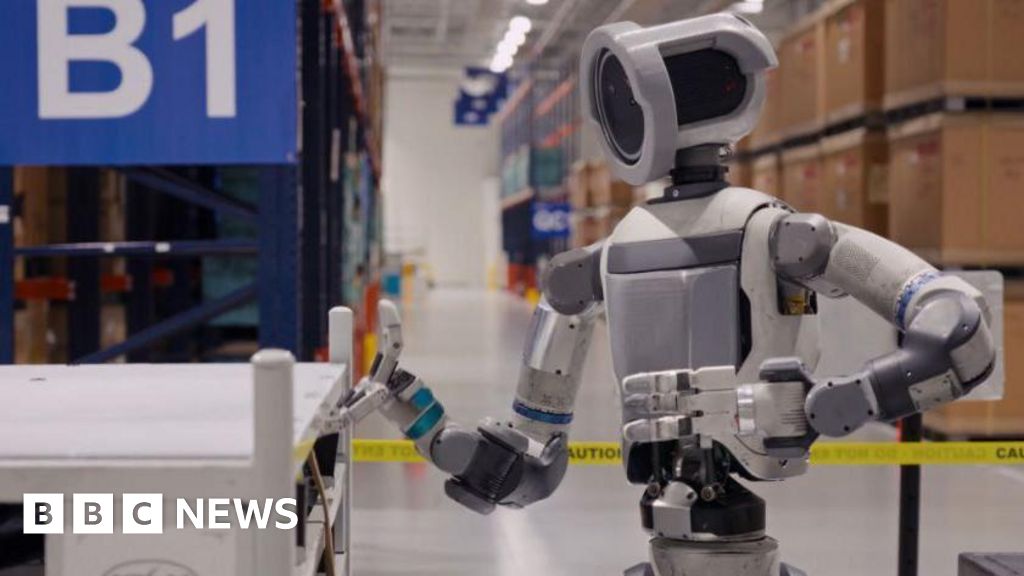
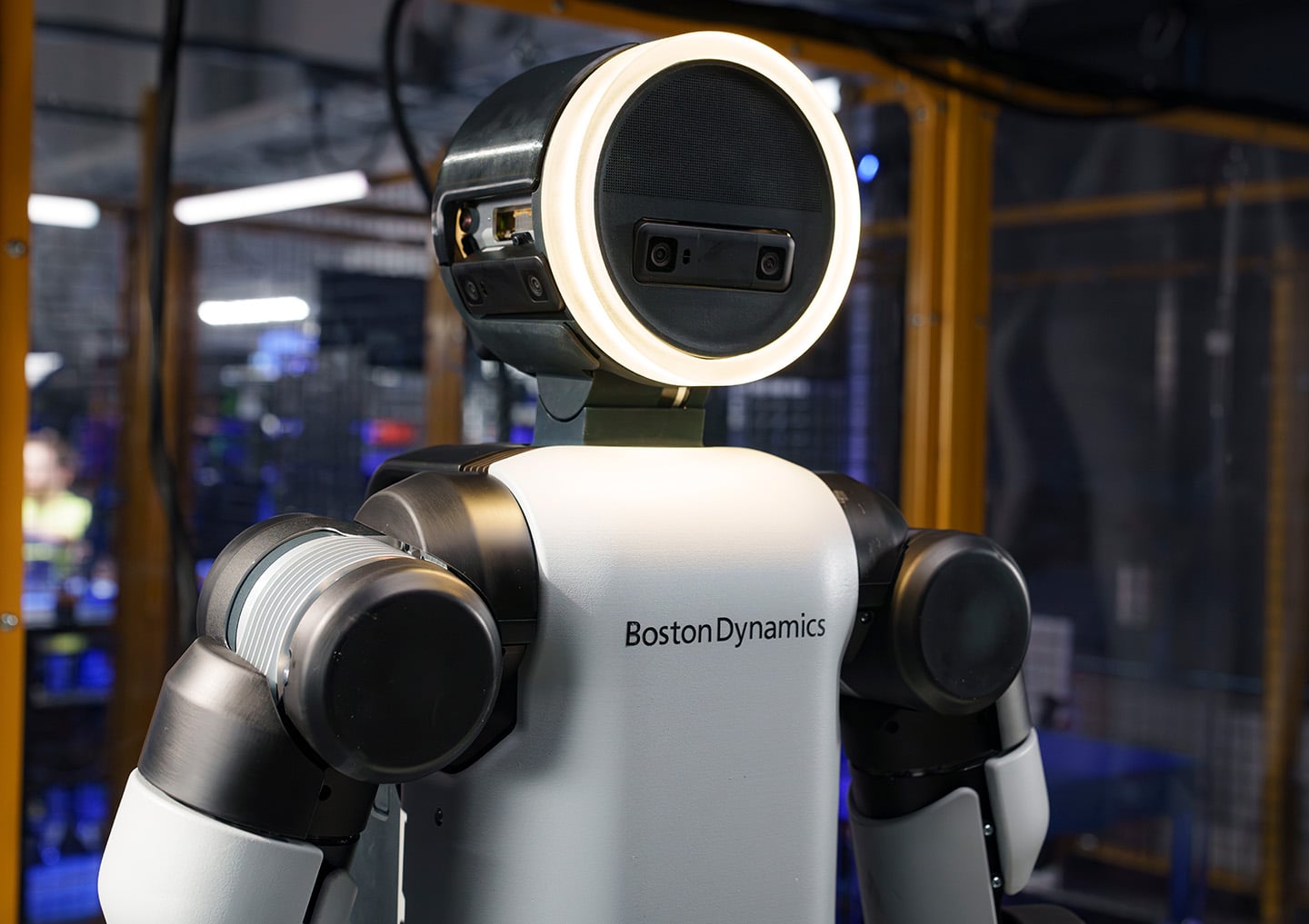
It stands 1.5 meters tall, weighs 89 kilograms, and can perform a backflip with unnerving grace. On January 5, 2026, in a Las Vegas convention hall awash in artificial light, the new, all-electric Boston Dynamics Atlas robot took its first autonomous steps onto a Hyundai-branded stage. There was no tether, no safety harness. Its human-scale hands, equipped with tactile sensing, reached out with a deliberate, almost contemplative slowness. The audience held its breath. This was not a lab experiment. Hyundai Motor Group announced it would build 30,000 of these humanoids every year, starting in 2028. The age of the domestic robot, long a staple of science fiction, began not with a whisper, but with the precise hydraulic whir of a machine built for work.
To understand this moment, you must look past the chrome and silicon to the corporate strategy that made it possible. The story is inextricably linked to a single, pivotal acquisition in June 2021. That summer, Hyundai Motor Group completed its $1.1 billion purchase of Boston Dynamics, the Waltham, Massachusetts-based robotics firm famed for its viral videos of dancing robots. Critics saw a car company buying a high-tech toy. Hyundai’s leadership saw a missing piece of a decades-long puzzle.
The vision was never about creating novelty acts. It was about solving a fundamental equation of modern industry: the need for precision, endurance, and safety in environments hostile or monotonous to humans. Hyundai, with its goal of selling 9.8 million vehicles annually by 2030, possessed unparalleled scale in mass manufacturing and supply chain logistics. Boston Dynamics possessed the most advanced mobile robot platforms on Earth. The fusion was deliberate. “We are not merely adopting robotics; we are integrating them into the very DNA of production,” stated a Hyundai executive during the CES 2026 media day. The ultimate goal? To use the harsh, unforgiving crucible of the automobile factory to forge robots reliable enough for your home.
“The factory is the ultimate proving ground. If a robot can handle a 40-hour week on a noisy, complex assembly line, sorting parts in sub-zero temperatures or handling hazardous materials, then assisting in a controlled home environment becomes a significantly reduced engineering challenge,” said Dr. Elena Voss, a robotics ethicist at the Stanford Center for Automotive Research. “Hyundai is using its industrial might to brute-force the reliability problem that has plagued domestic robotics for a generation.”
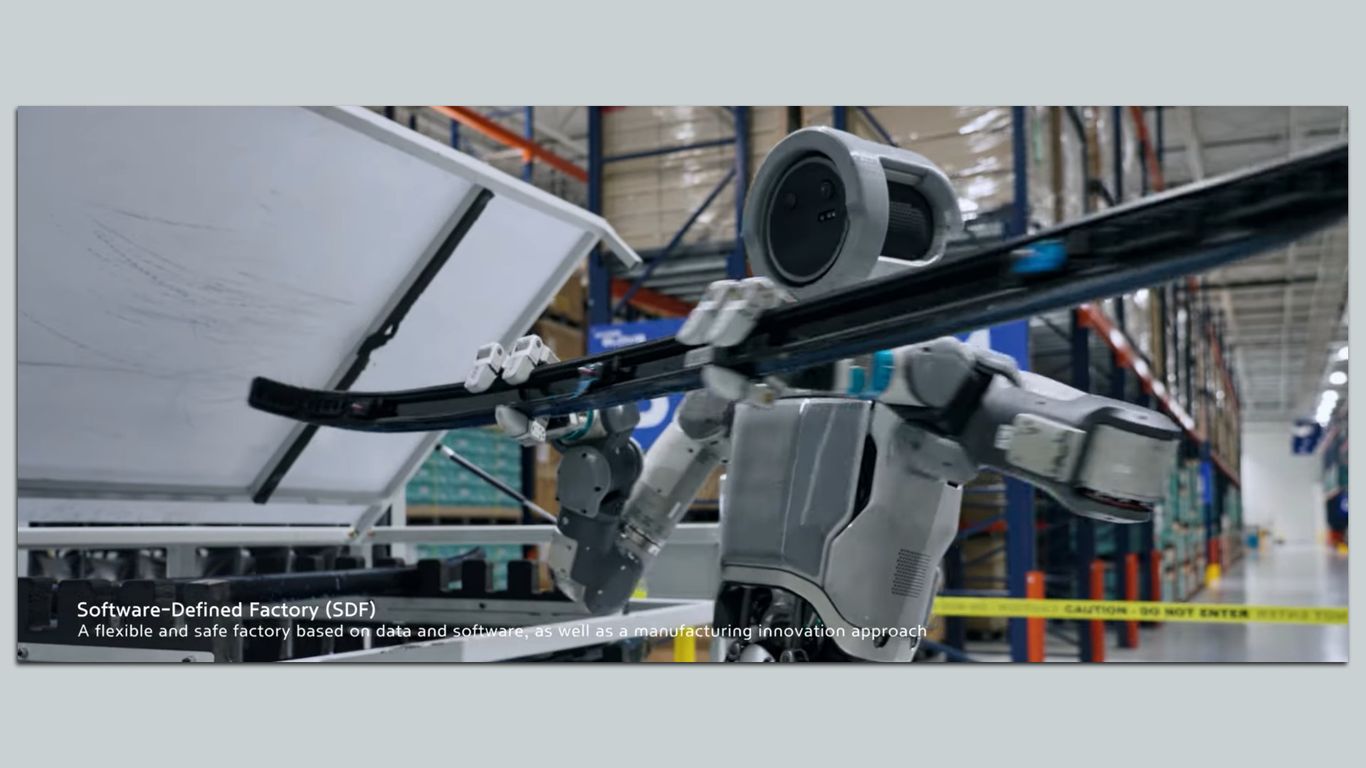
Central to this strategy is a concept borrowed from tech: the Software-Defined Factory (SDF). In an SDF, physical processes are governed by agile, updatable software, allowing for rapid retooling and customization. Hyundai is already implementing this across its global manufacturing sites. The logical, almost inevitable, extension is the Software-Defined Home.
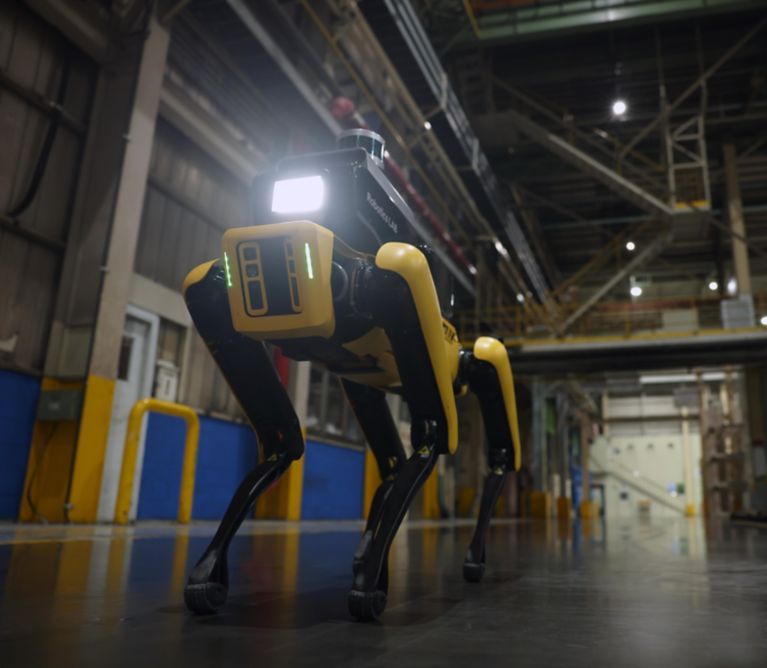
Picture not a single, humanoid butler, but a network of specialized agents. A descendant of the quadruped Spot robot could patrol a home’s perimeter, check for water leaks, or monitor an elderly resident’s gait for signs of instability. A mobile platform like the MobED (Mobile Eccentric Droid), a winner of a CES 2026 Best of Innovation Award, could serve as an adaptive delivery cart or a stable mobile base for telepresence. The star, the generalist, would be Atlas. Its proposed tasks in Hyundai’s factories—parts sequencing, tool handling, assembly—are directly analogous to domestic chores: sorting laundry, loading a dishwasher, fetching tools from a garage, or assembling furniture.
The technical hurdles remain immense. But Hyundai’ roadmap is a masterclass in incremental validation. Before an Atlas ever navigates a living room strewn with toys, it will have logged millions of hours in a Hyundai-Kia-Georgia (HMGMA) Metaplant in Savannah. Its first pilot programs begin in late 2026. By 2028, it is scheduled to be sequencing parts on active assembly lines. By 2030, it is slated for full assembly tasks. This phased, real-world deployment is Hyundai’s core advantage over startups that operate solely in controlled laboratory environments.
“The data from 40,000 Spot robots operating in over 40 countries, or from Stretch robots that have unloaded more than 20 million boxes for partners like DHL and Maersk, is irreplaceable,” notes James Kwan, lead analyst for service robotics at ABI Research. “That dataset on mechanical failure, environmental interaction, and real-world problem-solving is what allows Hyundai to move with such confidence. They are building a library of physical experience that no one else can match.”
A durable, mobile body is nothing without a capable mind. Here, Hyundai’s strategy reveals its most ambitious layer. The company is not building the AI brain alone. A deep partnership with Google DeepMind integrates the frontier of machine learning directly into the Atlas platform. The promise is staggering: an Atlas robot that can learn a new, complex task from a human demonstration in under a day.
This changes everything. Traditional industrial robotics requires months of meticulous, line-by-line programming for each specific task. A DeepMind-powered Atlas could watch a worker install a car seat, analyze the movements, and replicate them. Translating this to a home, the implications are profound. A robot could be shown how to operate a specific coffee machine, how to fold a particular style of shirt, or how to safely navigate around a family pet. This learning would not be siloed. Hyundai’s proprietary Orbit platform is designed to share intelligence across an entire fleet of robots. What one Atlas learns in a factory in South Korea could improve the performance of every Atlas in a facility in the United States—and, eventually, in homes around the world.
The new Atlas is built for this messy, unpredictable world. It operates in temperatures from -20°C to 40°C and is water-resistant. Its 360-degree camera array and advanced tactile sensors provide a constant stream of environmental data. Its electric drivetrain is quiet compared to its hydraulic predecessor, a non-negotiable feature for domestic acceptance. And when its battery runs low, it is designed to autonomously navigate to a docking station for a swap, a process far quicker than a lengthy charge. This is not a fragile prototype. It is a worker, engineered for shifts.
We stand at the precipice of a fundamental shift. For decades, the domestic robot was imagined as a standalone consumer product, like a vacuum cleaner or a microwave. Hyundai’s path reframes it as the final endpoint of an industrial technology cascade. The robot that assembles your car today may, in a different form, help maintain your home tomorrow. The journey from the roaring, chaotic factory floor to the quiet, cluttered domestic space is longer than it appears. But for the first time, a company with the capital, the manufacturing muscle, and the deliberate, step-by-step plan is building a bridge. And it has already broken ground.
The new Atlas is not the Atlas of viral YouTube fame, the one that captivated millions with its acrobatic feats. That was a hydraulic beast, loud and powerful, a marvel of engineering. This new iteration, publicly debuted on January 5, 2026, at CES, is something else entirely: an all-electric, untethered machine designed for the relentless demands of the factory floor. It represents a fundamental shift, a declaration that the era of laboratory-bound robotics is over, replaced by a strategic push towards industrial integration.
With 56 degrees of freedom and joints capable of full 360-degree rotation, this Atlas is built for complex manipulation. Its human-scale hands, featuring three-fingered dexterity and advanced tactile sensing, are not just for show. They are engineered to grasp, lift, and position with the precision required for automotive assembly. Imagine a robot that can lift up to 110 pounds, yet also handle delicate components. This is the promise Hyundai is making. The transition from a research project to a mass-produced tool, with 30,000 units annually targeted by 2028 at Hyundai's Georgia Metaplant, is a testament to this audacious vision.
Hardware, however impressive, is only half the story. The true leap forward lies in the intelligence powering Atlas. Hyundai's collaboration with Google DeepMind, announced alongside the robot's debut, is a game-changer. DeepMind's AI foundation models are being integrated to imbue Atlas with more natural, human-like interactions and vastly accelerated learning capabilities. This is not about programming every single movement; it is about teaching the robot to learn.
"Boston Dynamics’ humanoid robot Atlas will be the first test case," confirmed Carolina Parada, senior director of robotics at Google DeepMind, speaking at the CES 2026 announcement. Her words underscore the gravity of this partnership. It is a bold move, placing the most advanced humanoid platform in the hands of the most advanced AI research lab. The implications for speed of deployment and adaptability are immense.
The goal is to move beyond mere automation. It is about creating a system that can understand context, predict human actions, and adapt to unforeseen circumstances in a shared workspace. This is critical for safety, especially as robots move from caged environments to collaborative ones. The 360-degree cameras integrated into Atlas are not just for navigation; they are a critical input for the DeepMind AI, allowing for constant environmental awareness. But can even the most sophisticated AI truly replicate the nuanced judgment of a human worker when faced with an unexpected variable on a busy factory floor?
Hyundai's new Metaplant in Georgia, near Savannah, is more than just a factory; it is a living laboratory. This is where the rubber meets the road, quite literally. The company will open a U.S. Robot Metaplant Application Center (RMAC) in 2026, specifically designed to train these robots. Here, Atlas will learn the precise lifts, turns, and intricate movements required for parts sequencing by 2028, and eventually for full vehicle assembly by 2030. This incremental rollout, starting with safer, more repetitive tasks, is a pragmatic approach to a revolutionary technology.
The "Software-Defined Factory" (SDF) model is foundational to this integration. It allows for unprecedented flexibility, enabling rapid adjustments to production lines and robot tasks through software updates rather than costly physical reconfigurations. Hyundai has already seen success with its other Boston Dynamics products in similar industrial settings. The quadrupedal Spot robot is currently deployed in industrial inspections across 40+ countries, gathering critical data. The Stretch warehouse robot has proven its mettle, unloading over 20 million boxes worldwide since 2023 for logistics giants. This is not theoretical; it is proven at scale.
The Hyundai philosophy, as articulated in their CES 2026 presentation video, emphasizes a human-centric approach: "We believe it’s not about what technology can do – it’s about what humanity can achieve with it." This sentiment, while aspirational, carries significant weight when considering the potential for job displacement. Hyundai insists its robots are meant to augment, not replace, human workers, taking on the "dull, dirty, and dangerous" tasks. But history teaches us that increased automation, however well-intentioned, often reshapes labor markets in unpredictable ways.
While the ambition is undeniable, some skepticism is warranted. The rapid timeline for mass production—30,000 units annually by 2028—for a technology as complex and nascent as humanoid robotics is aggressive. Competitors like Unitree, with their agile H1/H2/Q1 models, demonstrate impressive mobility and force control, but none have announced production scales close to Hyundai's targets. The new Atlas, while boasting 56 degrees of freedom, still faces the monumental challenge of robust, real-world operation across diverse manufacturing environments. The leap from controlled demonstrations, however impressive, to reliable, 24/7 industrial deployment is vast. Can the DeepMind AI truly accelerate learning to the point where Atlas can adapt to the inevitable chaos of a factory without constant human intervention?
The security and privacy implications, while not explicitly highlighted as controversies by Hyundai, also warrant closer scrutiny as robots become more integrated. With 360-degree cameras constantly streaming data, and AI models learning from human interactions, the collection and utilization of this data will become an increasingly important discussion. Hyundai's focus on safety protocols and human interaction training is commendable, but the sheer dexterity and strength of Atlas, capable of lifting 110 pounds, demands an unwavering commitment to fail-safe mechanisms and ethical AI development. The question is not just whether humanity can achieve more with technology, but what unintended consequences might arise when that technology becomes this powerful and pervasive.
Hyundai's strategy transcends the creation of a single robot. It represents a fundamental reimagining of how advanced, embodied AI will enter our world. The path is not from a consumer electronics store to the home, but from the heavy industrial sector outwards. This is a blueprint for commercialization that Silicon Valley has largely ignored. By using its own factories as the primary customer and proving ground, Hyundai is solving the two greatest barriers to human-scale robotics: cost at scale and real-world reliability. The success or failure of this model will ripple across every industry that relies on physical labor.
"This is the first time a major industrial conglomerate has vertically integrated advanced humanoid robotics into its core production strategy," observes Dr. Arjun Patel, an industrial automation historian at MIT. "It's a pivot from viewing robots as capital equipment to viewing them as a new form of productive labor. The 30,000-unit annual production target isn't just a number; it's an attempt to achieve the cost reductions that come with automotive-scale manufacturing. If they succeed, the price point for humanoid robots could fall dramatically, changing the entire economic calculus for adoption in logistics, construction, and eventually, domestic settings."
The cultural impact is subtler but no less profound. For decades, the public imagination of robots has been split between the dystopian (terminators) and the frivolous (novelty companions). Hyundai and Boston Dynamics, through their relentless focus on practical, strenuous work, are forging a third archetype: the robot as a capable, neutral coworker. This normalization through utility could do more to shape public acceptance than any marketing campaign. The robot that unloads your delivery truck or helps build your car is far less threatening than one presented as an emotional companion or a soldier. It earns its place through function, not fantasy.
For all its ambition, the roadmap is fraught with unproven assumptions. The most significant is the transferability of factory-validated reliability to the unstructured domestic environment. A factory is a controlled space with standardized processes, lighting, and layouts. A home is chaos incarnate—a shifting landscape of pets, children’s toys, rearranged furniture, and unpredictable human behavior. The AI required to navigate a home safely is orders of magnitude more complex than that needed to sequence parts on an assembly line. Hyundai’s DeepMind partnership aims to bridge this gap, but the challenge remains monumental.
Furthermore, the economic argument for domestic robots remains speculative. While industrial applications have clear ROI in labor savings and safety, the consumer value proposition is murky. What is the market for a 110-pound-lifting humanoid in a private home, and at what price? The development costs, currently subsidized by industrial applications, would have to be recouped. There is also the unspoken issue of maintenance and repair. A factory has a technical staff; a homeowner does not. The specter of a $50,000 robot malfunctioning and needing a specialist house call could stall the market before it even begins.
Job displacement remains the elephant in the room, despite all assurances of "human-robot collaboration." The tasks targeted first—parts sequencing, warehouse unloading—are currently performed by people. Hyundai’s vision of elevating human workers to more cognitive roles is noble, but history suggests that the transition is rarely smooth or complete for the existing workforce. The social contract around this technological shift has yet to be written.
The immediate future is mapped with industrial precision. The opening of the U.S. Robot Metaplant Application Center (RMAC) in 2026 will be the first major inflection point, where the theoretical meets the practical. The subsequent pilot programs for Atlas at Hyundai and Google DeepMind facilities later that year will provide the first real-world performance data outside of Boston Dynamics' labs. All eyes will then turn to the Hyundai Motor Group Metaplant America (HMGMA) in Georgia, where the first production-line parts sequencing by Atlas is scheduled for 2028. That date is not an aspiration; it is a publicly stated milestone against which the entire strategy will be measured.
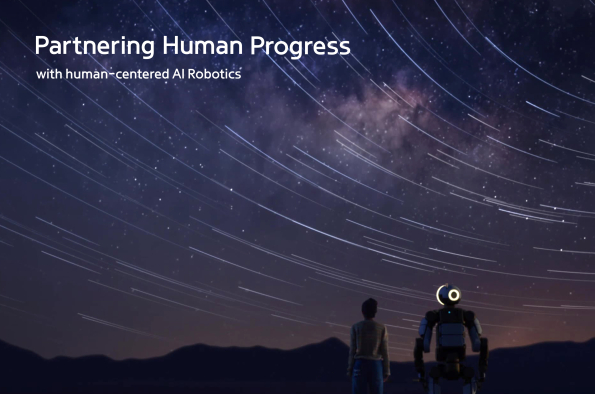
Success in Georgia will trigger the expansion into the broader sectors Hyundai has identified: logistics, energy, and construction. By 2030, the goal is for Atlas to be performing full assembly tasks. It is only after this decade of industrial hardening and data collection that a serious pivot to the domestic sphere could be considered. The “Partnering Human Progress” slogan will face its ultimate test: can progress be partnered, or does it inevitably leave some behind?
The quiet, electric whir of the new Atlas is the sound of a threshold being crossed. It is the sound of a backflipping lab experiment being forged into a tool, of a speculative future being hammered into the present on the anvil of mass production. The journey from the factory floor to the family home is long, and the final steps are still unwritten. But the bridge is now under construction, its first pylons driven deep into the bedrock of the global auto industry. The question that remains is not whether robots will enter our daily lives, but what version of ourselves we will have become by the time they arrive.
Your personal space to curate, organize, and share knowledge with the world.
Discover and contribute to detailed historical accounts and cultural stories. Share your knowledge and engage with enthusiasts worldwide.
Connect with others who share your interests. Create and participate in themed boards about any topic you have in mind.
Contribute your knowledge and insights. Create engaging content and participate in meaningful discussions across multiple languages.
Already have an account? Sign in here

Tesla's Optimus Gen 3 humanoid robot now runs at 5.2 mph, autonomously navigates uneven terrain, and performs 3,000 task...
View Board
CES 2025 spotlighted AI's physical leap—robots, not jackets—revealing a stark divide between raw compute power and weara...
View Board
The Architects of 2026: The Human Faces Behind Five Tech Revolutions On the morning of February 3, 2026, in a sprawling...
View Board
Autonomous AI agents quietly reshape work in 2026, slashing claim processing times by 38% overnight, shifting roles from...
View Board
AI steps out of screens into factories, powering agents that move cups, pick parts and reshape jobs amid surging robot i...
View Board
The open AI accelerator exchange in 2025 breaks NVIDIA's CUDA dominance, enabling seamless model deployment across diver...
View Board
Nscale secures $2B to fuel AI's insatiable compute hunger, betting on chips, power, and speed as the new gold rush in te...
View Board
Data centers morph into AI factories as Microsoft's $3B Wisconsin campus signals a $3T infrastructure wave reshaping gri...
View Board
Microsoft's Copilot+ PC debuts a new computing era with dedicated NPUs delivering 40+ TOPS, enabling instant, private AI...
View Board
Linh Tran’s radical chip design slashes AI power use by 67%, challenging NVIDIA’s dominance as data centers face a therm...
View Board
In 2026, AI agents like Aria design, code, and test software autonomously, reshaping development from manual craft to st...
View Board
MIT’s 2026 breakthroughs reveal a world reshaped by AI hearts, gene-edited embryos, and nuclear-powered data centers, wh...
View Board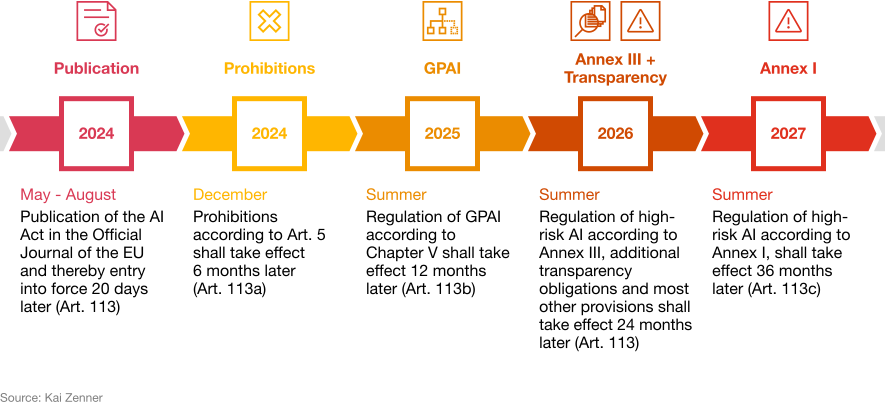
The EU AI Act became law on August 1, 2024, banning high-risk AI like biometric surveillance, while the U.S. dismantled ...
View Board
CES 2026 unveiled stair-climbing vacuums, mmWave presence sensors, and local AI robots that act, sense, and reshape smar...
View Board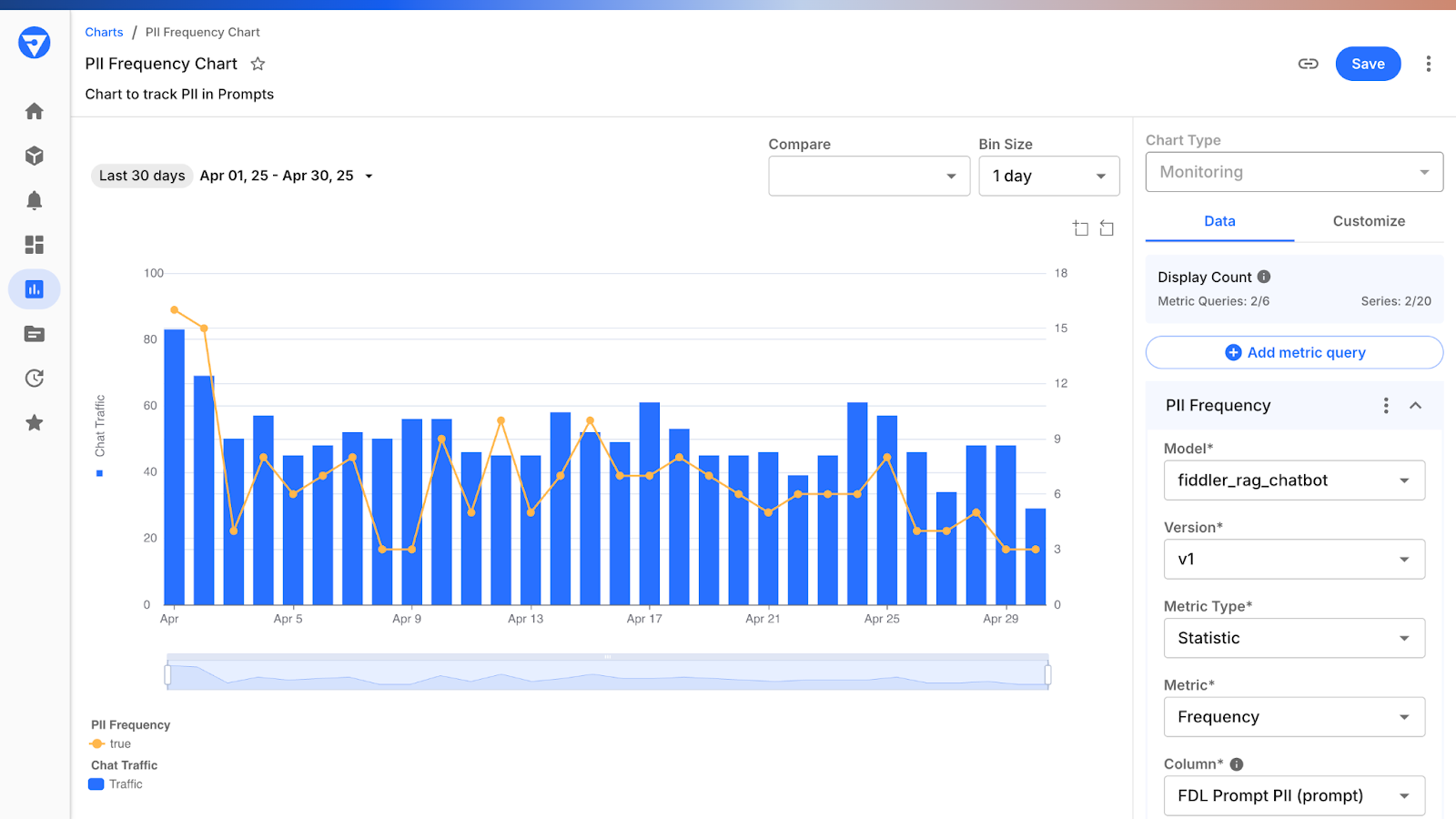
Depthfirst's $40M Series A fuels AI-native defense against autonomous AI threats, reshaping enterprise security with con...
View Board
MIT researchers transform ordinary concrete into structural supercapacitors, storing 10x more energy in foundations, tur...
View Board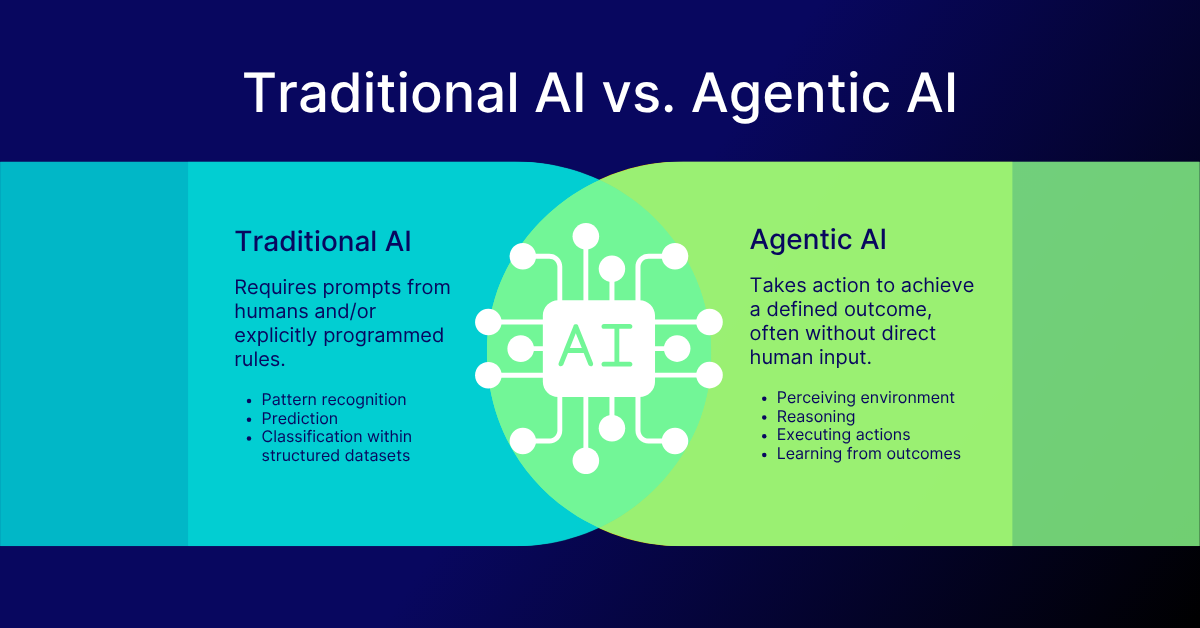
AI-driven networks redefine telecom in 2026, shifting from automation to autonomy with agentic AI predicting failures, o...
View Board
ul researchers unveil paper-thin OLED with 2,000 nits brightness, 30% less power use via quantum dot breakthrough, targe...
View Board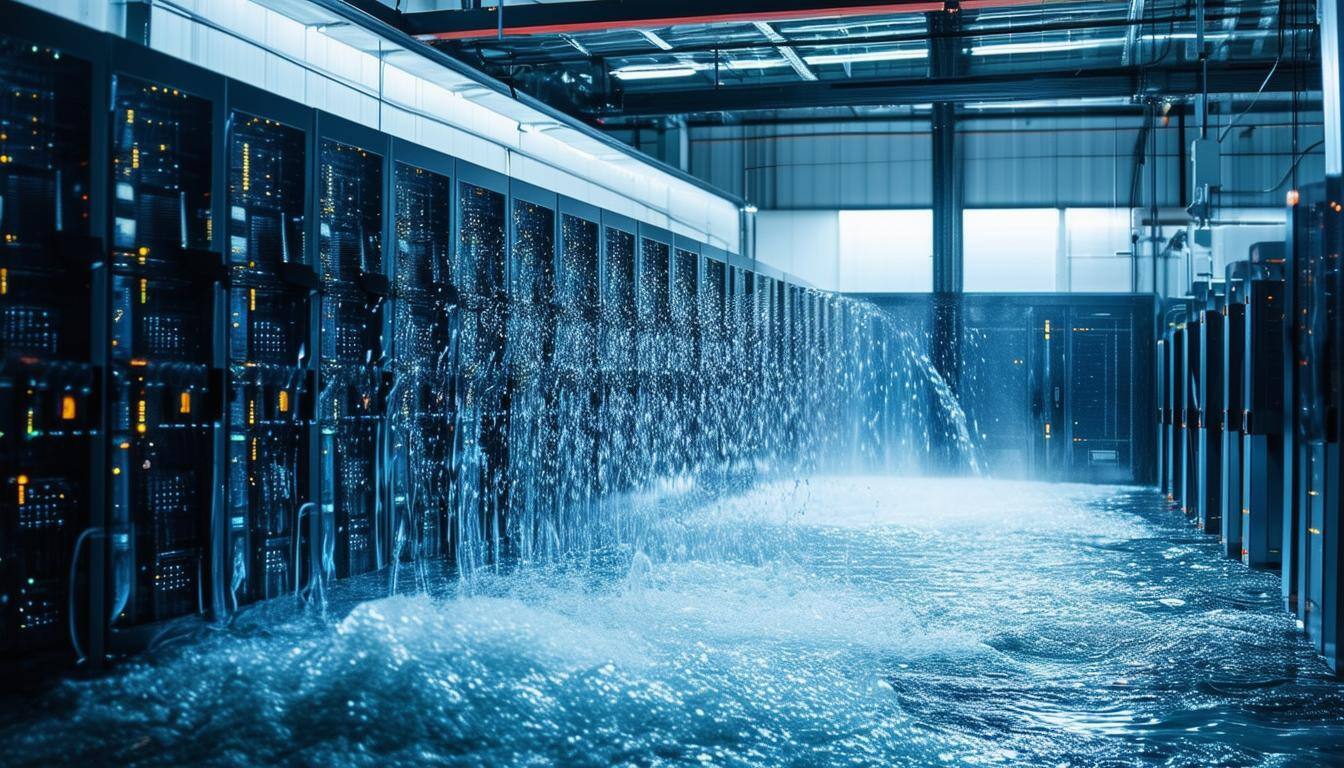
AI's explosive growth forces a reckoning with data center energy use, as new facilities demand more power than 100,000 h...
View Board
Singaporean ex-lieutenant Kevin Wu builds GRAY, turning iPhone cases into heirloom tech, then launches GRAYCRAFT1 NFT as...
View Board
Comments