



Explore Any Narratives
Discover and contribute to detailed historical accounts and cultural stories. Share your knowledge and engage with enthusiasts worldwide.
The robot vacuum whirring in the corner is a relic. The talking speaker on your counter is obsolete. On January 9, 2026, inside the sprawling Venetian Expo halls of Las Vegas, a new era of domestic technology declared itself not with a whisper, but with the definitive whir of servos and the quiet hum of local neural networks. CES 2026 wasn’t just another gadget show. It was the moment the smart home grew a body, developed eyes, and started to move.
For years, the promise of the smart home has been one of passive convenience—voices commanding static devices. CES 2026 shattered that paradigm by showcasing what industry leaders are now calling Smart Home 2.0: an environment powered by embodied AI. This isn’t software in the cloud. It’s artificial intelligence fused with robotics, granting machines the triad of capabilities we associate with living beings: perception, reasoning, and physical action. The vacuum doesn’t just avoid a sock; it picks it up. The security system doesn’t just record a package theft; a rolling robot guardian intercepts the delivery person. The home is no longer a collection of connected things. It is becoming a singular, animate entity.
“The shift from a smart home to an intelligent home requires a physical presence,” says Dr. Linus Tan, a robotics ethicist at the Stanford Center for Automotive Research. “Data points from a thermostat are informational. A robot that observes you shivering and fetches a blanket is contextual. That leap from data to contextual, physical action is the fundamental breakthrough we’re witnessing. It’s no longer about what your home knows. It’s about what your home does.”
The evidence was omnipresent across the show floor. At booth 52655, SwitchBot, a company once known for tiny actuator gadgets, unveiled a comprehensive AI robotics lineup that functions as a unified nervous system for the home. Their AI MindClip is a personal voice assistant, but one with advanced 3D liveness detection that recognizes you through hats, glasses, and changes in appearance. Critically, it processes data locally, a vital privacy pivot. Their Lock Vision Series employs a DualPower™ and DualBackup™ battery system and uses Matter-over-Wi-Fi for direct integration into ecosystems like Apple Home, eliminating the need for a central hub. This isn’t incremental improvement. It’s architectural redesign for an active, robotic domestic space.
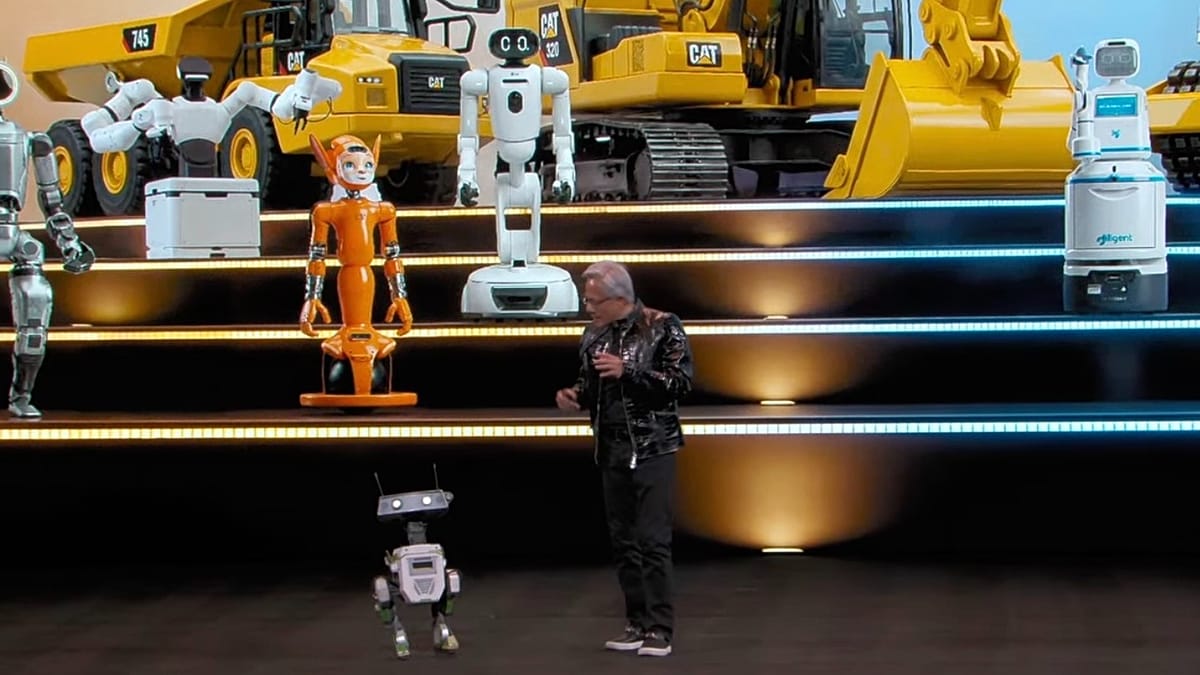
The most striking manifestations of this trend were the robots designed not for a single task, but for general-purpose assistance. LG’s CLOID robot, a centerpiece of their “Zero Labor Home” vision, looks like a sleek, mobile pedestal with expressive digital eyes and articulate arms. It’s designed as a companion for their ThinQ appliance ecosystem. Using computer vision, it can identify objects, navigate to them, and manipulate them. Imagine it fetching a drink from the refrigerator, delivering laundry to a bedroom, or finding a misplaced remote. CLOID represents a fundamental bet: the future home needs a mobile, manipulative agent.
Even established categories are being physically reinvented. Roborock, a leader in floor cleaning, demonstrated flagship models equipped with primitive robot arms capable of picking up shoes, socks, and toys before cleaning. Stair-climbing robots, once a fantasy, were presented as an imminent, widespread feature. The humble robot vacuum has evolved into a domestic custodian, its function expanding from cleaning to tidying.
“We are putting a face on AI in the home for a reason—trust and communication,” notes Mara Chen, a smart home industry analyst who covered the show. “A rolling cylinder is an appliance. A device with a face and the ability to hand you an object becomes an interface. At CES 2026, that interface started to move off the screen and into our physical space. The psychological impact of that shift cannot be overstated. We are inviting agents, not just tools, into our most private spheres.”
The applications extend beyond chores. SwitchBot also showcased its incubated project, the Acemate Tennis Robot, a device that uses AI to provide real-rally tennis experiences. While seemingly niche, it signals a broader ambition: AI robotics for recreation, education, and companionship. The home robot is transitioning from a utilitarian appliance to a multifaceted participant in daily life.
This robotic takeover is not powered by the cloud alone. In fact, a dominant trend at CES 2026 was the decisive retreat from cloud dependence for critical functions. The reason is a combination of latency, privacy, and reliability. Why upload a security video to a server thousands of miles away for analysis when an AI box in your closet can identify a person, a pet, or a parcel instantly? This “private security guard” model, exemplified by devices like the Real Link hub, processes camera footage locally, sending only encrypted alerts. It ensures privacy—your living room feed never leaves the house—and enables near-instantaneous response.
Simultaneously, the sensory palette of the smart home is expanding beyond simple motion detection. mmWave presence sensing technology was everywhere. Unlike traditional infrared motion sensors that require movement, mmWave can detect the subtle breathing of a perfectly still person sleeping in a room. This allows for far more nuanced automations: lights and climate that adjust not just to occupancy, but to the state of the occupant.
Access is becoming truly seamless. The new Aliro standard for Ultra-wideband (UWB) technology is being integrated into smart locks, enabling secure, hands-free “walk-up unlocking.” Your door recognizes your approved smartphone or wearable as you approach and unlocks without you digging for keys or tapping a screen. The combination of local AI processing, mmWave presence sensing, and UWB access creates a home that is profoundly aware and responsive, yet paradoxically less intrusive. It anticipates needs and removes friction without constant vocal commands or app interactions.
The narrative of CES 2026 is clear. The next big thing in smart homes isn’t a smarter speaker or a brighter light bulb. It is the emergence of the home as an active, embodied intelligence. The age of passive connectivity is over. The era of the animate home has begun.
Walk the halls of the Venetian Expo during those four days in January 2026 and you witnessed a collective engineering sprint toward a single goal: conquering the physical chaos of domestic life. The robots on display weren't just prototypes; they were detailed blueprints for a new domestic order, each targeting a specific human pain point with startling mechanical specificity. The narrative moved from vague promise to tangible, if imperfect, solution.
For two decades, the robot vacuum has been a floor-bound serf, confined to a single plane. The most audacious engineering at CES 2026 was the direct assault on this limitation. The Roborock Saros Rover didn't just sense stairs; it climbed them with articulated leg-wheel mechanisms, cleaning each step as it ascended. Dreame showed a chassis designed to give circular vacuums the same capability. This wasn't incremental. It was a fundamental redefinition of the machine's domain.
"Stairs remain one of the biggest barriers to full home automation, and while demonstrations showed promise, coverage also noted the difficulty of making such systems work reliably across varied real world environments." — Just Computers Online, January 14, 2026
That single sentence captures the exhilarating promise and sobering reality of CES 2026. The demos worked, often flawlessly, on controlled show floors. But could the Saros Rover navigate the unpredictable terrain of a cluttered, book-strewn staircase in a 100-year-old home? The industry's ambition is clear: total spatial conquest. The skepticism is equally warranted. We are asking machines to master an environment defined by human messiness, a challenge far greater than mapping an empty living room.
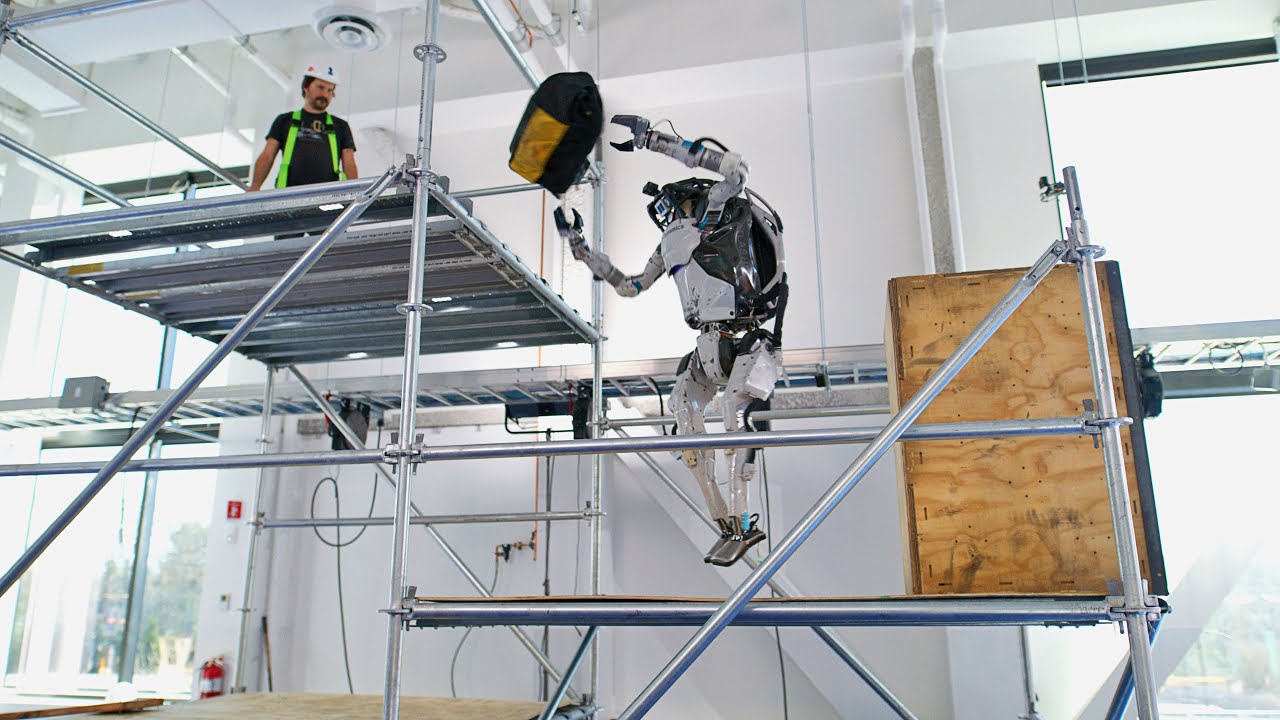
This vertical ambition extended beyond cleaning. Hyundai Motor Group's showcase, which earned a CNET Best of CES award for dexterity, featured the product version of Boston Dynamics' Atlas humanoid robot. Its phased deployment at a Hyundai factory starting in 2026 is a commercial beachhead. The partnership with AI chipmaker DEEPX to develop an "edge brain" semiconductor signals a future where this level of dynamic balance and task sequencing could, one day, navigate a split-level home. The message was a long-term bet: the ultimate domestic robot may not be a specialized appliance, but a general-purpose humanoid.
While robots grabbed the visual spectacle, a more subtle revolution was occurring in the home's underlying intelligence. The chatterbox AI assistant is dead. Its replacement is a silent, predictive operator.
"AI assistants are done being chatty. They're getting useful. Instead of just responding to your voice commands, AI is starting to anticipate routines, adjust settings automatically, and fix problems before you even notice them." — Steve DOES, Tech Analyst, January 21, 2026
This shift from reactive command to proactive management is the software corollary to robotic embodiment. Consider the cooking space. The Nosh AI Robo Chef handles the precise, tedious work of measuring, adding, and timing ingredients after the user does the creative prep. It's an AI that doesn't talk about food; it executes the recipe. Emerson's air fryers now feature offline voice control, processing commands locally for speed and privacy. Even microwaves, as seen at the show, now contain AI powerful enough to automatically cook multi-temperature plates of food. The intelligence is moving out of the cloud and into the appliance's chipset, becoming a feature of the hardware itself—what analysts are calling Physical AI.
The infrastructure enabling this quiet intelligence is finally maturing. The Matter smart home standard is now "a given," as noted by industry observers, eliminating the old nightmare of incompatible ecosystems. The new Aliro standard, built on Ultra-wideband (UWB) radio, solves another critical flaw: precision. The Aqara Smart Lock U400, announced at the show, uses UWB to measure both distance and direction, dramatically reducing false unlocks compared to Bluetooth. It supports Matter and will be Aliro-ready, with Samsung Wallet integration slated for Q1 2026. This technical trifecta—local processing, universal standards, and precise sensing—creates a home that can act decisively because it understands its environment and occupants with newfound accuracy.
The push toward standards like Matter and Aliro is a direct admission of past failure. The walled gardens of Apple Home, Google Assistant, and Amazon Alexa created consumer frustration and stalled adoption. CES 2026 presented a vision of détente, where a Samsung phone could unlock an Aqara lock that talks to an LG refrigerator via a single protocol. This interoperability is non-negotiable for the Smart Home 2.0 vision to work; a robot like LG's CLOID needs to interface seamlessly with every device in its path.
"Smart homes are becoming less fragile. The goal is systems that don't break because you flipped a physical switch." — Steve DOES, Tech Analyst, January 21, 2026
Yet, for all the talk of open standards, a new form of lock-in is emerging: the platform. LG's CLOID runs on its "affectionate intelligence" AI platform and is deeply integrated with the ThinQ ecosystem. Hyundai's robotics strategy is a vertically integrated stack from semiconductor (via DEEPX) to robot software. The home may speak a common language, but the most advanced brains controlling it will be proprietary. Will consumers trade the old battle of incompatible hubs for a new battle of incompatible robot ecosystems? The industry is betting we will, seduced by the depth of integration a closed platform can offer.
This leads to the most significant unasked question of the show: data sovereignty. CLOID uses an array of sensors and an onboard chipset for safe navigation. The U400 lock knows exactly when and how you approach your door. mmWave sensors know if you're asleep or awake. This data is increasingly processed locally, a win for privacy. But the insights gleaned from that data—your routines, your health patterns, your comings and goings—are the true commodity. The privacy policy, not the hardware spec, may become the most important document for the animate home.
The spectacle of CES demands a counterweight. Stepping back from the glow of the demo floor reveals a landscape littered with practical hurdles and unanswered questions. The stair-climbing vacuum is a marvel of engineering, but its price point, maintenance complexity, and durability against daily wear are complete unknowns. The NAVIA 6000 AWD robot mower with triple-sensor navigation promises a perfect lawn, but does it handle the toy left out by a child or the sudden downpour that turns its path to mud?
Many of these products, from the Robo Chef to the humanoid Atlas, solve for capability first, ignoring the calculus of cost-benefit that governs real households. Who is the customer for a $15,000 robot that folds laundry? The technology is chasing a "Zero Labor Home" ideal, but the path is currently paved with luxury prototypes. The democratization that made the robot vacuum ubiquitous is absent from this next wave.
"We are putting a face on AI in the home for a reason—trust and communication. A rolling cylinder is an appliance. A device with a face and the ability to hand you an object becomes an interface." — Mara Chen, Smart Home Industry Analyst
Chen's point about trust is profound, but it cuts both ways. An appliance that fails is an inconvenience. A robotic "companion" with a face that fails—that misplaces your keys, that misreads your emotion, that bumps into your elderly relative—breaks a psychological contract. The industry is anthropomorphizing hardware to build trust, but in doing so, it raises expectations to human levels that the technology is nowhere near capable of consistently meeting. The risk isn't just product failure; it's a rapid erosion of consumer faith in the entire category.
Furthermore, the focus on automation overlooks a simple human truth: many find solace in domestic tasks. Is the goal truly a "Zero Labor Home," or a home where labor is optional and machines handle the drudgery we genuinely dislike? The finest espresso comes from a manual machine operated with care. The most satisfying garden is often tended by hand. CES 2026 presented a future where every task is optimizable. The better future may be one where we have the choice to automate the mundane, freeing us for the tasks we find meaningful—including, perhaps, the simple act of folding our own laundry. The technology is advancing with breathtaking speed. Our philosophy of home is struggling to keep pace.
The significance of CES 2026 extends far beyond a collection of clever gadgets. It marks a philosophical pivot in our relationship with technology, one as profound as the introduction of the personal computer or the smartphone. We are not merely adding smarter tools to our living spaces; we are cultivating a new form of artificial life within them. This animate home, with its sensory apparatus, its local intelligence, and its growing physical agency, redefines fundamental concepts of privacy, agency, and labor. The Nest Thermostat of 2011 learned our patterns to save energy. The home of 2026 begins to learn our lives to participate in them. The shift is from a tool-using paradigm to a partnership paradigm, however nascent and clumsy that partnership may be today.
"The home has always been a reflection of the self. A cluttered home reflects a busy mind; a minimalist one, a desire for order. The animate home reflects something new: a delegation of the self. We are outsourcing not just tasks, but aspects of our awareness and intention to an artificial entity." — Dr. Linus Tan, Robotics Ethicist, Stanford Center for Automotive Research
This delegation carries immense cultural weight. For decades, domestic technology promised liberation from drudgery, a promise only partially fulfilled by washing machines and microwaves. The Smart Home 2.0 vision, exemplified by LG's "Zero Labor Home" and the proliferation of robots like CLOID, finally targets the cognitive and minor physical burdens that remain: the mental load of inventory, the interruption of a delivery, the search for a lost item. The impact isn't just on minutes saved; it's on mental bandwidth reclaimed. The historical arc here is clear: from physical mechanization (the industrial revolution) to informational automation (the digital revolution) to contextual, embodied assistance (the AI robotics revolution). CES 2026 was the coming-out party for that third act.
For all its promise, this future is fraught with unresolved tensions that no slick demo can gloss over. The most glaring is the economic chasm. The advanced robotics on display in Las Vegas—the stair-climbing Saros Rover, the dexterous Atlas, the companionable CLOID—are prototypes with no consumer price tags. The path from a $100,000 research robot to a $1,000 household appliance is long and littered with failed companies. The Smart Home 2.0 risks becoming a luxury suite for the wealthy, exacerbating a digital divide not of access, but of domestic service. Will the "Zero Labor Home" be a universal standard or the ultimate privilege?
Then there is the paradox of anthropomorphism. Companies are grafting faces and names onto these machines to foster trust and communication. But this creates a psychological mismatch. We are wired to attribute agency and emotion to faces. When a robot with expressive digital eyes fails to perform a simple task or, worse, makes a destructive error, the sense of betrayal is personal, not mechanical. The backlash won't be a product return; it will be a feeling of violation. Furthermore, this design choice subtly reinforces a specific model of service—the compliant, personable helper—that carries uncomfortable historical and social baggage. Why must a domestic robot have "affectionate intelligence"? Why not simply efficient, reliable, and transparent intelligence?
Security and data integrity move from abstract concerns to physical imperatives. A hacked smart lock is a nuisance. A hacked robot with articulating arms and mobility inside your home is a tangible threat. The industry's push toward local processing is a necessary firewall, but the attack surface expands with every new sensor and actuator. The standards like Matter and Aliro improve interoperability, but they also create new, system-wide vulnerabilities if compromised. We are building nervous systems for our homes without a mature understanding of their immune systems.
Finally, the vision itself may be myopic. The relentless drive toward total automation assumes all domestic labor is a burden to be eliminated. It ignores the therapeutic rhythm of washing dishes, the satisfaction of a hand-folded shirt, the simple, mindful care of a living space. Replacing all of this with robotic efficiency could create homes that are perfectly managed yet profoundly sterile. The goal should be augmentation, not replacement—machines that handle what we genuinely despise, freeing us for what we cherish, including the choice to engage in the care of our own domain.
The roadmap beyond CES is already being drawn. Hyundai's phased deployment of Atlas at its factory in 2026 will be a critical real-world stress test for humanoid dexterity. The consumer release of the Aqara U400 lock with Samsung Wallet integration in Q1 2026 will be the first major test of the Aliro standard's promise of seamless, secure access. Industry watchers will scrutinize the first sales data for Roborock's and Dreame's stair-conquering models, due in the second half of the year, to see if consumers are willing to pay the inevitable premium for vertical freedom.
By the time CES 2027 opens on January 7, 2027, the conversation will have shifted from "can it work" to "does it work." The prototypes will be judged as products. The anecdotes will be replaced by reliability metrics and repair logs. The question hanging over the Las Vegas convention center next year won't be about technological possibility. It will be about lived experience. Can we share our most intimate space with a new form of intelligence that sees, moves, and acts? We have built the body. Now we must learn to live with its ghost.
In conclusion, CES 2026 marked the definitive shift from passive smart devices to proactive, embodied AI robots in the home. This evolution promises a future where our living spaces are not just connected, but actively assisted by intelligent machines. The question now is not if these robots will arrive, but how seamlessly and ethically they will integrate into the fabric of our daily lives.
Your personal space to curate, organize, and share knowledge with the world.
Discover and contribute to detailed historical accounts and cultural stories. Share your knowledge and engage with enthusiasts worldwide.
Connect with others who share your interests. Create and participate in themed boards about any topic you have in mind.
Contribute your knowledge and insights. Create engaging content and participate in meaningful discussions across multiple languages.
Already have an account? Sign in here

Samsung unveils a comprehensive AI home ecosystem, prioritizing open interoperability and seamless integration across ap...
View Board
The Architects of 2026: The Human Faces Behind Five Tech Revolutions On the morning of February 3, 2026, in a sprawling...
View Board
AI steps out of screens into factories, powering agents that move cups, pick parts and reshape jobs amid surging robot i...
View Board
Smart glasses from Google and Apple are set to revolutionize how we interact with the world, but their impact on our liv...
View Board
Hyundai's Atlas robot debuts at CES 2026, marking a shift from lab experiments to mass production, with 30,000 units ann...
View Board
CES 2025 spotlighted AI's physical leap—robots, not jackets—revealing a stark divide between raw compute power and weara...
View Board
MIT’s 2026 breakthroughs reveal a world reshaped by AI hearts, gene-edited embryos, and nuclear-powered data centers, wh...
View Board
Tesla's Optimus Gen 3 humanoid robot now runs at 5.2 mph, autonomously navigates uneven terrain, and performs 3,000 task...
View Board
Microsoft's Copilot+ PC debuts a new computing era with dedicated NPUs delivering 40+ TOPS, enabling instant, private AI...
View Board
AI stock picks for 2026 focus on companies building infrastructure, monetizing AI at scale, and supplying critical tools...
View Board
: Nvidia e AMD disputam a liderança em IA na CES 2026 com chips Rubin e rack Helios! Descubra as estratégias e o futuro ...
View Board
Samsung Galaxy S26 Ultra wprowadza rewolucyjny wyświetlacz Privacy Display, który aktywnie blokuje podglądanie ekranu po...
View Board
Autonomous AI agents quietly reshape work in 2026, slashing claim processing times by 38% overnight, shifting roles from...
View Board
Data centers morph into AI factories as Microsoft's $3B Wisconsin campus signals a $3T infrastructure wave reshaping gri...
View Board
AI-driven digital twins simulate energy grids & cities, predicting disruptions & optimizing renewables—Belgium’s grid sl...
View Board
Sistema operacional inovador da Haiqu mapeia e contorna ruídos de qubits NISQ, atraindo US$11M em financiamento para tor...
View Board
Bis 2026 werden 80% der Unternehmen Physical AI nutzen – autonome Systeme, die nicht nur denken, sondern in Lagerhallen,...
View Board
Vor 50 Jahren gründeten zwei Studienabbrecher in einer Garage ein Unternehmen, das die Welt veränderte – die Geschichte ...
View Board
Tensor unveils Robocar at CES 2026: a Level 4 autonomous SUV with retractable wheel, 10 GPU clusters, and agentic AI, ta...
View Board
Sztuczna inteligencja rewolucjonizuje eksplorację kosmosu, od autonomicznych łazików na Marsie po zaawansowane systemy a...
View Board
Comments