
Explore Any Narratives
Discover and contribute to detailed historical accounts and cultural stories. Share your knowledge and engage with enthusiasts worldwide.
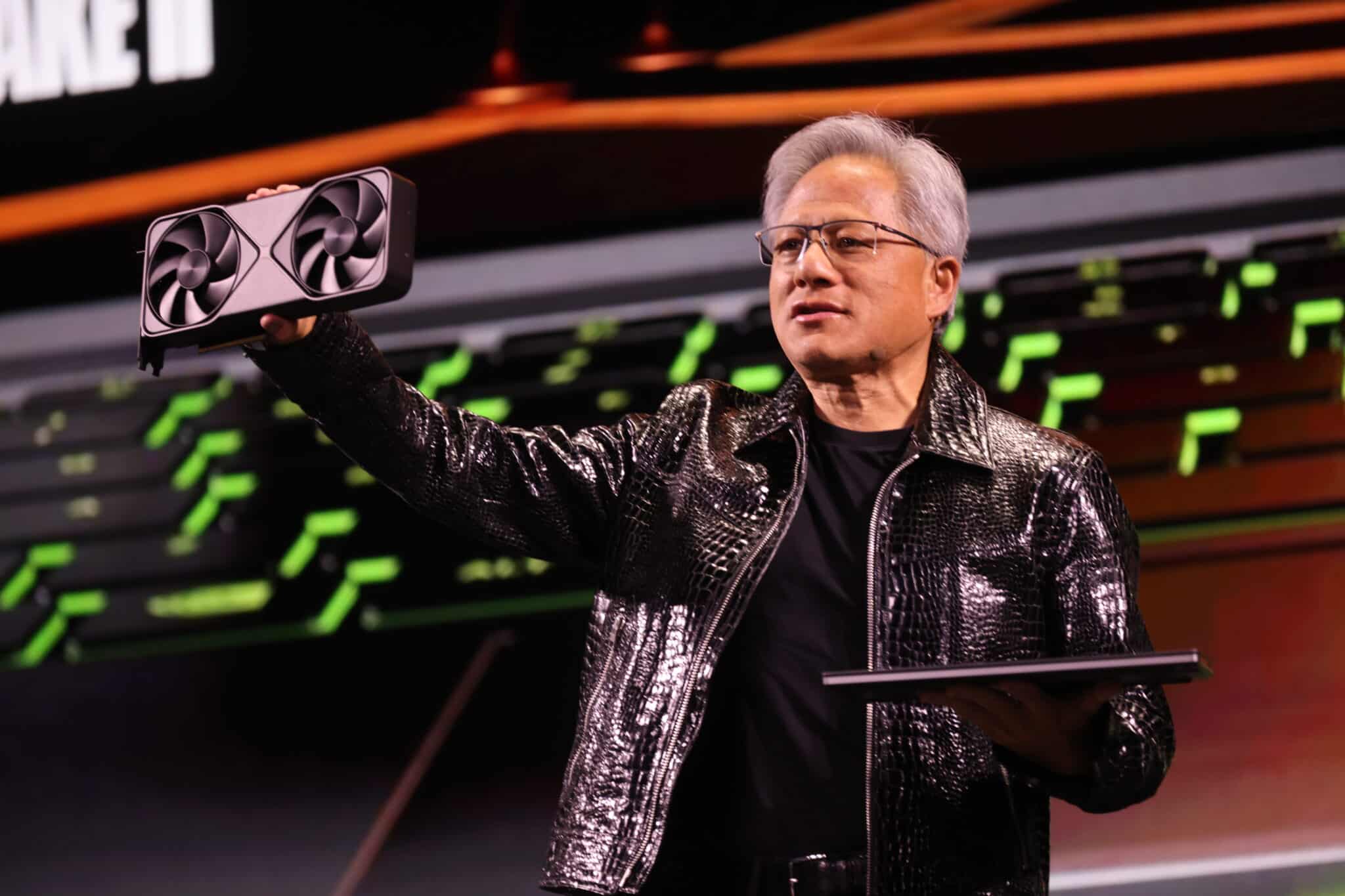
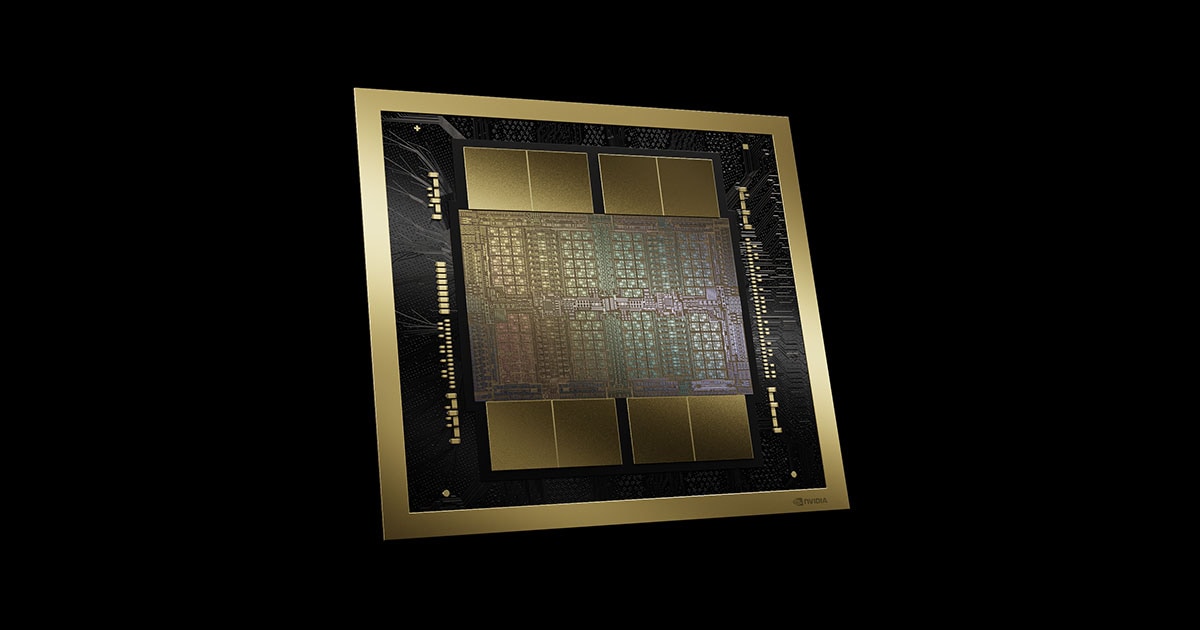
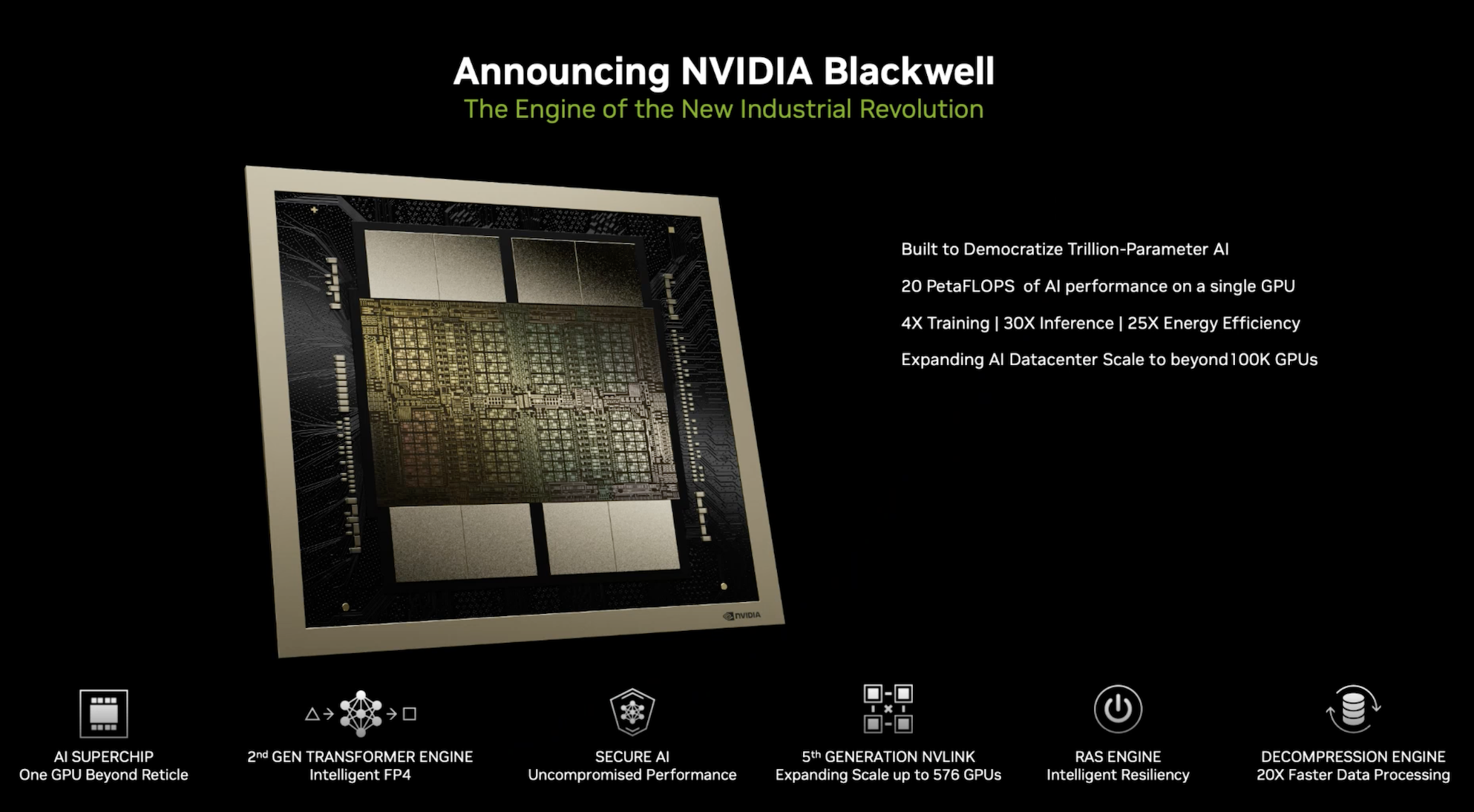
The thermal printer at the press badge station whirred incessantly on January 7, 2025. Thousands of journalists, analysts, and influencers streamed into the West Hall of the Las Vegas Convention Center, their collective attention funneled toward one entity: NVIDIA. CEO Jensen Huang would soon unveil the Blackwell architecture, a GPU boasting 92 billion transistors designed to put a petaflop-scale supercomputer on every desk. The air smelled of expectation and recycled coffee. And absolutely no one was talking about jackets.
That is the defining paradox of the so-called “AI Hardware Jacket” trend. A forensic search of CES 2025 reports, official exhibitor lists, and keynote transcripts reveals a stark reality: the category does not exist. No startup pitched a coat with integrated NPUs. No major brand announced a partnership to embed agentic AI in its lining. The fevered speculation imagined a synthesis—the NVIDIA RTX 5090 stitched into a parka—that the physical world of product roadmaps, thermal budgets, and consumer readiness has not yet produced.
Yet, the idea persists because it is a perfect allegory for the event itself. CES 2025 was a schizophrenic spectacle of staggering AI computational power divorced from the human body, existing alongside a separate, quieter revolution in wearable comfort. The story isn't about a jacket that thinks. It's about an industry struggling to connect the silicon brain to the worn sleeve.
To understand the absence, you must first catalog the dominant presence. AI at CES 2025 shed its abstract, chatbot skin and became undeniably physical. It just didn't choose clothing as its host. The intelligence manifested in robots with fluid manipulators that folded towels and mixed cocktails. It powered countertop combi-ovens that identified your salmon filet and prescribed the perfect steam-bake cycle. NVIDIA’s announcements were less about new features and more about a new physics of computing.
The numbers defined this new reality. The flagship RTX 5090, priced at $1,599, delivers 4 petaFLOPS of AI compute. Its Blackwell architecture, fabbed on a custom TSMC 4NP process, enables FP4 precision, doubling AI inference speed over the prior generation. Project DIGITS, a kit the size of a small lunchbox, promises to run AI models with 200 billion parameters locally. This is hardware that bends the curve of what’s possible, shrinking data-center capabilities onto a desktop.
This isn't an incremental upgrade; it's a phase change for personal computing. We are moving from computers that run AI applications to computers whose primary reason for being is to generate intelligence. The PC is now an AI.
According to Mark Stevens, a semiconductor analyst at Volity who attended the keynote, the shift was categorical.
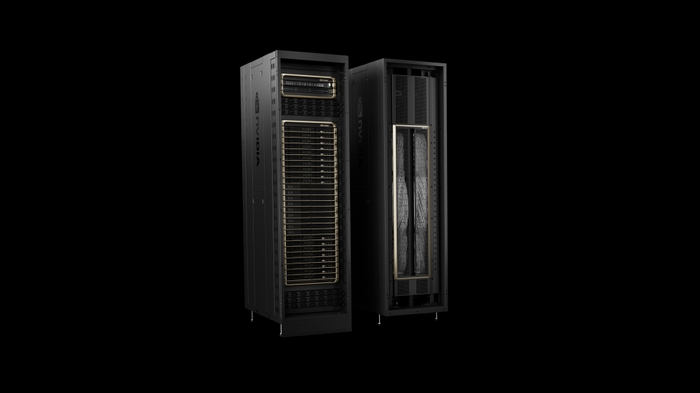
The implication is profound. When a single GPU can perform 3,352 trillion AI operations per second, the industry’s focus logically targets the heaviest workloads: real-time simulation, generative media creation, and scientific modeling. The idea of dedicating a slice of that monstrous throughput to, say, regulating your torso temperature or suggesting a matching scarf feels, in this context, almost comically trivial. The hardware is solving for artificial general intelligence, not ambient personal comfort.
While the computing giants raced toward the artificial mind, the apparel sector pursued the intelligent body—in a decidedly low-tech way. The most prominent wearable innovation was heat, not cognition. The Helios line of heated jackets and vests, showcased prominently, epitomized this path. These are sleek, battery-powered garments designed for the commuter or outdoor worker, offering all-day warmth from a rechargeable pack. They are a clever iteration on a decades-old idea, focused purely on the physics of thermal transfer.
Another CES Innovation Award honoree, Mij™, pointed in a more sophisticated, yet still non-AI, direction. Pronounced “me,” this wearable claims to optimize the body’s micro-thermal environment without sacrificing style. The language hints at a responsive system, a garment that adapts. But its published details discuss material science and passive regulation, not silicon, not inference, not a single large language model.
The disconnect is a lesson in industry verticals. The companies that understand textiles, ergonomics, and fashion supply chains are not the same entities mastering 4NP semiconductor fabrication. Bridging that gap requires more than a press release; it demands a complete re-engineering of value chains, power systems, and user expectations. We are in the foothills of that climb.
What we saw was a tale of two cities. In the North Hall, you have the raw, terrifying power of NVIDIA's silicon, building digital gods. In the South Hall, you have start-ups building slightly better mortal comforts. The twain did not meet.
This observation comes from Lars Christensen, a design strategist with Teams Design, who walked every aisle of the 2025 show.
Christensen’s critique cuts to the core. The “AI” plastered on thousands of products at CES 2025 was often a marketing gloss for pre-existing algorithms. A vacuum that maps a room is using sensor fusion and simultaneous localization and mapping (SLAM) software, concepts that predate the current AI hype cycle by 20 years. Calling it AI makes it sell; it doesn't make it new. Applying that same thin veneer to a heated jacket is technically possible—you could call its thermostat “AI-powered”—but it would be a deception of the highest order.
The true innovation in wearables was connectivity, not intelligence. Meta’s latest Ray-Ban smart glasses advanced subtly, becoming better at real-time translation and audio awareness. Smart rings and health monitors collected more biometrics. The data pipeline is being laid down, a river of personal metrics flowing to the cloud. But the processing, the “reasoning” on that data, almost universally happens elsewhere. The garment remains a sensor, a peripheral. It is not the computer.
So, where did the myth of the AI hardware jacket originate? It likely sprang from a confluence of overheated trends: the unavoidable buzzword “AI,” the concrete progress in wearable heaters, and the jaw-dropping capabilities of NVIDIA’s hardware. The human mind is a pattern-matching engine, and it is irresistibly drawn to synthesize a grand, unified theory. The narrative is elegant: the future of computing is not in your pocket, but on your shoulders. It is also, as of January 2025, fiction.
But is it a useful fiction? Does this non-existent product reveal a genuine gap in the market, or is it a technological dead end? The answer lies not in the specs of a GPU, but in the fundamental question of what we want our technology to do for us. Do we want our clothes to compute, or simply to care for us? The divergence at CES 2025 suggests the industry itself doesn’t yet know.
By January 10, 2025, the final day of CES, the narrative had solidified. The future of expressive, embodied AI would have arms and wheels, not sleeves. The Consumer Technology Association, overwhelmed by exhibitor interest, dedicated an entire hall to robotics for the first time. This was the true face of physical AI: multi-axis robotic arms demonstrating delicate tasks, quadrupedal bots navigating obstacle courses, humanoids practicing rudimentary gestures. The energy and investment here were palpable, measured in millions of R&D dollars and thousands of engineering hours.
The absence of intelligent apparel in that hall speaks volumes. It underscores a brutal, unspoken triage within the tech industry. When allocating finite engineering talent and venture capital, the sector consistently bets on platforms with clear industrial or high-value consumer applications. A robot that can stock a warehouse or assist an elderly person represents a potential market worth billions. A jacket that might, hypothetically, leverage an NPU to do… what, exactly? The business case evaporates under scrutiny.
"CES will highlight this trend, including AI-powered robots, wearables (such as AI smart glasses), and a wide range of on-device AI consumer products." — Dan Ives, Wedbush Securities Analyst
Ives’s pre-show prediction, reported by moomoo.com, proved half-right. The robots and on-device AI arrived in force. The wearable category, however, remained anchored to the form factor of glasses and pins—devices designed to be portals to a digital layer, not intelligent environments themselves. The failure of high-profile wearables like the Humane AI Pin and Rabbit R1 before CES 2025 cast a long, cautionary shadow. These products demonstrated the severe limitations of trying to cram generalized AI into a tiny, wearable form factor: poor battery life, thermal throttling, awkward user interfaces. If a pinned device struggles, embedding similar compute into a jacket’s structural fabric presents exponentially greater challenges.
Why does a cooking robot get funded while a smart jacket languishes in fiction? The numbers from the professional sphere are brutally clarifying. In a webinar looking ahead to the physical AI wave, McKinsey analysts laid out the stark financial reality of building machines that interact with the world.
"Advanced safety systems and fail-safes are not optional; they are the entry ticket. And that ticket costs between $150,000 and $500,000 per autonomous system just for the hardware and core software stack." — McKinsey & Company, AI in the Physical World Webinar
That figure, $150,000 to $500,000, is a firebreak. It immediately separates industrial and commercial applications from consumer whimsy. A company can justify that investment for a robot that will work 24/7 in a factory or hospital, displacing human labor or mitigating risk. No consumer would pay that for a garment. To approach a viable price point—say, under $2,000—the technology must undergo a miraculous miniaturization and cost-reduction journey akin to the cell phone’s. We are at the brick-phone stage for embodied AI, and the jacket form factor demands a foldable, transparent, weightless end-state on day one.
The robotics hall at CES 2025 wasn’t just a display of gadgets; it was a temple to this harsh economic truth. Every multi-degree-of-freedom arm, every sensor-fused gripper, was a testament to solving expensive, hard problems for high-stakes environments. The software running these machines, as McKinsey noted, must handle real-time learning and acute environmental sensing. The hardware must be robust, redundant, and safe. Transferring even a fraction of that capability to a flexible, washable, fashionable jacket isn’t just a technical challenge—it’s a fundamentally different product philosophy.
In the months following CES 2025, the industry’s trajectory bent further away from speculative wearables and deeper into concrete, physical automation. The conversation shifted definitively to CES 2026. YouTube analyses and tech previews began using language that made the "AI jacket" concept seem quaint, even nostalgic for a simpler hype cycle.
One prominent post-CES 2025 analysis, titled “AI at CES 2026 Is Insane,” showcased previews of what was coming. The focus was relentless: LG’s Cloi ID home robot with two fully articulated arms, Hyundai’s advanced Atlas and Spot demonstrations. These weren’t concepts; they were maturing platforms with clear utility. The video highlighted robotic fingers with precise actuation, machines capable of manipulating real-world objects in unstructured settings. The physical intelligence on display was about utility and function, not augmentation or ambient assistance.
"The focus for 2026 is on utility and dexterity. We’re past the stage of robots that wave. We need robots that wash, fold, and cook. Every degree of freedom in that arm, every sensor in that hand, is aimed at a specific, repeatable task that humans find tedious." — Commentary from YouTube analysis of CES 2026 previews
This framing is lethal to the AI jacket daydream. It prioritizes task completion over holistic personal enhancement. The market is voting with its capital for specialized machines, not generalized, wearable companions. Why build a coat that theoretically knows you’re cold and can call for a ride, when you can build a robot that will definitively clear your driveway of snow for the next ten winters? One is a vague convenience; the other is a concrete solution to a physical problem.
Even the formal pathways for innovation are closing ranks around this reality. The submission portal for the CES 2026 Innovation Awards closed at noon EST on December 31, 2025. Categories like “Cutting-Edge Technology” and “Smart Home” were open for entries, as reported by Tom's Guide. Theoretically, a revolutionary AI-embedded jacket could have been submitted. But no credible leaks, no teaser campaigns from major apparel or tech brands, hinted at such a submission. The silence is deafening. The awards, a reliable bellwether for industry focus, will instead lionize more powerful AI PCs, more dexterous robots, and more integrated smart home ecosystems.
This brings us to the central, contrarian observation: the "AI Hardware Jacket" is not an超前 idea waiting for technology to catch up. It is a category mistake. It attempts to apply a paradigm of centralized, general-purpose computing—the kind that thrives in a desktop GPU or a data center—to an environment that is fundamentally distributed, passive, and intimate. Clothing is a personal interface with the world, yes, but its value lies in protection, expression, and comfort. Infusing it with the architectural burdens of an AI inference engine (power delivery, thermal dissipation, physical robustness) may simply be the wrong way to achieve those ends.
"The evolution is toward specialization. The AI that controls a robotic arm making a latte is not the same AI that optimizes a supply chain, and neither should be the AI in your clothing. We’re fragmenting intelligence by domain, not consolidating it into a personal singularity." — Robotics Integration Specialist, paraphrased from McKinsey workforce training insights
This fragmentation is critical. The industry is building specialized intelligences for specialized tasks. A jacket’s "task" is wildly broad and context-dependent. Is its primary function thermal regulation? Biometric monitoring? Communication? Safety? Each of those requires different sensors, different algorithms, different success metrics. Attempting to bundle them into a single garment powered by a single, monolithic AI chip is a recipe for a product that does everything poorly and costs far too much.
The true innovation in smart clothing will likely be far less glamorous than a jacket running a 70-billion-parameter model. It will be in advanced materials with passive adaptive properties. It will be in low-power, task-specific ASICs for biometric sensing that last a month on a coin cell battery. It will be in seamless, durable connectivity that allows the jacket to be a simple, reliable node in a broader network—letting the heavy AI processing happen on the phone in your pocket or the laptop in your bag. This is the pragmatic, incremental path. It lacks the bombastic appeal of an "AI Hardware Jacket," but it has the distinct advantage of possibly existing within the decade.
So, was the entire notion just a fantasy born from misread trends? A projection of our desire for a technological second skin? Perhaps. But its persistent specter at the edges of CES discourse serves a vital function. It highlights the immense, uncharted territory between the raw computational firepower we now possess and the graceful, human-centric applications we crave. The gulf between the server rack and the sweater rack remains, for now, the most technically interesting and commercially fraught space in tech. Bridging it will require more than just stitching a GPU into a windbreaker; it will require reinventing the very philosophy of what wearable technology should be.
The enduring speculation around the AI Hardware Jacket, a product that left no trace on the official record of CES 2025, reveals more about our current technological moment than any actual gadget could. This phantom serves as a cultural Rorschach test, exposing our collective anxieties and aspirations about the coming integration of intelligence into every facet of life. Its absence on the show floor is more significant than a thousand present robots. It marks the precise frontier where technological capability crashes headlong into human need, practicality, and desire. We can put a supercomputer on a chip, but we still don't know what to do with it once it's woven into our daily fabric.
Historically, moments of great technological dislocation are defined by these chimeras—the flying car, the personal jetpack. They represent a simplistic, linear projection of new power into old forms. The AI jacket follows this tradition perfectly. It takes the epochal breakthrough of transformer-based AI and asks the least imaginative question possible: what if we put it in a coat? The industry's silent, unambiguous rejection of this premise at CES 2025 is therefore a landmark. It signifies a maturation, however nascent, in how we think about physical AI. The focus has shifted from decorative intelligence to applied utility.
"The intelligence must serve a purpose that is both physically necessary and economically viable. Ambient, omni-present AI is a software fantasy. In the physical world, intelligence is expensive, and so it must be targeted with surgical precision." — Lead Engineer from a CES 2025 robotics exhibitor
This shift carries profound industry implications. It directs venture capital away from diffuse, consumer-focused "smart everything" concepts and toward solving concrete industrial and service-sector problems. It tells material scientists and textile innovators that their goal is not to host a data center, but to develop new passive properties or enable robust data conduits. The phantom jacket, by not existing, has helped clarify the real playing field. Its legacy will be one of demarcation, a line in the sand between the age of conversational AI and the coming age of actionable, embodied machine utility.
To critique a non-product requires examining the flawed assumptions that birthed it. The core weakness of the AI Hardware Jacket concept is its technological solipsism. It starts with a solution—powerful AI silicon—and desperately seeks a problem. This gets the entire innovation process backward, and it's a recurring sickness in the tech sector. The most valid criticism is not of the jacket itself, but of the mindset that would prioritize its development over more urgent applications of the same technology.
Consider the ethical and social dimensions this fantasy glosses over. Embedding continuous sensing and inference into an item of clothing raises staggering privacy questions that its proponents never seriously address. A jacket that can "understand" your context is a jacket that must perpetually monitor your biometrics, your location, your conversations, and your environment. The security architecture required to make such a device safe from hacking or data leakage is far more complex than anything in a self-driving car, as the attack surface is intimately personal and always present.
Furthermore, the idea exacerbates the digital divide through a new, sartorial vector. It promises a future where socioeconomic status is not just reflected in the brand of your clothing, but in the processing power of its lining. Will there be a premium tier with a faster NPU for real-time translation, while the budget model merely offers basic heating? The jacket metaphor makes the stratification of intelligence uncomfortably literal, clothing us not just in fabric, but in tiers of cognitive augmentation.
From a pure design perspective, the concept is bankrupt. It ignores the fundamental human relationship with clothing. People form emotional attachments to garments. They wear them for years. They repair them. They break them in. Embedding hardware with a planned two-year obsolescence cycle into such an object is a design philosophy of profound alienation. It turns a personal belonging into a ticking e-waste time bomb. The cheerleaders for this future never explain how you mourn a favorite coat when its neural processor fails, leaving you with a lump of dead smart fabric that cannot be composted, repaired, or even easily recycled.
These are not mere technical hurdles; they are foundational critiques. They suggest that the pursuit of the all-in-one intelligent garment may be not just premature, but philosophically misaligned with human needs. The strength of the heated jacket at CES 2025 was its singular, humble purpose. It did one thing well: generate warmth. The supposed AI jacket, by aiming to be a cognitive Swiss Army knife, risks doing nothing well while creating a host of new problems we are ill-equipped to handle.
The road forward, illuminated by the negative space of this non-trend, is one of humility and specificity. The next milestone is not a mysterious jacket unveiling, but the public results of the focused investment already happening. Watch for the debut of the next-generation humanoid robots previewed for CES 2026, like LG's Cloi ID, which must now transition from controlled demos to real-world pilot programs in home and service settings by the second half of 2026. Their success or failure will dictate where billions in funding flow next.
The evolution of wearables will continue, but along the path of least resistance. Look for the next iteration of smart glasses from Meta or Apple, expected in late 2026, which will further refine the balance of discrete sensing, audio augmentation, and battery life—all while offloading heavy computation to a paired device. That is the realistic model: the wearable as a perceptive node, not a cognitive hub. Advanced materials will inch forward. A company like Mij™ or its successors may introduce a phase-change fabric in its 2027 line that dynamically adjusts insulation without a single line of AI code, achieving through material science what the AI jacket promised through brute compute force.
The Las Vegas Convention Center will host CES 2027 from January 5-8. The press badge thermal printers will whir again. The coffee will taste the same. And if the pattern holds, the dominant conversation will still be about the tangible, mechanical poetry of physical AI—a robot folding a shirt, an arm delicately pruning a plant. The fantasy of the AI Hardware Jacket will likely remain just that, a ghost in the machine, a persistent reminder of a simpler, more naive vision of the future that we collectively walked past without a second glance. Sometimes, the most important statement a technology can make is to refuse to exist.

Your personal space to curate, organize, and share knowledge with the world.
Discover and contribute to detailed historical accounts and cultural stories. Share your knowledge and engage with enthusiasts worldwide.
Connect with others who share your interests. Create and participate in themed boards about any topic you have in mind.
Contribute your knowledge and insights. Create engaging content and participate in meaningful discussions across multiple languages.
Already have an account? Sign in here

Nscale secures $2B to fuel AI's insatiable compute hunger, betting on chips, power, and speed as the new gold rush in te...
View Board
ul researchers unveil paper-thin OLED with 2,000 nits brightness, 30% less power use via quantum dot breakthrough, targe...
View Board
Hyundai's Atlas robot debuts at CES 2026, marking a shift from lab experiments to mass production, with 30,000 units ann...
View Board
The open AI accelerator exchange in 2025 breaks NVIDIA's CUDA dominance, enabling seamless model deployment across diver...
View Board
Tesla's Optimus Gen 3 humanoid robot now runs at 5.2 mph, autonomously navigates uneven terrain, and performs 3,000 task...
View Board
Samsung and Apple clash in 2026 with wide foldable phones, turning screens into canvases and creases into cultural battl...
View Board
The Architects of 2026: The Human Faces Behind Five Tech Revolutions On the morning of February 3, 2026, in a sprawling...
View Board
The EU AI Act became law on August 1, 2024, banning high-risk AI like biometric surveillance, while the U.S. dismantled ...
View Board
Depthfirst's $40M Series A fuels AI-native defense against autonomous AI threats, reshaping enterprise security with con...
View Board
Autonomous AI agents quietly reshape work in 2026, slashing claim processing times by 38% overnight, shifting roles from...
View Board
AI steps out of screens into factories, powering agents that move cups, pick parts and reshape jobs amid surging robot i...
View Board
AI-driven networks redefine telecom in 2026, shifting from automation to autonomy with agentic AI predicting failures, o...
View Board
AI's explosive growth forces a reckoning with data center energy use, as new facilities demand more power than 100,000 h...
View Board
Linh Tran’s radical chip design slashes AI power use by 67%, challenging NVIDIA’s dominance as data centers face a therm...
View Board
In 2026, AI agents like Aria design, code, and test software autonomously, reshaping development from manual craft to st...
View Board
XREAL unveils the 1S AR glasses at CES 2026, offering a lightweight, affordable $449 alternative for work and entertainm...
View Board
Microsoft's Copilot+ PC debuts a new computing era with dedicated NPUs delivering 40+ TOPS, enabling instant, private AI...
View Board
Smart glasses from Google and Apple are set to revolutionize how we interact with the world, but their impact on our liv...
View Board
Data centers morph into AI factories as Microsoft's $3B Wisconsin campus signals a $3T infrastructure wave reshaping gri...
View Board
CES 2026 unveiled stair-climbing vacuums, mmWave presence sensors, and local AI robots that act, sense, and reshape smar...
View Board
Comments