


Explore Any Narratives
Discover and contribute to detailed historical accounts and cultural stories. Share your knowledge and engage with enthusiasts worldwide.
The crease is a scar. It is the unavoidable seam in the fabric of a folding screen, a permanent reminder of the technological compromise between a slab of glass and a piece of paper. For years, users have accepted it as the price of novelty. In the fall of 2026, that bargain will be tested, not by an incremental update, but by a direct clash of titans on a new artistic frontier: the perfect display.
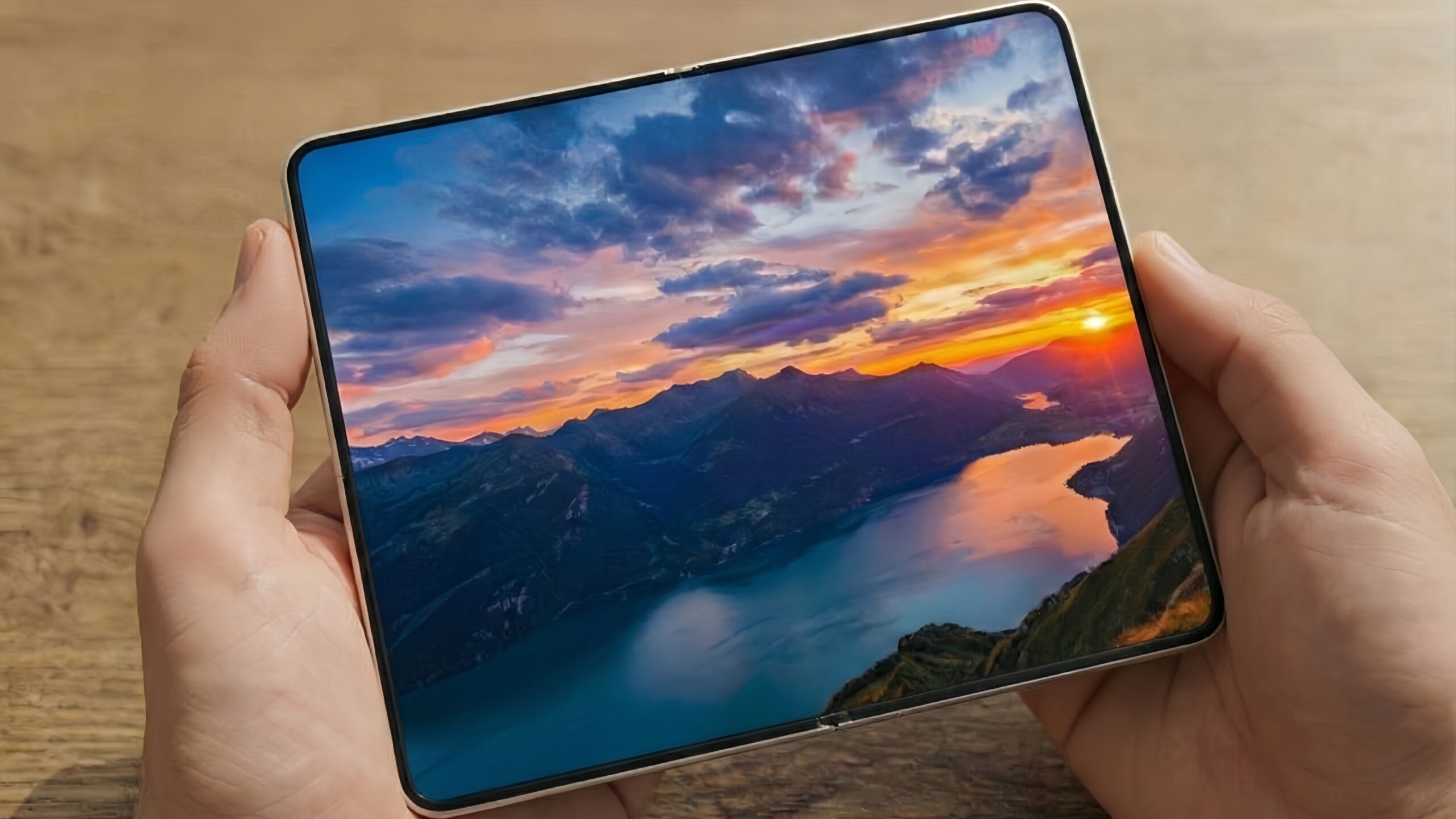
Samsung and Apple, the defining rivals of modern consumer electronics, are set to launch competing “wide” foldable smartphones simultaneously. Their target is not merely a market segment, but the very conception of the smartphone as an object of daily use and aesthetic desire. This is not a spec war. It is a cultural moment, where the screen ceases to be just a window and becomes the primary artifact itself.
Since Samsung introduced the Galaxy Fold in 2019, the foldable phone has been an experiment in verticality. Tall, narrow cover screens gave way to tall, narrow interior canvases—excellent for scrolling, less ideal for everything else. The rumored specifications for 2026 signal a profound philosophical shift. Both the Samsung Wide Fold and the Apple iPhone Fold are expected to embrace an inner display ratio close to 4:3.
This is a deliberate, almost retro, aesthetic choice. The 4:3 ratio is the shape of classic television, of early computer monitors, of a printed photograph held in your hands. It is a ratio built for landscape orientation, for split-screen multitasking that doesn’t feel like peering through a mail slot, for holding a device like a notebook rather than a remote control. Samsung’s move to a 7.6-inch interior and Apple’s to a 7.58-inch one are functionally identical. The difference will be in the curation of the experience within that frame.
Design leaks from December 2025, analyzed by sites like FrontPageTech, suggest a fascinating divergence in philosophy within near-identical dimensions. Samsung’s device allegedly features sharper corners—a more architectural, defined statement. Apple’s prototype shows rounder corners, reportedly launching in stark Black and White, echoing the minimalist dogma of its earliest products. The physical form is converging; the artistic intent is not.
“The shift to a 4:3 inner display isn’t about making a bigger screen. It’s about making a more useful canvas,” says a display engineer familiar with both projects, who spoke on condition of anonymity. “The tall foldable was a statement of possibility. The wide foldable is a statement of purpose. It says, ‘This is for creation, not just consumption.’”
The most heated debate, however, swirls around the one element that has defined the foldable experience: the crease. Some leakers, like those at FrontPageTech, have boldly claimed Apple’s design will have “no visible crease.” Others, including reliable analyst Max Jambor, suggest it will simply be “less visible” than current technology. This distinction is critical. The elimination of the crease is the holy grail not for technical bragging rights, but for artistic purity. It is the final step in making the display disappear, allowing content to exist without a physical interruption. A less visible crease is an improvement. A creaseless display is a revolution in form.
To understand the stakes of 2026, one must view the display not as a component, but as a curated space. Samsung has operated as the bold gallery owner for half a decade. Its Galaxy Z Fold series, with its latest Z Fold7 offering a 6.5-inch closed and 8-inch open display, established the vocabulary of the form. Samsung’s artistry has been in brightness, in saturation, in pushing the limits of what a flexible panel can do. It is spectacle. Their approach is extroverted—meant to impress upon first view, to dominate a room with luminance, to offer a palette of colors and gradients that pop.
Apple, the perennial latecomer, enters not as a student, but as a master curator from a different discipline. Its validation of the foldable form is the single most important event in the segment’s short history. Apple’s artistry has always been in restraint, calibration, and integration. Where Samsung offers a brilliant gallery wall, Apple designs the entire atelier—controlling the light, the tools, and the workflow. The company’s legendary color accuracy and responsive performance are not just features; they are a philosophy that the display must faithfully reproduce intent, not embellish it.
“Apple’s entry changes the conversation from ‘What can a folding screen do?’ to ‘What should it do?’” notes Mirai Tanaka, a technology critic for *The Interface Review*. “Samsung has been painting with broad, impressive strokes. Apple will approach the same canvas with a scalpel. The competition isn’t over whose display is better. It’s over whose definition of ‘better’ the culture adopts.”
This fundamental difference manifests in rumored specifications. Industry whispers point to Samsung continuing its push for adaptive, movie-and-gaming-optimized panels with tougher glass. Apple’s focus appears fixed on ergonomic curves, titanium chassis construction, and a seamless marriage between its A-series silicon and the new display’s behavior. Samsung’s display is a product. Apple’s display is an instrument.
The battle lines for 2026 are not drawn in megapixels or gigahertz. They are drawn in aspect ratios and pixel response times, in the visibility of a seam and the warmth of a white point. This is a war over the quality of light in our hands, over the shape of our digital windows, and over who gets to define the next chapter in the most intimate art form of the 21st century: the screen we cannot look away from. The race for the perfect display is, ultimately, a race to frame our reality.
In December 2025, a series of cold, precise CAD renders leaked into the tech press. They were blueprints for a cultural moment. Zeera Wireless published dimensions: the iPhone Fold would stand 120.6 mm tall, 83.8 mm wide, and 9.6 mm thick when closed. Unfolded, it would slim to a mere 4.8 mm. Android Authority followed with comparative renders of Samsung's Wide Fold. The numbers were nearly identical, the silhouettes almost twins. This visual convergence, however, masks a profound and ironic dependency. The artist is painting on a canvas supplied by his rival.
"The iPhone Fold does have a visible crease, it’s just that it is less visible than current foldables." — Max Jambor, leaker, on X, December 2025
Samsung Display, the undisputed champion of flexible OLED panels, is the exclusive supplier for Apple's foldable. This is not a partnership of equals; it is a master craftsman fulfilling the exacting specifications of a legendary designer. Apple has reportedly commissioned a custom process where the touch sensor is integrated into the display itself, reducing thickness by 19%. Samsung’s own Wide Fold will use different, likely more readily available, panel technology. The implications are staggering. Apple’s pursuit of aesthetic purity—a creaseless, seamless canvas—is physically enabled by the very company it seeks to dethrone. Samsung, in turn, gets to fund its R&D through Apple’s massive order while preparing its own, potentially more flamboyant, interpretation of the same base material.
The debate over the crease has moved from technical forums to the realm of artistic doctrine. On one side, leakers like FrontPageTech insist Apple’s internal display "will not have its crease visible." Jambor contradicts this, suggesting mere minimization. Who is right matters less than what the conflict reveals. For Apple, the crease is an affront. It is an imperfection, a rupture in the reality it curates. The company’s entire history, from the seamless unibody of the iPod to the monolithic slab of the iPhone 15, is a war against seams. A visible crease would be its first great, unavoidable compromise.
Samsung’s philosophy is more pragmatic, perhaps more human. It has lived with the crease for five generations. It has learned to design around it, to mitigate it, to accept it as part of the foldable condition. Its rumored sharper corners on the Wide Fold are a statement of precision, not of denial. This is the core artistic divergence: Apple seeks to make the technology disappear entirely. Samsung seeks to make you admire the technology itself.
"Reiterating specs with variance; notes Samsung's 5.4-inch cover and 7.6-inch internal vs. Apple's 5.35-inch cover and 7.58-inch internal." — Ice Universe, leaker, via Android Authority, December 24, 2025
The specifications, as parsed by leakers like Ice Universe, are a catechism of this rivalry. A difference of 0.05 inches on the cover display. A 0.02-inch gap on the interior. These are not engineering necessities; they are branding exercises, minute differentiations in a shared hymn. The 4:3 aspect ratio is their common scripture. But how will it be preached?
A display is not a static painting. It is a performance, and its quality depends entirely on the engine driving it. Here, the paths diverge into different genres altogether. Apple’ foldable is rumored to house the A20 processor, built on TSMC’s 2nm process, promising 15% more speed and 30% greater efficiency than its predecessor. This isn’t just a chip; it’s the central nervous system for an entirely new iOS body—iOS 26, with adaptive layouts meant to treat the 7.76-inch canvas as a single, fluid workspace.
Samsung will likely respond with a Snapdragon 8 Gen series chip. Its advantage has never been raw silicon supremacy, but integration with its own display hardware and the flexibility of Android. The battery numbers tell their own story: Apple is rumored to be packing a colossal 5400–5800 mAh unit, while Samsung’s Wide Fold may hover around 4400 mAh. Apple’s play is endurance, the promise that this expansive canvas won’t darken prematurely. Samsung’s is perhaps agility, a lighter device that powers a brighter, more adaptive screen.
"iPhone Fold available in only Black and White; internal display 'will not have its crease visible.'" — FrontPageTech, leaker, December 2025
The color palette is another stark declaration. FrontPageTech’s report that Apple is testing only Black and White finishes is a minimalist’s manifesto. It rejects the chromatic playfulness of Samsung’s past gradient finishes. Black and White are not colors; they are statements of essence. They say the device itself should recede, that the content is the only color that matters. Will this austere approach resonate in a market accustomed to expressing personality through device hue? Or is it a deliberate attempt to position the foldable as a serious tool, not a playful gadget?
Photography further crystallizes the philosophical schism. Rumors suggest Apple’s iPhone Fold will sport a dual rear camera system: two 48MP sensors for Main and Ultra Wide duties, pointedly omitting a telephoto lens. This is a shocking constraint from a company that has driven the multi-camera arms race. It implies a belief that computational photography, powered by that monstrous A20 chip, can overcome optical limitations. The display, in this view, is for viewing masterpieces created by AI.
Samsung, the longtime camera spec champion, is expected to deploy a triple rear array. Its artistry is in optical versatility, in giving the user more physical tools. This extends to software: Samsung’s Expert RAW mode offers multi-frame noise reduction and manual control, treating the photographer as a co-artist. Apple’s ProRAW processing is more automated, more opinionated. One system offers a palette and brushes. The other offers a filter that guarantees a "perfect" image. Which is truly the tool for creation?
The biometrics rumor—a shift from Face ID to a Side Touch ID on the iPhone Fold—is perhaps the most telling minor note. It is a sacrifice of a flagship feature for a more pragmatic one, likely to save space for the battery that fuels the display. It admits that in this new form, some dogmas must bend. Samsung, already using a side fingerprint sensor, faces no such existential crisis. Its identity isn’t tied to a single, iconic unlock method.
"The shift to a 4:3 inner screen is for iPad-like productivity, reducing the verticality of prior designs." — Industry Analyst, summarizing trend from December 2025 leaks
So what are we to make of these twin artifacts? Apple’s device looks like a bet on holistic, controlled perfection—a sealed universe of efficiency, minimalism, and enduring power. Samsung’s appears to be an evolution of its established gospel: spectacular hardware, user choice, and visible innovation. One wants to be a window. The other is content, for now, to be a dazzling piece of stained glass. The 2026 war won’t be won on a spec sheet. It will be won in the hands of users who must decide: do they want a tool that disappears, or a technology that performs?
The significance of the 2026 clash transcends the spec sheet. It represents the final, full-scale industrialisation of a form that has lingered on the fringes for half a decade. Foldables currently occupy a niche, estimated at roughly 5% of the premium smartphone market. The simultaneous arrival of Apple and Samsung’s wide-format devices is not a skirmish for existing users; it is a coordinated bombardment designed to shatter the mainstream’s final reservations. This is about defining the next decade of personal computing. The smartphone, having absorbed the camera, the wallet, and the communication hub, now aims to subsume the tablet and the notebook. The 4:3 aspect ratio is the tell. It is the shape of work, of creation, of canvas-based thought. Samsung and Apple are no longer selling phones. They are selling the primary aperture through which we will experience digital culture.
"Apple’s entry changes the conversation from ‘What can a folding screen do?’ to ‘What should it do?’ Samsung has been painting with broad, impressive strokes. Apple will approach the same canvas with a scalpel." — Mirai Tanaka, technology critic, The Interface Review
The historical context is crucial. Samsung has been the brave, sometimes bruised, pioneer since 2019. It has shouldered the early adopter criticism, the durability concerns, the software growing pains. Its role has been that of the experimental artist, pushing the medium’s physical limits with brighter panels, faster charging, and bolder designs. Apple’s arrival is the moment of institutional validation. It is the major museum acquiring a work from an avant-garde gallery. The foldable’s legitimacy, in the eyes of the mass market, hinges on this moment. A successful iPhone Fold does not just sell units; it sanctifies the entire category, guaranteeing its place in the technological canon. Conversely, a stumble from Apple could stigmatize the form for another product cycle. The stakes are not market share alone. They are historical legacy.
For all the promise, the path to 2026 is paved with unresolved tensions and potential fractures. The most glaring is the supply chain irony detailed earlier: Apple’s quest for aesthetic purity is utterly dependent on its arch-rival’s manufacturing prowess. Any production hiccup at Samsung Display dooms both devices, creating a shared vulnerability that neither company will acknowledge publicly. Furthermore, the industry’s shift to a 4:3 inner screen, while logical for productivity, is a tacit admission that the tall, narrow foldable was a years-long detour. What does that say about the millions of users who invested in that earlier vision?
The camera compromises are another critical weakness. Apple’s rumored decision to forgo a dedicated telephoto lens on a device costing upwards of $1,800 feels like an aesthetic overreach. It bets everything on computational photography, potentially leaving a gap that Samsung’s triple-camera array will exploit. Samsung’s own challenge is software. Its multitasking features on One UI are powerful but often complex, lacking the intuitive, system-deep integration that iOS 26 will likely promise for its foldable. Can Samsung match Apple’s famed “it just works” ethos on a form factor that is inherently more complicated?
Then there is the crease. The conflicting leaks between FrontPageTech and Max Jambor point to a fundamental uncertainty. If Apple fails to deliver a truly “invisible” crease, its entire value proposition of seamless elegance crumbles. If Samsung’s crease remains more pronounced, it cedes the high ground of premium feel. The crease is more than a technical hurdle; it is the symbolic scar of the foldable’s artificiality. The company that comes closest to erasing it wins not just a feature war, but the narrative of true innovation.
Looking forward, the calendar is stark. Fall 2026 is the arena. September will likely belong to Apple, with its traditional iPhone event unveiling the iPhone Fold alongside the iterative iPhone 18 models. October will be Samsung’s riposte, with a dedicated Galaxy Unpacked for the Wide Fold (potentially branded as the Galaxy Z Fold7 or Z Fold8) and a new Flip model. The leaks will intensify throughout the summer of 2026, a steady drumbeat of renders, spec confirmations, and factory rumors. The real battle, however, will be fought in the weeks following the launches, as reviewers hold the two devices side-by-side, judging not just their specs, but the coherence of their visions.
The victor will not be decided by which phone has the brighter nits or the larger milliamp-hours. It will be decided by which company better understands that it is no longer selling a communication device, but a portable atelier. The perfect display is not the one with the highest resolution. It is the one that disappears, that becomes a pure conduit for the user’s intent—whether that intent is watching a film, editing a photograph, or drafting a document. Apple’s bet is on a controlled, holistic environment where every pixel is shepherded by silicon. Samsung’s is on a vibrant, flexible toolkit that celebrates its own technological prowess.
The 2026 Smartphone Wars, therefore, are a referendum on taste. Is the future of personal technology a silent, seamless servant, or a brilliant, complex partner? By the close of that year, the scars on the canvas—and the hands holding it—will provide the answer.


Your personal space to curate, organize, and share knowledge with the world.
Discover and contribute to detailed historical accounts and cultural stories. Share your knowledge and engage with enthusiasts worldwide.
Connect with others who share your interests. Create and participate in themed boards about any topic you have in mind.
Contribute your knowledge and insights. Create engaging content and participate in meaningful discussions across multiple languages.
Already have an account? Sign in here
ul researchers unveil paper-thin OLED with 2,000 nits brightness, 30% less power use via quantum dot breakthrough, targe...
View Board
CES 2025 spotlighted AI's physical leap—robots, not jackets—revealing a stark divide between raw compute power and weara...
View Board
Nscale secures $2B to fuel AI's insatiable compute hunger, betting on chips, power, and speed as the new gold rush in te...
View Board
The open AI accelerator exchange in 2025 breaks NVIDIA's CUDA dominance, enabling seamless model deployment across diver...
View Board
AI-driven networks redefine telecom in 2026, shifting from automation to autonomy with agentic AI predicting failures, o...
View Board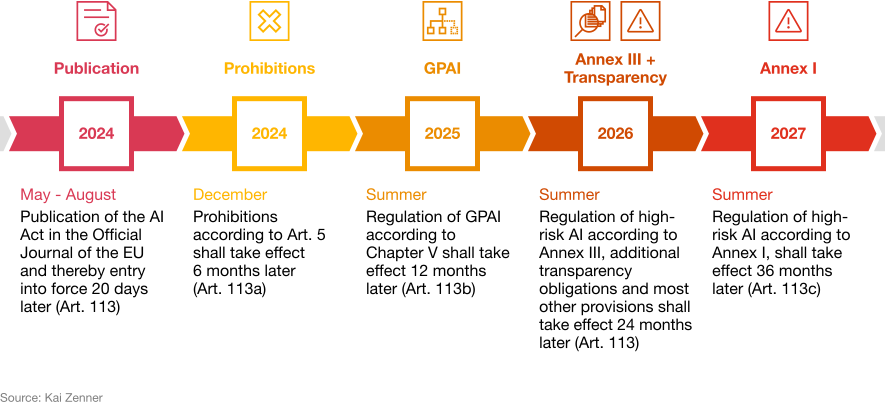
The EU AI Act became law on August 1, 2024, banning high-risk AI like biometric surveillance, while the U.S. dismantled ...
View Board
In 2026, AI agents like Aria design, code, and test software autonomously, reshaping development from manual craft to st...
View Board
Smart glasses from Google and Apple are set to revolutionize how we interact with the world, but their impact on our liv...
View Board
The Architects of 2026: The Human Faces Behind Five Tech Revolutions On the morning of February 3, 2026, in a sprawling...
View Board
Microsoft's ambitious January 2026 Xbox Game Pass lineup signals a new era of curated entertainment, with over a dozen n...
View Board
XREAL unveils the 1S AR glasses at CES 2026, offering a lightweight, affordable $449 alternative for work and entertainm...
View Board
Depthfirst's $40M Series A fuels AI-native defense against autonomous AI threats, reshaping enterprise security with con...
View Board
Autonomous AI agents quietly reshape work in 2026, slashing claim processing times by 38% overnight, shifting roles from...
View Board
Tesla's Optimus Gen 3 humanoid robot now runs at 5.2 mph, autonomously navigates uneven terrain, and performs 3,000 task...
View Board
AI's explosive growth forces a reckoning with data center energy use, as new facilities demand more power than 100,000 h...
View Board
Hyundai's Atlas robot debuts at CES 2026, marking a shift from lab experiments to mass production, with 30,000 units ann...
View Board
Linh Tran’s radical chip design slashes AI power use by 67%, challenging NVIDIA’s dominance as data centers face a therm...
View Board
AI steps out of screens into factories, powering agents that move cups, pick parts and reshape jobs amid surging robot i...
View Board
Kathmandu’s 1,324‑meter high valley blends 1596 Kasthamandap, UNESCO temples and Newar brickwork with four million resid...
View Board
Singaporean ex-lieutenant Kevin Wu builds GRAY, turning iPhone cases into heirloom tech, then launches GRAYCRAFT1 NFT as...
View Board
Comments