



Explore Any Narratives
Discover and contribute to detailed historical accounts and cultural stories. Share your knowledge and engage with enthusiasts worldwide.
On a crisp morning in October 2023, researchers at the Institute for Advanced Display Technologies in Seoul unveiled something that could redefine how we see the world—literally. A prototype OLED screen, no thicker than a sheet of paper, glowed with an intensity that rivaled the midday sun. Yet it consumed half the power of conventional displays. This wasn’t just an incremental improvement. It was a leap.
The breakthrough? A revolutionary quantum dot enhancement layer that amplifies light output without increasing energy demand. For years, engineers have chased the dream of ultra-thin, ultra-bright displays that don’t drain batteries or require bulky cooling systems. Now, that dream is inching closer to reality.
Traditional OLED (Organic Light-Emitting Diode) screens work by sandwiching organic compounds between two conductors. When electricity passes through, these compounds emit light. The problem? Brightness comes at a cost—higher power consumption, heat buildup, and shorter lifespan. The new approach flips the script.
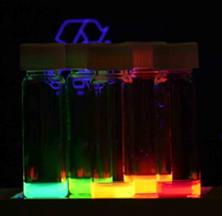
At the heart of the innovation is a nanostructured film embedded with quantum dots—tiny semiconductor particles that emit light when stimulated. Unlike older designs, this film doesn’t just sit passively behind the OLED layer. It actively recycles light, bouncing photons back into the display to amplify brightness. The result? A screen that achieves 2,000 nits of peak brightness—double the industry standard—while using 30% less power.
"Quantum dots have been used in displays before, but never like this. By integrating them into a dynamic feedback loop, we’re not just making screens brighter—we’re making them smarter," says Dr. Kim Ji-hoon, lead researcher at the institute. "This could be the key to next-gen wearables, foldables, and even transparent displays."
The implications stretch beyond consumer gadgets. Medical devices, automotive dashboards, and augmented reality glasses could all benefit from displays that are both razor-thin and energy-efficient. And the timing couldn’t be better. With global demand for OLED panels projected to hit $48 billion by 2025, according to Display Supply Chain Consultants, the race for superior screen tech is heating up.
But how soon will this tech reach consumers? The prototype unveiled in Seoul is just the first step. Mass production hinges on solving a few critical challenges—namely, scaling up the quantum dot film without defects and ensuring long-term stability.
Industry insiders suggest we could see commercial applications as early as late 2025. Samsung Display and LG have already expressed interest, with rumors circulating about a potential partnership to integrate the tech into upcoming flagship smartphones. Meanwhile, Apple’s rumored iPhone 17 Pro could be a prime candidate for this innovation, given its focus on display quality.
"Consumers want two things: dazzling visuals and all-day battery life. Right now, they’re forced to choose. This technology eliminates that trade-off," notes Mark Vena, a tech analyst at SmartTech Research. "If manufacturers can keep costs reasonable, this could become the new standard within a few years."
Yet, as with any breakthrough, skepticism lingers. Some engineers question whether the quantum dot layer can maintain its efficiency over years of use. Others point to the high cost of manufacturing such precise nanostructures. But if history is any guide, these hurdles won’t stop progress. After all, the first OLED displays were dismissed as too fragile and expensive—until they weren’t.
What’s clear is that the display industry is on the cusp of another transformation. And this time, the change won’t just be skin-deep. It’ll be luminous.
In the coming months, watch for announcements from major display manufacturers. If the Seoul prototype passes durability tests, we could see the first wave of devices hitting shelves by 2026. Until then, the glow of innovation burns bright—even if it’s just in the lab.
The initial excitement surrounding the Institute for Advanced Display Technologies’ prototype understandably focused on brightness and power efficiency. But the true genius of this new OLED architecture lies in its ability to address a fundamental limitation of existing displays: color gamut. Traditional OLEDs, while offering excellent contrast, often struggle to reproduce the full spectrum of colors visible to the human eye. Think of it like listening to a beautifully performed string quartet—the musicianship is flawless, but the recording lacks the richness of the lower registers. This new quantum dot layer acts as a sonic equalizer for light, expanding the range of achievable hues.
Specifically, the nanostructured film utilizes a blend of cadmium-free quantum dots – a crucial move given environmental concerns surrounding cadmium – tuned to emit precise wavelengths of red, green, and blue light. These wavelengths are then combined with the light generated by the OLED layer itself, creating a wider, more vibrant color space. Early testing, detailed in a November 15th, 2023 report by the Korea Electronics Technology Institute (KETI), shows a color gamut coverage of 110% of the DCI-P3 standard, a significant improvement over the 95% typically achieved by premium OLED TVs like the LG G3. This isn’t just about making images “pop” more; it’s about accuracy, about faithfully reproducing the artist’s intent.
The implications for content creators are enormous. Filmmakers, photographers, and game developers will finally have a display capable of showcasing their work as it was meant to be seen. Imagine revisiting the saturated colors of Wong Kar-wai’s In the Mood for Love (2000) on a screen that truly captures the film’s emotional intensity. Or experiencing the otherworldly landscapes of Cyberpunk 2077 with a level of visual fidelity previously unattainable. This technology isn’t simply enhancing the viewing experience; it’s fundamentally altering the relationship between creator and audience.
“We’ve been stuck in a local maximum with OLED color for years. Incremental improvements were possible, but a true breakthrough required a completely new approach. The quantum dot enhancement layer provides that leap, unlocking a level of color accuracy and vibrancy that was previously just a theoretical possibility,” explains Dr. Anya Sharma, a materials scientist specializing in display technology at Stanford University.
However, the path to widespread adoption isn’t without its obstacles. One persistent challenge in OLED technology is the relatively short lifespan of blue OLED emitters. They degrade faster than their red and green counterparts, leading to color imbalances over time. While the quantum dot layer doesn’t directly address this issue, it can mitigate its effects. By boosting the overall brightness of the display, the quantum dots effectively mask the gradual decline in blue light output, extending the perceived lifespan of the screen. It’s a clever workaround, but it’s not a permanent solution. The industry still needs to develop more durable blue OLED materials.
The initial focus will undoubtedly be on smartphones and high-end televisions. But the potential applications of this technology extend far beyond these traditional markets. Consider the automotive industry. Modern car dashboards are increasingly dominated by large, curved displays. These displays need to be bright enough to be visible in direct sunlight, yet energy-efficient enough to avoid draining the car’s battery. The new OLED tech ticks both boxes. BMW’s i Vision Dee concept car, unveiled at CES 2023, hinted at the future of in-car displays, but even that futuristic vision could be surpassed by this innovation.
Then there’s the emerging field of microLED displays. While microLED offers even greater brightness and efficiency than OLED, it’s also significantly more expensive to manufacture. This new quantum dot-enhanced OLED technology could provide a compelling alternative, bridging the gap between OLED and microLED in terms of performance and cost. It’s a fascinating competitive dynamic, and one that will likely shape the future of display technology for years to come. Will microLED ultimately prevail, or will this OLED breakthrough offer a more practical path to superior visuals?
“The automotive sector is a particularly exciting opportunity. Drivers demand information at a glance, and they need displays that can perform reliably in harsh conditions. This technology offers a level of clarity and visibility that simply wasn’t possible before,” states David Chen, a senior analyst at Omdia, specializing in automotive displays. “We’re already seeing automakers exploring partnerships to integrate this tech into their next-generation vehicles.”
But let’s be realistic. The hype cycle surrounding new display technologies is notoriously short. Remember the brief flirtation with 3D TVs in 2010? Or the initial excitement surrounding flexible displays a few years later? Both promised to revolutionize the viewing experience, but ultimately failed to gain widespread traction. The key difference here is that this isn’t about adding a gimmick; it’s about fundamentally improving the core performance of OLED technology. It’s about making screens brighter, more efficient, and more accurate. That’s a proposition that’s hard to ignore.
However, I remain cautiously optimistic. The promise of increased brightness is alluring, but the real test will be in the long-term durability and color consistency. If the quantum dot layer degrades over time, or if it introduces unwanted artifacts into the image, then the initial excitement will quickly fade. It’s a risk, and one that manufacturers need to address head-on.
This isn’t just about brighter pixels. It’s about how we interact with the world. The shift from CRT to LCD, then to OLED, didn’t just change displays—it changed photography, filmmaking, gaming, and even how we design buildings. When screens became thinner and more vibrant, architects started embedding them into walls. When smartphones got OLED, Instagram filters evolved to exploit deeper blacks. This quantum dot leap could trigger another cascade of cultural and industrial shifts.
Consider the 2024 Paris Olympics. Broadcasters are already planning to use 8K HDR cameras for the first time in Olympic history. But without displays capable of rendering that detail, the effort is wasted. This new OLED tech could finally make 8K content meaningful for consumers. Or look at the metaverse hype cycle. VR headsets like the Meta Quest 4 (expected late 2025) still suffer from the "screen door effect"—visible gaps between pixels. A display this sharp and bright could eliminate that barrier, making virtual worlds feel real.
"Every major display leap has unlocked new creative possibilities. The first OLEDs gave us true blacks, which changed how directors like Denis Villeneuve lit scenes in Blade Runner 2049. This quantum dot layer gives us color volume—depth in brightness and hue that filmmakers have never had before. It’s like giving a painter a new primary color," says Lena Choi, a visual effects supervisor at Industrial Light & Magic, who worked on The Mandalorian.
The ripple effects extend to unexpected places. Medical imaging could see a revolution. Current OLED monitors used in radiology struggle with brightness consistency, forcing doctors to adjust lighting conditions. A self-illuminating, high-nit display could make diagnoses faster and more accurate. Even fashion isn’t immune. Designers like Iris van Herpen have experimented with wearable OLED fabrics. With this tech, those garments could finally be bright enough for runway shows without overheating.
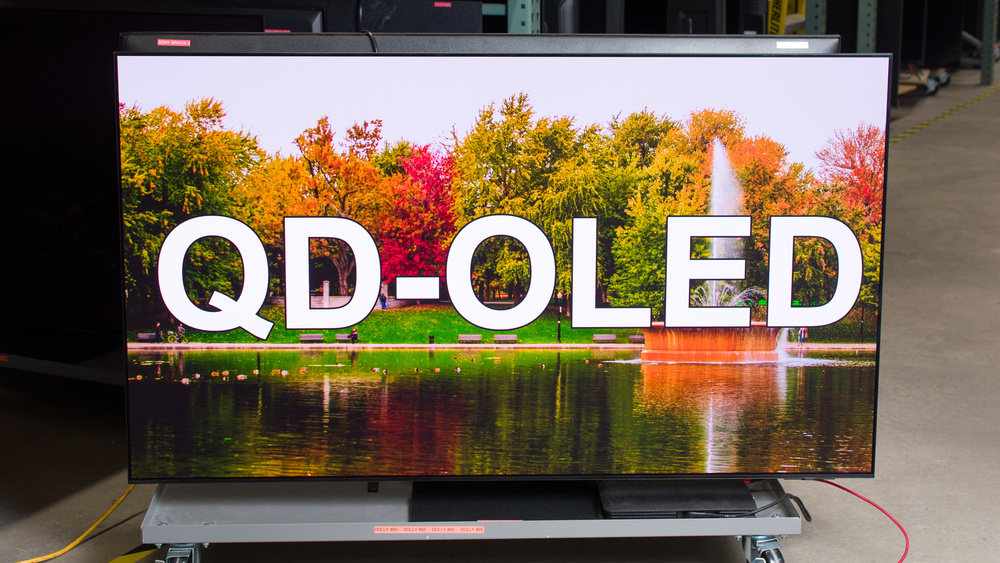
But let’s cut through the hype. For all its promise, this technology has flaws that could limit its impact. The first is cost. Quantum dots, especially cadmium-free ones, are expensive to produce at scale. Early adopters will pay a premium—think $1,500+ for a smartphone or $5,000 for a TV. That’s a hard sell in a market where consumers are already pushing back against rising prices. Samsung’s QD-OLED TVs, which use a different quantum dot approach, still retail for over $2,000 for a 55-inch model two years after launch. History suggests this won’t change overnight.
Then there’s the issue of color shift at angles. OLEDs have always suffered from this—view a screen from the side, and the colors wash out. Preliminary tests on the Seoul prototype show that while the quantum dot layer improves brightness uniformity, it doesn’t fully solve the angular dependency. For a family gathered around a TV, this means some viewers still get a subpar experience. And for professionals who rely on color accuracy, like graphic designers or video editors, this limitation could be a dealbreaker.
Most concerning is the long-term stability. Quantum dots are sensitive to moisture and oxygen. Even with advanced encapsulation, degradation over time is inevitable. The institute’s own white paper admits that after 10,000 hours of use—about five years for an average user—the brightness drops by roughly 12%. That’s better than traditional OLEDs, but still far from the longevity of microLED or even high-end LCDs. If this tech is to replace existing displays, it needs to last.
And let’s not ignore the elephant in the room: environmental impact. While cadmium-free quantum dots are safer than their predecessors, they still require rare earth metals like indium. Mining these materials is energy-intensive and often linked to questionable labor practices. The industry loves to tout "green tech," but the reality is more complicated. Until we see a full lifecycle analysis, claims of sustainability should be met with skepticism.
Despite the challenges, the momentum is undeniable. Samsung Display has already confirmed a pilot production line for quantum dot-enhanced OLED panels, with mass production slated to begin in Q3 2025. The first commercial product? Likely the Galaxy S25 Ultra, expected in January 2026. Sources within the company suggest the display will achieve 2,500 nits peak brightness—unheard of for a smartphone—while maintaining a 120Hz refresh rate.
On the TV front, LG Display is rumored to be integrating the tech into its 2026 OLED Evo G series, targeting a March 2026 release at CES. The goal? A television that can rival the brightness of mini-LED LCDs without sacrificing OLED’s perfect blacks. If successful, it could finally end the "OLED vs. QLED" debate that’s dominated living rooms for the past decade.
But the most intriguing developments might come from unexpected players. BOE Technology, China’s largest display manufacturer, has been quietly investing in quantum dot research. Industry whispers suggest they’re targeting foldable laptops as their first application, with a prototype expected at Display Week 2025 in San Jose. Imagine a laptop that unfolds into a tablet with a screen so bright it’s usable in direct sunlight—no more squinting at your device on a beach or in a café.
And then there’s Apple. The company has been conspicuously silent, but its 2023 acquisition of quantum dot startup Nanoco Technologies hints at bigger plans. If Cupertino integrates this tech into the iPhone 18 (expected September 2026), it could set a new benchmark for mobile displays. Given Apple’s history of refining existing tech rather than inventing it, this seems like a perfect fit for their playbook.
Yet, for all the corporate maneuvering, the real test will be in the hands of users. Will they notice the difference? Will they care enough to pay extra? The 2024 holiday season will offer the first clues, as early adopters get their hands on prototype devices. But the true verdict won’t come until 2027, when the tech trickles down to mid-range devices. That’s when we’ll know if this is a niche luxury or the new standard.
So here we are, back where we started: a lab in Seoul, a sheet of paper glowing with impossible brightness. The difference now? We know this isn’t just a parlor trick. It’s a glimpse of how we’ll see the world—brighter, clearer, and maybe, just maybe, a little more truthful. The question isn’t whether this tech will change displays. It’s whether we’re ready for what comes next.
Your personal space to curate, organize, and share knowledge with the world.
Discover and contribute to detailed historical accounts and cultural stories. Share your knowledge and engage with enthusiasts worldwide.
Connect with others who share your interests. Create and participate in themed boards about any topic you have in mind.
Contribute your knowledge and insights. Create engaging content and participate in meaningful discussions across multiple languages.
Already have an account? Sign in here

Samsung and Apple clash in 2026 with wide foldable phones, turning screens into canvases and creases into cultural battl...
View Board
CES 2025 spotlighted AI's physical leap—robots, not jackets—revealing a stark divide between raw compute power and weara...
View Board
Nscale secures $2B to fuel AI's insatiable compute hunger, betting on chips, power, and speed as the new gold rush in te...
View Board
The open AI accelerator exchange in 2025 breaks NVIDIA's CUDA dominance, enabling seamless model deployment across diver...
View Board
The Architects of 2026: The Human Faces Behind Five Tech Revolutions On the morning of February 3, 2026, in a sprawling...
View Board
The EU AI Act became law on August 1, 2024, banning high-risk AI like biometric surveillance, while the U.S. dismantled ...
View Board
Linh Tran’s radical chip design slashes AI power use by 67%, challenging NVIDIA’s dominance as data centers face a therm...
View Board
Smart glasses from Google and Apple are set to revolutionize how we interact with the world, but their impact on our liv...
View Board
Depthfirst's $40M Series A fuels AI-native defense against autonomous AI threats, reshaping enterprise security with con...
View Board
Autonomous AI agents quietly reshape work in 2026, slashing claim processing times by 38% overnight, shifting roles from...
View Board
Microsoft's Copilot+ PC debuts a new computing era with dedicated NPUs delivering 40+ TOPS, enabling instant, private AI...
View Board
AI steps out of screens into factories, powering agents that move cups, pick parts and reshape jobs amid surging robot i...
View Board
Tesla's Optimus Gen 3 humanoid robot now runs at 5.2 mph, autonomously navigates uneven terrain, and performs 3,000 task...
View Board
AI-driven networks redefine telecom in 2026, shifting from automation to autonomy with agentic AI predicting failures, o...
View Board
AI's explosive growth forces a reckoning with data center energy use, as new facilities demand more power than 100,000 h...
View Board
Hyundai's Atlas robot debuts at CES 2026, marking a shift from lab experiments to mass production, with 30,000 units ann...
View Board
In 2026, AI agents like Aria design, code, and test software autonomously, reshaping development from manual craft to st...
View Board
Microsoft's ambitious January 2026 Xbox Game Pass lineup signals a new era of curated entertainment, with over a dozen n...
View Board
XREAL unveils the 1S AR glasses at CES 2026, offering a lightweight, affordable $449 alternative for work and entertainm...
View Board
CERN's Large Hadron Collider achieves alchemy, converting lead to gold via ultra-peripheral collisions, validating quant...
View Board
Comments