





Explore Any Narratives
Discover and contribute to detailed historical accounts and cultural stories. Share your knowledge and engage with enthusiasts worldwide.
The network operations center at a major European telecom operator hums with a peculiar quiet. A decade ago, this room would have been a cacophony of alarms, ringing phones, and frantic engineers scrambling to diagnose a sudden cell tower outage affecting thousands. Today, the same event triggers no audible alarm. A dashboard flashes amber. An autonomous software agent has already isolated the fault to a specific power module, dispatched a repair ticket with detailed diagnostics to a field crew, and rerouted traffic through neighboring towers. The entire process, from detection to resolution, unfolds before a human operator even lifts a headset. This isn't a vision of the future. It is the operational reality bleeding into the present, and its name is the AI-driven network.
The telecom industry has talked about automation for twenty years. We had scripts. We had rule-based systems that could restart a failed virtual machine. But what is emerging now is categorically different. This is not automation. This is autonomy. The distinction is critical and hinges on one capability: proactive intelligence. Traditional automation follows a pre-written playbook. An AI-driven network writes its own, in real time, based on a living model of its entire environment. It predicts failures before they happen. It negotiates trade-offs between energy consumption, signal quality, and hardware lifespan. It sees patterns invisible to the human eye across petabytes of operational data.
Industry analysts and equipment vendors have converged on a specific timeline for this transformation. 2026 is repeatedly cited as the breakthrough year for large-scale, tangible adoption. This isn't arbitrary optimism. It is the culmination of a half-decade of foundational work—disaggregating hardware from software, building cloud-native platforms, and establishing open APIs. These are the necessary digital scaffolds upon which intelligence can be built. Without them, AI is just a fancy analytics tool bolted onto a rigid, monolithic system. With them, the network itself becomes a malleable, programmable entity.
"The evolution is from reactive automation to AI-assisted engineering, where intelligent agents amplify human engineers rather than replace them," notes a 2026 industry prediction report from Techinformed. "The focus is shifting to high-value scenarios like fault prediction and cross-domain orchestration that were previously impossible."
The standard for measuring this progress comes from the TM Forum, which defines five levels of autonomous networking. Most global operators currently hover between Levels 2 and 3, where basic automation and some analysis-assisted decisions occur. The leap to Levels 4 and 5—where the network can handle vast swaths of configuration, healing, and optimization on its own—is the Everest of telecom ops. Reaching the summit by 2026 seems ambitious, but the base camps are already established. Rakuten Symphony, for instance, has built its entire mobile network in Japan on cloud-native, automation-led principles, providing a concrete blueprint for others. Their experience proves the underlying architecture can work at national scale. The next phase is infusing it with a higher-order, reasoning intelligence.
If 2026 is the year, then the protagonist of the story is agentic AI. Forget the monolithic AI that tries to solve everything. Think instead of a swarm of specialized digital workers. One agent is a master of radio access network (RAN) tuning, constantly tweaking thousands of parameters to maximize coverage and capacity. Another is a security sentinel, prowling the data streams for anomalies indicative of a cyberattack. A third acts as a capacity planner, forecasting traffic spikes based on everything from local event calendars to weather patterns.
These agents don't just report problems. They orchestrate responses. They possess the authority to execute actions within a defined policy sandbox. Detecting an impending fiber cut from regional construction data, an agent can proactively shift priority traffic to a backup path and notify municipal authorities—all within seconds. This moves the industry from zero-touch management, a often-hyped but narrowly applied concept, to zero-wait resolution. The economic driver is brutal and simple: operational expense (OPEX). Every minute of network downtime, every truck roll dispatched unnecessarily, and every hour a senior engineer spends on routine diagnostics erodes profit margins already squeezed by massive capital investments in 5G and fiber.
"We are moving from measuring automation levels to measuring outcomes," explains a strategic analysis from Rakuten Symphony. "The new metrics are prevented outages, saved human hours, and optimized energy consumption per terabyte of data. By 2026, closed-loop AI processes integrating real-time telemetry, predictive modeling, and digital twins will make these outcomes commonplace."
The implications for the traditional network operations center (NOC) are profound. The NOC of 2026 will less resemble an air traffic control tower and more like a mission control center for a semi-autonomous spacecraft. The role of the human shifts from firefighter to supervisor, from tactician to strategist. Engineers will spend less time chasing alerts and more time training the AI agents, defining higher-level policy goals, and intervening in the rare, complex scenarios that stump the machines. This is the hybrid intelligence model—human expertise guiding artificial generalists, and domain-specific AI amplifying human capacity. It's a partnership, not a replacement. At least for now.
Consider a practical example already in testing: multi-agent systems for field diagnostics. A customer reports poor in-building coverage. Instead of a technician being sent blind, an agent analyzes the customer's device logs, the performance of the nearest small cells, and recent configuration changes. It collaborates with another agent that holds a digital twin of the building's interior. Together, they simulate fixes—adjusting a beamforming angle, suggesting a Wi-Fi calling profile—and validate the solution virtually before a single human or piece of hardware is engaged. The result is a first-time resolution rate that approaches 100%, a holy grail for customer satisfaction and cost control.
Yet for all the promise, the path to 2026 is littered with formidable challenges. Scaling a pilot project in a single city to a nationwide, heterogeneous network is a problem of almost incomprehensible complexity. Building trust in AI decisions, especially those affecting critical infrastructure, requires a transparency that many "black box" neural networks still lack. Data integration remains a nightmare, with legacy systems sitting in silos, speaking archaic protocols. And the commercialization timelines are long; carriers move cautiously, and for good reason. A single errant AI-driven configuration change could disrupt service for millions.
So why is the industry barreling toward this complex future? The pressure is multidimensional. Traffic demands aren't just growing; they're exploding, driven by ubiquitous video, immersive metaverse applications, and industrial IoT sensors. Networks themselves have become terrifyingly interdependent—a glitch in the core can cripple the edge, and a failure in the RAN can overwhelm the transport layer. National defense considerations now explicitly include telecommunications resilience and bandwidth. And perhaps most compellingly, the digital economy's next phase—from autonomous vehicles to remote robotic surgery—will be enabled not just by networks, but by intelligent networks. The telecom operator that masters this shift ceases to be a utility and becomes the central nervous system of the AI ecosystem itself.
The quiet NOC is just the beginning. The real transformation is moving from the control room out into the fabric of the network itself, into the software-defined fibers and self-optimizing radio waves. It’s a shift so fundamental it redefines what a network is. We are no longer building pipes. We are cultivating a garden of intelligent agents, and 2026 is when we expect to see the first full harvest.
Beneath the grand vision of autonomous networks lies a complex, often messy, engineering reality. The promise of 2026 hinges not on a single breakthrough, but on the convergence of several distinct technological threads, each with its own corporate champions and technical hurdles. To understand the coming year, you must look inside the engine room.
The first thread is the data fabric. An AI is only as good as the data it consumes, and telecom networks are historically terrible at providing a clean, unified data diet. Legacy systems, proprietary interfaces, and siloed domains—radio, transport, core, customer—have created a fractured landscape. The response, crystallizing in 2025, has been a rush to build intelligent data layers. Microsoft launched its AI-powered telecom data fabric on Azure, designed to support real-time analytics across 1,000+ network nodes. IBM expanded its Watson AI for autonomous operations, boasting a 25% improvement in fault resolution speed. These aren't just analytics dashboards; they are operational nervous systems. They ingest torrents of telemetry, normalize it, and serve it to hungry AI models in a digestible format. Without this fabric, agentic AI is blind.
The second thread is specialization. The initial wave of AI in telecom tried to force-fit generic models onto highly specialized problems. The results were often clumsy and untrustworthy. The shift now is toward telco-specific AI. "In 2026, we’ll see a move to telco-specific AI models that actually understand network structure, performance patterns, and past incidents," predicts Lee Myall, CEO of Neos Networks. This means models trained not just on general machine learning principles, but on decades of incident tickets, signal propagation maps, and hardware failure logs. NVIDIA's AI frameworks for digital twins, released in 2025, exemplify this. They don't just simulate a network; they simulate *this specific* network, with its unique topography, traffic patterns, and legacy quirks. Intel's next-generation AI accelerators, also launched last year, are optimized explicitly for the brutal mathematical workloads of 5G core and RAN functions. The era of the general-purpose AI tool is ending.
"AI is about to reshape the UK’s connectivity landscape faster than most people realise," says Myall. "The traffic patterns we’re beginning to see around emerging AI and data-centre growth zones are fundamentally different – more volatile, more capacity-hungry and far less predictable than traditional cloud workloads."
This volatility Myall describes is the third thread: the changing nature of the traffic itself. Networks are no longer just carrying human-generated video streams and web pages. They are becoming the circulatory system for distributed artificial intelligence. Inference requests from millions of IoT devices, real-time model updates between edge data centers, synchronization for autonomous vehicle fleets—this traffic is "bursty," unpredictable, and ruthlessly intolerant of latency. It demands a network that can reshape itself on a millisecond timescale. This is where the concept of "capacity as a service" moves from marketing fluff to technical imperative. "As AI and machine learning increasingly enable networks to operate autonomously, offering capacity as a service will become more valuable for customers," notes an expert identified only as Lotter in industry analysis. The network must become a dynamic resource, a pool of bandwidth and compute that can be summoned and released like AWS reserves server instances.
Here we hit a profound contradiction. The very AI systems that promise to optimize networks are themselves voracious energy consumers. Training large models consumes enough electricity to power small cities. So how can an industry under intense regulatory and social pressure to reduce its carbon footprint justify this new computational burden? The answer, paradoxically, is that AI might be its own best solution.
Early deployments are proving this point with hard numbers. In a partnership with Ericsson, Vodafone UK implemented AI/ML-driven "5G Deep Sleep" modes and power-efficiency heatmaps. The results are staggering: up to a 33% reduction in daily power consumption at selected 5G sites, with individual radios achieving up to 70% savings during off-peak hours without degrading user experience. AT&T's own AI-based energy optimization deployment in 2025 claims an 18% reduction in network power consumption. The logic is beautifully circular: use a slice of AI's brainpower to manage the energy appetite of the entire network, including the AI's own supporting infrastructure.
The mechanism is predictive scaling. Instead of running all network elements at full blast 24/7, AI models forecast traffic demand with minute-by-minute precision. They know when a stadium will empty after a game, when a business district will go dormant, when a viral video will spike load in a suburb. They can then power down entire sectors, put components into deep sleep, and adjust voltage levels—actions too complex and risky for human operators to perform at scale. This isn't just good for the planet; it's a direct assault on the single largest operational cost for carriers after labor: electricity. The global AI in telecommunication market, valued at USD 8,759.67 million in 2026, is driven as much by this brutal economics as by technological ambition.
"This will be a major step towards genuine multi-domain automation," states an analyst referred to as Anderson, pointing to the integration of these energy-saving systems with broader fault management and performance tools.
Yet a critical question lingers. Can these point solutions—brilliant as they are—scale to the entire, messy, multi-vendor reality of a global telecom network? Cisco's enhanced AI-driven network assurance platforms, also launched in 2025, are designed for this very challenge, targeting multi-vendor 5G environments. But integrating an AI from Vendor A to manage hardware from Vendors B, C, and D, all sitting on software from Vendor E, is a interoperability nightmare that no amount of AI fairy dust can completely solve. The industry's move toward Open RAN is partly a desperate attempt to create a standard playing field upon which these AI referees can operate. Without such standards, we risk creating a new layer of proprietary AI silos, simply shifting the lock-in from hardware to intelligence.
The most immediate and visceral impact of AI-driven networks is on downtime. For customers, a network outage is a flatlined smartphone, a frozen video call, a point-of-sale system that won't process payments. For the operator, it's a storm of angry calls, reputational damage, and financial penalties. Traditional resolution is a slow, forensic process. An alarm sounds. A tier-one technician reviews basic logs. If unresolved, a ticket escalates to a more senior engineer, who might pull in specialists from the RAN, core, and IT teams. This dance can take hours. Agentic AI compresses this timeline into seconds.
"Agentic AI in networks diagnoses problems, fixes issues, reroutes traffic, and tailors bandwidth," explains a 2026 technology industry predictions report from BDO USA. "It reduces incident downtime from hours to seconds." The math is compelling. If AI can automate the triage and resolution of even half of all common network incidents, the overall reduction in downtime can approach 45%. But this requires a level of trust that the industry has yet to fully grant. Handing over the keys to the network kingdom to a software agent is a terrifying prospect for a network engineer who has spent a career being the hero that fixes critical failures.
The transition, therefore, is not a sudden handover but a gradual partnership. The model is "AI-assisted engineering." The AI handles the tedious, repetitive, pattern-matching tasks: correlating 50 different low-priority alarms to pinpoint a single failing card, adjusting thousands of radio parameters overnight to optimize next morning's commute traffic. This frees the human engineers to focus on strategic planning, complex edge-case failures, and—crucially—training and supervising the AI agents themselves. The NOC becomes less a reactive war room and more a mission control center for autonomous systems. This shifts the skillset from deep, vendor-specific CLI command knowledge to skills in data science, AI model training, and policy design. It is a tectonic shift in telecom culture.
"Agentic AI for multi-domain automation, CX orchestration," is highlighted as a key 2026 trend by Fierce Wireless, indicating the technology's move beyond pure network ops into customer experience management.
The Asia Pacific region, growing at a compound annual rate of over 32%, is leading this charge. In countries like China, Japan, South Korea, and India, where network scale and complexity are immense and new infrastructure is being built from the ground up, the adoption of AI-driven network automation among large operators already exceeds 60%. They have less legacy baggage and a greater cultural willingness to embrace automation. Their success or failure will be the global proving ground.
But let's inject a note of skepticism. The market projections are euphoric—from USD 8.76 billion in 2026 to a projected USD 203.26 billion by 2035. Such hyperbolic growth curves often mask a reality of pilot purgatory and integration hell. Every carrier has a dazzling AI proof-of-concept in a lab or a single city. Scaling that to a nationwide, heterogeneous network, while maintaining reliability and security, is a problem of a different magnitude. The 65% of deployments currently focused on network optimization and customer analytics are the low-hanging fruit. The final 35%—encompassing full, trusted, end-to-end autonomy—will be exponentially harder.
Furthermore, the security surface is exploding. An autonomous network run by AI agents is, by definition, a software-defined network. Every agent is a potential entry point. The 2026 outlook acknowledges new risks like "AI agent manipulation and quantum threats." If an attacker can fool or compromise a single network-management agent, they could potentially issue commands that degrade service or create vulnerabilities across the entire system. The digital twin, while a powerful optimization tool, also becomes a perfect blueprint for an attacker. The industry's response so far seems to be a hope that governance layers and policy restrictions will be enough. History suggests that hope is not a strategy.
"AI-RAN (GPU/CPU-powered) for efficiency; multi-agent orchestration for CX tasks," forecasts a Fierce Network analysis, pointing to the next frontier where the radio access network itself becomes an AI computing grid.
The most profound change might be architectural. We are moving from a network that connects users to data, to a network that is itself a distributed computer. The "AI-RAN" concept envisions the radio access network—the towers and antennas—not just as transceivers, but as a distributed mesh of GPU and CPU power. This fabric could handle inference tasks locally for ultra-low-latency applications, turning the network edge into a vast, shared AI brain. This convergence of connectivity and compute is the true endgame. It's not just about making the network run itself. It's about transforming the network into the foundational platform for the next era of computing. The race to 2026 is, in essence, a race to build that new nervous system for the digital world. Whether the industry's bones can support that ambition remains the multi-billion dollar question.
The significance of AI-driven networks extends far beyond faster trouble tickets and lower electricity bills. This is not an incremental upgrade. It represents a fundamental redefinition of what a telecommunications company is and what it provides. For a century, telcos sold connectivity—a pipe of a certain diameter and quality. In the AI era, they are selling predictable, intelligent outcomes. A mobile operator is no longer just promising you bars of signal strength; it is guaranteeing that your autonomous vehicle's sensor data will have a latency of under 10 milliseconds on a specific stretch of highway, or that your factory's robotic assembly line will maintain synchronization within a microsecond tolerance. The network becomes an active, intelligent participant in the service, not just a passive conduit. This shifts the entire basis of competition from coverage maps to quality-of-experience algorithms.
This transition positions telecom operators at the very center of the burgeoning AI economy. Every other industry's AI ambitions—from healthcare diagnostics to financial trading algorithms to retail supply chains—are utterly dependent on the underlying network's performance and intelligence. A hospital using AI for real-time stroke analysis cannot afford a network hiccup. A smart grid balancing renewable energy sources needs a network that can predict and adapt to its own congestion. The telecom operator that masters AI-driven networking becomes the indispensable, intelligent utility of the 21st century. Failure to master it relegates them to a commoditized dumb pipe, vulnerable to being undercut or bypassed. The stakes are existential.
"The 2026 outlook is clear: AI-RAN for efficiency, multi-agent orchestration for CX tasks," states the analysis from Fierce Network. This isn't merely a tech trend; it's a roadmap for survival in a market where over 65% of AI deployments are already focused on optimization and analytics.
The cultural impact within these traditionally conservative organizations cannot be overstated. We are witnessing the dawn of the software-native telco. The archetypal telecom engineer, revered for decades of deep, proprietary hardware knowledge, is seeing their skillset disrupted. The new valued employee is a data scientist who can train a model, a software architect who can design policy frameworks for autonomous agents, a security expert who understands adversarial machine learning. This internal transformation may prove more difficult than the technological one, sparking tensions between old and new guard, between those who speak in CLI commands and those who speak in Python libraries.
For all its promise, the path to the autonomous network is mined with legitimate perils. The most glaring is the trust deficit. Handing over control of critical national infrastructure to opaque algorithms is a act of faith the public and regulators may be unwilling to make. When a human engineer makes a mistake, the chain of responsibility is clear. When an AI agent makes a catastrophic error—say, misconfiguring a routing protocol and causing a nationwide outage—who is liable? The carrier? The software vendor? The data scientist who trained the model? The legal and regulatory frameworks are still embryonic.
The "black box" problem of complex neural networks compounds this. An AI might correctly diagnose a fault with 99.9% accuracy, but if it cannot explain why it reached that conclusion in a way a human can audit and understand, it remains a dangerous oracle. This is not a minor technical hiccup; it is a fundamental barrier to adoption in safety-critical contexts. The industry's current answer seems to be "digital twins" and "governance layers," but these are monitoring tools, not explanations. They can tell you what the AI did, not why.
Security, as mentioned earlier, is a nightmare waiting for its moment. The attack surface expands from firewalls and access points to every AI agent and the data pipelines that feed them. Data poisoning—introducing subtle corruptions into the training data to cause later malfunctions—becomes a potent weapon. Adversarial attacks could trick vision systems monitoring physical infrastructure. The prediction of "AI agent manipulation and quantum threats" for 2026 is not science fiction; it is a warning from security professionals who see the horizon clearly. A network that can heal itself can also, if compromised, sabotage itself with terrifying efficiency.
Finally, there is the risk of a new kind of lock-in. The dream of Open RAN and software-defined networking was to break the stranglehold of monolithic equipment vendors. But if the intelligence layer becomes the new source of competitive advantage, we risk simply swapping hardware oligopolies for AI software oligopolies. Will carriers be truly independent if their entire autonomous operation runs on IBM's Watson, Microsoft's Azure AI fabric, or a proprietary platform from a hyperscaler? The promise of interoperability could shatter against the reality of competing, closed AI ecosystems.
These are not reasons to stop. They are reasons to proceed with eyes wide open, with robust oversight, and with a commitment to transparency that the tech industry has historically resisted. The benefits—a 45% reduction in downtime, energy savings up to 70%, the enablement of future technologies—are too profound to ignore. But the journey must be undertaken with a clear understanding that we are building a new kind of intelligence into the world's infrastructure, and we have only begun to grasp its psychology, its flaws, and its potential for unintended consequences.
The forward look is etched with specific, hard dates and tangible milestones. The period from late 2026 into 2027 will see the first large-scale commercial deployments of true multi-agent, closed-loop autonomous networks, likely in the advanced markets of South Korea and Japan. The 3GPP Release 19 specifications, finalized in 2025, will begin to be implemented, baking AI-native features directly into the 5G Advanced and early 6G standards. We will see the first major, public test of an "AI-RAN" where distributed computing tasks are seamlessly offloaded to the network edge. And crucially, we will witness the first significant security incident involving an autonomous network agent, an event that will define regulatory discussions for years to come.
Concrete product roadmaps are already public. Cisco, IBM, and Microsoft will likely announce major platform integrations in the second half of 2026, aiming to provide unified AI ops suites. Ericsson and Nokia will push their own integrated radio and core network AI solutions, challenging the hyperscalers. The race is not just to build the smartest AI, but to build the most trusted and integrable one. The market forecast of USD 203.26 billion by 2035 depends entirely on this trust being established in the next twenty-four months.
That quiet network operations center from our opening is destined to get quieter still. But the silence will be deceptive. It will not signify inactivity, but a transfer of cognition. The hum of servers and the glow of screens will remain, but the frantic human energy will have been redirected upstream, to the design labs and policy workshops where the goals of these silicon colleagues are set. The network will think for itself. Our job is to ensure we have taught it well, constrained it properly, and prepared for the moment it inevitably surprises us. The breakout year of 2026 is not an end point. It is the first, tentative step into a new relationship with the machines that connect our world. We are giving them the keys. We must now learn to live with the drivers.
Your personal space to curate, organize, and share knowledge with the world.
Discover and contribute to detailed historical accounts and cultural stories. Share your knowledge and engage with enthusiasts worldwide.
Connect with others who share your interests. Create and participate in themed boards about any topic you have in mind.
Contribute your knowledge and insights. Create engaging content and participate in meaningful discussions across multiple languages.
Already have an account? Sign in here

The Architects of 2026: The Human Faces Behind Five Tech Revolutions On the morning of February 3, 2026, in a sprawling...
View Board
The open AI accelerator exchange in 2025 breaks NVIDIA's CUDA dominance, enabling seamless model deployment across diver...
View Board
Autonomous AI agents quietly reshape work in 2026, slashing claim processing times by 38% overnight, shifting roles from...
View Board
In 2026, AI agents like Aria design, code, and test software autonomously, reshaping development from manual craft to st...
View Board
CES 2025 spotlighted AI's physical leap—robots, not jackets—revealing a stark divide between raw compute power and weara...
View Board
Nscale secures $2B to fuel AI's insatiable compute hunger, betting on chips, power, and speed as the new gold rush in te...
View Board
AI steps out of screens into factories, powering agents that move cups, pick parts and reshape jobs amid surging robot i...
View Board
Depthfirst's $40M Series A fuels AI-native defense against autonomous AI threats, reshaping enterprise security with con...
View Board
Microsoft's Copilot+ PC debuts a new computing era with dedicated NPUs delivering 40+ TOPS, enabling instant, private AI...
View Board
AI-driven digital twins simulate energy grids & cities, predicting disruptions & optimizing renewables—Belgium’s grid sl...
View Board
Linh Tran’s radical chip design slashes AI power use by 67%, challenging NVIDIA’s dominance as data centers face a therm...
View Board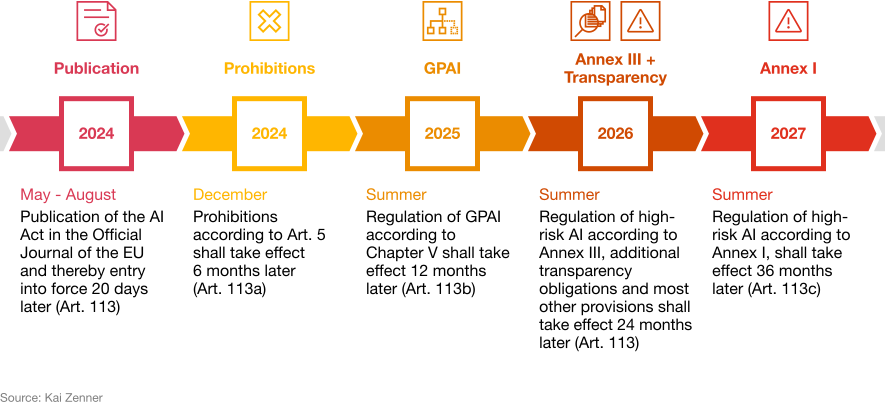
The EU AI Act became law on August 1, 2024, banning high-risk AI like biometric surveillance, while the U.S. dismantled ...
View Board
Tesla's Optimus Gen 3 humanoid robot now runs at 5.2 mph, autonomously navigates uneven terrain, and performs 3,000 task...
View Board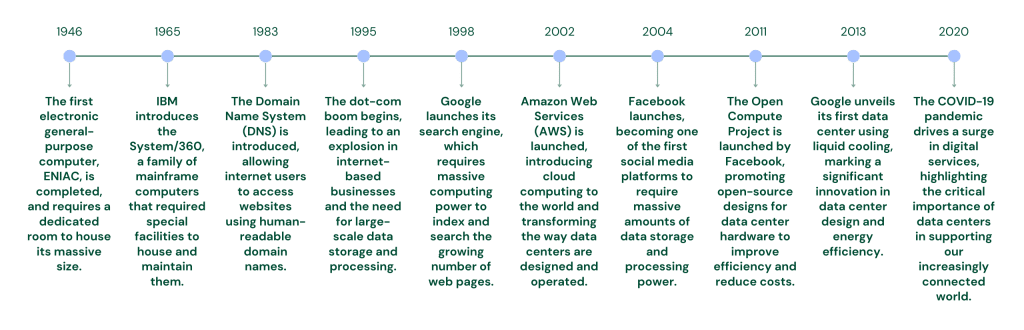
Data centers morph into AI factories as Microsoft's $3B Wisconsin campus signals a $3T infrastructure wave reshaping gri...
View Board
ul researchers unveil paper-thin OLED with 2,000 nits brightness, 30% less power use via quantum dot breakthrough, targe...
View Board
AI's explosive growth forces a reckoning with data center energy use, as new facilities demand more power than 100,000 h...
View Board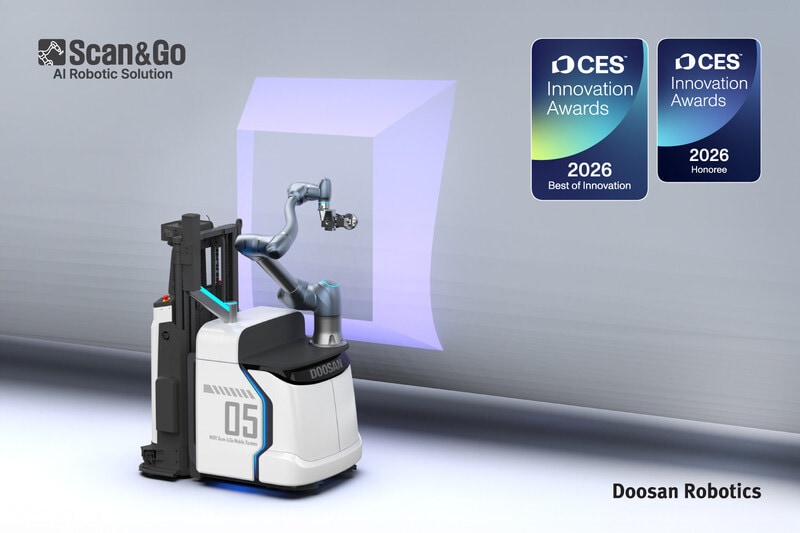
Hyundai's Atlas robot debuts at CES 2026, marking a shift from lab experiments to mass production, with 30,000 units ann...
View Board
Samsung and Apple clash in 2026 with wide foldable phones, turning screens into canvases and creases into cultural battl...
View Board
AI revolutionizes medical physics, crafting precise radiation plans in minutes, transforming diagnostics, and reshaping ...
View Board
MIT’s 2026 breakthroughs reveal a world reshaped by AI hearts, gene-edited embryos, and nuclear-powered data centers, wh...
View Board
Comments