



Explore Any Narratives
Discover and contribute to detailed historical accounts and cultural stories. Share your knowledge and engage with enthusiasts worldwide.
At a substation in Belgium, a transformer hums under a gray sky. Its physical state—temperature, load, vibration—streams into a parallel, digital universe. There, an artificial intelligence processes the data not just to monitor, but to predict. It forecasts a voltage spike 45 minutes from now, triggered by a passing cloud field throttling solar output and a coinciding surge from a nearby electric vehicle charging depot. The AI, governing a digital twin of the entire regional grid, automatically reroutes power and signals the charging stations to briefly throttle back. The spike never materializes. The grid holds. This isn't science fiction. It’s the operational reality emerging inside Europe’s power networks, and it represents a fundamental shift in how we manage the brittle, complex systems that keep our lights on and our cities running.
The convergence of AI and digital twins is forging a new toolkit for climate action. We are moving from static models and reactive responses to living, breathing simulations that can see around corners. A digital twin is more than a blueprint; it’s a virtual replica fed by a constant pulse of real-world data from sensors, smart meters, and satellites. Infuse it with machine learning algorithms capable of forecasting and optimization, and you have a system that doesn’t just mirror reality—it anticipates it. The imperative driving this fusion is the chaotic beauty of the renewable energy transition. Solar and wind are variable, electric vehicles are massive mobile batteries, and AI data centers are emerging as power-hungry city-states. Managing this volatility with 20th-century tools is a recipe for blackouts. The new paradigm is predictive, proactive, and born from a digital doppelgänger.
“The shift is from static digital replicas to intelligent, AI-driven systems that process dynamic data for proactive optimization,” notes a 2026 trends analysis from RTInsights. “By 2026, the digital twin is no longer a mere reflection. It is an active participant in system governance.”
Consider the problem of balance. A power grid must, at every second, match supply with demand. Too much or too little power threatens frequency stability and can trigger cascading failures. Integrating renewables makes this a high-wire act. Belgium’s transmission system operator, Elia, deployed an AI tool specifically to forecast these minute-by-minute imbalances. The results were stark. The AI slashed forecast errors by 41%. That number isn’t an abstract metric; it translates directly into fewer emergency actions, less wasted renewable energy, and a more stable grid frequency. It is a concrete example of AI moving from academic paper to grid control room, turning predictive insight into systemic resilience.
The applications sprawl far beyond high-voltage transmission lines. They reach into the urban fabric itself. In a German project slated for launch in 2026, digital twins and AI will manage a carbon-neutral heating and cooling system for 7,000 residents. The plan harnesses heat exchangers in wastewater systems—a typically overlooked energy source—and uses the twin to dynamically balance supply, storage, and demand across the district. The AI orchestrates a symphony of pumps, valves, and building management systems to maximize efficiency. This isn't just about comfort; it's about re-engineering the metabolic flow of a city. Early evidence suggests the market is noticing: sustainable buildings command a 21% premium in value over conventional structures, a signal that efficiency and intelligence are becoming hard economic assets.
Meanwhile, on a planetary scale, a different kind of twin is taking shape. The European Union’s Destination Earth (DestinE) initiative is building a Climate Digital Twin. Its second phase, running from 2024 to 2026, promises a radical leap in resolution. Where global climate models once offered blurry pictures with cells over 100 kilometers wide and data every six hours, DestinE aims for 5-10 kilometer resolution with hourly updates. This is the difference between predicting rain might fall somewhere in your county tomorrow and simulating how a thunderstorm cell will interact with the wind patterns over a specific wind farm this afternoon. The system will use AI for “what-if” scenario testing, allowing energy planners to ask precise questions about future climate impacts on infrastructure.
“The Climate DT will deliver kilometer-scale global climate projections hourly, with AI enhancements for uncertainty quantification,” states the European Centre for Medium-Range Weather Forecasts, which leads the DestinE climate work. “This is a step change in providing actionable, user-driven simulations for critical sectors.”
No discussion of AI and energy is complete without confronting the elephant in the server room: the astronomical power demand of AI data centers. A single large campus can consume as much electricity as a medium-sized city. This surge has been framed as a climate catastrophe in waiting. But a more nuanced, and perhaps more accurate, narrative is emerging. The data center boom is acting as a brutal, undeniable catalyst for the clean energy build-out. In the United States, renewables accounted for over 90% of all new utility-scale capacity added in 2024. Utilities, facing a tangible, immediate load, are fast-tracking gigawatts of solar, wind, and battery storage that might otherwise have lingered in development queues for years.
The relationship is becoming symbiotic. Data center operators, desperate for clean power to meet corporate sustainability pledges, are signing massive power purchase agreements that directly fund new renewable projects. They are also exploring how to become grid assets. Their backup generators could provide emergency power to the local network. Their waste heat—a colossal byproduct—could warm district heating systems, turning a liability into a public utility. The digital twin is the essential broker in this complex relationship, modeling energy flows, thermal outputs, and financial structures to find optimal configurations. The AI-energy tension is real, but it is also forging a new, more integrated, and potentially more resilient infrastructure paradigm.
Water networks, another climate-vulnerable system, are seeing similar gains. AI-driven digital twins of municipal water infrastructure can detect leaks and predict pipe failures, reducing non-revenue water loss by as much as 25%. In an era of increasing droughts and extreme rainfall, this conservation is a direct climate adaptation play. It demonstrates that the technology’s value lies not in a single application, but in its ability to bring predictive intelligence to any complex, sensor-laden system. The city itself becomes a collection of interconnected twins—power, water, heat, traffic—all optimized by AI for efficiency and resilience.
The narrative for 2026 is crystallizing around this concept of “sustainable digital infrastructure.” It’s a theme identified by investment firms like Calvert, signaling a market shift that will reward companies that build and operate efficient, grid-integrated digital assets. The era of treating IT and utilities as separate kingdoms is ending. They are now facets of a single, interdependent system. The digital twin, animated by AI, is the lens through which we can finally see that system whole, and the tool we will use to steer it through the turbulence of the coming century. This is just the opening chapter. The deeper analysis lies in the algorithms themselves, the hardware tests proving their worth, and the critical debates about control, access, and the very nature of the intelligence we are deploying.
The glossy brochures and conference presentations mean nothing until the code meets the conductor. The real transformation is happening not in corporate boardrooms, but in university labs and on factory floors where engineers are stress-testing algorithms against the raw physics of electricity. Researchers at institutions like the University of Texas at Austin have moved beyond simulation. They are running decentralized AI algorithms on real hardware—actual inverters, transformers, and battery banks—in microgrids subjected to the violent fluctuations of simulated EV fast-charging and sudden solar drop-off. The goal is voltage stability. The old method involves centralized control with a single point of failure. The new paradigm, proven in these gritty labs, distributes intelligence to the edge, allowing each component in the network to communicate and self-correct in milliseconds. This isn't just an IT upgrade; it's a philosophical shift in grid architecture, from a command-and-control hierarchy to a resilient, peer-to-peer network.
"The shift is from static digital replicas to intelligent, AI-driven systems that process dynamic data for proactive optimization," notes a 2026 trends analysis from RTInsights. "By 2026, the digital twin is no longer a mere reflection. It is an active participant in system governance."
This participation is yielding staggering results in industrial settings, where energy intensity meets balance sheets. Consider the factory. The World Economic Forum's Global Lighthouse Network, which recognizes leading sites in advanced manufacturing, documented radical transformations driven by this convergence. At HiTHIUM Energy Storage Technology in Chongqing, China, the integration of an AI-driven energy system with a micro-grid powered by photovoltaics and storage slashed the company's carbon footprint by 56%. The project didn't stop at the factory gate; it pulled 13 suppliers along, helping them achieve carbon neutrality certification. The numbers are granular and devastating to old methods: annual Scope 1 & 2 emissions fell 16%, while Scope 3 emissions per unit of output dropped 45%.
Another Lighthouse site, Fii VN Bac Ninh, deployed over twenty digital solutions, including AI for green design and a generative AI platform for carbon accounting. The outcome was a 22% reduction in Scope 3 emissions and a 34% cut in Scope 1 and 2 emissions. Then there’s Unilever’s Gandhidham facility in India. By weaving AI, digital twins, and Industrial IoT across its supply chain, the plant achieved a 90% reduction in Scope 1 and 2 emissions through a near-total transition to renewable energy. Water use fell 17%. Waste plunged 48%. These are not marginal gains. They are step-change improvements that rewrite the economics of manufacturing, proving that deep decarbonization can coincide with operational excellence. The digital twin here acts as a perpetual experiment, a sandbox where every process variable can be tweaked without risking a single rupee of real capital or a minute of production downtime.
All this intelligence consumes a ferocious amount of energy. This is the central, throbbing contradiction of the moment. We are using vast computational resources to save other resources, and the scale is tipping toward the absurd. According to analysis from investment firm Calvert, energy supply has now overtaken semiconductor availability as the primary bottleneck for large-scale data center deployment. The projections are vertigo-inducing. Data center power consumption is on track to grow at a 23% compound annual growth rate in Asia and the U.S. by 2030, and 16% in Europe. Morgan Stanley Research forecasts $3 trillion in global spending across the data center and AI value chain by the end of the decade.
"This creates what analysts describe as an 'AI energy gap,'" reports Calvert in its 2026 Research Themes, "where utilities and energy producers face the challenge of meeting enormous new electricity demand affordably and reliably without reversing carbon emission reductions."
The infrastructure scramble is creating bizarre market distortions. Natural gas turbines, a go-to for rapid capacity, are reportedly booked solid through the entire decade. In the near term, solar remains the cheapest and fastest build option, but it comes with its own baggage: the absolute necessity of massive, equally expensive storage and grid interconnection queues that can stretch for years. The "energy autonomy" plan is no longer a green ideal; it's a survival strategy for tech giants. Data center designers, as noted by infrastructure provider Vertiv, are shifting from hybrid AC/DC systems to higher voltage DC architectures to handle insane power densities. The mantra is becoming "Bring Your Own Power (and Cooling)." We are witnessing the birth of a new industrial archetype: the data center as a self-contained utility, a digital city-state that generates, stores, and manages its own power because the external grid simply cannot keep up.
Is this sustainable? Or are we building a digital Ouroboros, a snake eating its own tail? The critical perspective, often drowned out by boosterism, asks whether the energy intensity of the AI models themselves is justified. Training a single large language model can emit more carbon than five gasoline-powered cars over their entire lifetimes. We must ask if the optimization gains in grid efficiency truly offset the direct emissions from the silicon brains calculating those optimizations. The answer is not clear, and the industry has been shamefully opaque about its full-scope carbon accounting. The digital twin that manages a city’s energy flow is itself a prodigious consumer of energy, hosted in a facility that may or may not be powered by the renewables it champions.
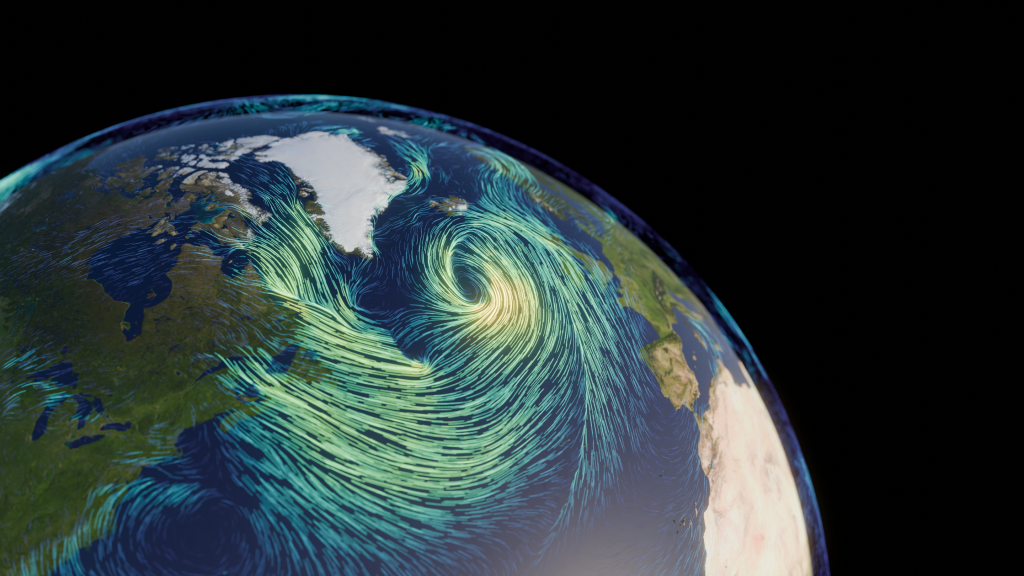
While one branch of this technology focuses on kilowatts and factory floors, another is modeling the entire planet. The European Centre for Medium-Range Weather Forecasts (ECMWF) is leading the Destination Earth (DestinE) Climate Digital Twin, and its ambitions reveal how AI is changing the very texture of climate science. Traditional global climate models are monumental achievements, but they are also slow, coarse, and distant. They operate at resolutions greater than 100 kilometers, spitting out data snapshots every six hours. They are paintings made with a broad brush. The Climate DT aims for a photograph with a microscopic lens: a 5-10 kilometer global grid, with projections updated hourly.
"The Climate DT will deliver kilometer-scale global climate projections hourly, with AI enhancements for uncertainty quantification," states ECMWF. "This is a step change in providing actionable, user-driven simulations for critical sectors."
This is not just more data; it's a different kind of knowledge. A wind farm developer can no longer rely on historical wind patterns that climate change is rendering obsolete. Instead, they can query the Climate DT: "Show me the likely wind shear and icing conditions at these exact coordinates in January 2035 under a high-emissions scenario." The AI within the twin will run a targeted, high-resolution simulation, quantifying the uncertainties. It can model how a changing jet stream might affect storm tracks over a specific mountain range, or how warming sea surface temperatures could alter precipitation patterns that feed a region's hydropower dams. The tool moves climate impact assessment from a decadal, academic exercise to a routine, operational planning resource. The risk, of course, is that we mistake this stunning precision for omniscience. A model is still a model. Its outputs are only as good as its inputs and assumptions, no matter how beautifully rendered.
The private sector is leveraging similar precision for infrastructure resilience. Companies like Neara use digital twins of entire electricity networks—every pole, wire, and transformer—to simulate climate impacts. They can flood a virtual California with a 100-year storm surge to see which substations drown first. They can subject a digital Australian bushland to hurricane-force winds and ember attacks to predict which power lines will fail and spark the next catastrophic fire. This allows utilities to harden the right assets, not just the obvious ones, and to do it proactively. The digital twin becomes a climate war game, where we battle nature’s worst-case scenarios with bits and bytes before they manifest in steel and flame.
But who controls this crystal ball? The most potent criticism of this entire enterprise centers on access and equity. The computational resources required to build and run these planetary-scale twins are concentrated in the hands of wealthy nations, corporations, and research consortia. The Global South, which faces the most severe climate impacts, often lacks the sovereign capability to run its own high-fidelity simulations. It risks becoming a consumer of climate forecasts generated elsewhere, potentially tailored to the economic or political interests of the data providers. The technology threatens to create a new kind of climate divide: not just in vulnerability, but in the very capacity to foresee and prepare for that vulnerability. The democratization of these tools is not a secondary concern; it is a prerequisite for global justice. If a digital twin helps a German district achieve carbon-neutral heating, that is a victory. If the same class of technology is locked behind a paywall, preventing Bangladesh from modeling its next catastrophic flood, that is a profound failure.
"AI supports low-carbon transitions through smart grid management, energy efficiency improvements, and real-time emissions monitoring," acknowledges a United Nations Development Programme report from December 2025. But it implicitly warns of the divide, noting the need for governance that ensures benefits are widely shared.
The narrative that AI and digital twins are unalloyed saviors is simplistic and dangerous. They are tools of immense power and commensurate risk. They can optimize a grid to near-perfect efficiency while consuming enough electricity to black out a small country. They can democratize climate foresight for a village or entrench the data oligarchy of a tech giant. The hardware tests prove the engineering works. The industrial case studies prove the economics work. The unresolved question, the one that will define the next decade, is whether we can build the governance, the transparency, and the ethical frameworks to make sure this intelligence ultimately serves humanity, and not just its own insatiable appetite for more power, more data, more control.
The true significance of climate-focused AI and digital twins transcends megawatts and carbon metrics. This convergence signals the emergence of a new economic and operational layer—a shadow economy of information and prediction that runs parallel to our physical infrastructure. We are no longer just managing grids and cities; we are managing their high-fidelity digital proxies. This shifts authority. The civil engineer with decades of field experience must now collaborate with, or defer to, the data scientist whose algorithm has modeled ten thousand failure scenarios the engineer could never physically test. The utility dispatcher no longer simply reacts to alarms; they interpret the forecasts of an AI that has ingested petabytes of weather data, market signals, and social media sentiment to predict human behavior. The technology is reorganizing professional hierarchies and rewriting the playbook for infrastructure governance.
This digital layer also creates a new form of capital. The most valuable asset for a city or utility in 2026 and beyond may not be its power plants, but its curated, high-resolution digital twin and the proprietary AI models trained on its unique operational data. This has profound competitive and security implications. A municipal utility with a sophisticated grid twin can optimize itself into a low-cost, high-reliability provider, outmaneuvering larger, less agile rivals. Conversely, this creates a massive attack surface. A hacker compromising a digital twin doesn't just steal data; they gain a perfect simulation of the physical system to plan a devastating, targeted kinetic attack. The digital twin is both a shield and a supremely detailed map for adversaries.
"The digitalisation of power grids through smart meters, sensors, and digital twins provides massive amounts of data that position AI uniquely to support the energy transition," states a report from the Innovation News Network. "But this data richness demands a security paradigm that is as dynamic and intelligent as the optimization it enables."
Culturally, we are witnessing the final erosion of the boundary between the natural and the engineered world. Climate models, once the domain of academic research, are being baked into the operational software of wind farms and desalination plants. We are attempting to tame the chaos of a changing climate not with bigger seawalls alone, but with predictive algorithms that try to outthink the weather. This represents a profound, almost hubristic, leap in human ambition. We are building a nervous system for the built environment, giving our cities and grids a form of reflex and foresight. The legacy will be measured in avoided blackouts, conserved billions of gallons of water, and perhaps, a more resilient relationship with a volatile planet.
For all its promise, this technological frontier is riddled with glaring flaws and uncomfortable contradictions. The most immediate is the energy paradox. The computational burden of training and running the most sophisticated AI models for these twins is staggering. A recent study from the University of Massachusetts Amherst estimated that training a single large AI model can emit over 626,000 pounds of carbon dioxide equivalent. We are using fossil-fuel-derived electricity to build tools meant to eliminate fossil fuels, often in regions where the grid remains carbon-intensive. The industry's response—that efficiency gains will eventually offset this footprint—feels like a promissory note written on melting ice.
Then there is the data divide. The vision of a perfectly simulated, optimized city is predicated on ubiquitous, high-quality sensor data. This exists in wealthy districts of Copenhagen or Singapore. It does not exist in informal settlements in Lagos or Karachi. The risk is that digital twin technology becomes another engine of inequality, optimizing services for the already well-served while leaving "data-poor" communities further behind. Their infrastructure remains opaque to the algorithms, and thus a lower priority for investment and resilience upgrades. The twin, for all its objectivity, will inherit and amplify the biases of its data inputs.
The black box problem looms large. When an AI managing a grid makes a decision—to throttle back a neighborhood's EV chargers, to switch a hospital to backup generation—can humans understand why? As these systems grow more complex, their decision-making processes become inscrutable. We are asked to trust the output without comprehending the logic. This is a dangerous precedent for critical infrastructure. It creates accountability voids. When a predictive failure leads to a blackout, who is responsible? The utility executive? The software vendor? The AI itself? Regulatory frameworks are scrambling to catch up, but they are years behind the code.
Finally, there is a philosophical critique: the map is not the territory. A digital twin, no matter how detailed, is a reduction. It simplifies the glorious, chaotic complexity of a living city—its social dynamics, its political pressures, its cultural rhythms—into quantifiable data streams. The danger is that planners and engineers begin to privilege the clean, simulated world over the messy, human one. Decisions are made because "the model says so," overriding local knowledge and democratic input. The twin becomes a technocratic tyrant, optimizing for efficiency metrics while eroding civic agency.
The path forward is not to abandon these tools, but to deploy them with clear-eyed humility. Their development must be coupled with aggressive investment in green computing and renewable energy to power the data centers that host them. Open-source frameworks and data-sharing agreements must be prioritized to prevent a proprietary lock on civic intelligence. "Explainable AI" must be a non-negotiable design requirement for any system touching critical infrastructure. And the digital twin must always be subordinate to democratic governance, a tool for informed debate, not a substitute for it.
Looking ahead, the calendar is marked with real tests. The German wastewater heat recovery project for 7,000 residents launches in 2026, a concrete benchmark for urban-scale thermal twins. The second phase of Europe's Destination Earth Climate Digital Twin runs from 2024 to 2026, promising to deliver its first operational, kilometer-scale global climate simulations. In the United States, the boom in AI data centers will force a reckoning; by late 2026, we will know if the surge in renewable construction has kept pace with demand or if natural gas has become the default fallback, betraying climate goals.
The transformer in Belgium hums on, its physical state forever streaming into the digital ether. Its twin, now an active participant in its fate, calculates probabilities in a realm of pure information. We have given our infrastructure a shadow, a ghost in the machine tasked with saving us from ourselves. The ghost is powerful, capable of feats of prediction and optimization we scarcely imagined a decade ago. But it is also hungry, opaque, and prone to the biases of its creators. The final simulation we must run is not of our grids, but of our own wisdom. Can we build a future where this digital intelligence illuminates our path without casting the things that truly matter into darkness? The model is still running. The output remains uncertain.
Your personal space to curate, organize, and share knowledge with the world.
Discover and contribute to detailed historical accounts and cultural stories. Share your knowledge and engage with enthusiasts worldwide.
Connect with others who share your interests. Create and participate in themed boards about any topic you have in mind.
Contribute your knowledge and insights. Create engaging content and participate in meaningful discussions across multiple languages.
Already have an account? Sign in here

MIT researchers transform ordinary concrete into structural supercapacitors, storing 10x more energy in foundations, tur...
View Board
The open AI accelerator exchange in 2025 breaks NVIDIA's CUDA dominance, enabling seamless model deployment across diver...
View Board
AI's explosive growth forces a reckoning with data center energy use, as new facilities demand more power than 100,000 h...
View Board
Microsoft's Copilot+ PC debuts a new computing era with dedicated NPUs delivering 40+ TOPS, enabling instant, private AI...
View Board
MIT’s 2026 breakthroughs reveal a world reshaped by AI hearts, gene-edited embryos, and nuclear-powered data centers, wh...
View Board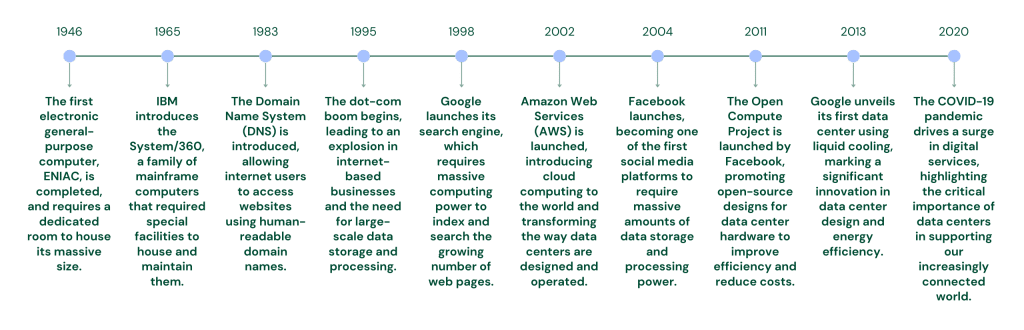
Data centers morph into AI factories as Microsoft's $3B Wisconsin campus signals a $3T infrastructure wave reshaping gri...
View Board
Autonomous AI agents quietly reshape work in 2026, slashing claim processing times by 38% overnight, shifting roles from...
View Board
The Architects of 2026: The Human Faces Behind Five Tech Revolutions On the morning of February 3, 2026, in a sprawling...
View Board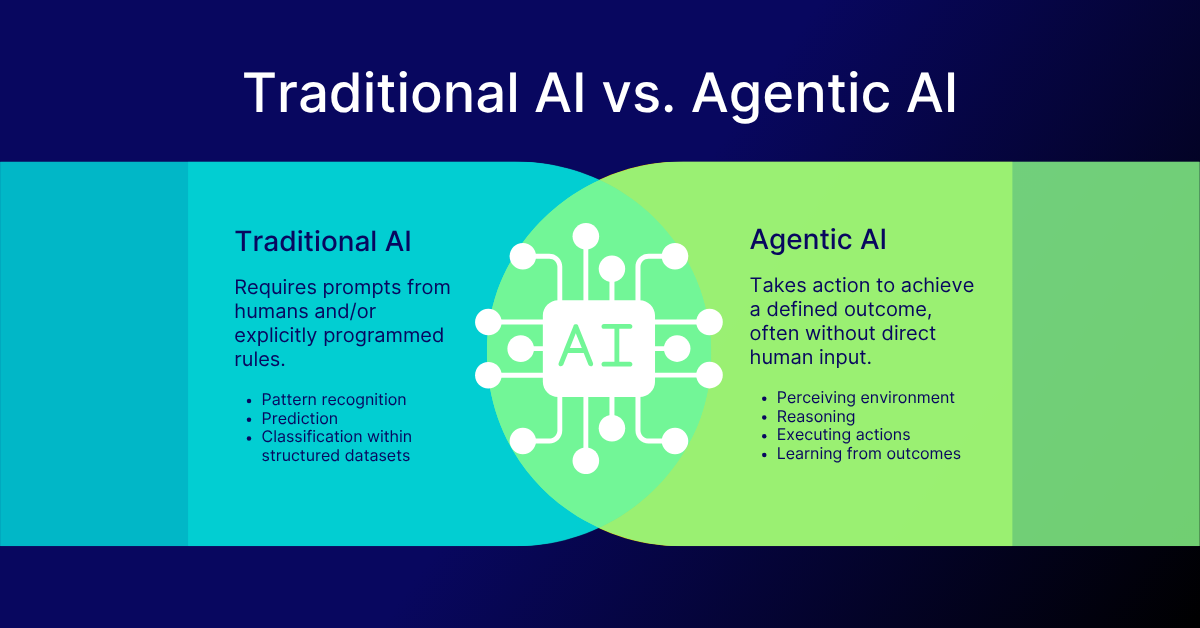
AI-driven networks redefine telecom in 2026, shifting from automation to autonomy with agentic AI predicting failures, o...
View Board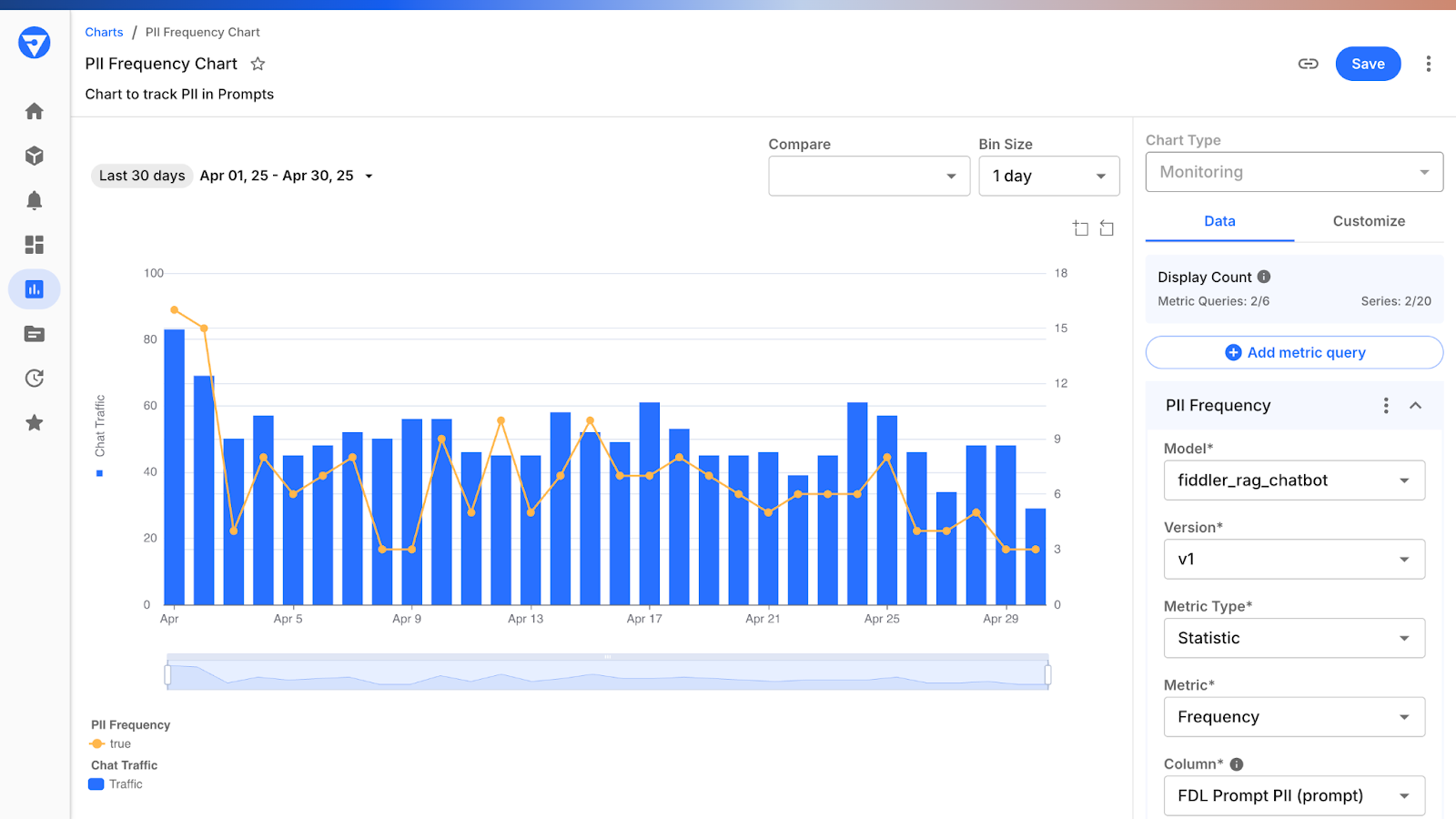
Depthfirst's $40M Series A fuels AI-native defense against autonomous AI threats, reshaping enterprise security with con...
View Board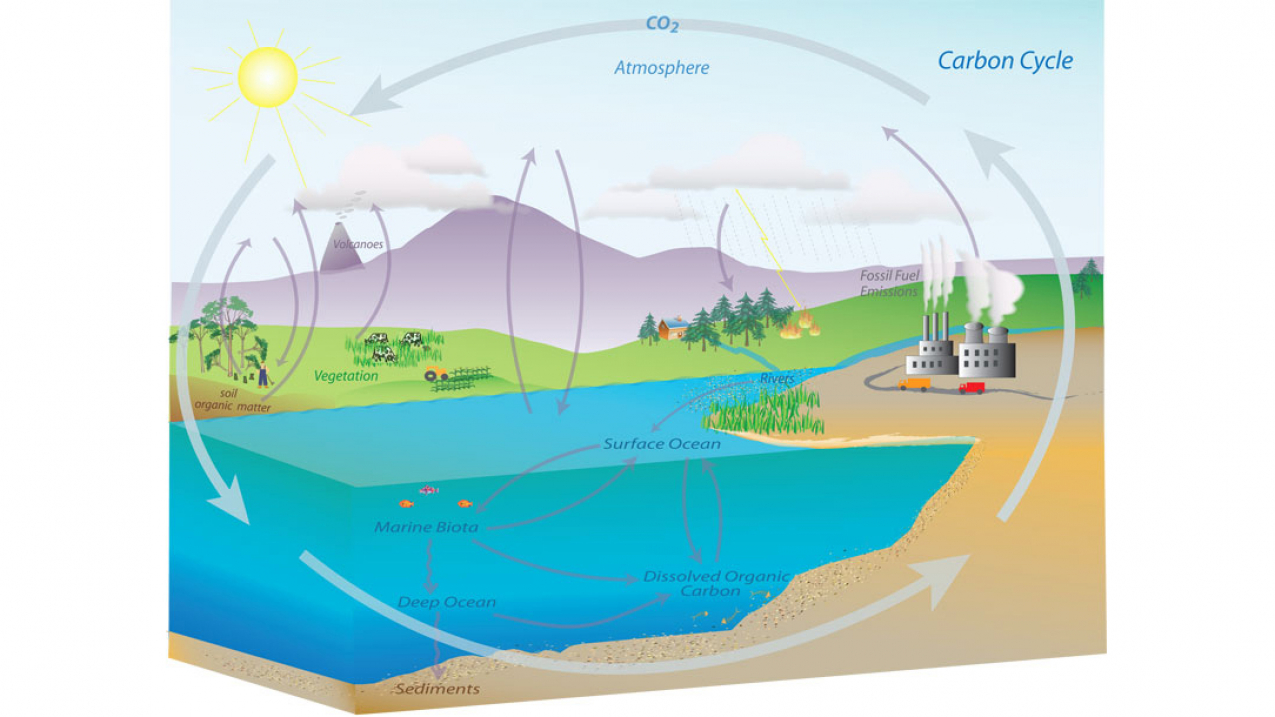
Microbial oceanographer Dr. Anya Sharma's 2025 discovery of deep-sea bacteria actively fixing carbon challenges decades ...
View Board
AI steps out of screens into factories, powering agents that move cups, pick parts and reshape jobs amid surging robot i...
View Board
Tesla's Optimus Gen 3 humanoid robot now runs at 5.2 mph, autonomously navigates uneven terrain, and performs 3,000 task...
View Board
Hyundai's Atlas robot debuts at CES 2026, marking a shift from lab experiments to mass production, with 30,000 units ann...
View Board
Linh Tran’s radical chip design slashes AI power use by 67%, challenging NVIDIA’s dominance as data centers face a therm...
View Board
The Prison Paradox: How Carceral Architecture Shaped Modern Co-Living The corridor is a dead thing. A long, sterile tube...
View Board
The EU AI Act became law on August 1, 2024, banning high-risk AI like biometric surveillance, while the U.S. dismantled ...
View Board
CES 2025 spotlighted AI's physical leap—robots, not jackets—revealing a stark divide between raw compute power and weara...
View Board
CES 2026 unveiled stair-climbing vacuums, mmWave presence sensors, and local AI robots that act, sense, and reshape smar...
View Board
Agenti AI: L'Ascesa dei Sistemi Autonomi e Integrati Il sistema di controllo del magazzino ha inviato un avviso alle 3:4...
View Board
Comments