
Explore Any Narratives
Discover and contribute to detailed historical accounts and cultural stories. Share your knowledge and engage with enthusiasts worldwide.
The announcement happened on a Saturday. In the controlled chaos of a Las Vegas convention hall, amid the flashing lights and booming sound systems of CES 2026, a Chinese tech company named XREAL made a quiet but consequential declaration. On January 4, 2026, they introduced the XREAL 1S, a pair of augmented reality glasses priced at $449. The figure itself was a statement. It was fifty dollars less than the launch price of its predecessor, the XREAL One, released just over a year prior. More importantly, it was a direct challenge to the prevailing notion that capable, high-fidelity AR must remain a luxury for developers and early adopters. XREAL wasn't just launching a product. They were attempting to democratize a window into another layer of reality.
The XREAL 1S arrives at a peculiar moment in extended reality. The metaverse hype of the early 2020s has cooled, replaced by a pragmatic, almost utilitarian drive for technology that solves immediate problems or enhances existing habits. Bulky virtual reality headsets, for all their immersive power, remain largely confined to dedicated gaming and training simulations. The dream of lightweight, all-day augmented reality—digital information seamlessly overlaid on the physical world—has been perpetually "five years away" for nearly a decade. XREAL's strategy, crystallized in the 1S, bypasses the grand, standalone ambitions of its competitors. Instead, it tethers itself to the computers we already own and love: our smartphones, laptops, and gaming handhelds. This is not a walled garden. It's a portable, personal cinema and a multi-monitor workstation that fits in a glasses case.
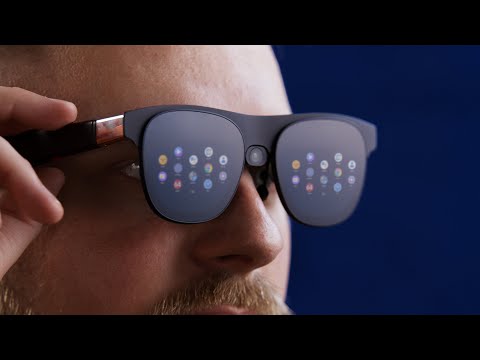
Physically, the 1S is an exercise in minimalist engineering. At 82 grams, it is lighter than many sunglasses. The frame uses spring hinges and adjustable temples, while medical-grade silicone nose pads aim to distribute weight. The goal is all-day wearability, a non-negotiable prerequisite for any device claiming to be a productivity tool. The core visual upgrades are precise and meaningful. The resolution bumps up to 1200p per eye from the previous 1080p. The field of view expands slightly to 52 degrees. Brightness hits 700 nits, a crucial spec for maintaining image clarity in well-lit rooms or outdoors. The lenses themselves are the party trick: they feature automatic electrochromic dimming. Walk into a bright space, and they tint electronically to maintain contrast; move to a dim environment, and they clear. It’s a feature borrowed from high-end aviation and automotive glass, now repurposed to blend digital content with the real world.
"The 1S represents our philosophy of augmentation, not replacement," said a company spokesperson during the CES unveiling. "We are enhancing the screens you already use, not asking you to abandon your ecosystem. The price point isn't a discount—it's the new baseline for what accessible, premium AR should cost."
Driving this experience is the X1 spatial computing chip, a custom piece of silicon that XREAL first introduced in its higher-end One Pro model. This is where the "smart" in smart glasses truly resides. The X1 chip enables native 3 degrees of freedom (3DoF) tracking. This means the glasses understand when you tilt your head up, down, or side-to-side, allowing virtual screens to remain locked in space—a feature called Anchor mode. The alternative, Follow mode, lets a screen float in front of your gaze as you move. The motion-to-photon latency is rated at an ultra-low 3 milliseconds. That number is critical. High latency causes a disorienting lag between your head movement and the image's response, a primary culprit for the nausea associated with early VR and AR. XREAL claims the X1 virtually eliminates it.
Connectivity is brutally simple: a single USB-C cable. Plug it into a compatible smartphone, a recent Mac, a Windows laptop, a Nintendo Switch, or a Steam Deck. Instantly, the device's screen is projected onto the glasses' micro-OLED displays, which can simulate a screen up to 500 inches in size. For productivity, this means you can anchor multiple browser windows or documents around your physical desk. For entertainment, it transforms a cramped airplane seat into a private IMAX theater. An over-the-air update promised for early 2026 will add true stereoscopic 3D support, unlocking a new dimension for compatible games and media.
"Latency is the ghost in the machine for AR," notes Dr. Elena Vance, a human-computer interaction researcher at Stanford University who has tested previous XREAL models. "When you get it down to single-digit milliseconds, the cognitive barrier falls away. The digital overlay starts to feel less like a projection and more like an object in your environment. That's the threshold for all-day use."
Launched in tandem with the 1S was another device, one that addresses the most persistent friction point in mobile AR: power and ports. The XREAL Neo is a polished, rectangular puck. It is, at its heart, a 10,000mAh power bank. But it also contains a full DisplayPort hub. Its purpose is elegantly simple. Take a device like the Nintendo Switch or a smartphone that only has one USB-C port. Plugging in the AR glasses consumes that port for video and power. The Neo sits in between. You connect your device to the Neo, and the Neo to the glasses. The device charges, the glasses get their video signal, and you are left with a free USB-C port on the Neo for other accessories. It even supports Qi wireless charging for your phone on its surface.
Priced between $99 and $119, the Neo is more than an accessory; it's an admission. It acknowledges that the ideal of a single, elegant cable is often thwarted by the reality of our gadgets' limitations. It is a bridge to a wireless future, sold separately. For XREAL, it completes the "work and play" narrative. The 1S handles the visual experience; the Neo handles the logistical headache, enabling truly cable-free sessions with game consoles and extending battery life for marathon mobile work sessions.
What’s conspicuously absent from this launch is any mention of complex app stores, gesture controls, or outward-facing cameras for full environmental mapping on the 1S itself. That functionality is offloaded to an optional accessory called the XREAL Eye camera, which enables 6DoF tracking. XREAL’s current bet is stark: most users don’t want to learn a new operating system strapped to their face. They want a better, bigger, more private screen that can also pin a YouTube tutorial next to their actual broken sink. The 1S, available immediately on Amazon, Best Buy, and XREAL's own site, is that bet made physical. It is a refinement, not a revolution. But in the slow, iterative march of wearable computing, refinement at a lower price can be the most revolutionary act of all.
The XREAL 1S, unveiled on January 4, 2026, at CES, is more than just a minor spec bump. It represents a subtle but significant pivot in XREAL's strategy, demonstrating a keen understanding of what consumers actually want from augmented reality *today*, not five years from now. At the heart of this shift is the X1 spatial computing chip, a piece of silicon that has matured considerably since its debut in the higher-end XREAL One Pro. In the 1S, the X1 is no longer just a processor; it is the enabler of true spatial computing within a tethered framework, providing capabilities that blur the lines between a simple external monitor and a genuine AR experience.
The chip’s prowess is evident in its handling of the display. The 1S boasts Sony Micro-OLED panels, now pushing a crisper 1200p resolution per eye, up from the 1080p of the original XREAL One. This isn't just about pixels; it's about the perceived clarity and depth. The 52-degree field of view, while only a marginal increase from the 50 degrees of its predecessor, feels more expansive thanks to the X1’s optimized rendering. A consistent 120Hz refresh rate ensures smooth motion, critical for both intense gaming sessions and fluid multi-window productivity. And with up to 700 nits perceived brightness, an improvement over the 600 nits of prior models, the virtual screen maintains its vibrancy even in challenging lighting conditions.
"The Xreal 1S takes the throne as the best AR glasses you can buy right now — packing a stellar display quality into a sleek design with ease of use courtesy of that X1 chip, and 3D content conversion that works so much better than I expected." — Tom's Guide Reviewer, published around January 2026.
Perhaps the most compelling feature enabled by the X1 chip is its real-time 2D-to-3D conversion. Historically, such conversions have been gimmicky at best, often introducing artifacts or motion sickness. However, XREAL’s implementation, powered by the X1’s Optic Engine 4.0, is surprisingly effective. It measures the depth of a scene and intelligently adds that additional dimension, transforming standard videos and games into a more immersive experience. This isn't groundbreaking in the sense of creating holographic projections, but it leverages existing content in a way that feels genuinely enhanced. This capability, combined with the 108% sRGB color gamut (up from approximately 100% in earlier models), presents a visual fidelity that belies the device's price point.
XREAL's decision to focus on a "personal cinema" wearable, eschewing full AR passthrough for basic virtual screens, is a calculated gamble. In an industry obsessed with pushing the boundaries of spatial computing, XREAL has doubled down on what works for a mass market *today a better screen. This strategy sidesteps the immense technical challenges and computational overhead of full mixed reality, which requires sophisticated cameras, depth sensors, and powerful, often bulky, onboard processors. By offloading much of the heavy lifting to the connected device—be it a smartphone or a laptop—XREAL keeps the glasses themselves light at 85 grams and, crucially, affordable.
The "less is more" approach extends to its core functionality. The 1S offers native 3DoF tracking, a feature that anchors virtual screens in space as you move your head. This isn't the full 6DoF tracking found in high-end VR headsets, which tracks your body's movement through a physical space. Yet, for watching movies or working with multiple virtual monitors, 3DoF is entirely sufficient. The X1 chip’s low-latency performance, boasting near-zero lag, makes this anchored experience feel remarkably stable, a critical factor in preventing motion sickness. The company has even implemented software-based IPD (interpupillary distance) adjustment, a clever workaround that shifts the perceived screen size to accommodate different eye distances without complex mechanical parts. It’s an example of software ingenuity compensating for hardware simplicity.
"The new model, dubbed the 1S... gets marginally better specs and $50 knocked from the asking price." — Engadget, in their CES 2026 coverage.
This deliberate restraint allows XREAL to deliver a focused, high-quality experience without the sticker shock associated with more ambitious AR devices. While other companies chase the elusive promise of fully interactive holograms, XREAL has honed in on the practical application of simply making your existing digital world bigger and more private. Is it true augmented reality in the purest sense? Perhaps not. But it is an incredibly effective wearable spatial display, and for most users, that's precisely what they need.
The simultaneous launch of the XREAL Neo hub, priced at $39.99 on XREAL's site, proves that sometimes the unsung accessory can be as impactful as the main event. This 10,000mAh power bank, which also functions as a DisplayPort hub, is especially significant for portable gaming. The original XREAL One often struggled with direct connections to consoles like the Nintendo Switch, requiring clunky adapters or external power solutions. The Neo hub solves this elegantly, allowing a single cable from the Switch to power both the glasses and the console itself, while simultaneously charging the Switch's internal battery.
This streamlined setup transforms the Nintendo Switch—and by extension, the rumored Nintendo Switch 2—into an even more compelling portable gaming machine. Imagine playing a graphically intensive game on a virtual 171-inch screen, expandable up to 500 inches, while sitting on a train or an airplane. The Neo makes this a seamless reality. No more fumbling with multiple cables or worrying about battery drain. The hub simply works, and its low price point makes it an almost mandatory companion purchase for any console gamer considering the 1S.
"This is the best way to game on Nintendo Switch 2." — Tom's Guide Reviewer, January 2026.
The synergy between the 1S and the Neo hub underscores XREAL's pragmatic approach. They are not just selling a pair of glasses; they are selling an ecosystem designed to integrate effortlessly into existing digital lives. This is a crucial distinction in a market often plagued by proprietary systems and compatibility headaches. The ability to connect via USB-C to virtually any modern device—from Macs to Steam Decks—means the 1S isn't a niche gadget; it's a versatile display solution for the digital nomad, the avid gamer, and the privacy-conscious commuter. As YouTube's TechChap observed in January 2026, the 1S makes it "easier for watch movies, do work," and the Neo hub significantly enhances that ease of use, especially for gaming.
While some might still consider the $449 price tag "high" for a pair of glasses, as noted by The Gadget Flow, the value proposition is undeniable when considering its capabilities. It's an affordable entry point into spatial computing, providing a premium experience that was once reserved for far more expensive and less comfortable devices. The XREAL 1S, available for purchase within weeks of its CES debut, complete with free shipping and a 1-year warranty, isn't just making AR more accessible; it's redefining what accessible AR can achieve for both work and play.
The true significance of the XREAL 1S launch in January 2026 isn't found in its spec sheet or its price. It is found in the mundane reality of its immediate availability on Amazon and Best Buy. This isn't a developer kit shipped to a select few; it's a consumer product you can buy with one-click checkout and have delivered tomorrow. This move from the fringes of tech expos to mainstream retail shelves represents a pivotal, if understated, shift. XREAL is not trying to sell the future. It is selling a better version of the present—a present where your screen isn't confined to a rectangle in your hand or on your desk. The cultural impact here is subtle but profound: it begins to normalize the act of wearing your digital interface. The "glasshole" stigma of Google Glass fades, replaced by the practical appeal of private, expansive screen real estate. This is the slow, unglamorous work of mainstream adoption, and the 1S is a critical tool in that effort.
Industry-wide, the 1S and its X1 chip signal a new phase in the wearable computing arms race. While Apple’s Vision Pro and Meta’s Quest Pro chase the high-end dream of a fully realized spatial computer, XREAL has carved out a massive middle ground. They have identified that the "killer app" for AR, for now, isn't virtual social interaction or complex 3D modeling. It is a better, more flexible monitor. By focusing relentlessly on this single, powerful use case and optimizing for it—through low-latency tracking, high-brightness displays, and universal connectivity—XREAL has built a product that solves an immediate problem for millions. This pragmatic approach forces the entire industry to reconsider its priorities. Do consumers want a $3,500 all-in-one headset, or a $449 accessory that dramatically enhances the devices they already own and love?
"Color accuracy has gone from 100 to 108% of the sRGB gamut... [with] the ability to upscale anything from 2D to 3D." — TechChap, YouTube review, January 2026.
The legacy of the 1S will likely be its role as a bridge. It bridges the gap between the promise of sci-fi AR and the practical needs of 2026. It bridges the gap between high cost and broad accessibility. Most importantly, it serves as a bridge for users themselves, acclimating them to the sensation and utility of overlaying digital information onto their physical space without the cognitive overload of a full operating system. This normalization is the essential precursor to any more ambitious future for augmented reality. You cannot jump straight to holographic telepresence if people aren't first comfortable wearing glasses to watch Netflix.
For all its savvy positioning, the XREAL 1S is not a perfect device, and its compromises are worth serious scrutiny. The most significant limitation is inherent in its design philosophy: it is fundamentally a tethered display. You are always attached to another device by a cable. This tether, while enabling the low price and weight, is a physical leash that contradicts the implied freedom of wearable computing. It can snag, it limits movement, and it means your primary device’s battery is still being drained. The optional Neo hub mitigates but does not eliminate this core constraint.
The field of view, while improved, remains restrictive at 52 degrees. It creates the sensation of looking through a large, high-definition window rather than being surrounded by an environment. For productivity and media consumption, this is acceptable. For any application demanding true environmental awareness or large-scale spatial annotations, it feels limiting. The software-based IPD adjustment is a clever hack, but it cannot match the optical precision of mechanical adjustment for users with extreme pupillary distances, potentially causing eye strain for some.
Then there is the question of what "augmented" really means here. The 1S offers brilliant virtual screens, but it does not understand your environment. It cannot place a virtual YouTube tutorial directly onto your actual oven door. That level of contextual integration requires the very cameras and sensors XREAL has deliberately omitted to keep costs down. This positions the 1S more accurately as an exceptional personal viewer rather than a true augmented reality device. Is it fair to criticize a device for not being something it never intended to be? Perhaps not. But the branding and marketing inevitably raise expectations that the hardware is designed to sidestep.
Finally, the comfort equation, despite the lightweight 85-gram frame, is not universally solved. Extended wear, especially for users with wider heads or specific nose bridge shapes, can still lead to pressure points. The electrochromic dimming is excellent, but it cannot make the glasses completely transparent; a faint digital haze over the real world is always present when content is displayed. These are the granular, human-factor details that separate a good tech demo from a perfect daily tool.
The market is also watching XREAL’s next move closely. The company has teased "Project Aura," its foray into full Android-based XR glasses, expected sometime after the 1S launch. The success of the 1S creates a curious tension. Will Project Aura be a bold step forward into standalone computing, or will it be a more complex, expensive device that loses the elegant simplicity that makes the 1S so appealing? The 1S has set a high bar for value and focus. Straying too far from that formula risks alienating the very audience XREAL has just successfully courted.
Looking forward, the concrete events are already on the calendar. The over-the-air update to enable native 3D playback is slated for the first half of 2026. The industry’s eyes are on the holiday season of 2026, where the combined offering of the 1S and the Neo hub will face its first major test against next-generation gaming portables and possibly new entries from competitors like Ray-Ban and Meta. The price point of $449 establishes a new benchmark that others will be forced to match or justify exceeding.
On a train platform in 2027, a commuter slides on a pair of sleek glasses not unlike the XREAL 1S. They glance up at the departure board, then look down to the immersive film playing privately in their periphery. The cord runs discreetly to their pocket. It’s not the seamless, wireless future we were promised. But it works. It’s affordable. And for the first time, it feels normal. That normalization, that quiet integration of a digital layer into the everyday, may be the most revolutionary step of all. The question is no longer if we will wear our computers, but how soon we will forget we’re wearing them at all.
In conclusion, the XREAL 1S launch at CES 2026 strategically targets the mainstream market with its accessible $449 price point. This move signals a pivotal step toward making augmented reality a practical tool for everyday productivity and entertainment. The question now is how quickly this affordable vision will reshape our digital interactions.


Your personal space to curate, organize, and share knowledge with the world.
Discover and contribute to detailed historical accounts and cultural stories. Share your knowledge and engage with enthusiasts worldwide.
Connect with others who share your interests. Create and participate in themed boards about any topic you have in mind.
Contribute your knowledge and insights. Create engaging content and participate in meaningful discussions across multiple languages.
Already have an account? Sign in here

Smart glasses from Google and Apple are set to revolutionize how we interact with the world, but their impact on our liv...
View Board
CES 2025 spotlighted AI's physical leap—robots, not jackets—revealing a stark divide between raw compute power and weara...
View Board
AI steps out of screens into factories, powering agents that move cups, pick parts and reshape jobs amid surging robot i...
View Board
ul researchers unveil paper-thin OLED with 2,000 nits brightness, 30% less power use via quantum dot breakthrough, targe...
View Board
Samsung and Apple clash in 2026 with wide foldable phones, turning screens into canvases and creases into cultural battl...
View Board
Tarsier Studios kehrt mit "REANIMAL" am 13. Februar 2026 zurück – ein kooperatives Horror-Adventure, das psychologische ...
View Board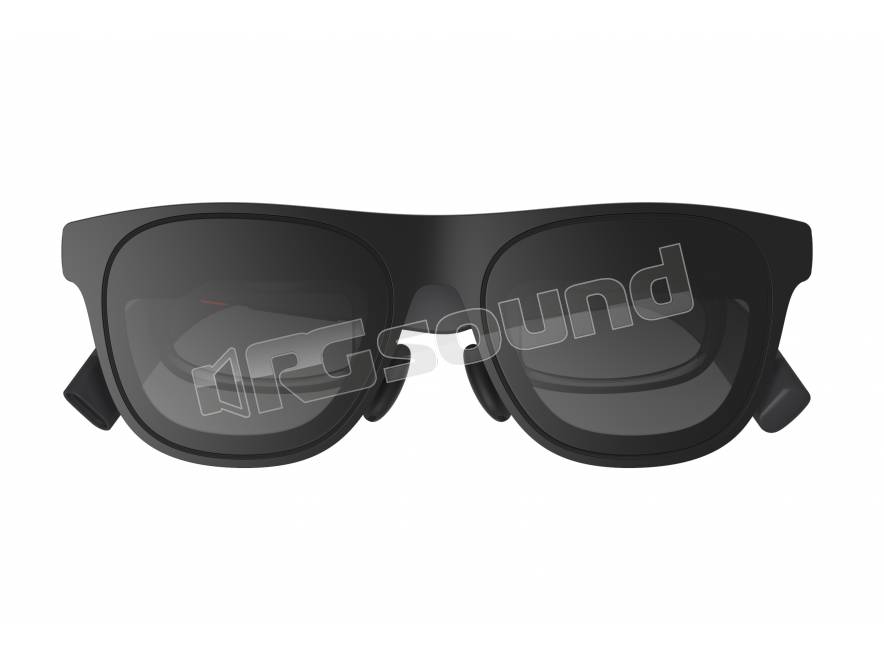
Gli occhiali intelligenti hanno superato la fase pionieristica: oggi pesano meno di una mela, traducono in tempo reale e...
View Board
The EU AI Act became law on August 1, 2024, banning high-risk AI like biometric surveillance, while the U.S. dismantled ...
View Board
Оптоволоконные кабели превращаются в гигантские сейсмические сенсоры, улавливая землетрясения и ритм городов с поразител...
View Board
La nostalgia domina las ventas navideñas de 2025: remasters como Oblivion y Mass Effect superan a los lanzamientos nuevo...
View Board
On a watchtower, a hunter flicks a Wirebug, soaring over fire, redefining vertical hunt on Switch; 14 million sales in t...
View Board
Animal Crossing: New Horizons – Nintendo Switch 2 Edition redefine o refúgio digital com 4K, controles de mouse e multip...
View Board
Michał Kiciński adquiere GOG por 90,7 millones de zlotys, recuperando su independencia y garantizando juegos de CD Proje...
View Board
El remake de Silent Hill 2 enfrenta al clásico de 2001 con tecnología moderna, preservando su esencia psicológica pero c...
View Board
Let It Die: Inferno redefine la brutalidad roguelite con un descenso al Hell Gate, donde muerte permanente y PvPvE se fu...
View Board
Mario Tennis Fever traz 38 personagens, 30 raquetes especiais, modo bebê na ilha dos monstros e lançamento exclusivo 12 ...
View Board
Deux philosophies s'affrontent en 2026 : la GameMT E3 Vigor à 45$ mise sur l'authenticité des cartouches GBA, tandis qu'...
View Board
La classification PEGI révèle discrètement l'arrivée de Pikmin 3 Deluxe sur Switch 2, confirmant la stratégie nostalgiqu...
View Board
Mario Tennis Fever: Jak Mario wygrywa premierę Switcha 2 12 września 2025 roku. W studiu Nintendo Direct, w trakcie cele...
View Board
Plongez dans l'univers mélancolique de MIO: Memories in Orbit, un Metroidvania cross-gen où exploration et émotion se mê...
View Board
Comments