

Explore Any Narratives
Discover and contribute to detailed historical accounts and cultural stories. Share your knowledge and engage with enthusiasts worldwide.
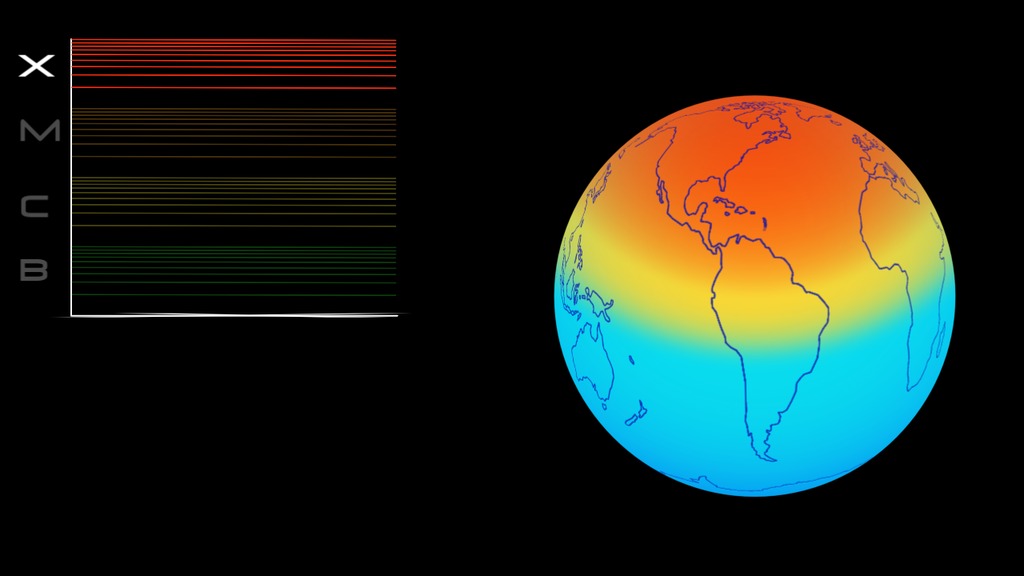
At 18:09 Universal Time on January 18, 2026, a filament of magnetic energy, twisted and stressed for days within sunspot region 3664, snapped. The subsequent detonation, an X1.9-class solar flare, released energy equivalent to a billion hydrogen bombs in a matter of minutes. Eight minutes later, the first pulse of X-rays and extreme ultraviolet light slammed into Earth's dayside, silently ionizing the upper atmosphere. The real event, however, was just beginning its journey. This was the opening salvo of a complex space weather event that would, within 25 hours, bathe our planet in a severe radiation storm and wrench our protective magnetic field into a state of severe disturbance. It was a visceral reminder that we inhabit the atmosphere of a star, not just a planet.
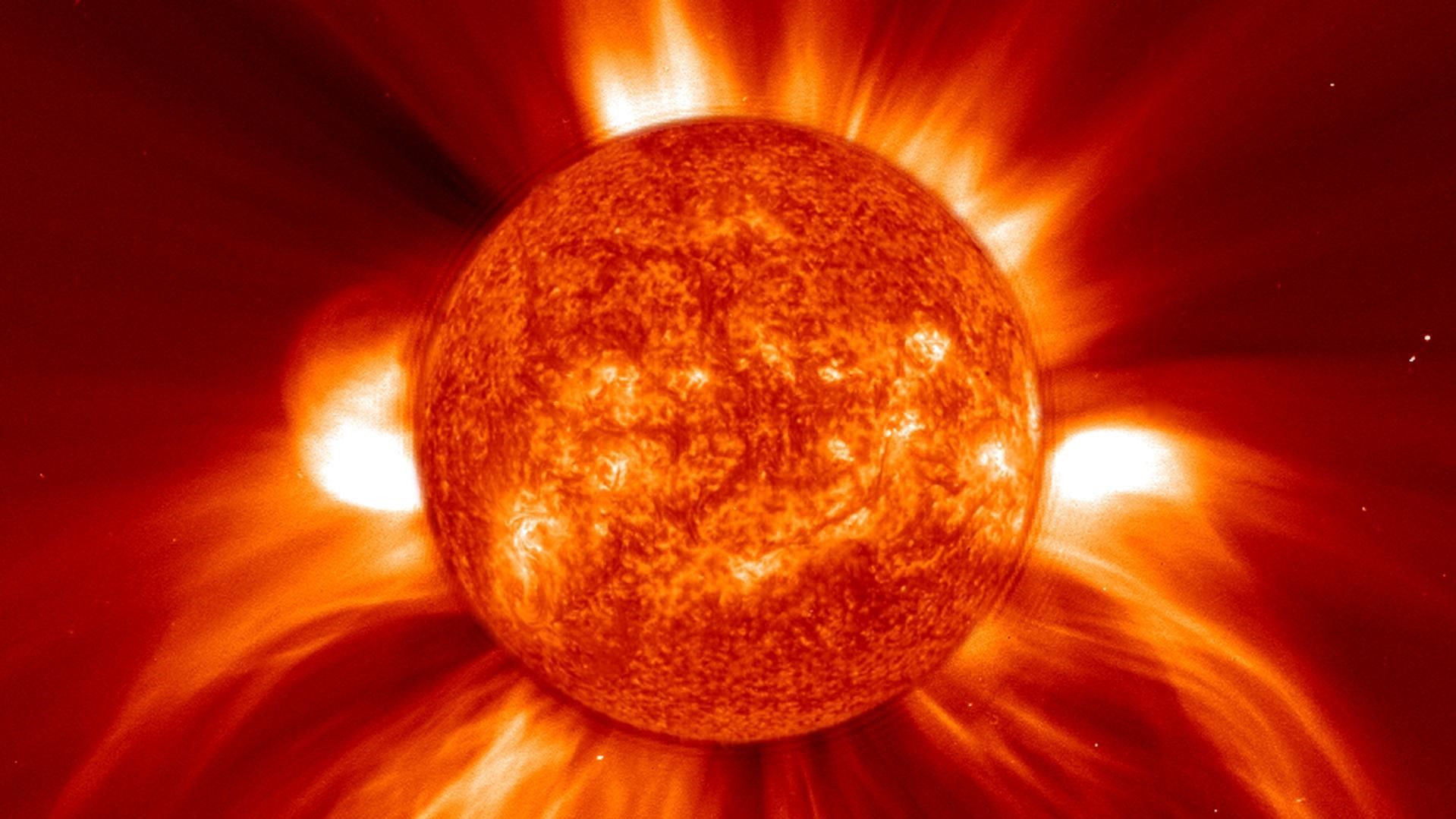
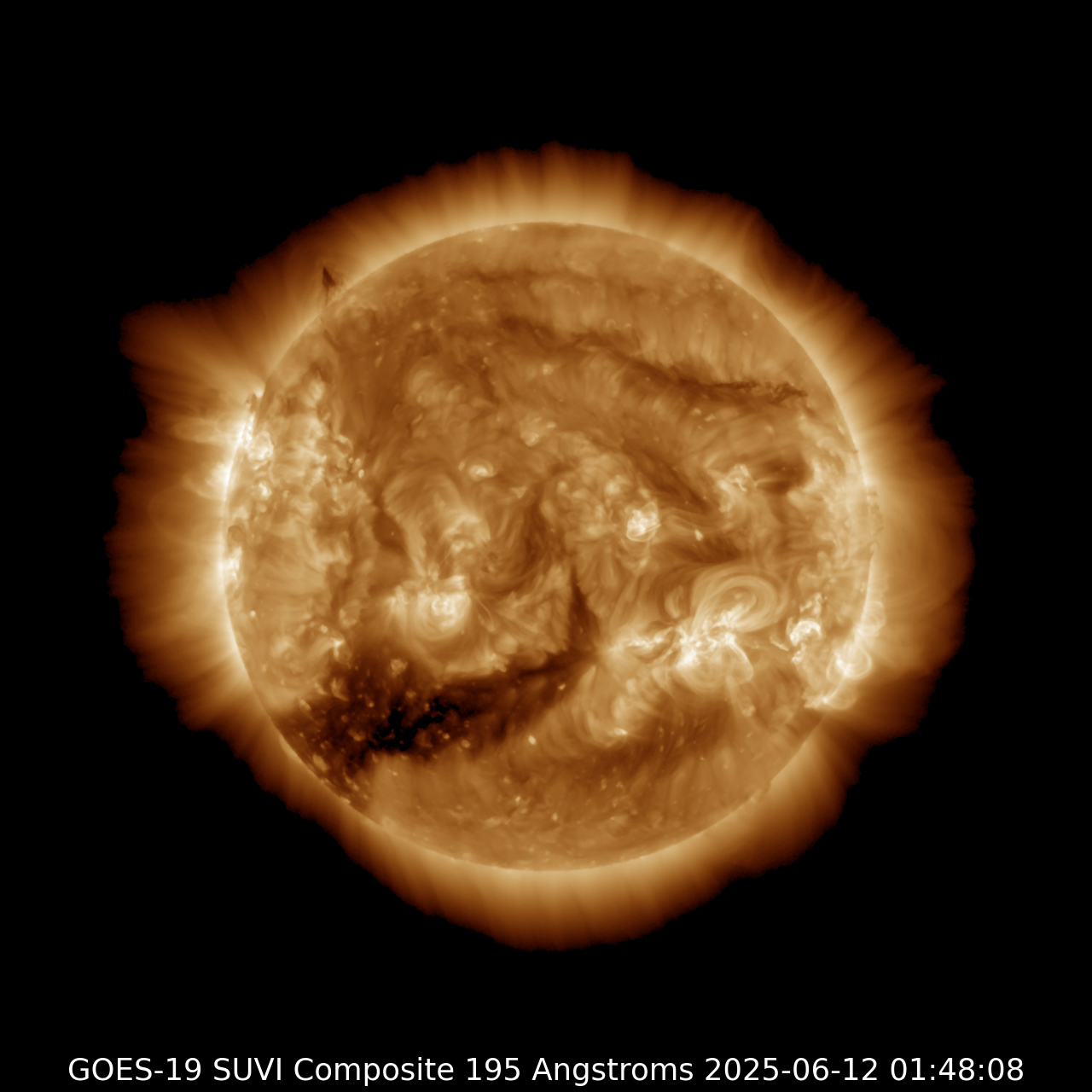
NASA's Solar Dynamics Observatory captured the flare's genesis in high-definition, a blinding white flash erupting from the Sun's limb. Concurrently, the joint ESA/NASA Solar and Heliospheric Observatory (SOHO) watched as a vast cloud of magnetized plasma, a coronal mass ejection (CME), was hurled into space. Initial speed estimates placed it at a formidable 1,400 kilometers per second. Later analysis would revise that upward to approximately 1,700 km/s. This was not a diffuse cloud; it was a focused cannon shot, and Earth was in its crosshairs.
The timeline that followed was compressed, aggressive. High-energy protons and electrons, accelerated by the shock front of the CME, began arriving at Earth just hours after the light flash. By 19:15 UTC on January 19, these particles constituted a Severe (S4) solar radiation storm, one of the most intense events recorded by the GOES satellite network since its inception. The particles didn't just pepper near-Earth space; they transformed it. The solar wind, the constant stream of particles from the Sun, saw its velocity quadruple. Space became a hostile medium.
According to Dr. Miho Janvier, a solar physicist at France's Institut d'Astrophysique Spatiale, "The rapidity of the particle arrival was clinically significant. We observed high-energy protons at Earth in under a day. For a storm of this magnitude, the typical transit is five to seven days. This indicated exceptionally efficient particle acceleration mechanisms at play, likely tied to the complex magnetic structure of the CME itself."
Then, at 19:38 UTC on January 19, the bulk of the CME's magnetic field connected with Earth's magnetosphere. The impact was not a gentle push. It was a direct, sustained compression. The planetary K-index, a measure of magnetic disturbance, spiked. The NOAA Space Weather Prediction Center in Boulder, Colorado, issued its alert: a G4 (Severe) geomagnetic storm was in progress. G4 is the second-highest level on their scale. The last line of the bulletin was stark: "Potential for widespread voltage control problems and protective system issues. Increased risk of satellite surface charging and orientation problems."
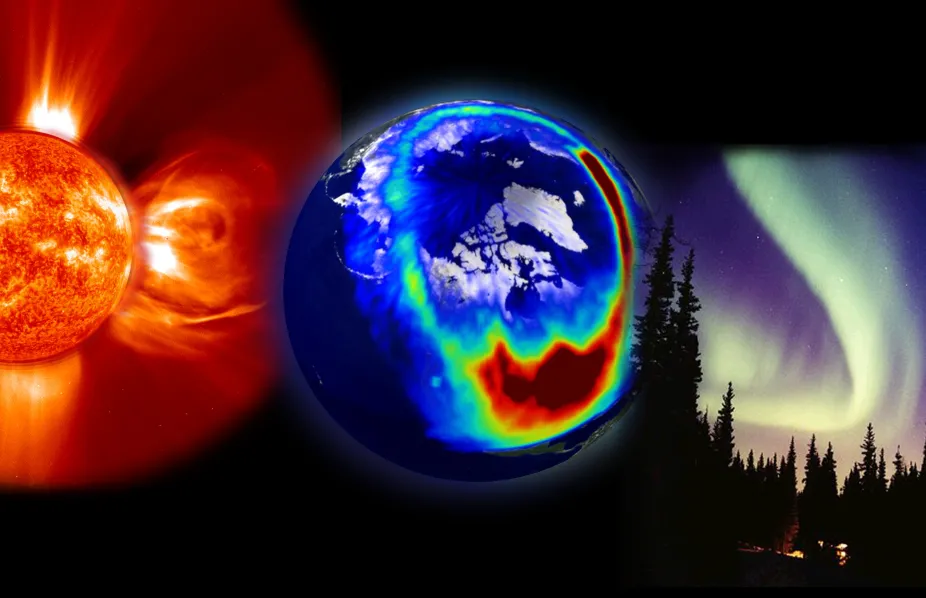
The most immediate and widespread human experience of the event was not radio static or a gnawing concern for infrastructure. It was light. As the radiation storm and geomagnetic storm conspired, they drove a furious influx of particles deep into Earth's atmosphere, primarily along the polar regions but extending far further. The result was a global auroral display, visible from latitudes that rarely, if ever, see such phenomena. Skies from Sicily to South Texas erupted in crimson and emerald curtains.
This was not a typical aurora. The radiation storm component played a critical, and unusual, role. High-energy protons colliding with atmospheric nitrogen generated a distinct, deep red glow at higher altitudes. The geomagnetic storm, with its violently fluctuating magnetic field (noted by scientists as extreme Bz component swings), then pulled the auroral oval equatorward, creating a spectacle unseen since the great storms of the early 2000s. The celestial show was a direct, visible manifestation of a complex and potentially damaging physical process.
"We must divorce the beauty from the hazard," stated Dr. Tzu-Wei Fang of NOAA's Space Weather Prediction Center in a technical briefing. "The global aurora is a diagnostic tool for us, a visible sign of intense energy deposition into our upper atmosphere. That same energy input heats and expands the thermosphere, increasing drag on satellites. The particles painting the sky are also penetrating spacecraft electronics and posing a serious risk to astronauts on the International Space Station. It is a stunning warning sign."
This event, now cataloged and analyzed, invites a perspective beyond the raw data of proton flux and solar wind speed. It forces a confrontation with a fundamental contingency of our existence. Human civilization, with its delicate electronic networks and orbital infrastructure, has evolved during a period of remarkable stellar calm. The Sun has been in a generational lull. Solar Cycle 25, even past its predicted peak in 2024, reminds us this is the exception, not the rule.
We are protected by a series of fragile contingencies: a magnetic field generated by a churning iron core, an atmosphere of just the right density, and a distance from our star that is precisely, almost unnervingly, balanced. The events of January 18-19, 2026, illustrated how tenuous that balance can be. A CME aimed a few degrees differently might have missed entirely. A magnetic orientation slightly more negative could have mitigated the storm. Or, conversely, it could have been worse.
The radiation storm presented a distinct philosophical problem. Its particles move at a significant fraction of the speed of light. They cannot be predicted with long lead times; we can only observe their source and then brace for impact. This creates a unique form of vulnerability. Our technological society is built on predictability, on the steady rhythms of orbital mechanics and network latency. A solar proton event disrupts that at a fundamental level, injecting a bolt of cosmic randomness into our most precise systems. It is a reminder that not all threats announce themselves with years of planning. Some simply arrive.
I watched the aurora that night from a location far south of its usual haunt. The crimson hues were unsettling, not just beautiful. They felt like a bleed-through from a more primal, violent universe into our ordered one. It was the Sun, reminding us of its presence not as a gentle source of light, but as a dynamic, physical body capable of reaching out and touching us. The data streams from SOHO and SDO were the real story, but the light in the sky was the story we could all feel. That disconnect—between the silent, digital alerts of space weather physicists and the awe-inspiring glow witnessed by billions—defines our modern relationship with these events. We are simultaneously more connected to the cosmos through our technology and more vulnerable to its whims because of it.
The narrative of the January 2026 event is a tale of two timelines. The first is the human timeline of alerts, observations, and response. The second is the physical timeline of propagating energy and distorting magnetic fields. Their intersection defines modern vulnerability. The initial effect, arriving with the light-speed flash of the X1.9 flare at 18:09 UTC on January 18, was an R3 (Strong) radio blackout. High-frequency (HF) radio communications across sunlit hemispheres—the Americas and the Pacific—experienced sudden degradation or complete absorption. Pilots, maritime operators, and amateur radio enthusiasts found static where there should be signal. Africa, plunged into nighttime, was spared this particular insult. This was the opening gambit, a demonstration of how our atmosphere, our very medium for certain kinds of communication, can be turned against us by a star 93 million miles away.
"The Sun emitted a strong solar flare, peaking at 1:09 p.m. EST on Jan. 18, 2026. This flare is classified as an X1.9 flare. X-class denotes the most intense flares." — NASA, Solar Cycle 25 Blog, January 20, 2026
Then came the particle bombardment and the magnetic siege. The CME's arrival time became a subject of minor but telling controversy in forecasting circles. Initial models suggested a January 20 impact. The South African National Space Agency (SANSA) and the Department of Science and Innovation warned of elevated activity expected around then. The universe, however, operates on its own schedule. The shock wave, dense with plasma, arrived early.
"The shock wave from the CME struck at 2:38 p.m. EST (1938 GMT) on Jan. 19. G4 storm levels were reached shortly after impact." — NOAA/Space.com, Updated Report, January 19, 2026
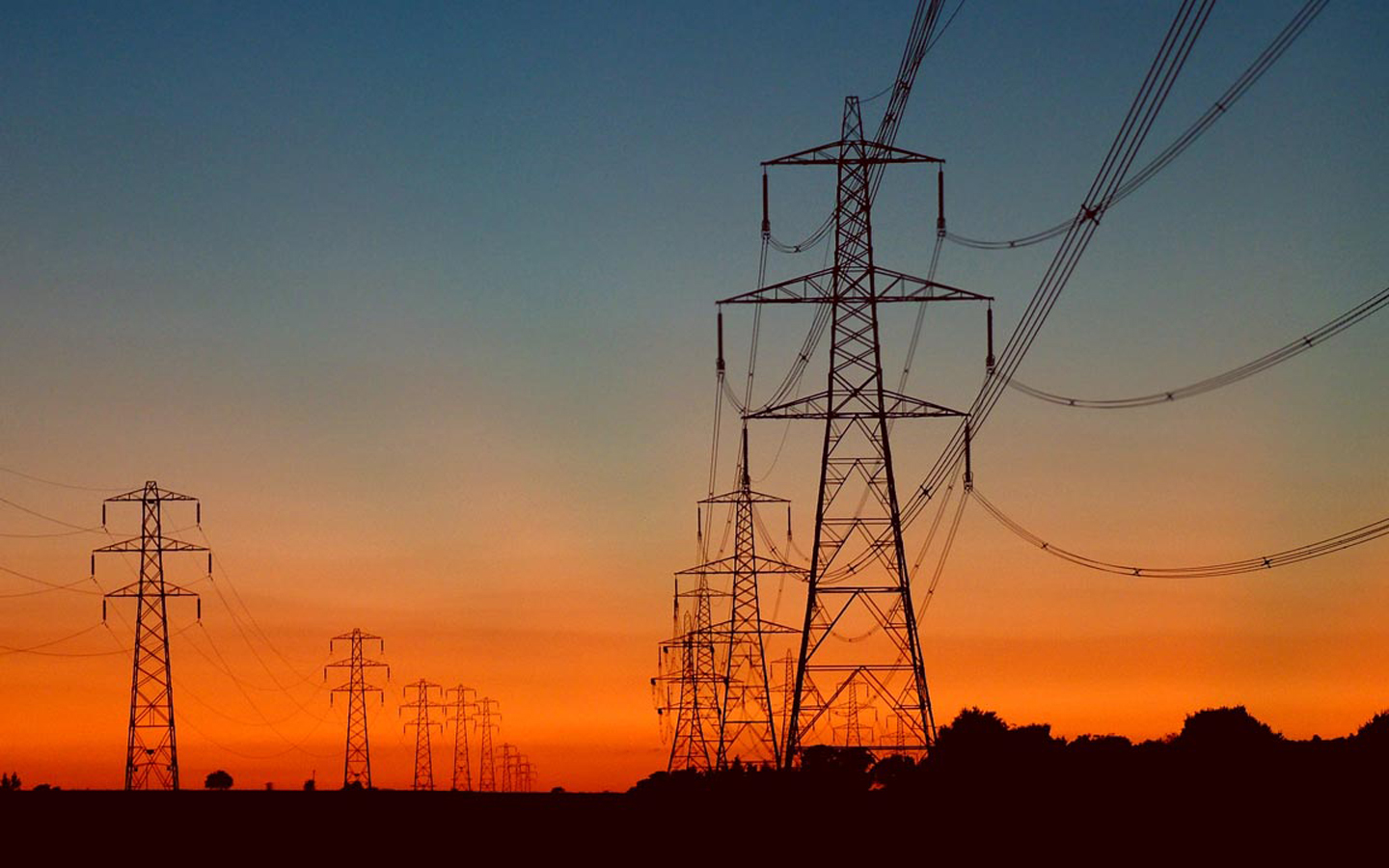
This 25-hour transit time was aggressive. The resulting G4/Severe geomagnetic storm did what such storms do: it turned Earth's magnetosphere into a chaotic electrical generator. Induced currents began flowing in long conductors—specifically, continental-scale power grids. Grid operators from North America to Europe entered a state of high vigilance, watching for unstable voltage swings and transformer stress. Satellites, from critical GPS constellations to commercial imaging birds, began experiencing surface charging. Differential voltages across their components risked sudden, catastrophic discharges—the space-based equivalent of a lightning strike frying a circuit board. Astronauts on the International Space Station retreated to more heavily shielded segments of the orbital outpost, their exposure to elevated radiation levels carefully monitored.
The dominant media narrative, crystallized in the days following, was one of relief. Infrastructure, by and large, held. The spectacular global aurora became the story, a celestial consolation prize for a potential catastrophe that never materialized. This framing is seductive but dangerously myopic.
"For the most part, we got off easy, with little infrastructure disruption. The biggest impact was actually a lovely impact: the northern lights." — Time.com, Post-Event Analysis, January 2026
That assessment from Time.com is factually correct but philosophically complacent. It confuses outcome with preparedness. The event was a G4 storm. The scale goes to G5. The 1859 Carrington Event is estimated to have been a G5+. The 2003 Halloween storms, which this event was frequently compared to, included flares exceeding X17 in strength. Our X1.9 was a severe warning shot, not a maximum effort. The power grids held because the storm's magnetic orientation, while disruptive, lacked the sustained, deeply negative Bz component that most efficiently pumps energy into the system. We experienced the building shaking, but the foundation didn't crack. This time.
Consider the radio blackouts. They were a temporary nuisance for most, but they reveal a permanent fragility. Our society has layered complex, high-frequency dependent systems atop a physical layer that is periodically and predictably rendered unusable. Aviation, emergency response, and global shipping have backup plans, but those plans represent degraded capacity. The storm highlighted a simple truth: we have built a skyscraper of communication on a foundation of ionized sand.
The discrepancy in predicted versus actual CME arrival time—a matter of hours—is not a failure of science. It is the essence of the scientific challenge. Forecasting space weather is fundamentally different from forecasting terrestrial weather. We have a single, distant observation point for the initial eruption. We must then model the propagation of a complex, magnetized plasma cloud through the turbulent solar wind, whose conditions we sample only sporadically. It is like predicting the precise path and force of a hurricane after seeing only the first wisp of cloud formation, with vast stretches of unmonitored ocean in between.
The tools are impressive. The Solar Dynamics Observatory provides breathtaking imagery. The SOHO satellite's coronagraphs allow us to see CMEs blossoming from the Sun's corona. But these are snapshots, not a continuous fluid dynamics simulation of the entire heliosphere. The full-halo CME observed on January 18 was clearly Earth-directed, but its speed and the exact configuration of its embedded magnetic field required estimation. The models spat out a range. Reality picked one. The fact that operational centers like NOAA's SWPC and SANSA can provide lead times measured in hours, not minutes, is a monumental achievement of applied astrophysics. It is also, from the perspective of a grid operator needing to decide whether to enact costly stability protocols, an agonizing uncertainty.
"Potential for power grid and satellite disruption, but systems held; risks to spacecraft/astronauts noted by NASA." — Friends of NASA, Technical Summary, January 2026
This sentence from a technical summary encapsulates the tightrope walk. The potential was real and acknowledged. The outcome was benign. This dissonance creates a political and economic problem. How do you justify significant investment in hardening infrastructure—installing grid-blocking capacitors, designing more radiation-resistant satellites, developing more robust protocols—against a threat that, in living memory, has only ever shown its potential, not its full fury? The argument becomes actuarial, pitted against more immediate and demonstrably damaging threats like cyberattacks or terrestrial extreme weather. The solar storm becomes the quintessential "high-impact, low-probability" risk, a category the human brain and modern governance structures are notoriously ill-equipped to handle rationally.
Is our improved resilience, as noted in some reports, a product of deliberate hardening or simply continued good fortune? The evidence points more toward the latter. Since the last great storm in 2003, our societal dependence on vulnerable space-based and electrical infrastructure has exploded, not contracted. We have added more targets, not stronger armor. The Starlink constellation alone comprises thousands of satellites in low-Earth orbit, all exposed. Our power grids, while better monitored, remain vast, interconnected, and inherently susceptible to geomagnetically induced currents. The January 2026 event was a live-fire drill where the enemy used blanks. Treating it as proof of concept for our defenses is a catastrophic error in judgment.
The aurora, that beautiful side effect, serves as the ultimate distraction. It personalizes the event, making it about wonder instead of vulnerability. People in Alabama and Mississippi looked up in awe, not contemplating the silent, invisible battle raging in the magnetosphere above them that was stressing the very systems that deliver their power and information. The aesthetic experience overrides the thermodynamic one. We are a species that responds to visible threats. A hurricane has a visible eye, a wildfire has visible flames. A geomagnetic storm’s primary manifestations are a dancing light in the sky and a number on a space physicist’s dashboard. One inspires poetry; the other should inspire action. So far, we have largely chosen the poetry.
The true legacy of the January 2026 solar storm will not be found in the GOES satellite data archives. It will be written in the policy memos, infrastructure budgets, and risk assessments of the coming decade. This event was a clarifying shock, a high-fidelity simulation of a Carrington-level catastrophe that stopped just short of the final, devastating act. It demonstrated the entire chain of failure from the Sun's corona to Earth's surface, yet allowed us to reset the switches before the lights went out for good. That is its profound, and troubling, significance. We witnessed a full-system test and passed, but only because the test's parameters were set to "severe" and not "extreme." The difference between those two settings is the difference between a manageable emergency and a decade-long global blackout.
Culturally, the event may have permanently altered humanity's relationship with the Sun. For centuries, the Sun has been a symbol of constancy, a life-giver. The auroral displays of January 19-20, 2026, reframed it, for billions of people, as a dynamic and potentially capricious actor. This is a necessary cognitive shift. We no longer live in a pre-technological age where a solar storm meant telegraph operators getting shocked and spectacular skies. We live inside the machine that is vulnerable. The global, smartphone-documented aurora created a shared, visceral experience of space weather, making an abstract astrophysical concept undeniably real. This public awareness is a new form of capital, one that scientists and emergency planners can leverage—if they are shrewd enough to do so before the memory fades.
"The current storm is an X1.9. When the gale from the sun reached the Earth at 2:20 p.m. ET on Jan. 19, all of these systems held and only minor disruptions were reported." — Time.com, January 2026
That single word—"held"—carries the weight of our modern civilization. It implies a temporary state, a system under stress that maintained integrity. But it begs the question: what is the tensile strength of that holding? The storm proved the protocols for short-term operational response work. It did not prove our long-term resilience. The historical impact of this event will be determined by whether we treat it as a success story or as the starkest warning yet delivered.
The dominant narrative of minimal disruption contains a dangerous seed of complacency. Our evaluation of the event's impact suffers from a critical, and common, observational bias: we are measuring only what we can easily see and quantify. Satellite anomalies? Tracked. Grid fluctuations? Monitored. Radio blackouts? Documented. But what of the cascading, second-order effects that lack a clear metric? The minor errors in satellite positioning data that degraded precision agriculture or autonomous shipping guidance for days? The cumulative radiation dose to aviation crew and passengers on polar routes, a slow, insidious health risk that never makes headlines? The tens of thousands of minor electronic glitches in everything from industrial control systems to personal devices, written off as "weird computer behavior" and never traced back to a solar cause?
We have built a world of exquisite complexity upon a foundation that is periodically, and violently, shaken. The storm exposed the weakness of a "fail-operational" philosophy. Our systems are designed to handle a single point of failure. A geomagnetic storm is not a single point of failure. It is a simultaneous, global-scale electromagnetic assault on every long conductor and every exposed microchip at once. It is the definition of a correlated failure. The fact that no major node collapsed is fortunate. It is not evidence of robust network design.
The most valid criticism of our current posture is one of imagination. We plan for repeats of past events, like 1859 or 2003. We do not seriously plan for what an X25 or X30 flare, coupled with a perfectly oriented CME, would actually do. The models exist. The scenarios are terrifying. They are also considered fringe, alarmist. The January 2026 storm, by being severe but not catastrophic, risks reinforcing this bias. It allows policymakers to place solar threats back into the category of "natural wonders with manageable side effects," rather than recognizing them as existential risks to technological civilization on par with pandemic or nuclear war. We aced the quiz and now risk skipping the final exam, believing we've already mastered the material.
Looking forward, the calendar is not kind to this complacency. Solar Cycle 25 is predicted to decline through 2026 and 2027, but its declining phase can still produce significant, complex sunspot regions like AR4341. The window of elevated risk remains open for several more years. More concretely, the operational timelines of major space agencies and infrastructure providers will now be scrutinized. The next major test is not an astronomical date, but a bureaucratic one: the 2027 budget cycles for entities like the U.S. Federal Energy Regulatory Commission (FERC) and the European Space Agency. Will the January 2026 event be cited to secure funding for grid hardening and the next generation of space weather satellites, like the ESA's Vigil mission? Or will it be filed away as a solved problem?
By 2028, several critical solar monitoring satellites, including aging components of the NOAA and ESA fleets, will be nearing end-of-life. The launch and commissioning of their replacements is now a matter of tangible security, not just scientific interest. The storm proved the incalculable value of that early warning data. Letting that capability degrade would be an act of profound negligence. Similarly, the commercial space sector—companies like SpaceX, OneWeb, and Amazon's Project Kuiper—must publicly detail, by the end of 2026, how their mega-constellations are being redesigned for greater radiation tolerance and orbital resilience. Their current architectures represent a trillion-dollar bet against the Sun's temper; January showed that bet is still live.
On the night of January 19, 2026, a deep red glow, born from proton collisions with nitrogen, pulsed over latitudes unaccustomed to such displays. It was a diagnostic signal of a severe radiation storm, a chart on a scientist's screen made visible. That light was both a wonder and a wound, a beautiful scar from a near-miss. We can choose to remember only the beauty, to frame the pictures and marvel at our good luck. Or we can study the scar, understand the force that made it, and finally build a world strong enough to withstand the next blow, which will not be a warning shot. The Sun has given us its terms. The question is whether we have the foresight, and the courage, to read them.
Your personal space to curate, organize, and share knowledge with the world.
Discover and contribute to detailed historical accounts and cultural stories. Share your knowledge and engage with enthusiasts worldwide.
Connect with others who share your interests. Create and participate in themed boards about any topic you have in mind.
Contribute your knowledge and insights. Create engaging content and participate in meaningful discussions across multiple languages.
Already have an account? Sign in here
Perseverance rover deciphers Mars' ancient secrets in Jezero Crater, uncovering organic carbon, minerals, and patterns h...
View Board
NASA's Habitable Worlds Observatory, set for a 2040s launch, aims to directly image Earth-sized exoplanets and detect li...
View Board
The world's largest space camera, weighing 3,000 kg with a 3.2-gigapixel sensor, captures 10 million galaxies in a singl...
View Board
A typographical error—a missing overbar—doomed NASA's Mariner 1, sparking a $80 million failure that reshaped software s...
View Board
Geophysicists declare Europa's seafloor erupts with active volcanoes, fueling plumes that may carry alien life's chemica...
View Board
NASA's Artemis II mission marks humanity's first crewed lunar journey in over 50 years, testing Orion's life-support sys...
View Board
Tiangong vs. ISS: Two space stations, one fading legacy, one rising efficiency—China’s compact, automated lab challenges...
View Board
Astronomers uncovered the Champagne Cluster on New Year's Eve 2025, revealing two galaxy clusters in a violent merger, o...
View Board
From Big Bang chaos to cosmic order—new discoveries reveal dark matter's violent origins, red-hot birth, and hidden gala...
View Board
NASA and ESA race to catalog millions of near‑Earth asteroids, using infrared telescopes and AI to spot threats before t...
View Board
Cancer research reaches new heights as ISS microgravity enables breakthroughs like FDA-approved pembrolizumab injections...
View Board
Next-gen dark matter detectors like LZ and TESSERACT push sensitivity limits, probing WIMPs with quantum tech and massiv...
View Board
Cosmologists challenge 40-year dogma: dark matter may have been born hot, screaming at near-light speed in the universe'...
View Board
A newly detected interstellar comet, 3I/ATLAS, streaked past Mars in late 2025, offering humanity its first direct sampl...
View Board
Rubin Observatory'spre-survey tests uncover 12,700 asteroids, including 11,000 in a single batch, using its 3.2-gigapixe...
View Board
New research reveals dark matter may have been born red-hot, moving near light speed, challenging 40 years of cold dark ...
View Board
Discover Sergei Korolev, the hidden genius behind Soviet space triumphs like Sputnik and Gagarin's flight. Explore his s...
View Board
ALMA detected a superheated gas halo around SPT2349-56, a 12.4-billion-year-old protocluster only 1.4 billion years old,...
View Board
Spaceflight rapidly rewrites human gene expression, accelerating aging and stressing stem cells, as new studies reveal p...
View Board
Kathmandu’s 1,324‑meter high valley blends 1596 Kasthamandap, UNESCO temples and Newar brickwork with four million resid...
View Board
Comments