


Explore Any Narratives
Discover and contribute to detailed historical accounts and cultural stories. Share your knowledge and engage with enthusiasts worldwide.
The story of our cosmos is being rewritten in a moment of profound, quiet revolution. For four decades, cosmologists have operated under a serene, almost elegant assumption: dark matter, the invisible scaffolding of everything we see, was born cold. Slow. Plodding. Its lethargic nature allowed it to clump together gently, seeding the galaxies and the vast cosmic web in a predictable, stately ballet. This was the dogma. It matched the data. It felt complete. Then, in May 2025, a team at Dartmouth College published a paper that set a match to that tidy narrative. Their theory, and others like it, propose a violent, brilliant origin. They argue dark matter was born hot. Not just warm, but screaming across the infant universe at nearly the speed of light. The placid foundation of reality, it seems, has a shocking, feverish past.
To understand the heresy, you must first appreciate the established church. The Lambda Cold Dark Matter model, or ΛCDM, is the scientific orthodoxy. It is the Sistine Chapel of modern cosmology, a masterpiece built from decades of observational data from telescopes like Hubble and Planck. It posits that roughly 27% of the universe’s mass-energy is dark matter—particles that do not interact with light but whose gravitational pull is the primary architect of cosmic structure. The “cold” is the crucial adjective. It means these hypothetical particles moved sluggishly in the early universe. This slowness allowed them to collapse under their own gravity quickly after the Big Bang, forming gravitational wells into which normal, baryonic matter—the stuff of stars and planets and us—could later flow. The model’s predictive power is stunning. It accurately forecasts the large-scale distribution of galaxies and the subtle fluctuations in the cosmic microwave background, the afterglow of the Big Bang.
For years, the primary challengers to this view were models of “hot” dark matter, with lightweight neutrinos as the classic candidate. These models failed. Spectacularly. If dark matter was born hot and fast, simulations showed it would have streamed across the universe, smoothing out the primordial lumps. The exquisite filamentary structures we observe, the clusters and the voids, would never have formed. The case appeared closed. Cold dark matter was the only conductor capable of orchestrating the universe we inhabit.
“The cold dark matter paradigm has been phenomenally successful,” says a cosmologist from the University of Minnesota, whose own 2025 work helped ignite the current debate. “But success can breed intellectual complacency. We stopped asking a fundamental question: what if ‘cold’ is a condition it achieved, not a property it was born with?”
The new theories do not seek to demolish the cathedral. They want to reveal the explosive foundry that forged its stones. The research, coalescing in 2024 and 2025 in journals like Physical Review Letters, points its finger at the universe’s most chaotic, least understood epochs: the end of cosmic inflation and the subsequent period of “reheating.” This was not a calm dawn. It was a seething, energetic maelstrom occurring within the first fractions of a second after the Big Bang.
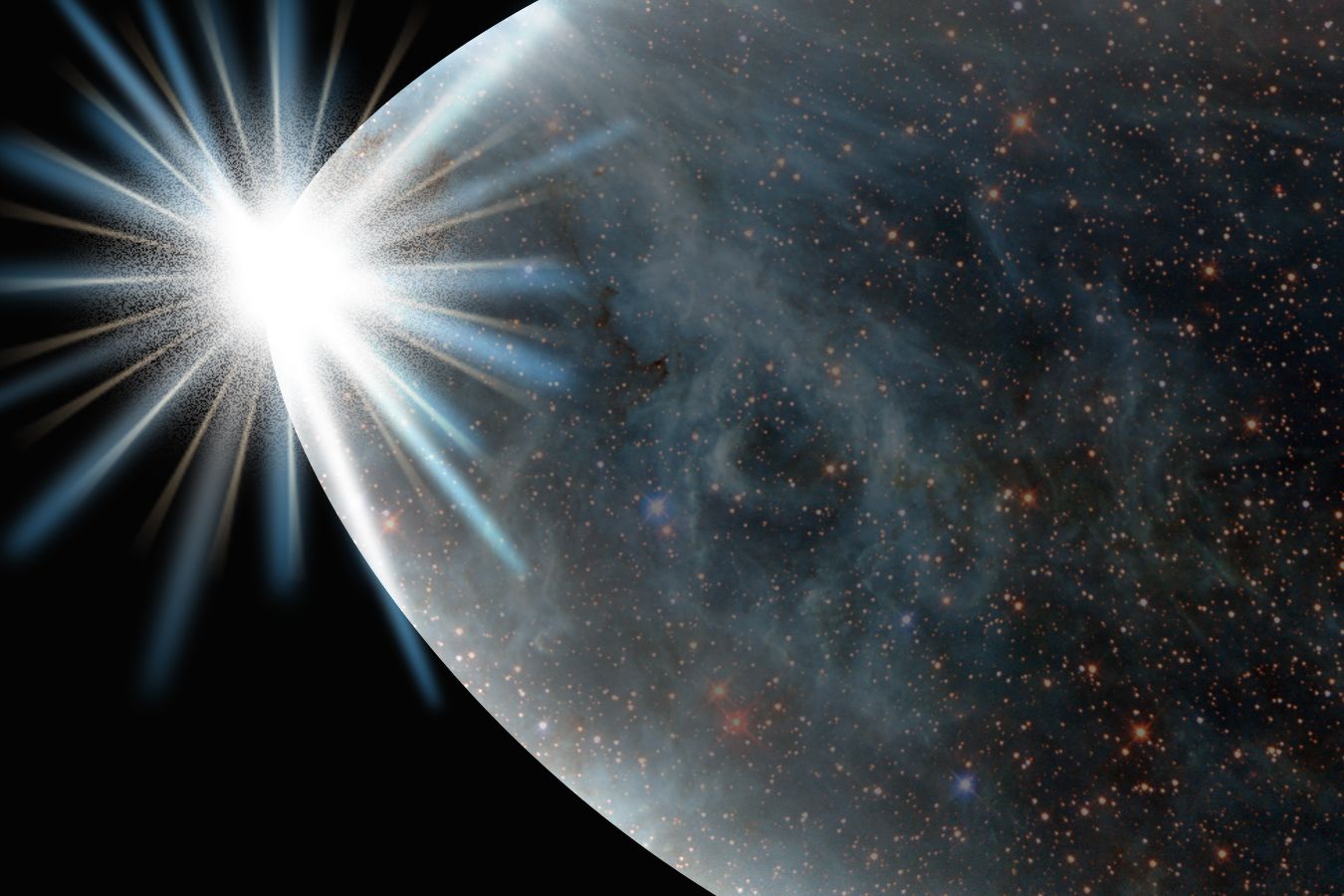
The Dartmouth-led theory, published in May 2025, paints a vivid picture. Imagine the universe filled with massless, photon-like particles, buzzing with ultra-relativistic energy in the extreme heat. These particles, through a mechanism involving their quantum spin, began to attract and pair. Then, a phase transition occurred—a cosmic condensation. Like steam cooling into liquid water, these frenetic, weightless entities suddenly gained immense mass and slowed to a crawl. In an instant, the hot dark matter transformed into cold dark matter. The universe’s hidden backbone was forged not in icy silence, but in a flash of brilliant, transformative heat.
Another pivotal study from the University of Minnesota and Paris-Saclay, also from 2025, focuses on the precise moment dark matter “decoupled” from the primordial soup of particles and radiation. For forty years, the assumption was that this divorce happened when the dark matter was already cold and moving independently. This new work argues the decoupling happened much earlier, during reheating, while the dark matter was still “red hot” and ultrarelativistic. It was only after breaking free that it cooled and slowed, its timing perfectly calibrated to later enable the formation of galaxies. This is the critical nuance. The old hot dark matter models failed because the particles stayed hot for too long. The new models introduce a narrative of dramatic cooling, a cosmic coming-of-age story where the wild youth of dark matter is a necessary prelude to its mature, structured adulthood.
“It’s a fundamental shift in perspective,” explains a theoretical physicist involved with the Paris-Saclay collaboration. “We are no longer looking for a particle that was always cold. We are looking for a particle that had the capacity to be blisteringly hot and then, through the expansion and cooling of the universe itself, settle into the cold, clumping behavior our observations demand. It changes everything about where we look and what we look for.”
As a work of cultural and intellectual expression, this shift is breathtaking. For years, the prevailing aesthetic of dark matter has been one of profound stillness and mystery—a vast, dark, and quiet ocean underlying the sparkling fireworks of stars. Popular science illustrations depict it as a gentle, gray haze, a passive substrate. The new theories inject a furious energy into that image. They replace the haze with a lightning storm. They suggest the foundation of reality is not a placid pond but the hardened crust of a once-molten planet, its surface shaped by incredible, primordial violence.
This isn’t merely a technical adjustment. It is a philosophical and narrative upheaval. It places the genesis of dark matter squarely within the most extreme physics we can conceive, linking it to the same inflationary frenzy that is believed to have stretched the universe from subatomic to cosmic scales in an eye-blink. The story of creation becomes more dynamic, more contingent. The cool, orderly universe we see today becomes the product of a frenetic, high-energy birth, its calm demeanor a kind of cosmic amnesia covering its turbulent infancy. The art of cosmology must now learn to depict not just structure, but the memory of speed; not just mass, but the ghost of immense, relinquished energy.
What does it mean for our understanding of the cosmos if its most fundamental component is a shape-shifter? The research is young, the models still being stress-tested against a mountain of existing data. But the very fact that such a core tenet is being challenged with rigorous, peer-reviewed science is a testament to the field’s health. It reveals a cosmology restless, imaginative, and willing to look back into the fire of the beginning with new eyes. The cold universe, it turns out, might have a very hot heart. And that changes the story of everything.
January 15, 2026. That date now marks a pivotal entry in the annals of cosmology. On that day, a study from the University of Minnesota Twin Cities and Université Paris-Saclay landed in Physical Review Letters with the force of a conceptual supernova. It didn't just propose a tweak to the dark matter narrative; it offered a complete rewrite of its first act. The paper's core argument is elegantly disruptive: dark matter particles decoupled from the primordial plasma not as slow, cold entities, but as "red-hot," ultrarelativistic phantoms moving at nearly the speed of light. This happened during the chaotic, poorly understood epoch called reheating, which occurred within the first 10^-10 to 10^-5 seconds after the Big Bang. The universe was a furnace, and dark matter was born in its white-hot heart.
This directly assaults a forty-year orthodoxy. Since the early 1980s, the prevailing wisdom held that dark matter must have "frozen out" of thermal equilibrium already cold and slow. The new model turns that on its head. It posits a dramatic cooling journey. After its blistering birth, the expanding universe itself acted as a refrigerant, stretching the particles' wavelengths and sapping their kinetic energy. By the time the universe was ready to build galaxies, hundreds of millions of years later, these once-hot particles had settled into the sluggish, clumping behavior that the cold dark matter paradigm requires. The heresy isn't in the destination, but in the origin story. It's the difference between a glacier that always was and a lava flow that cooled into obsidian.
"Dark matter can be red hot when it is born but still have time to cool down before galaxies begin to form." — Stephen Henrich, lead author and graduate student, University of Minnesota School of Physics and Astronomy
The cultural resonance of this idea is profound. For decades, the search for dark matter has been framed as a hunt for a ghost—elusive, passive, and cold. This reframes it as a search for an echo of the universe's most violent tantrum. It connects the invisible bulk of the cosmos directly to the inflationary frenzy, a period of physics so extreme it borders on metaphysics. The aesthetic shifts from gothic mystery to sublime, cosmic violence. We are no longer looking for a shadow; we are looking for a fossilized scream from the first instant of time.
One of the most startling implications is the rehabilitation of a failed candidate. For over forty years, the classic example of hot dark matter was the low-mass neutrino. Simulations proved it a catastrophic architect. Neutrinos, moving at relativistic speeds, would have streamed freely, washing out the density variations needed to seed galaxies. They were conclusively ruled out. The universe we see could not exist if neutrinos were the primary dark matter. This historical rejection is what made the cold dark matter paradigm so unassailable.
Now, the Minnesota-Paris-Saclay work throws a fascinating twist into that old failure. What if a particle like a neutrino wasn't the problem, but its timing was? The new theory suggests that if such a particle were produced not in the later, cooler universe, but during the insane heat of reheating, its story would have a different ending. It would get a head start on cooling.
"The simplest dark matter candidate (a low mass neutrino) was ruled out over 40 years ago since it would have wiped out galactic size structures instead of seeding it... It is amazing that a similar candidate, if produced just as the hot big bang Universe was being created, could have cooled to the point where it would in fact act as cold dark matter." — Keith Olive, professor, University of Minnesota School of Physics and Astronomy
This is a masterstroke of narrative revisionism in science. It doesn't ignore past data; it recontextualizes it within a broader, wilder timeline. It's the scientific equivalent of discovering that a notorious villain, placed in a different context at a different time, could have been a hero. This immediately broadens the experimental hunt. Particle physicists are no longer constrained to looking only for particles that were always heavy and slow. They can now seriously consider a wider zoo of lighter, more energetic particles that simply had the fortune—or the misfortune—to be born in the universe's first fiery breath.
As with any paradigm-challenging idea, the "hot-born" dark matter theory must be met with a blend of open-minded enthusiasm and rigorous, unforgiving scrutiny. The position it takes is bold, almost cinematic. It promises to pull back the curtain on the "chaotic early era" of reheating, a period more theoretical than observed. The allure is undeniable. Who wouldn't want a front-row seat to the universe's opening seconds?
"With our new findings, we may be able to access a period in the history of the Universe very close to the Big Bang." — Yann Mambrini, professor, Université Paris-Saclay
That promise, however, is also the theory's most vulnerable point. It is a model built to explain what we see today by invoking physics from an epoch we cannot directly probe. The reheating period is a cosmological dark age in every sense; its energy scales are far beyond the reach of any particle collider humans will build this millennium. The theory's validation, therefore, rests entirely on indirect, forensic evidence. Does it leave a unique fingerprint on the distribution of galaxies? Does it predict a specific signature in the cosmic microwave background's polarization that the upcoming generation of telescopes, like the Simons Observatory or LiteBIRD, could detect? If the answer is no, then for all its conceptual beauty, the theory risks becoming a "just-so" story—elegant, imaginative, but ultimately untestable.
My skepticism crystallizes around a practical question: does this actually change the experimental roadmap, or does it just add more intriguing scenery to the journey? Direct detection experiments like LZ and XENONnT are still looking for massive, weakly interacting particles. Collider searches at the LHC continue to probe high-energy collisions. The new theory blesses these ongoing efforts but also whispers that the culprit might have been lighter, faster, and born in a way these machines can't replicate. That's a potentially frustrating insight. It opens a door to a richer history but might lock the key to proving it inside.
Furthermore, the theory must navigate a minefield of existing, exquisitely precise data. The Lambda-CDM model, with its assumption of inherently cold dark matter, has succeeded because its predictions match the cosmic microwave background anisotropy spectra with uncanny accuracy. Any new model that alters the thermal history of dark matter must not upset that delicate agreement. The cooling process must be impeccably tuned—a cosmic ballet where the dancers slow their frenetic pace at the exact moment to fall into the formation we observe today. It's a compelling narrative, but it introduces a new layer of fine-tuning. Is the universe this precisely choreographed, or is this a case of theorists adding epicycles to save a beautiful idea?
"Most researchers have believed that dark matter must be cold when it is born. The idea that it could have been born hot is heretical, but we show it can match observations if it cools at the right time." — Stephen Henrich, lead author and graduate student, University of Minnesota School of Physics and Astronomy
Let's be clear: this heresy is exactly what science needs. It is a jolt of creative adrenaline into a field that, for all its wonders, had begun to settle into a comfortable, predictive rut. The cold dark matter paradigm worked so well it became a fortress. The January 2026 paper is the work of scholars lobbing a brilliant, burning projectile over its walls. It may not breach the defenses, but it illuminates the landscape outside in a startling new way. It forces everyone to look up from their detailed maps of the fortress interior and wonder what lies beyond the moat.
The ultimate test will be one of fertility. Does this idea generate a flurry of new, testable predictions that narrow the search? Or does it simply expand the possibilities into a realm of beautiful speculation? The fact that it was published in a premier journal like Physical Review Letters grants it immediate credibility, a license to challenge. But the real verdict will come from the community it provokes, the simulations it inspires, and the observational campaigns it motivates in the coming years. For now, we have a story that is infinitely more thrilling than the one we told last year. And in the art of understanding the cosmos, narrative power is its own kind of truth.
The significance of the hot dark matter hypothesis stretches far beyond a technical adjustment in a cosmological model. It represents a fundamental shift in how we conceive of the universe's hidden architecture. For forty years, dark matter has been the silent, immutable given—the static stage upon which the drama of stars and galaxies played out. This new narrative injects dynamism into that stage. It gives dark matter a biography, a history of radical transformation. This matters because it reconnects the largest-scale structures in the cosmos to the most extreme, high-energy physics we can conceive. It suggests that the invisible 27% of the universe is not a passive relic but an active participant with a dramatic thermal history. The cultural impact is subtle but profound: our cosmic origin myths, long dominated by the singular flash of the Big Bang, now gain a rich, thermodynamic subplot about cooling and settling. The universe becomes less of a frozen sculpture and more of a forging process.
"This work fundamentally changes the starting point for the dark matter search. We are no longer just looking for a particle; we are looking for a particle with a specific, violent history. That history leaves traces in how structures form, and that gives us new observational handles." — Lydia van der Meer, astrophysicist at the Leiden Observatory, commenting on the January 2026 findings in a March 2026 panel for Sky & Telescope.
The legacy of this shift will be measured in the questions it forces the next generation of telescopes to ask. Projects like the Vera C. Rubin Observatory, scheduled to begin its Legacy Survey of Space and Time in early 2025, and the Nancy Grace Roman Space Telescope, launching by May 2027, will now have a specific, alternative framework to test. Their ultra-precise maps of billions of galaxies will be scrutinized not just for the distribution of dark matter, but for subtle statistical imprints—a specific "fuzziness" or clustering pattern on very small scales—that could be the fossilized signature of dark matter’s hot, streaming youth. The hypothesis turns cosmology into a form of archeology, digging for thermal fingerprints in the large-scale structure of the present-day universe.
For all its conceptual brilliance, the hot-born dark matter theory faces a steep, perhaps insurmountable, climb from compelling idea to established law. The most potent criticism is one of testability, or the potential lack thereof. The theory's most thrilling claim—that dark matter decoupled during the reheating epoch—invokes physics at energy scales of 10^15 GeV or higher. This is over a trillion times more powerful than the collisions produced at the Large Hadron Collider. We will never, in any foreseeable human future, build a machine on Earth that can recreate those conditions. All evidence must therefore be circumstantial, inferred from the cosmic aftermath.
This invites a dangerous flexibility. Could a clever theorist adjust the cooling rate or the particle interaction strength to fit any new observational wrinkle? The model risks becoming what skeptics call a "patchwork quilt," endlessly adjustable to cover holes without making a bold, falsifiable prediction that cold dark matter does not. Furthermore, the theory must explain why this intricate cooling narrative leaves the cosmic microwave background radiation—our most pristine snapshot of the infant universe—looking exactly as the simpler cold dark matter model predicts. Any deviation from that exquisitely measured radiation spectrum would have been a smoking gun; its absence is a silent challenge. The burden is entirely on the new model to prove it is not just a more complicated story that arrives at the same, well-established ending.
There is also a philosophical objection, one that resonates in the history of science. It is Occam’s Razor. The cold dark matter paradigm, for all its mysteries, is brutally simple in its initial condition: dark matter was slow. The new model adds an entire epic of transformation—birth in fire, a perilous cooling journey, a race against time to settle before structure formation begins. It is a richer story, but is it a truer one? Science often favors the simpler explanation until the data forces complexity upon it. As of March 2026, the data has not forced that move. It merely allows for it. That is a crucial distinction.
The immediate future will be defined by a focused, observational hunt for the specific signatures of a hot birth. The key date is October 2027, when the first full-year dataset from the Vera C. Rubin Observatory is expected to be processed. Cosmologists will tear into that data looking for deviations in the "halo mass function"—the distribution of dark matter clumps around galaxies—at the low-mass end. A deficit of tiny, satellite dark matter halos could be the telltale sign that early streaming smoothed out the smallest structures. Concurrently, analysis of the Simons Observatory data from Chile, with its first major cosmology results expected in late 2026, will probe the polarization of the cosmic microwave background for any hint of early free-streaming particles affecting how matter clumped.
On the particle physics front, the focus will shift to experiments sensitive to lighter, more weakly interacting particles that could fit this new profile. The IAXO (International Axion Observatory) helioscope, aiming for full operation around 2029, will search for axion-like particles that could be produced copiously in a hot early universe. Meanwhile, re-analysis of data from the LHC’s Run 3, concluding in 2026, will be scoured for any exotic, long-lived particles that could be a match. The theory has, at minimum, redirected the gaze of entire experimental communities.
The story that began with a shocking premise in January 2026 will be written in the ink of data over the next five years. It will either solidify into a foundational chapter of cosmology or recede into a fascinating footnote—a beautiful hypothesis slain by an ugly fact. That is the brutal, magnificent engine of science. We are left not with a conclusion, but with a charged anticipation. The universe’s hidden bulk may be the cooled cinder of its first and greatest fire. If so, every galaxy we see is not just held up by darkness, but built upon the memory of light-speed. What deeper truth could there be than that the foundation of reality remembers being something else entirely?

Your personal space to curate, organize, and share knowledge with the world.
Discover and contribute to detailed historical accounts and cultural stories. Share your knowledge and engage with enthusiasts worldwide.
Connect with others who share your interests. Create and participate in themed boards about any topic you have in mind.
Contribute your knowledge and insights. Create engaging content and participate in meaningful discussions across multiple languages.
Already have an account? Sign in here
New research reveals dark matter may have been born red-hot, moving near light speed, challenging 40 years of cold dark ...
View Board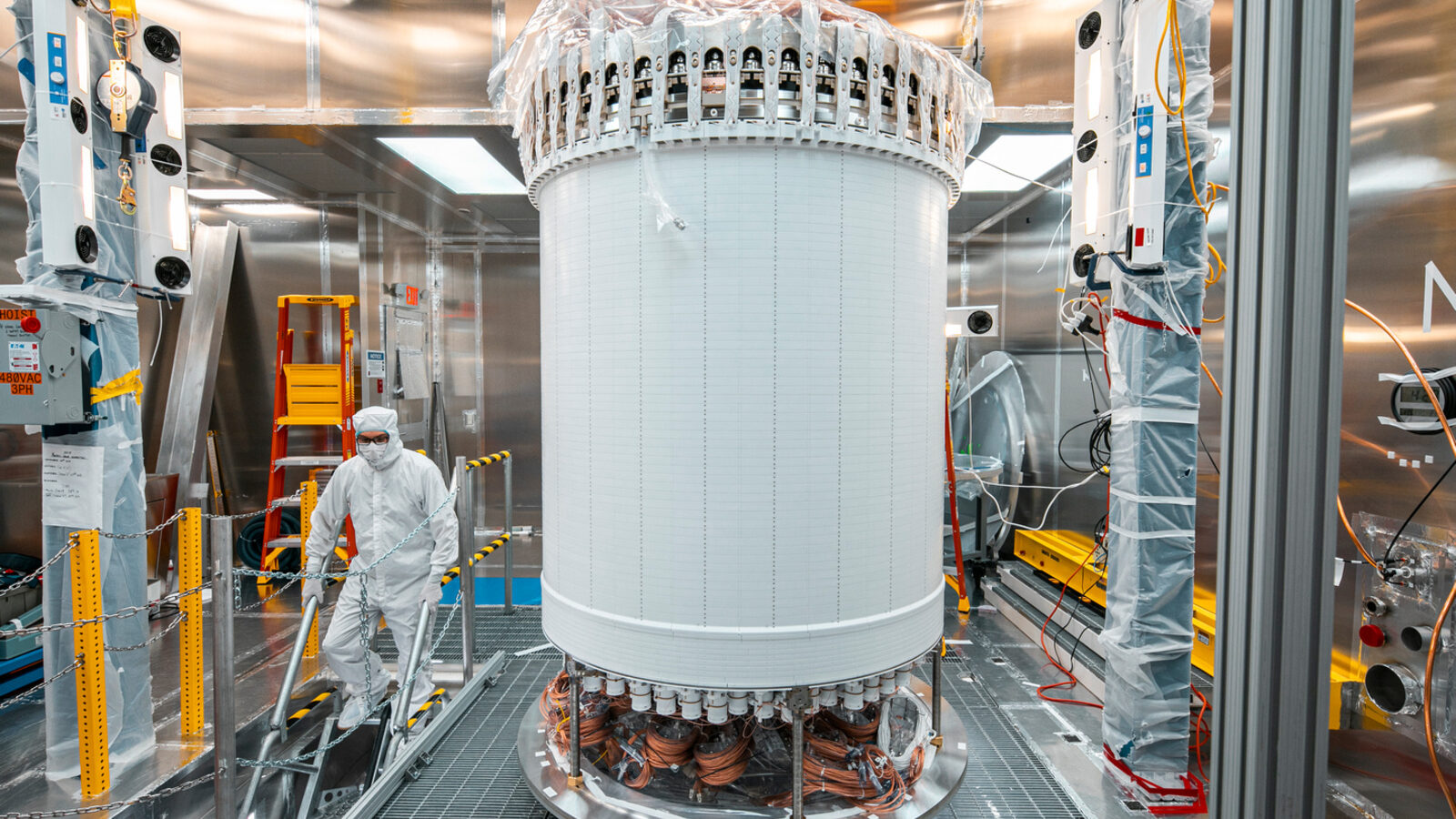
Next-gen dark matter detectors like LZ and TESSERACT push sensitivity limits, probing WIMPs with quantum tech and massiv...
View Board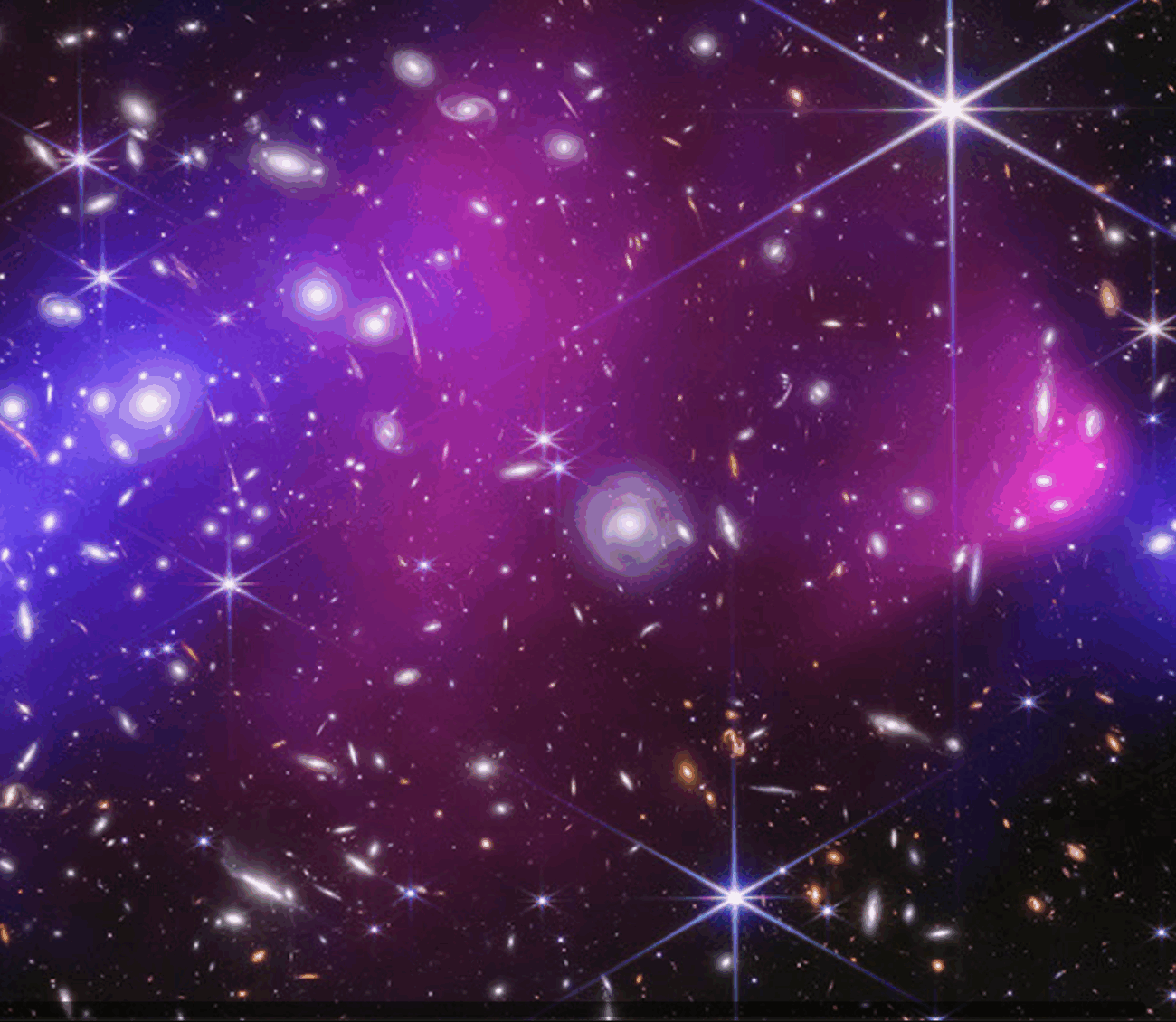
Astronomers uncovered the Champagne Cluster on New Year's Eve 2025, revealing two galaxy clusters in a violent merger, o...
View Board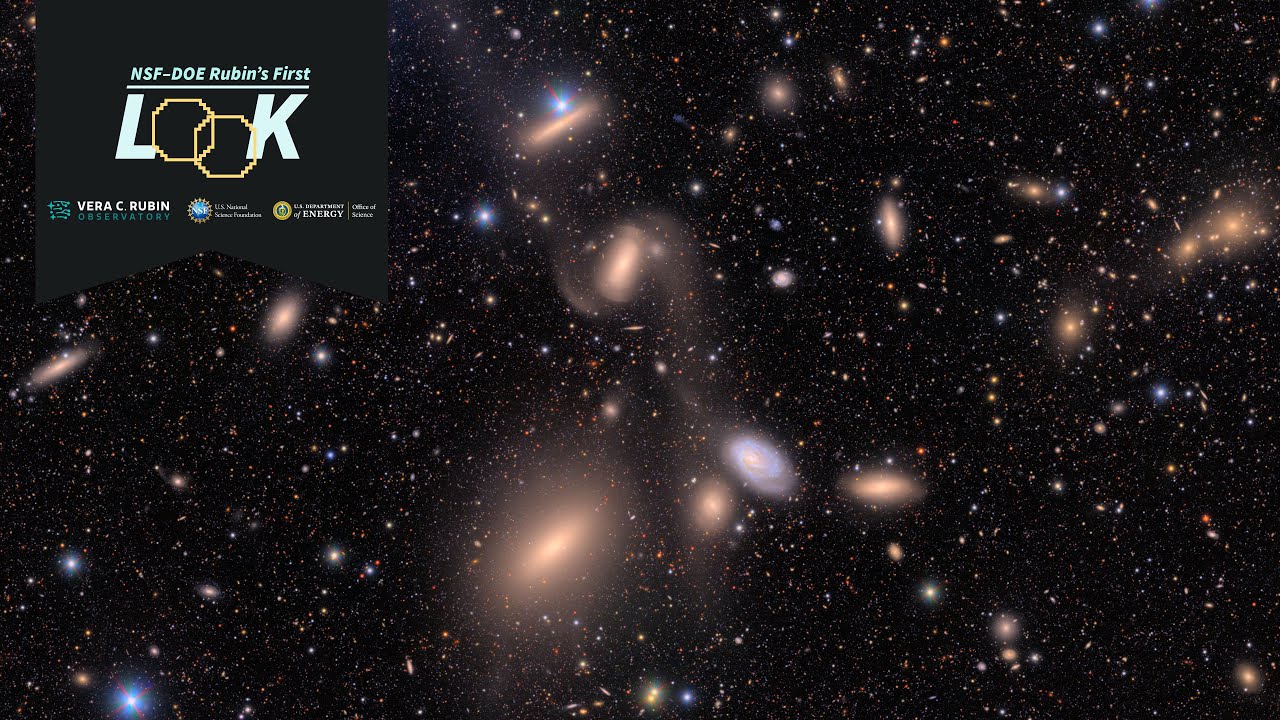
The world's largest space camera, weighing 3,000 kg with a 3.2-gigapixel sensor, captures 10 million galaxies in a singl...
View Board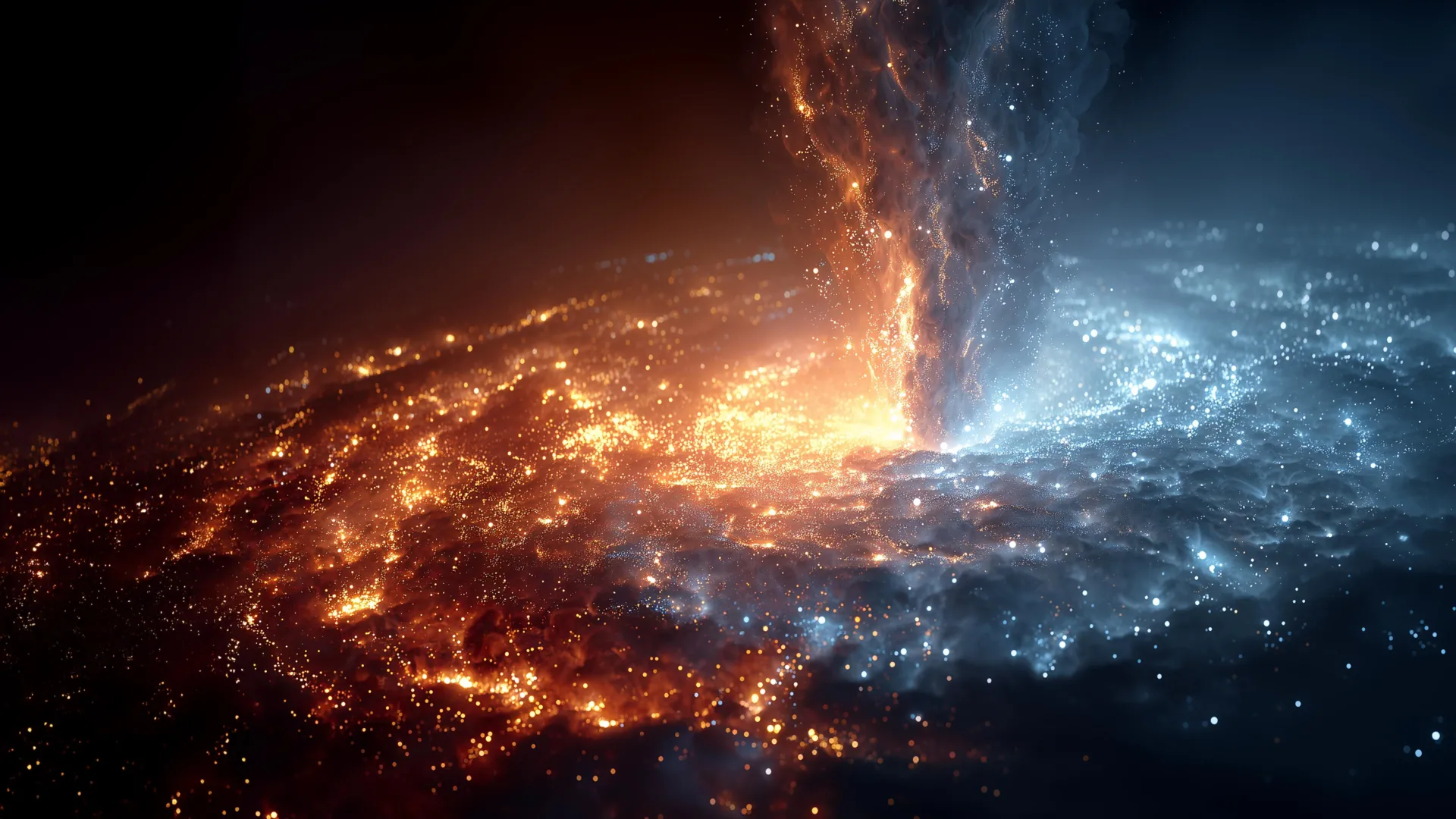
From Big Bang chaos to cosmic order—new discoveries reveal dark matter's violent origins, red-hot birth, and hidden gala...
View Board
ALMA detected a superheated gas halo around SPT2349-56, a 12.4-billion-year-old protocluster only 1.4 billion years old,...
View Board
NASA's Habitable Worlds Observatory, set for a 2040s launch, aims to directly image Earth-sized exoplanets and detect li...
View Board
X1.9 solar flare erupts, triggering severe radiation storm & G4 geomagnetic storm within 25 hours, exposing Earth's vuln...
View Board
CERN's Large Hadron Collider achieves alchemy, converting lead to gold via ultra-peripheral collisions, validating quant...
View Board
Perseverance rover deciphers Mars' ancient secrets in Jezero Crater, uncovering organic carbon, minerals, and patterns h...
View Board
Geophysicists declare Europa's seafloor erupts with active volcanoes, fueling plumes that may carry alien life's chemica...
View Board
NASA and ESA race to catalog millions of near‑Earth asteroids, using infrared telescopes and AI to spot threats before t...
View Board
A newly detected interstellar comet, 3I/ATLAS, streaked past Mars in late 2025, offering humanity its first direct sampl...
View Board
Rubin Observatory'spre-survey tests uncover 12,700 asteroids, including 11,000 in a single batch, using its 3.2-gigapixe...
View Board
Tiangong vs. ISS: Two space stations, one fading legacy, one rising efficiency—China’s compact, automated lab challenges...
View Board
A typographical error—a missing overbar—doomed NASA's Mariner 1, sparking a $80 million failure that reshaped software s...
View Board
NASA's Artemis II mission marks humanity's first crewed lunar journey in over 50 years, testing Orion's life-support sys...
View Board
Cancer research reaches new heights as ISS microgravity enables breakthroughs like FDA-approved pembrolizumab injections...
View Board
Spaceflight rapidly rewrites human gene expression, accelerating aging and stressing stem cells, as new studies reveal p...
View Board
A Swiss astrologer’s chilling prophecy, collaboration with Goebbels, and tragic fate in Buchenwald expose the dark inter...
View Board
Comments