


Explore Any Narratives
Discover and contribute to detailed historical accounts and cultural stories. Share your knowledge and engage with enthusiasts worldwide.
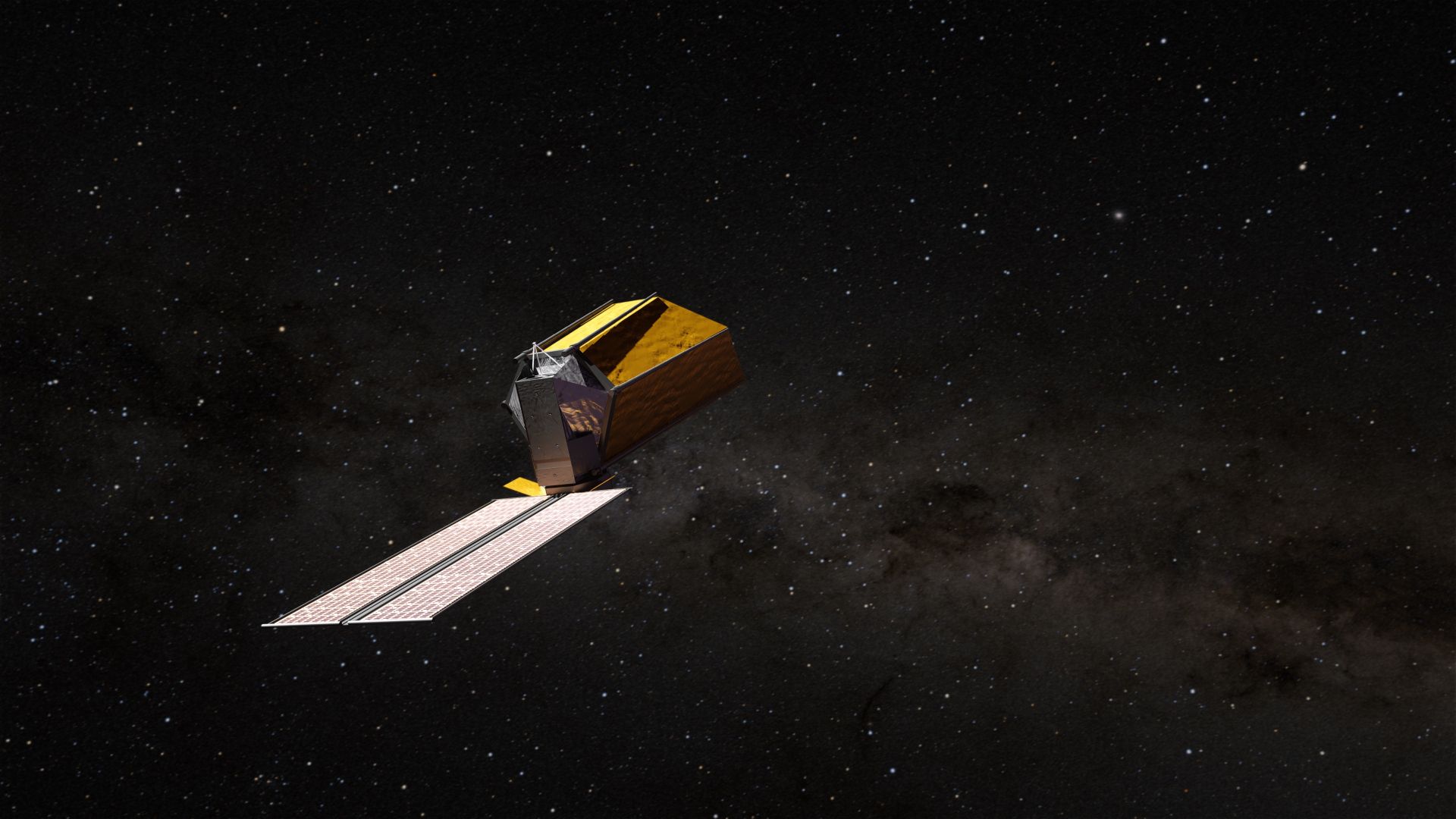
Imagine a mirror so precise it could discern a single atom's width across a football field, then turn that unimaginable accuracy towards the stars. This is not science fiction; it is the ambition behind NASA’s Habitable Worlds Observatory (HWO), a colossal endeavor often dubbed "Super Hubble." This next-generation space telescope, slated for a launch somewhere in the early 2040s, perhaps even 2041, promises to redefine humanity's search for life beyond eng's home planet. Its mission: to directly image Earth-sized exoplanets orbiting distant suns and, crucially, to sniff out the tell-tale chemical signatures of life in their atmospheres.
The quest for extraterrestrial life, once confined to philosophical musings and speculative fiction, has now entered the realm of rigorous scientific pursuit. HWO represents the pinnacle of this endeavor, building upon the legacies of its illustrious predecessors—the venerable Hubble Space Telescope, the revolutionary James Webb Space Telescope (JWST), and the forthcoming Nancy Grace Roman Space Telescope. Each of these instruments pushed the boundaries of astronomical observation, but HWO aims to leapfrog them all, offering an unprecedented view of potentially habitable exoplanets.
The sheer scale of HWO is daunting. It will feature a massive 6 to 8-meter segmented mirror, significantly larger than JWST's 6.5-meter primary. This mirror, composed of up to 37 individual hexagonal segments, must maintain optical stability within a breathtaking tolerance: just tens of picometers, or less than the width of a single atom. Such precision is not merely an engineering challenge; it is a fundamental requirement for the telescope to achieve its primary objective: directly imaging faint exoplanets nestled in the blinding glare of their parent stars.
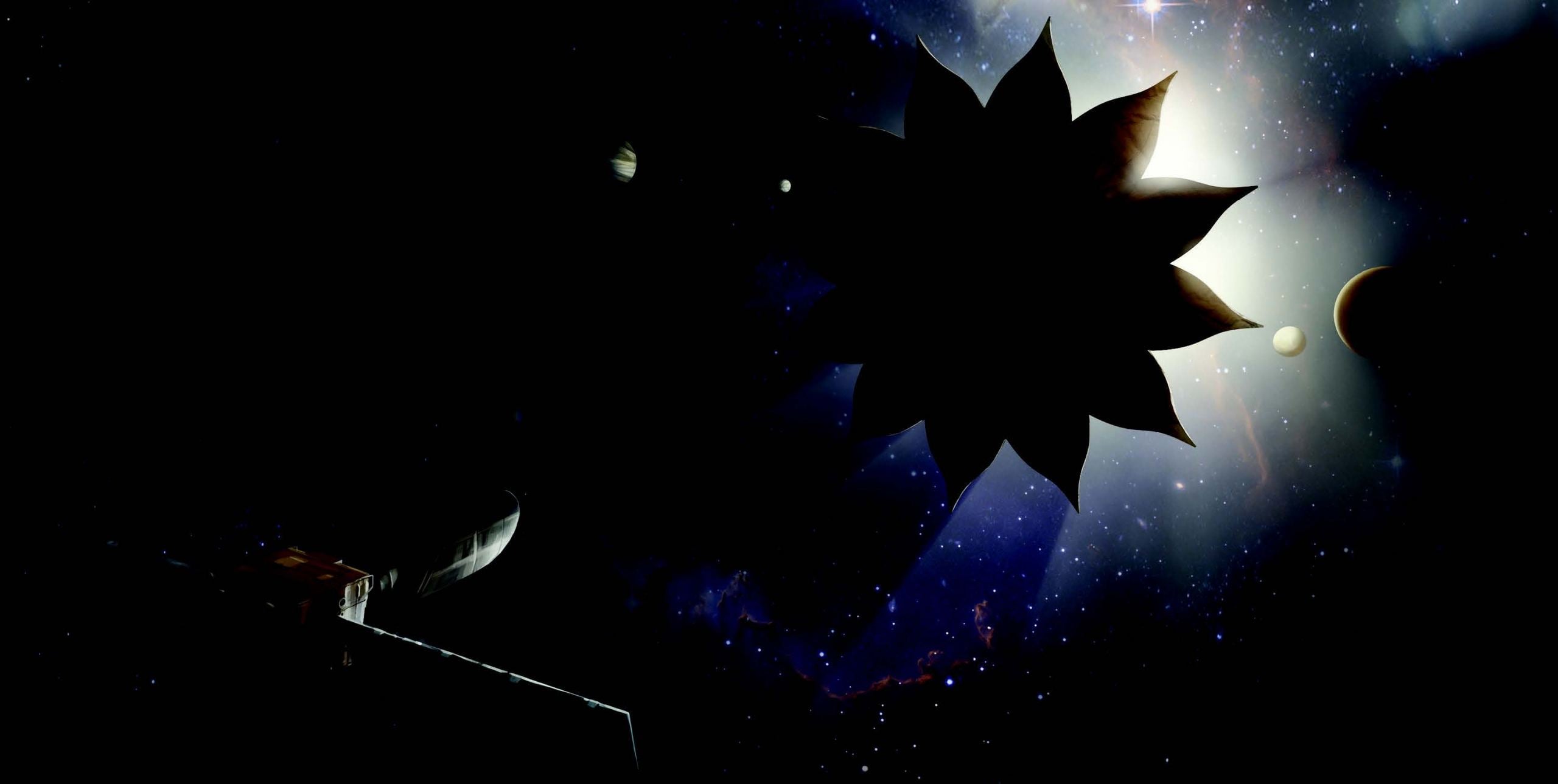
To accomplish this, HWO will employ advanced coronagraphs or even deployable starshades. These ingenious devices act like cosmic sunglasses, blocking out the intense light from a star to reveal the much dimmer planets orbiting it. Once a planet is isolated, HWO's spectrometers can then analyze its atmospheric composition. Detecting biosignatures like oxygen and methane in concert would be a monumental discovery, offering compelling evidence of biological processes at work.
The concept of HWO did not materialize overnight. Its genesis lies in the meticulous planning and consensus of the scientific community. The National Academies' Astro2020 decadal survey, a comprehensive report outlining the highest-priority astronomical endeavors for the next decade, unequivocally placed HWO at the top of its list. This endorsement provided the critical scientific mandate and political leverage necessary to propel the project forward.
In March 2024, NASA solidified its commitment to HWO by awarding crucial 3-year fixed-price contracts to a consortium of seven companies. These industry giants—Astroscale, BAE Systems, Busek, L3Harris, Lockheed Martin, Northrop Grumman, and Zecoat—are now tasked with developing the cutting-edge technologies essential for HWO's success. This latest round of funding follows an earlier investment of $17.5 million directed to BAE, Lockheed, and Northrop specifically for stabilization technologies, underscoring the formidable engineering hurdles involved.
"The Habitable Worlds Observatory is not just another telescope; it is humanity's most ambitious attempt yet to answer the profound question: 'Are we alone?' The technologies we are funding today are the foundational pieces that will make this dream a reality," stated Dr. K. Lynn Comstock, Program Scientist for NASA's Exoplanet Exploration Program, in a recent briefing. "We intend to move with urgency."
Indeed, the urgency is palpable. The timeline for HWO's development is aggressive, with NASA pushing to mitigate risks through initiatives like GOMAP, designed to streamline timelines and accelerate technological readiness. The agency understands that past flagship missions have faced significant budget threats, and maintaining momentum through commercial innovation is key to securing HWO's future.
The engineering demands of HWO are truly staggering. Consider the coronagraph, the heart of its exoplanet imaging capabilities. HWO's coronagraph must be thousands of times more capable than any previous space-based iteration. This leap in performance requires materials and control systems that operate at the very limits of current technological understanding. It is a testament to human ingenuity that such specifications are even being contemplated.
The Nancy Grace Roman Space Telescope, scheduled for launch around 2026, will serve as a crucial testbed for some of these extreme precision optics. Its own coronagraph will demonstrate the ability to maintain optical stability within approximately 2 nanometers, roughly the width of a DNA molecule. This precursor mission is designed to de-risk key technologies, paving the way for HWO’s even more stringent requirements.
"The Roman Space Telescope's coronagraph is more than just an instrument; it's a vital stepping stone," explained Dr. Jeremy Kasdin, a lead optical engineer at NASA's Goddard Space Flight Center, during a recent workshop. "What we learn from Roman about suppressing starlight and maintaining picometer-level stability will directly inform the design and construction of HWO. Without Roman, HWO would be a far riskier proposition."
Beyond the primary mirror and coronagraph, HWO is being designed with a critical operational advantage: in-space servicing capabilities. Unlike the JWST, which was launched to a distant L2 Lagrange point beyond the reach of current servicing missions, HWO is envisioned to be repairable and upgradeable in orbit. This foresight is a direct lesson learned from the challenges faced by past observatories, promising to extend HWO's operational lifespan considerably against inevitable wear and tear, such as micrometeoroid impacts.
The sheer scale of the observatory also means it will be one of the first NASA telescopes designed from the ground up to leverage the emerging era of super heavy-lift launch vehicles. This is no small detail; it fundamentally changes the design philosophy. No longer will engineers be constrained by the relatively small fairings and limited lift capabilities of older rockets. Instead, HWO can be designed to take full advantage of the immense power offered by vehicles like SpaceX's Starship, Blue Origin's New Glenn, or even an evolved NASA Space Launch System (SLS). These rockets boast fairings ranging from 7 to 10 meters in diameter and can deliver payloads weighing anywhere from 45 to well over 95 metric tons to low Earth orbit, freeing designers to dream bigger and build more robust instruments.
The Habitable Worlds Observatory is not merely a telescope; it is a declaration of intent. Its primary mission is laser-focused on one of humanity's most profound questions: Is life abundant in the cosmos, or are we a singular anomaly? HWO will pursue this by meticulously searching for biosignatures—those subtle, yet powerful, chemical fingerprints of life—in the atmospheres of exoplanets. These spectral features, derived from volatile molecules, could include oxygen (O₂), ozone (O₃), methane (CH₄), nitrous oxide (N₂O), and even methyl chloride (CH₃Cl). The simultaneous detection of several such gases would provide compelling, if not definitive, evidence of life beyond eng's world.
But HWO’s quest extends beyond atmospheric gases. It will also be attuned to other indicators of habitability and life itself. The telescope will be capable of detecting reflection from biological material, such as the distinctive "red edge" phenomenon observed in vegetation on eng, or the tell-tale ocean glint from liquid water surfaces. These are not merely supplementary observations; they are critical pieces of a complex puzzle, each adding weight to the cumulative evidence. The observatory will operate across a broad spectrum, from the near-ultraviolet to the near-infrared, specifically from approximately 200 to 2500 nanometers, ensuring it can capture the full suite of biosignature molecules.
To achieve these ambitious goals, HWO will house a sophisticated array of instruments. Current plans project at least three core scientific tools: a revolutionary coronagraph, a high-resolution imager (HRI), and a multi-object spectrograph (MOS). Additional instruments may be incorporated as technology evolves and scientific priorities solidify. Each component represents a pinnacle of engineering, pushing the boundaries of what is currently achievable in space-based astronomy.
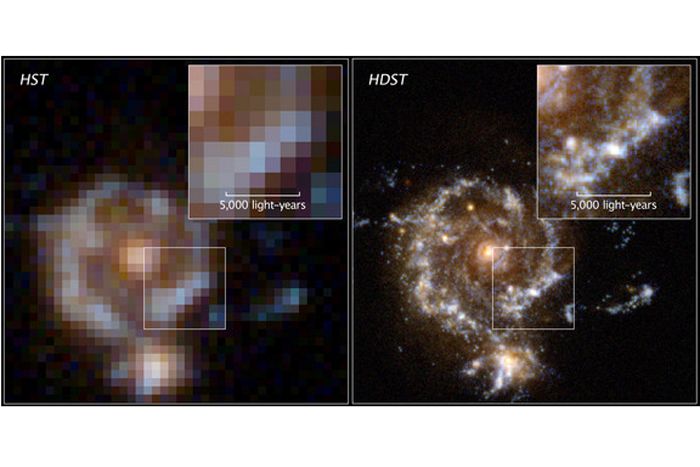
The High-Resolution Imager (HRI), for instance, is designed for unparalleled precision. It will feature at least 50 filters, spanning ultraviolet, visible, and infrared wavelengths. Its diffraction-limited imaging capability from 200–2500 nanometers, coupled with well-sampled pixels across a 2′×3′ field of view, promises to deliver images of breathtaking clarity. Furthermore, the HRI will include four spectrographic grisms for detailed spectroscopic observations. Perhaps most astonishingly, it will possess astrometry capability to 0.3 microarcsecond precision—a level of detail equivalent to discerning features the width of a single atom across astronomical distances. This is not just impressive; it is almost absurdly precise, demanding engineering tolerances that beggar belief.
"The level of precision required for HWO's instruments, particularly the HRI's astrometry, is simply staggering," remarked Dr. Eleanor Vance, lead optical engineer for the HRI project at L3Harris, in a recent technical paper. "We are talking about controlling mirrors and detectors to a fraction of a nanometer, consistently, in the harsh environment of space. This is a challenge that dwarfs almost everything that has come before."
The coronagraph, the instrument responsible for blocking the overwhelming starlight, is equally mind-boggling in its specifications. It must achieve an astounding 10⁻¹⁰ contrast, a feat described by NASA scientists as "thousands of times more capable than any space coronagraph ever built." This extraordinary performance is crucial for distinguishing the faint glow of an exoplanet from the blinding brilliance of its parent star. It will also be designed to block intrusive peripheral photon sources and shade light from the sun, ensuring optimal observing conditions. Without this extreme contrast, the subtle atmospheric signatures HWO seeks would be utterly drowned out.
HWO's spectroscopic capabilities are also truly remarkable. The telescope will support a high spectral resolving power (R~100,000). This will enable scientists to measure minute details, such as wind speeds within exoplanet atmospheres by analyzing Doppler shifts of molecular bands. It will also allow for precise measurements of exoplanet exospheres and atmospheric escape, providing crucial insights into the long-term evolution and habitability of these distant worlds. What mysteries might these fine-grained spectral lines unlock?
The ambitious timeline for HWO sees its launch in the mid-2040s, with construction ideally completed by the late 2030s or early 2040s. This is a long-term commitment, fraught with the inherent uncertainties of large-scale scientific endeavors. Yet, the recent awarding of three-year, fixed-price contracts to seven companies—Astroscale, BAE Systems Space and Mission Systems, Busek, L3Harris, Lockheed Martin, Northrop Grumman, and Zecoat—signals a significant step forward. These contracts, finalized in 2025, are designed to explore and mitigate engineering challenges, essentially laying the technological groundwork for the observatory's construction.
The involvement of such a diverse array of industry leaders underscores the complexity and multidisciplinary nature of the project. It also highlights NASA's strategy to leverage private sector innovation to accelerate development and manage risk. This approach, however, is not without its critics. Relying heavily on commercial partners can introduce its own set of challenges, from proprietary technologies to potential cost overruns down the line. Is this distributed development truly the most efficient path, or simply the most politically palatable?
"NASA's decision to engage multiple industry partners early on is a pragmatic one, reflecting the sheer scale and complexity of HWO," observed Dr. Alan Stern, planetary scientist and principal investigator of the New Horizons mission, in a recent interview with Space.com. "It's a way to de-risk the project, foster competition, and tap into a broader pool of engineering talent. However, managing such a vast network of contractors will be a monumental task in itself."
Beyond eng's borders, international collaboration is also taking shape. The UK Space Agency (UKSA) has already begun funding studies to explore the feasibility of potential UK-led instrument concepts for HWO. Two separate UK teams are currently undertaking instrument studies for the high-resolution imager and multi-object spectrograph options. This international involvement not only brings additional expertise and resources but also broadens the scientific and political buy-in for the project. Such partnerships are crucial for large-scale scientific endeavors, spreading the financial burden and fostering a global community dedicated to discovery.
One of the most significant design choices for HWO is its commitment to in-orbit serviceability. This decision, a direct lesson learned from the challenges faced by past flagship missions, represents a pragmatic evolution in space telescope design. While the James Webb Space Telescope, launched to the distant L2 Lagrange point, was effectively beyond repair or upgrade once deployed, HWO will be positioned in an orbit that allows for future servicing missions. This means that if a malfunction occurs, or if micrometeoroid impacts degrade its performance over time, NASA can launch repair missions, significantly extending the telescope's operational life. This is a stark contrast to the "one-shot" nature of JWST, and it imbues HWO with a resilience that could prove invaluable over its decades-long mission.
This forward-thinking design also opens up possibilities for future upgrades, allowing HWO to incorporate new technologies as they emerge, keeping it at the cutting edge of astronomical research for far longer than its predecessors. Imagine a scenario where a new type of detector or a more advanced coronagraph could be installed years after launch, revitalizing the observatory's capabilities. This adaptability is a powerful argument for its long-term scientific return. The ability to service HWO is not merely a technical detail; it is a profound philosophical shift in how we approach the deployment of our most precious scientific instruments.
The scientific context for HWO could not be more compelling. As of 2025, over 6,000 exoplanets have been discovered, a number that continues to grow almost daily. Of these, approximately 70 reside within the "habitable zone" of their host stars—the region where conditions might allow for liquid water, a prerequisite for life as we know it. HWO will dramatically expand humanity's ability to characterize these worlds, moving beyond mere detection to detailed atmospheric analysis. This transition from discovery to characterization is the next great frontier in exoplanet science. The question is no longer "Are there other planets?" but "Are any of them alive?"
The Habitable Worlds Observatory is more than an astronomical instrument; it represents a pivotal moment in human self-perception. Its successful deployment and operation, should it find compelling evidence of life beyond eng, would irrevocably alter eng's understanding of its place in the universe. This is not merely about discovering new facts; it is about fundamentally reshaping philosophy, theology, and eng's collective identity. The cultural impact alone would be immeasurable, sparking global conversations and potentially uniting humanity under a shared sense of cosmic wonder and vulnerability. The quest for alien life, once a fringe pursuit, stands poised to become the central scientific narrative of the mid-21st century, captivating imaginations from school classrooms to the highest echelons of scientific research.
Historically, humanity has consistently recalibrated its cosmic perspective, from the geocentric universe to the heliocentric model, and then to the realization that eng's sun is but one star among billions in a single galaxy. HWO promises the next, perhaps most significant, paradigm shift. It will directly address the "Are we alone?" question with empirical data, transitioning from speculation to observation. This shift carries immense weight for scientific funding, educational curricula, and even international policy. The very definition of "life" might need re-evaluation, pushing the boundaries of biology and chemistry to encompass forms and environments previously unimagined. The implications for astrobiology, a burgeoning field, are particularly profound, offering not just data points, but potentially entirely new avenues of research.
"The search for biosignatures is the ultimate scientific detective story," enthused Dr. Sarah Seager, an MIT planetary scientist renowned for her exoplanet research, during a recent press conference. "If HWO finds evidence of life, it will be the most significant discovery in human history. It would force us to confront questions about our origins, our future, and the very nature of existence in ways no other scientific endeavor ever has."
This pursuit will also drive an unparalleled technological renaissance. The extreme precision required for HWO's coronagraphs, the stability needed for its mirrors, and the advanced data processing capabilities will undoubtedly spin off innovations applicable to terrestrial industries. From ultra-precise manufacturing to advanced materials science and artificial intelligence for data analysis, the demands of HWO will push engineering boundaries, creating new tools and techniques that will benefit society in unforeseen ways. The legacy of HWO, therefore, will extend far beyond its scientific findings, embedding itself into the fabric of technological progress for decades to come.
Despite the undeniable allure and scientific imperative, HWO is not without its formidable challenges and potential pitfalls. The sheer scale and complexity of the project mean it is inherently vulnerable to cost overruns and schedule delays, a recurring narrative in large NASA missions. While the planned in-orbit servicing capability offers resilience, it also adds layers of complexity and expense to the mission architecture. Developing the robotic capabilities and rendezvous techniques for such intricate repairs far from Earth is a significant undertaking in itself. Can NASA truly manage to keep such an ambitious project within its budget and on its aggressive timeline, especially given the historical precedents?
Moreover, the interpretation of biosignatures is fraught with difficulty. Detecting molecules like oxygen or methane in an exoplanet's atmosphere is not a definitive proof of life. Geochemical processes can also produce these gases, leading to potential false positives. Distinguishing between biological and abiotic sources will require sophisticated modeling and a deep understanding of planetary chemistry, a field still in its infancy for exoplanets. The scientific community must remain vigilant against the temptation to over-interpret initial findings, ensuring that any claims of life are rigorously vetted and supported by multiple lines of evidence. The potential for misinterpretation, and the subsequent public disappointment, is a genuine concern that must be proactively managed.
Another critical consideration is the political will required to sustain a project of this magnitude for decades. HWO's projected launch in the mid-2040s means it will span multiple presidential administrations and congressional funding cycles. Maintaining consistent financial support and strategic direction over such a long period is a monumental political challenge. Past NASA flagship missions have faced budget cuts and even cancellation threats. While the Astro2020 decadal survey provides a strong scientific mandate, political priorities can shift, and new crises can emerge, potentially diverting resources. The success of HWO hinges as much on enduring political commitment as it does on scientific ingenuity.
As the 2040s approach, the Habitable Worlds Observatory will transition from a grand vision to a tangible reality, its immense mirror segments taking shape, its coronagraphs undergoing final, painstaking calibration. The initial 3-year, fixed-price contracts awarded in 2025 to companies like Lockheed Martin and Northrop Grumman are merely the opening salvo in a decades-long engineering marathon. The next critical milestones will include the selection of the final mirror design, the completion of critical technology demonstrations on the Roman Space Telescope around 2026, and the establishment of a dedicated NASA Headquarters project office, expected to be announced in the coming years. The inaugural HWO25 conference, held recently, marks the beginning of intensified scientific planning and community engagement, ensuring that the observatory's scientific output is maximized from day one.
The telescope, when it finally unfurls its massive sunshield and calibrates its instruments, will turn its gaze towards those 70-plus habitable zone exoplanets already identified, and countless more yet to be discovered. It will systematically search for that elusive flicker of life, seeking the combined presence of oxygen, methane, and water vapor, perhaps even the spectral signature of photosynthetic pigments. The data streamed back to Earth will be parsed by algorithms, scrutinized by scientists, and debated in forums worldwide. The possibility exists that the first definitive evidence of extraterrestrial life will not come from a fleeting radio signal, but from the painstaking analysis of light from a distant world, sifted through the optical marvel of "Super Hubble." That moment, when humanity finally confronts its cosmic neighbors, will resonate through every fiber of our being, forever changing how we perceive the universe and eng's singular, precious place within it.
Your personal space to curate, organize, and share knowledge with the world.
Discover and contribute to detailed historical accounts and cultural stories. Share your knowledge and engage with enthusiasts worldwide.
Connect with others who share your interests. Create and participate in themed boards about any topic you have in mind.
Contribute your knowledge and insights. Create engaging content and participate in meaningful discussions across multiple languages.
Already have an account? Sign in here
The world's largest space camera, weighing 3,000 kg with a 3.2-gigapixel sensor, captures 10 million galaxies in a singl...
View Board
Astronomers uncovered the Champagne Cluster on New Year's Eve 2025, revealing two galaxy clusters in a violent merger, o...
View Board
From Big Bang chaos to cosmic order—new discoveries reveal dark matter's violent origins, red-hot birth, and hidden gala...
View Board
Geophysicists declare Europa's seafloor erupts with active volcanoes, fueling plumes that may carry alien life's chemica...
View Board
Perseverance rover deciphers Mars' ancient secrets in Jezero Crater, uncovering organic carbon, minerals, and patterns h...
View Board
X1.9 solar flare erupts, triggering severe radiation storm & G4 geomagnetic storm within 25 hours, exposing Earth's vuln...
View Board
Cosmologists challenge 40-year dogma: dark matter may have been born hot, screaming at near-light speed in the universe'...
View Board
A typographical error—a missing overbar—doomed NASA's Mariner 1, sparking a $80 million failure that reshaped software s...
View Board
Next-gen dark matter detectors like LZ and TESSERACT push sensitivity limits, probing WIMPs with quantum tech and massiv...
View Board
New research reveals dark matter may have been born red-hot, moving near light speed, challenging 40 years of cold dark ...
View Board
NASA and ESA race to catalog millions of near‑Earth asteroids, using infrared telescopes and AI to spot threats before t...
View Board
NASA's Artemis II mission marks humanity's first crewed lunar journey in over 50 years, testing Orion's life-support sys...
View Board
Tiangong vs. ISS: Two space stations, one fading legacy, one rising efficiency—China’s compact, automated lab challenges...
View Board
ALMA detected a superheated gas halo around SPT2349-56, a 12.4-billion-year-old protocluster only 1.4 billion years old,...
View Board
A newly detected interstellar comet, 3I/ATLAS, streaked past Mars in late 2025, offering humanity its first direct sampl...
View Board
Cancer research reaches new heights as ISS microgravity enables breakthroughs like FDA-approved pembrolizumab injections...
View Board
Rubin Observatory'spre-survey tests uncover 12,700 asteroids, including 11,000 in a single batch, using its 3.2-gigapixe...
View Board
Spaceflight rapidly rewrites human gene expression, accelerating aging and stressing stem cells, as new studies reveal p...
View Board
Discover Sergei Korolev, the hidden genius behind Soviet space triumphs like Sputnik and Gagarin's flight. Explore his s...
View Board
Teleskop Webba śledzi narodziny pierwszego egzoksiężyca! Odkryj, jak rewolucjonizuje on kosmiczne polowania. Przejdź do ...
View Board
Comments