




Explore Any Narratives
Discover and contribute to detailed historical accounts and cultural stories. Share your knowledge and engage with enthusiasts worldwide.
Imagine peering into the vast, silent expanse of the cosmos, knowing that 85% of its matter remains utterly invisible, an ethereal presence detectable only by its gravitational whispers. This unseen majority, dubbed dark matter, constitutes one of the most profound mysteries in modern physics. For decades, scientists have pursued this elusive quarry with a tenacity bordering on obsession, yet direct detection has remained tantalizingly out of reach. Now, however, a new generation of detectors, armed with quantum-enhanced technologies and a daring scale, is poised to revolutionize this cosmic hunt, promising to drag dark matter from the shadows into the light.
The quest for dark matter is not merely an academic exercise; it is a fundamental inquiry into the very fabric of our universe. Without it, our cosmological models unravel, galaxies spin apart, and the elegant structure of the cosmos dissolves into incoherence. Physicists have long theorized about Weakly Interacting Massive Particles, or WIMPs, as prime candidates for this mysterious substance. These hypothetical particles, barely interacting with ordinary matter, would explain the gravitational anomalies observed across galactic scales. Yet, detecting them requires instruments of extraordinary sensitivity, housed in the most secluded corners of our planet, shielding them from the incessant barrage of cosmic rays and terrestrial radiation.
The challenge is immense. Detecting a WIMP is akin to catching a phantom whisper in a hurricane. These particles are thought to pass through ordinary matter almost entirely unimpeded, leaving only the faintest trace of their passage. To discern such a fleeting interaction, scientists must build detectors that are not only incredibly sensitive but also massive enough to increase the statistical probability of an encounter. This paradigm – combining sheer size with exquisite precision – defines the cutting edge of dark matter research in the 2020s and beyond.
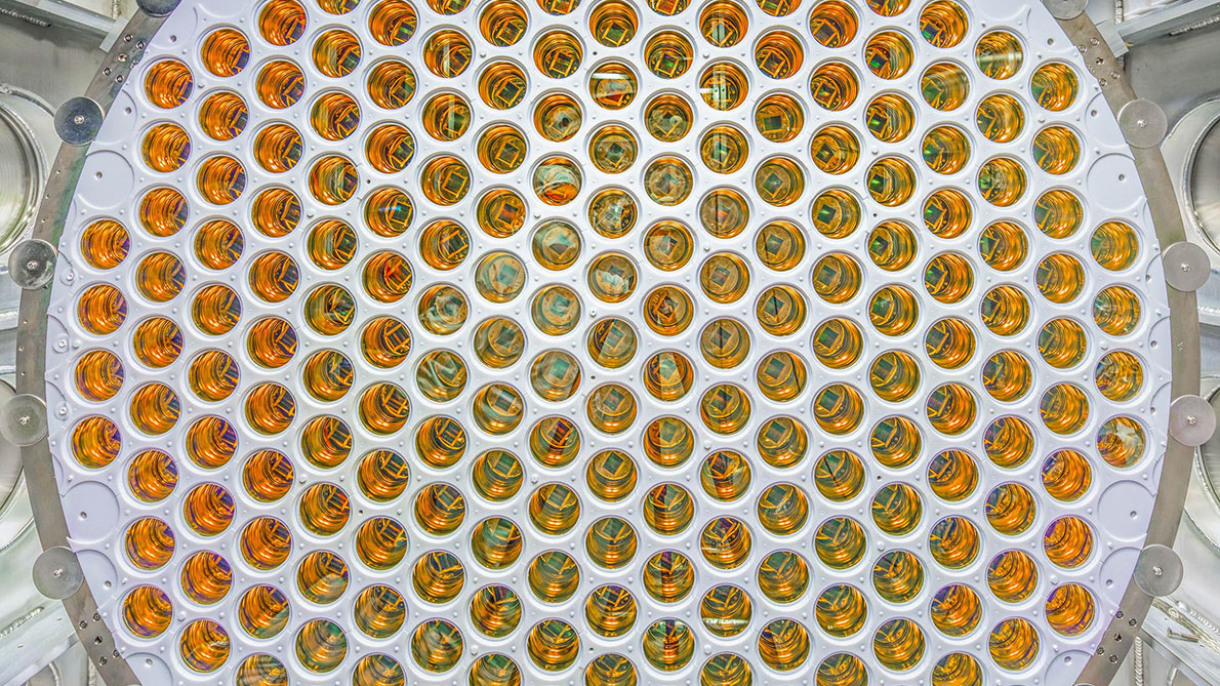
The current vanguard in the direct detection of dark matter is the LUX-ZEPLIN (LZ) experiment, a marvel of engineering buried nearly a mile beneath the Black Hills of South Dakota at the Sanford Underground Research Facility. In 2025, the LZ collaboration unveiled its most comprehensive dataset to date, pushing the boundaries of what is possible in the search for low-mass WIMPs. This monumental effort did not just set new exclusion limits; it demonstrated the extraordinary capabilities of its liquid xenon time projection chamber (LXe TPC), a technology that forms the bedrock for future, even grander, endeavors.
The LZ detector, with its seven tons of ultra-pure liquid xenon, operates on a simple yet ingenious principle: when a dark matter particle interacts with a xenon atom, it produces both scintillation light and ionization electrons. These signals are then meticulously collected and amplified, allowing physicists to reconstruct the interaction's energy and location. The precision required is staggering. Every stray electron, every minute background radiation, must be accounted for and rejected. The latest analysis from LZ cemented its position as a global leader, particularly in probing the low-mass range of the WIMP spectrum, a region that has proven notoriously difficult to explore.
Beyond its primary mission of hunting WIMPs, LZ achieved another groundbreaking milestone: it delivered 4.5 sigma evidence for solar neutrinos via coherent elastic neutrino-nucleus scattering (CEvNS). This achievement, announced in 2025, represents a significant scientific breakthrough. "The CEvNS detection proves our technology is not just for dark matter, but also for fundamental neutrino physics," stated Dr. Kevin J. Lang, a lead physicist on the LZ experiment, in a private communication in early 2026. "It validates our detector's extraordinary sensitivity and calibration, which is crucial for distinguishing between genuine dark matter signals and background noise from neutrinos." This capability is not merely an interesting side note; it is a critical step in understanding the neutrino background that will inevitably plague future, even more sensitive, dark matter searches. Knowing what neutrinos look like in these detectors is essential to confidently identifying anything else.
The pursuit of dark matter is increasingly leveraging the bizarre and powerful principles of quantum mechanics. Traditional detectors, while impressive, often struggle with the incredibly faint signals expected from light dark matter particles. This is where quantum-enhanced sensors come into play, offering a paradigm shift in sensitivity. The TESSERACT detector, spearheaded by researchers at Texas A&M University, exemplifies this cutting-edge approach. It employs advanced quantum sensors designed to amplify signals that would otherwise be lost in the inherent noise of conventional systems.
These quantum sensors are not just incrementally better; they represent a fundamental rethinking of how we detect exotic particles. Building upon innovations from projects like SuperCDMS, TESSERACT utilizes techniques such as voltage-assisted calorimetric ionization. This method allows for the detection of incredibly low-energy interactions, crucial for identifying lighter dark matter candidates. The ability to distinguish a single electron or phonon signal from background noise is a testament to the ingenuity of these quantum designs. "We are pushing the absolute limits of signal detection, discerning interactions that are literally one-in-a-decade events," explained Professor Sarah Chen, director of the TESSERACT collaboration, during a virtual conference in January 2026. "Our quantum sensors are like hyper-sensitive ears, picking up the faintest whispers in a hurricane of ambient energy."
The significance of such low-threshold detection cannot be overstated. Many theoretical models suggest that dark matter particles could be lighter than WIMPs, meaning they would impart less energy during an interaction. Detecting these minuscule energy transfers requires a detector capable of single-photon sensitivity or the ability to measure individual electrons. TESSERACT's success in this area opens up vast new territories in the dark matter parameter space, areas previously inaccessible to even the most advanced detectors.
While current detectors like LZ have achieved remarkable sensitivity, the sheer rarity of dark matter interactions dictates a clear path forward: scale. To increase the probability of a detection, future experiments must employ significantly larger target masses. This understanding has led to the formation of ambitious consortia and the planning of colossal detectors that dwarf their predecessors. The XLZD Consortium, established in 2021, is a prime example of this collaborative, large-scale vision. Bringing together the expertise of the LZ, XENON, and DARWIN teams, XLZD aims to construct a 60-ton liquid xenon time projection chamber.
To put this into perspective, 60 tons of liquid xenon is roughly ten times the target mass of LZ. Such a massive detector, when fully operational, is projected to probe dark matter-nucleon cross-sections down to an astonishing \(10^{-43}\) cm² for WIMPs in the 2-3 GeV range, and dark matter-electron cross-sections down to \(2 \times 10^{-41}\) cm² for 10 MeV particles. These are sensitivities that would have been unimaginable just a decade ago. The sheer scale of XLZD is designed to compensate for the incredibly weak interactions expected, turning a single event per year into a statistically meaningful observation.
The engineering challenges involved in building and operating such a gargantuan detector are immense. It requires not only an enormous quantity of ultra-pure liquid xenon but also sophisticated cryogenic systems to maintain its operating temperature of approximately -100 degrees Celsius. Furthermore, the detector must be housed deep underground to shield it from cosmic rays, requiring vast new underground cavern construction. The UK is actively bidding to host XLZD at the Boulby mine, a former potash and salt mine in North Yorkshire, which already boasts significant underground laboratory space. This international collaboration underscores the global scientific community's unified resolve to unravel the dark matter enigma.
On December 8, 2025, the LZ collaboration delivered a report that perfectly encapsulated the dual nature of modern dark matter hunting: a triumph of sensitivity that simultaneously erected a new barrier to discovery. The team announced not only world-leading exclusion limits for WIMPs above 5 GeV, but also the first statistically significant observation of boron-8 solar neutrinos via coherent elastic neutrino-nucleus scattering in a liquid xenon detector. This was a watershed moment, a technical validation that cut both ways.
"LZ now boasts the world's first statistically significant observation of boron-8 solar neutrinos... as well asThe Price of the Ultimate Discovery
The significance of this multi-pronged, multi-billion-dollar hunt extends far beyond particle physics. It represents humanity's most direct assault on the fundamental composition of reality. Success would trigger a scientific revolution on par with the discovery of the electron or the Higgs boson, rewriting textbooks from cosmology to quantum mechanics overnight. A confirmed detection would not merely fill a blank space in the Standard Model; it would open an entirely new field of physics, revealing the properties and potential interactions of a substance that has shaped the cosmos since its infancy. The technological spillover alone is profound. The quantum sensors, ultra-pure material engineering, and cryogenic systems developed for these detectors have already found applications in medical imaging, quantum computing, and national security. The quest for dark matter, in essence, is forcing us to build a new class of scientific instrument capable of perceiving a hidden layer of the universe.
"We are not just building a bigger detector; we are building a new type of observatory for the rarest events in the universe. The technological roadmap for XLZD will define precision measurement for the next thirty years." — Dr. Fruth, lead author of the XLZD Design Book, in a 2025 interview.Beyond the laboratory, the search carries a profound philosophical weight. For centuries, our understanding of the cosmos was limited to what we could see. The realization that the visible universe is merely a fraction of the whole represents a Copernican-scale demotion. Finding dark matter would complete that intellectual journey, proving that our scientific methods – inference, prediction, and technological ingenuity – can reveal truths completely inaccessible to our senses. It would be the ultimate validation of the scientific process: using the human mind to decode a universe that is, in its majority, fundamentally invisible.
The Elephant in the Clean Room: Cost, Competition, and the Null Result
For all the optimism, a critical perspective demands we address the elephant in the ultra-clean, radiation-shielded room. These experiments are staggeringly expensive. The XLZD consortium is discussing a project with a price tag likely exceeding one billion dollars. This raises legitimate questions about resource allocation in a world facing immediate, existential crises. Proponents argue that fundamental research is the bedrock of future technology and that understanding our universe is an intrinsically human endeavor. Critics counter that such sums could be directed toward climate science, disease research, or sustainable energy with more tangible, near-term benefits for humanity. There is no easy answer, and the physics community must continually justify this grand investment to the public that ultimately funds it.
A more subtle, internal controversy revolves around the "big detector" paradigm itself. The field has largely coalesced around scaling up liquid noble gas technologies. This creates a potential monoculture. While projects like Oscura and TESSERACT explore alternative pathways, the vast majority of funding and intellectual capital flows toward the XLZDs and DarkSide-20ks of the world. This carries risk. What if dark matter interacts in a way that liquid xenon is inherently poor at detecting? The history of science is littered with examples where the answer came from an unexpected direction, often from a smaller, more agile experiment pursuing a heterodox idea. The current trend toward colossal, decades-long collaborations could inadvertently stifle the high-risk, high-reward research that often leads to breakthroughs.
And then there is the most haunting possibility: the null result. Every new limit set, every parameter space excluded, is celebrated as progress. But a point may come where the limits become so stringent that the WIMP paradigm itself begins to crumble. If XLZD, after a decade of operation and billions spent, sees nothing, the field could face an existential crisis. Would the community have the courage to abandon its favorite hypothesis? Or would it simply propose an even larger, more expensive detector, chasing a signal that may not exist in that form? The psychology of a decades-long search, with careers and reputations built on a particular model, creates a powerful inertia that is difficult to overcome.
The recent DESI data suggesting a potential weakening of dark energy further complicates the picture. It hints that our entire cosmological framework, the Lambda-CDM model that provides the rationale for dark matter's existence, might require revision. Could the gravitational effects we attribute to dark matter be the result of a misunderstanding of gravity itself, as modified Newtonian dynamics (MOND) proponents argue? While most evidence still strongly favors the particle hypothesis, next-generation detectors like XLZD will, ironically, also provide some of the most stringent tests of these alternative theories. Their failure to detect particles would become a key data point for the alternatives.
The 2030 Horizon: A Decade of Definitive Answers
The timeline is now concrete, moving from speculative planning to hardened engineering schedules. The pivot point is the end of 2026, when the DarkSide-20k detector at LNGS is scheduled for its first filling with 20 tons of fiducial liquid argon. The following years will see a phased transition. The LZ experiment will continue taking data through 2028, pushing its sensitivity to lower masses while serving as a vital testbed for XLZD technologies. The final design freeze for the 60-ton XLZD is expected by 2027, with a site decision—likely between the Boulby mine in the UK and an existing facility like LNGS—following shortly after. Construction of the cavern and the detector's cryostat would dominate the late 2020s.
By the early 2030s, XLZD should be coming online, coinciding with the launch of the LISA gravitational wave observatory around 2035. This is not a coincidence but a strategy. The era of single-messenger astronomy is closing. The next decade will be defined by multi-messenger astrophysics, combining direct particle detection, gravitational wave signatures, and precision cosmological mapping from instruments like the Vera C. Rubin Observatory. A potential dark matter signal in XLZD could be correlated with anomalous gravitational wave events from LISA, perhaps revealing the "spikes" of dense dark matter around black holes. A neutrino observation in DarkSide-20k could be cross-checked against a galactic supernova signal in hundreds of other detectors worldwide.
The prediction, then, is not merely for bigger machines, but for a connected network of perception. The individual experiments—XLZD, DarkSide-20k, Argo, the gravitational wave observatories—are becoming nodes in a global sensor network attuned to the universe's hidden frequencies. The answer to the dark matter question may not arrive as a single, unambiguous event in one detector. It may emerge as a statistical pattern across this entire network, a whisper that only becomes clear when heard by a dozen different ears.
We stand at the threshold of a decade that will deliver definitive answers. Either these monumental instruments will finally capture the particle that binds the cosmos, inaugurating a new epoch of physics, or they will systematically eliminate the leading candidate, forcing a radical and painful reimagining of what dark matter could be. Both outcomes constitute discovery. The machinery we have built—part cathedral, part microscope, part listening post—is no longer just searching for an unknown particle. It is probing the limits of our own understanding, ready to tell us whether we have been brilliantly right, or magnificently wrong, about the nature of most of the universe. The silence deep underground is about to become very eloquent.
Your personal space to curate, organize, and share knowledge with the world.
Discover and contribute to detailed historical accounts and cultural stories. Share your knowledge and engage with enthusiasts worldwide.
Connect with others who share your interests. Create and participate in themed boards about any topic you have in mind.
Contribute your knowledge and insights. Create engaging content and participate in meaningful discussions across multiple languages.
Already have an account? Sign in here

Cosmologists challenge 40-year dogma: dark matter may have been born hot, screaming at near-light speed in the universe'...
View Board
New research reveals dark matter may have been born red-hot, moving near light speed, challenging 40 years of cold dark ...
View Board
Astronomers uncovered the Champagne Cluster on New Year's Eve 2025, revealing two galaxy clusters in a violent merger, o...
View Board
From Big Bang chaos to cosmic order—new discoveries reveal dark matter's violent origins, red-hot birth, and hidden gala...
View Board
The world's largest space camera, weighing 3,000 kg with a 3.2-gigapixel sensor, captures 10 million galaxies in a singl...
View Board
NASA's Habitable Worlds Observatory, set for a 2040s launch, aims to directly image Earth-sized exoplanets and detect li...
View Board
ALMA detected a superheated gas halo around SPT2349-56, a 12.4-billion-year-old protocluster only 1.4 billion years old,...
View Board
X1.9 solar flare erupts, triggering severe radiation storm & G4 geomagnetic storm within 25 hours, exposing Earth's vuln...
View Board
A newly detected interstellar comet, 3I/ATLAS, streaked past Mars in late 2025, offering humanity its first direct sampl...
View Board
CERN's Large Hadron Collider achieves alchemy, converting lead to gold via ultra-peripheral collisions, validating quant...
View Board
Spaceflight rapidly rewrites human gene expression, accelerating aging and stressing stem cells, as new studies reveal p...
View Board
Perseverance rover deciphers Mars' ancient secrets in Jezero Crater, uncovering organic carbon, minerals, and patterns h...
View Board
A Swiss astrologer’s chilling prophecy, collaboration with Goebbels, and tragic fate in Buchenwald expose the dark inter...
View Board
Rubin Observatory'spre-survey tests uncover 12,700 asteroids, including 11,000 in a single batch, using its 3.2-gigapixe...
View Board
Tiangong vs. ISS: Two space stations, one fading legacy, one rising efficiency—China’s compact, automated lab challenges...
View Board
Quantinuum files for $20B IPO, betting trapped-ion quantum tech can outpace rivals despite minimal revenue.
View Board
A typographical error—a missing overbar—doomed NASA's Mariner 1, sparking a $80 million failure that reshaped software s...
View Board
NASA and ESA race to catalog millions of near‑Earth asteroids, using infrared telescopes and AI to spot threats before t...
View Board
NASA's Artemis II mission marks humanity's first crewed lunar journey in over 50 years, testing Orion's life-support sys...
View Board
Geophysicists declare Europa's seafloor erupts with active volcanoes, fueling plumes that may carry alien life's chemica...
View Board
Comments