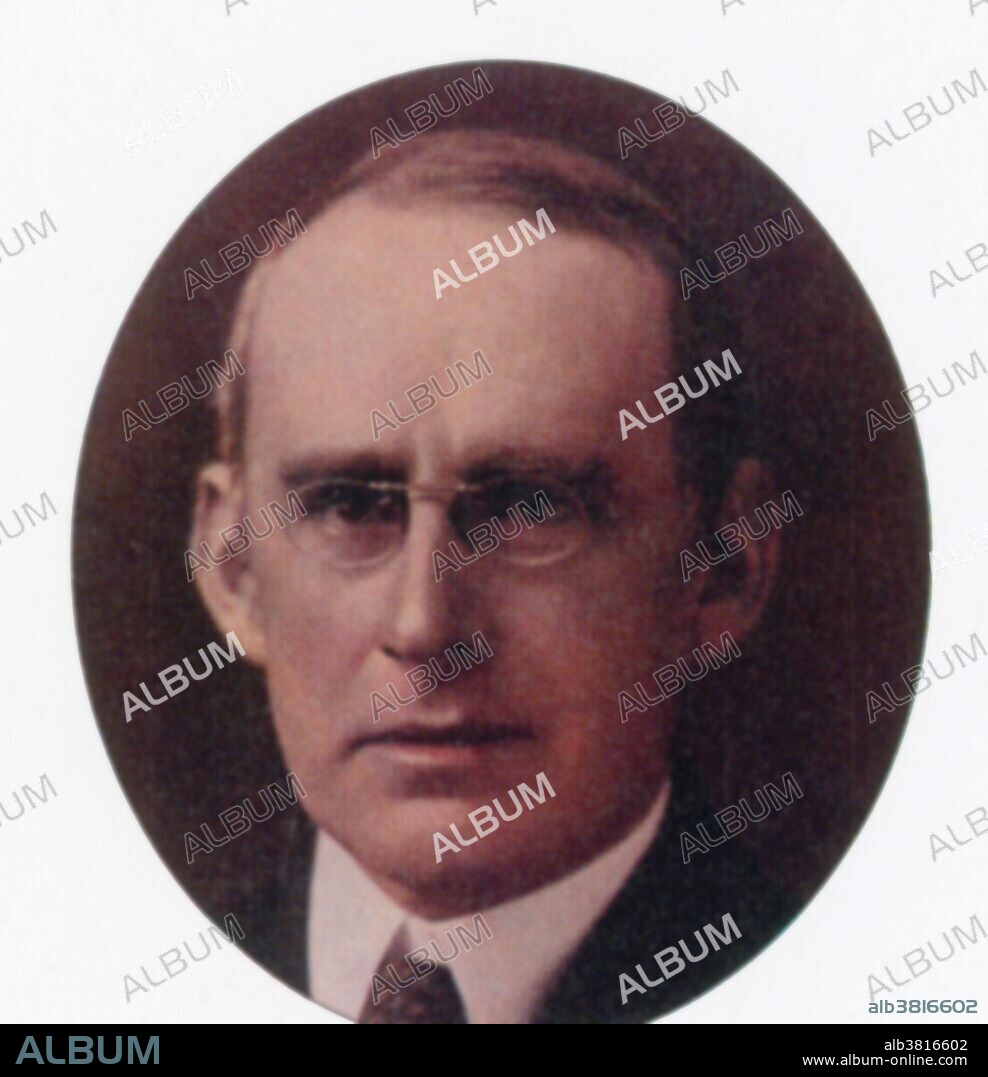
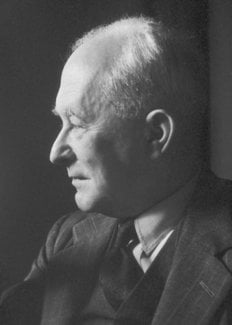
Arthur Stanley Eddington, a name that resonates profoundly within the realms of astrophysics and cosmology, remains an emblematic figure due to his influential contributions to our understanding of the universe. Not just a scientist, but a communicator, philosopher, and a pivotal bridge connecting the abstract realm of Einstein's relativity to observable confirmations, Eddington's legacy is one that continues to illuminate the pathways of modern cosmological discoveries.
Early Life and Education
Born on December 28, 1882, in the small coastal town of Kendal in England, Eddington was immersed in an environment that valued education and intellectual curiosity from an early age. His father, an educational administrator, unfortunately passed away when Eddington was just two years old. Despite financial hardships, Eddington and his family maintained their allegiance to rigorous Quaker values, a belief system that would inform Eddington's philosophical outlook throughout his life.
Eddington's academic journey began at Brymelyn School in Weston-super-Mare, where his exemplary skills in mathematics rapidly distinguished him from his peers. This led to his enrollment at Owens College in Manchester at a mere age of 16, and subsequently, a scholarship to Trinity College, Cambridge. At Cambridge, Eddington’s prowess in mathematics flourished, earning him the prestigious Smith's Prize and thereby setting the foundation for his future scientific endeavors.
Path to Prominence
After completing his studies, Eddington joined the Royal Observatory in Greenwich as Chief Assistant. His tenure at the observatory honed his skills in observational astronomy and provided him with profound insights into the mechanics of stars. This phase marked the beginning of Eddington's venture into the depths of astrophysics.
In 1913, Eddington was appointed Plumian Professor of Astronomy at the University of Cambridge, a significant position that allowed him the autonomy to pursue his research interests with fervor. It was during this period that he became enraptured by the enigmatic ideas of Albert Einstein, who had published his Theory of General Relativity in 1915, a theory initially met with skepticism and little understanding outside of Germany.
The Eclipse Expedition of 1919
Eddington's most celebrated contribution to science is arguably the validation of Einstein's General Theory of Relativity during the solar eclipse of 1919. Comprised of concepts that challenged classical Newtonian perspectives, Einstein's theory proposed that gravity was not just a force but a product of the curvature of space-time caused by massive objects. To verify this, Eddington orchestrated an expedition to observe the bending of starlight around the sun, a direct prediction of General Relativity.
The total solar eclipse on May 29, 1919, provided the perfect setting for this verification. Eddington led one of two observation teams to the island of Príncipe off the west coast of Africa, while the other headed to Sobral, Brazil. Observations from these expeditions indeed confirmed that starlight passing near the sun was deflected by the amount predicted by Einstein's equations. This empirical validation catapulted Einstein to worldwide fame and marked a pivotal shift in modern physics, underscoring the universe's incomprehensible nature both mystical and mathematical.
Legacy and Impact
Eddington's expeditious verification of Einstein’s theory is often considered one of the landings on the shores of modern scientific enlightenment. However, his impact did not conclude with the eclipse expedition. Eddington's pursuits extended into the fields of stellar structures and the famous Eddington Limit, which describes the balance between radiation pressure and gravitational pull in a star, a fundamental principle in astrophysics.
Moreover, Eddington was a prolific science communicator. His writings, such as "The Internal Constitution of the Stars" and "The Mathematical Theory of Relativity," were designed to make complex subjects comprehensible, opening the doors of advanced astrophysical concepts to non-experts. These works contributed greatly to public understanding and appreciation of science during an era burgeoning with scientific revolutions.
Arthur Eddington's life paints the picture of a scientist striving not just to peer deeply into the cosmos but to invite humanity into that gaze, to wonder, and to understand. His story is imbued with the spirit of inquiry, the tenacity of scientific rigor, and an endless curiosity about the universe. Eddington’s passport into the annals of scientific history was stamped by an unyielding commitment to bridging the vast distances between theoretical physics and empirical reality, a legacy that remains pivotal as we continue exploring the cosmos today.
Advancements in Stellar Physics
Arthur Eddington's contributions to the field of stellar physics are both profound and enduring. His work delved deep into understanding the internal mechanics of stars, laying the groundwork for many concepts that contemporary astrophysical research is built upon. In particular, Eddington aimed to decipher the equilibrium of forces within stars, focusing on why stars do not collapse under their own gravity.
At the heart of Eddington's stellar physics lay the Eddington Limit, a concept that describes the maximum luminosity a star can achieve while maintaining a balance between gravitational pull and radiation pressure. Stars emit energy through radiation, which would typically cause them to expand. However, gravity works in opposition, countering that outward push. The Eddington Limit determines the point at which these forces achieve equilibrium. A star exceeding this limit would expel its outer layers due to the overwhelming radiation pressure, making this concept crucial for understanding stellar stability and evolution.
Eddington’s insights extended further, where he explored the principles of thermonuclear processes that might power stars, an area building the preface to what we know today about nuclear fusion reactions taking place at a star’s core. Although Eddington lived before nuclear fusion was fully understood, his conjectures hinted at the transformation of hydrogen into helium as a pivotal energy source. This foresight paved the way for later discoveries that confirmed his hypotheses, making him a crucial contributor to our understanding of stellar energy production.
Philosophical Musings and the Nature of Knowledge
Apart from his groundbreaking scientific achievements, Eddington was deeply philosophical about the implications of scientific discoveries on human knowledge and existence. He often ventured into discussions beyond empirical data and mathematical formulations, considering the broader philosophical ramifications of scientific understanding.
Eddington was a pioneer in advocating for the interpretation of scientific phenomena within a broader philosophical and even religious framework. His belief system, rooted in Quaker values, resulted in a conviction that science and spirituality could coexist harmoniously rather than conflict. This perspective often led him to argue that while science is an invaluable tool for exploring the universe, it should not be seen as the sole arbiter of truth. Instead, Eddington emphasized the need to understand the limits of scientific knowledge and to remain open to other avenues of understanding.
His book, "The Nature of the Physical World," reflected this philosophical contemplation. Here, Eddington discussed reconciliation between the laws of physics and concepts of free will, engaging readers with ideas about the subjective perception of reality versus its objective analysis. It was a work that resonated with both scientists and philosophers, pushing the boundaries of how scientific knowledge is integrated with human understanding.
Eddington's Influence on Scientific Culture
Arthur Eddington's influence extended beyond his direct contributions to science. Through his effective communication and public engagement, Eddington played a pivotal role in shaping scientific culture and perceptions in the 20th century. By translating complex scientific theories into accessible ideas, he became a crucial figure in popularizing science during an era characterized by rapid advancements.
Eddington's amicable relationship with the media and his efforts to garner public interest in science helped demystify abstract concepts such as relativity. Through lectures, publications, and public engagements, he cultivated a newfound respect and curiosity for scientific inquiry among the general populace. In doing so, Eddington laid the groundwork for a more enlightened public discourse, encouraging widespread interest in the unfolding mysteries of the cosmos.
Moreover, Eddington’s work encouraged international collaboration among scientists. During a time when global cooperation was often impeded by political tensions, especially post-World War I, Eddington maintained correspondences and exchanges with scientists across borders, emphasizing science's role as a universal endeavor. This approach not only enriched scientific advancements but also promoted pacifism and unity through shared scientific pursuits.
Legacy and Continuation
Eddington's legacy is multifaceted, encompassing his scientific contributions, philosophical insights, and cultural influence. He served as an intellectual compass for future generations of scientists, setting a standard for meticulous inquiry and open-minded exploration. His work, particularly on stellar processes and relativity, continues to be a cornerstone in physics and cosmology, esteemed for both its historical significance and ongoing relevance.
In the decades since Eddington's pioneering efforts, countless discoveries have refined and built upon his theories, yet the essence of inquiry he embodied continues to inspire new generations of scientists. Whether it's in mastering the cosmos or contemplating the universe's philosophical implications, Eddington's overarching message persists — that the quest for understanding, coupled with humility and open-mindedness, leads to the boundless frontiers of knowledge.
In academic circles today, educators still draw upon Eddington’s knack for communication and accessibility, striving to engage and inspire in the same manner he did. His life’s work remains a testament to the transformative power of interconnected thinking, advancing not just the scientific community but expanding humanity’s very imagination in its quest to comprehend the universe.
Challenges and Controversies
Despite Arthur Eddington's enduring contributions and revered status in the annals of science, his career was not without controversies and challenges that underscored the complexities and competitive nature of academic life. One such controversy arose around the Chandrasekhar Limit, a theoretical boundary related to the fate of collapsing stars.
In the 1930s, a young Indian physicist, Subrahmanyan Chandrasekhar, demonstrated that white dwarfs, the remnants of medium-sized stars, have a maximum mass (approximately 1.4 times that of the Sun) beyond which they cannot stabilize themselves, leading them to collapse further into neutron stars or black holes. While this discovery later gained acceptance and earned Chandrasekhar a Nobel Prize, Eddington initially opposed the idea. During a meeting of the Royal Astronomical Society in 1935, Eddington famously ridiculed the notion of black holes as "stellar buffoonery," a critique indicative of the intense scientific debates of the era.
Eddington’s resistance did not stem merely from scientific disagreements but reflected his philosophical reluctance to accept a concept as sensational and seemingly inconceivable as black holes. This incident exemplifies the occasional clash between established scientific authority and revolutionary ideas, further complicating the dynamic progress of knowledge.
Eddington’s Interdisciplinary Approach
Eddington's work was characterized by its interdisciplinary nature, blending physics, mathematics, and philosophy into a cohesive approach. This interconnected method was evident in how Eddington tackled the mysteries of the universe, analyzing cosmic phenomena not only with mathematical rigor but also with a philosophical lens that sought to contextualize scientific discoveries within broader narratives of understanding.
Eddington’s interdisciplinary inquiries often led him to explore the philosophical implications of modern physics on human perception. His outlook straddled the overlap between the deterministic nature of classical mechanics and the probabilistic themes emerging in quantum physics. Such examinations are seen in "The Philosophy of Physical Science," where he contemplated the limitations of scientific observation and theorized about what could lie beyond empirical evidence.
In today's multidisciplinary scientific ecosystem, Eddington’s approach is seen as pioneering. Current scientific endeavors increasingly recognize the importance of crossing traditional disciplinary boundaries to solve complex problems. Eddington’s legacy in promoting such interdisciplinary inquiry is thus not only historically significant but also continues to offer guidance for navigating the uncharted territories of science.
Honors and Recognition
Arthur Eddington's contributions have been celebrated through numerous accolades and recognitions. He received a knighthood in 1930, acknowledging his invaluable services to astronomy and cosmology. Throughout his career, Eddington was also awarded several prestigious international honors, including the Henry Draper Medal from the National Academy of Sciences, reflecting his prominent role in advancing astrophysical research on a global stage.
Beyond personal honors, Eddington's impact is also commemorated through academic and research institutions. The Eddington Astronomical Society and various academic chairs and lectureships named in his honor serve as enduring tributes to his influence. These recognitions highlight the breadth of his contributions and the lasting mark he left on the world of astronomy.
The Eddington Enigma
Arthur Eddington was an enigma of his time, a scientist whose quest was not just for empirical discoveries but for a deeper understanding of our place in the universe. While his work in advancing Einstein's theories and understanding stellar processes is celebrated, his philosophical inquiries prompt introspection on the multifaceted nature of knowledge itself.
Eddington's life embodied the essence of scientific exploration, characterized by curiosity, skepticism, and the continuous drive to bridge empirical evidence with philosophical understanding. His journey was a testament to the idea that in pursuing scientific understanding, one also uncovers questions about the nature of reality and the quest for meaning within the cosmic expanse.
Conclusion
Arthur Eddington's story is one of intellectual bravery and imagination, venturing beyond the confines of conventional science into realms where mathematical reasoning and philosophical reflection coexist. His legacy, composed of steadfast scientific inquiry coupled with open-mindedness, provides inspiration as we continue to explore the elegant mysteries of the cosmos.
Today, Eddington's work continues to serve as a guiding beacon for astronomers, physicists, and philosophers alike. His ability to synthesize diverse aspects of human thought into a coherent understanding of the universe remains a foundational asset for addressing the complex questions that define our existence. As we progress deeper into the unknown, Eddington’s legacy reminds us that the universe is not just a scientific puzzle to be solved but a wondrous mystery to be experienced, explored, and appreciated in all its infinite glory.
Haporium is a revolutionary platform that lets you organize your web browsing experience with customizable dashboards and boards. Create, manage, and share your favorite content collections.
Join us today and get:
The right to be one of the first pioneers
Unlimited dashboards and boards
Access to exclusive beta features
Priority support from our team
We use cookies to enhance your experience. By continuing to use this site, you agree to our Cookie Policy.


















Comments