

Explore Any Narratives
Discover and contribute to detailed historical accounts and cultural stories. Share your knowledge and engage with enthusiasts worldwide.
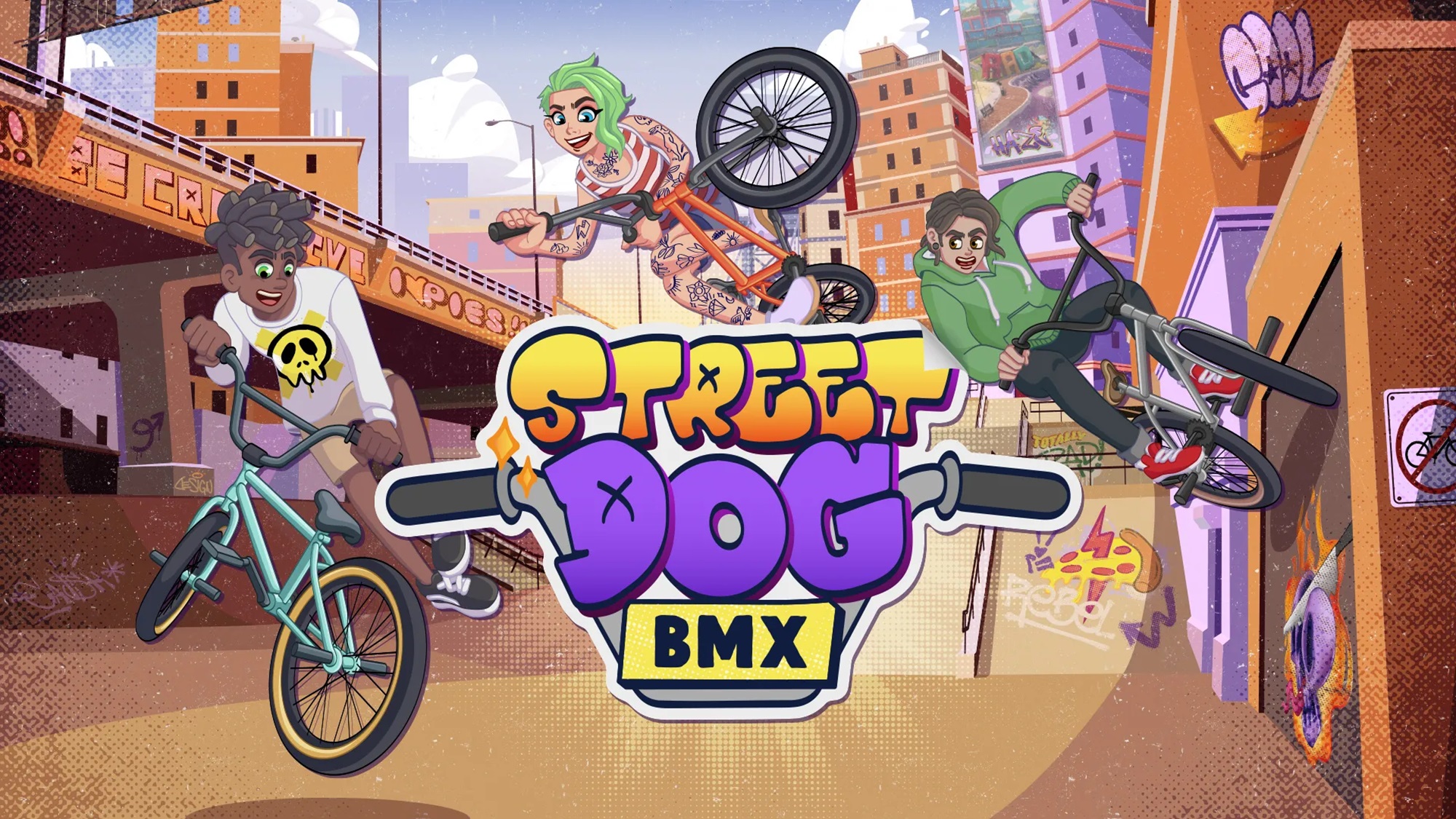
The last trick landed, the points tallied, and then the screen went black. For decades, that was the rhythm of arcade sports games: a burst of adrenaline followed by the cold finality of a score screen. But in a modest home office in late 2022, Adam Hunt stared at a different kind of screen. On it, a polygon BMX rider, rough and untextured, balanced precariously on a pixelated ledge. Hunt, a lifelong BMX rider and a veteran of the games industry, had spent nights and weekends for two years already coaxing this digital rider to life. He wasn't just building a game; he was trying to bottle a feeling—the specific, liberating sensation of a perfect run where bike and body move as one. The result of that four-year solitary grind, Streetdog BMX, is now barreling toward a January 14, 2026 release on Steam. It represents more than a new entry in a niche genre. It is a direct, unfiltered transmission from one enthusiast's brain to your PC.
The story of Streetdog BMX is inextricably linked to the story of Adam Hunt. As the founder of the one-person studio Yeah Us! Games, Hunt has operated not as a corporate entity chasing trends, but as a craftsman fulfilling a personal vision. The game’s development, spanning from early 2022 to its imminent launch, mirrors the DIY ethos of BMX culture itself. This isn't a title born from boardroom focus groups analyzing the "extreme sports market." It is, as the Steam page bluntly states, a game "by BMX riders, for BMX riders." That phrase risks sounding like marketing copy, but the mechanics betray its truth. The trick list reads like a glossary from a bike magazine: fakies, manuals, icepicks, wallrides, barspins, backflips, crooked grinds, and the notoriously difficult crankflip. This isn't a simplified approximation; it's a studied translation.
"As a long term fan of both BMX and video games, I’m thrilled to be able to bring them both together in Streetdog BMX," Hunt stated in the game's announcement press release in November 2025.
The thrill he mentions is palpable in the game's design philosophy, which he calls "Your Bike, Your Rules." It’s an invitation to play your own way. You can chase the high-score combo frenzy that defined classics like Tony Hawk’s Pro Skater and Dave Mirra Freestyle BMX. Or you can ignore the scoring altogether, treating the six expansive maps as digital skateparks for freestyle flow and exploration. This dual-purpose design is a subtle but critical insight. It acknowledges that the joy of riding—whether on concrete or in a CPU—is not monolithic. Some days you want to compete, even against yourself. Other days, you just want to roll.
Streetdog BMX constructs its playgrounds with a clear understanding of what makes these games tick. The six maps are not mere backdrops; they are intricate courses built from interlocking lines of possibility. You'll find the expected skateparks, complete with bowls, ramps, and rails, but the game ventures beyond the foam-padded confines. It sends riders across gritty construction zones, over rain-slicked rooftops, and through the labyrinthine streets of a stylized city. Each environment is peppered with what the genre reverently calls "gaps"—specific jumps between objects that, when cleared, unlock additional points and challenges. Finding them requires a blend of observation and audacity.
This is where the 270 handcrafted challenges come into play. They are the game's structured curriculum, pushing players to engage with every nook and cranny of the world. Some are straightforward timed races from point A to point B. Others are precision-based stunt objectives. The most demanding will be the record-breaking combo trials, demanding a player chain together wallrides, grinds, and aerial spins in a single, unbroken sequence of controlled chaos. The number, 270, is significant. It speaks to density, to a world meant to be mastered rather than merely toured. For comparison, the seminal Tony Hawk's Pro Skater 2 featured 190 gaps across its levels. Hunt is aiming for a similar legacy of depth.
The tools for tackling these challenges are deeply customizable. Players can tweak their rider's appearance—clothes, shoes, hair, tattoos, accessories—building a visual identity. More importantly, they can modify their bike, adjusting the frame and chainring and playing with a full spectrum of colors. This isn't just cosmetic. In the precise physics of an arcade BMX sim, the feel of a bike is paramount. Altering its components can subtly change handling, allowing players to find a setup that matches their personal trick style, whether they favor technical grinds or huge air.
"The response from the community following our announcement has been incredible," Hunt noted in a Steam community post in late 2025. "Seeing players dissect the trailer, speculate on the trick system, and share their own BMX stories has been the best fuel to get through this final stretch of development."
That final stretch leads to a January 14, 2026 release date, a target that feels both imminent and the product of a long journey. The game will launch exclusively on PC via Steam, a pragmatic choice for a solo developer that allows for a direct relationship with the audience. The Steam page, active under App ID 2707870, already supports multiple languages including English, Spanish, French, and Japanese, indicating an intention to court the global extreme sports gaming community from day one.
What emerges from these facts is a clear picture. Streetdog BMX is not attempting to reinvent the wheel—or the sprocket. Instead, it seeks to refine a beloved formula, to polish it with modern tools and deliver it with an authenticity that can only come from true fandom. It exists at the intersection of a nostalgic genre revival and a very personal passion project. The question isn't whether it will capture the spirit of early-2000s extreme sports games. The evidence suggests it will. The more compelling question is whether, in its dedication to that spirit, it can carve out its own identity and find an audience in a 2026 gaming landscape vastly different from the one that birthed its inspirations.
Eleven days from launch, the conversation around a PC game inevitably turns to specs. Can it run? For Streetdog BMX, the answer is a resounding, almost nostalgic yes. The minimum system requirements, as listed on Gadgets360, are not a barrier but an invitation. They ask for Windows 7 or higher, just 8GB of RAM, and a GPU from a bygone era—an Nvidia GeForce GTS 450 or AMD Radeon HD 5570. The entire experience needs only 10GB of storage and DirectX 11. These numbers are not just low; they are archaeological. They suggest a game engineered for flow, not fidelity, prioritizing consistent performance on a decade-old laptop over ray-traced puddles on a rooftop gap. In an industry chasing photorealistic sweat droplets, this is a radical statement of intent.
"A game like this lives or dies by its frame rate. If you're grinding a rail and the game hitches, the run is dead. Hunt's choice to target such accessible hardware is a direct investment in the player's rhythm. It's a promise that the trick, not the texture, is the star." — Maya Torres, Senior Editor, PC Performance Bench
This technical frugality reveals a core philosophy. Streetdog BMX is not trying to win a graphics war. It is trying to win a feel war. The modest specs ensure that the January 14, 2026 release window isn't accompanied by a wave of performance panic. They democratize access, welcoming players who might still be riding hardware from the era that inspired the game itself. But this choice carries a critical trade-off. The visual style, as seen in the 2025 release date trailer, leans into a stylized, low-poly aesthetic. It's clean and functional, but it lacks the visual punch of something like Session: Skate Sim or the chaotic detail of Skater XL. The game risks feeling dated on day one, not retro, but simply plain. When the trailer showcases "pure gameplay footage highlighting flow," it is implicitly arguing that gameplay is enough. For a genre built on style, that's a gamble.
The most defining—and potentially limiting—design decision is right there in the enrichment data: Single-player only. In 2026, this is not just a choice; it's a declaration of isolation. Adam Hunt has built a meticulously crafted playground and then bolted the gate shut behind you. Every one of those 270 challenges, every high score, every discovered gap is a conversation you have with yourself. This creates a potent, almost meditative focus. The pressure is internal. The victory is personal. There is no lobby full of screeching teenagers, no leaderboard hacked by script kiddies within hours of launch. It's just you, your bike, and the architecture.
"The single-player focus is a double-edged grind. It allows for a perfectly tuned, uninterrupted experience, a pure skill check. But it also removes the social catalyst that has kept games like Tony Hawk's Pro Skater 1+2 alive for years. Where's the one-upmanship? Where's the shared frustration over a missed combo?" — Leo Chen, Game Design Analyst, "The State of Play" Podcast
This design echoes the solo development journey itself. It is insular, focused, and perhaps a little lonely. The game offers no esports angle, no competitive multiplayer, not even asynchronous score battles. Your only benchmark is your previous best. For some, this is the ultimate appeal—a digital skatepark after hours, all to yourself. For others, it renders the experience curiously inert. Why master a difficult line if no one is there to see it? The game's extensive customization—rider clothes, bike parts, colors—feels almost poignant in this context. You are dressing up for a mirror.
Compare this to the landscape it enters. Recent successful indie sports titles, like Rollerdrome, married its single-player campaign with a global leaderboard system, creating a perpetual whisper of competition. Even classic arcade sports games thrived on the "beat your friend's score" dynamic. Streetdog BMX consciously rejects this. It asks a fundamental question: is the intrinsic joy of pulling off a perfect run enough to sustain a player in an era defined by shares, clips, and likes? The trailer's emphasis on "flow" suggests Hunt believes it is. The market will deliver its verdict by January 15th.
Let's be blunt: Streetdog BMX is standing on the shoulders of giants, and those giants cast a long shadow. The ghost of Tony Hawk's Pro Skater 2 haunts every combo system. The spirit of Dave Mirra Freestyle BMX lingers in every ramp transition. Hunt's passion is evident, but passion alone does not transcend influence. The game's six maps, while expansive, must contend with decades of player memory. Can a construction site bowl ever feel as iconic as the School II level? Can a rooftop course compete with the visceral geography of Manhattan from THPS4?
"Authenticity is a trap for games like this. The 'by riders, for riders' ethos gets you the right trick names, but does it get you the right feeling? The great arcade sports games were never simulations. They were cartoons. They exaggerated. Streetdog seems caught between honoring the reality of BMX and delivering the impossible fantasy that made those old games stick." — David Park, Game Critic and Author of "Pixelated Thrills: A History of Extreme Sports Games"
The game's challenges—timed races, stunt objectives, combo trials—are functionally identical to the tasks we've been completing since 1999. This is not innovation; it is preservation. In a genre that has seen little evolution, is preservation enough? The contrarian observation here is that this lack of innovation might be its greatest strength for a specific audience. For players who felt abandoned by the shift toward simulation in titles like Skater XL, Streetdog BMX offers a safe harbor. It is a deliberate anachronism. It is the game you remember, rebuilt with modern tools.
"Watching the gameplay footage, I see the language of BMX translated correctly. The weight shift during a manual, the snap of a barspin. But I don't see the magic. Where's the personality? The old games had a punk rock attitude, a soundtrack, a vibe. This feels technically proficient but culturally silent." — Jenna Miller, Professional BMX Rider and Content Creator
This cultural silence is palpable. The enrichment data and trailers show no hint of a licensed soundtrack, no professional rider cameos, no branding beyond the game itself. It is a pure, unadorned gameplay vessel. This austerity can be read as a lack of polish or a defiant focus. In an age where games are often bloated with cross-promotions and seasonal battle passes, Streetdog BMX is just a game about riding a bike. But that very purity raises the stakes for its core mechanics. When you strip everything else away, the trick system must be flawless. The physics must sing. The level design must inspire. If those elements falter, there is nothing else to hold onto.
The release date trailer from 2025 shows fluid motion and a clean interface, but it reveals nothing about progression, reward, or narrative texture. Is there a career mode? A story? Or simply a list of challenges to check off? The pre-launch silence on these fronts is telling. It suggests a game that is confident in its foundational gameplay loop but perhaps unsure how to dress it up for a modern audience. The risk is that it delivers a competent but soulless tribute, a museum piece rather than a living sport. Can a game built on four years of solitary development capture the chaotic, communal energy that defined the genre's heyday? The evidence suggests it might not even be trying to.
The significance of Streetdog BMX launching on January 14, 2026 stretches far beyond its Steam page. It is a case study in the modern indie development ethos, where a single individual's obsession can manifest as a commercial product targeting a specific, underserved audience. This isn't just a BMX game; it is a flag planted in the ground for a certain kind of creative process—solitary, protracted, and driven by personal passion over market analytics. Its success or failure will be scrutinized not merely as a game's performance, but as a validation of a method. In an industry increasingly dominated by live-service goliaths and risk-averse sequels, Streetdog BMX represents the stubborn persistence of the artisan.
"Hunt's project is part of a vital counter-current. We're seeing a resurgence of deeply specific sports sims—surfing, skateboarding, snowboarding—driven by developers who are participants first. This isn't broad entertainment; it's a translation of a subculture. When it works, it creates a uniquely authentic experience. When it doesn't, it feels like an insider's diary that's hard to decipher. Streetdog BMX will be a key data point in understanding this movement's ceiling." — Dr. Anya Sharma, Professor of Digital Media Studies and author of "The Player-Developer: Identity and Creation in the Indie Age"
This game's legacy, regardless of its review scores, will be its existence. It proves that a genre declared commercially dormant by major publishers can be resurrected from a home office. It sends a signal to other niche enthusiasts: the tools are accessible, the distribution is direct, and an audience, however small, might be waiting. The four-year development cycle, a marathon of one, redefines scope for solo creators. It suggests that depth and breadth are still possible without a team of fifty, provided the vision is narrow enough and the will is ironclad.
Yet, purity of vision is a double-edged grind. The critical perspective on Streetdog BMX must grapple with its self-imposed limitations, which are as defining as its features. The staunch single-player focus is its greatest gamble. In the social ecosystem of 2026 gaming, where even single-player narratives have photo modes built for sharing and leaderboards are a standard expectation, choosing complete isolation is an archly traditionalist stance. It risks making the experience feel hermetic, a sealed capsule disconnected from the zeitgeist. The joy of discovery has no conduit. The frustration of a near-miss has no community to share it with. This design doesn't just avoid multiplayer; it rejects the social layer that has become the lifeblood of game longevity.
Furthermore, the commitment to accessible, low-poly visuals—while smart for performance—may undermine its ability to capture the imagination of new players browsing Steam. The game's aesthetic, functional as it is, lacks a distinctive hook. It doesn't have the hyper-stylized sheen of Hover: Revolt of Gamers or the gritty, VHS-filtered realism of Session. It risks being visually forgettable in a marketplace where the thumbnail is the first and sometimes only chance to grab attention. The "Your Bike, Your Rules" philosophy is admirable, but it places a tremendous burden on the moment-to-moment gameplay. If the trick system lacks that intangible "feel," if the physics are even slightly off, the entire structure collapses. There is no narrative, no social hook, no visual spectacle to fall back on.
The most pointed criticism may come from within the very subculture it aims to please. The "by riders, for riders" mantra sets a high bar for authenticity that the arcade-style mechanics might inherently contradict. A simulation purist will find it too forgiving; an arcade fan might find its trick list overly technical. By trying to sit between two stools—authentic BMX simulation and Tony Hawk-style fantasy—it could fail to satisfy either camp completely. The game must perform a delicate trick of its own: feeling real enough to earn respect, but fantastical enough to be fun.
January 14, 2026, is not an end point; it is a beginning. The launch is merely the moment Streetdog BMX stops being Adam Hunt's private project and starts being a public text. The immediate future hinges on the community's reaction in the days that follow. Will players dissect the maps, sharing hidden lines and optimal challenge routes on forums and Discord, building a meta-game despite the lack of official social tools? Will content creators find compelling narratives in the solitary pursuit of a high score, or will they pass it by for something more inherently shareable?
The concrete events are simple: the game unlocks on Steam. The predictions are more complex. If it finds its audience, the path forward likely involves iterative updates—new maps, new gear, perhaps even a surprise addition like a level editor, which would be a masterstroke. A console port seems a logical step given the modest hardware requirements, potentially opening the game to a broader audience in late 2026 or early 2027. If it stumbles, it will become a respected cult artifact, a lesson in passionate execution and commercial limitation.
Eleven days from now, the digital rider that began as untextured polygons on a developer's screen will be unleashed into the wild. Its success won't be measured in units alone, but in whether it makes a player, alone at their desk, feel for a moment the weightless pivot of a perfect fakie, the tense balance of a manual, the silent communion between rider and concrete. That was the feeling Hunt tried to bottle four years ago. On January 14th, we find out if the cap comes off.
Your personal space to curate, organize, and share knowledge with the world.
Discover and contribute to detailed historical accounts and cultural stories. Share your knowledge and engage with enthusiasts worldwide.
Connect with others who share your interests. Create and participate in themed boards about any topic you have in mind.
Contribute your knowledge and insights. Create engaging content and participate in meaningful discussions across multiple languages.
Already have an account? Sign in here

Pathologic 3 arrives January 9, 2026, wielding time-travel to deepen its signature despair, forcing players to rewrite t...
View Board
MIO: Memories in Orbit launches on Game Pass Jan 20, 2026, offering a polished metroidvania with fluid combat, hand-draw...
View Board
MIO: Memories in Orbit launches Jan 20, 2026, blending punishing Metroidvania gameplay with a haunting narrative on memo...
View Board
GTA 6 faces its toughest rival in 2026: GTA V's $10B legacy. Can Rockstar's sequel eclipse a game that redefined longevi...
View Board
Code Vein II invites players on a somber pilgrimage through time, blending Soulslike combat with a narrative of sacrific...
View Board
Cairn redefines climbing games with physics-driven realism, forcing players to read rock faces, manage stamina, and plac...
View Board
Pathologic 3 arrives January 9, 2026, a punishing survival RPG where time-travel meets plague diagnosis in a dying city,...
View Board
Code Vein 2 overhauls combat, expands customization with 200+ Formae, and rebuilds level design, addressing the original...
View Board
Code Vein 2 launches Jan 30, 2026, rewriting its anime Soulslike legacy with time-bending combat, deeper RPG systems, an...
View Board
Xbox Game Pass January 2026 delivers 11 new titles, including Star Wars Outlaws and Death Stranding: Director's Cut, whi...
View Board
Resident Evil Requiem blends classic survival horror with modern tech, delivering dual narratives of terror and action i...
View Board
Josef Fares' Split Fiction redefines co-op storytelling with its radical two-player-only design, selling 2M copies in a ...
View Board
Mortal Kombat 11: A Deep Dive into Its Enduring Legacy The arena lights flicker, a digital roar erupts, and then, the c...
View Board
Code Vein II redefines gothic action RPGs with time-bending combat, vast ruins, and a motorcycle-driven wasteland, but l...
View Board
Steel Century Groove launches Jan 28, 2026, blending mecha combat with rhythm RPG strategy, turning war machines into da...
View Board
Code Vein II rewrites fate with time-bending combat, deeper customization, and a bold single-companion system, launching...
View Board
Dynasty Warriors Origins DLC launches Jan 22, 2026, reimagining villains as heroes with new weapons, skills, and untold ...
View Board
Heartopia storms Steam with 17K players, blending cozy sim charm & mobile monetization, sparking a cultural clash over g...
View Board
Tekken 7’s Rage Arts, 8‑million unit sales and tournament‑ready mechanics forged a modern fighting‑game era, shaping com...
View Board
Claim Fallout 1 & 2 for free via Prime Gaming before Jan 26, 2026—permanent ownership of the iconic RPGs that shaped gam...
View Board
Comments