


Explore Any Narratives
Discover and contribute to detailed historical accounts and cultural stories. Share your knowledge and engage with enthusiasts worldwide.
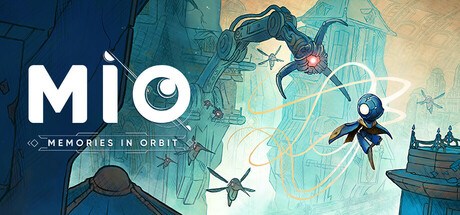
The clock strikes 8:00 AM Pacific Time on January 20, 2026. Across the globe, servers update and download queues activate. For Xbox Game Pass Ultimate and PC Game Pass subscribers, a new world unlocks without an additional charge. MIO: Memories in Orbit, a hand-drawn metroidvania from indie developer Douze Dixièmes, enters the fray not as a hopeful underdog but as a polished contender with the full weight of publisher Focus Entertainment behind it. Its day-one inclusion in the subscription service is a statement. In a landscape crowded with iterative sequels and live-service leviathans, this is a bet on artistry, precision, and the enduring power of a well-crafted single-player journey.
You control MIO, a nimble android awakening within the Vessel. This setting is a decaying technological ark, a place where vibrant flora strangles dead circuitry and rogue AI caretakers known as Pearls patrol silent halls. The premise is rich with melancholy and mystery. Your objective is exploration, survival, and uncovering the truths of a failed mission. The gameplay loop will feel immediately familiar to genre aficionados: gain new abilities, unlock previously inaccessible areas, and battle imposing guardians. Yet early previews suggest Douze Dixièmes has focused on execution over innovation, honing movement and combat to a razor's edge.
According to a lead developer commentary in the January 13, 2026 featurette, "The Vessel is a character of silence and consequence. We didn't want a noisy world. We wanted the environment itself—the rust, the overgrowth, the flickering lights—to tell the story of collapse. MIO's agility is your voice in that silence."
This emphasis on atmospheric storytelling is paired with robust technical foundations. MIO launches simultaneously on six platforms: PlayStation 5, Xbox Series X|S, PC via Steam, Epic Games Store, and Microsoft Store, and on Nintendo's Switch 1 & 2. It is fully playable on Steam Deck and leverages Xbox Play Anywhere for cross-save functionality. The standard purchase price is $19.99, with a 10% pre-order discount. For Game Pass members, however, the financial barrier evaporates. This strategic placement guarantees immediate visibility to millions of players, a crucial advantage in a release window shared with titles like Final Fantasy VII Remake Intergrade.
MIO's promise rests on the fluidity of its movement and the clarity of its combat. The android's toolkit includes wall-climbing, gliding, a grappling hook, and the use of orb-based projectiles and decoy clones. These are not mere gimmicks; they are interlocking systems designed for sequence-breaking and player expression. Developers promise over 30 distinct enemy types and 15 guardian bosses, each requiring pattern recognition and precise execution. Scavenged components allow for customizable modifiers, letting players tweak MIO's capabilities to suit aggressive or evasive styles.
The hand-drawn art style is a deliberate aesthetic choice that sets the tone. It evokes the melancholic beauty of genre benchmarks like Hollow Knight but filters it through a lens of retro-futurism and decay. Environments are painted with a palette of muted metals and sudden, vibrant bioluminescence. This isn't just background. It is integral to the navigation puzzles and environmental storytelling that define the metroidvania experience. The game's ESRB rating of Everyone 10+ for Fantasy Violence and Mild Language indicates an approachable, though not simplistic, adventure.
Preview coverage from The Xbox Hub in January 2026 was unequivocal, stating, "From the demo onwards, MIO has felt special. Its visual design is mesmerizing, and the combat fluidity suggests a team that has studied the greats. It has the potential to be a Game Pass system-seller for genre fans, a stunning addition that could rival the very titles it draws inspiration from."
Audience reception pre-launch is a buzz of optimistic comparison. The playable demo released during Summer Game Fest 2025 generated substantial positive word-of-mouth. Hype solidified with a release date trailer on December 4, 2025. Online forums and social media are rife with references to Hollow Knight and Ori, setting a high bar for Douze Dixièmes' first major project. This context is a double-edged sword. It provides a ready-made audience hungry for a new obsession, but it also invites relentless scrutiny. Can a game consciously styled as a "Hollow Knight-like" escape the shadow of its inspiration?
My analysis is that it can. The early footage showcases a confidence in pacing and visual cohesion that many indie metroidvanias lack. The decision to include MIO in Game Pass is a masterstroke for discovery, effectively removing the risk for curious players. Furthermore, its multi-platform release avoids the console war tribalism that can limit a game's cultural footprint. MIO is positioned not as a niche curiosity, but as a mainstream accessible entry point into a beloved genre. The real test will be the density of its world and the satisfaction of its progression loops—factors that can only be measured after January 20.
Behind the scenes, the development narrative is one of focused ambition. Douze Dixièmes, under the publishing umbrella of Focus Entertainment, appears to have prioritized a polished, complete package over endless scope creep. The simultaneous global release—timed for 11:00 AM ET in New York, 4:00 PM GMT in London, and 5:00 AM NZDT on January 21 in Auckland—speaks to coordinated logistical planning. The game is optimized for the Xbox Series X|S and is a highlight of Microsoft's mid-January service update, which also welcomed back Resident Evil Village despite removing five other titles. MIO isn't just another game on the roster; it's a featured attraction.
What does this mean for the metroidvania genre's evolution? MIO: Memories in Orbit arrives during a resurgence, propelled by both indie darlings and major studio investments. Its success on Game Pass could reinforce a trend of subscription services as premier venues for polished, mid-tier single-player experiences. The game doesn't seem to break the mold. Instead, it aims to perfect a specific, beloved shape. That ambition, coupled with its unprecedented accessibility, makes its launch on January 20, 2026, a significant event. The Vessel is ready for boarding. The only question is how deep its corridors will run, and how long its memory will linger.
January 20, 2026, was not just a release date; it was a synchronized global experiment. At 8:00 AM PT in Los Angeles, while it was already 4:00 PM in London and the early hours of January 21 in Tokyo, the digital locks on the Vessel disengaged simultaneously. This coordinated rollout, detailed by outlets like Gamerant, was a logistical feat for Douze Dixièmes and Focus Entertainment. It created a unified moment of discovery, a rarity in an industry often staggered by time zones. The pre-order incentive of a 10% discount across all platforms, requiring PS Plus only on Sony's console, was a calculated nudge. It converted cautious interest into committed downloads, building a day-one player base even among those with Game Pass access.
This launch strategy reflects a fundamental shift. MIO: Memories in Orbit arrived not with the thunderous marketing campaign of a AAA blockbuster, but with the curated precision of a prestige indie. The final hype cycle was meticulously managed. Following the release date confirmation on December 4, 2025, Focus Entertainment released a series of clipped vignettes in early January 2026. These weren't traditional story trailers. They were mood pieces, focusing on specific facets: the eerie threats lurking in the ducts, the graceful flow of MIO's agility, the contrasting textures of "ice, root, and steel."
"The global release times are set. From Los Angeles to Auckland, players will breach the Vessel's gates together. This simultaneous unlocking is meant to mirror the universal, isolated experience of the game itself." — Gamerant, Release Date Breakdown
The most substantial pre-launch glimpse was the January 5, 2026 "Visions of the Vessel" trailer, showcased by GameTrailers. This footage moved beyond teasers to present extended, uninterrupted gameplay sequences. It showed MINO navigating vast, derelict chambers, engaging in multi-phase boss encounters, and utilizing the full suite of mobility tools. The response from core gaming communities was palpable. Forums dissected every frame, analyzing enemy attack patterns and speculating on ability gates. This wasn't just marketing; it was community onboarding.
A critical, often overlooked, facet of MIO's design is its handheld-first optimization. The game is confirmed fully playable on Steam Deck and launches on the Nintendo Switch 1 & 2. This is not a mere port. The metroidvania genre, with its bite-sized exploration loops and precise controls, has a symbiotic relationship with portable play. The ability to chip away at a challenging boss during a commute or map a new zone in short sessions is integral to the modern experience. Douze Dixièmes recognized this. The clean, readable hand-drawn art and the fluid, responsive control scheme feel tailor-made for a screen held inches from your face. Does this focus compromise the grandeur on a 4K television? Early indications suggest the opposite. The art's clarity scales.
"The Nintendo Switch 2 listing confirms the ESRB rating and hints at the file size considerations for handheld hardware. This is a game built for intimate exploration, a perfect fit for the platform." — Nintendo.com, Store Page Analysis
This multiplatform, handheld-ready approach is a direct rebuttal to exclusivity. It maximizes potential audience and acknowledges how people actually play these games in 2026. The promise of Xbox Play Anywhere cross-save between PC and Xbox consoles further cements this philosophy of flexible play. Your progress in the Vessel isn't locked to a single screen; it follows you. In an age where gaming time is fragmented, this design intelligence is as important as any sword swing or double-jump.
Let's address the Gilded Sentinel in the room: Hollow Knight. Every contemporary metroidvania exists in its long, silken shadow. The comparisons are inevitable and, in the case of MIO, explicitly invited by early previews. The hand-drawn aesthetic, the melancholic atmosphere of a fallen kingdom, the silent protagonist navigating a world of ruined grandeur—the surface parallels are undeniable. To dismiss MIO as a derivative clone, however, is a critical failure. The true analysis lies in where it diverges and what it chooses to emphasize.
MIO's world is technological, a "decaying technological ark." This shifts the narrative and visual palette from Hollow Knight's organic, bug-infested caverns to a realm of corroded metal, synthetic overgrowth, and malfunctioning AI. The Pearls are not instinct-driven beasts but broken caretakers, their hostility born of programming error, not primal malice. This introduces a different flavor of tragedy. The environmental storytelling speaks of ambition and engineering, not evolution and decay. The artistic risk here is sterility. Can a world of "ice, root, and steel" generate the same visceral, emotional pull as Hallownest's fungal groves and crystal peaks?
"The new clips focus on the world's duality—the harshness of industrial decay softened by invasive, vibrant life. It's a striking visual thesis that sets it apart from its peers." — Cinelinx, on Pre-Release Hype Clips
The combat philosophy also shows a distinct lineage, perhaps closer to Ori and the Will of the Wisps than Hollow Knight's deliberate, punishing strikes. MIO's toolkit, with its orb projectiles, decoy clones, and emphasis on aerial gliding and grappling, suggests a rhythm geared towards evasion, misdirection, and ranged pressure. The 30+ enemy types and 15 guardians are not just numbers; they are a promise of variety. But will their encounters demand the same level of memorization and perfect execution that defined the Pantheon? Or will they prioritize fluid spectacle?
My position is that MIO's greatest potential strength is its pacing. Hollow Knight is a masterpiece of deliberate, often slow-burn exploration. MIO, with its android protagonist and suite of agility tools, appears engineered for momentum. The wall-climbing is described as spider-like, the glide ability a sustained breach of gravity. This could result in a less ponderous, more immediately gratifying traversal loop. The risk is a loss of weight and consequence. If moving through the world feels too effortless, does the exploration lose its tension? The game's success hinges on balancing this exhilarating mobility with meaningful environmental resistance.
"The countdown isn't just to a release; it's to an answer. Can this game carve its own memory in a genre defined by a few towering titans? January 20th is judgment day." — Destructoid, Release Countdown Feature
The studio's behind-the-scenes community effort, the "Focus Together" program, is a fascinating footnote. It allowed players to create accounts for exclusive rewards and provide input during development. This creates a subtle contract between creator and early adopter. It fosters investment but also raises questions. Was the game's design subtly crowd-sourced? Does this input lead to a more broadly appealing, but potentially safer, creative vision? The most enduring metroidvanias are often authoritarian in their design—a single, uncompromising vision of a world. The specter of committee hangs over any community feedback system.
Ultimately, the Game Pass factor cannot be overstated. For millions, the barrier to answering these critical questions is zero. This removes the protective skepticism a $30 price tag might instill. Players will jump in with curiosity rather than cautious investment. This is a double-edged sword for Douze Dixièmes. It guarantees a massive initial player base, but it also places MIO in a context of immediate, disposable consumption. Will players, knowing they didn't "pay" for it, grant it the patience required to uncover its depths? Or will a frustrating boss or a cryptic progression lock lead to a swift uninstall, lost in the vast library of the subscription service? The game must be compelling enough to fight for its own attention.
The business model underscores a harsh reality for indie developers. The day-one Game Pass deal provides financial security and exposure, but it may come at the cost of traditional sales and long-tail revenue. The game's estimated tenure on the service is one year. After that, it could vanish, becoming a forgotten memory in orbit unless it has cemented itself as a must-own classic. This launch strategy is a high-wire act. It bets everything on immediate impact and cultural staying power within a fickle ecosystem. MIO isn't just fighting bosses in the Vessel; it's fighting against the endless churn of the content cycle.
MIO: Memories in Orbit’s true legacy will not be measured in its January 2026 launch numbers, but in its contribution to a critical evolution within the games industry. It represents the maturation of a model: the day-one, high-polish indie on a major subscription service. This is not a scrappy passion project begging for attention. It is a fully-realized artistic statement funded by a publisher (Focus Entertainment) and deployed as a strategic asset for a platform holder (Microsoft). Its significance lies in proving that Game Pass and its competitors can be homes for complete, single-player experiences that demand dozens of hours of focused engagement, not just fleeting multiplayer diversions or back-catalog classics.
The game’s cross-platform, handheld-optimized release further signals a dissolution of old barriers. The notion of a “console-defining exclusive” is challenged by a title that performs with equal grace on an Xbox Series X, a PlayStation 5, a Steam Deck, and a Nintendo Switch 2. This universality strengthens the work itself. The memory of exploring the Vessel becomes a shared cultural touchpoint across ecosystems, not a point of tribal contention. In an era of fragmented audiences, MIO builds a consensus of experience.
"The inclusion of a title like this day-one on Game Pass is a statement of intent. It signals that the service's value proposition is expanding beyond blockbuster libraries to include curated, premium indie experiences that define a player's month." — The Xbox Hub, on Service Strategy
For the metroidvania genre, MIO serves as a crucial bridge. It carries the torch of Hollow Knight’s demanding design principles but potentially delivers them in a more accessible, momentum-driven package. Its success could demonstrate to publishers that there is a vast audience for these games beyond the hardcore niche, provided the presentation is impeccable and the barriers to entry are low. It doesn’t seek to dethrone the genre kings; it seeks to expand their kingdom.
For all its polish and promise, MIO invites legitimate skepticism. The most glaring risk is one of identity. The pre-release marketing has leaned heavily on comparisons to Hollow Knight, a dangerous game. It sets expectations at a near-impossible level. Should any aspect—the depth of lore, the cunning of boss design, the sheer scale of the world—feel lesser, the critique will be swift and brutal. The game’s aesthetic, while beautiful, may struggle to achieve the same iconic, instantly recognizable character design as its forebears. Can a robotic protagonist and AI antagonists forge the same emotional connection as the tragic bugs of Hallownest?
The focus on fluid, acrobatic movement carries a gameplay trade-off. A world designed for constant, graceful flow may lack the deliberate, treacherous platforming that creates unforgettable moments of tension and triumph. If every wall is effortlessly scalable and every chasm easily crossed, the environment ceases to be an adversary and becomes mere scenery. The 15 guardians must do heavy lifting to provide the punishing, learn-from-failure challenge that genre devotees crave.
Furthermore, the very business model that guarantees its reach could undermine its longevity. As a Game Pass title, it is one of dozens in a rotating catalog. The pressure to hook players instantly is immense. Will its opening hours be designed for addictive immediacy at the expense of a more nuanced, slow-burn introduction? The “Focus Together” community input, while well-intentioned, raises the specter of design by consensus, potentially sanding off interesting, idiosyncratic edges to create a more universally palatable—and forgettable—experience. True artistic vision is rarely democratic.
Looking forward, the calendar provides immediate checkpoints. The week of January 27, 2026, will deliver the first wave of professional reviews and aggregate scores. These will solidify its critical standing. By early February, player completion data and achievement statistics will reveal how deeply the community is engaging with the Vessel’s secrets. The developer, Douze Dixièmes, will likely break their post-launch silence by mid-February, addressing any critical feedback or technical issues. Their first communication will set the tone for the game’s post-launch life.
Concrete predictions are perilous, but evidence points to a specific outcome. MIO will be hailed as a superb, polished entry in the genre. It will not displace Hollow Knight in the canon, but it will secure a firm position as a top-tier recommendation, especially for newcomers. Its Game Pass performance will be deemed a success, encouraging more deals of its kind. By March 2026, discussion will inevitably turn to DLC. Will the studio expand the Vessel, or will this be a singular, complete statement? The game’s structure, focused on reviving memories, lends itself perfectly to additional narrative fragments.
On January 20, 2027, one year after launch, its Game Pass license will likely expire. That is its true crucible. Will players who experienced it for "free" feel compelled to purchase it to keep it in their library, or will its memory simply fade? The answer will determine if MIO is a fleeting visitor in the subscription orbit or a permanent resident in the metroidvania pantheon. The Vessel’ gates are now open. The echoes within will tell us what we value.

Your personal space to curate, organize, and share knowledge with the world.
Discover and contribute to detailed historical accounts and cultural stories. Share your knowledge and engage with enthusiasts worldwide.
Connect with others who share your interests. Create and participate in themed boards about any topic you have in mind.
Contribute your knowledge and insights. Create engaging content and participate in meaningful discussions across multiple languages.
Already have an account? Sign in here

Pathologic 3 arrives January 9, 2026, wielding time-travel to deepen its signature despair, forcing players to rewrite t...
View Board
Resident Evil Requiem blends classic survival horror with modern tech, delivering dual narratives of terror and action i...
View Board
GTA 6 faces its toughest rival in 2026: GTA V's $10B legacy. Can Rockstar's sequel eclipse a game that redefined longevi...
View Board
MIO: Memories in Orbit launches Jan 20, 2026, blending punishing Metroidvania gameplay with a haunting narrative on memo...
View Board
Pathologic 3 arrives January 9, 2026, a punishing survival RPG where time-travel meets plague diagnosis in a dying city,...
View Board
Solo developer Adam Hunt crafts Streetdog BMX, a love letter to BMX culture, launching January 14, 2026, on Steam with 2...
View Board
Code Vein II invites players on a somber pilgrimage through time, blending Soulslike combat with a narrative of sacrific...
View Board
Heartopia storms Steam with 17K players, blending cozy sim charm & mobile monetization, sparking a cultural clash over g...
View Board
Code Vein 2 launches Jan 30, 2026, rewriting its anime Soulslike legacy with time-bending combat, deeper RPG systems, an...
View Board
Cairn redefines climbing games with physics-driven realism, forcing players to read rock faces, manage stamina, and plac...
View Board
Claim Fallout 1 & 2 for free via Prime Gaming before Jan 26, 2026—permanent ownership of the iconic RPGs that shaped gam...
View Board
Steel Century Groove launches Jan 28, 2026, blending mecha combat with rhythm RPG strategy, turning war machines into da...
View Board
A philosopher dissects how Kanto’s badge quests, closed map, and cable‑linked trading force identity, choice, and the et...
View Board
Xbox Game Pass January 2026 delivers 11 new titles, including Star Wars Outlaws and Death Stranding: Director's Cut, whi...
View Board
Josef Fares' Split Fiction redefines co-op storytelling with its radical two-player-only design, selling 2M copies in a ...
View Board
Tekken 7’s Rage Arts, 8‑million unit sales and tournament‑ready mechanics forged a modern fighting‑game era, shaping com...
View Board
Mortal Kombat 11: A Deep Dive into Its Enduring Legacy The arena lights flicker, a digital roar erupts, and then, the c...
View Board
Betrayal at Baldur's Gate transforms a blank board into a dungeon of shifting alliances and procedural terror, where 49 ...
View Board
Code Vein II redefines gothic action RPGs with time-bending combat, vast ruins, and a motorcycle-driven wasteland, but l...
View Board
Brews & Bastards arrives on Xbox Game Pass Jan 6, 2026. Engage in chaotic twin-stick co-op, fight boozy demons, and recl...
View Board
Comments