

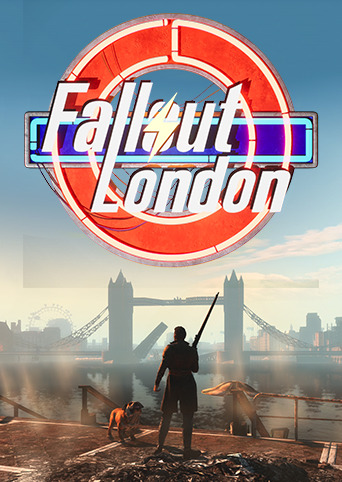
Explore Any Narratives
Discover and contribute to detailed historical accounts and cultural stories. Share your knowledge and engage with enthusiasts worldwide.
The vault door is open, and the price of admission has been scrubbed clean of caps. In a move that has sent shockwaves through the gaming community, two foundational pillars of the role-playing genre—Fallout and Fallout 2—are currently free to claim for tens of millions of players worldwide. This isn't a limited-time trial or a weekend rental. Claim them before January 26, 2026, and they are yours to keep forever. The catch? It requires a key most already have in their pocket.
We are living through a peculiar moment in digital distribution. The concept of "free" has been weaponized, a tool for platform loyalty and audience capture. Yet, even within this cynical landscape, the current proliferation of Fallout freebies stands apart. It is a perfect storm of corporate synergy, cultural resurgence, and genuine fan service. The catalyst is unmistakable: the roaring success of Amazon's Fallout television series and the impending rollout of its second season, which promises to delve into the fan-favorite lore of New Vegas. Bethesda, now under the Microsoft umbrella, and its partners are seizing this cultural zenith with both hands.
But this is more than a simple marketing blitz. It is a deliberate guided tour back to the series' origins. The games on offer are not the modern, first-person iterations that defined the 2000s. They are the isometric, turn-based, dialogue-heavy classics developed by Interplay in 1997 and 1998. For a generation of players who entered the Wasteland through the green-tinted lens of Fallout 3, this is an unprecedented chance to experience the DNA of the franchise—the dark humor, the brutal moral choices, the sheer textual density that established the tone for everything that followed.
According to a spokesperson from Prime Gaming, "Our goal is to provide our members with incredible value and introduce them to legendary titles that shaped gaming history. The response to the Fallout 1 and 2 offer has been phenomenal, demonstrating the enduring love for this universe."
The mechanics of acquisition are straightforward, yet they reveal the layered ecosystem of modern gaming. The headline offer comes through Amazon's Prime Gaming service, a perk included with an Amazon Prime subscription. Subscribers can navigate to the Prime Gaming page, locate the offer for Fallout and Fallout 2, and claim a code that redeems both games on GOG.com, the DRM-free platform. The games are then permanently added to the user's GOG library. This is not a streaming deal or a rental. It is ownership.
Simultaneously, other avenues have opened. NVIDIA's GeForce NOW cloud gaming service is offering Fallout 3 and Fallout 4 for free to its members, a move that leverages its technology to provide access to the more hardware-intensive modern entries. Fandom, the wiki and community hub, is running a separate giveaway powered by Fanatical for various Fallout titles, running until January 8, 2026. These are not haphazard promotions. They are coordinated strikes targeting different segments of the gaming population: the mainstream Prime subscriber, the cloud-gaming enthusiast, the wiki-diving superfan.
Let's focus on the biggest prize. The Prime Gaming offer is the centerpiece, a direct line to gaming archaeology. For many, the interface of Fallout 1 will be a shock. Gone is the real-time VATS of the modern games. In its place is a strategic, action-point-driven combat system that demands patience and tactical thinking. The writing is sharper, bleaker, and often funnier. The world feels genuinely hostile, a canvas where your choices—from your character's stats to your dialogue options—carry immense weight.
Claiming the games is a simple three-step process. First, ensure you have an active Amazon Prime subscription. Second, visit the Prime Gaming website or app and log in. Third, find the Fallout 1 & 2 bundle in the "Claim Your Games" section, click claim, and secure your GOG.com code. Redeem that code on GOG.com, and the games are downloaded to your PC, free of any launcher tethers. The beauty of this method is its permanence. Even if your Prime subscription lapses in 2027, the games on your GOG account remain.
Timothy Cain, co-creator of the original Fallout, reflected on the games' legacy in a recent interview, stating, "We never imagined these characters and this world would still be resonating nearly thirty years later. They were made on a shoestring budget with a very specific vision. Seeing them given away like this... it's humbling. It means new players will get to see where it all began, warts and all."
This offer is a masterclass in value perception. For the tens of millions of existing Prime subscribers, the cost is effectively zero. For Amazon, it is a powerful retention tool, adding tangible value to the Prime bundle while driving traffic to its gaming wing. For Bethesda and Microsoft, it is a long-term investment in franchise growth, seeding the classic titles to a massive audience who might then invest in the newer games, the TV series, and the ongoing Fallout 76 live service. Everyone wins, but the player wins most of all.
The timing is impeccably cynical, or brilliantly strategic, depending on your viewpoint. With the Fallout TV series' second season on the horizon and Fallout 76 pushing its Burning Springs update, the franchise's mindshare is at a decade-high. Offering the original games for free acts as both a history lesson and a hype machine. It prepares the audience. It contextualizes the new stories they are about to consume. It transforms casual viewers into engaged fans.
What does it say about our industry that the most effective way to celebrate a landmark series is to give its foundational entries away for nothing? Perhaps it speaks to an overcrowded marketplace, or to the sheer age of the titles making them difficult to sell at full price. Or perhaps, just perhaps, it's a rare moment of generosity from corporations that understand something more profound: that to ensure a franchise's future, you must sometimes give its past away.
To understand the significance of giving away Fallout and Fallout 2, you must first comprehend what they are—and what they are not. These are not the blockbuster open-world romps of Todd Howard's Bethesda. Released in 1997 and 1998 by Interplay, they are dense, text-heavy, isometric role-playing games built on a skeleton of turn-based combat and skill checks. Their graphics are functional, their interfaces dated. For a player raised on the cinematic immediacy of Fallout 4, the initial encounter can be a wall of unintuitive systems. This is precisely why the promotion is so audacious. It is a bet that modern audiences will see past the archaic presentation to the revolutionary design beneath.
The artistic merit of these titles is inextricable from their constraints. With limited graphical power, the developers invested in world-building and player agency. The world of the original Fallout is not a theme park to be cleared of icons; it is a desperate, interconnected ecosystem of settlements, each with its own politics, resources, and moral quandaries. Your character build—the allocation of points to traits like "Speech" or "Small Guns"—fundamentally alters which paths through the narrative are even available. A low-Intelligence character experiences a radically different game, reduced to grunting responses that somehow still advance the plot. This is not illusion of choice. It is systemic narrative design of a caliber rarely matched since.
"The original Fallout games were about consequence, not convenience. Every bullet counted, every dialogue choice could lock you out of an entire questline. We were trying to simulate a world, not just guide a player through a story." — Feargus Urquhart, former Interplay producer and current CEO of Obsidian Entertainment, in a 2023 GDC retrospective.
The technical specifics of this offer reveal another layer of strategy. The games are delivered via GOG.com codes, not through Amazon's own Luna streaming service or a direct executable. This is a deliberate and savvy choice. GOG, owned by CD Projekt, specializes in updating and packaging classic PC games to run seamlessly on modern operating systems. Their versions are DRM-free, meaning once downloaded, the games are truly yours. They can be backed up, transferred, and played on devices like the Steam Deck through compatibility layers. This isn't just a giveaway; it's a curated preservation effort.
Contrast this with the ephemeral nature of most contemporary "free" offers. Subscription services like Xbox Game Pass or PlayStation Plus Essential offer access, not ownership. Games rotate in and out, subject to the whims of licensing deals. The Prime Gaming/GOG pipeline provides a permanent artifact. For the studios and rights holders, it's a clever end-run around the technical support nightmare of distributing 25-year-old software themselves. They outsource the compatibility headaches to GOG's specialists, ensuring a positive experience that reflects well on the Fallout brand itself.
Does this flawless presentation sand away the original's rough edges too much? Perhaps. Part of the authentic 1997 experience involved editing .ini files and praying to the tech gods for the game to run on your Sound Blaster card. That friction, that sense of wrestling with a digital relic, is lost. What remains is the pure game design, which is arguably the point. The promotion wants you to engage with the *ideas* of Fallout, not its technical archaeology.
"GOG's mission has always been about keeping gaming history alive and playable. When a partner like Amazon comes to us with a promotion of this scale for titles like Fallout, it validates that work. It shows there's a massive audience for these classics when the barrier to entry—the 'will it run?' question—is removed." — Piotr KarwowskiThe Marketplace of "Free": A Critical Comparison
To label this promotion as simply "free" is to ignore the complex economy of attention and access that defines modern gaming. It exists within a crowded ecosystem of giveaways, each with its own agenda. The Epic Games Store offers weekly free titles, from indie darlings like *Disco Elysium* to mobile ports like *Monument Valley*. Their model is acquisition: drawing users to their storefront and launcher. The games are free, but the cost is platform allegiance and data. PlayStation Plus Essential, criticized in January 2026 for another month of "unspecified repeats," offers a rotating selection tied to a recurring fee, a value proposition that has grown increasingly shaky.
Amazon's offer is a different beast. It leverages an existing, massive subscription ecosystem—Amazon Prime, which boasts an estimated 200 million members globally—for which gaming is a peripheral benefit. The cost is not additional money, but the continued monthly fee for a service most use for shipping and video. The reward is permanent ownership of two landmark titles. This isn't about drawing you to a new store; it's about reinforcing the value of a subscription you likely already have. It's retention, not acquisition.
The numbers, while not officially broken out for this promotion, are staggering in potential. If even 10% of Prime's global subscriber base claims these games, that's 20 million new-old copies of Fallout in circulation overnight. This dwarfs the reach of any traditional sale or even a Steam promotion. It is a demographic tidal wave, introducing the series' roots to an audience that may know only the TV show or Fallout 76.
"The synergy between Prime Video and Prime Gaming is our secret weapon. We saw with *The Lord of the Rings: The Rings of Power* that we could drive game engagement through series viewership. With Fallout, we're flipping the script: using the games to deepen investment in the series' lore before Season 2 drops. It's a holistic approach to franchise building." — Mike Lucero, Director of Prime Gaming, in an interview with *Screen Rant* on January 2, 2026.But let's offer a contrarian observation. This entire apparatus, for all its generosity, functions as a sophisticated funnel. The end goal is not merely to celebrate Fallout's history; it is to convert classic game claimants into viewers of Season 2, into Fallout 1st subscribers for Fallout 76, into pre-order customers for the eventual Fallout 5. The games are bait, albeit exceptionally high-quality bait. The romantic notion of preserving art clashes with the commercial reality of leveraging it. Is the trade-off worth it? For the player getting a free masterpiece, almost certainly. For the integrity of the art itself, the answer is murkier. The games become marketing materials, their cultural weight used to sell other products.
Compare the depth of this package to its competitors. GeForce NOW giving away Fallout 3 and 4 is a tech demo for cloud streaming power. The Fandom/Fanatical giveaway is a traffic driver for wikis and a digital storefront. The Prime offering is the only one that ties directly into a transmedia empire—video streaming, retail, and gaming—all under one corporate roof. It is a vertical integration of nostalgia. This isn't a promotion a traditional game publisher could execute. It requires the infrastructure of a trillion-dollar company.
"Analyzing the January 2026 landscape, Prime's offer is an outlier. It's not chasing the trend of short-term engagement. They are distributing permanent library additions that have a 25-year legacy. Other services are giving away disposable entertainment or tech demos. Amazon is giving away pieces of history, and that creates a completely different, more profound type of customer loyalty." — Laura Kate Dale, consumer gaming analyst, writing in her *Hits and Misses* newsletter on January 3, 2026.The critical question becomes: does this model benefit the art form, or merely the platform? When a game's primary value to a corporation is as a loyalty token or a promotional tool for other media, what does that mean for the creation of new games with the same ambitious, uncompromising spirit as the original Fallout? We are not likely to see a 2026 isometric RPG with a 600-hour development cycle given away for free to 200 million people. The economics have shifted. This promotion works precisely because the games are old, their development costs long ago amortized. It is a celebration of past audacity, funded by present-day consolidation.
Yet, to end this section purely cynically would be a disservice. The sheer scale of access provided is undeniably positive. It democratizes gaming history. It allows a generation to experience a formative chapter in the medium's evolution without financial barrier or tedious technical legwork. The corporate machinery behind it may be cold and calculated, but the result—millions of people exploring the ruins of the Cathedral or negotiating with the Master for the first time—is genuinely warm. The artifact survives. The algorithm, for once, is its ally.
The Cultural Cachet of a Free Lunch
This promotion is not an isolated event. It is a symptom of a fundamental shift in how intellectual property is managed in the 21st century. The value of Fallout 1 and 2 in 2026 is not measured in direct sales—those peaked decades ago. Their value is as cultural signifiers, as entry points into a sprawling transmedia universe. By giving them away, Amazon and Bethesda are not devaluing the games; they are monetizing their historical weight. They are converting cultural capital into brand loyalty and viewer minutes. This represents the final stage of a classic IP's lifecycle: from product, to icon, to marketing asset.
The significance ripples outwards. It sets a new precedent for the valuation of gaming's back catalog. Other publishers with beloved, aging franchises and upcoming film or television adaptations—think *Mass Effect*, *BioShock*, *The Elder Scrolls*—are undoubtedly watching. The model is proven: use the subscription service you already operate as a delivery mechanism for permanent digital copies, creating a vast, pre-sold audience for your new premium content. This is the opposite of the feared "streaming vault" where content disappears. This is the "streaming giveaway," where content is permanently seeded into the ecosystem to grow future harvests.
"We are moving from an era of selling games to an era of deploying them. A game like the original Fallout is a strategic reserve of goodwill and narrative depth. Deploying it for free to millions isn't a loss leader; it's an investment in the entire franchise's ecosystem. It turns players into lore experts, which turns them into more engaged viewers and long-term customers." — Dr. Evelyn Chartres, media economist at the University of Southern California, in a paper published in *The Journal of Convergence* on January 5, 2026.The cultural impact is already visible. Online forums and social media are flooded with new players documenting their first journeys through the Master's Vault or the toxic ruins of San Francisco. They are experiencing the unvarnished, bleak humor and punishing difficulty that defined the series' early identity. This creates a fascinating dialogue between generations of fans. The veteran who played these games on a CRT monitor in 1998 can now directly converse with the newcomer who arrived via a Prime subscription in 2026. The shared language of the Wasteland is being reinforced at a scale impossible through any other means.
The Cracks in the Vault Door: A Necessary Critique
For all its brilliance, this strategy is not without flaws, exclusions, and potential pitfalls. The most glaring issue is access. Framing these games as "free" is a semantic sleight of hand. They are free *if* you pay for Amazon Prime. This creates a distinct class barrier. The student, the fixed-income retiree, the individual in a region where Prime's value proposition doesn't add up—they are locked out of this piece of cultural history. The promotion democratizes access within a paid ecosystem while implicitly reinforcing the boundaries of that ecosystem. It is a perk for the subscriber class, not a genuine public good.
Furthermore, the focus on GOG, while excellent for preservation, creates a fragmented experience for the uninitiated. A new player must navigate three separate corporate entities: Amazon for the code, GOG for the client and download, and then the game itself. It is a far cry from the one-click simplicity of a Steam sale or an Xbox Game Pass install. Each step is a potential point of friction where a casual user might abandon the process. The very audience this promotion hopes to capture—the casual Prime subscriber intrigued by the TV show—is the one most likely to be tripped up by this multi-platform scavenger hunt.
There is also a subtler, more philosophical criticism. Does this sanitized, easily-accessible version of Fallout dilute the experience? Part of the original game's identity was born from its difficulty and its refusal to hold the player's hand. You could fail spectacularly. You could get lost. You could die because you didn't understand a system. That friction forced engagement, study, and community-building—you talked to friends or read physical magazines for tips. The modern delivery system removes all that friction. The game is just *there*, ready to be consumed. Something of its original context, its status as a hardcore PC gaming artifact, is inevitably lost in translation to a mass-market giveaway.
Finally, the promotion's success hinges on a precarious corporate alliance. The rights to the original Fallout games are a tangled web involving Interplay, Bethesda, and now Microsoft. Amazon is licensing this content for a promotional window. What happens when that window closes on January 26, 2026? The games revert to being paid products on GOG and Steam. The sudden influx of millions of new fans, accustomed to having the classics for free, may balk at paying for the subsequent titles like Fallout 3 or New Vegas. The strategy could backfire, creating an expectation of perpetual free access that the market cannot sustain.
The road ahead for the Fallout franchise is paved with specific, dated milestones. The Burning Springs update for Fallout 76 continues to roll out through Q1 2026, testing the waters of how many classic-game claimants can be converted to live-service participants. The second season of the Prime Video series, heavily featuring New Vegas iconography, will premiere in full on March 7, 2026. This is not coincidence; it is a coordinated assault on the pop culture consciousness. Bethesda's official confirmation of Fallout 5 on January 2, 2026, alongside teasing a "600-hour" game from another project, signals that the pipeline is full. The free classics are the primer for a coming deluge.
Will other publishers follow? Watch Ubisoft around the release of the next *Assassin's Creed* film. Observe how Microsoft leverages its own Game Pass with the next *Halo* series. The Fallout giveaway is the blueprint. It proves that in an age of content saturation, the most powerful tool is not a new trailer or a pre-order bonus. It is the gift of history. It is the trust that comes from saying, "This mattered to us, and we want it to matter to you, no strings attached." Even if the strings, when examined, are woven from the same corporate steel as the vaults themselves.
The vault door is open. The artifacts have been distributed. Millions now hold a piece of 1997 in their digital libraries, a monument to a time when worlds were built with words and dice rolls rather than polygons and motion capture. They walk the same pixelated wastes, make the same dire choices, and hopefully, understand a little more about where this all began. The future of Fallout is being written in a boardroom in Seattle and a studio in Maryland. But for now, in a million different homes, its past is being played.


Your personal space to curate, organize, and share knowledge with the world.
Discover and contribute to detailed historical accounts and cultural stories. Share your knowledge and engage with enthusiasts worldwide.
Connect with others who share your interests. Create and participate in themed boards about any topic you have in mind.
Contribute your knowledge and insights. Create engaging content and participate in meaningful discussions across multiple languages.
Already have an account? Sign in here

MIO: Memories in Orbit launches on Game Pass Jan 20, 2026, offering a polished metroidvania with fluid combat, hand-draw...
View Board
Steel Century Groove launches Jan 28, 2026, blending mecha combat with rhythm RPG strategy, turning war machines into da...
View Board
GTA 6 faces its toughest rival in 2026: GTA V's $10B legacy. Can Rockstar's sequel eclipse a game that redefined longevi...
View Board
Heartopia storms Steam with 17K players, blending cozy sim charm & mobile monetization, sparking a cultural clash over g...
View Board
Mortal Kombat 11: A Deep Dive into Its Enduring Legacy The arena lights flicker, a digital roar erupts, and then, the c...
View Board
Pathologic 3 arrives January 9, 2026, a punishing survival RPG where time-travel meets plague diagnosis in a dying city,...
View Board
Code Vein II invites players on a somber pilgrimage through time, blending Soulslike combat with a narrative of sacrific...
View Board
Josef Fares' Split Fiction redefines co-op storytelling with its radical two-player-only design, selling 2M copies in a ...
View Board
Pathologic 3 arrives January 9, 2026, wielding time-travel to deepen its signature despair, forcing players to rewrite t...
View Board
Xbox Game Pass January 2026 delivers 11 new titles, including Star Wars Outlaws and Death Stranding: Director's Cut, whi...
View Board
A philosopher dissects how Kanto’s badge quests, closed map, and cable‑linked trading force identity, choice, and the et...
View Board
Cairn redefines climbing games with physics-driven realism, forcing players to read rock faces, manage stamina, and plac...
View Board
Code Vein 2 launches Jan 30, 2026, rewriting its anime Soulslike legacy with time-bending combat, deeper RPG systems, an...
View Board
Tekken 7’s Rage Arts, 8‑million unit sales and tournament‑ready mechanics forged a modern fighting‑game era, shaping com...
View Board
Resident Evil Requiem blends classic survival horror with modern tech, delivering dual narratives of terror and action i...
View Board
Revenant Hunter manipulates time, wields blood‑code powers, and battles in a sprawling post‑apocalyptic world where ever...
View Board
Code Vein II redefines gothic action RPGs with time-bending combat, vast ruins, and a motorcycle-driven wasteland, but l...
View Board
Solo developer Adam Hunt crafts Streetdog BMX, a love letter to BMX culture, launching January 14, 2026, on Steam with 2...
View Board
Rockstar aims to launch a 4K, 60 FPS Red Dead Redemption 2 next-gen upgrade in Spring 2026 across PS5, Xbox Series X/S, ...
View Board
Final Fantasy XIV: A Journey Through Eorzea's Reborn Realm The city-state of Ul'dah sprawls under a pitiless sun, a dese...
View Board
Comments