

Explore Any Narratives
Discover and contribute to detailed historical accounts and cultural stories. Share your knowledge and engage with enthusiasts worldwide.
The clock starts ticking on January 9, 2026. That is the date when Ice-Pick Lodge will open the gates to Town-on-Gorkhon once more, releasing a new plague upon the world—or at least, upon the PC gaming populace. Pathologic 3, the long-awaited continuation of a series synonymous with punishing psychological horror and dense philosophical narrative, is not merely another game. It is a meticulously crafted instrument of despair. This time, however, the developers have forged a new key: a time-travel mechanic that promises to twist the knife of player choice in fresh, devastating ways.
To understand the magnitude of this sequel, one must first grasp the sheer, uncompromising weight of the legacy it carries. The original Pathologic, released in 2005, was less a video game and more a digital piece of Russian absurdist theatre. It was a bleak, opaque, and notoriously cruel experience where players fought a losing battle against a spreading Sand Plague across twelve grueling in-game days. Its 2019 follow-up, Pathologic 2, was less a direct sequel and more a gut-wrenching, character-focused reimagining of the first game’s Haruspex storyline. It refined the systems of survival—hunger, infection, exhaustion, and pervasive mistrust—into a razor-sharp edge.
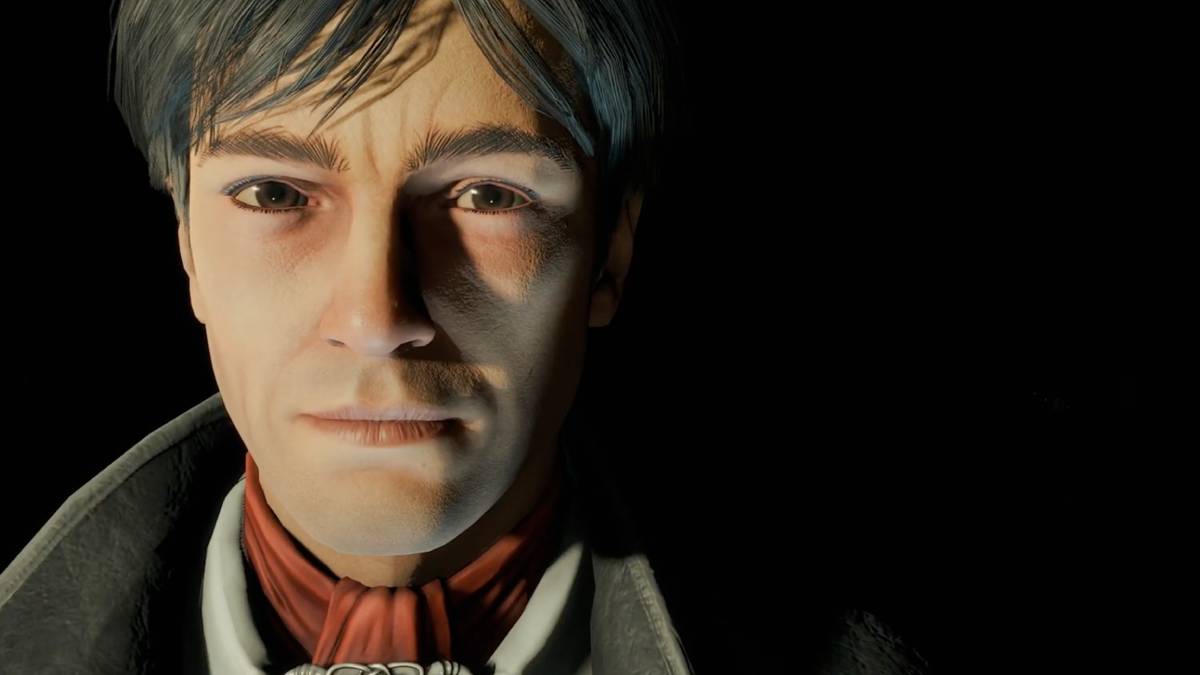
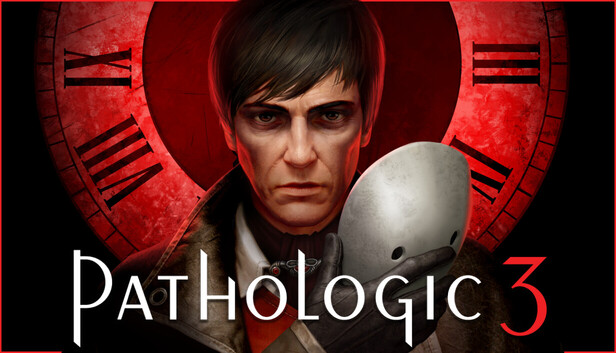
Pathologic 3 picks up the thread of another of the original’s protagonists: Daniil Dankovsky, The Bachelor. He is a man of science and reason, a metropolitan physician who arrives in the remote steppe town of Town-on-Gorkhon seeking an immortal man. Instead, he finds a festering epidemic and is promptly conscripted to lead the fight against it. The town itself is a character, a place of “impossible” architecture and decaying grandeur that, according to the game’s own description, “resists salvation.” This is not a setting you save. It is a patient you diagnose, a body you dissect, and a tragedy you are doomed to witness.
“Dankovsky is brilliant. He is capable. He is also the absolute worst,” writes a PC Gamer preview for its February 2026 issue. “He’s a foul-tempered medical researcher on a quixotic quest to defeat death itself, armed with little more than a sharp tongue and a profound sense of his own superiority. Playing as him is an exercise in managed contempt.”
The core premise remains deceptively simple: you have twelve days. The plague is spreading. You must contain it, treat it, and uncover its secrets. Failure is not an option; it is a constant, looming presence. Every resource is scarce. Every character lies. Every choice carries a cost measured in human lives. What Pathologic 3 introduces is a paradoxical new layer of agency within this rigid framework: the ability to rewind time.
The new time-travel mechanic, as detailed in early previews, is not a get-out-of-jail-free card. It does not erase consequences so much as it recontextualizes them. The twelve-day structure is sacrosanct, a pillar of the game’s design philosophy. However, players will now have the ability to revisit pivotal moments within that timeline—a fatal misdiagnosis, a botched negotiation, a district lost to quarantine—and attempt a different approach.
Think of it not as a do-over, but as a surgeon reopening a wound. The scar remains. The tissue is forever altered. You are simply trying to suture it more cleanly this time. This mechanic transforms the narrative from a linear descent into hell into a more complex, branching exploration of cause and effect. It asks a terrifying question: if you could see exactly how your failure doomed a quarter of the town, would you have the stomach to go back and make the other, equally horrific choice?
The gameplay systems are built to support this oppressive atmosphere. You will engage in medical diagnosis and treatment, using microscopes to research pathogens and develop experimental cures. You will manage the epidemic itself, deploying patrols and implementing brutal quarantines. You will conduct investigative fieldwork, picking through the lies of the townsfolk and the clues left in abandoned homes. Every action consumes time, and time is the most precious commodity of all.
According to Ice-Pick Lodge’s announcement on Gematsu in October 2025, “The time-travel feature offers narrative flexibility while maintaining the original 12-day constraint. It allows players to explore the repercussions of their decisions more deeply, without sacrificing the relentless pressure that defines the Pathologic experience.”
A free demo released during Steam Next Fest in October 2025 offered a first taste of this new iteration. It provided a unique slice of content—an introduction to The Bachelor, exploration of the town’s eerie districts, and a hands-on demonstration of the fieldwork mechanics. It confirmed support for five languages and beta controller support, small concessions to accessibility in a universe famously indifferent to player comfort.
Pathologic has always been a hard sell. Its prose is dense and theatrical. Its systems are unforgiving. Its tone is unrelentingly bleak. Yet, against all odds, it has cultivated a ferociously dedicated cult following. These are players who do not simply enjoy a challenge; they crave a specific type of meaningful suffering, a digital ordeal that leaves a lasting psychic mark. For them, Pathologic 3 is not just another release. It is the next stage of a meticulously designed experiment, with them as the willing subjects.
Can a game be both more accessible and more punishing? Can it offer players a new tool for control, only to make them feel more responsible for the ensuing chaos? On January 9, 2026, Ice-Pick Lodge will begin collecting data. The town is waiting. The plague is stirring. The Bachelor, that brilliant, insufferable man of science, is about to get his hands dirty. And we, the players, will have no choice but to follow him into the heart of the infection, time after time after time.
The promotional trailers for Pathologic 3 ask a simple, brutal question: "Can You Cheat Death in 12 Days?" The answer, gleaned from dissecting the game's newly detailed systems, appears to be a resounding and meticulously designed "no." But Ice-Pick Lodge is no longer content with simply watching players fail. With Pathologic 3, the studio has built an elaborate machine to make players complicit in their own failure, over and over again. The time-travel mechanic is not a narrative gimmick. It is the core of a psychological experiment dressed as a video game.
Consider the basic arithmetic of survival. Each in-game day lasts between 1.5 to 3 hours of real time, a duration dictated by the player's engagement with exploration and side quests. A standard playthrough as The Bachelor, according to playtime guides, clocks in at roughly 20 to 30 hours. That is thirty hours of managing a dwindling inventory, navigating hostile social dynamics, and making triage decisions with eternal consequences. A "perfect" run, one that utilizes time travel to avoid every fatality and optimize every outcome, balloons to over 40 hours. The message is clear: avoiding despair is a full-time job. The game’s design, however, suggests that even this herculean effort is a fool's errand.
"The question is no longer if the town can be saved, but which version of it survives," states the narration from the Time Travel Trailer released by Ice-Pick Lodge on December 27, 2025.
This line is the key to understanding Pathologic 3’s fundamental shift. Previous entries presented a linear tragedy. You made a choice, someone died, and you lived with the hollow echo of that decision for the remaining days. The new non-linear structure, where events unfold "repeatedly across different moments and perspectives," transforms the experience from a passive endurance test into an active, agonizing process of curation. You are not saving the town. You are editing a catastrophe. Undoing one death, as developers have hinted, might simply doom someone else in your revised timeline. The plague must always feed. The body count is a constant; you are merely deciding which names fill the ledger.
This creates a fascinating, almost sadistic tension between player agency and designer intent. You are given a powerful tool—control over time itself—but its application is governed by the game's ruthless internal logic. The psychological survival mechanics now extend beyond hunger and infection to include a meta-layer of guilt and second-guessing. Did I rewind enough? Should I have let that first death stand? Is my "better" timeline actually more morally bankrupt? The time-travel system weaponizes a player's natural inclination to save-scum and optimize, turning it into the source of deeper narrative unease.
The atmosphere remains a character in itself. Comparisons to Silent Hill are apt but incomplete. While both trade in existential dread and surreal landscapes, Pathologic’s horror is bureaucratic and systemic. It is not a monster in the fog; it is a corrupted ledger in the town hall, a faulty diagnosis, a supply chain that has broken down. The haunting sound design and impossible architecture serve not to shock, but to disorient and oppress, making the simple act of navigation a tense ordeal. You are not fighting for jump scares. You are fighting for clarity in a world designed to obscure it.
"The time manipulation system allows players to rewind time to fix mistakes, though this creates cascading consequences—undoing one death may doom someone else," explains a preview from Gam3s.gg, summarizing the central dilemma.
Where does this leave the player? In a far more complex relationship with the game’s systems than before. In Pathologic 2, failure felt like being beaten by a superior opponent. In Pathologic 3, failure will feel like you beat yourself. You had the power to change things. You used it. And the result is still, somehow, ashes. This is a bold and potentially alienating design choice. It risks turning the game’s signature difficulty from a challenge to be overcome into a philosophical tautology—a puzzle where every solution is pre-determined to be wrong.
Ice-Pick Lodge faces a paradox with this sequel. The series’ cult status is built on its reputation for being "notoriously cruel" and "bleak, challenging and heavy on theatrical prose," as past coverage has noted. Its fans are a self-selecting group who wear their completion of the game as a badge of honor. By introducing a mechanic that ostensibly allows for error correction, is the studio softening its edges to attract a wider audience? The evidence suggests the opposite. The time-travel feature appears engineered not to dilute the experience, but to concentrate it.
Think of it as moving from drinking bitter medicine to receiving it via an IV drip. The potency is unchanged; the method of delivery is just more direct, more inescapable. A new player might initially see the rewind function as a safety net. They will soon discover it is a web, and they are the fly. The promise of a "perfect run" is a siren song leading toward 40+ hours of obsessive, likely futile, restructuring. Is this more accessible? In a purely mechanical sense, yes—you can technically fix mistakes. In terms of emotional and psychological toll, it is arguably more demanding. You are no longer a victim of the narrative; you are its co-author, and every sentence you write is drenched in blood.
"A foul-tempered medical researcher on a quixotic quest to defeat death itself," is how PC Gamer describes The Bachelor, a protagonist who perfectly embodies this futile struggle.
The game’s multi-platform release on January 9, 2026 for PC, PlayStation 5, and Xbox Series X/S, published by HypeTrain Digital, will undoubtedly bring the series to more screens than ever before. This expansion invites scrutiny. Can the dense, metaphor-laden dialogue and slow-burn tension of Pathologic hold the attention of an audience reared on more immediate, action-driven horror? The December 24, 2025 gameplay trailer, with its stark question about cheating death, is a marketing pitch aimed squarely at those who relish a challenge. It is not trying to seduce the faint of heart.
My skepticism lies not with the ambition, but with the execution of this time-travel narrative. Non-linear storytelling in games is notoriously difficult to pull off without creating plot holes, tonal inconsistency, or a diluted sense of consequence. When every moment is potentially mutable, does any moment truly matter? Ice-Pick Lodge’s solution—ensuring consequences cascade rather than vanish—is philosophically sound. The practical gameplay result could feel either brilliantly oppressive or frustratingly arbitrary. Will players perceive their choices as meaningful revisions of fate, or as merely selecting from a menu of predetermined bad endings?
"Pathologic 3 employs a non-linear narrative design where choices ripple backward and forward across multiple timelines, reshaping characters and factions," notes an analysis of the game's structure, highlighting the scale of the narrative ambition.
The true test of Pathologic 3 will be whether its new central mechanic enhances the series’ themes or merely decorates them. The original games were about the inevitability of decay and the arrogance of resistance. They were tragedies in the classical sense. By giving players a tool to resist that inevitability, the game must now make failure feel even more profound, more personal. It must make us believe that our meddling made things worse, or at least, differently awful. If it succeeds, it will be a landmark in interactive storytelling. If it fails, it will be remembered as a fascinating but flawed experiment—a brilliant diagnosis followed by an incorrect, self-administered cure. The surgery begins on January 9. We will soon see if the patient survives the doctor.
Pathologic has never been a commercial juggernaut. It will never compete with the sales figures of a Resident Evil or a Dead Space. Its significance lies elsewhere, in the dark, fertile soil of video game design philosophy. The series stands as one of the few mainstream-adjacent projects that treats the player's emotional and psychological state not as a byproduct of gameplay, but as its primary mechanic. It is not about being scared; it is about being worn down, morally compromised, and intellectually challenged. The release of Pathologic 3 on January 9, 2026 represents more than a sequel. It is a doubling-down on a singular, uncompromising vision in an industry increasingly dominated by safe bets and user-friendly comfort.
Its influence is subtle but detectable in the creeping dread of games like Darkwood, the systemic despair of Frostpunk, and the narrative weight of Disco Elysium. These are titles that understand failure as a narrative device, not a checkpoint reload. Ice-Pick Lodge did not invent this concept, but they have refined it into a brutally pure form. They have created a universe where the mechanics of play—the hunger bar, the infection meter, the ticking clock—are not obstacles to a fun power fantasy. They are the very text of the story being told. The town's decay is mirrored by your character's; its hopelessness becomes your own. This is horror not of the jump scare, but of the slow, inevitable realization.
"The series has become a touchstone for designers interested in using systemic gameplay to generate emergent tragedy," noted a veteran game critic in a recent industry roundtable. "It proves that you can build profound, affecting stories not just through pre-written dialogue and cutscenes, but through the cold, hard logic of rules and resources. Pathologic makes you feel its themes in your gut because you are constantly fighting its systems."
The cultural impact is measured in the dedication of its community. This is a game series that spawns doctoral theses, elaborate fan theories dissecting its Russian literary and theatrical roots, and a discourse that thrives on shared trauma. Players do not simply "beat" Pathologic; they survive it, and then they gather to compare scars. Pathologic 3, with its time-travel twist, is poised to fuel this discourse for years, offering not a single definitive experience, but a multiverse of personalized failures. It turns every player into a unique case study.
For all its brilliance, the Pathologic formula is not without its flaws, and Pathologic 3 risks amplifying them. The most persistent criticism leveled at the series is its opacity. The dense, metaphorical prose, the deliberately confusing NPC interactions, the labyrinthine town layout—these are features for the devoted, but they can feel like arrogant barriers to the uninitiated. The game often mistakes obfuscation for depth. There is a fine line between challenging a player's intellect and simply refusing to communicate with them. The new time-travel mechanic, for all its narrative potential, could exacerbate this issue. If the consequences of temporal meddling are too inscrutable, players may feel their choices are arbitrary rather than meaningful, reducing the experience to a frustrating puzzle box with no clear solution.
Furthermore, the series' commitment to unrelenting bleakness can border on the emotionally monotonous. The constant pressure, the perpetual shortage, the universal hostility—it creates a powerful atmosphere, but one that lacks the tonal variation of even the darkest classics in the genre. There is little light to make the shadows deeper. Pathologic 3, by focusing once again on The Bachelor, a character described even by his advocates as "the absolute worst," leans into a particularly cynical and misanthropic viewpoint. This narrow focus could limit the emotional range of the story, offering variation in plot but not in fundamental perspective. The game risks preaching only to its already converted choir, those who find a perverse comfort in its nihilism.
The technical execution also remains a question mark. Ice-Pick Lodge's ambitions have historically outpaced their resources, resulting in games that are philosophically rich but occasionally rough around the edges. Can their engine handle the proposed complexity of multiple, dynamically shifting timelines without breaking immersion through bugs or performance hiccups? The promise of a "perfect" 40-hour playthrough is a tantalizing one for completionists, but will that extended journey be supported by enough meaningful content variation, or will it devolve into repetitive timeline optimization? The ambition is laudable. The practical burden is immense.
Looking forward, Pathologic 3’s launch is not an endpoint, but a new infection point. The game’s release on PC, PlayStation 5, and Xbox Series X/S will introduce this harsh, poetic world to its largest audience yet. The immediate question is how that audience will receive it. Will the expanded player base embrace the agony, or reject it as masochistic and obtuse? The longer-term impact will be observed in the design studios that play it. Just as the original inspired a generation of indie developers to think more seriously about systemic narrative, Pathologic 3’s time-bending tragedy could seed new ideas about player agency and the nature of choice in interactive media.
The clock in Town-on-Gorkhon is always ticking. On January 9, 2026, a new cohort of players will step off the train, assume the role of the arrogant, desperate Bachelor, and begin their futile fight against the inevitable. They will rewind time. They will make different choices. They will try to cheat death. And in doing so, they will participate in the series' most profound and cruelest joke yet: that the power to change everything only makes the final, tragic outcome feel more like their own fault. The plague is eternal. The doctor is always too late. The only thing left to discover is the precise shape of your own failure.


Your personal space to curate, organize, and share knowledge with the world.
Discover and contribute to detailed historical accounts and cultural stories. Share your knowledge and engage with enthusiasts worldwide.
Connect with others who share your interests. Create and participate in themed boards about any topic you have in mind.
Contribute your knowledge and insights. Create engaging content and participate in meaningful discussions across multiple languages.
Already have an account? Sign in here

MIO: Memories in Orbit launches on Game Pass Jan 20, 2026, offering a polished metroidvania with fluid combat, hand-draw...
View Board
Code Vein II invites players on a somber pilgrimage through time, blending Soulslike combat with a narrative of sacrific...
View Board
Resident Evil Requiem blends classic survival horror with modern tech, delivering dual narratives of terror and action i...
View Board
Pathologic 3 arrives January 9, 2026, a punishing survival RPG where time-travel meets plague diagnosis in a dying city,...
View Board
MIO: Memories in Orbit launches Jan 20, 2026, blending punishing Metroidvania gameplay with a haunting narrative on memo...
View Board
Code Vein 2 launches Jan 30, 2026, rewriting its anime Soulslike legacy with time-bending combat, deeper RPG systems, an...
View Board
Solo developer Adam Hunt crafts Streetdog BMX, a love letter to BMX culture, launching January 14, 2026, on Steam with 2...
View Board
Cairn redefines climbing games with physics-driven realism, forcing players to read rock faces, manage stamina, and plac...
View Board
GTA 6 faces its toughest rival in 2026: GTA V's $10B legacy. Can Rockstar's sequel eclipse a game that redefined longevi...
View Board
Code Vein II redefines gothic action RPGs with time-bending combat, vast ruins, and a motorcycle-driven wasteland, but l...
View Board
Josef Fares' Split Fiction redefines co-op storytelling with its radical two-player-only design, selling 2M copies in a ...
View Board
Quarantine Zone: The Last Check turns zombie survival into bureaucratic horror, forcing players to make life-or-death de...
View Board
Dynasty Warriors Origins DLC launches Jan 22, 2026, reimagining villains as heroes with new weapons, skills, and untold ...
View Board
Xbox Game Pass January 2026 delivers 11 new titles, including Star Wars Outlaws and Death Stranding: Director's Cut, whi...
View Board
Tekken 7’s Rage Arts, 8‑million unit sales and tournament‑ready mechanics forged a modern fighting‑game era, shaping com...
View Board
Heartopia storms Steam with 17K players, blending cozy sim charm & mobile monetization, sparking a cultural clash over g...
View Board
Mortal Kombat 11: A Deep Dive into Its Enduring Legacy The arena lights flicker, a digital roar erupts, and then, the c...
View Board
Code Vein II rewrites fate with time-bending combat, deeper customization, and a bold single-companion system, launching...
View Board
Code Vein 2 overhauls combat, expands customization with 200+ Formae, and rebuilds level design, addressing the original...
View Board
Betrayal at Baldur's Gate transforms a blank board into a dungeon of shifting alliances and procedural terror, where 49 ...
View Board
Comments