


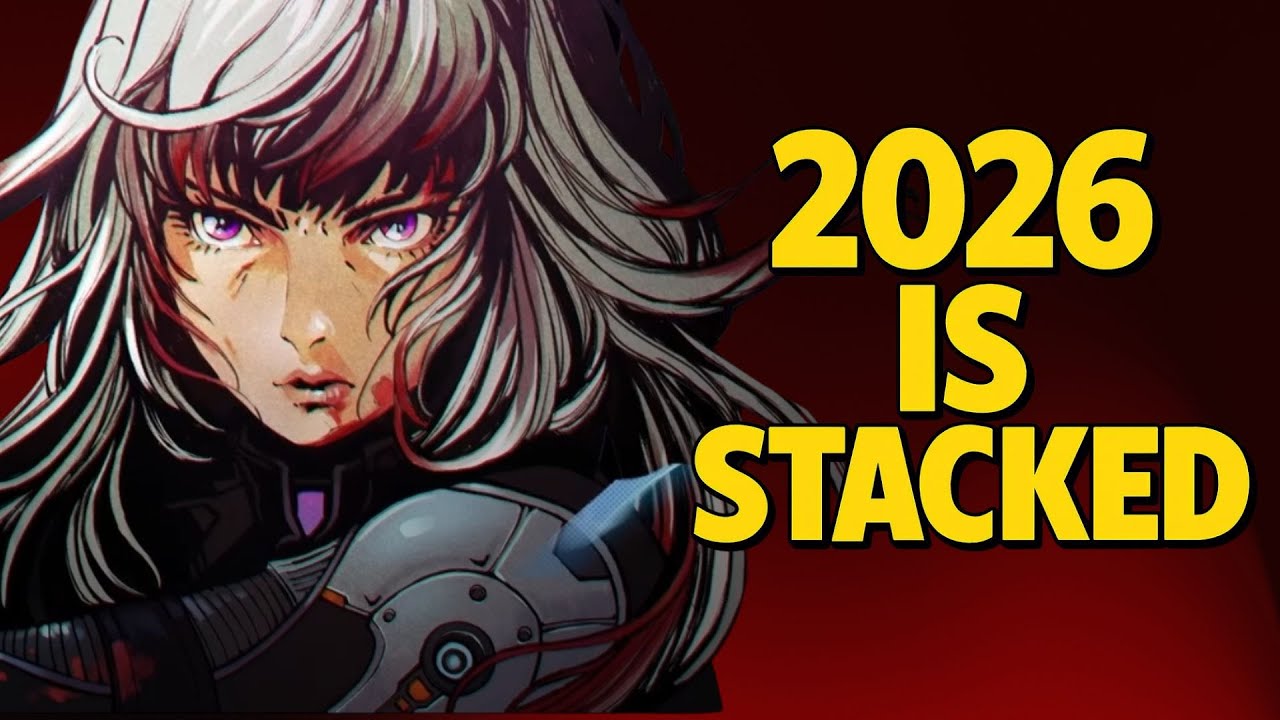



Explore Any Narratives
Discover and contribute to detailed historical accounts and cultural stories. Share your knowledge and engage with enthusiasts worldwide.
A single, graceful shot opens the trailer: an android’s hand, sleek and white, twitches to life against a backdrop of corroded metal and encroaching vines. A voice whispers, “What is a memory if not a ghost?” This is the first moment of MIO: Memories in Orbit, a game that asks players to navigate not just a labyrinthine spaceship, but the very concept of consciousness itself. Developed by the French studio Douze Dixièmes and published by Focus Entertainment, its journey to launch has been a calculated orbit, finally settling on a release date of January 20, 2026. After a delay from its initial 2025 window, the game is now locked in, with pre-orders live and a demo that has already begun cultivating a fervent following.
The anticipation isn't abstract. It’s built on the tangible, punishing, and beautiful two-to-three hour demo available on Steam and the Microsoft Store. Players who have ventured into the opening segments of the decaying Vessel return with stories of exquisite frustration and awe. They speak of a world where art direction isn't a backdrop but a character, where every jump feels consequential, and where death carries a tangible, almost poetic cost. This isn't just another entry in the Metroidvania renaissance; it is a deliberate, high-stakes argument for what the genre can be when it fully commits to its themes of isolation, discovery, and consequence.
The narrative premise of MIO: Memories in Orbit is deceptively simple on its surface. You are MIO, an android awakening on a vast, derelict spaceship called the Vessel. The once-pristine corridors are now a fusion of industrial decay and rampant, wild vegetation. The AI caretakers known as Pearls, who maintained this ark, are shutting down. Your objective is to explore, to recover lost memories, and to avert a looming catastrophe. The depth, however, lies in the execution. From the opening cinematic—a surreal sequence of a luminous “soul” being injected into MIO’s chassis amid floating, cryptic symbols—the game establishes that it is concerned with the blurry line between organic and artificial intelligence, between data storage and lived experience.
This philosophical underpinning is woven directly into the gameplay mechanics. The game deliberately withholds the comfort of a constant minimap. Instead, players can only view the map at specific, scattered terminal systems aboard the Vessel. The design intention is brutal and brilliant: it forces navigation by memory and landmark, making the player’s growing understanding of the environment a direct parallel to MIO’s own recovering memory. You don’t just fill in a map; you reconstruct a ghost of the ship’s former purpose in your mind.
According to a preview from GameSpew in June 2025, this approach fundamentally changes the player's relationship with the space. “The lack of a constant minimap isn't a quality-of-life oversight; it's a core thematic pillar. You are meant to feel lost, to rely on your own growing mental image of the Vessel. When you finally find a mapping terminal, it’s a revelation, a literal piece of your memory falling back into place.”
The atmosphere is further amplified by the game’s aesthetic. The art direction, frequently described as “spellbinding,” uses a palette of muted metallics, eerie bioluminescent greens, and deep, velvety blacks. Machinery doesn't just break down; it is subsumed, almost embraced, by organic growth. Trailer voiceovers, delivered in a haunting, poetic cadence, hint at larger themes: “boundless growth,” “hidden hungers,” and “destiny.” The Vessel isn't merely a setting; it’s a corpse being reclaimed by nature, and you are a spark of synthetic life trying to understand its death throes.
At the heart of MIO’s punishing yet compelling loop is its unique risk-reward system, centered on a currency called nacre. This resource, perhaps named for the iridescent substance that forms pearls, is collected from defeated enemies and the environment. It serves a dual purpose: it can be spent on healing items and permanent upgrades, providing clear progression. However, upon death, all unspent nacre is lost forever unless the player has taken the precaution to “crystallize” it at one of the game’s checkpoint stations.
This mechanic transforms every expedition into a tense calculation. Do you push forward into unknown, dangerous territory with a pocket full of nacre, hoping to find a new upgrade vendor or a save point? Or do you turn back, securing your gains but potentially breaking your exploratory flow? The low initial health pool of MIO means combat demands precision—dodging and avoiding enemies is often smarter than engaging, especially when carrying a small fortune in nacre. This creates a dynamic where the scrap you collect from the environment feels earned, where death is not a minor inconvenience but a genuine setback that tests your nerve.
“The nacre system is what elevates MIO from a challenging game to a thoughtful one,” suggests an analysis from PopMatters. “It directly ties the economic risk to the narrative theme of memory and preservation. To crystallize your nacre is to make a memory permanent, safe from the ‘death’ of data loss. It’s a brilliant, tactile metaphor that makes every player decision resonate beyond the immediate gameplay.”
This design philosophy places MIO: Memories in Orbit firmly in the company of games like Nine Sols or certain Souls-likes, where mastery is rewarded and carelessness is punished. Yet, it avoids feeling gratuitously cruel because the risk is so perfectly married to the game’s central themes. You aren't just losing money; you are losing the tangible fragments of your progress, your “memories” of the journey thus far.
The stage is set. The Vessel awaits, a decaying monument to a forgotten purpose. MIO awakens not with a bang, but with a whisper of code and a question hanging in the static-filled air: Who built this tomb, and why am I its only ghost? The answer, players will discover starting January 20, 2026, is scattered across six platforms—PC, PlayStation 5, Xbox Series X|S, Nintendo Switch, and the forthcoming Nintendo Switch 2—in the form of 15 formidable bosses, over 30 enemy types, and a labyrinth that asks to be remembered, not just mapped.
The visual identity of MIO: Memories in Orbit is not merely a stylistic choice; it is a fundamental pillar of its design, deeply intertwined with both gameplay and narrative. Douze Dixièmes has crafted an aesthetic that marries hand-drawn 2D art with thoughtful 3D space, achieving what many have described as a "poetic and eerie" sci-fi look. This isn't just about making a pretty game; it’s about making a legible, purposeful one. The art informs the action, guiding the player through environments that are both alien and strangely familiar.
Art director Hourcade articulated the philosophy behind this visual engineering, stating, “The most important one was that we decided to differentiate the rules depending on the moment of the game.” This meant enforcing strict guidelines, such as limiting the number of edges on assets to control outlines, ensuring that the visual complexity never overwhelmed the player's ability to discern platforms, enemies, or interactable elements. The result is a painterly quality, where biome-specific color palettes mimic Photoshop shading, giving the entire Vessel a coherent, yet diverse, appearance. It’s a delicate balance, making sure that while the art is breathtaking, it always serves the demanding, precise platforming and combat that define the Metroidvania genre.
The decision to build environments that support non-linear exploration presented unique challenges for the art and level design teams. Unlike a sequential narrative, where levels unfold linearly, MIO’s Vessel is a sprawling, interconnected organism. Game designer Sévan Kazandjian explained this approach, stating, “Since the environment might be explored in a non-linear way, I wouldn’t say it was conceived in a ‘sequential’ way like a graphic novel. Instead, it’s more like a collection of interesting places.” This philosophy encourages players to treat the environment not as a series of obstacles, but as a trove of secrets, each corridor and chamber begging the question: what lore haven’t we uncovered yet?
This non-linear design is reinforced by the game's deliberate art direction. The development team employed clever visual cues to guide players without resorting to overt signposting. For instance, the engine itself was reportedly built through early visual experiments, ensuring color persistence with "one global light and very strict control of the colours in each biome." This attention to detail means that even without a constant minimap, players can often discern a biome's identity and potential paths through its distinct visual language. It’s a bold choice, one that trusts the player’s intelligence and rewards careful observation. But does it risk alienating those who prefer a more straightforward, guided experience? Perhaps, but the demo's reception suggests that for its target audience, this deliberate obscurity is a feature, not a bug.
According to Creative Bloq in a recent feature, the game’s art "prioritizes gameplay readability over realism, blending comic lines and painterly colors for an otherworldly feel. The non-linear design mirrors the memory theme, forcing players to piece together the narrative and geography simultaneously." This integration of form and function is where MIO truly begins to shine, making its world feel lived-in and mysterious.
As MIO: Memories in Orbit approaches its launch on January 20, 2026, across PS5, Xbox Series X|S, Nintendo Switch 2, PC (Steam), and as a Day 1 Xbox Game Pass title, it enters a crowded, yet vibrant, Metroidvania landscape. Many are positioning it as "the first major indie Metroidvania of 2026," suggesting it’s poised to make a significant impact. The comparisons are inevitable, particularly to the long-awaited Hollow Knight: Silksong. Yet, MIO seems to deliberately carve its own niche, offering "unique mechanics" like modular ability customization that promise a more adaptable and personalized experience.
The core gameplay loop centers on MIO’s nimble combat and precise platforming, featuring wall-climbing, gliding, hooking, and low-gravity locomotion. Players will face over 30 enemy units and confront 15 guardian bosses. But where MIO distinguishes itself is in its approach to player agency. The modular ability customization, achieved by scavenging parts, allows players to tailor their playstyle. This could involve enhancing specific combat modifiers, or augmenting MIO’s hooks and orbs for unique traversal and offensive options. This freedom to experiment and evolve MIO’s capabilities directly addresses a common critique leveled at some Metroidvanias, including, by some, even Hollow Knight itself: the rigidity of character builds.
ComicBook.com highlighted this distinction, writing, “The freedom to customize allows you to build MIO up in various ways, contrasting Silksong's rigidity. The focus is to keep on the move, emphasizing precise, fast-paced actions.” This suggests that while MIO embraces the high-skill, challenging combat of its peers, it offers a more flexible path to mastery, allowing players to adapt the android to their own strengths.
The game's lo-fi and choral soundtrack, coupled with its mesmerizing, intertwined, decaying world, as emphasized on the Nintendo Switch 2 page, creates an experience that demands rhythm and timing mastery. The low-gravity environments, according to GameRant, create a "forgiving and disorienting" sandbox, allowing for creative movement solutions that belie the underlying difficulty. This is a game that expects you to learn, to adapt, and to ultimately master its intricate systems. But it also gives you the tools to do so on your own terms. Is this blend of punishing challenge and flexible customization the future of the genre, or merely a clever variation?
While the promise of modular customization is tantalizing, one must ask: how deep does it truly go? Will players genuinely feel empowered to create distinct builds, or will a meta emerge that funnels everyone into a few optimal configurations? The game promises to transform MIO's abilities, enabling personalized builds, but the true test will be in the breadth and impact of these modules. If the modifications are superficial, adding only minor statistical tweaks rather than fundamentally altering playstyle, then the promise of "unique mechanics" might fall short. However, if the modules genuinely create divergent combat and traversal strategies, then MIO could indeed offer a fresh perspective on player progression within the Metroidvania framework.
Focus Entertainment has been steadily building anticipation. On January 13, 2026, just a week before launch, they released several featurettes detailing aspects like "Exploration & Agility," "Visions of the Vessel," "Characters in Motion," and "Threats and Tensions." Two more, "Evolve & Adapt" and "Voices of the Vessel," are planned before the game’s release. These insights, along with the widely praised 2-3 hour demo, suggest a developer confident in its vision. With a 10% pre-order discount across platforms, the publisher is clearly incentivizing early adoption. The stage is set for MIO: Memories in Orbit to not just participate in the Metroidvania conversation, but to lead it into new, uncharted territory, bridging the gap between artistic ambition and player-driven mechanics.
MIO: Memories in Orbit is not merely another sci-fi platformer launching on January 20, 2026. Its significance lies in its audacious attempt to synthesize high-concept themes with uncompromising, player-first game design. In a genre often celebrated for its intricate maps and power progression, Douze Dixièmes is asking a more profound question: what if the map is not just a tool, but the mystery itself? The game’s insistence on memory-based navigation—forcing players to rely on their own mental cartography rather than a persistent UI element—is a radical design statement. It elevates exploration from a mechanical task to a cognitive one, directly mirroring the android protagonist’s own journey to reclaim a fragmented past.
This approach positions MIO at the forefront of a subtle but important shift in the Metroidvania genre. While titles like Hollow Knight and Ender Lilies masterfully build worlds, MIO seeks to build a relationship with its world. The Vessel is not just a playground to be conquered; it is a character to be understood, a corpse to be autopsied. The game’s art direction, meticulously crafted with biome-specific palettes and rules that prioritize gameplay readability, serves this relationship. Every visual choice, from the limited outlines to the painterly shading, is in service of making the player feel both lost and strangely at home within the decay.
“A lot of small rules were established: no asset with too many edges because it would create too many outlines... if it’s a strong action / platformer moment then the art must be at the service of the gameplay.” — Hourcade, Art Director
The game’s thematic core—exploring the boundary between artificial and organic memory—also resonates beyond its own narrative. In an era increasingly preoccupied with AI consciousness and digital legacy, MIO offers an interactive allegory. The nacre system, where unsecured memories (currency) are lost upon death, is a brilliant, tactile metaphor for data fragility and the value we assign to experience. It transforms a standard risk-reward loop into a poignant commentary on preservation. The game’s potential legacy, therefore, may be in proving that the most effective way to explore complex philosophical ideas is not through cutscenes or logs, but through systems that make the player feel those ideas in their moment-to-moment decisions.
For all its ambition, MIO: Memories in Orbit walks a razor’s edge. Its deliberate design choices, while laudable, carry inherent risks that could alienate a segment of its audience. The most glaring is the absence of a constant minimap. While celebrated by purists as a bold return to organic discovery, it could easily translate into frustration for players who value clarity and efficiency. In a genre known for sprawling, complex environments, the potential for aimless wandering and repeated dead-ends is high. Will the environmental signposting and “collection of interesting places” philosophy be sufficient guidance, or will it lead to periods of tedious, momentum-killing confusion?
Furthermore, the game’s punishing difficulty, coupled with the permanent loss of un-crystallized nacre, creates a high-stakes environment. This will be a core draw for a specific, masochistic player base, but it could wall off the experience from those seeking a more narrative-driven, contemplative journey through its beautiful world. The promise of deep modular customization is the counterbalance here, but if the build variety is shallow or if a single “meta” loadout emerges as dominant, then this celebrated flexibility becomes an illusion. The game’s success hinges on these systems feeling meaningful and varied, not just cosmetic.
There is also the matter of narrative delivery. A story about recovering lost memories in a non-linear world is inherently fragmented. The risk is a lore that feels too obscure, too scattered, leaving players with a beautiful but ultimately hollow experience. The developers have hinted at major narrative payoffs, with director Oscar Blumberg mentioning a pivotal endgame scene “where you find this very big character, and you walk on vines around her in deep space.” Such moments need to be earned by a narrative thread strong enough to survive the game’s open structure. If that thread snaps, the emotional impact dissipates.
The upcoming release on Xbox Game Pass Day One is a masterstroke for accessibility, inviting a massive audience to take the risk. But it also means MIO will be judged by a broader, less genre-devoted crowd. The game must prove that its challenges are fair, its world compelling enough to memorize, and its rewards—both narrative and mechanical—worth the considerable effort it demands.
The trajectory for MIO: Memories in Orbit is now fixed. With the final pre-launch featurettes, “Evolve & Adapt” and “Voices of the Vessel,” scheduled for release before January 20, the last pieces of the puzzle will fall into place. The immediate future is one of scrutiny and celebration. The game’s performance on the Nintendo Switch 2 will be particularly telling, a test of whether its mesmerizing art and precise performance can translate seamlessly to a hybrid platform. The speedrunning community will likely dissect its modular systems and boss patterns within days, creating a secondary meta-narrative of optimization and sequence breaking.
Predictions are perilous, but the evidence points toward a title that will carve a deep, respected niche. It will not dethrone genre kings through mass appeal, but through conviction. It will be the game cited in design lectures for its daring integration of theme and mechanic. It will be the subject of dense, admiring video essays analyzing its memory mechanics. And for a dedicated group of players, the Vessel will become a second home—a place of beautiful desolation where every rediscovered corridor feels like a personal triumph, a ghost of a memory made solid again.
The android’s hand twitches, a spark in the silence. A voice in the static asks, “What is a memory if not a ghost?” On January 20, 2026, players will begin the work of providing an answer, not with words, but with movement, with exploration, with the crystallized fragments of their own journey through the ruins. The orbit is set. The only remaining question is who will choose to remember.
Your personal space to curate, organize, and share knowledge with the world.
Discover and contribute to detailed historical accounts and cultural stories. Share your knowledge and engage with enthusiasts worldwide.
Connect with others who share your interests. Create and participate in themed boards about any topic you have in mind.
Contribute your knowledge and insights. Create engaging content and participate in meaningful discussions across multiple languages.
Already have an account? Sign in here

Pathologic 3 arrives January 9, 2026, wielding time-travel to deepen its signature despair, forcing players to rewrite t...
View Board
MIO: Memories in Orbit launches on Game Pass Jan 20, 2026, offering a polished metroidvania with fluid combat, hand-draw...
View Board
Solo developer Adam Hunt crafts Streetdog BMX, a love letter to BMX culture, launching January 14, 2026, on Steam with 2...
View Board
Cairn redefines climbing games with physics-driven realism, forcing players to read rock faces, manage stamina, and plac...
View Board
Pathologic 3 arrives January 9, 2026, a punishing survival RPG where time-travel meets plague diagnosis in a dying city,...
View Board
Code Vein 2 overhauls combat, expands customization with 200+ Formae, and rebuilds level design, addressing the original...
View Board
Josef Fares' Split Fiction redefines co-op storytelling with its radical two-player-only design, selling 2M copies in a ...
View Board
Code Vein II redefines gothic action RPGs with time-bending combat, vast ruins, and a motorcycle-driven wasteland, but l...
View Board
Code Vein II invites players on a somber pilgrimage through time, blending Soulslike combat with a narrative of sacrific...
View Board
Dynasty Warriors Origins DLC launches Jan 22, 2026, reimagining villains as heroes with new weapons, skills, and untold ...
View Board
Code Vein 2 launches Jan 30, 2026, rewriting its anime Soulslike legacy with time-bending combat, deeper RPG systems, an...
View Board
Tekken 7’s Rage Arts, 8‑million unit sales and tournament‑ready mechanics forged a modern fighting‑game era, shaping com...
View Board
GTA 6 faces its toughest rival in 2026: GTA V's $10B legacy. Can Rockstar's sequel eclipse a game that redefined longevi...
View Board
Betrayal at Baldur's Gate transforms a blank board into a dungeon of shifting alliances and procedural terror, where 49 ...
View Board
Quarantine Zone: The Last Check turns zombie survival into bureaucratic horror, forcing players to make life-or-death de...
View Board
Code Vein II rewrites fate with time-bending combat, deeper customization, and a bold single-companion system, launching...
View Board
Xbox Game Pass January 2026 delivers 11 new titles, including Star Wars Outlaws and Death Stranding: Director's Cut, whi...
View Board
Heartopia storms Steam with 17K players, blending cozy sim charm & mobile monetization, sparking a cultural clash over g...
View Board
Resident Evil Requiem blends classic survival horror with modern tech, delivering dual narratives of terror and action i...
View Board
Mortal Kombat 11: A Deep Dive into Its Enduring Legacy The arena lights flicker, a digital roar erupts, and then, the c...
View Board
Comments