


Explore Any Narratives
Discover and contribute to detailed historical accounts and cultural stories. Share your knowledge and engage with enthusiasts worldwide.
Kerbal Space Program (KSP) is a unique and captivating spaceflight simulation game that has captured the hearts of gamers, space enthusiasts, and aspiring rocket scientists alike. Developed by Squad and first released in 2011, KSP allows players to design, build, and launch their own spacecraft, oversee missions to distant planets, and explore the vastness of a fictional solar system. With its blend of realistic physics, engaging gameplay, and a healthy dose of humor, KSP has become one of the most beloved space simulator games in the industry.
The game is set in a fictional star system centered around the planet Kerbin, home to the amphibious Kerbals—the game’s lovable and often hapless astronaut species. Kerbin itself resembles Earth in many ways, with an atmosphere, oceans, and varied terrain, making it an excellent starting point for new players. The Kerbol System includes several other celestial bodies, such as Mun (Kerbin’s moon), Duna (a Mars-like planet), Jool (a gas giant), and many more. These destinations provide endless opportunities for exploration, requiring players to carefully plan missions to overcome gravitational forces, orbital mechanics, and fuel limitations.
One of KSP’s most defining features is its robust ship-building mechanics. Players start in the Vehicle Assembly Building (VAB) or the Spaceplane Hangar (SPH), where they can construct spacecraft from a vast array of available parts. The game includes realistic propulsion systems, fuel tanks, structural components, command modules, and scientific instruments. Unlike many other space-themed games, KSP requires players to understand real-world physics principles such as thrust-to-weight ratio, delta-V (change in velocity needed for maneuvers), and orbital mechanics.
Launching a spacecraft is only the first step—players must then navigate through Kerbin’s atmosphere, achieve stable orbit, and execute maneuvers like burns to reach other celestial bodies. The learning curve can be steep, but overcoming these challenges is immensely rewarding, teaching players fundamental aerospace concepts along the way.
Kerbal Space Program offers three primary game modes to suit different player preferences: Sandbox, Science, and Career.
Sandbox mode provides unlimited resources and access to all parts from the beginning, allowing complete freedom in spacecraft design and mission planning. This mode is ideal for players who want to experiment without limitations or those who already have a strong grasp of the game's mechanics.
Science mode introduces progression by requiring players to conduct experiments and gather scientific data from different biomes and celestial bodies to unlock new technologies. This mode strikes a balance between open-ended gameplay and structured objectives.
Career mode is the most challenging and immersive, combining resource management, reputation, and financial constraints. Players must complete contracts, manage budgets, and strategically expand their space program to stay afloat. Balancing mission costs, scientific research, and public approval adds a layer of strategic depth rarely seen in simulation games.
While KSP simplifies some aspects of real-world physics for accessibility, it incorporates many authentic concepts, making it one of the most educational games available. Players learn about:
The modding community has further expanded on this realism with add-ons that introduce more accurate atmospheric models, life support requirements, and even more detailed celestial bodies.
Several factors contribute to KSP’s enduring popularity:
Kerbal Space Program stands as a masterpiece of simulation gaming, blending scientific accuracy with creative freedom and humor. Whether you’re a casual player looking for fun or an aspiring aerospace engineer, KSP offers an unmatched experience. In the next section, we’ll explore advanced gameplay mechanics, modding, and how the game inspires real-world space exploration.
Let me know when you're ready for the next part!
Once players master the basics of rocket construction and orbital mechanics in Kerbal Space Program, they can delve into more complex mission planning and spacecraft design. Advanced techniques are essential for reaching distant planets, establishing space stations, and even conducting interstellar missions with mods.
Leaving Kerbin’s sphere of influence and journeying to other planets requires precise timing and execution. Players must learn about transfer windows—the optimal periods when the alignment of celestial bodies minimizes the amount of fuel needed for travel. Tools like the phase angle diagram (or mods like Kerbal Alarm Clock) help determine the best launch dates. Additionally, executing a Hohmann transfer orbit—an elliptical trajectory between two planets—is often the most fuel-efficient method.
Advanced players utilize gravity assists—slingshot maneuvers around moons or planets—to gain speed without expending fuel. Precisely calculating these trajectories requires an understanding of orbital paths and velocity changes. Similarly, managing delta-V budgets (the total change in velocity a spacecraft can achieve with its fuel) becomes critical. Players must ensure their vessels have enough fuel for mission-critical maneuvers, including landing, ascent, and course corrections.
One of the most technically challenging yet rewarding aspects of KSP is docking spacecraft. Successfully linking two vessels in orbit involves matching velocities, aligning docking ports, and carefully maneuvering using RCS (Reaction Control System) thrusters. Many players use these skills to construct modular space stations or assemble massive interplanetary ships piece by piece in orbit.
Elon Musk’s SpaceX has popularized reusable rockets, and KSP players can replicate these feats. Designing reusable launch systems—where boosters return safely to Kerbin—requires careful thrust management and aerodynamic stability. Another high-level challenge is building Single-Stage-To-Orbit (SSTO) spaceplanes that can reach orbit without jettisoning any components, blending jet and rocket propulsion.
While the base game provides an incredible experience, the modding community has vastly expanded KSP’s possibilities. Thousands of mods introduce new parts, mechanics, and even entire star systems.
Players seeking ultra-realistic simulations often install mods like:
Aesthetic and convenience mods enhance immersion without altering core gameplay:
For players craving more exploration, mods like Outer Planets Mod (which adds analogues of Saturn, Uranus, and Neptune) or Galileo’s Planet Pack (a revamped solar system) provide fresh challenges. Some ambitious mods even introduce warp drives and interstellar travel.
Remarkably, KSP has transcended entertainment, influencing real aerospace professionals and educational programs.
NASA and the European Space Agency (ESA) have partnered with KSP’s developers for outreach initiatives. NASA’s "Asteroid Redirect Mission" and ESA’s "Lunar Lander Challenge" were recreated in-game to engage the public. Some engineers and astronauts have even admitted to playing KSP for conceptual prototyping.
Universities and high schools use KSP to teach physics and engineering principles. The game’s hands-on approach helps students grasp abstract topics like orbital decay, rocket staging, and trajectory optimization far better than traditional methods.
Countless players credit KSP for sparking their interest in aerospace careers. The game’s trial-and-error nature reinforces perseverance—failure isn’t just expected; it’s part of the fun (“rapid unscheduled disassembly” is a beloved euphemism for explosions).
Though primarily single-player, the KSP community has devised creative ways to collaborate and compete.
Mods like DarkMultiPlayer (DMP) and Luna Multiplayer enable shared space programs, where players can work together on massive projects or race to complete objectives first.
Enthusiasts compete to achieve milestones in record time—like the fastest Mun landing or the quickest interplanetary mission. YouTube and Twitch streamers often showcase these feats, inspiring others to push the game’s limits.
Players design and share custom challenges—for example, landing on both of Jool’s moons with one ship or building a rover that circumnavigates Kerbin. Reddit’s r/KerbalSpaceProgram and forums are hubs for these creative endeavors.
Kerbal Space Program’s depth goes far beyond its initial appeal, offering layers of complexity for dedicated players. From mastering orbital physics to leveraging mods and contributing to real-world science, KSP remains a benchmark for interactive learning and creativity. In the final section, we’ll explore the game’s future, including KSP 2’s anticipated features and its legacy in gaming history.
Let me know when you're ready for the next part!
As Kerbal Space Program celebrates over a decade of captivating players, the announcement of Kerbal Space Program 2 has sparked excitement throughout the gaming and space exploration communities. This final section explores what's next for the franchise, how it builds upon the original, and the lasting legacy of this groundbreaking space simulator.
Scheduled for release after several delays (maintaining the Kerbal tradition of "rapid unscheduled disassembly" of launch schedules), KSP 2 promises to take everything players love about the original to new heights. Developed by Intercept Games and published by Private Division, the sequel introduces several groundbreaking features while maintaining the core physics-based gameplay that made the original so special.
The most ambitious addition in KSP 2 is the ability to travel beyond the Kerbol system to entirely new star systems. Players will need to master:
Built on a new foundation, KSP 2 features:
The developers have addressed many player pain points from the original with:
The road to KSP 2 hasn't been smooth. The development challenges highlight how ambitious the project is:
Beyond being just a successful game, KSP has made a significant impact on gaming culture and space enthusiasm worldwide.
The game has appeared in numerous unexpected places:
The player base has developed its own traditions and terminology:
KSP has become an invaluable STEM education tool:
Kerbal Space Program's success offers important lessons for game developers:
KSP demonstrates how simple rules (physics) can create complex, unpredictable outcomes that feel rewarding to master. Unlike scripted experiences, every player's journey is unique.
The game turns failure into entertainment - whether it's spectacular explosions or realizing your lander has no parachutes. This creates a safe space for experimentation.
By mirroring reality (with some Kerbal twists), the game offers nearly infinite possibilities for expression and discovery without artificial content restrictions.
At its core, KSP taps into fundamental human drives:
Mapping uncharted planetary surfaces and finding anomalies fulfills our innate curiosity about the unknown.
Progressing from barely reaching orbit to executing complex interplanetary missions provides a profound sense of achievement.
Designing spacecraft that reflect personal ingenuity and style becomes an art form in itself.
Kerbal Space Program represents a rare convergence of entertainment, education, and inspiration. What began as a quirky indie game grew into a phenomenon that not only simulates spaceflight but fosters genuine appreciation for aerospace science. As we look to KSP 2 and beyond, the franchise continues to push boundaries - much like the intrepid Kerbals themselves, always reaching for the next horizon.
Whether you're a newcomer strapping your first rocket together or a veteran planning an interstellar colony, Kerbal Space Program offers a universe of possibilities limited only by imagination (...and occasionally the laws of physics). As Jebediah Kerman would say: "Time to add more boosters and try again!"


Your personal space to curate, organize, and share knowledge with the world.
Discover and contribute to detailed historical accounts and cultural stories. Share your knowledge and engage with enthusiasts worldwide.
Connect with others who share your interests. Create and participate in themed boards about any topic you have in mind.
Contribute your knowledge and insights. Create engaging content and participate in meaningful discussions across multiple languages.
Already have an account? Sign in here

Heartopia storms Steam with 17K players, blending cozy sim charm & mobile monetization, sparking a cultural clash over g...
View Board
Explore Portal 2's ingenious physics-based puzzles! Discover gels, portals, and mind-bending challenges in Aperture Scie...
View Board
From a fatal first message to a karmic fog, Demon's Souls rewrites challenge as spiritual pilgrimage, where every death ...
View Board
Cairn redefines climbing games with physics-driven realism, forcing players to read rock faces, manage stamina, and plac...
View Board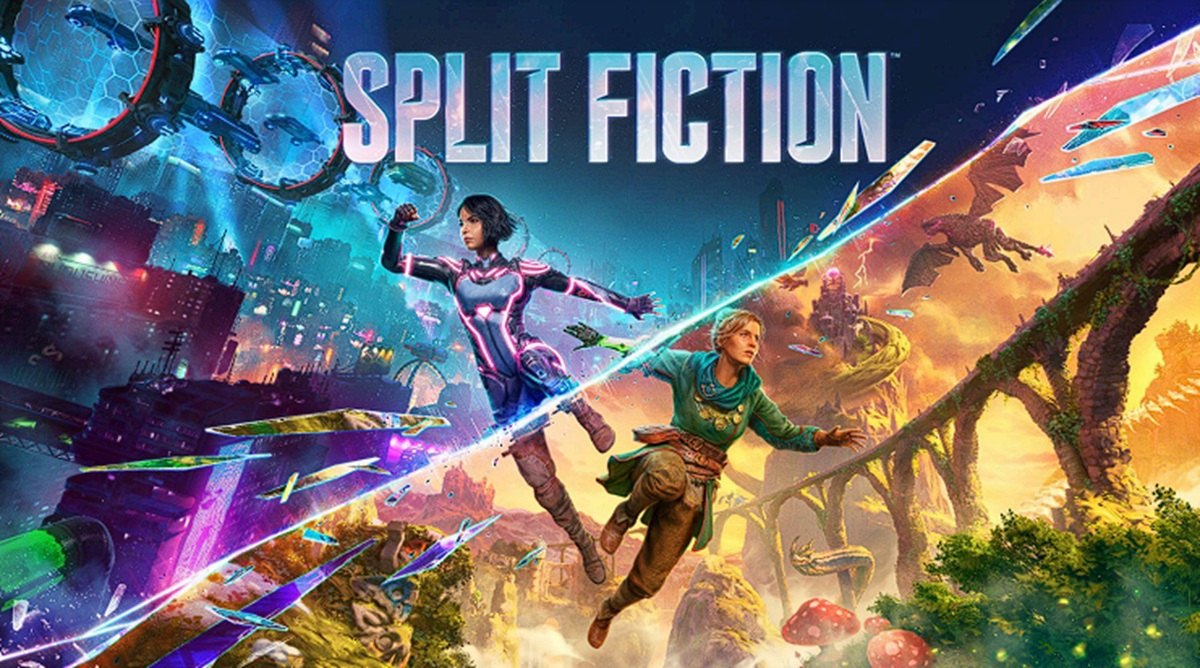
Josef Fares' Split Fiction redefines co-op storytelling with its radical two-player-only design, selling 2M copies in a ...
View Board
Delve into Death Stranding's unique gameplay: cargo delivery, BT encounters, social strands & more! Explore the Director...
View Board
Pathologic 3 arrives January 9, 2026, a punishing survival RPG where time-travel meets plague diagnosis in a dying city,...
View Board
Relive Fire Emblem: Awakening, the 3DS tactical RPG that revitalized the series! Discover its deep strategy, compelling ...
View Board
MIO: Memories in Orbit launches Jan 20, 2026, blending punishing Metroidvania gameplay with a haunting narrative on memo...
View Board
Solo developer Adam Hunt crafts Streetdog BMX, a love letter to BMX culture, launching January 14, 2026, on Steam with 2...
View Board
Hades 2 is here! Explore the underworld as Melinoë in this roguelike sequel from Supergiant Games. Learn about the relea...
View Board
Code Vein 2 overhauls combat, expands customization with 200+ Formae, and rebuilds level design, addressing the original...
View Board
Code Vein II invites players on a somber pilgrimage through time, blending Soulslike combat with a narrative of sacrific...
View Board
Pathologic 3 arrives January 9, 2026, wielding time-travel to deepen its signature despair, forcing players to rewrite t...
View Board
Here is the meta description in English, exactly 150-160 characters: "Civilization VI's final update marks a radical shi...
View Board
Explore Super Mario 64's groundbreaking impact on 3D platforming! Discover its development, innovations, cut content, an...
View Board
Tekken 7’s Rage Arts, 8‑million unit sales and tournament‑ready mechanics forged a modern fighting‑game era, shaping com...
View Board
Explore the innovative gravity-defying world of Super Mario Galaxy on Wii! Discover its unique gameplay, characters, pow...
View Board
Dynasty Warriors Origins DLC launches Jan 22, 2026, reimagining villains as heroes with new weapons, skills, and untold ...
View Board
MIO: Memories in Orbit launches on Game Pass Jan 20, 2026, offering a polished metroidvania with fluid combat, hand-draw...
View Board
Comments