

Explore Any Narratives
Discover and contribute to detailed historical accounts and cultural stories. Share your knowledge and engage with enthusiasts worldwide.
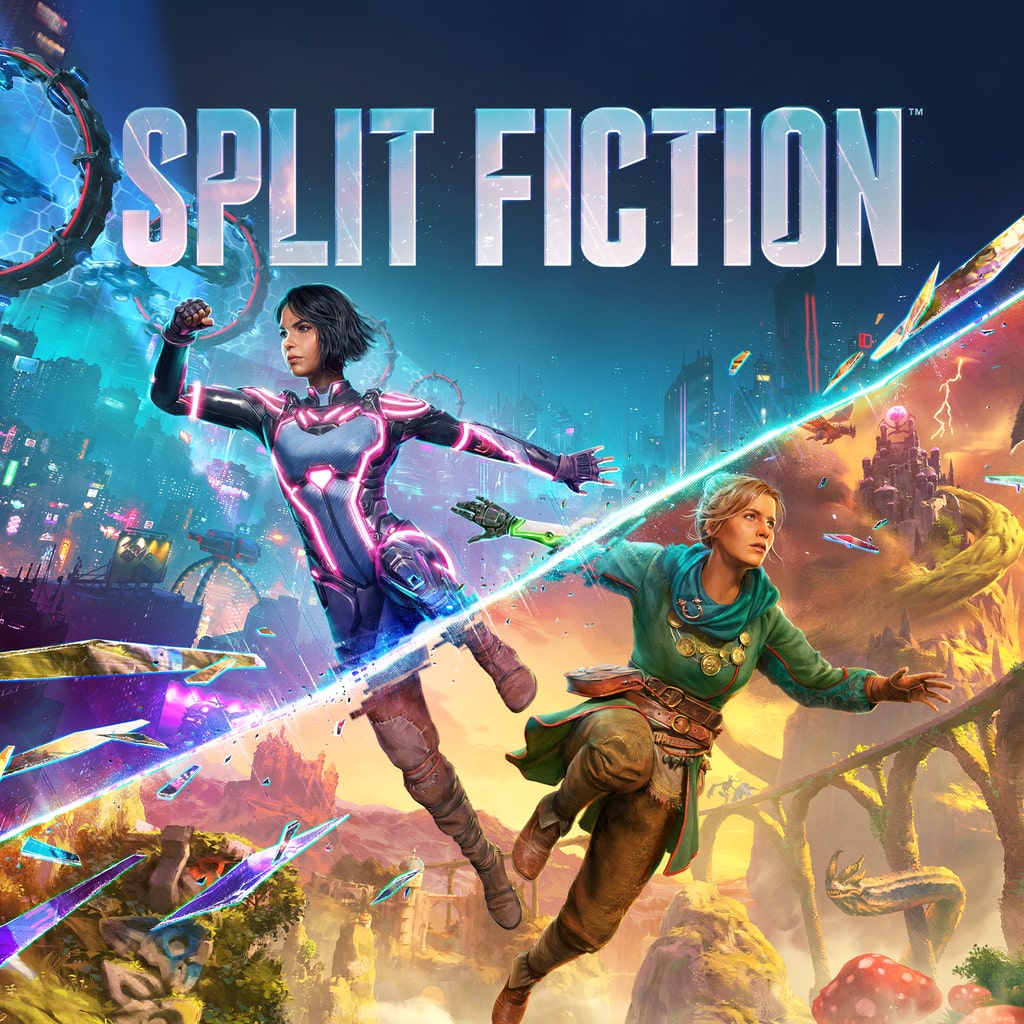
The video game industry, for all its talk of innovation, is a fortress of convention. Blockbuster budgets demand blockbuster returns, a formula that often narrows creative ambition into predictable shapes. Multiplayer gaming, the sector's most lucrative engine, has largely settled into two camps: the fiercely competitive arenas of shooters and battle royales, and the endless, grinding loops of live-service worlds. Into this landscape, Josef Fares throws a narrative grenade. On March 6, 2025, his studio Hazelight released Split Fiction, an action-adventure platformer built from a single, radical premise: two players, one story, no solo option. It sold over two million copies in seven days.
It's a love letter to creativity—to stories, games, and the people who make them. An early contender for the best game of 2025.
That's GameSpot's assessment, a definitive stamp on a game that feels like a rebellion made interactive. The success of Split Fiction isn't just another hit; it's a pointed argument about the future of playing together. It challenges the assumption that shared digital spaces must be battlegrounds or second jobs. Instead, Fares and his team propose a different model: the co-op narrative as a shared emotional journey, a meticulously crafted experience where the mechanics of play are inseparable from the beats of a story. This is biographical journalism about an idea, personified by a director and realized by a studio that has, against all market wisdom, made cooperation its competitive edge.
To understand Split Fiction, you must first understand Josef Fares. His biography reads like a screenwriter's pitch. Born in Lebanon in 1977, he fled the civil war with his family, settling in Sweden at age ten. He found his first creative outlet in film, directing features like Jalla! Jalla! and Kopps. His pivot to games was accidental, sparked by a meeting with Swedish publisher Starbreeze. The result was Brothers: A Tale of Two Sons in 2013, a single-player game that used its control scheme—each thumbstick governing one brother—to forge a profound, wordless narrative about loss and reliance. The game was a critical darling, winning awards, but more importantly, it planted a seed in Fares' mind: what if the two characters were controlled by two separate people?
He founded Hazelight Studios in 2014 to answer that question. The studio's name, a play on "hazel," a color associated with his daughter's eyes, and "light," signaled a personal, intimate mission. The industry looked on, skeptical. A studio dedicated solely to two-player co-op? It seemed commercially suicidal. Electronic Arts, through its EA Originals program, saw potential. The deal was crucial: Hazelight retained creative control and ownership of its IP, paying back development costs before sharing revenue. This freedom allowed Fares to operate with a filmmaker's singular vision.
His 2018 debut, A Way Out, forced two players to cooperate as convicts breaking out of prison. It was clunky in places, raw, but its commitment to shared-screen storytelling—even online—was undeniable. Then came 2021's It Takes Two, a dazzling, genre-hopping journey through a crumbling marriage metaphor. It sold over 10 million copies, won Game of the Year awards, and transformed couch co-op from a nostalgic niche into a vibrant, mainstream conversation. Fares, with his palpable intensity and now-infamous 2017 Game Awards middle-finger to the Oscars, became the charismatic, uncompromising face of this movement.
Split Fiction is the evolution of that decade-long obsession. The narrative premise is meta, a direct commentary on the creative struggles Fares knows intimately. You play as Mio and Zoe, writers at Rader Publishing, a corporation that uses a simulation machine to literally extract and weaponize creative ideas from authors. The themes are nakedly modern: intellectual property theft, corporate exploitation of art, the battle for creative autonomy. It's a story about storytelling, wrapped in a game that demands collaboration to progress.
The development was a marathon of iteration. In an interview with Vice in March 2025, Fares revealed the studio began conceptualizing the game's ending sequence a full three-and-a-half years before release. "We always start with the feeling, the core concept of cooperation," he said. "The mechanics, the worlds, they all serve that." This long-term vision is supported by a technical foundation that has matured dramatically. Where A Way Out felt, in Fares' own words, "rough around the edges," Split Fiction is polished to a sheen, featuring around 20 unique universes, each with its own visual language and gameplay twist.
We have been building our technical muscle for ten years now. It's not just about ideas; it's about having the ability to execute them at the highest level.
Fares stated this plainly, a reminder that behind the creative bravado is a studio that has patiently built its tools. This execution is evident in the game's structure. Players are constantly given asymmetrical abilities—one may manipulate time while the other rearranges platforms—forcing communication and shared problem-solving. The "Friend Pass" system, carried over from Hazelight's previous titles, is a quiet revolution in itself: buy one copy, and a friend can play the entire game with you online for free. It's a system that prioritizes shared experience over unit sales, and the market has responded. That first-week revenue figure, exceeding $100 million, proves the model works.
What does Fares' journey tell us? That a director who once made films about community and connection found his ultimate canvas in an interactive medium where connection is the core mechanic. His background as an outsider—a filmmaker in a game developer's world, an immigrant with a distinct voice—granted him the perspective to question entrenched norms. He didn't just make co-op games; he built a studio philosophy around them, and in doing so, carved out a new genre lane entirely. The commercial triumph of Split Fiction is, in many ways, the validation of his stubborn, decade-long bet on human collaboration over competition. The industry is now forced to reckon with that bet's payoff.
If It Takes Two was a vibrant thesis on emotional partnership, Split Fiction is the rigorous dissertation on mechanical symbiosis. The game’s foundation is its radical, non-negotiable premise: two players, one story, no solo option. This isn’t a multiplayer mode tacked onto a single-player campaign; it is the campaign’s entire genetic code. Hazelight Studios has moved beyond proving co-op’s viability and is now dissecting its very architecture. The result is a 14-hour campaign that functions as a relentless, joyous deconstruction of what playing together can mean. Every jump, puzzle, and boss fight is a dialogue.
The critical reception has been a chorus of astonishment focused on this execution. Split Fiction secured the 3 spot on Push Square’s 2025 Game of the Year list and ranked 4 on XboxEra’s equivalent list. These aren't just accolades; they are indicators of a title that has captured the critical imagination by fulfilling a promise others barely dare to make.
"A celebration about how wonderful, imaginative and downright clever videogames can be when they choose to embrace what they are." — XboxEra, Game of the Year 2025 List
This embrace is key. The game is described as "unashamedly video game-y," a phrase that cuts to its core. It forsakes cinematic realism or gritty narrative drama for a kaleidoscope of pure play. One moment you’re in a tense motorcycle chase, the next you’re "farting rainbows as a pig" or commanding a dragon. This isn’t incoherence; it’s a statement of purpose. The narrative frame—writers Mio and Zoe trapped in a machine that weaponizes creativity—becomes the perfect excuse for this maximalist approach. The game argues that shared joy, surprise, and absurdity are valid emotional endpoints for a story.
Where Split Fiction truly advances Hazelight’s craft is in its mastery of consistency within variety. Reviewers universally note the game maintains "very simple and consistent controls" even as the world and mechanics shift beneath the players' feet. This is a critical design triumph. The perspective may switch from 2D platformer to third-person shooter to top-down racer, but the fundamental language of interaction—how you move, jump, and interact with your partner—remains stable. This creates a unique cognitive experience: the challenge isn’t relearning controls every ten minutes, but applying a familiar toolkit to wildly new problems. The cooperation becomes intuitive, baked into the muscle memory.
The finale receives particular acclaim for breaking this very rule it so carefully established. Push Square noted it "brilliantly toys with your expectations and breaks its own design rules for a real showstopper moment." This meta-commentary, a climax that acknowledges the game’s own constructed nature, feels like Josef Fares winking from the director’s chair. It’s a final, defiant reminder that this is a crafted experience, a shared hallucination between developers and two players.
"The sheer variety of ideas, distinct sequences, and set pieces it throws at you is simply mind-blowing." — Space.com, The Best Sci-Fi and Space Games of 2025
The success of Split Fiction following 2021’s Game of the Year win for It Takes Two establishes a pattern, not an anomaly. Hazelight Studios has built a brand synonymous with premium, narrative-driven co-op. The commercial performance—that explosive first-week revenue—proves a sustainable market exists outside of live-service grind and competitive esports. This is the most significant industry impact: a redefinition of value. The game’s price point, $49.99 USD, and its Friend Pass system position it as a high-quality, complete package meant to be shared, not a free-to-play portal designed for endless monetization.
This challenges a core industry assumption. For years, the dominant logic held that multiplayer engagement was best measured in daily active users and season passes. Hazelight measures engagement in completed campaigns, in shared memories, in the act of a player using their one Friend Pass to bring someone else into the experience. The model is fundamentally social and finite. Does this signal a broader shift? Not immediately. The AAA landscape is still dominated by open-world bloat and service games. But it carves out a prestigious, profitable lane. It gives other studios permission to think smaller, more focused, and more mechanically inventive.
"Hazelight Studios' best work to date." — Push Square, Game of the Year 2025
This critical consensus is vital. When a studio’s third consecutive title is hailed as its best, it points to a rare trajectory of refinement rather than dilution. The praise isn’t just for a good game; it’s for the maturation of a specific design philosophy. From the rough-around-the-edges prison break of A Way Out, through the polished marital metaphor of It Takes Two, to the genre-hopping meta-narrative of Split Fiction, the through-line is an ever-deepening understanding of how to make two players feel indispensable to each other.
To analyze Split Fiction without critique is to engage in hagiography. The game’s greatest strength—its unwavering commitment to co-op—is also its most significant barrier. The mandatory two-player requirement is a design hill it is willing to die on, and it will inevitably leave some players stranded. What if you don’t have a consistent partner with a matching 14-hour window? The experience is completely inaccessible. This isn't a flaw in execution; it's a philosophical exclusion. Hazelight isn’t interested in compromise, and the game is better for it, but that artistic purity comes at the cost of universality.
Furthermore, the narrative’s "unashamedly video game-y" nature, while refreshing, can border on the insubstantial for players seeking deeper character arcs or thematic weight. The meta-commentary about creativity and corporate theft is clever framing, but does it resonate as profoundly as the marital strife at the heart of It Takes Two? The game is a smorgasbord, as Space.com notes, of "both fantasy and science fiction worlds, honoring the past and present of the genres." But does this celebration of tropes and mechanics sometimes feel like a dazzling parade of concepts in search of a more resonant emotional core? The brilliance of the gameplay can occasionally overshadow the heart of the story it’s trying to tell.
"Relentless imagination... a bonkers co-op adventure." — Push Square & Space.com
This "relentless imagination" is both the engine and the potential pitfall. The constant shifting prevents monotony, but could it also lead to a kind of gameplay whiplash that prevents mastery or deep immersion in any one idea? The game is a torrent of invention, but one wonders if a slightly more restrained pace would allow its best ideas to breathe. Is variety itself the point, or is it a delivery mechanism for a deeper statement about cooperation? Split Fiction seems to argue the former, positioning sheer creative joy as the ultimate payload.
Ultimately, these critiques are only possible because of the game’s towering ambitions. It sets such a high bar for mechanical invention and cooperative design that its narrative and structural choices become legitimate subjects for debate. It doesn’t play it safe. It doesn’t include a solo mode to placate a broader audience. It is, in every sense, a definitive statement. And in an industry rife with focus-tested homogeneity, that definitive stance—flaws, barriers, and all—is perhaps its most revolutionary act. The game doesn’t just want to be played; it demands to be discussed, to be argued about. It transforms players into co-critics, dissecting their shared experience long after the credits roll.
The significance of Split Fiction and Hazelight Studios’ decade-long project extends far beyond its sales figures or review scores. It represents a fundamental challenge to the prevailing economic and creative doctrines of the multiplayer space. For over a decade, the industry has operated on a simple, brutal calculus: player engagement is best monetized through competition or endless progression. Live-service models and competitive ladders dominate because they promise long-tail revenue. Split Fiction, alongside its predecessors, proposes a radical counter-narrative: that finite, shared, narrative-driven experiences have immense commercial and cultural value. It validates the idea that a game can be a one-time event, a complete story to be experienced with a specific person, and still be a blockbuster. This isn't a niche; with over 2 million copies sold in a week, it's a major market force.
This success provides a desperately needed blueprint for mid-tier development. In an era of ballooning AAA budgets and risky gambles on new IP, Hazelight’s model—creative ownership under EA Originals, focused scope, and a clear design pillar—emerges as a sustainable path. It proves that a studio can build a powerful brand not by chasing trends, but by perfecting a singular, human-centric vision. The cultural impact is subtler but more profound: the game actively architects social connection. It forces communication, cooperation, and shared problem-solving in a medium increasingly criticized for fostering toxicity and isolation. In living rooms and over voice chats, it is creating inside jokes, moments of triumph, and, yes, the occasional frustrated shout, all within a framework of mutual dependence.
"It sets a new standard for the genre... a love letter to creativity—to stories, games, and the people who make them." — GameSpot, Review
This "new standard" is not about graphical fidelity or open-world scale. It’s a standard of intentionality. Every pixel, every jump, every shift in perspective in Split Fiction is engineered for two. This level of design commitment raises the bar for what co-op can be. It moves cooperative play from a simple feature—drop-in, drop-out—to the core aesthetic and mechanical principle of an entire work. The legacy is already visible; other developers now look at the co-op-only model not as commercial suicide, but as a legitimate, even prestigious, creative avenue.
To lionize Hazelight’s approach without examining its inherent friction would be disingenuous. The studio’s philosophy carries built-in limitations. The mandatory co-op design, while pure, is also exclusionary. It creates a significant barrier to entry that has nothing to do with skill or interest, but with social circumstance. What about the player without a ready partner, or whose gaming schedule is solitary and asynchronous? For them, this celebrated genre remains a locked door. This is the artistic trade-off: by refusing to dilute the experience with a solo mode, the studio guarantees a potent, undiluted vision for some, while completely walling it off from others.
Furthermore, one must question the long-term replayability and community lifespan of such a model. A competitive shooter or a live-service game can thrive for years on a cycle of seasons and updates. A narrative-driven co-op adventure, no matter how brilliant, is a consumable product. The discussion around it peaks at launch and slowly fades as players complete the campaign. This isn’t a weakness per se, but it defines the game’s cultural footprint as a moment—a brilliant, shared moment—rather than a persistent world. Does this limit its long-term impact? Possibly. Yet, in an age of endless digital chores, the value of a complete, finite masterpiece is itself a powerful statement.
The studio’s reliance on a constant barrage of new mechanics—the "relentless imagination"—also risks a certain emotional whiplash. The narrative can feel like a delivery system for the next spectacular set-piece rather than a journey with deep, accumulating resonance. The heart of It Takes Two was its metaphor; the heart of Split Fiction is its invention. For some, this represents an evolution towards purer play. For others, it may feel like a step back from the poignant maturity of its predecessor.
Looking forward, the trajectory is clear but the next steps are fascinating. Josef Fares and Hazelight Studios have not announced a new project, but the pattern suggests they are already years deep in conceptualizing their next cooperative revolution. The studio has evolved with each title, from the straightforward prison break of A Way Out, to the emotional and mechanical depth of It Takes Two, to the meta-fictional spectacle of Split Fiction. Where does one go from a game that already traverses twenty universes? The logical progression may not be bigger, but deeper—perhaps exploring asymmetrical roles with greater narrative consequence, or weaving the cooperation into the very fabric of a persistent, evolving world.
The industry impact will be measured in the studios that follow this blueprint. In the next two years, expect to see a surge of mid-budget, co-op-focused titles from publishers emboldened by Hazelight’s financial proof-of-concept. The "Friend Pass" system will become a standard feature, not a novelty. The real question is whether any other team can match the alchemy of mechanical invention and pure, uncynical joy that defines Hazelight’s work. Fares’s background as a filmmaker who stumbled into games continues to be his superpower; he approaches interaction not as a systems engineer, but as a director orchestrating a shared performance between two audience-participants.
On March 6, 2025, Split Fiction didn't just launch a game. It launched an argument—a loud, colorful, irrefutable argument that playing together can be the main event, not a side mode. It proved that cooperation, in its purest form, is not just a mechanic, but a story worth telling. The final image of the game, whatever spectacular rule-breaking climax it employs, is less important than the one that follows: two players, controllers down, talking over each other about what they just saw and did together. That conversation is the artifact Hazelight sells. And in a fragmented digital world, it might be the most valuable thing a game can create.
Your personal space to curate, organize, and share knowledge with the world.
Discover and contribute to detailed historical accounts and cultural stories. Share your knowledge and engage with enthusiasts worldwide.
Connect with others who share your interests. Create and participate in themed boards about any topic you have in mind.
Contribute your knowledge and insights. Create engaging content and participate in meaningful discussions across multiple languages.
Already have an account? Sign in here

Pathologic 3 arrives January 9, 2026, a punishing survival RPG where time-travel meets plague diagnosis in a dying city,...
View Board
Heartopia storms Steam with 17K players, blending cozy sim charm & mobile monetization, sparking a cultural clash over g...
View Board
Code Vein II invites players on a somber pilgrimage through time, blending Soulslike combat with a narrative of sacrific...
View Board
Dynasty Warriors Origins DLC launches Jan 22, 2026, reimagining villains as heroes with new weapons, skills, and untold ...
View Board
Pathologic 3 arrives January 9, 2026, wielding time-travel to deepen its signature despair, forcing players to rewrite t...
View Board
Mortal Kombat 11: A Deep Dive into Its Enduring Legacy The arena lights flicker, a digital roar erupts, and then, the c...
View Board
Tekken 7’s Rage Arts, 8‑million unit sales and tournament‑ready mechanics forged a modern fighting‑game era, shaping com...
View Board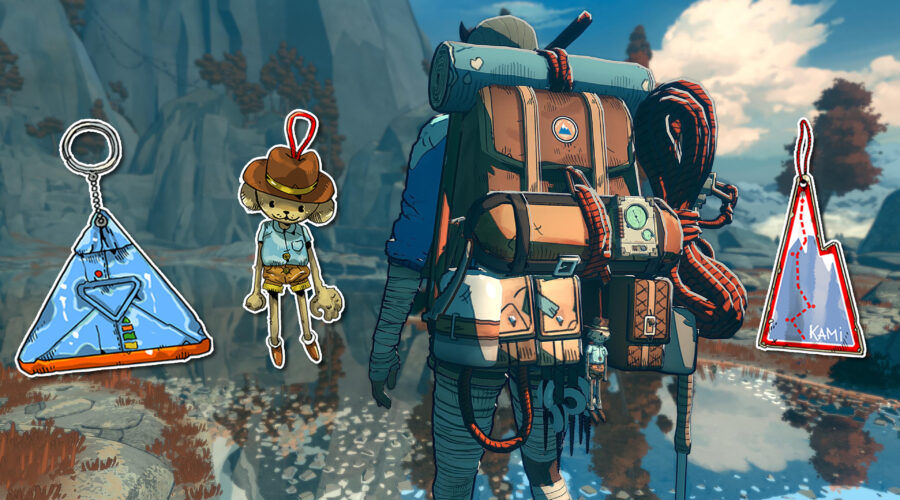
Cairn redefines climbing games with physics-driven realism, forcing players to read rock faces, manage stamina, and plac...
View Board
MIO: Memories in Orbit launches on Game Pass Jan 20, 2026, offering a polished metroidvania with fluid combat, hand-draw...
View Board
MIO: Memories in Orbit launches Jan 20, 2026, blending punishing Metroidvania gameplay with a haunting narrative on memo...
View Board
GTA 6 faces its toughest rival in 2026: GTA V's $10B legacy. Can Rockstar's sequel eclipse a game that redefined longevi...
View Board
Code Vein 2 overhauls combat, expands customization with 200+ Formae, and rebuilds level design, addressing the original...
View Board
A philosopher dissects how Kanto’s badge quests, closed map, and cable‑linked trading force identity, choice, and the et...
View Board
Solo developer Adam Hunt crafts Streetdog BMX, a love letter to BMX culture, launching January 14, 2026, on Steam with 2...
View Board
Xbox Game Pass January 2026 delivers 11 new titles, including Star Wars Outlaws and Death Stranding: Director's Cut, whi...
View Board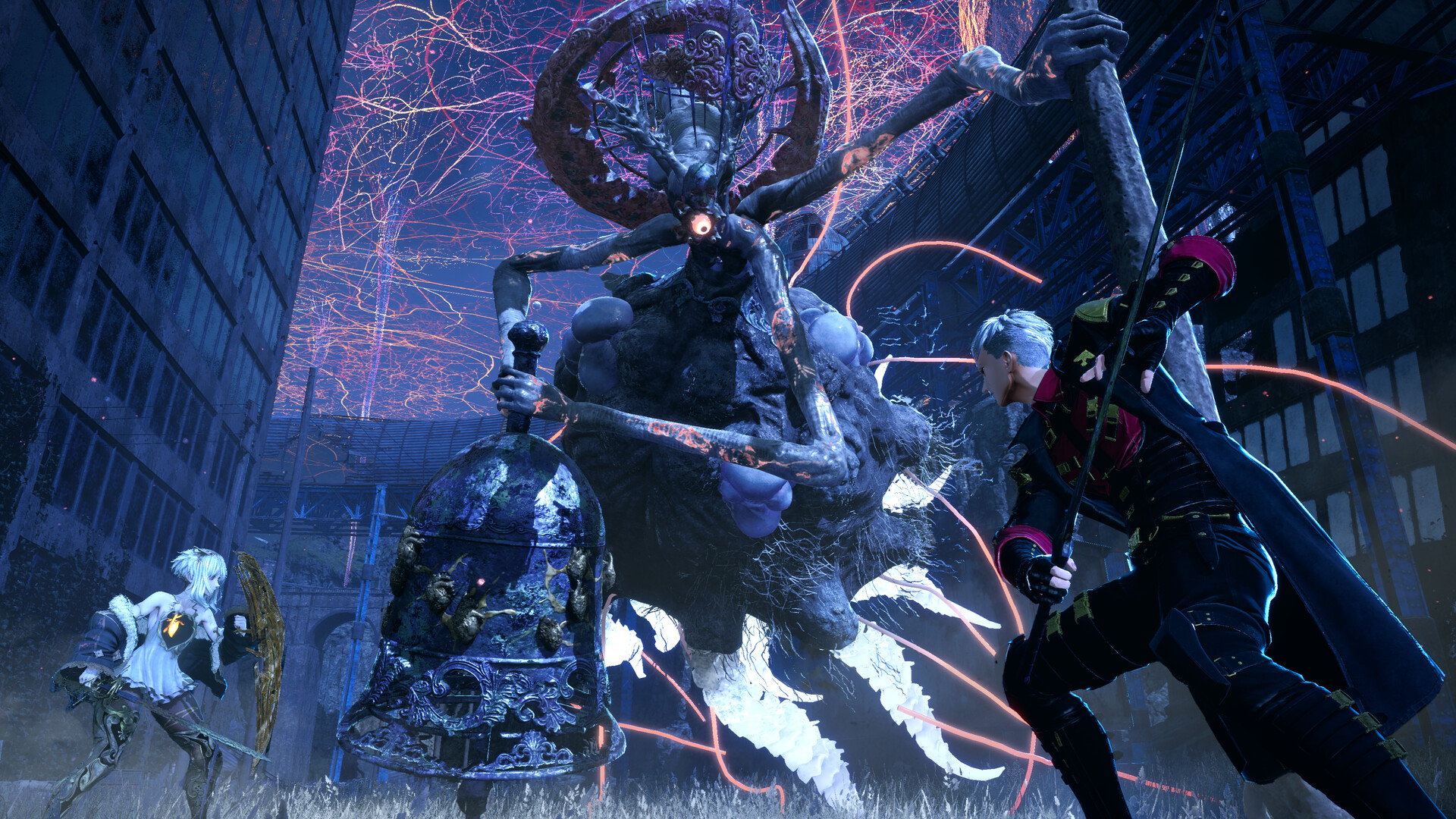
Code Vein 2 launches Jan 30, 2026, rewriting its anime Soulslike legacy with time-bending combat, deeper RPG systems, an...
View Board
Claim Fallout 1 & 2 for free via Prime Gaming before Jan 26, 2026—permanent ownership of the iconic RPGs that shaped gam...
View Board
Code Vein II redefines gothic action RPGs with time-bending combat, vast ruins, and a motorcycle-driven wasteland, but l...
View Board
Steel Century Groove launches Jan 28, 2026, blending mecha combat with rhythm RPG strategy, turning war machines into da...
View Board
Betrayal at Baldur's Gate transforms a blank board into a dungeon of shifting alliances and procedural terror, where 49 ...
View Board
Comments