


Explore Any Narratives
Discover and contribute to detailed historical accounts and cultural stories. Share your knowledge and engage with enthusiasts worldwide.
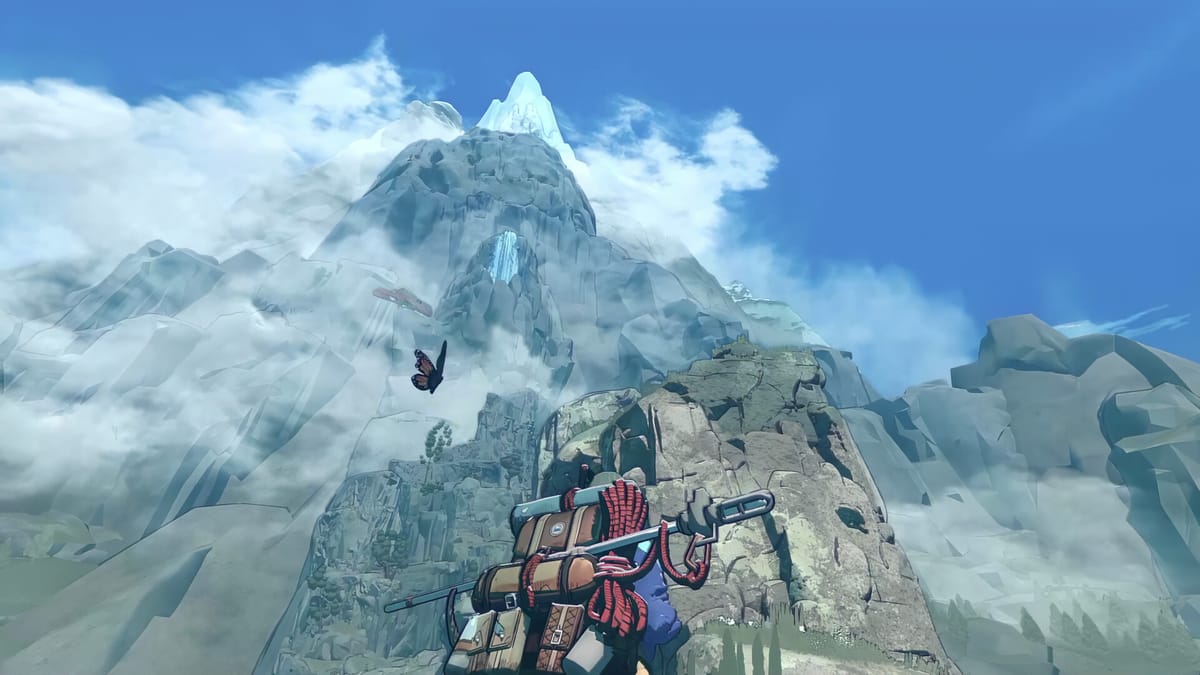
The first time your digital avatar slips, you feel it in your gut. It’s not a flashy animation. There’s no red warning flash on the screen. Your climber, Aava, simply exhales a sharp, ragged breath. Her hands, previously steady on the pixelated granite, begin to tremble. The controller pulses with a frantic, irregular rhythm that matches a spiking heart rate. You have seconds to find a new hold, to redistribute weight, to make a decision that real climbers make thousands of feet above certain death. This is the core experience of Cairn, an upcoming simulation that replaces gaming's traditional "jump and grab" mechanics with something far more profound: a physics-based study of human limits.
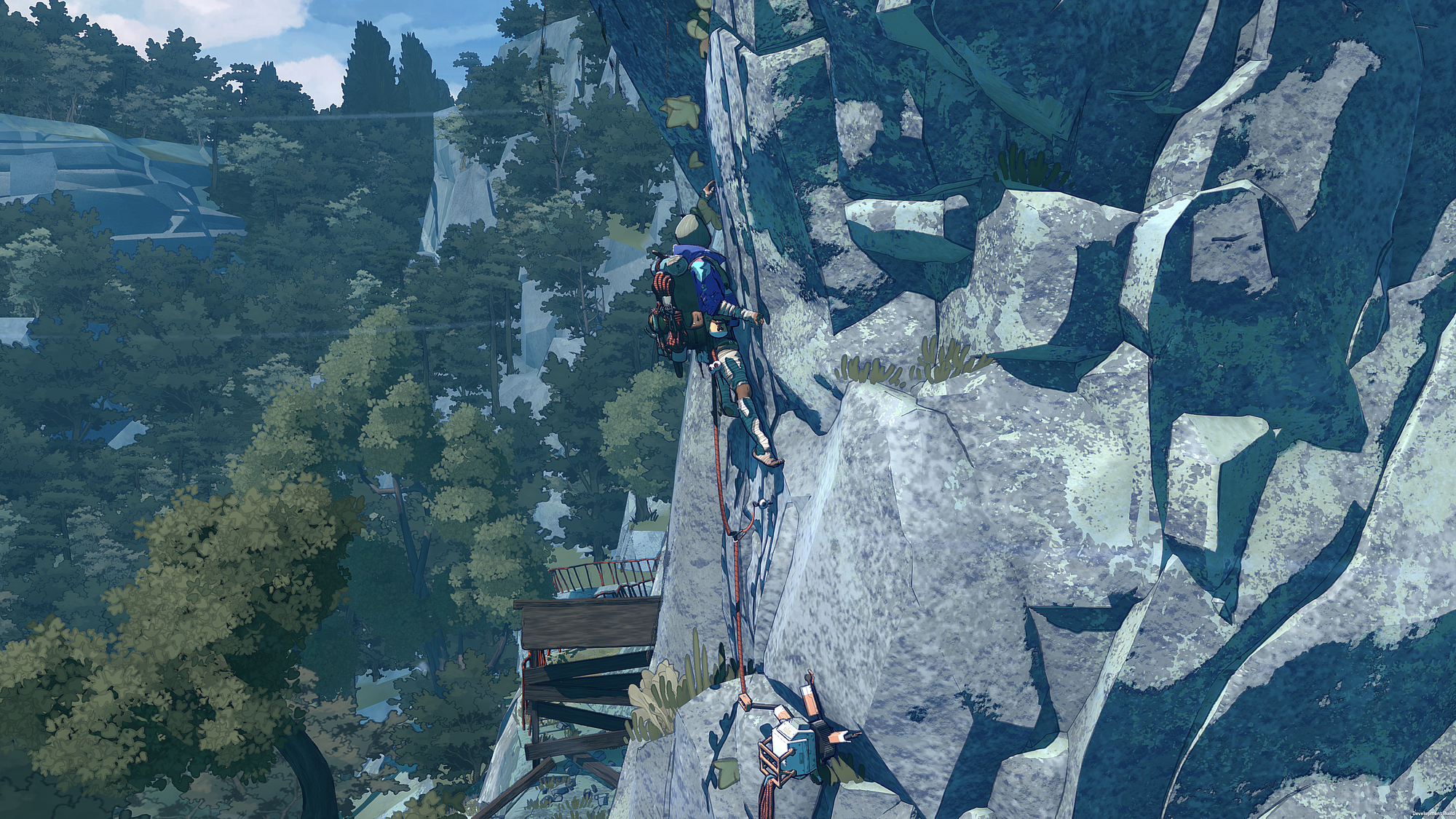
Scheduled for launch on January 29, 2026, for PlayStation 5 and PC, Cairn from The Game Bakers (Furi, Haven) isn't just another adventure game with climbing sections. It is a meticulous, handcrafted simulation built on a radical premise. The rock face isn't a pre-scripted path of glowing handholds. It is a mathematical problem. Every crack, every tiny ripple in the stone, every precarious ledge is a variable in a continuous physics calculation. Aava’s body is not animated to gracefully latch onto predetermined spots; her limbs are endpoints in a dynamic system of forces, balance, and fatigue.
Emeric Thoa, creative director at The Game Bakers, frames the development philosophy in stark terms. The goal was to build a system "controlled by maths, not animations." This distinction is everything. In an animated system, a character either reaches a hold or doesn't. In a physics-based one, a player can press a limb against the rock for friction, can shift their center of mass millimeter by millimeter to gain a crucial few degrees of stability, can fail in a hundred subtle ways before a catastrophic fall. Small tweaks to the level geometry or the physics parameters create cascading changes in possible routes. The game becomes less about following a trail and more about reading the rock—a skill that defines real-world alpine and rock climbing.
"We drew a direct parallel between gaming and mountaineering," Thoa explains. "Both are built on a framework of rules, on learned instinct, and on immediate, unambiguous consequences. You forget the rule, you misjudge the move, you fall. The feedback loop is brutally clear."
This approach required a fundamental reinvention of control. Players manually position Aava's left and right hands and feet using the analog sticks, with a single button to commit to a grip. The challenge isn't in the input complexity, but in the strategic application. You must manage her posture, her stamina, her balance. You must decide when to expend energy for a dynamic move and when to rest, recouping stamina in a stable position. The game communicates entirely through diegetic cues: heavy breathing, trembling limbs, the increasing thrum of the controller, the way the camera sways with exhaustion. There is no health bar, no stamina circle. The interface is the body itself.
Cairn’s punishment system reinforces its scientific rigor. A fall does not always mean a full reset to a distant checkpoint. The game employs a partial progress loss system anchored by a limited resource: pitons. These metal spikes, hammered into cracks, act as your temporary safety nets. Place one on your ascent, and if you fall, you will only descend to that last point of security. Run out of pitons, and the consequences grow steeper. This mechanic isn't just a difficulty slider; it's a direct translation of real climbing strategy. Every piton represents a calculated risk assessment, a piece of carried weight versus a potential lifesaver. It forces the player to think like a climber: Is this section safe enough to run it out? Is this crack reliable for protection?
Audrey Leprince, the game’s director, emphasizes that this creates a unique tension. The checkpoints aren't arbitrary developer placements. They are your choices, your mistakes, or your small victories made physical in the game world. "The piton system creates a natural, player-driven checkpoint system," she notes. "It turns the act of securing your climb from a menu option into a physical, strategic decision with tangible weight. You are literally building your own safety net, one piece at a time, and you can run out of pieces."
"The liberation comes from the limitation," Leprince argues. "By removing glowing markers and saying 'the rock is the puzzle,' we hand the player a genuine tool for discovery. You learn to see the mountain not as a backdrop, but as a text to be read."
This philosophy extends to the game's two core modes. The Story mode follows Aava, a professional climber attempting to be the first to summit the fictional, deadly Mount Kami. Her journey is punctuated by narrative sacrifices, communication with ground support, and the psychological weight of the climb. Expedition mode strips away the story for pure simulation. Here, players can select different avatars, including Aava's companion Marco, and choose climbing styles like alpine or the terrifying free solo—ascending without any ropes or protection at all. This mode is built for repetition, optimization, and sharing results on leaderboards, appealing directly to the community that thrives on mastering complex simulations.
Since February 2025, a free demo on Steam has served as a public beta for these systems. It includes a tutorial and the ascent of Mount Tenzen, offering about 45 minutes of vertical gameplay. The demo’s reception has been a crucial data point. Feedback from players, particularly those with real climbing experience, has highlighted the unexpected cognitive load. This isn't a power fantasy. It’s a patience fantasy. Success requires observation, planning, and the quiet acceptance of incremental progress.
The demo was updated throughout 2025 with new features and bug fixes, a process that mirrors the iterative, responsive development of simulation software more than a traditional video game. Player anecdotes shared online often focus not on dramatic moments, but on quiet triumphs: finally deciphering a route that stymied them for an hour, learning to trust the friction of a slab, managing to place a piton just before a fall. These reports validate the developers' thesis. They have successfully gamified the climber's mindset—a blend of geometry, physics, physiology, and cold fear.
By eliminating the typical gaming lingua franca of glowing edges and automatic grabs, Cairn forces a new literacy. The rock face becomes a topological map. A shadow might indicate an undercling. A faint discoloration could mean a softer, more friable section of stone to avoid. The dynamic weather and day-night cycles, which can force players to bivouac on the wall, aren't just visual flair. They are environmental variables that change the friction coefficient of the rock, the visibility of features, and the metabolic cost of the climb. It is, as several previews have stated, the closest a game has come to simulating not just the act of climbing, but the preoccupation of it.
As the January 2026 release approaches, Cairn stands at the intersection of two trends: the rising demand for grounded, thoughtful simulations and the indie scene's willingness to deconstruct genre mechanics. It is less a game about conquering a mountain and more a game about understanding it, piece by precarious piece. The question it poses to players is not "Can you reach the top?" but "Do you have the discipline to read the rock?" The answer, written in sweat, vibration, and virtual pitons, will define a new genre of digital ascent.
Climbing a digital mountain in Cairn feels less like playing a game and more like conducting a continuous, life-or-death physics experiment. The Game Bakers’ decision to build a system "controlled by maths, not animations" creates an experience of unparalleled tactile consequence. Every action has a vector. Every hold has a coefficient of friction. This isn't metaphor; it's the foundational code. The result is a climbing simulation that demands a real-world climber's mindset: patience, route-reading, and a constant, low-grade anxiety. The January 2026 indie wrap-up from MonsterVine captured the duality perfectly, praising the "stunning art" while acknowledging the "tight, if slightly wonky" mechanics. That "jank" is the tell. It’s the sound of a system pushing against the limits of perfect predictability, and in that imperfection, Cairn finds a strange, compelling authenticity.
"Climbing is challenging: each wall feels like a boss fight." — Niche Gamer, Preview Analysis
The boss fight analogy isn't casual hyperbole. It reveals how the game transmutes physical struggle into a cognitive puzzle. A boss in a traditional game has patterns to learn, phases to survive, a specific weak point. A Cairn wall operates on identical principles. The pattern is the rock's topology. The phases are the changing angles and available features. The weak point is the sequence of moves you must discover through trial, error, and observation. There is no health bar to deplete, only your stamina and your supply of pitons. Victory comes not from a flashing special attack, but from the silent, final haul over a lip you've been staring at for twenty minutes.
Where Cairn separates itself from any climbing game before it is in its ruthless integration of survival systems. This isn't just about getting to the top; it's about sustaining a body long enough to do it. Hunger and thirst aren't decorative status icons. They are metabolic timers that directly impact stamina recovery and shake in your climber's limbs. Gear degrades. You must forage for wild onions and melt snow for water. The bivouac—the act of setting up a temporary camp on a tiny ledge—isn't a cutscene. It's a mandatory gameplay loop of resource management, cooking, and planning the next day's pitch. This transforms the climb from a technical puzzle into a logistical expedition.
The free demo on Steam, available since early 2025, functions as a stark tutorial in this reality. It begins in the safety of a climbing gym, with seven walls to practice technique and even collectibles like coins and snacks—a clever, almost cruel, reminder of the curated safety you are about to leave behind. Then it opens onto Mount Tenzen. Here, you must immediately apply those skills while also scanning the environment not just for holds, but for resources. That small, dark crack isn't just a handhold; it might be a place to hammer a piton. That patch of moss might yield a trickle of water. The game’s preview on GameWhims, which awarded it a 5-star impression, called the experience "unforgettable," and the weight of that word comes from this systemic layering. You don't just remember a difficult jump. You remember the desperate bivouac you set up just below it, shivering as you cooked your last can of beans, knowing the next day's climb would demand everything.
"REALISTIC CLIMBING SIMULATION – Cairn’s realistic simulation allows intuitive climbing: find the best holds and place your hands and feet seamlessly with simple controls. Adapt your posture, effort and balance —if you’re not careful, you will fall!" — Niche Gamer, Feature Breakdown
The controls are deceptively simple, a masterclass in elegant input design. One stick, one button per limb. The complexity emerges from the physics, not the command list. This creates a direct, almost neural, connection between player intention and on-screen action. You don't press a button to "perform a mantel." You painstakingly shift weight onto your arms, walk your feet up, and push. The game understands the difference. This is where the simulation reaches its peak verisimilitude—and also where it risks alienating players seeking instant gratification. There is no "win" button. Mastery is measured in millimeters and degrees.
Placing Cairn in the current gaming landscape is a challenge because it effectively has no direct competitors. The January 2026 release window, confirmed after a delay from an original November 2025 target, sees it alongside titles that only highlight its singularity. Look at the other indie releases noted that month. Big Hops, launching January 12, 2026, is a 3D platformer about hopping and climbing with a frog's tongue. It's a colorful, arcade-inspired romp. Perfect Tides: Station to Station, arriving January 22, 2026, is a narrative point-and-click adventure. These are wonderful games, but they operate in different universes of design intent. Cairn exists in a self-created genre: the "survival climber."
This isolation is both its greatest strength and its core commercial risk. The game appeals to a specific, perhaps narrow, palate: players who find pleasure in systems-driven simulation, who enjoy the slow burn of logistical planning, who see a mountain not as a backdrop but as an adversary to be understood. It has more in common with hardcore survival sims or complex vehicle simulators than with action-adventure games. The Game Bakers, following the stylized combat of Furi and the relationship-driven exploration of Haven, have pivoted to a new form of intimate intensity. Instead of a emotional connection to a character, they are engineering a physical connection to a rock face.
"The game has a janky charm to its physics that makes every successful move feel earned." — MonsterVine, January 2026 Indie Wrap-Up
"Janky charm" is a brilliant, honest descriptor. It acknowledges that the physics-based approach can sometimes produce moments where a limb behaves unexpectedly, where a slide seems too sudden, where the connection between input and action briefly glitches. In a less ambitious game, this would be a fatal flaw. In Cairn, it can feel like part of the simulation—the unpredictable variable of real rock, the sudden give of a loose hold. Does this excuse technical imperfections? Not entirely. But it contextualizes them within a design philosophy that prioritizes emergent, systemic realism over canned, polished animation. The player's struggle and the simulation's occasional struggle become strangely congruent.
What about the broader "climbing game" genre? Most are platformers in disguise, where climbing is a means of traversal, not the central subject. They use magnetic grips, infinite stamina, and glowing ledges. Cairn rejects every one of those conventions. Its closest philosophical relative might be a game like Lonely Mountains: Downhill, which also emphasizes route-finding, risk management, and the consequences of a mistimed move, albeit on a bike going downhill. Both games understand that tension comes from freedom within a punishing ruleset, not from restrictive scripting.
Aava's journey up Mount Kami is not just a physical test but a narrative one. The story, woven through radio contacts with companions and reflections on the mountain's history, introduces a different kind of resource to manage: psychological fortitude. The "personal sacrifices" mentioned in previews aren't just backstory; they are emotional weight the player carries up each pitch. This is where the simulation risks breaking its own spell. Can a game this devoted to granular physical realism successfully integrate a heartfelt narrative without it feeling like an intrusive cutscene?
Early indications suggest the developers are attempting a fusion. The story unfolds during rests at bivouacs or in moments of quiet contemplation on a ledge. It doesn't stop the climb; it lives within its pauses. The danger is one of tonal whiplash. The intense focus required for a difficult pitch is a solitary, almost meditative state. Jumping from that into a voiced dialogue about a personal loss could feel jarring, like a sudden commercial break in the middle of a marathon. The success of this blend will be a major determinant of whether Cairn is remembered as a brilliant tech demo or a holistic masterpiece.
"A survival climber that challenges every handhold." — Fix Gaming Channel, Preview Headline
That headline gets to the exhausting, exhilarating heart of it. Every handhold is a challenge because every handhold is a choice. There is no autopilot. The delayed release to January 29, 2026, granted The Game Bakers extra time to polish this incredibly complex interplay of physics, survival, and narrative. The final product will stand as a referendum on a specific type of game design: one that believes players will find profound engagement in being asked to care about the angle of a virtual wrist, the weight of a virtual backpack, and the silent, crumbling history of a virtual mountain. Does the market have the stamina for it? We'll find out at the summit.
Cairn’s significance stretches far beyond its January 29, 2026, release date for PC and PS5. It represents a fundamental challenge to a core gaming convention: the abstraction of the body. For decades, video game characters have been puppets. We press a button, and they perform a canned animation—a jump, a punch, a climb. Cairn proposes a different model. The player doesn't command Aava; they inhabit her physical presence in a world governed by simulated physics. This isn't a new idea in simulation software, but its application to a narrative-driven, mainstream-adjacent indie game is a radical experiment. It asks whether the tactile, systemic friction of a real skill can be the primary source of engagement in an entertainment product. The Game Bakers aren't just building a game about climbing; they are prototyping a new grammar for physical interaction in digital spaces.
"The game’s realistic simulation allows intuitive climbing: find the best holds and place your hands and feet seamlessly with simple controls. Adapt your posture, effort and balance —if you’re not careful, you will fall!" — Niche Gamer, Feature Analysis
This shift has cultural implications. It aligns with a broader, perhaps subconscious, desire for digital experiences that reward patience and mastery over reflexive speed. In an era of hyper-optimized games that funnel players along critical paths, Cairn is an act of defiance. It offers a mountain and says, "Figure it out." The story of Mount Kami and Aava’s sacrifices becomes secondary to the player's own story of perseverance. The cultural impact, if successful, could be a ripple effect encouraging more developers to explore simulation-first design in unexpected genres. Why not a sailing game where you truly manage sail trim and currents? Why not a surgery sim that focuses on tissue resistance and instrument slip? Cairn proves the market exists for games that treat their core activity not as a means to an end, but as the end itself.
For all its ambition, Cairn walks a precarious line, and it will not be for everyone. The criticism is baked into its design. The very "janky charm" that some previews celebrate will be, for other players, a deal-breaking frustration. When the physics system produces an unexpected slip or a limb gets caught on geometry, the immersion shatters. In a game about precise control, any loss of agency feels magnified. This isn't a bug; it's the inherent risk of prioritizing a dynamic physics system over hand-tuned animation. The question becomes whether the moments of transcendent, self-directed triumph outweigh these instances of systemic betrayal.
Furthermore, the marriage of hardcore survival simulation—with its hunger, thirst, and gear degradation—and a potentially emotional narrative is an untested alloy. The logistical demand to stop and cook food on a tiny ledge could clash violently with a poignant story beat delivered via radio. Does the narrative serve as a welcome respite from the physical grind, or does it feel like an intrusive interruption? The game's success hinges on this rhythm being perfectly calibrated. Early previews have not had enough sustained playtime to judge this pacing. There is also the very real risk of monotony. Does the fifteenth rock face, for all its unique geometry, feel meaningfully different from the fifth? The game’s longevity, both in its 15-hour story mode and its Expedition mode, depends on the developers' ability to introduce subtle new environmental and systemic variables that keep the core loop of climb-plan-rest from becoming a repetitive slog.
The market challenge is also stark. By creating a "survival climber" niche, The Game Bakers have built a cathedral in a desert. There is no established audience for this hybrid. The game must create its own audience, pulling in simulation enthusiasts, climbing aficionados, and narrative adventure players, and convincing them that this unique blend is worth the steep learning curve. The free Steam demo is a crucial tool in this, a 45-minute invitation to see if the player's temperament aligns with the game's demanding pace.
The legacy of Cairn will not be measured in sales alone, but in influence. Will it be remembered as a fascinating, flawed experiment, a cult classic praised for its ambition but criticized for its rough edges? Or will it be the title that cracked the code, proving that deep physical simulation can carry a mainstream-adjacent narrative experience? The answer lies on the faces of the developers who play it in January 2026. If they walk away inspired not just by the mountain, but by the feeling of the climb—the specific ache of virtual muscles, the relief of a secure piton—then Cairn will have succeeded in its most daring ascent: changing how we think about controlling a body on a screen.
Looking forward, all attention is on January 29, 2026. The release is the final test. The Deluxe Edition, priced at $36.99 and including a Mount Kami guide comic by Mathieu Bablet, suggests confidence in a dedicated audience. Post-launch, the focus will shift to the Expedition mode leaderboards. Will a speedrunning community emerge, optimizing routes up Mount Tenzen and Kami with ruthless efficiency? Will players share their most harrowing falls and improbable saves? The community's response will determine if this is a one-time journey or a persistent vertical landscape. The Game Bakers have built the mountain. Now we see if players will choose to live on it.
The controller still vibrates with a fading, irregular rhythm, a ghost of a pulse from a near-fall an hour ago. You are no longer just playing a game. You are remembering the angle of a hold, the weight of a pack, the sound of a virtual wind. That lingering sensation—the phantom tremor in your own hands—is the true summit.


Your personal space to curate, organize, and share knowledge with the world.
Discover and contribute to detailed historical accounts and cultural stories. Share your knowledge and engage with enthusiasts worldwide.
Connect with others who share your interests. Create and participate in themed boards about any topic you have in mind.
Contribute your knowledge and insights. Create engaging content and participate in meaningful discussions across multiple languages.
Already have an account? Sign in here

Pathologic 3 arrives January 9, 2026, a punishing survival RPG where time-travel meets plague diagnosis in a dying city,...
View Board
MIO: Memories in Orbit launches Jan 20, 2026, blending punishing Metroidvania gameplay with a haunting narrative on memo...
View Board
Pathologic 3 arrives January 9, 2026, wielding time-travel to deepen its signature despair, forcing players to rewrite t...
View Board
MIO: Memories in Orbit launches on Game Pass Jan 20, 2026, offering a polished metroidvania with fluid combat, hand-draw...
View Board
Solo developer Adam Hunt crafts Streetdog BMX, a love letter to BMX culture, launching January 14, 2026, on Steam with 2...
View Board
Code Vein II invites players on a somber pilgrimage through time, blending Soulslike combat with a narrative of sacrific...
View Board
Heartopia storms Steam with 17K players, blending cozy sim charm & mobile monetization, sparking a cultural clash over g...
View Board
Josef Fares' Split Fiction redefines co-op storytelling with its radical two-player-only design, selling 2M copies in a ...
View Board
Quarantine Zone: The Last Check turns zombie survival into bureaucratic horror, forcing players to make life-or-death de...
View Board
Steel Century Groove launches Jan 28, 2026, blending mecha combat with rhythm RPG strategy, turning war machines into da...
View Board
GTA 6 faces its toughest rival in 2026: GTA V's $10B legacy. Can Rockstar's sequel eclipse a game that redefined longevi...
View Board
Dynasty Warriors Origins DLC launches Jan 22, 2026, reimagining villains as heroes with new weapons, skills, and untold ...
View Board
Tekken 7’s Rage Arts, 8‑million unit sales and tournament‑ready mechanics forged a modern fighting‑game era, shaping com...
View Board
Code Vein 2 launches Jan 30, 2026, rewriting its anime Soulslike legacy with time-bending combat, deeper RPG systems, an...
View Board
Mortal Kombat 11: A Deep Dive into Its Enduring Legacy The arena lights flicker, a digital roar erupts, and then, the c...
View Board
Betrayal at Baldur's Gate transforms a blank board into a dungeon of shifting alliances and procedural terror, where 49 ...
View Board
Code Vein II redefines gothic action RPGs with time-bending combat, vast ruins, and a motorcycle-driven wasteland, but l...
View Board
Claim Fallout 1 & 2 for free via Prime Gaming before Jan 26, 2026—permanent ownership of the iconic RPGs that shaped gam...
View Board
Code Vein 2 overhauls combat, expands customization with 200+ Formae, and rebuilds level design, addressing the original...
View Board
Hypergryph abandons tower defense for a bold open-world action RPG, merging factory automation with real-time combat in ...
View Board
Comments