



Explore Any Narratives
Discover and contribute to detailed historical accounts and cultural stories. Share your knowledge and engage with enthusiasts worldwide.
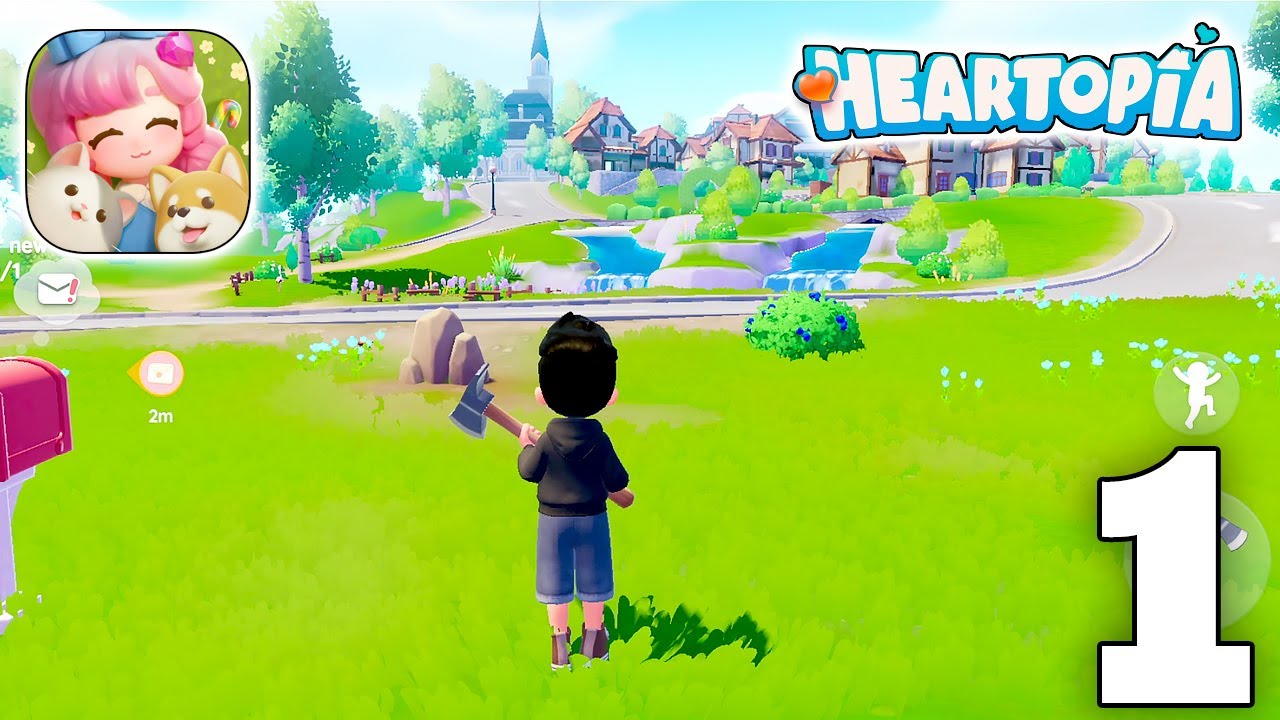
The numbers tell a stark story. On January 17, 2026, at 10:00 AM Pacific Time, a new contender materialized on Steam. Within twelve hours, 15,100 players were simultaneously tending virtual gardens, casting digital fishing lines, and decorating pixel-perfect homes on a place called Whale Island. The concurrent player count soon ticked to 17,100. By the next morning, Heartopia, a free-to-play cozy life simulator from Chinese developer XD Games, had amassed 350 reviews. It was a launch fueled by a mobile version already topping download charts in over fifty countries. It was also a launch that exposed a deep, fascinating rift in modern gaming culture.
Here sits a game explicitly designed for peace, a "relaxing slow-life simulation" promising creativity and calm. Yet its arrival on PC has been anything but tranquil. Heartopia represents the latest and perhaps most pure distillation of a trend: the aggressive, sophisticated migration of mobile-first monetization and design philosophy onto the traditional PC gaming platform. It asks players to find zen while navigating a labyrinth of currencies, gacha mechanics, and real-time events. It builds a beautiful, persistent world for making friends, then populates it with shared quests that can shatter any illusion of being a solitary pioneer. This isn't just another farming sim. This is a cultural artifact. It is the serene, smiling face of a profound and often uncomfortable industry convergence.
Whale Island is Heartopia’s primary achievement. This is the canvas where the game’s promise is either fulfilled or fractured. The island is a persistent, shared space where players build their homes, pursue hobbies, and interact. The hobby system forms the core progression loop, a clever and expansive replacement for a traditional skill tree. Players can engage in fishing, cooking, gardening, bird watching, pet care for cats and dogs, photography, and fashion design. Each activity unlocks specific rewards, from new recipes to clothing patterns, creating a tangible sense of mastery outside of combat or conquest.
The absence of a stamina or energy system is Heartopia’s most celebrated design decision. It is a direct, intentional rejection of a core mobile gaming orthodoxy. You can fish until your virtual arms ache, tend crops until the digital cows come home. This freedom is intoxicating, and it’s the primary hook that has drawn players in. Combined with deep home decoration tools and a vast catalog of furniture and clothing to collect, the game presents an almost overwhelming array of peaceful pursuits. The initial critical response latched onto this liberating feel. As one early reviewer noted on the game’s Steam page, the lack of gates creates a dangerously addictive loop.
"I stayed up until 3 AM last night just arranging furniture and chasing butterflies. There's no 'energy' telling you to stop, so you simply don't. It’s peaceful, but it’s also a black hole for your time."
This frictionless engagement is the cornerstone of XD Games’ vision. On the official Heartopia website, the studio frames the experience in explicitly therapeutic terms. They aren’t selling a game; they are selling a mood, a retreat.
"Our goal with Heartopia was to create a digital sanctuary," states Li Chen, Creative Director at XD Games. "In a fast-paced world, Whale Island is a place to breathe, to create without pressure, and to connect with others over simple, shared joys. The removal of stamina limits was non-negotiable. True relaxation cannot be rationed."
Yet, this idyllic vision exists within a distinctly modern and commercial architecture. The game is built on Unity and is fully cross-platform between mobile and PC. Your island, your progress, your meticulously arranged living room sofa—they follow you from your phone to your desktop. This technical feat enables the social promise: shared villages where friends can visit in real time, see your decorations, and collaborate on tasks. It’s here that the first crack in the pastoral fantasy appears. The multiplayer systems, while fostering community, inadvertently sabotage the classic cozy narrative. You are not the "chosen one" revitalizing a forgotten valley. You are one of thousands of new residents on Whale Island, all receiving the same urgent plea from the local mayor to gather ten seashells. The magic of a solitary journey dissipates in the crowd.
To play Heartopia is to enroll in a casual masterclass in virtual economics. The game operates on a multi-tiered currency system that is immediately familiar to anyone who has engaged with a major free-to-play mobile title. Acorns serve as the primary earned currency, acquirable through daily tasks, selling items, and a curiously specific community-driven activity: hunting down a non-player character named Albert for a reward. Heart Diamonds are the premium currency, purchased with real money and used for exclusive items and speeding up certain processes. Then there are Exhibition Passes, which function as keys for loot boxes containing random furniture and clothing.
This ecosystem is supplemented by limited-time events and rotating stock in the Acorn and Gold stores, where free outfits and furniture can be claimed through grinding. The entire structure is a carefully calibrated engine designed to promote daily engagement and offer constant, shimmering incentives. For the mobile audience, this is a standard, even expected, environment. It is the water in which they swim. For the PC players arriving via Steam on that January morning, it felt like an intrusion. The cozy life sim genre on PC—exemplified by titles like Stardew Valley—has traditionally been anchored in the premium purchase model. You buy the game, you own the experience. Heartopia’s model is different. You download the world, but you rent the aesthetic pinnacle.
The immediate success on Steam proves a significant portion of the PC audience is willing to accept these terms. The 17,100 concurrent players weren't all confused mobile emigrants; they were PC gamers actively choosing this model. But this acceptance is fraught with tension. Technical complaints flooded the early forums: poor keyboard and mouse controls, a user interface clearly designed for touchscreens, and general "jank" that feels out of place on a powerful gaming rig. The game risks being perceived as a mobile port, an afterthought, rather than a native PC experience. This first impression matters immensely. A player struggling with clunky camera controls is far less likely to succumb to the serene allure of a sunset bird-watching session.
And looming on the horizon, announced for February 2026, is another flashpoint: a collaboration with My Little Pony. For some, this is a delightful crossover. For a vocal segment of the new PC player base, it is a glaring, neon sign of "predatory" mobile tactics—a licensed, nostalgia-driven event perfectly engineered to drive sales of premium currency. Heartopia stands at this exact crossroads. It is trying to be two things at once: a haven of quiet creativity and a ruthlessly efficient engagement platform. Whether these two souls can coexist in one body will define its legacy. The island is open. The whales, both metaphorical and literal, are already circling.
Precision in dates reveals intention. Heartopia did not simply arrive on PC; it executed a staggered, tactical deployment. The mobile version launched globally on January 7, 2026, a Wednesday. It was an immediate, undeniable smash. Within days, it became the most downloaded game on the App Store in over fifty countries. According to data from Mobilegamer.biz, it skyrocketed to the top of charts, amassing over 5 million mobile players and more than 1 million downloads on the Google Play Store alone, where it holds a 4.8/5 rating from 22,000 reviews. This was a phenomenon built for the pocket.
The PC version followed, but not where the core audience expected. On January 8, 2026"The team is fully focused on optimizing the PC experience, and we'll keep you updated with the latest progress right here in the Steam community." Eight days later, on January 16, 2026, Heartopia launched on Steam. "Without warning," as PCGamesN reported. This sequence is a masterclass in platform strategy. It allowed the massive, monetization-acclimated mobile audience to lead, establishing community norms and spending patterns. It used TapTap as a soft-launch buffer. By the time the game hit Steam, a wave of positive sentiment from millions of mobile players was already a fait accompli, ready to counterbalance the inevitable PC culture shock.
The shock was immediate and quantifiable. Steam reviews, approximately 1,000 in the first couple of days, settled at a 69% positive rating, earning the platform's "Mixed" designation. This binary reception—mobile euphoria versus PC skepticism—frames the entire Heartopia experiment. On one screen, a player taps effortlessly, spending Heart Diamonds to instantly complete a charming gazebo. On another, a player fights with a camera system that feels grafted from a different species of software, muttering about "mobile port jank." They are playing the same game. They are having fundamentally different experiences. This is the platform paradox: a single creative vision fractured by the physical and philosophical interfaces through which it is accessed.
Heartopia’s economy is a beast of elegant complexity, a system that perfectly serves one master while bewildering another. The game is free. You can build a lovely home, cultivate a sprawling garden, befriend the island’s residents, and dress your avatar in a respectable wardrobe without spending a cent. This is true. It is also a truth wrapped in a glittering lattice of constant monetization prompts. The Acorn, the Heart Diamond, the Exhibition Pass—these are not just currencies. They are psychological triggers.
For the mobile player, this environment is native territory. The language of daily login bonuses, limited-time event shops, and gacha-style loot boxes is their vernacular. The transaction is seamless: a moment of desire, a tap, a biometric confirmation, a flash of new content. The friction is near zero. On PC, the friction multiplies. The interface for purchasing Heart Diamonds feels like a portal to another world. The expectation on Steam, particularly within the cozy life sim niche dominated by premium titles like Stardew Valley or even the paid Disney Dreamlight Valley, is ownership. You pay once, you harvest forever. Heartopia’s model whispers a different promise: pay for potential, pay for priority, pay for palette swaps.
"It's such a lovely and relaxing game," writes one typical positive reviewer on Steam, capturing the genuine affection many feel for Whale Island's core.
This affection is real. But it exists in tension with a design ethos that can, at times, feel antithetical to relaxation. Is it truly relaxing to know the most elegant swimming pool or the coffee machine that completes your kitchen aesthetic is locked behind a random draw from an Exhibition Pass? The game masterfully employs the "cozy" aesthetic as a softener for its commercial mechanics. Pastel colors and gentle music lower the player's defensive barriers. The aggression is sugared, making it palatable to millions. Yet for a segment of the PC audience, the aftertaste is bitter. They perceive not just microtransactions, but a macrostructure of engagement optimization that leaves a film on the pristine waters of Whale Island.
System requirements on Steam are modest: Windows 10, an Intel Core i5 2500 or AMD FX-4350, and 8 GB of RAM. These are specifications from a decade ago. Heartopia is not demanding raw power; it is demanding a particular kind of compliance. The game is built in Unity, engineered first for the touchscreen. This origin story is written in every interaction on the PC version.
The camera control criticism is the most persistent and damning technical complaint. On mobile, camera manipulation is an intuitive, two-finger drag. On PC, it is often translated into a clunky, accelerated mouse drag or awkward key binds that fight the player's desire to simply admire their handiwork. This isn't a minor bug. It is a fundamental rupture of immersion. When the core fantasy is creating and inhabiting a beautiful space, a disobedient camera is more than an inconvenience—it is a betrayal of the game's primary promise. The UI, with its large, finger-friendly buttons and menus, can feel sprawling and inefficient on a high-resolution monitor. These are not insurmountable problems. But their persistence speaks to a potential prioritization. The game crushes it on mobile, where the revenue likely concentrates. How urgent, truly, is optimizing for the vocal but possibly less lucrative PC minority?
Crossplay and cloud save functionality, however, are technical triumphs. The ability to tend your garden on a phone during a commute, then later sit at your desktop to meticulously arrange furniture, is a powerful feature. It validates the game as a true persistent world. This seamless transition is the strongest argument for Heartopia's modern, platform-agnostic vision. It also, inadvertently, highlights the control disparity. The same task can feel fluid on one device and frustrating on the other.
"The newest and first cosy life simulation game that has launched in 2026," proclaims LeeksCozyCorner, an enthusiast site, praising its "freedom" and "no boundaries."
This enthusiasm is warranted from a content perspective. The hobby system is deep. The lack of loading screens in the seamless fairy-tale town is a technical achievement that enhances the sense of place. The sheer volume of items to craft and collect is staggering. But the phrase "no boundaries" rings ironically when considering the economic and control-scheme fences that do exist. The game's world is boundary-free. Its relationship with the player is carefully, meticulously fenced.
Heartopia is locked in a quiet war for the soul of the cozy game. On one flank are the traditionalists, the guardians of the premium, single-player pastoral. Their champions are games like Stardew Valley, a one-time purchase that offers a complete, self-contained universe. On the other flank are the live-service architects, building endless, evolving worlds sustained by continuous player investment and spending. Palia and Disney Dreamlight Valley have already planted flags here.
Heartopia’s innovation—or its transgression, depending on your viewpoint—is marrying the full, aggressive live-service model of a top-grossing mobile title with the aesthetic and activities of a PC cozy sim. It didn’t create a gentle hybrid; it performed a high-stakes graft. The patient is thriving, but shows signs of rejection. The multiplayer elements, for instance, create bizarre tonal dissonance. The game wants to be a personal retreat and a bustling social hub. Seeing dozens of other players clad in extravagant, paid-gacha outfits running identical errands for the same NPC can shatter the curated "slow-life" illusion. You are not escaping to a quiet island. You are logging into a server.
GameRant labels it an "instant hit" and "overwhelmingly positive" on mobile, predicting potential for success on Switch if ported.
This analysis points to the likely future. The mobile audience has fully embraced Heartopia’s terms of service. The PC audience is divided, a 69% positive rating indicating a hesitant majority won over by charm despite flaws. The console audience, particularly on Nintendo Switch, represents a potential middle ground—a platform accustomed to both premium Indies and free-to-play titles. A successful Switch port could be the ultimate validation of XD Games’ cross-platform cozy vision. Or it could simply transfer the current debate to a new screen. Does the cozy genre’s future lie in one-time purchases of a perfect, finite world, or in endlessly updated, monetized living services? Heartopia is not just a game. It is the answer to that question, currently being live-tested by over five million players. The data is pouring in. The verdict is a persistent, polite, and deeply conflicted "mixed."
Heartopia’s significance transcends its player counts and review scores. It functions as a perfect case study for a new phase of digital capitalism, one that targets not our competitive drive or our thirst for power, but our profound need for rest. This is the cozy-industrial complex: the systematic, data-driven commodification of relaxation itself. XD Games has not simply built a game; they have engineered an ecosystem where the desire for peace is the primary resource to be mined. The lack of a stamina system is the brilliant, benevolent-looking cornerstone of this model. It removes the classic mobile gate, replacing it with something more subtle and potent: the infinite horizon of possibility, forever dotted with premium landmarks.
The game’s true cultural impact lies in its normalization of this model within a genre historically associated with resistance to market pressures. Stardew Valley was a rejection of corporate farm sims. Animal Crossing operates on real-time patience, not currency conversion. Heartopia represents the industry’s reclamation of that space. It demonstrates that any aesthetic, any emotional tone, can be successfully integrated into a live-service, free-to-play framework. The conversation is no longer about whether this can be done, but whether its side effects—the confusopoly of currencies, the psychological hooks dressed in pastoral wear—are a fair price for admission to a beautiful, persistent world. As one industry analyst, speaking to PCGamesN under condition of anonymity, framed it:
"Heartopia is the canary in the coal mine for premium-feeling experiences on free-to-play infrastructure. Its success tells every publisher that even the most tranquil, creativity-focused genre can be built on an engine of relentless engagement metrics. The question isn't if others will follow. They already are."
This shift redefines player relationships. You are no longer a customer who purchased a product. You are a resident of a corporate-owned town, where the mayor’s office also functions as the bank and the boutique. Your investment is emotional and temporal first, financial second. This creates a different kind of loyalty, one that is stickier and more defensible against competitors. Why would you leave your meticulously curated home, your collection of rare fish, your circle of in-game friends? The exit cost is not the price of a game. It is the abandonment of a digital life.
For all its commercial savvy and genuine charm, Heartopia’s weaknesses are structural and revealing. The most glaring is the unresolved identity crisis between a solitary cozy sim and a social MMO. The narrative, what little exists, collapses under the weight of multiplayer. Being one of thousands of "special" newcomers helping a quaint village robs the story of any personal stakes or meaning. The social features feel bolted onto a single-player skeleton, creating awkward moments of coexistence rather than meaningful collaboration. This isn't a community; it's a crowded park where everyone is on the same picnic blanket.
Furthermore, the monetization, while optional, constantly undermines its own stated goal of relaxation. The presence of multiple overlapping currencies and time-limited shops introduces a layer of cognitive management and FOMO (fear of missing out) that is the antithesis of a "slow-life." Players report feeling a nagging pressure to complete dailies, to check the rotating stock, to maximize Acorn yield—to optimize their leisure. This transforms play into a second job with a very pretty office. The game’s greatest contradiction is that it sells escape while meticulously designing systems meant to prevent you from ever truly logging off.
Technically, the PC version remains a compromised ambassador. The camera and control issues are not mere bugs to be patched; they are symptoms of a platform hierarchy. Until the PC experience is built with its native input methods as a primary consideration, not an afterthought, it will forever carry the stigma of a port. This limits its potential to win over the core PC simulation audience that could provide long-term stability. A game that asks for so much of a player’s time cannot afford to fight them on its basic mechanics.
The immediate future for Heartopia is already scheduled. The My Little Pony collaboration event in February 2026 is the next major test. This crossover will be a litmus test for player tolerance of overtly licensed, nostalgia-driven premium content. Will PC players see it as a delightful whimsical addition, or as the ultimate expression of a predatory mobile mindset? The event’s reception will signal whether the game’s two audiences are beginning to reconcile or are destined to remain in parallel, mutually suspicious universes.
Longer-term, the path seems set for expansion, not contraction. XD Games will likely continue to refine the PC controls in piecemeal updates, but the core economic model is proven and profitable. New hobbies, seasonal events, and collaborative crossovers will be the primary content pipeline. The unannounced but logical next frontier is console, specifically the Nintendo Switch. The Switch’s hybrid nature makes it the ideal mediator between mobile’s accessibility and PC’s dedicated play sessions. A successful port there could finally bridge Heartopia’s cultural schism, offering a platform where its free-to-play nature is less anomalous and its cozy controls feel at home.
Heartopia arrived in January 2026 not with a whisper, but with the dual roars of mobile chart dominance and heated Steam forum debates. It has already won by the metrics that matter most to its creators: millions of daily active users, strong engagement, and a thriving in-game economy. Its legacy, however, will be determined by a quieter, more philosophical contest. Can a digital sanctuary built on the architecture of perpetual engagement ever truly provide sanctuary? The players tending their gardens on Whale Island, blissfully or uneasily, are living out the answer every day. The island is open for business. The price of admission is your attention, forever.
Your personal space to curate, organize, and share knowledge with the world.
Discover and contribute to detailed historical accounts and cultural stories. Share your knowledge and engage with enthusiasts worldwide.
Connect with others who share your interests. Create and participate in themed boards about any topic you have in mind.
Contribute your knowledge and insights. Create engaging content and participate in meaningful discussions across multiple languages.
Already have an account? Sign in here

Pathologic 3 arrives January 9, 2026, a punishing survival RPG where time-travel meets plague diagnosis in a dying city,...
View Board
Josef Fares' Split Fiction redefines co-op storytelling with its radical two-player-only design, selling 2M copies in a ...
View Board
MIO: Memories in Orbit launches on Game Pass Jan 20, 2026, offering a polished metroidvania with fluid combat, hand-draw...
View Board
GTA 6 faces its toughest rival in 2026: GTA V's $10B legacy. Can Rockstar's sequel eclipse a game that redefined longevi...
View Board
Xbox Game Pass January 2026 delivers 11 new titles, including Star Wars Outlaws and Death Stranding: Director's Cut, whi...
View Board
Mortal Kombat 11: A Deep Dive into Its Enduring Legacy The arena lights flicker, a digital roar erupts, and then, the c...
View Board
Cairn redefines climbing games with physics-driven realism, forcing players to read rock faces, manage stamina, and plac...
View Board
Claim Fallout 1 & 2 for free via Prime Gaming before Jan 26, 2026—permanent ownership of the iconic RPGs that shaped gam...
View Board
Steel Century Groove launches Jan 28, 2026, blending mecha combat with rhythm RPG strategy, turning war machines into da...
View Board
A philosopher dissects how Kanto’s badge quests, closed map, and cable‑linked trading force identity, choice, and the et...
View Board
Code Vein II invites players on a somber pilgrimage through time, blending Soulslike combat with a narrative of sacrific...
View Board
Tekken 7’s Rage Arts, 8‑million unit sales and tournament‑ready mechanics forged a modern fighting‑game era, shaping com...
View Board
Pathologic 3 arrives January 9, 2026, wielding time-travel to deepen its signature despair, forcing players to rewrite t...
View Board
Final Fantasy XIV: A Journey Through Eorzea's Reborn Realm The city-state of Ul'dah sprawls under a pitiless sun, a dese...
View Board
Revenant Hunter manipulates time, wields blood‑code powers, and battles in a sprawling post‑apocalyptic world where ever...
View Board
Solo developer Adam Hunt crafts Streetdog BMX, a love letter to BMX culture, launching January 14, 2026, on Steam with 2...
View Board
Dynasty Warriors Origins DLC launches Jan 22, 2026, reimagining villains as heroes with new weapons, skills, and untold ...
View Board
Code Vein 2 launches Jan 30, 2026, rewriting its anime Soulslike legacy with time-bending combat, deeper RPG systems, an...
View Board
Resident Evil Requiem blends classic survival horror with modern tech, delivering dual narratives of terror and action i...
View Board
Hypergryph abandons tower defense for a bold open-world action RPG, merging factory automation with real-time combat in ...
View Board
Comments