image not described
Video -
Video -
Video -

Pokémon Red and Blue: The Unlikely Genesis of a Global Obsession


The Game Boy cartridge was a drab, industrial gray. Its label, a simple red or blue stripe with a monster’s silhouette, offered little fanfare. On September 28, 1998, this unassuming plastic shell arrived in North American stores, its 8-bit circuits holding a world few at Nintendo believed would succeed. The initial shipment was a cautious 300,000 units. Within weeks, those cartridges became impossible to find. Shelves emptied. A frenzy, later dubbed “Pokémania,” had begun. This was not merely the launch of two video games. It was the ignition of a cultural singularity that would redefine childhoods, forge a multibillion-dollar empire, and permanently alter the DNA of interactive entertainment. The story of Pokémon Red and Blue is a tale of obsolescence turned into advantage, of a creator’s singular vision, and of a gamble on human connection that paid off beyond any spreadsheet’s prediction.


A Bug Collector’s Dream, Forged on Outdated Tech


The genesis of Pokémon is now legend, but its improbability bears repeating. Satoshi Tajiri, the son of a Nissan salesman, spent his youth not on baseball fields but in the ditches and rivers of suburban Tokyo, catching insects and tadpoles. He watched with dismay as urbanization paved over his childhood playgrounds. That loss, coupled with a fascination with the Game Boy’s link cable—which he imagined not as a conduit for data but as a tunnel for creatures to travel through—formed the core of his pitch. He wanted to recreate the thrill of discovery and the social ritual of swapping finds with friends. He called the concept Capsule Monsters.


Nintendo’s legendary producer, Shigeru Miyamoto, saw potential in Tajiri’s eccentric passion and became his mentor. Development at Game Freak, Tajiri’s small studio, was a six-year ordeal of financial peril and technical struggle. The team, including artist Ken Sugimori, worked on outdated Sharp X68000 computers. The Game Boy hardware, released in 1989, was a monochrome relic by mid-1990s standards. This limitation became a creative catalyst. The simple, iconic sprite work was born of necessity. The turn-based battle system was elegantly efficient. The entire concept was built for a portable system everyone already owned, a masterstroke of market positioning.


“Tajiri viewed the link cable as a kind of digital extension of the secret paths and shortcuts he explored as a child,” notes historian and author David Sheff. “He wasn’t just designing a game; he was engineering a shared experience for a generation that he felt was losing its connection to that kind of exploration.”


The original Japanese release of Pokémon Red and Green on February 27, 1996, was not a blockbuster. It was a slow burn. Initial sales were so poor that Nintendo reportedly considered ending the project. But word of mouth, fueled by a clever CoroCoro comic manga promotion that offered the mythical Mew, began to spread. A revised Blue Version, with improved graphics and sound, followed later that year. The combination cemented a foothold. The stage was set for a global assault, but it required a radical strategy.


The Two-Version Gambit and the American Frontier


Shigeru Miyamoto offered the pivotal business advice: split the game into two versions. Each version would contain a subset of Pokémon unavailable in the other. To “catch ‘em all,” the slogan that would become a mantra, you had to connect with another human being. This was not just a ploy to sell two copies; it was a fundamental design principle that weaponized social interaction. The link cable transformed the Game Boy from a solitary escape into a bustling town square.


Localizing the games for the West was its own epic. The Japanese Green Version was dropped, with the international release using the upgraded codebase from Japanese Blue. The protagonist’s name was defaulted to “Red,” his rival to “Blue.” Text was meticulously scrubbed and rewritten, with some cultural references altered. The games would launch into a market completely unaware of what was coming. Nintendo of America orchestrated a synergistic media blitz, timing the game release to follow the debut of the Pokémon anime on September 8, 1998. The cartoon served as a daily, half-hour commercial for the games.


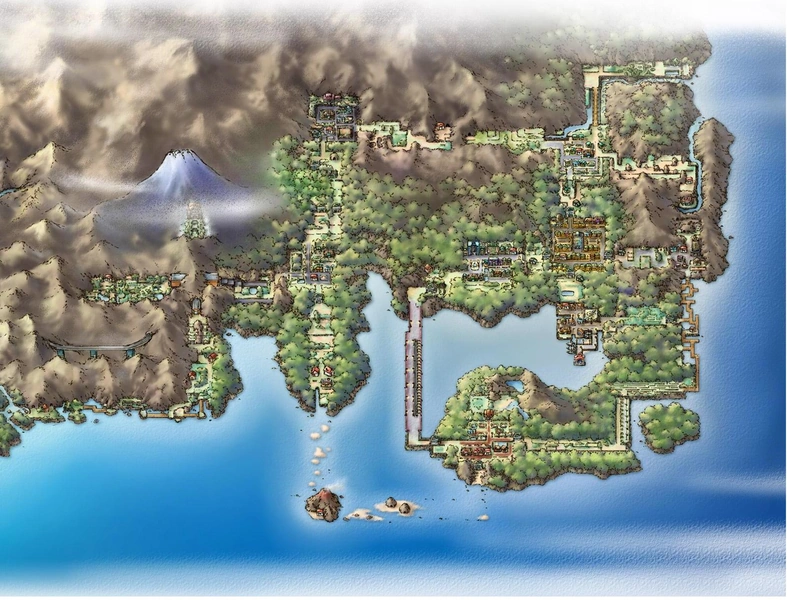
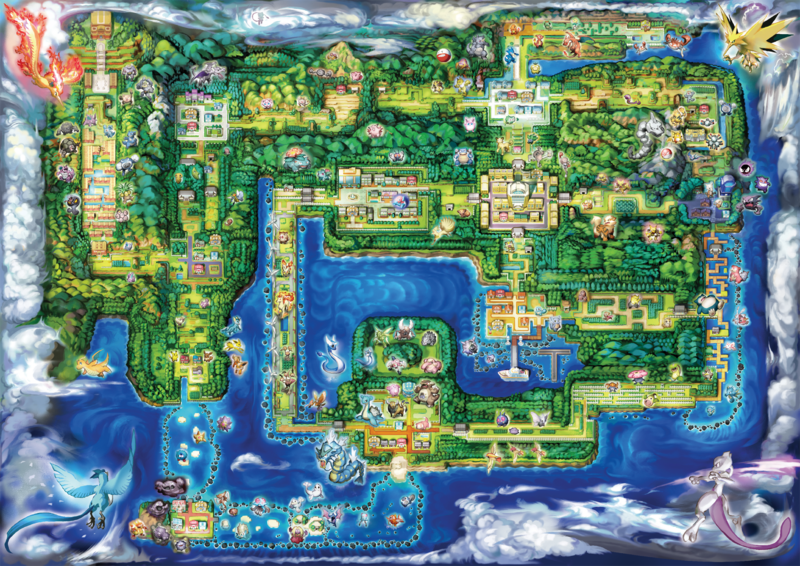
The player’s journey was deceptively simple. You begin in Pallet Town, receive one of three iconic starter Pokémon—Bulbasaur, Charmander, or Squirtle—from Professor Oak, and embark to fill your Pokédex. Eight Gym Badges awaited, earned by defeating leaders from Brock in Pewter City to Giovanni, the ground-type master and secret boss of the criminal Team Rocket, in Viridian City. The ultimate goal: conquer the Elite Four and become Champion. This linear progression belied a vast, open secret. The world of Kanto was littered with hidden items, optional areas like the Seafoam Islands, and legendary creatures lurking in deep caves. The post-game discovery of Cerulean Cave and the psychic powerhouse Mewtwo offered a pinnacle challenge few players ever forgot.


“The genius was in the balance of structure and freedom,” says Dr. Rachel Kowert, a research psychologist specializing in games. “The gyms provided a clear, rewarding progression ladder. But the space between them was a sandbox. You could grind levels, hunt for rare Pokémon, get lost in the Rock Tunnel without Flash, or simply experiment with your team. That loop of structured achievement and open-ended exploration is psychologically potent.”


The version differences were curated to fuel conversation. A child with Red could find an Ekans, while his friend with Blue would find a Sandshrew on the same route. Trading was not a bonus feature; it was the endgame. It forced communication, negotiation, and trust. It turned data into social currency.


The Glitch That Became a Feature


No discussion of the original games is complete without acknowledging their infamous quirks. The games were riddled with programming glitches, the most famous being ‘MissingNo.,’ a corrupt Pokémon encounter that could duplicate items in your bag. Nintendo’s hotline was flooded with calls. Rather than purely a flaw, this glitch became part of the games’ folklore—a secret passed through playground networks, a shared piece of arcane knowledge that deepened the mystery of the game world. It felt less like a broken game and more like a universe with its own unstable, discoverable physics.


By Christmas 1998, the craze was undeniable. The initial shipment was a distant memory. Pokémon Red and Blue sold a combined 11.27 million copies internationally, rescuing the Game Boy from obsolescence and launching the franchise into the stratosphere. But those numbers only tell part of the story. The true impact was in the tangled link cables on school buses, the heated debates over whether Charizard was better than Blastoise, and the tangible sense that you and your friends were explorers in a vast, shared world that fit in your pocket. The adventure, against all odds, had truly begun.

The Architecture of a Phenomenon: Code, Constraints, and Community


Beneath the charming sprites and catchy chip-tune melodies of Pokémon Red and Blue lies a foundation of radical technical ambition, brutal compromise, and near-catastrophic failure. The games are a masterclass in turning limitation into innovation. The development saga, stretching from a rough pitch in 1990 to that fateful Japanese launch on February 27, 1996, is less a story of smooth execution and more a six-year tightrope walk over a chasm of bankruptcy and data loss. Game Freak was a magazine publisher turned fledgling game studio, operating on shoestring budgets and obsolete Sharp X68000 computers. The target platform, the original Game Boy, was a monochrome 8-bit system with a processor slower than a modern calculator. This was the canvas for a game meant to simulate an entire ecosystem of 100+ creatures, each with unique stats, moves, and evolutions. The ambition was ludicrous.


"Once we were happy with our designs, we started working on the moves they could each use. This process probably accounted for around three of those six years." — Junichi Masuda, composer and programmer, Retro Gamer interview (2016)


That single sentence from Masuda reveals the monumental, granular labor involved. Every Pokémon needed a learnset, every move required programming for accuracy, power points, and type effectiveness. The initial plan for over a hundred creatures was quickly slashed to around thirty for prototyping, solely due to the Game Boy’s RAM limitations concerning nickname storage. They eventually pushed the hardware to its absolute breaking point to house 151 species. The infamous glitches—MissingNo., the item duplication trick, the arbitrary code execution exploited by modern speedrunners—are not signs of sloppy work. They are stress fractures in the code, evidence of a small team pushing a machine far beyond what anyone thought possible.


Consider the link cable. Today, online connectivity is a given, a background function. In 1996, creating a stable, real-time trading and battling system between two handhelds was a monumental technical hurdle. There were no precedents to follow, no APIs to simplify the process. This wasn't a feature added for polish; it was the entire philosophical core of the project, and it had to be built from the ground up. The near-total loss of game data late in development, averted only by a last-minute backup, underscores how fragile this entire endeavor was. The miracle isn’t that the games have bugs. The miracle is that they function at all.


The Localization Labyrinth: From Fushigidane to Bulbasaur


The journey from Japan’s Pocket Monsters to the West’s Pokémon was a cultural translation as complex as the code. Nintendo of America faced a daunting task: localizing not just text, but an entire aesthetic and ethos for an audience that had zero context. The Japanese Green Version, with its more primitive graphics, was jettisoned entirely. The international releases were built on the enhanced codebase of the Japanese Blue Version, released on October 15, 1996. This decision gave Western players a subtly more polished experience from the start.


But the changes ran deeper. Dialogue was rewritten, sometimes significantly. A trainer near the Seafoam Islands in the Japanese versions muses about the islands being two separate landmasses, while the English translation simplifies the geography. More crucially, certain trade evolution paths were altered; a Haunter traded in Japan might bizarrely become a Kangaskhan, a glitch-turned-feature that was sanitized for the international release. The very name had to change. "Capsule Monsters" was scrapped over trademark concerns, leading to the iconic "Pocket Monsters." The localization team, led by Hiro Nakamura, made thousands of micro-decisions that shaped how a generation would perceive this world. They turned a deeply Japanese concept—inspired by kawaii culture and insect-collecting (mushi-tsuri)—into a universal language of adventure.


"Tajiri’s vision was always about connection, but the technical execution of that vision on the Game Boy was a war of attrition. The fact that the trading system worked reliably enough to become the game's defining social feature is a minor engineering marvel." — James Batchelor, author of *The History of the Pokémon Games*


This localization effort was a calculated risk with a brutal timeline. The North American launch date was set for September 28, 1998. The initial shipment was a cautious 300,000 units. Retailers were skeptical. Video game magazines gave it modest previews. No one, perhaps not even Nintendo, was prepared for the demand that would vaporize that stock almost instantly. The success was a perfect storm: the anime’s lead-in, the novelty of the trading concept, and the sheer, undeniable depth of the game itself.


Deconstructing the Kanto Grind: Game Design Genius and Flaw


Playing Pokémon Red and Blue today is an exercise in historical analysis. The design choices, so foundational they became invisible, stand out in stark relief. The core loop is impeccable: the dopamine hit of a successful catch, the strategic puzzle of type matchups in gym battles, the long-term investment in evolving your team. The decision to make Pokémon faint rather than "die" was a conscious, moral choice by Tajiri to avoid violence, creating a combat system that felt challenging but never cruel. The world of Kanto is a masterwork of guided non-linearity. You are funneled along critical paths by HM obstacles like Cut trees and Surfable waterways, but the order in which you tackle certain gyms (like Saffron’s Sabrina versus Fuschia’s Koga) could be shuffled, allowing for personal strategy.


Yet, for all its brilliance, the game is riddled with what modern designers would call "friction." The inventory management is archaic. The box system for storing Pokémon, operated via the obtuse PC, is a menu navigation nightmare. The balance is wildly uneven. Psychic-type Pokémon, due to a programming oversight that gave Ghost-type moves no effect on them, were utterly broken, making Sabrina’s Alakazam a wall for unprepared players. The grind for experience points, especially for solo Pokémon that didn’t benefit from the Exp. Share mechanic of later generations, could be monotonous. Early prototypes included infinite trainer rebattles, a feature cut for being too grindy—a decision that ironically created a different grind by forcing players to hunt wild Pokémon for experience.


"The removal of the infinite rebattle feature was a direct response to playtesting feedback. It was seen as a tedious crutch that would undermine the exploration and capture mechanics. Ishihara and the team wanted you out in the tall grass, not circling back to the same kid on Route 1." — Analysis from The Cutting Room Floor technical wiki


But does this friction diminish the experience? Or did it, paradoxically, enhance it? The lack of hand-holding meant discovery felt earned. The cryptic clues about evolving certain Pokémon (trading with an item, leveling up at night) created a thriving oral tradition on playgrounds. The games demanded patience and investment. You couldn’t speed-run to a powerful team; you had to live with your Charmander as it struggled against the first two gyms, forging a bond through adversity. This created narratives that were personal and deeply felt. Was your victory over Lance’s Dragonite the result of a perfectly bred Ice-type, or a desperate, last-minute X Accuracy and Guillotine from a level 58 Dugtrio? Both stories were valid, both were yours.


The post-game content of Cerulean Cave and the hunt for Mewtwo set a template for the entire industry. After the credits rolled, the game offered a true pinnacle challenge, a reward not of story but of pure gameplay mastery. It whispered that the world was still bigger than you thought.


The Enduring Underground: Glitches, Speedruns, and ROM Hacks


The legacy of Red and Blue is not preserved in amber. It is a living, breathing, and often chaotic subculture. The games’ technical jank became a playground. The MissingNo. glitch transformed from a programmer’s oversight into a generational inside joke and a practical tool for item duplication. Modern speedrunners dissect the code with surgical precision, using arbitrary code execution to warp directly to the Hall of Fame in minutes, a practice that would seem like witchcraft to a ten-year-old in 1998.


"The original games are a sandbox for emergent gameplay. The community hasn't just preserved them; they've reverse-engineered them, broken them wide open, and found new games hidden inside the code. That level of enduring engagement is the ultimate testament to their systemic depth." — Dr. Alex Custodio, author of *Who Are You?: Nintendo’s Game Boy Advance Platform*


ROM hacking communities have spent decades creating entirely new adventures within the Kanto framework—harder challenges, new storylines, "demakes" of later Pokémon generations. The digital re-release on the Nintendo 3DS Virtual Console on February 27, 2016, for the 20th anniversary, did not quell this activity; it legitimized it, providing a new, official avenue to experience the originals. This vibrant underground stands in stark contrast to the polished, guided experience of modern Pokémon titles. It is raw, community-driven, and endlessly creative. The games are treated not as sacred texts, but as open-source software to be modified, debated, and mastered.


Where does this leave the modern critic? It forces an acknowledgment that these games are not "flawed masterpieces." That term is too trite. They are foundational texts whose very imperfections—the brutal grind, the unbalanced types, the glitch-riddled code—are woven into their identity and their enduring appeal. They are complex artifacts of a specific moment in technology and culture. To judge them solely by contemporary standards of quality-of-life features and graphical fidelity is to miss the point entirely. They are not just games you play. They are worlds you inhabit, systems you learn to manipulate, and shared social contracts you negotiate with friends. The cable that linked two Game Boys did more than transfer data. It forged a connection that, for millions, has never been severed.

The Unseen Legacy: How Two Cartridges Redefined a Medium


The true measure of Pokémon Red and Blue is not found in their 11.27 million combined sales, nor in the shelves of merchandise they spawned. Their significance is etched into the foundational code of modern gaming itself. They executed a paradigm shift so complete we now take it for granted: the transformation of video games from a predominantly solitary activity into a mandated social ecosystem. Before Pokémon, multiplayer was an option—a versus mode in a fighting game, a cooperative campaign. Tajiri and Game Freak made it the objective. “Gotta catch ‘em all” was not a marketing slogan; it was a behavioral directive that required peer-to-peer interaction. This simple, brilliant conceit cracked open the portable gaming market, proving that handhelds could host persistent, complex worlds that extended far beyond the screen and into schoolyards and living rooms. The Game Boy, perceived as a technological relic in 1998, was reborn as a social nexus.


The games’ structural DNA is now the industry’s lingua franca. The core loop of collection, progression, and customization they perfected fuels everything from mobile gacha games to live-service looter-shooters. The concept of post-game content, of a true challenge awaiting after the narrative climax, became a staple expectation in RPGs. They demonstrated that technical limitations could be alchemized into iconic art direction—that a four-color palette and simple sprites could birth characters more enduring than a thousand photorealistic models. They created a new genre of cross-media franchise, where games, television, cards, and films weren’t separate merchandising avenues but interconnected parts of a single immersive universe.


"Pokémon didn't just create players; it created curators, strategists, and traders. It introduced an entire generation to systems thinking, resource management, and informal social economies. It was, arguably, the first true 'social network' built on proprietary hardware, predating Facebook by six years." — Felicia Williams, media studies professor and author of *Playful Worlds*


The cultural imprint is indelible. The games minted a visual lexicon that persists: the silhouette of a Poké Ball, the three starter types forming a rock-paper-scissors relationship, the very word “Pokémon” as a catch-all for a category of collectible creatures. They provided a shared social script for a generation. The act of trading was a first lesson in negotiation; building a team against the Elite Four was an early exercise in strategic planning and perseverance. The franchise became a universal touchstone, a common language that transcended borders. It proved that a story rooted in very specific Japanese childhood experiences could, with care and clever adaptation, resonate on a global scale.


The Cracks in the Foundation: A Necessary Critique


To canonize these games without scrutiny is to engage in hollow nostalgia. Viewed through a contemporary lens, significant portions of the Red and Blue experience are objectively cumbersome, if not flawed. The user interface is often hostile. Managing your Pokémon storage via the clunky, metaphor-heavy PC system is an exercise in frustration. The balance of power is fundamentally broken, with the Psychic type reigning supreme due to the infamous glitch that made Ghost-type moves ineffective. This wasn’t a nuanced design choice; it was an error that dictated the competitive meta.


The game’s pacing can be glacial. The grind for experience, especially for single Pokémon that evolve at high levels or for those not in your core party, represents a stark time commitment that modern quality-of-life features have rightly sought to mitigate. Furthermore, the foundational “two-version” model, while genius in fostering social interaction, established a corporate strategy of deliberate incompleteness that the franchise and countless imitators have exploited for decades. It commodified friendship, creating a financial incentive to double-dip. The narrative, praised for its openness, is also threadbare. Team Rocket’s motives are cartoonishly simplistic, and the player character is a silent cipher with no agency beyond the commands “Fight” or “Run.” The games create a wonderful world to inhabit, but they tell a profoundly minimal story within it. Their greatness lies in the systems, not the script.


These criticisms do not topple the games from their pedestal; they contextualize it. They remind us that revolution is often messy. The breakthroughs in social connectivity and addictive gameplay loops were so powerful they overshadowed a host of presentational and technical shortcomings. Later remakes like FireRed and LeafGreen (2004) and the re-imagining in Let’s Go, Pikachu! & Eevee! (2018) exist precisely to sand down these rough edges while preserving the sublime core. The originals remain a fascinating study in raw, unfiltered ambition.


Looking Ahead: The Next Evolution


The future of these specific titles is one of preservation and reference, not active development. Their next major milestone is already on the calendar: the 30th anniversary of the Japanese Red and Green release on February 27, 2026. While Nintendo and The Pokémon Company have announced no specific plans, the pattern is clear. The 20th anniversary brought the 3DS Virtual Console re-release. The 25th in 2021 was met with a wave of celebratory merchandise and retrospectives. The 30th will undoubtedly be marked by some form of official commemoration—a special edition console, a curated museum in a game like Pokémon HOME, or perhaps their inclusion on a next-generation Nintendo Switch Online service with enhanced link cable emulation.


The broader franchise trajectory points away from direct sequels but towards spiritual successors that re-examine the core tenets. The critical and commercial success of Pokémon Legends: Arceus (2022), which deconstructed the classic formula into an action-oriented catching simulator, proves the appetite for foundational innovation. Its confirmed follow-up, Pokémon Legends: Z-A, slated for a 2025 release, will continue this trend. These are not replacements for the Red and Blue model, but branches on the same evolutionary tree, exploring what “Pokémon” can be when freed from the strictures of 1996 hardware.


The original cartridges, however, occupy a permanent and singular space. They are the primordial code, the Big Bang event from which an entire universe expanded. Every new game, every card, every animated episode, exists in the cultural gravity well they created. Their legacy is not confined to history. It is actively mined by speedrunners, modded by hackers, and revisited by veterans seeking the specific, unvarnished texture of that first journey through Viridian Forest. The gray Game Boy cartridge, with its simple colored stripe, promised a world. Against impossible odds, it delivered one so vast we are still mapping its borders, still trading its creatures, still chasing that first, electric thrill of discovery in the long, digital grass.

Comments

Welcome

Discover Haporium

Your personal space to curate, organize, and share knowledge with the world.

Explore Any Narratives

Discover and contribute to detailed historical accounts and cultural stories. Share your knowledge and engage with enthusiasts worldwide.
Join Topic Communities

Connect with others who share your interests. Create and participate in themed boards about any topic you have in mind.

Share Your Expertise

Contribute your knowledge and insights. Create engaging content and participate in meaningful discussions across multiple languages.

Get Started Free
10K+ Boards Created
50+ Countries
100K+ Links Curated