




Explore Any Narratives
Discover and contribute to detailed historical accounts and cultural stories. Share your knowledge and engage with enthusiasts worldwide.
Imagine a 40-ton war machine, its hydraulic joints groaning not under the strain of combat, but in perfect syncopation to a pulsing synthwave beat. Its cockpit rattles, not from enemy fire, but from the percussive stomp of a choreographed routine. This is not a scene from a whimsical anime dream sequence. It is the core promise of Steel Century Groove, an upcoming rhythm RPG that aims to dismantle genre conventions with the subtlety of a plasma axe. Developed by the solo indie studio Sloth Gloss Games, the title is confirmed for a full launch on PC via Steam on January 28, 2026. It represents a four-year labor of love, an Epic MegaGrant recipient, and a bizarre, brilliant gamble that giant robots dancing could be the next evolution of interactive music.
The premise alone warrants a double-take. Steel Century Groove is set thousands of years after an unspecified cataclysm. The towering mechas built to avert that doom failed in their primary mission. Now, salvaged and repurposed, they compete in continent-spanning dance championships. Creator Andrew Gaubatz has traded grimdark narratives for a world where rusted hulls and radiant disco balls share the same space. Players will pilot these "colossal dancers" on a coast-to-coast journey, building a squad, customizing pilots, and forging rivalries. The narrative explores a potent, oddly hopeful theme: the transformation of instruments of war into vessels of pure expression and entertainment.
This is not a simple skin swap. The game’s identity is fundamentally intertwined with this juxtaposition. The mechas are not sleek, new models. They are ancient, patchwork veterans finding a new purpose. "The core fantasy is taking these incredibly powerful, heavy things and making them move with grace and intention to music," Gaubatz explained in a developer diary. The setting allows for a tonal blend of humor, charm, and surprising depth, as players uncover the history of these machines while steering them toward rhythmic glory.
"We've seen rhythm games about idols, about rock bands, even about sword fighting. But the idea of tactical mecha dance battles, where your 'notes' are strategic ability choices, felt like undiscovered territory," said a preview from So Many Games in October 2025.
Where Steel Century Groove truly seeks to innovate is in its mechanical heart. This is not Guitar Hero with joysticks. The game discards the established paradigm of matching scrolling notes with fixed button presses. Instead, combat is driven by selecting abilities from each mech’s unique kit, timed to the beat of the music. One mech might focus on energy management, requiring players to balance powerful moves with recharge cycles synced to the bass line. Another could command a drone army, deploying units on specific musical phrases. A third might incorporate a mini deck-building system, where cards representing dance moves are played in rhythm.
The player's skill, therefore, shifts from pure reflexive timing to strategic rhythm management. You are conducting a symphony of destruction and disco, choosing which note to play and when to play it for maximum combo potential and style. This layer of tactical decision-making is a deliberate bridge to RPG fans who may be intimidated by traditional rhythm game precision. It asks not just "can you hit the beat?" but "what is the smartest move to make on this beat?"
Support for custom MP3s is a crucial feature, promising near-infinite replayability and personalization. The built-in soundtrack, composed by October Williamson, will need to both stand on its own and serve as a flexible framework for any song a player imports. Full compatibility with gamepad, mouse-and-keyboard, and the Steam Deck positions the game firmly within the modern PC gaming ecosystem, catering to both desktop purists and the burgeoning portable market.
"The fusion of squad-based RPG mechanics—collecting mechs, applying mods, even recruiting backup dancers—with a genuinely novel rhythm combat system is its biggest selling point," noted a Gematsu article from September 2025. "It’s aiming for the satisfaction of building a powerful team and the visceral thrill of nailing a perfect sequence."
The story of Steel Century Groove is inextricably linked to the story of its creator. Andrew Gaubatz, operating under the studio name Sloth Gloss Games, began full-time development in 2021. The project’s validation came in 2022 with an Epic MegaGrant, a financial and reputational boost that has sustained its development. This places the game within a compelling modern narrative: the ambitious solo developer leveraging contemporary tools and funding opportunities to realize a highly specific, niche vision.
The announcement of the January 28, 2026 release date in September 2025, accompanied by a new gameplay trailer, triggered a wave of coverage from outlets like Bleeding Cool, RPG Site, and Niche Gamer. The headlines consistently zeroed in on the game’s most outlandish element: "Giant Robot Dance Battle RPG." The buzz is palpable, though it exists in the pre-launch vacuum typical of indie projects. There are no wishlist numbers or pre-order stats to dissect yet—only the arresting image of mechanized titans locked in a funky, furious groove.
Can a game built on such a specific, strange premise find its audience? The rhythm game genre has long welcomed innovation, from the narrative depth of Sayonara Wild Hearts to the punishing hybrid of Crypt of the NecroDancer. Steel Century Groove seems to slot into a new wave of rhythm-RPG hybrids, betting that players want more from the genre than high-score chasing. It offers a world to explore, characters to meet, and mechs to customize—all filtered through the universal language of a killer beat. The dance floor is set. We’ll see if the world is ready to join the robot on January 28.
The concept of Steel Century Groove is audacious. It smashes together the tactical depth of role-playing games, the rhythmic precision of music titles, and the visceral appeal of giant robots. This isn't merely genre fusion; it's a bold reinterpretation of what a rhythm game can be, moving beyond simple button prompts to strategic decision-making. The game’s August 8, 2025 demo release offered a tantalizing glimpse into this hybrid world, demonstrating a rhythm-combat system where hitting beats isn't just about timing, but about unleashing stylish, calculated attacks. It dares to ask: What if your perfect syncopation wasn't just for points, but for outplaying an opponent in a mechanized duel?
The California-based solo indie studio, Sloth Gloss Games, is clearly banking on the appeal of this unique blend. "The game marries two of humanity's greatest inventions—giant robots and synchronized dance routines," quipped a preview from GameSpot in January 2026, capturing the essence of its quirky charm. This sentiment highlights the inherent whimsy that underpins Steel Century Groove, yet beneath the surface lies a serious attempt to innovate within stagnant genres. The ability to upload custom MP3s for personalized soundtracks, for instance, isn't just a feature; it's a statement about player agency and replayability, a nod to the enduring popularity of tools that allow users to integrate their own media into gameplay. This move transcends mere customization, transforming the game into a platform for individual expression.
"The game marries two of humanity's greatest inventions—giant robots and synchronized dance routines," stated a GameSpot article published in January 2026, emphasizing the unique blend.
The game's release on Steam on January 28, 2026 places it in a competitive month. It rubs shoulders with established names, appearing alongside titles like Code Vein 2, launching two days later on January 30, and major expansions such as Cult of the Lamb: Woolhaven. This isn't just a quiet indie debut; it's a direct challenge to the attention spans of players who might otherwise gravitate towards more conventional RPG offerings. Can a game with such an eccentric premise carve out a significant niche among these titans? The answer hinges on whether its genre-blending is genuinely innovative or merely an interesting novelty.
The journey of Sloth Gloss Games, a solo endeavor, is a familiar narrative within the indie development scene. The creation of a title as ambitious as Steel Century Groove by a single developer speaks volumes about dedication and vision. The support from an Epic MegaGrant, while not explicitly detailed in recent previews, is a testament to the project's perceived potential and technical merit. Such grants are rarely bestowed lightly, suggesting that Gaubatz managed to convince Epic Games that his mecha-dancing vision was not only viable but groundbreaking.
However, the solo development path is fraught with peril. The lack of a public Steam page or developer blogs offering deeper insights into the creative process, as noted in the available research, leaves a void. While previews laud the concept, the absence of direct developer quotes or detailed production diaries means much of the game’s narrative and mechanical depth remains speculative pre-launch. This isn't necessarily a flaw, but it does raise questions about transparency and community engagement, critical elements for indie success in the modern era. Will the final product live up to the hype generated by its intriguing premise, or will the constraints of solo development reveal themselves in unexpected ways?
"This game epitomizes the indie trend of aggressive genre-blending, taking disparate elements and forging something genuinely new," observed an article from Green Man Gaming in January 2026, highlighting its innovative approach.
The game’s aesthetic, described as evoking "peak Tokyo craziness" by So Many Games in January 2026, despite its California origins, suggests a deliberate cultural pastiche. It’s a love letter to the vibrant, often outlandish, mecha and rhythm game traditions of Japan, filtered through a Western indie lens. This cross-cultural pollination is often where true innovation lies, merging familiar tropes into something fresh and unexpected. The game's campaign story, team interactions, and progression towards league championships hint at a rich RPG framework supporting the rhythm mechanics, promising more than just a series of isolated dance-offs. It suggests a world, not just a gameplay loop.
While the initial reception has been largely enthusiastic, focusing on the sheer novelty of giant robots dancing, a critical eye must ask: Does the gameplay hold up beyond the initial "wow" factor? The emphasis on strategic ability selection over traditional button presses is a fascinating pivot, but it also carries risks. Will players feel truly challenged on a rhythmic level, or will the strategic layer overshadow the musicality? The best rhythm games make players feel intrinsically connected to the music, almost as if they are conducting it. If Steel Century Groove leans too heavily on its RPG elements, it risks alienating rhythm game purists who seek that direct, visceral connection.
Moreover, the game's success will depend heavily on the quality of its implementation. A compelling story and customizable mechs are only as good as the underlying mechanics. The "precise timing" required for attacks, as described by various previews, must feel responsive and fair. The difficulty curve needs to be finely tuned, offering both accessibility for newcomers and a deep challenge for veterans. This is where solo development can sometimes stumble; balancing every facet of a complex hybrid title is an enormous undertaking for a small team, let alone an individual.
"The true test for Steel Century Groove will be whether its innovative rhythm-combat system can maintain engagement over dozens of hours, or if the novelty wears off," pondered an analyst from Gamespot in January 2026, questioning its long-term appeal.
The sheer lack of quantitative data prior to launch – no sales figures, no beta participant numbers, no wishlist counts – means that much of the game's potential remains an enigma. This isn't unusual for an indie title, but it does mean that predictions of its impact are largely speculative. Will it truly "redefine rhythm games" as some early impressions suggest, or will it be a fascinating, albeit niche, footnote in the genre's history? Only time, and the verdict of players after January 28, 2026, will tell. The ambition is undeniable, the concept captivating, but the execution remains the ultimate arbiter of its legacy.
"We’re entering an era where indie developers are fearlessly mashing up genres, and Steel Century Groove is a prime example of that creative courage, taking a gamble on a concept that sounds absurd on paper but could be brilliant in practice," wrote a commentator for the Indie Game Guide in January 2026, celebrating the game's bold approach.
The game’s narrative, which focuses on repurposing war machines for entertainment, mirrors its own creative process. It takes established elements—mechs, rhythm, RPGs—and repurposes them into something new. This meta-narrative could be its greatest strength, resonating with players who appreciate innovation and a fresh perspective on familiar tropes. However, the market is fickle, and even the most brilliant concepts can falter if the execution is anything less than stellar. The stage is set, the mechs are polished, and the music is ready. Now, we wait for the dance to begin.
The importance of Steel Century Groove extends far beyond its January 28, 2026 release date. Its true significance lies in its potential to act as a catalyst, challenging the very definition of the rhythm game genre. For years, the genre has been dominated by two poles: the high-score perfectionism of arcade-style titles and the narrative-focused, atmospheric experiences. Steel Century Groove plants a flag firmly in a third territory—the strategic, systems-driven rhythm RPG. Its core innovation, replacing fixed button prompts with tactical ability selection synced to music, is not just a mechanic; it's a philosophical statement. It argues that rhythm games can engage the brain's tactical centers as much as its reflexive ones, that they can be about thoughtful composition rather than just flawless reproduction.
Culturally, the game taps into a powerful, optimistic narrative of repurposing and finding joy after catastrophe. In a media landscape often saturated with grimdark futures, its post-post-apocalyptic setting—where ancient war machines become instruments of celebration—feels refreshingly subversive. It reflects a contemporary desire to find light and creativity in unexpected places, to transform tools of conflict into sources of community and competition. This thematic resonance, coupled with its cross-cultural aesthetic blending Californian indie sensibilities with "peak Tokyo craziness," positions it as a unique artifact of globalized game development.
"What Gaubatz is attempting with Steel Century Groove is more than a quirky game; it's a proof of concept for a new hybrid genre. If it succeeds, we could see a wave of imitators exploring rhythm-based strategy, expanding the audience for music games in profound ways," argued a feature on RPG Site in late 2025.
From an industry perspective, the game is a beacon for solo developers. The journey from a solo vision to an Epic MegaGrant recipient to a prominent January 2026 release showcases a viable path for highly specific, artist-driven projects. It demonstrates that in an era of blockbuster budgets, there is still immense value—and commercial potential—in a singular, uncompromising idea. Its success or failure will be closely watched by other indie creators testing the boundaries of genre convention.
For all its promise, Steel Century Groove is not without its inherent risks and potential weaknesses. The most glaring is the danger of its systems clashing rather than harmonizing. The strategic RPG layer and the rhythmic action layer must be perfectly balanced; if one dominates, the other becomes superfluous. If the ability choices feel too divorced from the music's flow, players will feel like they are managing a spreadsheet, not conducting a dance. Conversely, if the rhythm element is too simplistic to accommodate deep strategy, the RPG mechanics will feel like tacked-on bloat.
The reliance on custom MP3 support, while a major selling point, is also a technical and design minefield. Creating a combat system that feels dynamic and engaging across millions of potential songs—each with different BPM, structure, and genre—is a monumental challenge. The game's built-in soundtrack, composed by October Williamson, must not only be excellent but also serve as the ideal template, perfectly showcasing how music and mechanics intertwine. If the custom song implementation feels janky or unbalanced, a core pillar of the game's longevity crumbles.
Furthermore, the game’s tone, balancing humor, charm, and the weight of its post-apocalyptic setting, is a tightrope walk. Lean too far into whimsy, and the narrative loses stakes. Lean too far into solemnity, and the spectacle of dancing robots becomes absurd in the wrong way. The solo development story, while inspiring, also invites scrutiny: can one person effectively polish every aspect of a game with this many moving parts—from combat balance and UI clarity to narrative pacing and visual polish? The August 8, 2025 demo provided a snapshot, but the final product must deliver a cohesive, bug-free experience to justify its ambitious premise.
All speculation ends on January 28, 2026. The release date is not a suggestion but a starting gun. The immediate future holds concrete milestones: the first wave of player reviews on Steam, the inevitable deep-dive analysis from genre specialists, and the crucial data on concurrent player numbers in its launch window. Its performance will be measured against its January peers, not just in sales, but in cultural footprint. Will it be the conversation starter of the month, or will it be drowned out by Code Vein 2 on January 30?
Specific predictions are fraught, but evidence points to a likely outcome. The game will almost certainly develop a dedicated, passionate cult following. Its uniqueness guarantees that. The question is whether it can break out of that niche. Success will depend on streamability—will its dance battles be visually spectacular and understandable to an audience?—and on word-of-mouth praising its depth over its novelty. If the systems sing in harmony, it could achieve something rare: becoming a benchmark, a title that rhythm and strategy game designers point to for years as a bold experiment that worked.
The legacy of Steel Century Groove may ultimately be that of a pioneer rather than a populist champion. It is testing uncharted territory, and even if it stumbles, it will have mapped the terrain for others. Its very existence in the January 2026 lineup is a victory for creative risk. The war machines of a forgotten age are poised on the launch pad, their hydraulics humming not with menace, but with potential energy. The music is cued. The world is watching to see if this gamble on grace, this fusion of fist-pumps and tactical flow, can find its rhythm in the crowded, noisy landscape of modern gaming.
A 40-ton war machine awaits its first step onto a new kind of battlefield, where the only explosions are bursts of light and sound, and victory is measured in style.
Your personal space to curate, organize, and share knowledge with the world.
Discover and contribute to detailed historical accounts and cultural stories. Share your knowledge and engage with enthusiasts worldwide.
Connect with others who share your interests. Create and participate in themed boards about any topic you have in mind.
Contribute your knowledge and insights. Create engaging content and participate in meaningful discussions across multiple languages.
Already have an account? Sign in here

MIO: Memories in Orbit launches on Game Pass Jan 20, 2026, offering a polished metroidvania with fluid combat, hand-draw...
View Board
Pathologic 3 arrives January 9, 2026, a punishing survival RPG where time-travel meets plague diagnosis in a dying city,...
View Board
Claim Fallout 1 & 2 for free via Prime Gaming before Jan 26, 2026—permanent ownership of the iconic RPGs that shaped gam...
View Board
GTA 6 faces its toughest rival in 2026: GTA V's $10B legacy. Can Rockstar's sequel eclipse a game that redefined longevi...
View Board
Heartopia storms Steam with 17K players, blending cozy sim charm & mobile monetization, sparking a cultural clash over g...
View Board
Cairn redefines climbing games with physics-driven realism, forcing players to read rock faces, manage stamina, and plac...
View Board
Solo developer Adam Hunt crafts Streetdog BMX, a love letter to BMX culture, launching January 14, 2026, on Steam with 2...
View Board
Code Vein II invites players on a somber pilgrimage through time, blending Soulslike combat with a narrative of sacrific...
View Board
Josef Fares' Split Fiction redefines co-op storytelling with its radical two-player-only design, selling 2M copies in a ...
View Board
Pathologic 3 arrives January 9, 2026, wielding time-travel to deepen its signature despair, forcing players to rewrite t...
View Board
Mortal Kombat 11: A Deep Dive into Its Enduring Legacy The arena lights flicker, a digital roar erupts, and then, the c...
View Board
A philosopher dissects how Kanto’s badge quests, closed map, and cable‑linked trading force identity, choice, and the et...
View Board
Dynasty Warriors Origins DLC launches Jan 22, 2026, reimagining villains as heroes with new weapons, skills, and untold ...
View Board
Revenant Hunter manipulates time, wields blood‑code powers, and battles in a sprawling post‑apocalyptic world where ever...
View Board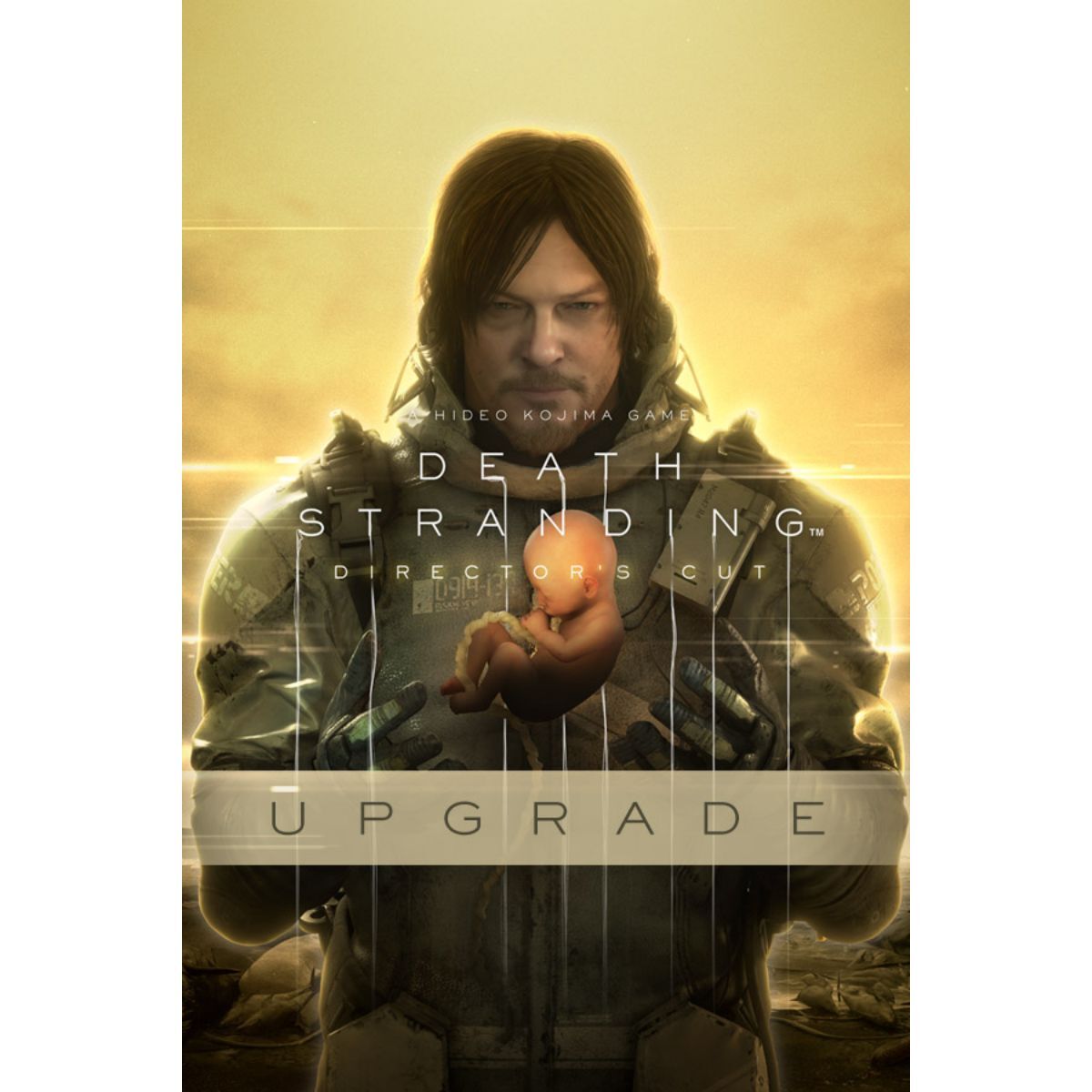
Xbox Game Pass January 2026 delivers 11 new titles, including Star Wars Outlaws and Death Stranding: Director's Cut, whi...
View Board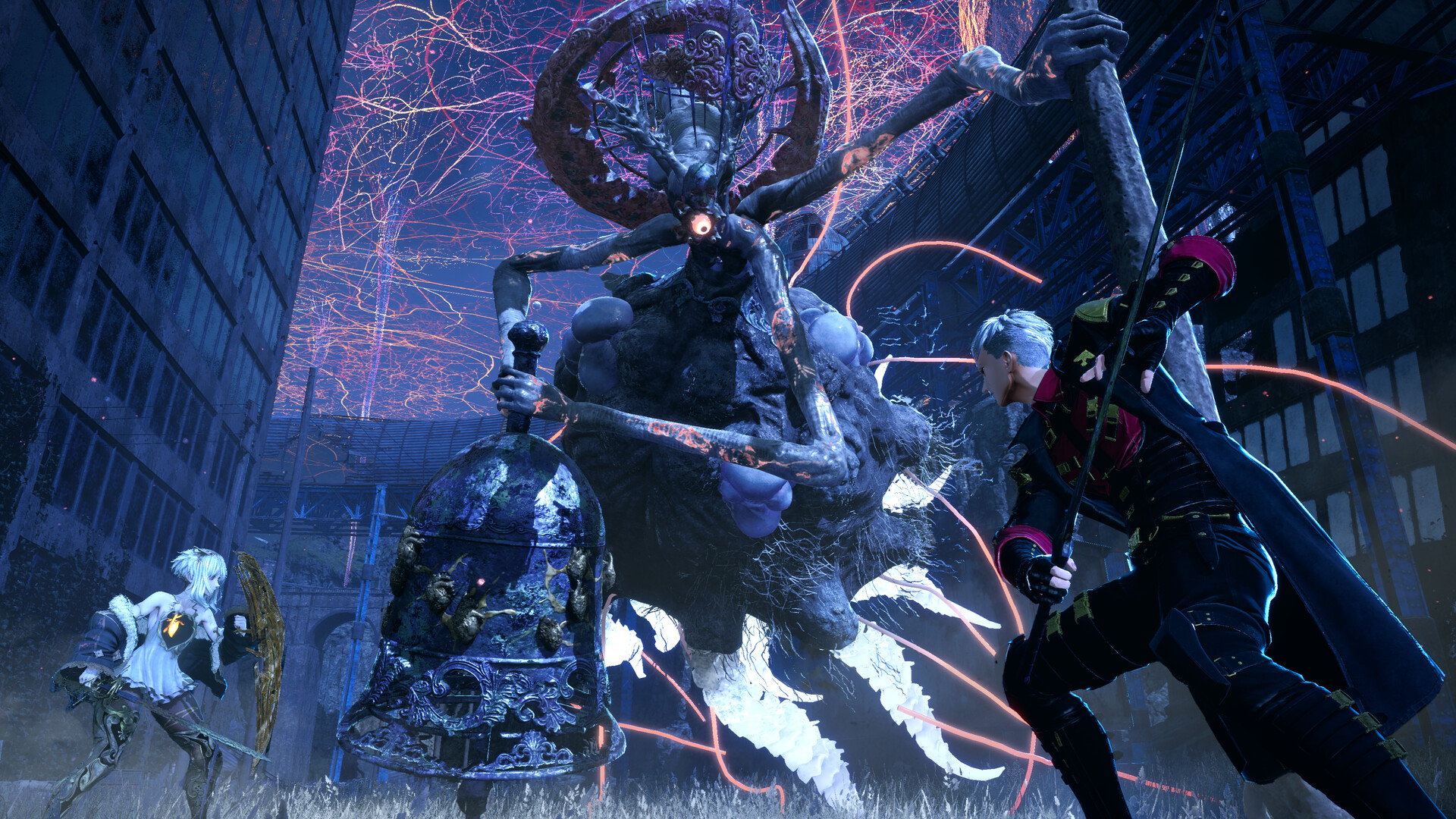
Code Vein 2 launches Jan 30, 2026, rewriting its anime Soulslike legacy with time-bending combat, deeper RPG systems, an...
View Board
Brews & Bastards arrives on Xbox Game Pass Jan 6, 2026. Engage in chaotic twin-stick co-op, fight boozy demons, and recl...
View Board
Resident Evil Requiem blends classic survival horror with modern tech, delivering dual narratives of terror and action i...
View Board
Code Vein II redefines gothic action RPGs with time-bending combat, vast ruins, and a motorcycle-driven wasteland, but l...
View Board
Tekken 7’s Rage Arts, 8‑million unit sales and tournament‑ready mechanics forged a modern fighting‑game era, shaping com...
View Board
Comments