


Explora cualquier narrativa
Descubre y contribuye a relatos históricos y culturales. Comparte tus conocimientos con entusiastas de todo el mundo.
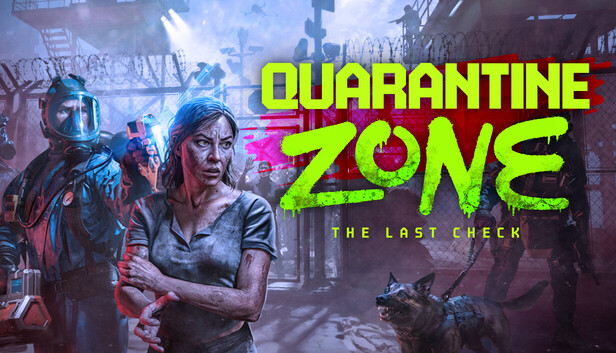
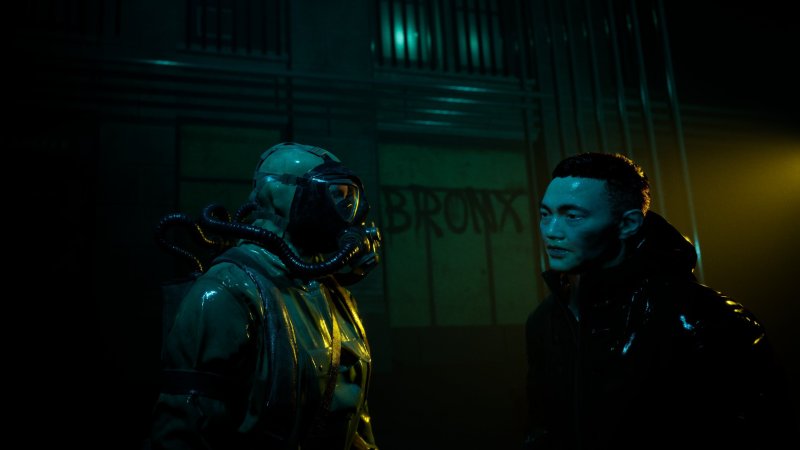
The stethoscope is cold against your palm. Your own breath fogs the visor of your biohazard suit. On the other side of the checkpoint glass, a woman coughs. Her eyes are bloodshot. She says it’s just the dust. You have sixty seconds to decide: is she lying? Your camp’s food stores are at 15%. The generator needs fuel by nightfall. If you let her in and she’s infected, the virus could wipe out the safe zone. If you turn her away, you lose a potential medic. The clock ticks. This is Quarantine Zone: The Last Check, and it’s a masterpiece of bureaucratic terror.
Launched on January 12, 2026, by developers Brigada Games and published by Devolver Digital, this first-person survival management sim has rapidly infected the Steam charts. Priced at a compelling $20, it transplants the soul of Lucas Pope’s Papers, Please into the rotting corpse of the zombie genre. You are not a hero with a shotgun. You are a government agent, a cog in a collapsing system, tasked with screening survivors at the last functioning checkpoint of a doomed city. Your weapons are a reflex hammer, an X-ray machine, and a crushing series of moral calculations.
The horror here isn’t in jump scares, though the nightly zombie assaults provide plenty. The true dread is systemic, psychological, and self-inflicted. Each in-game day follows a brutal, elegant loop. Mornings bring a line of desperate survivors to your booth. You have a limited toolkit to assess them: listen to lung sounds, test knee-jerk reflexes, scan for internal hemorrhaging with a portable X-ray, inspect backpacks for contraband. The game’s genius is in making these mundane actions feel intensely tactile and consequential.
Every decision branches into a resource management nightmare. Four options exist for each subject: admit to the camp, send to quarantine, dispatch to the lab for “analysis” (a usually fatal procedure), or order immediate liquidation. A healthy adult means more hands for gathering supplies. A child consumes food but boosts morale. Sending someone to the lab yields valuable “samples” for research points but is essentially a death sentence. The game doesn’t judge you aloud. It simply shows you the camp roster later, with a red “DECEASED” stamp next to the name you condemned.
According to Alex Van Aken, a critic who reviewed the game for PC Gamer, "The moment-to-moment act of examination is brilliantly executed. Finding a tell—a shaky hand, a suspicious shadow on an X-ray—delivers a potent dopamine hit. You feel like a genius, a savior. Then you realize you just sent a frightened man to his death because his spleen looked funny."
Your choices directly impact your camp’s vital statistics: food, fuel, electricity, medicine, and population. A wrong call can introduce the infection, which spreads silently. You might log in to a new day to find 40% of your population now infected because you missed one cough two days prior. This creates a unique, lingering paranoia that follows you out of the game. Did that last survivor seem too calm? Was that rash on the hiker’s neck just a rash?
As daylight fades, the gameplay shifts from psychological scrutiny to base defense. Your fortified checkpoint comes under attack. Zombies claw at the gates. Some rappel from adjacent rooftops, a new threat added for the full release. You man turrets, direct drones, and pray your upgrades hold. The resources you didn’t allocate to better walls are now felt in the splintering of wood and the screams of your people. Harvesting samples from killed zombies offers a grotesque economy—trade flesh for progress.
"The tension isn't just about survival, it's about complicity," observes Mara Lin, a streamer who documented her entire playthrough on January 13th. "You start playing by the book. Then your food runs low. Then you see a healthy-looking guy with a full backpack. The game whispers, 'The lab needs samples. You need his supplies.' It makes you audit your own ethics under duress. I haven't slept right since."
To discuss Quarantine Zone in January 2026 is to discuss a game of stark contrasts. Its core inspection loop is arguably one of the most innovative mechanics of the year. The sound design—the wheeze of a sick lung, the metallic clang of a closing gate, the static of the radio—is impeccable. It is also, by many early accounts, a technically messy experience. Players report bugs like invisible contraband, rendering glitches that obscure critical evidence, and progression-halting softlocks.
These imperfections create a bizarre meta-layer to the experience. Is the X-ray blurry because the survivor is infected, or because the game hiccupped? This uncertainty shouldn’t work, but in a perverse way, it amplifies the game’s central theme: you are operating with broken tools in a broken world. The line between intended stress and technical frustration is dangerously thin. For some, it breaks immersion. For others, it deepens the simulation of systemic collapse.
Available day-one on PC Game Pass, the game has found a massive audience willing to grapple with its flaws. Steam forums are alight with players comparing diagnostic strategies and sharing horror stories of catastrophic failures. It’s a game that demands to be talked about, dissected. You don’t just play Quarantine Zone; you conduct a post-mortem on your own decisions every time you close it. The question it leaves you with, as you lie awake, is simple: how many of those deaths were necessary, and how many were just convenient?
Numbers rarely tell the full story, but in the case of Quarantine Zone: The Last Check, they diagnose a specific kind of cultural infection. According to data tracked by IsThereAnyDeal, the game achieved a peak concurrent player count of 31,653 on Steam in the days following its January 12, 2026 launch, stabilizing around 13,289 by January 17. Those aren't just statistics; they represent over thirty thousand people simultaneously conducting grim triage, a digital assembly line of moral compromise. With a 76% positive rating from 2,589 user reviews, the consensus is clear: the core concept is brilliant, but the experience is febrile. This split verdict defines the game's first week. It is a phenomenal success built on a foundation of profound unease, both intentional and technical.
The pre-launch metrics were staggering. A demo, available briefly in late 2025, was played by 2 million users and generated a colossal 1.2 million wishlists. This wasn't just hype; it was a signal that players were starving for a new kind of systemic horror, one where the monster is the spreadsheet. The promise, crystallized in trailers from IGN on December 21, 2025, and content creator MathChief on January 3, 2026, was irresistible. The game sold a fantasy of grim authority.
"Last Check is shaping up to be one of the most interesting and unexpected indie releases of early 2026," MathChief stated in his preview. "It's way more than a simple simulation or a slice of zombie paperwork."
He was right. The paperwork is just the gateway drug. The real addiction forms in the layered consequences. You don't merely check boxes; you perform a crude symphony of diagnostics. The metiascope for eye dilation and reflexes. The cold probe for skin temperature. The invasive, almost absurd "butt checks" for hidden contraband that PC Gamer's review noted with a mix of horror and bemusement. Each tool feels plausibly inadequate, a relic of a world that no longer exists. The genius lies in how these mini-games feed the larger economic machine. A successful diagnosis isn't just about being right; it's about resource acquisition. A healthy survivor is a unit of labor. A suspicious one is a source of research samples, but only if you're willing to sign their death warrant with a lab transfer order.
For the first ten hours, Quarantine Zone is nearly impossible to put down. The dopamine hit of correctly identifying a "Shambler" variant from a slight limp is profound. The terror of a misclick during a nighttime defense, watching a rooftop zombie drop behind your lines, is visceral. The game masterfully escalates pressure across two axes: the increasing complexity of infections and the dwindling patience of your own camp. Survivors you admitted days ago now stand in your line, sick and accusing. Your initial moral code—save everyone possible—erodes into a brutal calculus. Do you liquidate the sick child to preserve medicine, or does that act of cruelty tank the morale of your entire workforce, triggering a cascade of failures?
This is where the game's Papers, Please DNA mutates into something new. Lucas Pope's classic was about the dehumanization of bureaucracy under a state apparatus. Brigada Games' creation is about the privatization of that dehumanization in a crisis. The state has collapsed. You are the state now, a petty dictator in a hazmat suit, and your legitimacy is measured in kilowatts and canned goods. The much-touted "zombie feeding cage," a macabre addition for the full release, perfectly encapsulates this. Instead of burning corpses, you can cage them. The government, a distant, faceless entity, pays you for the specimens. You are no longer just a gatekeeper; you're a rancher, farming the undead for scrap and favor. It's a sickening, brilliant twist.
"Screen survivors, manage scarce resources and make impossible moral decisions that determine who gets in — and who doesn’t," the IGN trailer from December 21, 2025, declared. It was a succinct, accurate pitch that barely scratched the surface of the game's existential rot.
Yet, by the fifteenth hour, the cracks in the system become personal. The criticism levied by PC Gamer in their post-launch review begins to resonate with a dull thud. The review praised the "clever and grisly medical examination systems" but delivered a sharp, accurate critique: there is "not enough base management and side activities to remain engaging for long." The loop, so taut initially, begins to sag. The zombie attacks, while tense, start to feel repetitive. The research tree, promising upgrades, reveals itself to be disappointingly linear. You realize you've seen most of the survivor archetypes, the medical conditions, the moral dilemmas. The game world, so richly detailed in its micro-interactions, feels shallow in its macro-scale.
Is this a fatal flaw, or is it a deliberate mirror of the protagonist's own existential burnout? The game never answers that, leaving it as its central debate. The jank—the occasional softlock, the rendering bug that makes contraband invisible—stops feeling like atmospheric chaos and starts feeling like incompetence. When a game's theme is the failure of systems, how much actual failure is too much?
Let's be definitive: Quarantine Zone: The Last Check is one of the most important horror simulations of the decade. It also isn't a masterpiece. Its significance lies not in polish, but in perspective. It refuses the power fantasy. In an era where most zombie games give you a cricket bat or a military-grade rifle, this game gives you a clipboard and a crushing sense of responsibility. It makes you complicit in every death, not heroic in every kill. You don't headshot the infected; you condemn them with a drop-down menu. This bureaucratic remove is, paradoxically, more affecting than any gory head-stomp.
The narrative, however, fails to match the mechanical ambition. The story is threadbare, a series of radio messages from factions that feel more like quest-givers than desperate remnants of humanity. Your choices culminate in binary endings that feel reductive after a campaign of such nuanced, granular decision-making. The game teaches you to think in shades of gray, then asks you to pick black or white. It's a disappointing climax to a journey built on agonizing middle grounds.
In their review, PC Gamer captured this disconnect perfectly, arguing the brilliant core is let down by a lack of sustaining depth around it. The systems are deep enough to hook you but not robust enough to hold you indefinitely.
Compare it to its spiritual predecessor. Papers, Please derived its tension from political and personal stakes within a rigid, known system. Quarantine Zone derives its tension from biological and logistical chaos within a collapsing one. The former is a tragedy of rules. The latter is a tragedy of their absence. This is the game's boldest stroke. It asks: when society ends, what is the value of an individual life? And it forces you to answer not with philosophy, but with resource allocation spreadsheets. The answer, every time, is "it depends on the medicine stockpile."
Yet, for all this heavy lifting, the game stumbles in its supporting mechanics. Base management, touted as a key pillar, is simplistic. Assigning survivors to tasks is a menu-driven chore devoid of personality. Upgrading walls and turrets lacks tangible impact. The promised "top-down base management UI" added at launch feels like an afterthought, a sterile map when the first-person booth feels so alive. The dissonance is glaring. You experience the intimate horror of a mother's pleading eyes through your visor, then you manage her labor assignment through a bland list interface. The humanity the game works so hard to create in one moment, it dissipates in the next.
"The moment-to-moment act of examination is brilliantly executed," the PC Gamer review conceded, before pivoting to the essential critique. The very specificity that makes the inspections so compelling highlights the comparative emptiness of everything surrounding them.
So, who is this game for? Not for the player seeking a thrilling action-horror romp. Not for the strategist craving deep, city-builder complexity. It is for the atmospheric masochist, the player who finds pleasure in systems of pressure and the slow, inevitable corrosion of their own principles. It is for those who want to feel the weight of the world not on their shoulders, but on their conscience. In its best moments, Quarantine Zone achieves a rare feat: it makes you hate the job it so brilliantly simulates. And in its worst moments, you simply hate the game for not being more. That tension—between its unparalleled high-concept execution and its middling follow-through—is the real quarantine zone. Most players, based on those 76% positive reviews, have decided the infection is worth the risk. For now.
The legacy of Quarantine Zone: The Last Check will not be measured by its bug count or its player retention metrics. Its significance is far more profound: it successfully weaponizes bureaucracy as a core horror mechanic, proving that the most terrifying monster isn't a shambling corpse but the administrative burden of deciding its fate. In an industry oversaturated with zombie power fantasies, Brigada Games dared to ask a brutal, subversive question: what if the apocalypse is run by middle management? This reframes survival horror from a test of reflexes to a test of ethics under duress. Your ammo is policy. Your health bar is the guilt graph.
It arrives in January 2026 as a direct challenge to a decade of genre conventions. Since DayZ and The Last of Us popularized the emotional, resource-scarce zombie survival narrative, the focus has been on scavenging, crafting, and combat. Quarantine Zone surgically removes the combat. You never fire a gun. Your violence is systemic, delivered through drop-down menus and the cold application of inadequate science. This positions it not as an action game, but as a documentary simulator of collapse. You are not chronicling your fight for survival; you are chronicling the erosion of your own humanity under the fluorescent lights of procedure. This is its true innovation.
A developer from a competing studio, who requested anonymity to speak freely, put it to me: "It makes the player an administrator of death. Most horror games make you fear the thing trying to kill you. This makes you fear being the thing that chooses who lives. That's a different type of horror, and it's why this game will be referenced for years."
The cultural impact is already visible. Steam forums are not filled with discussions about optimal turret placement, but about the ethics of lab transfers versus quarantine. Reddit threads debate the merit of saving a productive engineer versus a sick child, not as a narrative choice but as a mathematical imperative dictated by the game's own systems. It has sparked a discourse on "procedural morality," a term for ethical frameworks generated not by pre-written narratives, but by cold, intersecting gameplay systems. The game's 76% positive rating is a testament to players accepting—even craving—this uncomfortable friction.
For all its brilliance, Quarantine Zone is ultimately a prisoner of its premise. The critical perspective is unavoidable: the game simulates the soul-crushing weight of triage so effectively that it risks becoming a chore. The inspection mini-games, while tactile, follow a predictable pattern of escalation. You learn that a specific rash always indicates the "Spitter" variant. The mystery dissipates, replaced by pattern recognition. The resource management, so tense in the early game, can devolve into a grinding optimization puzzle in the late stages, where the most moral choice is often the most mathematically efficient.
Furthermore, its narrative ambition falls flat. The binary endings feel like a betrayal after forty hours of decisions painted in excruciating shades of gray. The characters you screen remain archetypes—the panicked mother, the secretive soldier, the sick child—never evolving into individuals. The story exists only to justify the systems, not to enhance them. The game's greatest weakness may be its greatest thematic strength: it simulates the burnout of a checkpoint officer so well that you might, yourself, burn out. Is that a design flaw, or is it the most authentic horror of all? To make you not just play the job, but to feel its psychic toll until you log off, exhausted.
Technical issues remain its most common and damning critique. As of late January 2026, players still report occasional progression-halting bugs, like a survivor spawning inside a wall, making them impossible to process. The jank that initially felt atmospheric can later feel like an unpolished product. The question for Devolver Digital and Brigada Games is simple: will they patch the bugs, or will they patch the humanity back in? The support roadmap, typically announced within a game's first month, will be the ultimate test of whether they view their creation as a software product or a cultural statement.
The immediate future for this new sub-genre—call it bureaucratic horror—is already taking shape. The success of Quarantine Zone has demonstrably greenlit a wave of imitators. One major studio has fast-tracked a project code-named Checkpoint: Aurora, described by a leaked design document as "Quarantine Zone meets This War of Mine." Another, from a respected indie team known for narrative walking sims, is reportedly pivoting to a title set in a collapsing fantasy kingdom where you manage refugee intake, not infections. The formula is replicable because the core insight is universal: the tension of making irreversible choices under pressure is more compelling than the spectacle of fighting them.
For Quarantine Zone specifically, the developers have confirmed their first major content update, titled "Protocol Delta," is scheduled for a free release in April 2026. It promises a new survivor faction with unique infection vectors, a new tier of building upgrades focused on psychological morale rather than just stronger walls, and a new late-game threat: survivors who are actively lying. Not about infection, but about their skills. This shifts the paradigm from medical diagnosis to detective work. A sequel is not yet officially greenlit, but the financial success makes it inevitable. The real question is one of scope and ambition. Will they polish the existing systems to a mirror shine, or will they have the courage to deepen the systems of morality itself?
The stethoscope hangs on the edge of the desk. The line outside your booth never shortens. You will log back in. Not for the thrill of the headshot, but for the grim satisfaction of a job done correctly, of a system mastered. The horror of Quarantine Zone was never the zombies at the gate. It was the realization that in the face of absolute collapse, we don't become monsters. We become clerks. And the paperwork, it never ends.
Tu espacio personal para organizar y compartir conocimientos con el mundo.
Descubre y contribuye a relatos históricos y culturales. Comparte tus conocimientos con entusiastas de todo el mundo.
Conéctate con otros que comparten tus intereses. Crea y participa en tableros temáticos.
Contribuye con tus conocimientos. Crea contenido atractivo y participa en discusiones en varios idiomas.
¿Ya tienes una cuenta? Inicia sesión aquí

Pathologic 3 arrives January 9, 2026, wielding time-travel to deepen its signature despair, forcing players to rewrite t...
Ver tablero
Pathologic 3 arrives January 9, 2026, a punishing survival RPG where time-travel meets plague diagnosis in a dying city,...
Ver tablero
Cairn redefines climbing games with physics-driven realism, forcing players to read rock faces, manage stamina, and plac...
Ver tablero
Zeekerss’s solo horror co‑op Lethal Company forces four players to scavenge moon scrap under a ticking quota, sparking f...
Ver tablero
Hypergryph abandons tower defense for a bold open-world action RPG, merging factory automation with real-time combat in ...
Ver tablero
MIO: Memories in Orbit launches Jan 20, 2026, blending punishing Metroidvania gameplay with a haunting narrative on memo...
Ver tablero
Dynasty Warriors Origins DLC launches Jan 22, 2026, reimagining villains as heroes with new weapons, skills, and untold ...
Ver tablero
MIO: Memories in Orbit launches on Game Pass Jan 20, 2026, offering a polished metroidvania with fluid combat, hand-draw...
Ver tablero
Tekken 7’s Rage Arts, 8‑million unit sales and tournament‑ready mechanics forged a modern fighting‑game era, shaping com...
Ver tablero
Code Vein II redefines gothic action RPGs with time-bending combat, vast ruins, and a motorcycle-driven wasteland, but l...
Ver tablero
Heartopia storms Steam with 17K players, blending cozy sim charm & mobile monetization, sparking a cultural clash over g...
Ver tablero
Code Vein II invites players on a somber pilgrimage through time, blending Soulslike combat with a narrative of sacrific...
Ver tablero
Mortal Kombat 11: A Deep Dive into Its Enduring Legacy The arena lights flicker, a digital roar erupts, and then, the c...
Ver tablero
Josef Fares' Split Fiction redefines co-op storytelling with its radical two-player-only design, selling 2M copies in a ...
Ver tablero
Resident Evil Requiem blends classic survival horror with modern tech, delivering dual narratives of terror and action i...
Ver tablero
Code Vein 2 launches Jan 30, 2026, rewriting its anime Soulslike legacy with time-bending combat, deeper RPG systems, an...
Ver tablero
Betrayal at Baldur's Gate transforms a blank board into a dungeon of shifting alliances and procedural terror, where 49 ...
Ver tablero
Solo developer Adam Hunt crafts Streetdog BMX, a love letter to BMX culture, launching January 14, 2026, on Steam with 2...
Ver tablero
Experience Arknights: Endfield's thrilling 3D action RPG combat on PC, PS5, iOS & Android. Join the global launch with f...
Ver tablero
Kejora’s January 2026 launch sidestepped Silksong, showcasing hand‑drawn Southeast Asian artistry in a narrative puzzle‑...
Ver tablero
Comentarios