




Entdecken Sie beliebige Erzählungen
Entdecken Sie historische und kulturelle Geschichten. Teilen Sie Ihr Wissen mit Enthusiasten weltweit.
The developer's presentation ended, the lights in the private Gamescom 2025 demo room came up, and a palpable silence hung in the air. The journalist sitting next to me simply stared at his hands for a full ten seconds. A Capcom PR representative, mistaking the quiet for boredom, began to ask if everything was okay. The journalist finally looked up, his face pale. "I need to check if the door to my hotel room has a chain lock," he said. "That's how okay I am." This wasn't just another sequel. This was a declaration of terror, and its name is Resident Evil Requiem.
Slated for release on February 27, 2026, the ninth mainline entry is Capcom's ambitious, terrifying love letter to the franchise's 30th anniversary. It represents a convergence: a return to the series' most hallowed ground, a fusion of its modern and classic horror identities, and a staggering technological leap. But beneath the anniversary fanfare and the polish of the RE Engine lies a single, brutal question. Can a series that defined survival horror three decades ago reclaim its crown in a saturated market? Early evidence suggests it not only can, but that it plans to do so by weaponizing dread in ways we haven't felt since the Spencer Mansion creaked to life in 1996.
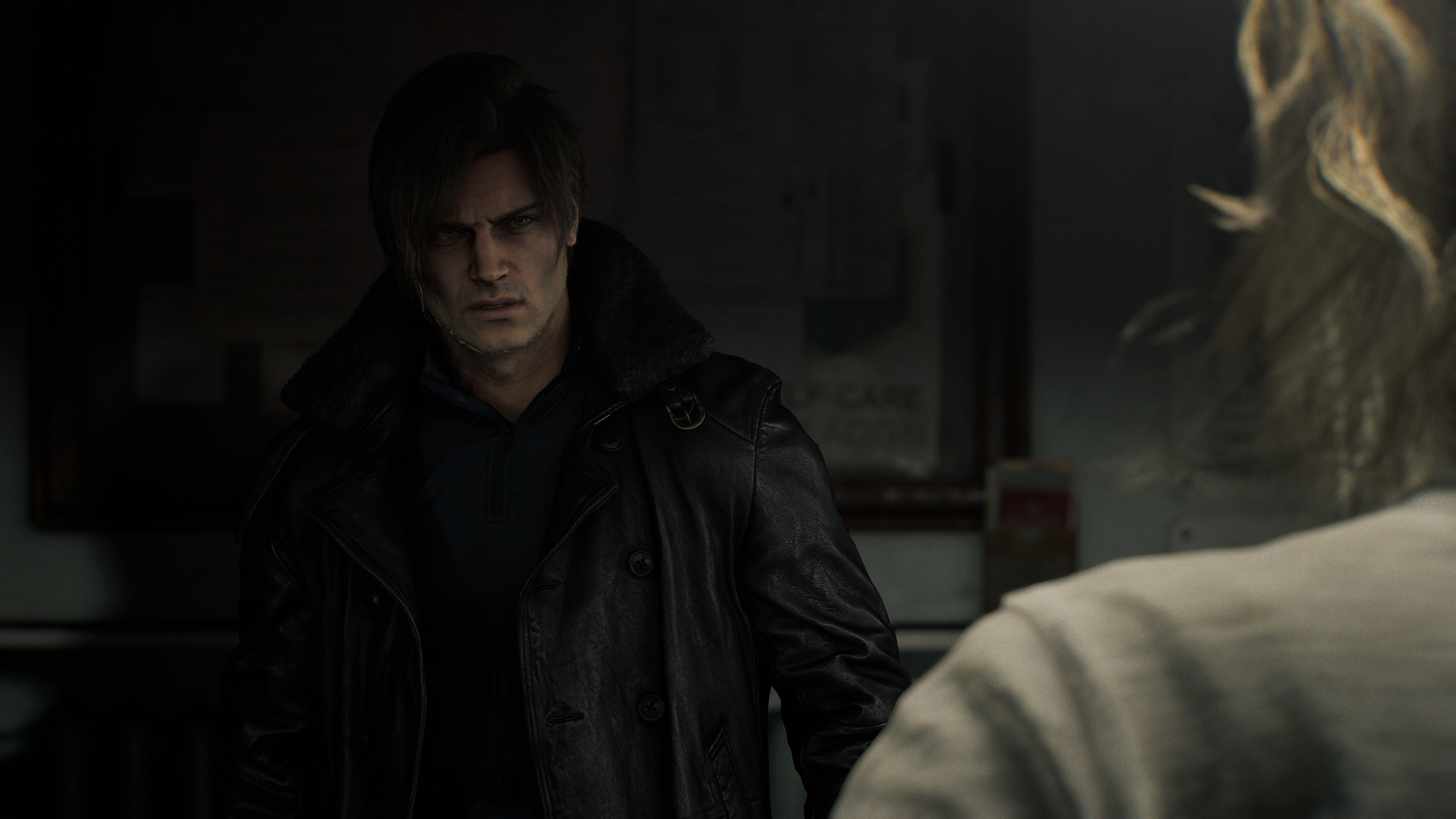
Resident Evil Requiem discards the sprawling villages and castles of its immediate predecessors. Director Koshi Nakanishi, the architect of the profoundly intimate terror in Resident Evil 7: Biohazard, has orchestrated a deliberate, claustrophobic return. The game splits its narrative between two protagonists, each representing a different era and style of fear. On one side is the legendary Leon S. Kennedy, a veteran of countless bioterror outbreaks. His presence signals a return to the action-infused, resource-managed suspense of the series' fourth chapter. On the other is an entirely new figure: Grace Ashcroft, an FBI analyst and the daughter of Alyssa Ashcroft from the cult classic Resident Evil Outbreak.
This duality is the game's core. Grace's story is a personal, investigative horror. She arrives at the opulent, decaying Wrenwood Hotel to investigate a series of grisly murders. The location is no random choice; it is the very site where her mother was killed. Her toolkit is that of an investigator—forensic analysis, logic, and a desperate need for closure against a backdrop of unnatural violence. Leon's path, meanwhile, pulls the camera back to a macro scale of horror. Intelligence leads him back to the epicenter of the franchise's mythology: the ruins of Raccoon City. This isn't the bustling metropolis of Resident Evil 3's opening moments. This is a tomb, a poisoned, silent graveyard over a decade after its destruction, promising horrors that have festered in the dark.
"The Wrenwood isn't just a setting; it's a character with a memory," said lead environment artist, David Chen, in a post-demo interview. "Every bloodstain on the carpet, every shattered chandelier, tells a part of Grace's mother's final story. The player isn't just solving a mystery. They are walking directly into a family's trauma, and the house remembers."
Nakanishi has been unequivocal in shutting down one major speculation. In a January 2026 interview with Game Informer, he directly stated, "This isn't an open-world game." The design philosophy is one of curated, intense pressure. The team aims to weave the distinct gameplay styles—Grace's tense, puzzle-box exploration and Leon's more combat-ready survival—into a single, oppressive experience. The goal isn't freedom; it's entrapment. It's the feeling of being hunted within a space you are compelled to understand, a philosophy that powered the series' most revered entries.
The power of this entrapment is magnified exponentially by the game's technical prowess. Built on Capcom's proprietary RE Engine, Requiem represents the franchise's most significant visual overhaul since the shift to photorealistic characters in Resident Evil 7. The developers are implementing a full suite of ray-tracing features: path-traced lighting, ray-traced global illumination, shadows, and ambient occlusion. The jargon translates to a simple, terrifying reality: darkness behaves like darkness.
In the Wrenwood Hotel demo, this was viscerally apparent. The beam from Grace's flashlight wasn't a simple cone of light. It was a physical object, cutting through airborne dust and smoke, its reflection glinting off broken glass and polished marble floors in real-time. Shadows didn't just disappear when you turned a corner; they bled, pooled, and clung to objects with a tangible weight. The famous "Library of Shadows" sequence shown to press used this technology not for spectacle, but for pure psychological torture. A creature, heard but not seen, would move just outside the fragile circle of your flashlight. You would see its distorted shadow stretch and warp across a distant bookcase, its source completely invisible in the pitch black. Your only clues were the sound of dragging flesh and the silhouette on the wall.
"The ray-traced audio is just as critical as the lighting," explained audio director, Maria Flores. "We're modeling how sound travels and echoes in these spaces. A whimper in the Wrenwood's ballroom doesn't just hit your ears. It bounces off the grand piano, gets muffled by the heavy velvet curtains, and comes to you as a ghost of a sound. You'll be tracking threats by ear as much as by sight, and in the ruins of Raccoon City, the silence is often more frightening than any noise."
The commercial appetite for this specific flavor of fear appears immense. Following its reveal at Summer Game Fest 2025, Resident Evil Requiem was added to over 1 million wishlists across Steam, PlayStation, and Xbox storefronts in a matter of weeks. The public demos at PAX West and Gamescom consistently had lines exceeding three hours, a testament to the potent mix of nostalgia and next-generation horror on offer. The demand is there. The stage, lit by path-traced flares and shrouded in dynamic shadow, is set.
Yet, technical achievement and fan enthusiasm are not guarantees of artistic success. The true test for Requiem lies not in its pixel count or its wishlist numbers, but in its ability to synthesize the franchise's fractured identity into a coherent, devastating whole. Can the slow-burn psychological horror of Grace's story coexist with the resource-tight action of Leon's without one undermining the other? Can a return to Raccoon City feel like anything more than a nostalgic gambit? The first chapter of this horror story sets a daunting, brilliant table. The feast of fear begins on February 27th.
January 26, 2026. A new wave of previews hits the internet, and the theoretical framework for Resident Evil Requiem solidifies into tangible, terrifying mechanics. The game's central gamble—the dual protagonist structure—isn't just narrative. It's a brutal, binary split in gameplay philosophy. Grace Ashcroft inhabits a world of scarcity and silence. Leon Kennedy operates in a realm of cathartic, gore-soaked excess. The genius, and the immense risk, lies in forcing the player to live in both. This isn't a choice at the start menu. It's a schizophrenic rhythm the game establishes, a deliberate whiplash between vulnerability and power that could either redefine survival horror or collapse under its own ambitious weight.
Grace's sections are a masterclass in constrained design. Her view is first-person, a direct lineage from the Baker estate and the village of Dimitrescu. This perspective isn't just a camera angle; it's a prison. Your field of view is limited. Turning feels deliberate, almost heavy. Resources are ghosts. You count handgun bullets like precious gems. The iconic green herb is a rare treasure. Your inventory, a brutalist grid of limited slots, forces agonizing decisions: do you carry the key item for a distant puzzle or the single first-aid spray you just found? Even your melee weapon, a breakable knife, is a temporary, desperate reprieve. This is the pure, uncut survival horror of the franchise's roots, amplified by modern technology.
"Grace's chapters are a true love letter to RE2," states an analysis from the YouTube channel Survival Horror Network, breaking down the January 26 footage. "The Wrenwood Hotel, with its interconnected rooms, persistent stalker-type threats, and focus on environmental puzzle-solving, creates one of the most atmospheric environments in the entire franchise. It's oppressive in a way that feels classical yet freshly terrifying."
Then, with a narrative transition, you become Leon. The camera pulls back to the over-the-shoulder third-person view that revolutionized the series in 2005. The audio mix shifts. The mournful, droning ambiance of the Wrenwood is replaced by a more propulsive, alert score. Your inventory expands. Ammo, while not infinite, is plentiful. Enemies that stalked Grace with impunity now have health bars. Your hatchet, a tool for prying open cabinets Leon finds locked, doesn't break—it dulls, and you resharpen it. The power fantasy is immediate and visceral. You are no longer prey; you are the exterminator. In the January 26 footage, Leon confronts a chainsaw-wielding horror in a barn, a clear nod to Resident Evil 4's iconic opener, and delivers a smug, one-liner perfectly in character: “Sorry, but I’m not on the menu.”
Capcom's stated goal is a cohesive package that represents the breadth of the series. The previews suggest they are achieving this through a clever, almost metatextual, level of integration. Areas initially traversed by Grace in a state of breathless terror are later revisited by Leon. That hallway where Grace cowered in a locker, listening to something monstrous scrape past? Leon marches down it, shotgun raised, ready to blast the creature into pulp. The locked cabinet Grace had to bypass becomes a source of handgun ammo for Leon after he pries it open. This creates a fascinating dialogue between the two styles. The horror informs the action, and the action retroactively demystifies the horror. The question is whether this demystification is a feature or a bug.
Does knowing Leon will eventually clean up the mess diminish the primal fear of Grace's sequences? Or does it instead create a new kind of narrative tension, where you endure the terror with the promise of catharsis? The Xbox Wire preview from January 26 argues strongly for the latter.
"The dual protagonists reflect different levels of situational awareness within the same nightmare," the preview notes. "Leon provides cathartic revenge, a direct contrast to Grace's powerless terror. It’s a smart, deliberate use of the trope that serves both gameplay variety and thematic depth."This is the game's tightrope walk. The balance must be perfect. Too much Leon, and Grace's meticulously built atmosphere becomes a frustrating prelude. Too much Grace, and players craving the series' signature action feel starved.
The return to Raccoon City, specifically for Leon's segments, is the other pillar of this high-wire act. We haven't meaningfully explored this ground since the 1998 incident (or its 2019 remake). The city is a tomb, a character in its own right. Early descriptions mention Leon navigating the remnants of the Raccoon City Police Department, a location seared into franchise lore. This isn't nostalgia for nostalgia's sake. It's an archaeological dig into trauma. What new horrors have evolved in the chemical and biological soup left by the thermobaric missile? What structures of the Umbrella nightmare remain standing? The potential for environmental storytelling here is immense, but the risk of leaning too hard on fan service iconography is equally real.
Beyond design, the true silent partner in Requiem' horror is technology. Capcom's RE Engine, already renowned for its visual fidelity in Resident Evil Village and the RE4 remake, is being pushed to new extremes. The promotional language promises a "new era of survival-horror, amplified by technological advancements." This isn't marketing fluff. The specifics—lifelike facial capture, individual sweat droplets on skin, micro-expressions of fear on Grace's face—serve a singular purpose: selling the reality of the nightmare.
When Grace is hiding, the player will see the subtle tremble of her lower lip, the dilation of her pupils in the low light, the sheen of panic-sweat on her temple. This isn't just graphical polish; it's a direct feedback loop to the player's own nervous system. The enemy designs benefit just as profoundly. The leaked boss battle footage from January 26 shows a grotesque fusion of flesh and machinery, with texture work so detailed you can almost smell the decay. The action, as one analysis puts it,
"rivals iconic horror cinema in its visceral impact. The gore isn't cartoonish; it's wet, weighty, and horrifically tangible."
Yet, for all its technical marvels, a legitimate criticism emerges from this focus. Is Requiem potentially mistaking graphical fidelity for atmospheric depth? The original Resident Evil on the PlayStation, with its pixelated zombies and pre-rendered backgrounds, is arguably scarier than many modern, photorealistic horror games. Terror is conjured in the mind, often by what is suggested, not shown. The RE Engine's ability to show everything in brutal, ray-traced clarity could work against the game. Will the fear of the unknown, the series' greatest asset, be sacrificed on the altar of visual perfection? The shadow that was so terrifying in the Library of Shadows becomes just another detailed monster model once Leon shines a flashlight on it. The game's success may hinge on Nakanishi's team knowing precisely when to hold back, when to let the player's imagination—still the most powerful rendering engine—do the work.
The preview cycle has been overwhelmingly positive, but it exists in a controlled environment. Journalists played curated, likely optimized slices. The real test is the 12-to-15-hour marathon. Will the pacing of the perspective shifts feel rhythmic or jarring over that duration? Will the resource economies feel balanced, or will players fall into predictable patterns? The Summer Game Fest 2025 announcement sparked a frenzy, and the subsequent demos at Gamescom 2025 and detailed previews in January 2026 have built a formidable cathedral of expectation. Capcom is promising not just a game, but a definitive statement: a synthesis of thirty years of horror evolution.
"The potential here is undeniably massive," concludes the Survival Horror Network analysis, striking a note of cautious optimism that echoes through the industry. "It has all the ingredients to be a landmark title. But whether the final product delivers a perfectly balanced meal or two separate, conflicting flavors served on the same plate remains the ultimate question."
They are aiming for nothing less than the full spectrum of fear, from the quiet dread of a creaking floorboard to the explosive release of a shotgun blast. No other franchise would dare attempt this synthesis. No other developer has the specific, bloody history to even try. On February 27, 2026, we will discover if Resident Evil Requiem is a masterful concerto of horror or a ambitious, discordant jam session.
Resident Evil Requiem does not arrive in a vacuum. Its release on February 27, 2026, is a deliberate event, marking the franchise's 30th anniversary with the narrative weight of a returning hero and a technological flex that aims to reset industry standards. But its significance stretches far beyond a birthday celebration. This game represents Capcom's attempt to resolve a fundamental tension that has defined the series—and the survival horror genre itself—for two decades: the push-and-pull between pure, helpless terror and empowered, action-oriented survival. By forcing these two philosophies to coexist not just in one game, but within one interconnected experience, Capcom is betting on a synthesis that could finally lay the old debates to rest.
The impact of a successful synthesis would ripple throughout the industry. For years, the genre has bifurcated into two camps: the slow-burn, resource-starved indie darlings and the big-budget, combat-heavy action-horror hybrids. Requiem posits that there is a viable, blockbuster middle path. It suggests that a single title can deliver the intimate, psychological scares that hardcore enthusiasts crave while also providing the visceral, set-piece power fantasy that maintains mass market appeal. If it works, it becomes a new blueprint. If it fails, it reinforces the notion that these two horror identities are fundamentally incompatible on this scale.
"This is more than a new chapter; it's an attempted unification of the franchise's DNA," says veteran industry analyst, Ben Carter of Apex Interactive. "Capcom isn't just making a scary game. They are trying to codify a complete horror language, from whisper to scream, within one product. Success here would legitimize a hybrid model that every major publisher with a horror IP would rush to dissect and emulate."
The return to Raccoon City is the emotional core of this legacy play. It’s a direct tether to the series' origins, a conscious effort to validate three decades of narrative and gameplay evolution by rooting it all in the soil where it began. This isn't fan service; it's historical reckoning. The game is asking players to measure how far the fear has evolved by showing them the unchanged, haunted ground zero.
For all its ambition, Requiem walks a minefield of its own design. The most glaring risk is tonal whiplash. The transition from Grace's first-person, resource-starved vulnerability to Leon's third-person, arsenal-wielding confidence must feel like a narrative-driven shift in perspective, not a jarring disconnect that shatters immersion. Will players resent being pulled from a tense, puzzle-focused groove into a combat sequence, or vice versa? The seamless integration promised in previews must hold for a full 15-hour campaign, not just a 45-minute demo.
Furthermore, the game's dual structure invites direct, moment-to-moment comparison in a way few games do. Players will inevitably judge which half is "better," which style is more fun or more frightening. This could lead to a divisive reception, where one protagonist's chapters are hailed as a masterpiece and the other's are criticized as a pacing-breaking slog. The balance isn't just about screen time; it's about emotional weight and gameplay satisfaction. A misstep could make the game feel like two compelling but separate experiences awkwardly stapled together, rather than the cohesive whole Capcom promises.
There's also the danger of the technology overshadowing the terror. The RE Engine's staggering capability for realism—the sweat, the ray-traced shadows, the hyper-detailed gore—could inadvertently demystify the horror. The unknown is almost always scarier than the known. When every strand of mutilated flesh is rendered in 4K clarity, does the monster become less a thing of nightmare and more a digital effect to be appraised? The game must use its graphical prowess to suggest deeper horrors lurking just outside the frame, not merely to display every gruesome detail within it. Relying too heavily on visual fidelity risks creating a haunted house that feels more like a museum of grotesque art—impressive to look at, but ultimately inert.
The clock ticks down to launch. All pre-release metrics—the over 1 million wishlists, the frenzied press reactions from Gamescom 2025, the sustained buzz from the January 26, 2026 footage—point toward a commercial juggernaut. But the true verdict on Capcom's gamble will arrive in the weeks following February 27. The discourse will not be about sales; it will be about synthesis. Did the experiment work?
Capcom’s own future moves are already hinted at. Their next financial briefing, scheduled for May 2026, will undoubtedly feature Requiem’s sales data and likely tease the roadmap for DLC expansions. Early rumors suggest a side-story focusing on the Raccoon City ruins, potentially playable from another character’s perspective. The franchise machine does not stop. But the direction of that machine for the next decade will be set by the reception to this anniversary title.
That journalist in the darkened demo room, worried about his hotel door chain, experienced a specific, primal kind of fear. It was the fear of the immediate, the personal, the thing in the dark with you. Resident Evil Requiem seeks to deliver that, and then hand you a chainsaw and tell you to fight back. It aims to be the full spectrum of dread, a comprehensive encyclopedia of horror. On February 27th, we open the book. The final page will tell us if this is the future of fear, or a beautiful, overambitious eulogy for what the genre once was.
Ihr persönlicher Raum zum Kuratieren, Organisieren und Teilen von Wissen.
Entdecken Sie historische und kulturelle Geschichten. Teilen Sie Ihr Wissen mit Enthusiasten weltweit.
Verbinden Sie sich mit anderen, die Ihre Interessen teilen. Erstellen Sie thematische Boards.
Teilen Sie Ihr Wissen. Erstellen Sie ansprechende Inhalte und nehmen Sie an Diskussionen in mehreren Sprachen teil.
Haben Sie bereits ein Konto? Hier anmelden

Pathologic 3 arrives January 9, 2026, wielding time-travel to deepen its signature despair, forcing players to rewrite t...
Board ansehen
MIO: Memories in Orbit launches on Game Pass Jan 20, 2026, offering a polished metroidvania with fluid combat, hand-draw...
Board ansehen
Code Vein II invites players on a somber pilgrimage through time, blending Soulslike combat with a narrative of sacrific...
Board ansehen
GTA 6 faces its toughest rival in 2026: GTA V's $10B legacy. Can Rockstar's sequel eclipse a game that redefined longevi...
Board ansehen
Code Vein 2 launches Jan 30, 2026, rewriting its anime Soulslike legacy with time-bending combat, deeper RPG systems, an...
Board ansehen
Solo developer Adam Hunt crafts Streetdog BMX, a love letter to BMX culture, launching January 14, 2026, on Steam with 2...
Board ansehen
Xbox Game Pass January 2026 delivers 11 new titles, including Star Wars Outlaws and Death Stranding: Director's Cut, whi...
Board ansehen
Pathologic 3 arrives January 9, 2026, a punishing survival RPG where time-travel meets plague diagnosis in a dying city,...
Board ansehen
Mortal Kombat 11: A Deep Dive into Its Enduring Legacy The arena lights flicker, a digital roar erupts, and then, the c...
Board ansehen
Claim Fallout 1 & 2 for free via Prime Gaming before Jan 26, 2026—permanent ownership of the iconic RPGs that shaped gam...
Board ansehen
Code Vein II redefines gothic action RPGs with time-bending combat, vast ruins, and a motorcycle-driven wasteland, but l...
Board ansehen
Rockstar aims to launch a 4K, 60 FPS Red Dead Redemption 2 next-gen upgrade in Spring 2026 across PS5, Xbox Series X/S, ...
Board ansehen
A jornada de Ethan Winters em Resident Evil Village chega às subscrições PS Plus e Xbox Game Pass a 20 de janeiro de 202...
Board ansehen
Heartopia storms Steam with 17K players, blending cozy sim charm & mobile monetization, sparking a cultural clash over g...
Board ansehen
Cairn redefines climbing games with physics-driven realism, forcing players to read rock faces, manage stamina, and plac...
Board ansehen
Tekken 7’s Rage Arts, 8‑million unit sales and tournament‑ready mechanics forged a modern fighting‑game era, shaping com...
Board ansehen
Code Vein II rewrites fate with time-bending combat, deeper customization, and a bold single-companion system, launching...
Board ansehen
Betrayal at Baldur's Gate transforms a blank board into a dungeon of shifting alliances and procedural terror, where 49 ...
Board ansehen
MIO: Memories in Orbit launches Jan 20, 2026, blending punishing Metroidvania gameplay with a haunting narrative on memo...
Board ansehen
Quarantine Zone: The Last Check turns zombie survival into bureaucratic horror, forcing players to make life-or-death de...
Board ansehen
Kommentare