Explore Any Narratives
Discover and contribute to detailed historical accounts and cultural stories. Share your knowledge and engage with enthusiasts worldwide.
On the morning of February 3, 2026, in a sprawling Amazon fulfillment center outside Reno, Nevada, a yellow robotic arm designated Unit 1,000,000 executed its first pick. It selected a hardcover copy of Mary Shelley’s Frankenstein from a bin, placed it in a box, and sealed it for shipping. The moment was ceremonial, a press event milestone. But the engineer who oversaw its calibration, a 34-year-old named Anya Petrova, felt a more personal tremor. Her team’s DeepFleet AI coordination software, which managed this million-robot army, wasn't just moving goods. It was learning, in real-time, how to prevent a collision between two autonomous carriers in Stuttgart while simultaneously recalibrating grip strength for porcelain mugs in Tokyo. The machine had developed a kind of peripheral vision. "We stopped building tools and started cultivating a workforce," Petrova says, wiping a smudge of grease from her glasses. "The question shifted from 'what can it do' to 'what is it learning on its own today?'"
This quiet revolution in a Nevada warehouse is the physical heartbeat of a year defined not by a single gadget, but by a profound migration. In February 2026, technology is crossing a final frontier: it is leaving the screen and entering the gritty, unpredictable, and legally consequential realm of human space. The trends dominating boardrooms and research labs—agentic AI, physical robotics, neuromorphic computing, embedded finance 2.0, and sovereign infrastructure—are not mere products. They are the life's work of specific individuals whose philosophies, failures, and obsessions are now hard-coded into our daily reality. This is the story of that migration, told through the architects enabling it.
The generative AI explosion of the early 2020s created a cottage industry of prompt engineers. By 2026, that role is nearly extinct, rendered obsolete by the very technology it sought to guide. The trend is Agentic AI: systems that don't wait for instructions but pursue multi-step objectives with strategic independence. The poster child is the autonomous back-office. Imagine an AI that doesn't just generate a report on Q3 vendor discrepancies but identifies the problematic vendor, negotiates new terms via a series of structured emails, executes a contract amendment, and logs the entire process for compliance—all before a human manager has finished their morning coffee.
"The ROI conversation has completely inverted," says Marcus Thorne, a lead partner on Deloitte's Tech Trends team. "In 2024, clients asked, 'What's the potential savings?' Now, in February 2026, they present a problem like 'Our global invoice reconciliation takes 12,000 person-hours a quarter' and demand, 'Have your agent solve this by April. We will measure its performance against the last human team.' The agent isn't a cost center; it's a hire."
This shift demands a new kind of tech professional: the agent architect. These are less coders and more behavioral psychologists and process auditors. Dr. Lena Zhou, who left a tenured position at Stanford's Computer Science department to found the agency-design firm Simplex, describes her work as "defining ambition and installing guardrails." Her team doesn't program tasks; they create digital personas with specific domains of authority, ethical boundaries, and escalation protocols. "We built an agent for a pharmaceutical client that autonomously manages clinical trial data compliance across 40 countries. Its core directive isn't 'process data,' but 'ensure the continuity and integrity of the trial above all else.' It once delayed a scheduled data dump for 72 hours because it detected an anomalous statistical pattern in a sub-group from Belgium. It flagged it, initiated a preliminary review, and alerted the lead human researcher. That's not following a script. That's exercising judgment."
The friction point is profound. Agentic systems are compressing innovation cycles from years to months, creating a relentless pressure for continuous adaptation. The human role is no longer to direct, but to curate, challenge, and interpret the outcomes of a newly autonomous digital workforce.
If Agentic AI represents the maturation of intelligence, then Physical AI represents its daring, often clumsy, quest for a body. The buzz of CES in early February 2026 wasn't about thinner phones or brighter TVs. It was the thud of humanoid robots navigating obstacle courses, the whir of coordinated drone fleets simulating warehouse logistics, and the silent demonstration of smart materials in a "self-sensing" bridge truss. The trend has moved from simulation to embodiment.
At the BMW plant in Regensburg, Germany, this isn't a trade show fantasy. Fully assembled vehicles, guided by a factory-wide spatial AI, now navigate themselves from the final assembly line to the loading dock, identifying and avoiding human workers and other vehicles. The system, developed over five years by a team led by Klaus Fischer, uses a form of "common sense" physics modeling. "The biggest hurdle was not navigation, but anticipation," Fischer explains, his voice echoing slightly in the vast factory hall. "A human worker sees a puddle of coolant and walks around it. A traditional robot rolls through it and creates a safety hazard. Our AI must perceive the fluid, understand its properties, predict the smear path, and recalculate its route. It is learning the world as a child does—through interaction and consequence."
The drive for physical AI is fueled by an acute economic imperative: the world of atoms remains where the vast majority of global GDP resides. Automating physical space is the next, and most difficult, frontier. Amazon's millionth robot is a testament to scale, but the real story is the 10% efficiency gain delivered by the DeepFleet AI coordination layer. This software doesn't control individual robots; it manages the emergent behavior of the entire fleet, optimizing for system-wide flow rather than individual unit speed. It is an exercise in macro-robotics.
"We are building world models for machines," says Anya Petrova, the Amazon engineer. "It's a 'theory of mind' for physical systems. The AI doesn't just see a shelf. It understands that shelf's load capacity, its repair history, its proximity to a high-traffic corridor, and the schedule of the human inspector who checks it every Thursday. The robot's action is the output of that rich, contextual understanding."
The implications sprawl into every physical domain. Civil engineers are prototyping concrete embedded with neural sensors that report on stress and micro-fractures, dreaming of self-diagnosing infrastructure. The line between a city and a computer is blurring, with the urban environment becoming both the user and the platform for a new kind of physical intelligence.
This is Part 1 of a three-part series. In Part 2, we will examine the silent, energy-hungry engines powering this revolution—neuromorphic computing and post-quantum cryptography—and delve into the explosive, controversial rise of Embedded Finance 2.0, where corporate balance sheets are being rewritten by autonomous algorithms. We will meet the cryptographer racing against a quantum clock and the CFO who entrusted her company's liquidity to a swarm of AI agents.
While robots like Amazon’s millionth arm capture headlines, the true revolution of February 2026 is silent, hot, and voraciously thirsty. It hums in vast, windowless data centers consuming entire power grids. The physical and agentic AI systems demanding real-time, contextual understanding cannot run on the brute-force graphics processing units (GPUs) of the past decade. They are hitting a wall of physics, economics, and geopolitics all at once. The response is a dual-track sprint toward two seemingly contradictory goals: building brain-like computers that think with extreme efficiency, and fortifying digital walls against a computer so powerful it doesn't yet exist.
Dr. Arjun Mehta’s lab at the Carnegie Mellon University AI Innovation Hub, established in that pivotal September 2025 partnership, smells of ozone and frustration. On a workbench sits a prototype chip no larger than a thumbnail. It is a neuromorphic processor, designed not to process data in linear sequences but to fire signals in sparse, event-driven bursts, mimicking the neural architecture of a biological brain. "The GPU is a brilliant, energy-hogging sledgehammer," Mehta says, his voice calm but his hands animated. "It processes everything, all the time, flooding the network with data. Our system only 'spikes' when there's a meaningful change to process—a door opening in a robot's visual field, a shift in network traffic, a new variable in a financial model. It’s the difference between having a light bulb on in every room of a skyscraper versus a single LED that only illuminates where someone is walking."
"The AI infrastructure bill has become the single largest line item for Fortune 500 CIOs. We've seen a 280-fold drop in token costs since 2024, yet monthly enterprise bills are in the tens of millions. Efficiency is no longer an engineering goal; it's an existential mandate." — Marcus Thorne, Deloitte Tech Trends Lead
This isn't academic. Amazon’s own Trainium3 chips and the AI models coordinating its Proteus autonomous floor robots—now in 50% of fulfillment centers and credited with a 15% unit processing cost reduction since 2024—leverage similar principles of sparsity. The efficiency gains are the only thing making the economics of scale plausible. When your AI "workforce" numbers in the millions, a 40% reduction in per-agent compute power doesn't just save money; it determines whether the system can be built at all. The trend is a full-stack re-architecture, from silicon to software, to support a world of always-on, ambient intelligence.
But here lies the first major friction. Neuromorphic systems are notoriously difficult to program. They require a completely new paradigm, one that most of the industry’s talent pool, steeped in traditional software engineering, lacks. The very hardware designed to accelerate AI adoption is creating a critical skills bottleneck. Is the industry building a engine so advanced that no one knows how to drive it?
If silicon forms the brain of 2026’s tech trends, then finance is its central nervous system—and it is undergoing a radical, largely invisible, rewiring. Forget the "buy now, pay later" schemes of the early 2020s. Embedded Finance 2.0 is the deep, programmatic integration of financial functions directly into non-financial software and hardware, orchestrated by autonomous agents. It represents the final commoditization of money movement.
Consider a manufacturing company in Stuttgart. Its physical AI system, monitoring a self-navigating BMW, detects a minor but consistent friction in a specific bearing sourced from a supplier in Taiwan. In 2024, this would trigger a maintenance work order. In February 2026, the AI agent, linked to the company's treasury management system, executes a series of actions autonomously: it analyzes the failure pattern against the supplier's contract, negotiates a discounted bulk order for replacement parts via a smart contract, issues a purchase order, and funds the transaction using a portion of the company's corporate stablecoin reserves that are automatically staked in a decentralized finance (DeFi) yield protocol. The liquidity for the repair was earning 4.2% APY until the millisecond before it was needed. The storefront has vanished; commerce is now a feature of operational software.
"We've moved from embedded payments to embedded balance sheets. The CFO's role is shifting from allocator of capital to curator of autonomous financial agents. My primary job is to define their risk parameters and then get out of the way." — Sophie Chen, CFO of a multinational industrial conglomerate
This is not science fiction. It is the logical endpoint of trends documented by analysts like CB Insights, pointing to the tokenization of real-world assets and corporate stablecoins. The "finance department" is dissolving into a set of API-connected agentic functions. High-margin fee income from payment processing is evaporating, crushed by this seamless, machine-to-machine efficiency. The controversy is profound and twofold. First, it concentrates immense financial power in the hands of the platforms that control the agentic ecosystems—be they Amazon's AWS, Microsoft's Azure, or emerging blockchain protocols. Second, it creates systemic risks that are horrifyingly opaque. When a flash crash or a smart contract bug can trigger a cascade of autonomous corporate treasury actions across the globe in milliseconds, who hits the brakes?
The data underscores the scale. Third-party sellers now account for over 60% of units sold on Amazon, generating high-margin fees. But Embedded Finance 2.0 threatens to disintermediate even this platform power. What happens when those sellers' AI agents band together in a digital cooperative to source logistics and financing directly, bypassing the marketplace's financial layer entirely? The competitive wars are no longer just about retail goods; they are about who owns the financial plumbing of the entire digital economy.
Beneath the glossy surface of consumer robotics and frictionless finance lies the most consequential and contentious trend of February 2026: the race for sovereign technological stacks. The era of a global, homogeneous cloud is over. Nations and economic blocs are pouring billions into building their own independent capabilities in compute, AI models, and data sovereignty. This isn't about innovation for its own sake; it's about digital sovereignty as a component of national security and economic survival.
The catalyst is the dual specter of quantum computing and geopolitical fracture. While practical quantum computers remain years away, their potential to break current public-key encryption has triggered a panic in enterprise security suites. Post-quantum cryptography (PQC) is no longer a research topic; it is a migration project with hard deadlines. "Every piece of encrypted data you plan to need in ten years—from health records to military communications—that is being transmitted or stored today is already vulnerable to 'harvest now, decrypt later' attacks," explains Elara Vance, a cryptographer leading the PQC transition for a European Union consortium. "We are not planning for a future threat. We are responding to a present, ongoing theft."
"The build-out of sovereign AI infrastructure is the new space race. It's not about who has the smartest model, but who controls the complete stack—from the power plant feeding the data center to the algorithms making strategic decisions. Dependence is the ultimate vulnerability." — Analysis from the CB Insights 2026 Tech Trends Report
This drive for sovereignty is reshaping physical geography. Amazon’s purchase of 50 acres in Edmonton, Canada for a new fulfillment center is as much a logistical decision as a geopolitical one, a move to regionalize data and inventory within friendly borders. Data centers are no longer just IT real estate; they are critical grid assets, with operators like AWS adopting "follow the sun" strategies to maximize use of renewable energy peaks, turning compute into a shock absorber for national power grids.
Yet the sovereign trend harbors a dangerous paradox. It seeks to reduce external dependence, but the tools for building sovereignty—the advanced AI chips, the quantum-resistant algorithms, the precision robotics—are themselves concentrated in a handful of global corporations and allied nations. The EU’s Gaia-X cloud project, India's INDIAai initiative, and similar efforts are monumental bets that they can recreate a decade of Silicon Valley innovation in a fraction of the time, often while wrestling with the very American tech giants they seek independence from. The risk is a fragmented, inefficient global digital landscape that stifles the very innovation it aims to protect.
"AWS holds ~31% cloud market share, and that revenue funds our robotics R&D. But the world is splitting into tech spheres of influence. Our challenge is to be the infrastructure provider in every sphere, even when those spheres are trying to build their own infrastructure to replace us." — Internal strategy memo from a major cloud provider, quoted in the Chronicle Journal, February 5, 2026
The capital expenditure is staggering. Companies and nations are betting billions on the "build" phase of the AI cycle, gambling that long-term compute demand will justify today's empty data halls and chip fabrication plants. It is a high-stakes wager that could lead to unprecedented capability or catastrophic overcapacity. The engine room of 2026 is not just building faster computers; it is constructing the foundational pillars of the next world order, one encrypted, sovereign, and energy-conscious data center at a time.
The significance of February 2026’s technological pivot extends far beyond warehouse efficiency or novel gadgets. It marks the point where our digital creations ceased to be mere extensions of our will and began to exhibit a form of operational autonomy. The cultural impact is a subtle but profound shift in the human psyche. We are no longer just users or creators; we are supervisors, collaborators, and sometimes reluctant spectators to systems that learn and act in ways we cannot always trace. The historical parallel is not the industrial revolution, but the dawn of organized agriculture. We are not just building machines; we are cultivating a new kind of environment—part digital, part physical—that requires constant, attentive stewardship to manage its growth and unintended consequences.
This reshapes entire industries from the inside out. Healthcare is seeing the unbundling of traditional insurance plans by AI-driven health navigators that broker services à la carte. Pharmaceutical research is migrating to self-driving labs where AI agents hypothesize, synthesize, and test compounds in a closed loop. The very concept of software is dissolving into a living layer of intelligent agents. As Lena Zhou of Simplex noted earlier, the job is now about "defining ambition and installing guardrails." The legacy of this period will be measured not in the power of the tools we unleashed, but in the wisdom of the constraints we programmed into their core.
"We are witnessing the 'productization' of autonomy. The trend isn't the AI model itself, but the packaging of its decision-making into a reliable, auditable service you can license. It's the shift from awe at the technology to trust in its output. That trust is the new currency, and it's frighteningly easy to break." — Dr. Arjun Mehta, Carnegie Mellon University AI Innovation Hub
For all its breathtaking potential, the vision of February 2026 is built on a foundation of staggering opacities and unresolved tensions. The critical perspective, often drowned out by investor enthusiasm, must be voiced. First is the consolidation of power. The agentic ecosystems, neuromorphic chips, and sovereign cloud stacks are not being built by a vibrant ecosystem of startups. They are the domain of a half-dozen hyperscalers and a handful of nation-states with the capital and data to compete. The promise of AI democratization is giving way to the reality of AI as the ultimate moat. When Amazon’s DeepFleet AI can coordinate a million robots and its AWS division holds ~31% of the cloud, the line between platform and participant becomes a wall.
Second is the illusion of efficiency. The 280-fold drop in AI token costs has been swallowed whole by exponential increases in scale and complexity. Monthly enterprise AI bills in the tens of millions are not a sign of affordability, but of dependency. The "autonomous corporation" powered by embedded finance agents creates systemic risks that are novel and poorly understood. A cascading failure in one agentic financial protocol could trigger a liquidity crisis across hundreds of corporate balance sheets before a human analyst has received their first alert. We have built systems that are too fast for our own regulatory and cognitive reflexes.
Finally, there is the human cost, not of job displacement, but of cognitive displacement. The role of the expert is being eroded. When an AI agent can manage a 40-country clinical trial or negotiate supply chain contracts, what is the seasoned professional’s role? To audit the machine? To handle the exceptions it cannot? This creates a generation of workers who are perpetual second-guessers of a black box, leading to a crisis of agency and mastery. The physical AI robots in BMW’s factory may be safer, but they also render the intuitive, hard-won "feel" of a veteran production line manager an obsolete artifact.
The controversies are not about safety in a simple sense, but about direction and values. Who programs the ambition of our agentic AIs? What cultural, ethical, and economic biases are hard-coded into their world models? The race is on, but the finish line—a stable, beneficial integration of autonomous intelligence—is undefined. We are brilliant at building capability and dangerously under-practiced at installing purpose.
Looking forward, the calendar is marked with concrete tests of this new reality. The RoboBusiness 2026 conference in Boston on October 14-16 will showcase the next generation of physical AI, with a focus on humanoid robots for eldercare—a sector where efficiency will clash directly with ethics and empathy. Before that, the International Conference on Machine Learning (ICML) in July 2026 will feature the first major peer-reviewed evaluations of large-scale neuromorphic computing deployments, revealing whether the promised energy savings materialize outside lab conditions. In the financial world, watch for the Q3 2026 earnings reports of major cloud providers; the gap between their colossal capital expenditure on AI infrastructure and their realized revenue will signal whether the bet on sovereign AI demand is paying off or leading toward a costly bubble.
On a smaller, more human scale, engineers like Anya Petrova will return to the Reno fulfillment center in late 2026, not to celebrate another million robots, but to observe the second-generation DeepFleet AI. The goal will no longer be coordination, but negotiation—managing conflicts between different AI subsystems with competing priorities. The unit that picked up Frankenstein will be a museum piece, a relic of the simple age when a robot’s job was just to move an object from point A to point B.
The question that will define the rest of the decade is not "what can it do?" We have passed that. The pressing, unresolved, and deeply human question hanging over every autonomous agent, every neuromorphic chip, and every sovereign data center built in the fervor of February 2026 is far simpler and infinitely more complex: What does it want?
Your personal space to curate, organize, and share knowledge with the world.
Discover and contribute to detailed historical accounts and cultural stories. Share your knowledge and engage with enthusiasts worldwide.
Connect with others who share your interests. Create and participate in themed boards about any topic you have in mind.
Contribute your knowledge and insights. Create engaging content and participate in meaningful discussions across multiple languages.
Already have an account? Sign in here

AI steps out of screens into factories, powering agents that move cups, pick parts and reshape jobs amid surging robot i...
View Board
The open AI accelerator exchange in 2025 breaks NVIDIA's CUDA dominance, enabling seamless model deployment across diver...
View Board
Nscale secures $2B to fuel AI's insatiable compute hunger, betting on chips, power, and speed as the new gold rush in te...
View Board
Autonomous AI agents quietly reshape work in 2026, slashing claim processing times by 38% overnight, shifting roles from...
View Board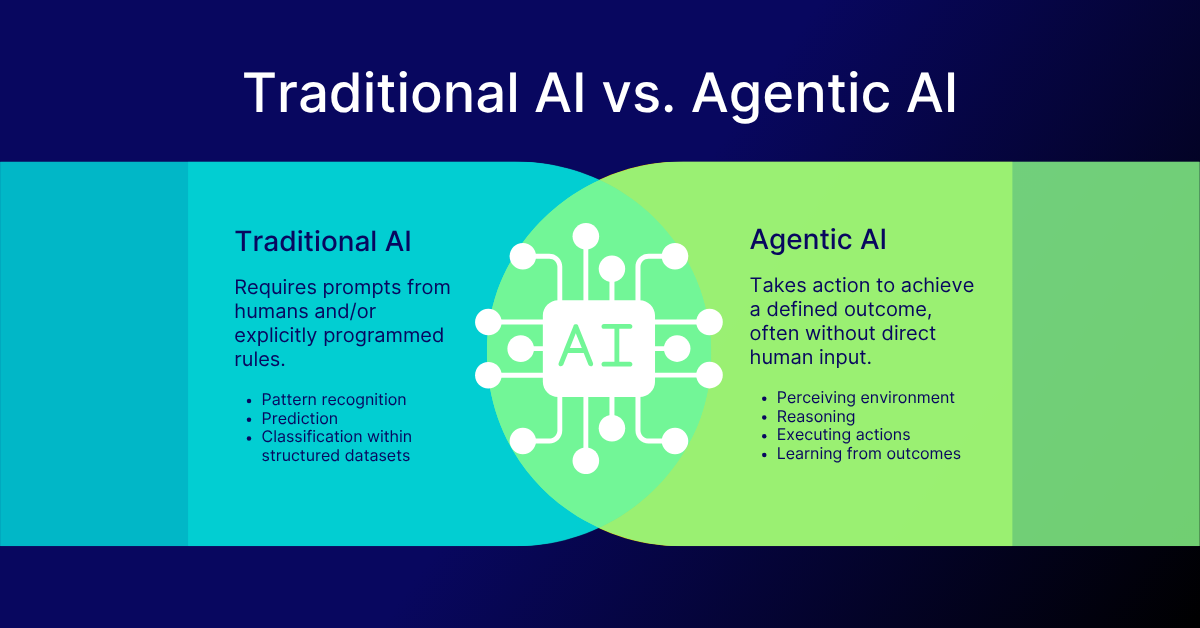
AI-driven networks redefine telecom in 2026, shifting from automation to autonomy with agentic AI predicting failures, o...
View Board
In 2026, AI agents like Aria design, code, and test software autonomously, reshaping development from manual craft to st...
View Board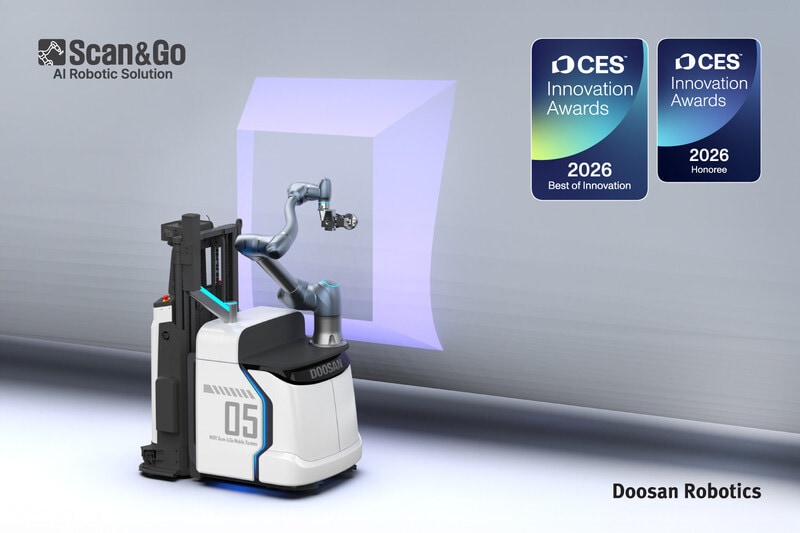
Hyundai's Atlas robot debuts at CES 2026, marking a shift from lab experiments to mass production, with 30,000 units ann...
View Board
CES 2025 spotlighted AI's physical leap—robots, not jackets—revealing a stark divide between raw compute power and weara...
View Board
Tesla's Optimus Gen 3 humanoid robot now runs at 5.2 mph, autonomously navigates uneven terrain, and performs 3,000 task...
View Board
CES 2026 unveiled stair-climbing vacuums, mmWave presence sensors, and local AI robots that act, sense, and reshape smar...
View Board
Microsoft's Copilot+ PC debuts a new computing era with dedicated NPUs delivering 40+ TOPS, enabling instant, private AI...
View Board
Depthfirst's $40M Series A fuels AI-native defense against autonomous AI threats, reshaping enterprise security with con...
View Board
Linh Tran’s radical chip design slashes AI power use by 67%, challenging NVIDIA’s dominance as data centers face a therm...
View Board
AI's explosive growth forces a reckoning with data center energy use, as new facilities demand more power than 100,000 h...
View Board
Data centers morph into AI factories as Microsoft's $3B Wisconsin campus signals a $3T infrastructure wave reshaping gri...
View Board
ul researchers unveil paper-thin OLED with 2,000 nits brightness, 30% less power use via quantum dot breakthrough, targe...
View Board
MIT’s 2026 breakthroughs reveal a world reshaped by AI hearts, gene-edited embryos, and nuclear-powered data centers, wh...
View Board
AI-driven digital twins simulate energy grids & cities, predicting disruptions & optimizing renewables—Belgium’s grid sl...
View Board
The EU AI Act became law on August 1, 2024, banning high-risk AI like biometric surveillance, while the U.S. dismantled ...
View Board
Samsung and Apple clash in 2026 with wide foldable phones, turning screens into canvases and creases into cultural battl...
View Board
Comments