



Explore Any Narratives
Discover and contribute to detailed historical accounts and cultural stories. Share your knowledge and engage with enthusiasts worldwide.
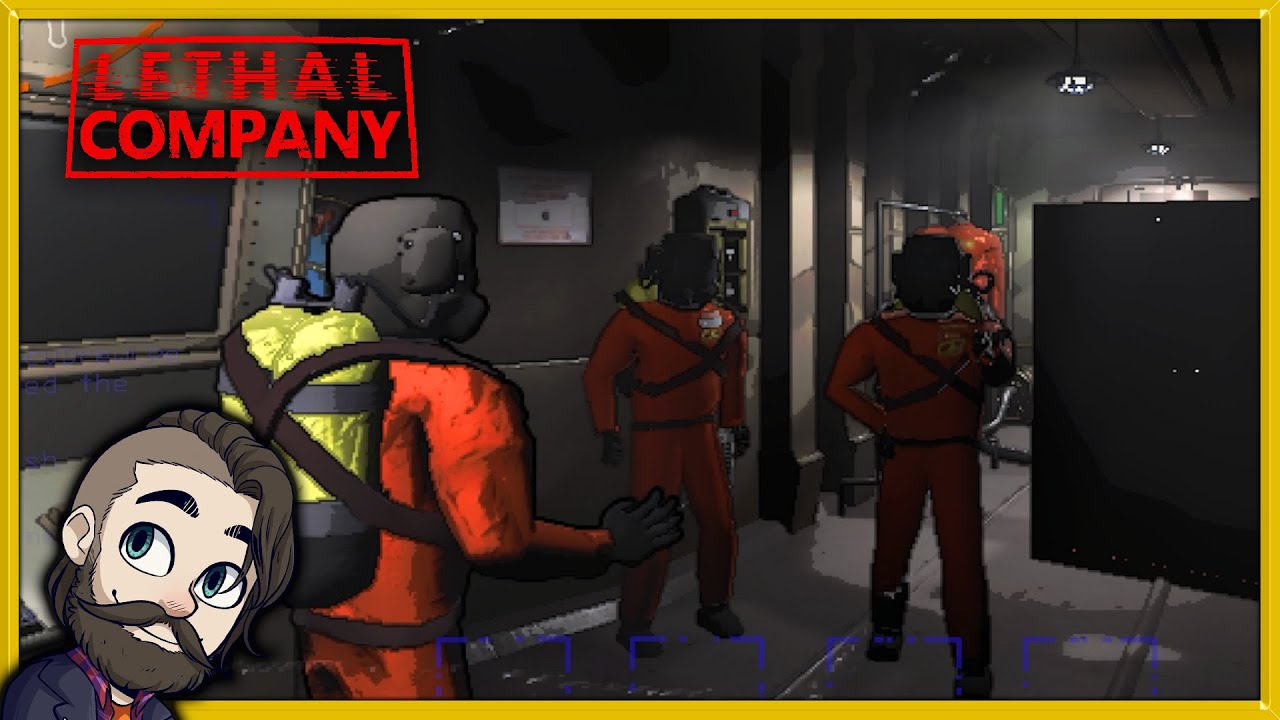
The audio crackles over a cheap radio. One player is screaming, lost in a maze of industrial piping. Another is frantically dragging a power generator toward the ship’s airlock. A third is dead, his body claimed by something in the dark. The fourth is calmly sorting scrap metal on the ship’s terminal, calculating if they’ve met the quota. It’s October 23, 2023. A solo developer named Zeekerss releases Lethal Company on Steam. Within weeks, it isn't just another co-op horror game. It is a phenomenon. Tens of thousands of players are simultaneously learning a brutal lesson: in deep space, your coworkers are both your greatest asset and your most likely cause of death.
This isn't a story about a blockbuster studio production. It’s a case study in a perfect market fit. Lethal Company distilled a potent, repeatable formula of fear, greed, and emergent chaos that captured a massive audience and has refused to let go. By early 2026, long after its explosive launch, dedicated players and content creators are still dissecting its mechanics, running solo challenge quotas, and modding it for larger crews. The game’s creator, financially secure from its success, has moved on to experimental projects. Yet the game itself endures. Why? The answer lies in a deceptively simple loop that weaponizes teamwork against itself, creating a business model of horror that prints unforgettable stories.
Forget heroic narratives. Lethal Company frames the player not as a savior, but as an indebted contractor. You work for "The Company," a faceless entity that demands a specific monetary quota of scrap from abandoned, monster-infested moons. Fail to meet it, and you are jettisoned into the void. This isn't atmospheric flavor. It is the game's central, driving mechanic. Every decision is a cold calculation of risk versus reward, pressurized by a ticking clock and the desperate voices of your teammates.
The gameplay is dungeon-crawling stripped to its raw essentials. Your four-person crew lands on a procedurally generated moon. You must venture into industrial complexes or vast mansions, scavenge for loot, and haul it back to the ship before time runs out or something finds you. The genius is in the interdependence. One player must typically man the ship, monitoring security cameras, operating doors, and guiding those inside via radio. Their competence—or lack thereof—directly dictates the survival of the ground team.
According to an analysis by Silverarm Press, the game brilliantly approximates the feel of an OSR (Old School Revival) tabletop RPG like Mothership. "The corporate framing ('I don’t care what you saw in there, get back in—we’ve got to make quota!') is a constant geas forcing greed vs. fear decisions," the piece notes, highlighting how the game mechanizes desperation.
You learn by dying. Creature behaviors, from the luring song of the Bracken to the sudden pounce of a Thumper, become gruesome lessons. Knowledge is procedural memory, earned through failure. This creates a compelling, replayable knowledge curve. Veterans can identify threats by sound alone, while newcomers provide fresh, hilarious panic. The tension isn't just about monsters. It's about whether to risk a second trip into a facility for a large, valuable engine, knowing your flashlight is dying and something is breathing in the adjacent vent. It’s about whether to leave a fallen comrade's body—and their share of the loot—behind to save yourself and the quota.
The business narrative here is as compelling as the gameplay. Zeekerss, the solo developer, crafted this experience alone. The launch trajectory was vertical. The game tapped directly into the same nerve that made Phasmophobia a hit: the potent cocktail of genuine scares amplified by friend-induced chaos. But Lethal Company added a sharper, more punitive economic layer. The result was an instant megaton hit on Steam.
"Set for life after a megaton Steam hit, Lethal Company creator gets back to what really matters: releasing weird retro horror games," reported GamesRadar+ in late 2024. The financial success was so absolute it allowed Zeekerss to pivot entirely, creating free, experimental titles like the text-and-audio adventure Welcome to the Dark Place.
This shift is critical to understanding the game's 2026 landscape. With the developer moving on, the community has taken stewardship. Official updates have ceased, but player engagement has evolved, not diminished. The game is now a platform. Mods like "More Company" expand the player cap, turning four-player chaos into eight-player bedlam. Communities dissect version-specific metas, debating the most efficient loot routes on moons like Artifice or the precise timing of "cruiser jumps." The game is frozen in time, yet its players continue to find new depth.
By January 2026, a YouTuber can post a challenge run titled "Solo High Quota in the Old Version" and attract significant viewership. Streamers ask, "Is it still scary?" and find their answer in the screams of a new player encountering a Nutcracker for the first time. The game's longevity defies conventional industry wisdom. Without seasonal content, battle passes, or developer-driven roadmaps, Lethal Company sustains itself on the pure, unpredictable product of human interaction under duress.
The magic is emergent. It’s the story of the crewmate who, in a panic, locks everyone outside the ship with a monster. It’s the perfectly timed door close by the ship operator that saves a life. It’s the betrayal of someone stealing the last slot on the ship and leaving you to die. These are not scripted moments. They are the direct result of systems—communication, inventory management, movement, and AI behavior—colliding with human psychology. The game provides a brutally simple framework; the players author a million unique tragedies and narrow victories within it.
Accessibility fuels this fire. The low-poly, retro aesthetic is not a limitation but a strength. It lowers barriers to entry, focuses attention on gameplay and audio cues, and runs on modest hardware. The learning curve is social, not mechanical. You learn by playing with others, by listening, by making catastrophic mistakes. This creates a powerful onboarding cycle where veterans shepherd rookies, only for those rookies to inevitably cause a team wipe in a new and inventive way. The cycle is self-perpetuating. It is also intensely watchable. The game’s success on streaming platforms like Twitch and YouTube acted as a perpetual marketing engine, demonstrating its unique value proposition in real time: no two sessions are ever the same.
So, as of early 2026, Lethal Company occupies a rare space. It is a completed product, a finished work. Its creator has cashed out and moved on. Yet its player base, though smaller than its peak, remains fiercely dedicated. They are the curators now, exploring every crevice of its design, modding it to their tastes, and introducing it to new players. The Company's quota remains, an eternal demand. And somewhere, on a misty moon, a team of four is about to learn that the most lethal company is often the one you keep.
Success in the digital marketplace often feels mercurial. Lethal Company proves it can be engineered. The game’s ascent from a solo developer’s project to a Steam powerhouse wasn't accidental magic; it was the result of a brutally efficient design philosophy meeting a perfectly primed audience. By dissecting its performance metrics and its core mechanical innovations, a blueprint for modern co-op virality emerges. This is a story told in 264,981 Steam reviews and a 12.2 rating on aggregator SteamPeek, numbers that scream a definitive market verdict long after its October 2023 launch.
Consider the release timing. October 23, 2023, placed it squarely in the Halloween season, a period of heightened appetite for horror. But this wasn't just another jump-scare factory. It arrived as the "friendslop" trend—that specific genre of chaotic, communication-heavy cooperative gameplay—was reaching a zenith. Lethal Company didn't just ride the wave; it refined it into something sharper, more punitive, and infinitely more replayable. It presented a space horror premise that was immediately graspable: work for a faceless corporation, collect scrap, don’t die. The simplicity of the pitch masked the depth of the torment.
"Co-op tends to remove many of a game's scariest parts, but Lethal Company shows that doesn't have to be the case. In fact, many of the scariest moments come from playing co-op." — GameSpot, from their 2025 list of best horror games where they awarded it a scare factor of 8/10.
This observation cuts to the heart of Zeekerss's genius. Traditional horror isolates the player. Lethal Company weaponizes the group. Fear becomes a social contagion, spread through distorted radio chatter, sudden screams cut short, and the shared, panicked realization that someone has just locked the wrong door. The terror is ambient, born from environmental sounds and creature behaviors, but its potency is multiplied through the voice channel. Your friend’s panic attack becomes your own. The game’s much-lauded scare factor isn't just about monster design; it's about orchestrating human vulnerability.
The raw data tells a story of staggering reach. Those 264,981 reviews on Steam, coupled with a SteamPeek rating of 12.2, position it as a category leader. For comparison, SteamPeek ranked the similarly themed R.E.P.O. at 11.3. This isn't merely popularity; it's dominance. The game achieved a peak of 6,865 concurrent players according to the same metrics, a figure that, while not capturing its absolute zenith at launch, indicates a sustained, dedicated community well into 2024 and beyond. These aren't the numbers of a flash-in-the-pan viral moment. They are the metrics of a game that has secured a permanent niche.
Where is the revenue data, the exact sales figures? Zeekerss’s own career trajectory provides the most eloquent answer. As reported by GamesRadar+, the developer was "set for life" financially, enabling a complete pivot to passion projects like the free game Welcome to the Dark Place. The commercial success was so total it granted absolute creative freedom. In an industry obsessed with live-service hooks and endless content drips, Lethal Company stands as a stark counterpoint: a complete, finite experience that generated enough revenue to permanently alter its creator’s life. How many triple-A studios, with budgets in the hundreds of millions, can claim such a clean, definitive return on investment?
"Up to four players descend into a hellish world to extract resources for 'The Company' to meet a revenue quota." — GameSpot, succinctly defining the core loop that drives every moment of tension.
This loop is the engine. The quota system transforms greed into a primary gameplay mechanic. Do you risk a second run into the facility for that high-value apparatus? Do you leave a fallen teammate's body—and their collected loot—to the creatures? These are not narrative choices; they are economic imperatives. The game brilliantly frames capitalist drudgery as a horror premise. You are not fighting for glory or survival of the species. You are fighting to meet a quarterly target for an entity that would replace you before your corpse hits the ground. It’s a bleakly hilarious satire that players live, rather than watch.
True impact is measured by the echoes you create. By 2026, the influence of Lethal Company is palpable in the industry pipeline. Games media, when discussing upcoming titles for platforms like the rumored Switch 2, explicitly target its audience. Announcements promise experiences for "fans of Lethal Company or R.E.P.O." New games, such as Pocketpair's Vision Quench, explore similar dark fantasy extraction themes with corporate undertones. The game didn't just attract players; it defined a subgenre expectation: cooperative, punitive, procedurally generated horror with a stark economic motivator.
Yet here we must engage in necessary criticism. The game’s greatest strength—its emergence from a singular, complete vision—is also the source of its long-term limitation. With Zeekerss moving on and no major updates since 2023, the experience is static. The community, through mods and self-imposed challenges, has done heroic work extending its lifespan. But can a game built on discovery and surprise maintain its edge when every monster behavior, every moon layout, every loot spawn is cataloged on a wiki? The thrill of the unknown is a non-renewable resource. Once consumed, a horror game must transform into something else to survive—a challenge platform, a social sandbox. Lethal Company has successfully made that transition, but the cracks are visible.
Space.com, in a 2024 overview of the genre, framed the game as part of an accessible space horror trend, noting the "friendslop" wave it rode to prominence. While not a direct quote on the game, the contextual placement is telling.
The reliance on player-generated content and mods is a double-edged sword. It fosters a dedicated community, but it also cedes control. The vanilla, curated experience that created the sensation is now one of many variants. This isn't inherently bad, but it fragments the player base and dilutes the specifically tuned tension of the original design. A mod that allows for eight players might be hilarious, but it fundamentally breaks the delicate balance of communication and role assignment the game was built upon. Is the game still Lethal Company when it's modded into a chaotic party game? Or has it become something else entirely, using the original as a framework?
Furthermore, its PC-exclusive status, while understandable for a solo developer, has inevitably capped its cultural penetration. The game is a titan on Steam, but it remains absent from the living room consoles where casual, party-friendly co-op thrives. This strategic choice preserved development focus but left a massive audience segment unaddressed. One wonders if the game's legacy would be even more pronounced had it made the leap to PlayStation or Xbox, platforms where its unique social horror could have found a second wind.
Analysis from Silverarm Press argues the game's corporate framing is "a constant geas forcing greed vs. fear decisions," directly linking its mechanical tension to tabletop RPG design principles. This isn't an accident; it's sophisticated game design disguised as simple fun.
So where does this leave us in early 2026? Lethal Company is a fascinating artifact: a perfectly calibrated hit that achieved everything it set out to do and then froze in amber. Its data proves its success. Its design school influences new releases. Its community keeps its heart beating. But it is no longer a growing entity; it is a studied one. Players aren't logging in to see what's new. They're logging in to relive a specific, exquisite form of panic, or to craft new variants of it themselves. The Company's quota is eternal, but the methods for meeting it are now in the hands of the employees. Whether that represents a triumphant evolution or a graceful decline is the question every player answers for themselves each time they boot up the ship's terminal.
Beyond its Steam reviews and player counts, Lethal Company matters because it represents a viable, alternative path in an industry hurtling toward homogenization. In an era where major publishers chase live-service dragons and cinematic bloat, a solo developer created a definitive experience that was financially transformative and creatively complete. Its legacy is dualistic: it exists as a blueprint for efficient, systemic game design, and as a ghost, a perfectly preserved artifact that the industry can study but seems hesitant to fully replicate. The game proves that the most compelling horror isn't found in photorealistic gore, but in the fragile dynamics between people pushed to their utilitarian limits.
Culturally, it cemented the "friendslop" trend not as a joke, but as a serious design paradigm. It demonstrated that cooperative play could be the source of horror, not a dilution of it. This shifted the conversation. You can draw a direct line from its success to the market positioning of subsequent titles. When a major gaming outlet previews an upcoming Switch 2 title by directly invoking its name to set expectations, its influence is codified. It created a new shorthand. The game’s stark, corporate satire—the feeling of being a disposable asset—resonates in a gig-economy world, giving its horror a subversive, relatable edge that fantasy monsters lack.
"The corporate framing is a constant geas forcing greed vs. fear decisions," noted the Silverarm Press analysis, highlighting how the game's mechanical heart is a brutal reflection of capitalist anxiety. This isn't just theme; it's integrated design that makes a philosophical point through gameplay.
Historically, Lethal Company will be remembered alongside titles like Among Us and Phasmophobia as a pandemic-era adjacent phenomenon that redefined social gaming. But where those games rely heavily on social deduction or ghost-hunting rituals, Zeekerss’s creation is purer in its extraction-loop cruelty. It stripped away pretense. You are not an astronaut or a paranormal investigator. You are debtors. This bluntness is its revolutionary act. It inspired a wave of developers to see the potential in small-scale, high-tension cooperative loops, proving that audience hunger was for compelling systems, not just sprawling narratives or graphical fidelity.
For all its brilliance, a clear-eyed critique must acknowledge its inherent ceiling. The game is a masterpiece of a specific type, and its flaws are the inverse of its strengths. The most significant limitation is its static nature. Since its last official update in 2023, the game has existed in suspended animation. While the community modding scene is vibrant, it operates outside the creator's vision. The curated, terrifying balance of the vanilla experience—the specific audio cues, the carefully tuned monster AI—is often the first casualty in modded variants seeking more chaos or more players. The game can feel like a museum exhibit: profoundly impressive, but frozen in time.
This stagnation impacts replayability at its highest level. Once a crew has internalized the behavioral patterns of every entity, mastered the optimal routes on each moon, and developed flawless communication protocols, the core horror evaporates. It becomes a speedrun or a comedy sketch, which are valid evolutions but represent a departure from the initial terrifying premise. The game lacks an endgame or a procedural depth that can keep pace with a dedicated community's skill curve. Its reliance on the fear of the unknown means it has a finite shelf life for any individual player before that unknown becomes intimately known.
Furthermore, its minimalist presentation, a strength for accessibility, can also be a barrier to immersion for some. The low-poly art style and simple UI are functional, but they forever anchor the experience in a specific, retro-inspired niche. There is a starkness to its world that, after dozens of hours, can feel less like atmospheric minimalism and more like an empty stage. The moons, while procedurally arranged, are built from a limited set of assets. The repetition of textures, objects, and room layouts eventually becomes visible, breaking the illusion of exploration and reminding the player they are in a cleverly constructed game space, not a truly alien world.
Looking forward, the concrete events are not updates to Lethal Company, but ripples from its impact. The anticipated release of similar cooperative horror titles on platforms like the Switch 2 in 2026 will be the next test of its legacy. Games like the Pocketpair-published Vision Quench will demonstrate whether the formula can evolve or if it is fundamentally tied to Zeekerss's specific execution. The developer's own path is the most telling indicator. His move into experimental, non-commercial projects like Welcome to the Dark Place suggests the market's hunger for polished, systemic horror may be filled by imitators, while the original creator explores weirder, more personal frontiers.
The ship's terminal is still active. The quota still flashes. But the developer has left the cockpit, and the passengers are now pilots, engineers, and saboteurs, remaking the journey in their own image. They will meet the quota, or they will be ejected. That central, brutal truth remains unchanged. The question is no longer whether Lethal Company is a sensation, but whether its ghost—the perfect, terrifying echo of a team pushed to the brink—can haunt the industry long enough to build something new in its shadow, or if it will simply remain the one brilliant, unrepeatable run everyone remembers.
In conclusion, Lethal Company's success stems from its masterful blend of cooperative tension and emergent horror, creating unforgettable, chaotic moments for players. It proves that a simple, terrifying premise executed well can captivate a massive audience. This raises the question: what other indie gems are waiting to redefine our expectations of cooperative play?


Your personal space to curate, organize, and share knowledge with the world.
Discover and contribute to detailed historical accounts and cultural stories. Share your knowledge and engage with enthusiasts worldwide.
Connect with others who share your interests. Create and participate in themed boards about any topic you have in mind.
Contribute your knowledge and insights. Create engaging content and participate in meaningful discussions across multiple languages.
Already have an account? Sign in here

Quarantine Zone: The Last Check turns zombie survival into bureaucratic horror, forcing players to make life-or-death de...
View Board
Pathologic 3 arrives January 9, 2026, a punishing survival RPG where time-travel meets plague diagnosis in a dying city,...
View Board
Pathologic 3 arrives January 9, 2026, wielding time-travel to deepen its signature despair, forcing players to rewrite t...
View Board
Cairn redefines climbing games with physics-driven realism, forcing players to read rock faces, manage stamina, and plac...
View Board
Hypergryph abandons tower defense for a bold open-world action RPG, merging factory automation with real-time combat in ...
View Board
Mortal Kombat 11: A Deep Dive into Its Enduring Legacy The arena lights flicker, a digital roar erupts, and then, the c...
View Board
Experience Arknights: Endfield's thrilling 3D action RPG combat on PC, PS5, iOS & Android. Join the global launch with f...
View Board
Wildlight's silent launch drops Highguard, a 3v3 fantasy shooter merging wall-running, mounts and shield raids, aiming t...
View Board
MIO: Memories in Orbit launches on Game Pass Jan 20, 2026, offering a polished metroidvania with fluid combat, hand-draw...
View Board
Kejora’s January 2026 launch sidestepped Silksong, showcasing hand‑drawn Southeast Asian artistry in a narrative puzzle‑...
View Board
Brews & Bastards arrives on Xbox Game Pass Jan 6, 2026. Engage in chaotic twin-stick co-op, fight boozy demons, and recl...
View Board
Steel Century Groove launches Jan 28, 2026, blending mecha combat with rhythm RPG strategy, turning war machines into da...
View Board
Solo developer Adam Hunt crafts Streetdog BMX, a love letter to BMX culture, launching January 14, 2026, on Steam with 2...
View Board
Resident Evil Requiem blends classic survival horror with modern tech, delivering dual narratives of terror and action i...
View Board
Code Vein II redefines gothic action RPGs with time-bending combat, vast ruins, and a motorcycle-driven wasteland, but l...
View Board
BrokenLore: UNFOLLOW drags players through a decaying digital hallway where a towering figure repeats a cruel mantra, ex...
View Board
Mario Tennis Fever: Jak Mario wygrywa premierę Switcha 2 12 września 2025 roku. W studiu Nintendo Direct, w trakcie cele...
View Board
Josef Fares' Split Fiction redefines co-op storytelling with its radical two-player-only design, selling 2M copies in a ...
View Board
MIO: Memories in Orbit launches Jan 20, 2026, blending punishing Metroidvania gameplay with a haunting narrative on memo...
View Board
Claim Fallout 1 & 2 for free via Prime Gaming before Jan 26, 2026—permanent ownership of the iconic RPGs that shaped gam...
View Board
Comments