

Explore Any Narratives
Discover and contribute to detailed historical accounts and cultural stories. Share your knowledge and engage with enthusiasts worldwide.
The servers for Arknights: Endfield went live on January 22, 2026, at precisely 11:00 AM in Shanghai. At that same moment, it was 7:00 PM on January 21 in Los Angeles and 10:00 PM in New York. This global synchronization was not an accident. It was a declaration. For the first time in the franchise's history, a flagship Arknights title was not launching first on a smartphone screen. It was arriving simultaneously on PC, PlayStation 5, iOS, and Android, with every player's progress tethered to a single Gryphline Account. The mobile gacha, a genre defined by its intimate, personal, and often solitary relationship with a handheld device, had formally reported for duty on the big-screen battlegrounds of PC and console.
To understand the weight of Endfield's launch, you must rewind to a different era. The original Arknights debuted in 2019, a tower defense game wrapped in a dystopian pharmaceutical narrative that became a global mobile phenomenon. It perfected a formula: compelling strategic gameplay married to a monetization system of "pulls" for new characters, a mechanic so ubiquitous in East Asian mobile games it earned the onomatopoeic Japanese term "gacha." The game amassed over 100 million downloads, a staggering figure that created a universe with its own lore, anime, and fan culture. Yet, it remained firmly within the mobile sphere. Ports existed, but the core experience was designed for touch.
This mobile-first dominance defined a generation of live-service gaming. Games like Genshin Impact, launched in 2020, began to blur the lines, offering cross-play between mobile, PC, and console. But for the Arknights franchise, developed by Hypergryph and published by Gryphline, the leap to a native, simultaneous multi-platform release was uncharted territory. Endfield was not a port. It was a ground-up reimagining built for a multi-screen world. The announcement in 2022 signaled a strategic pivot, a bet that the franchise's dedicated fanbase—and a new wave of players—would embrace an Arknights built for a controller and a high-refresh-rate monitor.
"The pre-registration numbers told the story before the servers even booted. Over 35 million sign-ups isn't just hype; it's a quantifiable demand signal for a full-fat, 3D Arknights experience beyond the phone," states Michael Lee, an industry analyst at Niko Partners specializing in cross-platform live-service models. "Hypergryph isn't testing the waters. They're building a bridge from mobile to PC and console, and they're marching their entire army across it on day one."
Players logging into Talos-II, the new industrial planet setting of Endfield, on that January day encountered a different kind of Arknights. The signature tactical pause of the original was present, but now it governed a squad of four operators in a fully 3D, real-time combat environment. The narrative shifted from a medical response team to the industrial frontier, casting the player as the "Endministrator" managing Endfield Industries from the orbital vessel OMV Dijiang. The core loop expanded beyond combat to include sandbox exploration using ziplines and elevators, and deep facility management via the Automated Industrial Complex (AIC). This was a genre fusion—part action-RTS, part factory simulator, part open-world explorer—all wrapped in the familiar, coveted skin of character collection.
The technical specifications broadcast intent. On PC, the game offered native 120 FPS support and NVIDIA's DLSS suite for super resolution and frame generation. On PS5, it leveraged the DualSense controller's haptic feedback. These are features for enthusiasts, for players who invest in hardware. They signal an expectation that the audience will engage for extended sessions, not just during a commute. The inclusion of a full controller support scheme on PC further eroded the traditional line between console and computer gaming for this title. The interface, while retaining the menu density common to gacha games, had been reconfigured for analog sticks and button presses.
"The controller support on PC is more than a convenience; it's a philosophical statement," observes veteran game critic Clara Bennett in a launch-week analysis. "It says the experience is designed to be consumed leaned back on a couch or leaned in at a desk, with equal validity. This fundamentally changes the rhythm of engagement from the quick-session mobile model to something more immersive and sustained. They are courting the Monster Hunter and Destiny player as much as the Arknights veteran."
Cross-progression was the non-negotiable linchpin of this entire experiment. A player could farm resources on their phone during the day, then command their squad in high-fidelity combat on their PS5 in the evening, all while their pull currency and character roster remained perfectly synchronized. The account system became the central nervous system of the experience. Official guides stressed the importance of linking PSN and Gryphline Accounts correctly, warning that a misstep with an email address could lock progress. This infrastructure, invisible when working perfectly, was the most critical piece of technology in the entire launch.
Endfield's launch incentives were a calculated overture. The promise of at least 135 free pulls across various banners was a substantial war chest, a direct acknowledgment of the competitive landscape it was entering. On mobile, it competed for time and spending against established giants. On PC and PS5, it competed for commitment against subscription services and premium $70 titles. Those free pulls were a peace offering and a hook, designed to bootstrap player investment—both emotional and financial—in this new ecosystem.
The gacha mechanic itself underwent a subtle but significant contextual shift. On a phone, pulling for a new character is a private, almost tactile ritual—a quick swipe and animation burst on a personal device. On a 65-inch 4K television or an ultrawide gaming monitor, that same ritual becomes a cinematic event. The flash of light, the character reveal, the voice line—they are amplified, shared, streamed. The psychological pull of the mechanic collides with the grandeur of a home theater setup. Hypergryph seemed to understand this, designing character skills and environmental effects with a visual spectacle that benefits from the increased graphical horsepower.
This cross-platform launch did not happen in a vacuum. It arrived in the wake of Genshin Impact's unprecedented success and amid a flurry of similar expansions from other mobile-first developers. The trend was clear: the most ambitious live-service games would no longer be platform-exclusive. They would be omnipresent. Endfield, however, carried the specific burden of the Arknights legacy. It had to satisfy a fanbase steeped in the lore and gameplay of a 2D tower defense game while being compelling enough to justify its existence as a separate, premium-feeling product on major gaming platforms.
The opening weeks were a study in this tension. Players explored the rust-colored vistas of Talos-II, managing supply chains and unlocking new areas, while the community immediately began dissecting the efficiency of the new combat system and the viability of launch operators. The game was a success by the most immediate metric: servers remained stable, and player counts were robust. But the true test lay ahead, beyond the launch window honeymoon. Would the gameplay loop of industrial management and real-time squad combat retain players accustomed to more focused genres? Could the update cadence, with its first major content drop—Version 1.1—scheduled for nearly three months later on March 12, 2026, maintain momentum? The bridge was built. Now, Hypergryph had to prove people would keep traveling across it.
Revenue figures are the cold, hard metrics that either vindicate or dismantle corporate strategy. For Arknights: Endfield, the data from its first month on the market, January 22 to February 22, 2026, delivered a verdict. The game generated $46 million in mobile revenue alone. This number, reported by industry analytics firm Sensor Tower, breaks down to $28.3 million (61%) from iOS and $17.7 million (39%) from Google Play. A single day after the global launch, on January 23, revenue peaked at $4.2 million, a 70% surge from the launch day itself. This wasn't just a successful debut; it was a financial explosion that mapped directly onto the game's cross-platform gambit.
"That $46 million first-month figure is a rocket signal to the entire industry. It proves the addressable market for a high-production-value gacha game is not confined to mobile devices. It's a multi-screen audience with substantial spending power," says financial analyst David Chen of AppEconomy Insights. "The revenue spike on February 7, which jumped 107% to $2.4 million, is textbook. It shows that the core gacha engagement loop—new character banner releases—translates perfectly and profitably to the PC and console audience they've now captured."
The spike Chen references is crucial. On February 7, 2026, Hypergryph deployed the game's first post-launch weapon: the banner for the six-star nature-element support operator, Gilberta. Revenue vaulted from $1.1 million to $2.4 million in 24 hours. This pattern is familiar to mobile free-to-play economists, but its occurrence in a title also available on Epic Games Store and PlayStation 5 confirms a hypothesis. The psychological triggers of scarcity, collectibility, and meta-progression are not platform-dependent. A player admiring Gilberta's intricate 3D model and skill effects on their PS5 is just as susceptible to the pull as someone watching the animation on a phone screen. Perhaps more so, given the increased sensory investment.
The launch's global synchronization was a feat of operational planning that often goes unappreciated. Servers activating at 11:00 AM Beijing Time on January 22 meant it was still January 21 in the Americas. This wasn't a staggered regional rollout, a common tactic to manage server load. It was a single, global switch flipped. In Los Angeles, players logged in at 7:00 PM on the 21st. In New York, it was 10:00 PM. London saw a 3:00 AM start on the 22nd, while Berlin faced a 4:00 AM wake-up call.
This approach carried significant risk. A catastrophic server failure at launch would have been a global news story, damaging credibility on all fronts simultaneously. Yet, it paid off by creating a unified global event. Social media, streaming platforms, and community forums erupted at the same moment worldwide. The conversation was singular, not fragmented by time zones. For a live-service game whose lifeblood is communal hype and shared discovery, this synchronization was as important as any graphical feature.
"Managing that simultaneous global launch is like conducting an orchestra across twelve time zones. One mistimed cue and you get a cacophony of error messages and rage posts," notes veteran online services engineer Anika Sharma. "The clean launch suggests Hypergryph and Gryphline invested heavily in backend infrastructure and load testing. They understood that for a true cross-platform identity, the first experience had to be seamless everywhere, for everyone. A botched launch on PS5 would have poisoned the well for the entire multi-platform strategy."
The technical foundations enabled this. Support for 120 FPS and 4K resolution on capable hardware wasn't mere checkbox features; they were statements of parity. They announced that the PC and PS5 versions were not afterthoughts but premier experiences. The inclusion of NVIDIA DLSS technologies specifically catered to the PC enthusiast crowd, a demographic notoriously skeptical of free-to-play mechanics. This was a deliberate courtship, an attempt to bypass platform prejudice with undeniable technical polish.
Beyond the business model, Endfield's more audacious bet was gameplay synthesis. It attempted to weld three distinct genres into a coherent whole: character-driven action RPG, real-time tactical combat, and Factorio-style automation logistics. You command a squad of four operators in real-time, executing dodges, swapping characters for combos, and triggering ultimate abilities. Simultaneously, you are the manager of Endfield Industries, designing production lines with conveyors, setting up zipline networks for traversal, and optimizing resource flow in your Automated Industrial Complex. Then, as if that weren't enough, tower defense elements reappear in open-world challenges. This is either a visionary blend or a recipe for identity crisis.
The early player response revealed the friction in this fusion. The combat, while flashy, demanded less of the tactical forethought that defined the original Arknights' tower defense. The automation systems, while deep, could feel disconnected from the core adventure loop of exploring Talos-II. Was the player a frontline commander or a supply chain manager? The game insisted they were both, but the cognitive shift between these roles was not always smooth.
"The factory mechanics are fascinating, but they exist in a weird parallel universe to the main story. I found myself obsessively optimizing my power grid for two hours, completely forgetting I had a narrative mission to pursue," writes content creator and strategy game specialist "MechaScribe" in a long-form critique. "It's two very good games vying for attention inside one client. The tension isn't always productive. For players drawn to the Arknights IP for its tight, strategic combat, the conveyor belts can feel like a chore. For management sim fans, the action RPG combat might be an intrusive interruption."
This is the central creative risk of Endfield. Genshin Impact successfully fused open-world exploration with action combat and gacha. It did not ask you to also design efficient smelting arrays. Endfield's ambition is staggering, but ambition can scatter focus. The Version 1.1 update, launched on March 12, 2026 after a six-hour maintenance, added more story, a new area, and characters. It did not fundamentally rewire the game's hybrid core. The upcoming "Survival Training" event in April, promised as a tower defense-style challenge, feels like a nostalgic concession to the franchise's roots, a reminder of the simpler gameplay loop it evolved beyond.
"Hybridizing genres is the great challenge of modern game design. Endfield tries to be a 'everything game' for its community—combat, exploration, base-building, collection," argues Dr. Lena Kuroda, professor of interactive media design. "The data shows players are engaging and spending. Yet, the critical question remains: is this a cohesive experience or a collection of compelling but disjointed modules? The long-term retention will hinge on whether players see the automation as meaningfully empowering their combat progression, or as a separate mini-game they tolerate for rewards."
The automation does have its defenders. For a significant cohort, the joy of designing an elegant, self-sustaining industrial complex on the dusty plains of Talos-II is the game's unique triumph. It provides a peaceful, systemic counterpoint to the combat's chaos. This divide in player priorities highlights the game's attempt to cast a wider net. It is no longer just for tower defense strategists. It is for Factorio engineers, for action RPG enthusiasts, for collectors. Whether this expansive design can maintain a cohesive community, or if it will fragment into sub-communities playing different games within the same client, is an unresolved narrative.
Endfield’s first month proved the cross-platform model could be wildly profitable. Its first major update proved the content pipeline was turning. But the deeper experiment—whether this particular trilogy of genres could form a stable compound under the pressures of live-service demands and gacha economics—was still very much in the lab. The factory was built, the operators were deployed. Now, Hypergryph had to prove the entire complex could run without one part grinding the others to a halt.
The significance of Arknights: Endfield’s January 2026 launch extends far beyond its own servers. It represents a decisive, financially validated pivot point for an entire sector of the gaming industry. For years, the "gacha" or "mobile RPG" label carried implicit platform limitations. These were games for phones, sometimes with clumsy PC clients or delayed console ports that treated those platforms as secondary citizens. Endfield, with its day-one parity on PS5 and PC via Epic Games Store and its own launcher, obliterated that hierarchy. It demonstrated that the business model—not the platform—is the defining characteristic. The industry is now looking at a new template: the AAA-gacha, a high-fidelity, multi-platform live-service experience where the core monetization loop is the pull of a virtual lever.
"Endfield is the clearest signal yet that the distinction between 'mobile game' and 'console/PC game' is functionally dead for top-tier live-service projects," asserts Maria Flores, lead industry commentator for *The Game Developer's Chronicle*. "Hypergryph didn't port a mobile game to PC. They developed a PC and console game that also works on mobile. The psychological and financial commitment they ask for is the same across all devices. This recalibrates player expectations and competitor strategies overnight. The next major title from miHoYo or Kuro Games will now be judged against this standard of simultaneous, full-featured multiplatform release."
The cultural impact is subtler but equally profound. The Arknights universe, once primarily accessed through a smartphone, now has a sprawling, explorable 3D world on the same hardware that runs *Elden Ring* or *Final Fantasy*. This elevates the franchise’s narrative and world-building from a thing read in menus and visual novels to a thing physically traversed. The lore of Terra and now Talos-II gains spatial reality. This shift deepens fan investment and expands creative possibilities for transmedia storytelling. The orchestral themes and the original song by OneRepublic, "Give Me Something (For Arknights Endfield)," are no longer just accompaniment for a mobile session; they are the score for an epic, multi-screen saga.
For all its success, Endfield is not a flawless artifact. The criticism it faces is the direct consequence of its own ambitious synthesis. The most persistent complaint from a segment of players is the feeling of being pulled in three directions. The game demands engagement with its action combat, its factory management, and its open-world exploration to progress efficiently. This can generate a pervasive sense of grind, where no single activity feels wholly satisfying because another system always requires attention. The "Administrative" part of the Endministrator title can start to feel like a second, unpaid job.
The monetization, while generous with its initial 135 free pulls, operates within the established and often-criticized gacha framework. The introduction of the six-star Gilberta banner and its attendant revenue spike is a classic case study. It proves the model works, but it also reinforces the power of psychological triggers designed to encourage spending. The game’s beautiful 3D models and elaborate combat animations for premium characters create a powerful desire that the free currency drip-feed cannot always satisfy. This tension—between a genuinely engaging, content-rich game and a system engineered for recurrent spending—is Endfield’s eternal conflict. It is a conflict inherent to the genre, but one that becomes more conspicuous when played on a $500 console connected to a $1500 television.
Furthermore, the cross-platform infrastructure, while robust, creates its own minor frustrations. The PS5 version’s auto-assignment of server based on PSN region, with no manual override at launch, was a blunt instrument for players with friends in different territories. The account linking process, though well-documented, remained a potential point of failure that could lock a player out of their progress. These are the friction points of a new paradigm, the small sacrifices demanded at the altar of universal sync.
The immediate future for Endfield is already charted with specific coordinates. The events of Version 1.1, which began on March 12, 2026, roll on with the "Cleanse and Rinse" jet-drone event starting March 29 and the tower defense callback event, "Survival Training," launching April 9, 2026. These events are the first test of the post-launch content cadence. The industry will watch to see if player retention curves hold or dip between the major narrative update of Version 1.1 and the presumed arrival of Version 1.2, likely in late May or early June 2026.
The prediction based on the first month’s data and the established patterns of live-service gaming is clear. Endfield will settle into a rhythm of major updates every 10-12 weeks, punctuated by limited-time events and new character banners every 3-4 weeks. Its success guarantees increased investment; expect more explorable regions, deeper automation systems, and increasingly elaborate character kits designed to showcase the power of the platforms it now calls home. The question is no longer if the game will survive, but how high its ceiling will be. Can it carve out a permanent space in the weekly rotation of a PC or console player, alongside the monolithic shooters and annualized sports titles?
On January 22, 2026, at 11:00 AM in Shanghai and 10:00 PM in New York, players on five different platforms logged into the same world, their progress forever intertwined. That single moment rendered an old industry boundary obsolete. The gacha had left the pocket and arrived in the living room, not as a guest, but as a permanent resident. The factory on Talos-II is now forever online, its lights visible from every screen.
In conclusion, Arknights: Endfield's synchronized cross-platform launch marks a strategic evolution for the franchise beyond its mobile origins. This move signifies a bold bet on a unified, multi-platform future for gacha gaming. Will this gambit redefine player expectations and set a new industry standard?


Your personal space to curate, organize, and share knowledge with the world.
Discover and contribute to detailed historical accounts and cultural stories. Share your knowledge and engage with enthusiasts worldwide.
Connect with others who share your interests. Create and participate in themed boards about any topic you have in mind.
Contribute your knowledge and insights. Create engaging content and participate in meaningful discussions across multiple languages.
Already have an account? Sign in here
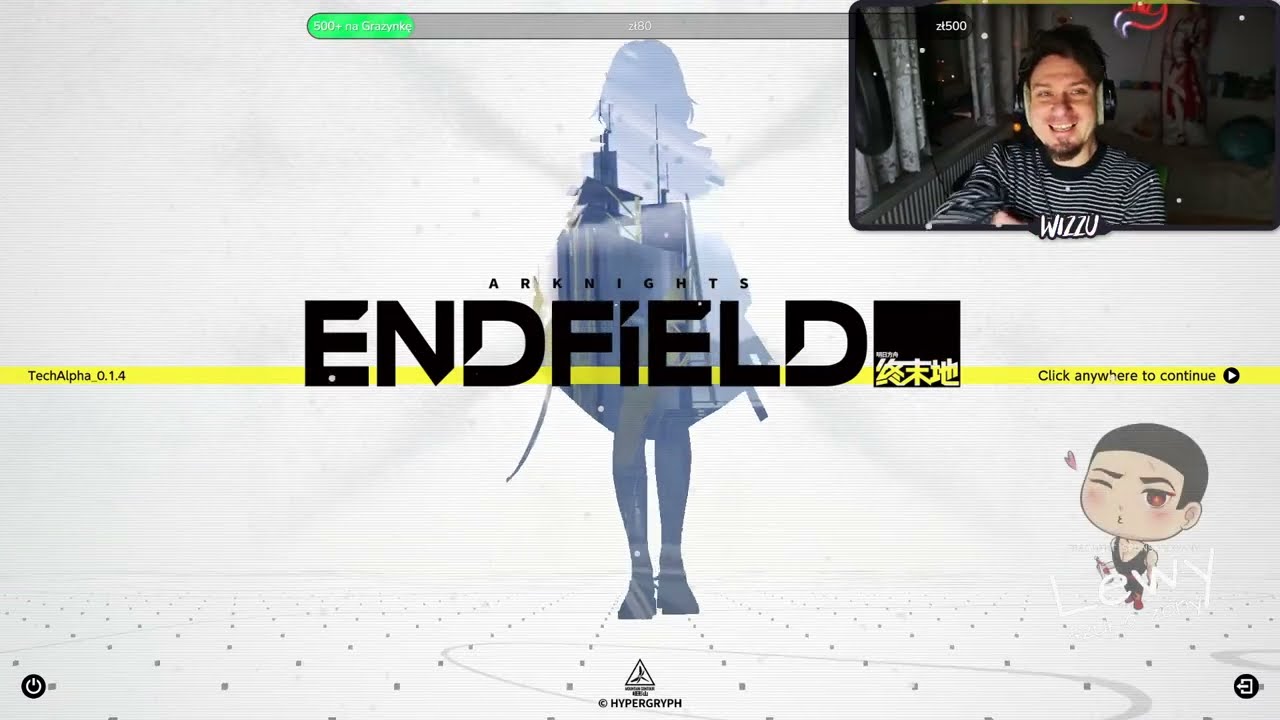
Hypergryph abandons tower defense for a bold open-world action RPG, merging factory automation with real-time combat in ...
View Board
Kejora’s January 2026 launch sidestepped Silksong, showcasing hand‑drawn Southeast Asian artistry in a narrative puzzle‑...
View Board
MIO: Memories in Orbit launches on Game Pass Jan 20, 2026, offering a polished metroidvania with fluid combat, hand-draw...
View Board
On a watchtower, a hunter flicks a Wirebug, soaring over fire, redefining vertical hunt on Switch; 14 million sales in t...
View Board
Code Vein II torna nel 2026 con un action RPG anime che unisce combattimento soulslike, viaggio nel tempo e una narrativ...
View Board
Zeekerss’s solo horror co‑op Lethal Company forces four players to scavenge moon scrap under a ticking quota, sparking f...
View Board
Code Vein II invites players on a somber pilgrimage through time, blending Soulslike combat with a narrative of sacrific...
View Board
Resident Evil Requiem blends classic survival horror with modern tech, delivering dual narratives of terror and action i...
View Board
Code Vein 2 launches Jan 30, 2026, rewriting its anime Soulslike legacy with time-bending combat, deeper RPG systems, an...
View Board
Brews & Bastards arrives on Xbox Game Pass Jan 6, 2026. Engage in chaotic twin-stick co-op, fight boozy demons, and recl...
View Board
A philosopher dissects how Kanto’s badge quests, closed map, and cable‑linked trading force identity, choice, and the et...
View Board
Quarantine Zone: The Last Check turns zombie survival into bureaucratic horror, forcing players to make life-or-death de...
View Board
Claim Fallout 1 & 2 for free via Prime Gaming before Jan 26, 2026—permanent ownership of the iconic RPGs that shaped gam...
View Board
Fifteen million copies sold since its 2018 debut show Detroit: Become Human’s moral choices still spark debate, reshapin...
View Board
Steel Century Groove launches Jan 28, 2026, blending mecha combat with rhythm RPG strategy, turning war machines into da...
View Board
Rockstar aims to launch a 4K, 60 FPS Red Dead Redemption 2 next-gen upgrade in Spring 2026 across PS5, Xbox Series X/S, ...
View Board
Pathologic 3 arrives January 9, 2026, wielding time-travel to deepen its signature despair, forcing players to rewrite t...
View Board
Wildlight's silent launch drops Highguard, a 3v3 fantasy shooter merging wall-running, mounts and shield raids, aiming t...
View Board
Code Vein II redefines gothic action RPGs with time-bending combat, vast ruins, and a motorcycle-driven wasteland, but l...
View Board
Mortal Kombat 11: A Deep Dive into Its Enduring Legacy The arena lights flicker, a digital roar erupts, and then, the c...
View Board
Comments