
Explore Any Narratives
Discover and contribute to detailed historical accounts and cultural stories. Share your knowledge and engage with enthusiasts worldwide.
On a clear Chilean night, a shutter the size of a hula hoop snaps open and shut. Forty seconds pass. It does it again. And again. Every movement captures a sliver of sky in staggering, unprecedented detail. This isn't a camera. It's a census taker for the solar system, and its first test rolls have already upended our understanding of what's out there.
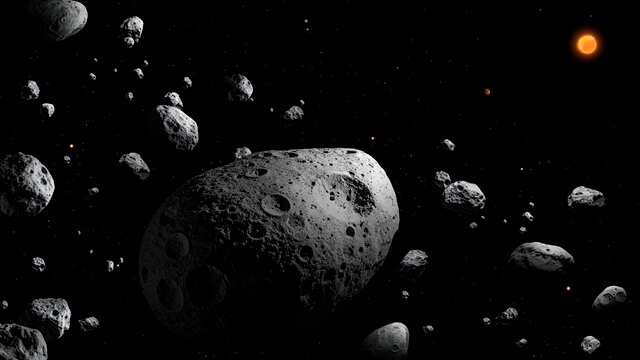
The Vera C. Rubin Observatory, a joint project of the National Science Foundation and the U.S. Department of Energy, hasn't even begun its official mission. Yet, from its perch on Cerro Pachón, its engineering runs have delivered a blunt preview of the coming decade: our map of the solar system is woefully incomplete. In a mere summer of optimized testing in 2025, the observatory's systems pinpointed over 11,000 previously unknown asteroids. That single batch, confirmed by the International Astronomical Union's Minor Planet Center, constituted the largest such haul in the past year. The total pre-survey bounty, gathered over about 1.6 years of commissioning and testing, stands at 12,700 asteroids.
This isn't just more data. It's a different kind of data altogether, heralding a seismic shift from sporadic discovery to industrialized detection. The 10-year Legacy Survey of Space and Time (LSST) will function not as a telescope, but as a relentless scanning engine. Its mandate is simple and colossal: image the entire southern sky every few nights for a decade, creating a high-definition, time-lapse movie of the universe.
The numbers from the early runs read like a manifesto. From late 2024 through the summer of 2025, what astronomers call "engineering-quality data" flowed in. The First Look survey in April-May 2025 found 1,514 asteroids. The optimization surveys that followed exploded with over 11,000 new ones. Buried within those thousands were 33 previously unknown near-Earth objects and hundreds of distant, icy bodies orbiting beyond Neptune. The observatory submitted roughly one million observations to tracking databases in just a month and a half.
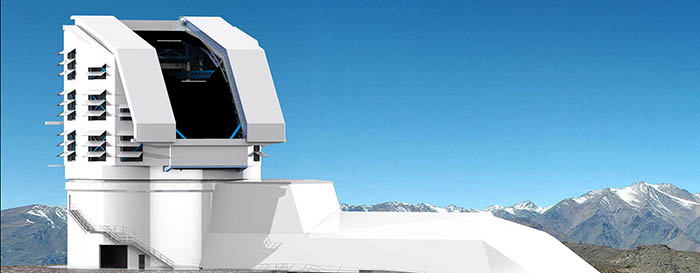
The scale is enabled by brute force optics and processing power. The Rubin Observatory's 8.4-meter mirror feeds the 3.2-gigapixel LSST Camera, the largest digital camera ever built for astronomy. Its field of view is so wide it would take over 800 high-definition television screens to display one of its images at full resolution. This apparatus sees things six times fainter than current leading surveys. It’s the difference between spotting a campfire and a matchstick from the same distance.
We are transitioning from an era of hunting for specific objects to an era of conducting a systematic, all-sky inventory. The early data demonstrates Rubin isn't just another telescope; it's a discovery assembly line. The sheer volume of moving objects it detects in a single night would take other surveys weeks.
According to Dr. Ari Heinze, a research scientist at the University of Washington's DiRAC Institute who works on the Rubin's moving object pipeline, the shift is fundamental.
But finding the specks of light is only the first step. The real magic, and the immense challenge, lies in the "pipeline"—the software that must connect the dots. A single asteroid appears as a faint streak in one image, then another, in a different part of the frame, 40 seconds later. The software, developed by teams like Heinze's and fellow researcher Jacob Kurlander, must sift through terabytes of nightly data, identify which streaks are real, and determine which streaks across multiple images belong to the same object. It must then calculate a preliminary orbit before the object is lost again.
Sometimes, the data reveals not just a new object, but a new kind of behavior. In January 2026, the first peer-reviewed scientific paper based on LSST data was published. It didn't focus on the thousands of new rocks. It focused on how 19 of them moved. The paper identified 19 super- and ultra-fast-rotating asteroids, tumbling end over end at dizzying speeds.
The champion, named 2025 MN45, is a colossus. Measuring about 710 meters long—the size of a large skyscraper laid on its side—it resides in the main asteroid belt between Mars and Jupiter. It completes a full rotation every 1.88 minutes. That is the fastest spin ever measured for an asteroid larger than 500 meters. Imagine a mountain whirling so fast its surface gravity is nearly overcome by centrifugal force.
2025 MN45 shouldn't exist, at least according to our standard models. An object that large, spinning that fast, should fly apart. Its mere survival tells us something profound about its internal structure—it must be a monolithic, cohesive rock, not a rubble pile held together by gravity. It forces us to rewrite the book on asteroid composition and tensile strength.
This analysis comes from a planetary scientist specializing in asteroid dynamics, who notes that such extreme rotators were virtually unknown before Rubin's unique cadence began catching them.
This is the hidden promise of the LSST. Beyond the raw count of discoveries, its relentless 40-second cadence acts as a strobe light on the dynamics of the solar system. It catches the subtle flickers and rapid spins that slower, more targeted surveys miss. The survey will find asteroids, yes. But more importantly, it will classify them, characterize them, and reveal the physics of their existence.
The pre-survey data is a proof of concept. The 12,700 asteroids are a down payment. When the official decade-long scan begins, the firehose will be turned on full blast. The observatory's systems are being tuned not just to handle the expected deluge, but to anticipate the unexpected patterns within it. The solar system, it turns out, is far more crowded, dynamic, and strange than we thought. And for the next ten years, a giant eye in Chile will be blinking, methodically, every 40 seconds, refusing to look away.
On August 5, 2025, the International Astronomical Union’s Minor Planet Center issued a circular, MPEC 2025-P62, that quietly signaled a revolution. It confirmed 11,007 new asteroid candidates detected by the Rubin Observatory during its June-July commissioning run. This wasn't a trickle of new data. It was a flash flood, a single batch that dwarfed the annual output of many dedicated surveys. The official start of the Legacy Survey of Space and Time was still over a year away, but the message was already clear: the old ways of mapping the solar system were obsolete.
"These 11,000 asteroids from just a few weeks of testing show that our census of the solar system is dramatically incomplete—Rubin will rewrite the map over the next decade." — Željko Ivezić, Rubin Director
The technical milestones that followed were swift and decisive. First light was achieved on March 15, 2026, with images capturing transient events across the cosmos. More crucially, the National Science Foundation had already approved full operations funding on February 20, 2026—$150 million annually through 2035—locking in the observatory’s future and accelerating the LSST start to the fourth quarter of 2026. By March 28, 2026, another data release added 2,847 confirmed new asteroids from early science verification. The machine was not just warming up; it was hitting its stride, processing 15 terabytes of data each night during its initial runs and using AI to reject 99.9% of false positives from cosmic rays and satellite streaks.
The most immediate and tangible impact of this deluge is on planetary defense. Before Rubin, our knowledge of near-Earth objects (NEOs) was a patchwork quilt full of holes. Current surveys had detected roughly 40% of NEOs larger than 140 meters, the size threshold for regional devastation. Rubin’s sensitivity and cadence are projected to find 80% of these objects. Of the 11,007 asteroids in that first major batch, 1,200 were NEO candidates, with 8% flagged as potentially hazardous.
"Rubin will find 10 times more asteroids than all previous surveys combined, including potentially hazardous ones we’ve missed." — Lindley Johnson, NASA Planetary Defense Officer
This is not an incremental improvement. It is the difference between guarding a city with a few security cameras and blanketing it with a live, ultra-high-definition satellite feed. The observatory’s expected yield—some 27,000 new NEOs over its decade of operations—will transform planetary defense from a reactive endeavor into a statistical science. We will move from wondering what might hit us to modeling, with high confidence, what won’t. But this capability introduces an immediate ethical tension. The "notification dilemma"—whether to publicly announce a newly discovered object with a non-zero impact probability decades in the future—moves from theoretical debate to daily operational policy. The sheer volume of discoveries will force a new protocol.
Project the numbers out. From a pre-Rubin catalog of about 1.2 million known asteroids, the LSST is expected to add 5 to 10 million new objects. The breakdown, according to projections updated in a 2025 NSF review, suggests about 60% will be Main Belt asteroids, with 30% being near-Earth objects. It will detect roughly 90% of NEOs brighter than an absolute magnitude of 22. The data volume alone is mind-numbing: 60 petabytes over 10 years, all publicly accessible via the Rubin Science Platform.
This open-data policy is democratizing in principle, but it risks creating a new hierarchy. Large, well-funded teams with sophisticated AI and cloud computing resources will be able to mine this dataset in ways smaller university departments cannot. The "data deluge" isn't a metaphor; it's an operational reality that could centralize discovery and analysis within a few powerful institutions, a point of quiet contention raised at the IAU General Assembly in August 2025.
Then there is the most visible threat to Rubin’s pristine data: the ever-growing constellation of commercial satellites. As of early 2026, streaks from satellites like SpaceX’s Starlink were contaminating 20-30% of Rubin’s test images. Each streak is a gash across the data, obliterating faint asteroids and distant galaxies in its path. The astronomical community’s frustration has moved from concern to outright alarm.
"Starlink streaks could blind Rubin to real threats; we need international satellite regs now." —Anthony Tyson, LSST Camera Principal Investigator
Software filters can mask the worst of the damage, but they are a digital tourniquet, not a cure. Every pixel lost to a satellite trail is a potential discovery erased. The conflict pits a billion-dollar, decades-in-the-making public scientific facility against the commercial interests of the new space economy. The mitigation is a frantic, ongoing software war, a race to patch the holes in the net faster than new satellites tear them.
Focusing solely on the numbers, however, misses Rubin’s deeper scientific revolution. Finding millions of asteroids is one thing. Understanding them as a population is another. Rubin’s true power lies in its repeated, systematic visits—roughly 1,000 visits per patch of sky over the decade. This creates a dynamic movie of the solar system, allowing scientists to trace not just orbits, but changes in brightness that reveal an asteroid’s shape, rotation, and surface composition.
"Rubin will transform asteroid science from discovery to population studies, revealing formation history." — Tommy Grav, LSST Solar System Science Lead
Take the fast-spinning asteroids like 2025 MN45. Before Rubin’s rapid cadence, these extreme rotators were nearly invisible. Now, they are detectable, and their existence challenges fundamental models of asteroid structure and cohesion. Rubin will find thousands more, allowing statisticians to finally answer questions about the distribution of rubble-pile versus monolithic asteroids, the effects of solar radiation on spin rates, and the collisional history of the belt. This is the shift: from stamp-collecting to ecology.
But is the astronomical community ready for this shift? The optimistic view, championed by project leads, envisions a golden age of solar system science. A more cautious perspective acknowledges the brutal logistics. The pipeline that processed 15 terabytes a night during commissioning must handle the full firehose at operations. The AI classifiers must evolve in real-time to recognize new classes of objects they were never trained on. The promise of population studies hinges on the successful archiving, curation, and accessibility of a dataset of unprecedented complexity. One major software bug or calibration error could corrupt an entire season's observations.
The funding trajectory itself tells a story of escalating ambition and cost. Initial budgets around $473 million from the NSF and DOE ballooned to over $900 million due to supply chain issues and technical complexities, a point of criticism in a GAO report from November 2025. Every dollar spent on Rubin is a dollar not spent on other telescopes, a trade-off that fuels debate about the project's opportunity cost. Does the solar system census justify the price? Or has the project become too big to fail, its scientific output now expected to rationalize its escalating budget?
The project stands at a precipice. Its engineering triumphs are undeniable. Its potential is breathtaking. But it now must deliver science at the scale it has promised, while navigating a minefield of satellite interference, data management nightmares, and the immense weight of its own expectations. The pre-survey data was a stunning demo. The next decade is the live performance, and there are no second takes.
The significance of the Vera C. Rubin Observatory transcends asteroid counts and planetary defense metrics. Its true legacy lies in its function as a temporal instrument. For the first time, humanity will possess a continuous, decade-long film strip of the dynamic sky. This archive will outlive the survey itself, becoming a time capsule for future generations of scientists to interrogate with tools we cannot yet imagine. It shifts astronomy from a science of snapshots to a science of cinema, where the plot is the evolution of the universe itself. The cultural impact is subtle but profound: it redefines our relationship with the cosmos from one of static observation to one of monitoring a living, breathing, and occasionally hazardous system.
"We are not just building a telescope. We are building the primary source material for the next century of solar system science. Historians in 2120 will cite the LSST data release as the demarcation line between the era of ignorance and the era of knowledge." — Megan Schwamb, Planetary Astronomer and Rubin Science Collaboration Co-Chair
This isn't merely about finding what's there. It's about establishing a baseline against which all future change can be measured. A subtle brightening of a distant object in 2035, when compared to its 2026 state, could signal a collision or an outburst. The slow drift of an asteroid's orbit, measured with micrometric precision across thousands of observations, will reveal the subtle push of solar radiation. Rubin provides the ultimate control experiment for the solar system. Its data will settle debates about the migration of giant planets, the source of Earth's water, and the true population of objects in the icy Oort Cloud. The project’s open-data policy ensures this foundational record belongs to the world, a digital commons of the sky.
For all its grandeur, the Rubin endeavor is not immune to critique, and sober analysis requires acknowledging its vulnerabilities. The satellite contamination issue is not a minor technical hiccup; it is an existential threat to the survey's core promise of completeness. If 30% of images are compromised, the statistical purity of the population studies is corrupted. Gaps in the data create biases. An asteroid that happens to streak behind a satellite trail during a crucial orbital arc could be lost forever, its parameters miscalculated. The software filters designed to remove these streaks are themselves imperfect, sometimes erasing genuine faint objects or creating artificial artifacts. The mitigation is a constant, resource-intensive battle, a tax on the project's scientific return paid to private aerospace companies.
Furthermore, the sheer data volume presents a paradox of abundance. The promise of democratization through open access clashes with the reality of computational gatekeeping. A small university team in Latin America or Eastern Europe may have equal legal right to the 60-petabyte dataset, but without equivalent cloud computing budgets and machine learning expertise, their ability to mine it for discoveries is severely limited. This risks creating a two-tiered scientific community: the data haves and the data have-nots. The "data deluge" could ironically lead to consolidation, not diversification, of discovery.
The project's cost, now soaring past $900 million, also invites scrutiny. Critics within astronomy, often speaking anonymously, question the opportunity cost. That capital could have funded a fleet of specialized, smaller telescopes or sustained a dozen other observatories for decades. Rubin’s all-encompassing nature is its strength, but also its weakness; it is a monolithic solution in an age increasingly favoring agile, targeted missions. Its success is so imperative to the field's future that discussing its potential for partial failure has become taboo, a dangerous mindset for any scientific enterprise.
Finally, there is the psychological and practical challenge of the "notification dilemma" made acute by Rubin's prowess. The system will inevitably find asteroids with very long-term, very low-probability impact risks. The protocol for public communication of these risks remains murky. Does every one-in-a-million-chance-in-2175 object warrant a press release? The potential for public fatigue or, conversely, unnecessary alarm is a real societal hazard the project has spawned. Rubin doesn't just discover asteroids; it discovers ethical quandaries.
The forward look is etched in concrete dates and hard deadlines. First light has passed. The machinery is tuned. The official start of the 10-year Legacy Survey of Space and Time is locked for the fourth quarter of 2026. The first full-year data release, encompassing millions of alerts and hundreds of thousands of new solar system objects, is scheduled for mid-2028. By 2030, the catalog of known asteroids will have likely doubled. The project's own endpoint, around 2036, is not an end but a beginning—the moment the decade-long film is complete and ready for perpetual replay and analysis.
Specific predictions are possible. Based on the commissioning data, we can expect the first "Rubin-discovered" potentially hazardous object requiring a deflection campaign to be identified before 2030. The survey will settle the debate about the existence of "Planet Nine" or similar distant perturbers; it will either find it or conclusively rule it out. It will catalog over 5 million new Main Belt asteroids, transforming them from anonymous dots into a statistical population with understood properties, compositions, and histories.
On a clear Chilean night, the shutter will continue its metronomic dance, open and shut, every forty seconds. Each movement captures not just light, but time. The mountain on Cerro Pachón is no longer just a geological feature; it is the platen of a cosmic printing press, stamping out pages of a story that is 4.6 billion years in the telling. We have just started reading the first chapter. The atlas of our solar system, once filled with blank spaces and guesswork, is being filled in with relentless, undeniable detail. What will we do when we finally see the full map?
In conclusion, the Rubin Observatory's decade-long survey promises to dramatically expand our catalog of asteroids, fundamentally reshaping our map of the solar system. This monumental effort compels us to consider our place in the cosmos and the importance of understanding the celestial neighborhood we share.


Your personal space to curate, organize, and share knowledge with the world.
Discover and contribute to detailed historical accounts and cultural stories. Share your knowledge and engage with enthusiasts worldwide.
Connect with others who share your interests. Create and participate in themed boards about any topic you have in mind.
Contribute your knowledge and insights. Create engaging content and participate in meaningful discussions across multiple languages.
Already have an account? Sign in here

NASA and ESA race to catalog millions of near‑Earth asteroids, using infrared telescopes and AI to spot threats before t...
View Board
A newly detected interstellar comet, 3I/ATLAS, streaked past Mars in late 2025, offering humanity its first direct sampl...
View Board
Perseverance rover deciphers Mars' ancient secrets in Jezero Crater, uncovering organic carbon, minerals, and patterns h...
View Board
The world's largest space camera, weighing 3,000 kg with a 3.2-gigapixel sensor, captures 10 million galaxies in a singl...
View Board
Astronomers uncovered the Champagne Cluster on New Year's Eve 2025, revealing two galaxy clusters in a violent merger, o...
View Board
Geophysicists declare Europa's seafloor erupts with active volcanoes, fueling plumes that may carry alien life's chemica...
View Board
NASA's Habitable Worlds Observatory, set for a 2040s launch, aims to directly image Earth-sized exoplanets and detect li...
View Board
From Big Bang chaos to cosmic order—new discoveries reveal dark matter's violent origins, red-hot birth, and hidden gala...
View Board
Teleskop Webba odkrywa kosmiczną autostradę kryształów w młodym układzie EC 53, gdzie gwiazda gotuje pył i wyrzuca krysz...
View Board
X1.9 solar flare erupts, triggering severe radiation storm & G4 geomagnetic storm within 25 hours, exposing Earth's vuln...
View Board
Teleskop Webba śledzi narodziny pierwszego egzoksiężyca! Odkryj, jak rewolucjonizuje on kosmiczne polowania. Przejdź do ...
View Board
New research reveals dark matter may have been born red-hot, moving near light speed, challenging 40 years of cold dark ...
View Board
Sztuczna inteligencja rewolucjonizuje eksplorację kosmosu, od autonomicznych łazików na Marsie po zaawansowane systemy a...
View Board
Next-gen dark matter detectors like LZ and TESSERACT push sensitivity limits, probing WIMPs with quantum tech and massiv...
View Board
ALMA detected a superheated gas halo around SPT2349-56, a 12.4-billion-year-old protocluster only 1.4 billion years old,...
View Board
« Le télescope spatial Roman, successeur de Hubble, révolutionnera la cartographie cosmique avec un champ de vision de 9...
View Board
Cosmologists challenge 40-year dogma: dark matter may have been born hot, screaming at near-light speed in the universe'...
View Board
Tiangong vs. ISS: Two space stations, one fading legacy, one rising efficiency—China’s compact, automated lab challenges...
View Board
Sentinel-6B wystartował 17 listopada 2025, by z precyzją do 1 cm monitorować 90% oceanów, kontynuując 30-letni rekord po...
View Board
A typographical error—a missing overbar—doomed NASA's Mariner 1, sparking a $80 million failure that reshaped software s...
View Board
Comments