Explore Any Narratives
Discover and contribute to detailed historical accounts and cultural stories. Share your knowledge and engage with enthusiasts worldwide.
On January 29, 2026, a new breed of hunter awoke. In the hushed, digital aisles of the PlayStation Network, Xbox Store, and Steam, a revenant stirred. Code Vein II arrived not with a whisper, but with the sharp, metallic scent of blood and ozone. This was the long-awaited return to Bandai Namco Entertainment’s anime-infused dystopia, a sequel that promised not just a new chapter, but a fundamental rewriting of the rules. It promised to weaponize time itself.
The announcement, made at Summer Game Fest in June 2025, was a calculated strike. The original Code Vein, released in 2019, had carved a niche. It was the "anime Dark Souls," a description both reductive and strangely accurate, beloved for its melodramatic narrative, deep character customization, and punishing, partner-assisted combat. Its world was a static, crumbling purgatory. For the sequel, producer Keita Iizuka and his team decided to dynamite that foundation. They would keep the aesthetic, the blood codes, the thirst. Everything else was open for revision.
To understand Code Vein II, you must first understand the man tasked with evolving it. Keita Iizuka is not a bombastic auteur. His public statements are measured, technical. He speaks of systems and player experience. In a pre-release interview, he made a declaration that would define the project’s entire philosophy.
"We aimed to create a completely different experience from the first game. While retaining the core identity of Code Vein, we built a different world with an original cast. The time-manipulation mechanic was our answer to a fundamental question: how do we make the player feel truly powerful in a genre defined by vulnerability?"
This was the mandate. Not iteration, but transformation. The team retained the beautiful, haunting anime aesthetic—the flowing hair, the impossible weapons, the eyes that glowed with supernatural intent. But they poured their creative energy into three pillars: exponentially expanded customization, companions with genuine narrative agency, and boss battles that were less puzzles and more theatrical spectacles. The goal was to shift the emotional register from sheer survival to empowered intervention.
The player is no longer just a Revenant. You are a Revenant Hunter. This semantic shift is everything. Your purpose is not merely to endure the post-apocalyptic hellscape; it is to stalk through its timeline, to correct its cosmic errors. The hub area, a relic of the first game, is gone. In its place is a dynamic, explorable world that exists in two states: the ruined, hostile Present and a fragile, revealing Past. The Hunter moves between them, using temporal shifts to solve environmental puzzles, ambush enemies from eras where they don't belong, and uncover truths buried by catastrophe.
The iconic Blood Code system returns, refined. You still drain ichor from foes to fuel an arsenal of Gifts—magical abilities tied to specific classes or codes. The strategic dance of managing your blood supply mid-combat remains the core rhythmic loop. But now, it syncopates against a new beat: time manipulation. Imagine facing a towering Lost, its claws poised to strike. You freeze a localized pocket of time for a three-count, dash behind it, and release the stasis as your blade finds its spine. The tactical possibilities explode.
Weapons, now called Jails, are more than stat sticks. They are artifacts with history, their designs reflecting fragments of the world’s collapsed timeline. A greatsword might be forged from the frozen gears of a clocktower that stopped at the exact moment of the Great Collapse. A catalyst could be a shard of crystallized memory. This lore is not just flavor text; it feeds directly into the new progression systems, allowing for upgrades that alter not just damage, but the very temporal effects of your attacks.
And then there are the partners. In the first game, your companion was a welcome, if sometimes simple, ally. In Code Vein II, they are a constant, dynamic presence. They react to the shifts in time, offering commentary on a past they might remember differently. They have their own skill trees, their own narrative arcs that unfold parallel to yours. They are no longer just a combat crutch; they are your only tether to a consistent reality as you bend chronology to your will.
The ambition was staggering. Could a team known for a specific, successful formula successfully graft a high-concept chrono-warfare mechanic onto its established soulslike skeleton? Early access for Deluxe and Ultimate Edition holders, which began on January 28, 2026, provided the first answer. The community’s response was immediate and visceral, flooding social media with meticulously crafted characters from the free, pre-release Character Creator Demo. This tool, offering 64 character slots, was a masterstroke of marketing. It allowed players to invest dozens of hours into designing their ideal Hunter before the world even opened its gates. They were not just buying a game; they were casting the protagonist for their own temporal epic.
"The Character Creator was our invitation," explained a Bandai Namco community manager in a launch-day stream. "We wanted players to form an attachment to their Hunter before the first cutscene. By the time they stepped into the Past for the first time and saw their creation reflected in a rain-puddled window from a dead era, the connection was already personal. They weren't just altering history; they were inserting themselves into it."
This was the alchemy Iizuka sought. The personal, almost narcissistic investment of deep customization, fused with the god-like power of timeline manipulation. It was a recipe for either profound player agency or catastrophic design overload. As the servers went live globally on January 30, 2026, the hunt began in earnest. Players were no longer just descending into the depths. They were unspooling the very fabric of Code Vein’s apocalypse, one manipulated moment at a time. The question hanging in the air was simple: would this bold rewrite of the formula be remembered as a masterpiece, or as a fascinating, flawed experiment lost in time?
Bandai Namco Studios Inc. made a promise it knew would echo across the genre. Code Vein II, released on January 29, 2026, would not be another labyrinth of claustrophobic corridors. It would breathe. The team dynamited the closed, level-based structure of the 2019 original and built something sprawling, a landscape where the horizon was not just a painted backdrop. Reviewers immediately reached for the most obvious, and perhaps most dangerous, comparison: Elden Ring. This was the post-apocalypse rendered with a sense of scale, where exploration between the jagged ruins and spectral forests felt purposeful, driven by a player’s curiosity as much as by a linear quest marker.
The hubs of the first game are gone. In their place, players unlock small pockets of relative safety called Mistles. These function as save points and fast-travel nodes, but they also serve as narrative waypoints in a world that spans centuries. You are not just traversing geography; you are charting a course through time. The journey, as described in the game’s own promotional material, is explicitly epic in scope.
"A Tale Across Time: Embark on a journey that spans both the present and the past to prevent the destruction that looms over the world." — Official Game Description, Bandai Namco Entertainment Inc.
This expansion gave the series, in the words of one review, vital oxygen. "A Bigger World Gives the Series Room to Breathe," declared the headline from consolegamestuff.com. And it does. The oppressive, almost suffocating atmosphere of the original’s Vein is replaced with vistas that evoke a melancholy grandeur. You can see the places you will eventually desecrate with time-paradox combat. You can plan your route. The freedom is palpable, liberating. Yet, this newfound space also exposes the seams in the game’s construction.
The Elden Ring comparison becomes a double-edged sword. Where FromSoftware’s masterpiece populated its vastness with dense, handcrafted detail and shocking verticality, Code Vein II’s open zones can feel, at times, like beautifully rendered but sparsely furnished rooms. The environmental storytelling—a staple of the soulslike genre—sometimes falters, relying more on the explicit time-shift mechanic to reveal secrets than on the subtle, haunting environmental cues that define the genre’s best. It is a world built for a new mechanic first, and for atmospheric cohesion second. Is that a fair trade? For players who craved scale, absolutely. For purists who believe every crumbled wall should whisper a tragedy, the answer is less certain.
If the world is bigger, the companions are deeper. The partner system, always the series' most distinctive social mechanic, has evolved from a supportive crutch into the game’s strategic and emotional core. Your AI ally is no longer just a ghost who occasionally heals you. They are a persistent character with opinions, reactions to temporal shifts, and a new, game-changing ability: partner fusion.
This mechanic allows you to temporarily merge with your companion, creating a powered-up entity that unleashes devastating attacks before splitting back into two separate beings. It is a flashy, visually spectacular system that rewards aggressive play and tight coordination. It also fundamentally alters the difficulty calculus. The original Code Vein was challenging, but its partner could often feel like a safety net with limited AI. In the sequel, that net is woven from titanium cable. Partners actively draw enemy aggression, revive you with stunning efficiency, and through fusion, provide massive stat boosts.
This design philosophy has sparked the most intense debate among the game’s critics. Has Bandai Namco sacrificed the essential, lonely tension of the genre at the altar of accessibility and spectacle? One review from qualbert.com cut straight to the heart of the issue, labeling the experience with a phrase that would sting any soulslike developer: "More Nibble than Bite." The critique argues that the partner system, for all its clever depth, removes too much of the punishing edge, the sense of hard-won mastery. The combat loop begins to revolve around managing your partner as much as your enemy.
"It may not always match the polish of the genre’s biggest names, but the expanded partner system and build flexibility create a uniquely approachable take on the formula." — Review, consolegamestuff.com
Approachable. That is the key word, and the central tension. Code Vein II is not trying to be Dark Souls. It is trying to be Code Vein, but bigger, friendlier, and more explosive. The Drain Attacks for Ichor management encourage constant offense. The ability to swap Blood Codes on the fly—shifting from a heavy-weapon bruiser to a dual-blade assassin to a ranged magic caster—means players are encouraged to experiment wildly, not fear being locked into a single, punishing build. This is a power fantasy dressed in gothic horror trappings. The question is whether that fantasy conflicts with the grim satisfaction the genre was built upon.
Beneath the cinematic time warps and partner fusions lies the game’s true engine: a staggering, almost overwhelming build-crafting system. The Blood Code system returns as the chassis, but it is now loaded with new aftermarket parts. Each Code dictates base stats and a unique set of unlockable Gifts, but the introduction of Formae abilities and deeply customizable weapons allows for hybridization that borders on the arcane. This is where the community’s creativity ignites.
Within weeks of launch, platforms like YouTube were flooded with analysis and showcases. Content creators like SethRah dissected "darker environments" and "new vampire abilities," while build specialists demonstrated devastating combinations. The Fire & Ice Build emerged as an early favorite, a testament to the game’s encouragement of elemental synergy and stat-stacking. Players are not just finding powerful builds; they are authoring them, threading together Gifts from disparate Codes, modifying weapons with time-altering effects, and selecting Formae that complement their chosen temporal playstyle.
"Gameplay footage showcases the visual spectacle of high-end PC performance, with RTX 4090s rendering the chaotic beauty of time-manipulation effects and particle-heavy spell combos in stark detail." — Technical Analysis, Community Footage
The weapon customization, tied to the lore-rich Jails, is particularly compelling. You are not just increasing a sword’s damage; you might be infusing it with a "Staggering Past" effect that briefly ages an enemy, slowing their attacks, or a "Future Echo" enchantment that causes a delayed, secondary strike. This system directly connects the game’s central time-bending theme to the tactile feel of combat. Your loadout becomes a statement of chronological intent.
Yet, for all its depth, the system suffers from a classic RPG pitfall: opacity. The game is notoriously reluctant to provide clear numerical data on how different modifiers stack or interact. Does the "Frostbite" effect from your ice Gift scale with your weapon's magic stat or your Blood Code's base intelligence? The community is left to crowdsource testing, digging through spreadsheets and forum posts to find answers that should be more readily available in the game’s UI. This lack of transparency creates a barrier between casual experimentation and true mastery, a strange flaw in a game that otherwise encourages playful build-crafting.
The critical reception to Code Vein II has been a study in measured expectations. There are no hatchet jobs, but no unqualified raves either. The consensus, as reflected in the "Mixed" overall user reviews on Steam (63% positive from 4,121 reviews at launch) and a more recent "Mostly Positive" recent rating (74% from 404 reviews), paints a picture of a game that wins over players who meet it on its own terms, but struggles to convert skeptics.
Reviewers consistently praise its ambition. They applaud the boldness of the time-shift mechanic, the genuine improvement in companion AI, and the near-limitless cosmetic and build customization. The game is a feast for players who love to tinker, to style, to feel powerful in a beautifully bleak world. It executes on its core promise: to be a different experience from the first game.
"The shift to a more open-world structure (similar to Elden Ring) provides a fresh framework, though the execution can feel uneven when held against the genre's most refined titles." — Review, qualbert.com
But that word—polish—haunts the discourse. The criticism is rarely about broken systems, but about a certain roughness around the edges. Enemy AI in the open field can be simplistic. The narrative, while ambitious in its cross-time structure, sometimes leans too heavily on anime tropes that feel dated. The balance between the punishing soulslike foundation and the empowering new mechanics is precarious, and for some, it tips too far toward empowerment, diluting the tension.
Is this a case of a sequel being judged against the titans it evokes, rather than the game it actually is? Probably. Code Vein II is not a genre-defining masterpiece. It is a bold, sprawling, and occasionally messy evolution of a cult classic. It traded the tight, oppressive focus of its predecessor for scope and spectacle. In doing so, it gained a legion of new admirers who revel in its chaotic, personalized power fantasy. It also risked, and perhaps confirmed, the disappointment of those who wanted a sharper, more solitary blade. The game exists in that tension, a fascinating and flawed monument to the perils and payoffs of sequel ambition. It dared to manipulate time. The final judgment on whether that gamble paid off is still being written, player by player, in the fractured timelines it so confidently created.
Code Vein II will not be remembered as the game that dethroned Dark Souls. Its legacy, instead, will be that of a fascinating and necessary outlier. In an industry where sequels often mean safer iterations, Bandai Namco Studios Inc. chose a path of deliberate, systemic upheaval. The significance of this move extends beyond its mixed Steam reviews. It represents a studio using its established IP as a laboratory, testing how far a genre's boundaries can be stretched before its identity fractures. The game matters because it asked a question many developers avoid: What happens when you make a soulslike less lonely, less punishing, and more explicitly empowering?
The answer has reshaped the conversation around accessibility and player fantasy within a notoriously rigid genre. By weaponizing companionship through the fusion system and democratizing build-crafting with rapid Blood Code swaps, Code Vein II built a bridge. It connected the hardcore ethos of stamina management and boss pattern memorization to a more mainstream appetite for spectacle and creative expression. This is its cultural impact. It proved that the atmospheric core of a soulslike could survive, even thrive, when transplanted into a more forgiving, open-world host. It created a gateway.
"It carves its own identity by embracing a more accessible, partner-driven power fantasy, suggesting a viable alternate path for the genre beyond ever-increasing difficulty." — Analysis, qualbert.com
Historically, the genre has been defined by auteur-driven visions of despair and monumental challenge. Code Vein II, by contrast, feels collaborative, almost communal. Its defining moments are not just your solitary victory over a boss, but the synchronized fusion with your partner to unleash a cataclysmic attack, or the discovery of a build so perfectly tailored to your playstyle that it feels like a secret you authored. The industry impact is subtle but real: it demonstrates there is a substantial audience for games that borrow the aesthetic and mechanical depth of soulslikes but leave the masochistic gatekeeping at the door. It expanded the definition of what this kind of RPG can be.
For all its ambition, Code Vein II’s flaws are not mere polish issues; they are foundational compromises. The most persistent criticism targets its narrative soul. The time-travel premise is brilliant in theory—a chance to inject concrete cause-and-effect into a genre built on environmental lore. In execution, the story often retreats into a comfortable fog of anime melodrama, with characters delivering exposition about "lost histories" and "fates" in dramatic tones that feel disconnected from the personal, ground-level horror of surviving as a Revenant. The plot serves the mechanic, not the other way around. You alter destinies because the game needs a reason for you to shift timelines, not because you are organically driven by a compelling character's plight.
This narrative thinness is exacerbated by the partner system’s success. The AI companions are tactically brilliant but often emotionally generic. Their dialogue loops during exploration can become repetitive, and their personal arcs, while present, rarely achieve the pathos of the original game’s best companion stories. The fusion mechanic, for all its visual fireworks, can reduce your partner to a temporary stat-boosting power-up, undermining the very camaraderie the system seeks to foster. The game wants you to care about these characters, but its systems sometimes treat them as equipment.
Furthermore, the open world, while a welcome change of pace, highlights a lack of meticulous hand-crafting. The space between major landmarks and Mistles can feel underpopulated, filled with generic enemy patrols rather than bespoke environmental storytelling. The comparison to Elden Ring is inevitable and damaging because it highlights a disparity in density and intentionality. Code Vein II’s world is a stage for its mechanics, while the genre’s benchmarks create worlds that are characters in themselves. This is the core of the criticism: the game is an exceptional set of systems in search of a world and story worthy of their innovation.
The future of Code Vein is now inextricably linked to the player’s role as an editor of time. The game’s post-launch roadmap, though unconfirmed by official channels as of March 2026, will almost certainly explore this concept further. The most logical and compelling step is not just new areas, but new eras. DLC could transport the Revenant Hunter to the immediate aftermath of the Great Collapse or forward to a distant future where the consequences of their temporal meddling have fully manifested. The systems are built for it. The narrative framework demands it.
Bandai Namco Entertainment Inc. has a clear template to follow. The community’s intense engagement with the build-crafting meta, documented across YouTube and forums, points directly to what comes next. The studio will release new Blood Codes, Jails, and Formae abilities that introduce even more radical temporal manipulations—perhaps a Code focused on slowing time globally, or a Jail that traps enemies in recursive time loops. The success of the partner system guarantees new companions will be added, each with unique fusion abilities and, one hopes, more nuanced personal quests that leverage the time-travel premise for genuine emotional payoff.
Concrete predictions are perilous, but the evidence points to a major expansion announcement by the end of 2026, targeting a release in early 2027. This content will be the true test of the sequel’s legacy. Can the developers deepen the narrative to match their mechanical ambitions? Can they fill the expansive world with more deliberate, haunting stories? The foundation is poured and solid. The next step is to build something timeless upon it.
On January 29, 2026, a new breed of hunter awoke. That hunter now stands at a crossroads of their own making, not just in the game, but for the series itself. The sequel dared to manipulate the very chronology of its genre, trading claustrophobic dread for sprawling possibility. Its world remains, waiting in two states—the ruined Present and the malleable Past—for players to continue rewriting its code. The final verdict is not a score, but an ongoing action, a perpetual drain on the ichor of tradition, altering what a vampire’s saga can be.
In conclusion, Code Vein II successfully expands its anime-infused dystopia with a fundamental evolution of its gameplay and world. It delivers a visceral and deep return for hunters seeking a richer post-apocalyptic challenge. Will you answer the call and carve your legacy in this reshaped nightmare?

Your personal space to curate, organize, and share knowledge with the world.
Discover and contribute to detailed historical accounts and cultural stories. Share your knowledge and engage with enthusiasts worldwide.
Connect with others who share your interests. Create and participate in themed boards about any topic you have in mind.
Contribute your knowledge and insights. Create engaging content and participate in meaningful discussions across multiple languages.
Already have an account? Sign in here

Brews & Bastards arrives on Xbox Game Pass Jan 6, 2026. Engage in chaotic twin-stick co-op, fight boozy demons, and recl...
View Board
Microsoft's ambitious January 2026 Xbox Game Pass lineup signals a new era of curated entertainment, with over a dozen n...
View Board
Wildlight's silent launch drops Highguard, a 3v3 fantasy shooter merging wall-running, mounts and shield raids, aiming t...
View Board
Code Vein II invites players on a somber pilgrimage through time, blending Soulslike combat with a narrative of sacrific...
View Board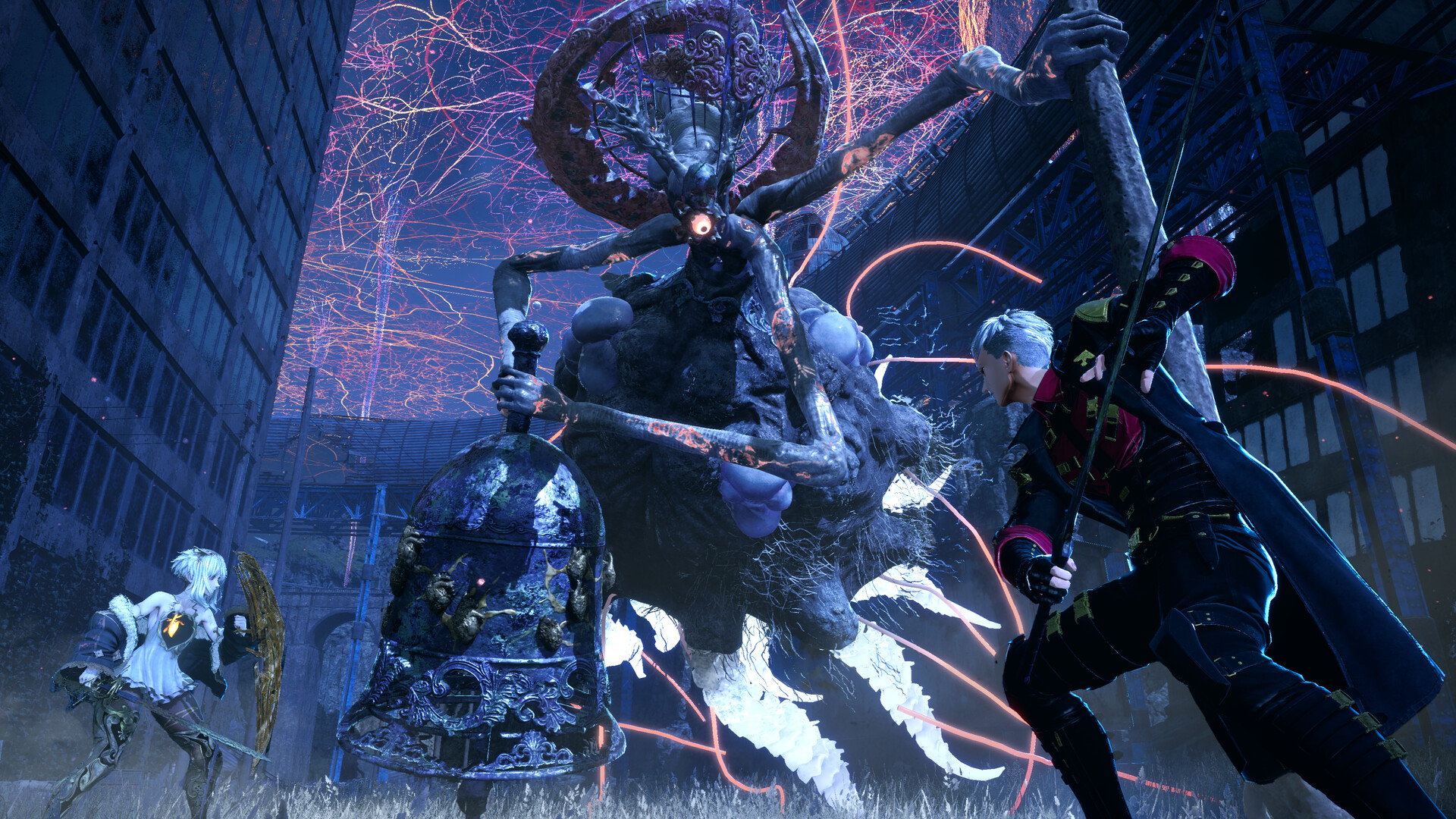
Code Vein 2 launches Jan 30, 2026, rewriting its anime Soulslike legacy with time-bending combat, deeper RPG systems, an...
View Board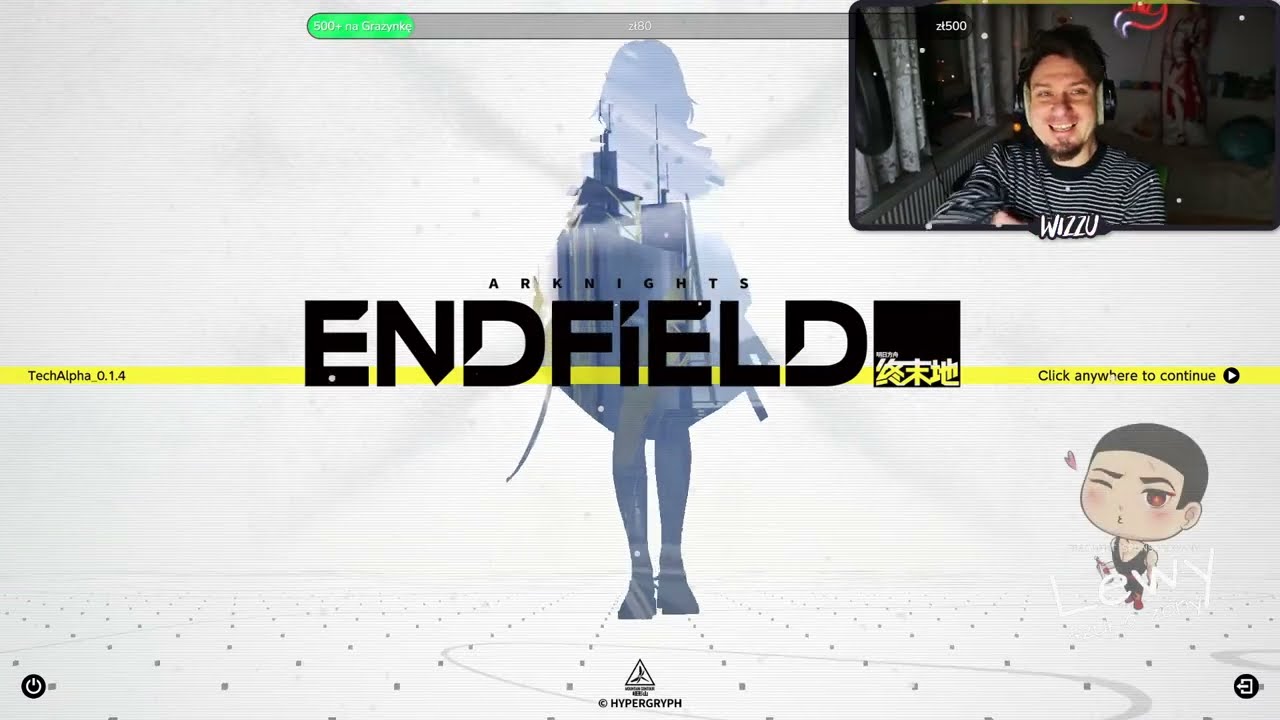
Hypergryph abandons tower defense for a bold open-world action RPG, merging factory automation with real-time combat in ...
View Board
Code Vein 2 overhauls combat, expands customization with 200+ Formae, and rebuilds level design, addressing the original...
View Board
Pathologic 3 arrives January 9, 2026, a punishing survival RPG where time-travel meets plague diagnosis in a dying city,...
View Board
GTA 6 faces its toughest rival in 2026: GTA V's $10B legacy. Can Rockstar's sequel eclipse a game that redefined longevi...
View Board
Code Vein II redefines gothic action RPGs with time-bending combat, vast ruins, and a motorcycle-driven wasteland, but l...
View Board
Mortal Kombat 11: A Deep Dive into Its Enduring Legacy The arena lights flicker, a digital roar erupts, and then, the c...
View Board
A philosopher dissects how Kanto’s badge quests, closed map, and cable‑linked trading force identity, choice, and the et...
View Board
Heartopia storms Steam with 17K players, blending cozy sim charm & mobile monetization, sparking a cultural clash over g...
View Board
BrokenLore: UNFOLLOW drags players through a decaying digital hallway where a towering figure repeats a cruel mantra, ex...
View Board
MIO: Memories in Orbit launches on Game Pass Jan 20, 2026, offering a polished metroidvania with fluid combat, hand-draw...
View Board
Claim Fallout 1 & 2 for free via Prime Gaming before Jan 26, 2026—permanent ownership of the iconic RPGs that shaped gam...
View Board
Steel Century Groove launches Jan 28, 2026, blending mecha combat with rhythm RPG strategy, turning war machines into da...
View Board
Final Fantasy XIV: A Journey Through Eorzea's Reborn Realm The city-state of Ul'dah sprawls under a pitiless sun, a dese...
View Board
Josef Fares' Split Fiction redefines co-op storytelling with its radical two-player-only design, selling 2M copies in a ...
View Board
Fifteen million copies sold since its 2018 debut show Detroit: Become Human’s moral choices still spark debate, reshapin...
View Board
Comments