

Explore Any Narratives
Discover and contribute to detailed historical accounts and cultural stories. Share your knowledge and engage with enthusiasts worldwide.
The year was 1348. Ships docked in Sicily, carrying not just silk and spices but an invisible killer. Within months, the Black Death had swept through Europe, leaving behind a trail of devastation. Yet, in the shadow of this catastrophe, an unexpected transformation began—one that would reshape the lives of women for centuries to come.
The Black Death wiped out nearly 30-60% of Europe’s population. Entire villages vanished. Fields lay fallow. The economy staggered. But in the chaos, a critical shift occurred: labor became scarce. Suddenly, the few who survived held unprecedented bargaining power.
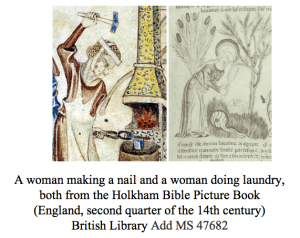
For women, this was revolutionary. Before the plague, their work—whether in fields, households, or textile production—was often undervalued or unpaid. But as men perished in droves, women stepped into roles previously denied to them. They became brewers, weavers, merchants, and even guild members. And for the first time, they demanded—and received—wages.
According to Dr. Judith Bennett, Professor of History at the University of Southern California, “The Black Death didn’t just kill people; it killed the old economic order. Women who had been confined to domestic labor suddenly found themselves in positions where their skills were not just needed but essential.”
The data backs this up. Records from 14th-century England show that women’s wages in agriculture and textile production rose by as much as 20-30% in the decades following the plague. In cities like London and Florence, women’s participation in wage labor doubled. The plague had, in a grim twist of fate, become an economic equalizer.
By the late 1300s, women were no longer just supplementary labor—they were economic players in their own right. In Ghent, women made up nearly 40% of the textile workforce, a sector that had previously been male-dominated. In Paris, female merchants began appearing in tax rolls, a sign of their growing financial independence.
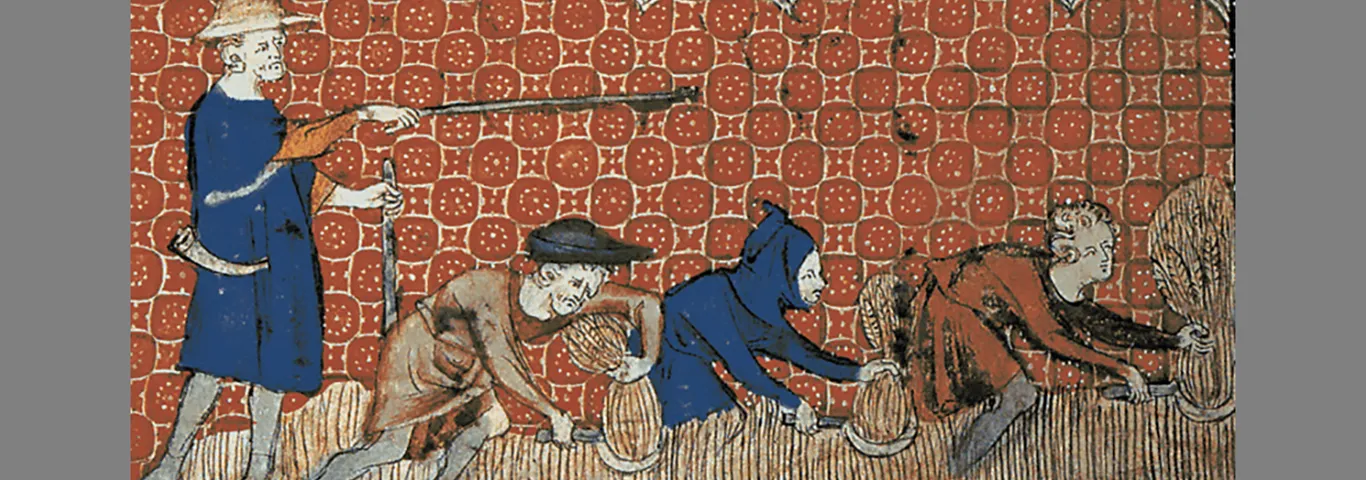
Even in rural areas, where traditional gender roles had been most entrenched, women took on new responsibilities. They managed estates, oversaw harvests, and negotiated contracts. Some even inherited land, a rarity before the plague. The Black Death had not just thinned the population—it had thinned the barriers that had kept women economically marginalized.
Dr. Sharon Farmer, a medieval historian at the University of California, Santa Barbara, notes, “The plague created a labor market where women could, for the first time, dictate terms. If a lord refused to pay a fair wage, a woman could simply walk away—because there were always other opportunities.”
Yet, this newfound economic power came with challenges. Some male-dominated guilds resisted women’s entry, fearing competition. Church leaders preached against women’s growing independence, warning of moral decay. And as populations slowly recovered in the 15th century, some of these gains began to erode. But the plague had already set a precedent: women’s labor was valuable, and they would not easily return to the shadows.
This is the first part of a three-part series. Next, we’ll explore how these economic shifts influenced women’s social and legal status—and why some historians argue the plague’s impact on gender roles was more complex than we think.
The Black Death didn’t just reshape economies—it forced a reckoning with gender roles. Women’s wages rose, their labor became indispensable, and for a brief, fleeting moment, medieval society had to confront an uncomfortable truth: women could do the work of men. And in some cases, they could do it better.
But economic power doesn’t always translate to social acceptance. The same forces that pushed women into the workforce also sparked resistance. Guilds, those bastions of male privilege, dug in their heels. In London, the Weavers’ Guild fought tooth and nail to exclude women, arguing that their inclusion would “degrade the craft.” In Florence, the Wool Guild—one of the city’s most powerful—limited women to low-paying, menial tasks, despite their proven skill in textile production.
Dr. Katherine French, a historian at the University of Michigan, cuts to the heart of the matter: “The plague didn’t erase patriarchy. It exposed its fragility. Men in power didn’t suddenly embrace equality—they scrambled to reassert control. The fact that women’s wages rose at all is a testament to how desperate the labor shortage was, not how progressive society had become.”
And yet, the cracks in the system were undeniable. In 1370s Paris, women like Jeanne de Montbaston, a bookseller, began appearing in legal records as independent business owners. In Bruges, female brewers dominated the industry, their alehouses thriving in a city where men had once held a monopoly. The plague had created a labor market where competence mattered more than gender—at least for a while.
Here’s the uncomfortable truth: many of the “gains” women made were temporary. As populations rebounded in the 15th century, so did the old hierarchies. Laws like the 1388 Statute of Cambridge in England explicitly restricted women’s ability to work independently, tying their labor rights to their marital status. Widows could inherit businesses, but unmarried women? They were pushed back into domestic roles.
Even in cities where women had thrived, the backlash was swift. In Ghent, female textile workers who had commanded higher wages in the 1350s found themselves sidelined by the 1420s. Male guilds lobbied city councils to pass ordinances barring women from certain trades. The argument? That women’s work was “disrupting the natural order.”
So was the plague’s impact on women’s rights a revolution or a blip? The answer lies somewhere in between. The Black Death didn’t dismantle patriarchy, but it did something almost as powerful: it proved that women’s labor was not just necessary but valuable. And once that idea took root, it couldn’t be entirely erased.
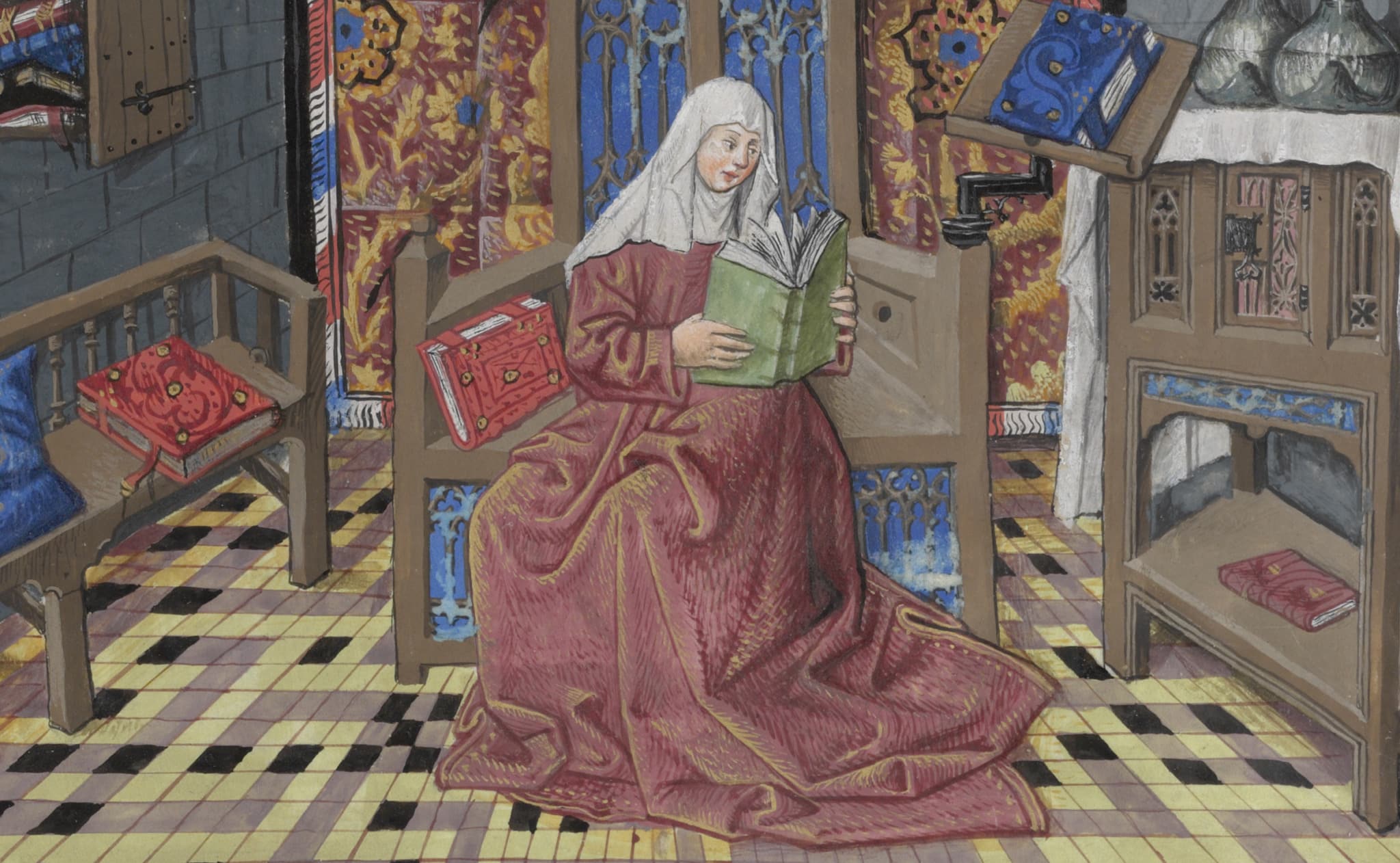
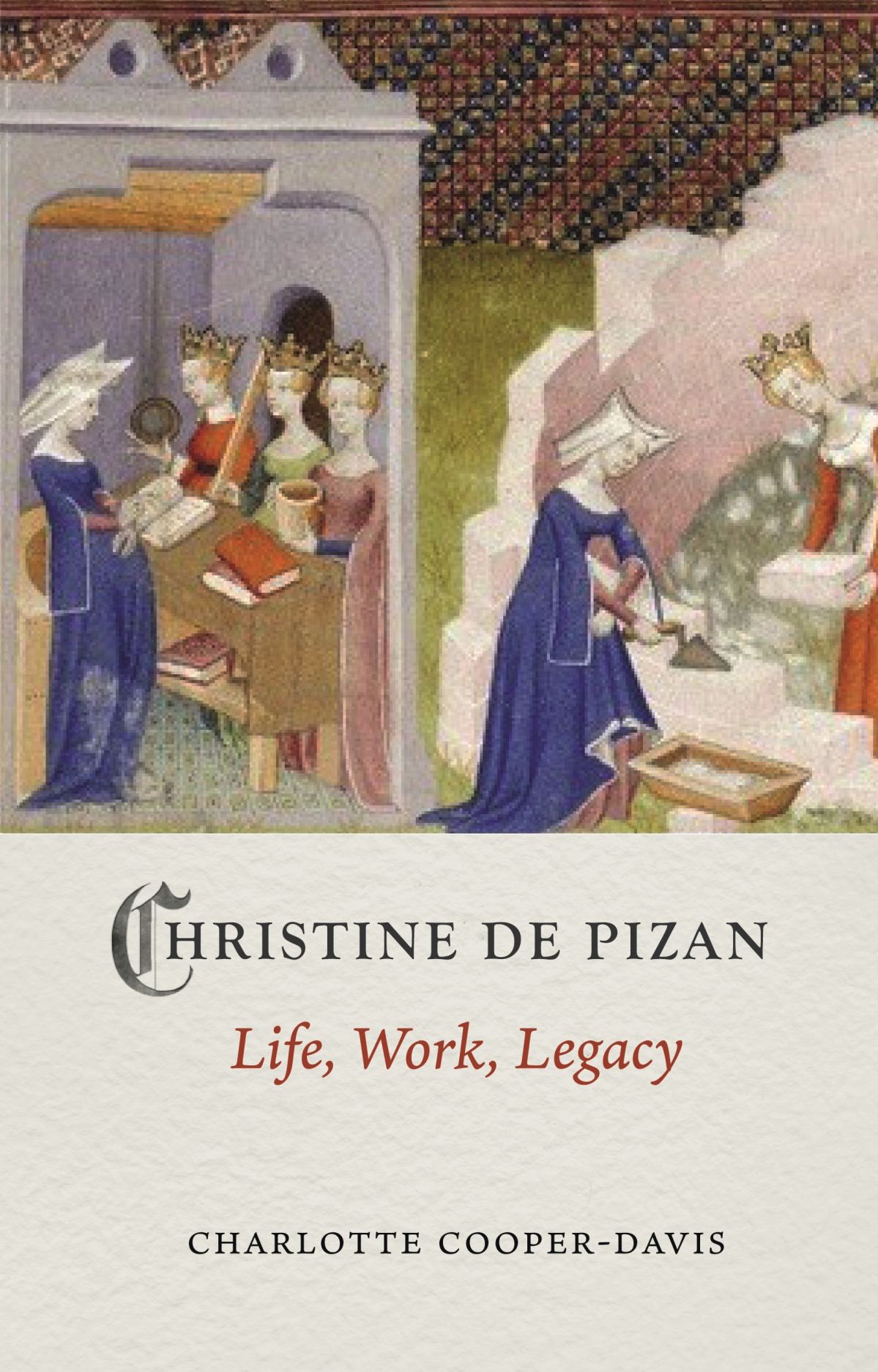
If economic records tell one story, art and literature tell another. The plague’s aftermath saw a surge in depictions of women not just as mothers or saints, but as workers, merchants, and even rebels. In Christine de Pizan’s The Book of the City of Ladies (1405), women are portrayed as the architects of civilization, a direct challenge to the male-dominated narratives of the time.
And then there’s the 1381 Peasants’ Revolt in England. While often framed as a male-led uprising, records show women played crucial roles. In Norfolk, a woman named Johanna Ferrers led a group of rebels in seizing a manor. Her motive? Not just economic justice, but a demand for recognition of women’s labor rights. The revolt failed, but the fact that women were at its forefront speaks volumes.
Dr. Marjorie Keniston McIntosh, author of Working Women in English Society, 1300-1620, argues, “The plague didn’t just change wages—it changed how women saw themselves. When you’ve run a farm, managed a workshop, or negotiated a contract, you don’t just go back to being silent. The cultural shift was slower than the economic one, but it was just as real.”
And yet, for every step forward, there was a reminder of how fragile these gains were. In 1429, Joan of Arc led armies to victory, only to be burned at the stake for defying gender norms. The message was clear: women could be useful in a crisis, but they were not to be trusted with lasting power.
Here’s where the narrative gets messy. Some historians, like Dr. Barbara Hanawalt, argue that the plague’s impact on women has been overstated. She points out that while wages rose, women’s work was still largely confined to “female” industries like textiles and brewing. The glass ceiling of medieval Europe wasn’t shattered—it was just cracked.
And then there’s the issue of marriage markets. With so many men dead, women suddenly had more leverage in choosing partners. But this also led to a rise in bride prices and dowries, turning marriage into an economic transaction. Was this liberation or just another form of commodification?
The plague’s silver lining, it seems, was more of a gilded edge—shiny, but thin. Women’s wages rose, their roles expanded, but the underlying structures of power remained intact. The real question isn’t whether the Black Death liberated women, but whether it planted the seeds for future rebellions.
Next, we’ll examine how these medieval shifts echo in modern debates about gender, labor, and crisis—and why the lessons of the Black Death are still relevant today.
The Black Death didn’t just reshape the 14th century—it sent ripples through time. The economic shifts it triggered for women weren’t isolated to medieval Europe; they laid the groundwork for debates about labor, gender, and power that still rage today. When we talk about wage gaps, workplace equality, or the value of “women’s work,” we’re echoing conversations that began in the shadow of the plague.
Consider this: the idea that labor shortages could force societal change isn’t just historical trivia. It’s a pattern. During World War II, women entered factories in unprecedented numbers, much like their medieval counterparts after the Black Death. And just as post-plague Europe saw a backlash against women’s economic gains, the 1950s saw a concerted effort to push women back into domestic roles. History doesn’t repeat itself, but it rhymes.
Dr. Eileen Power, a pioneering economic historian, wrote in Medieval Women (1925), “The Black Death was the first great economic revolution in which women played a visible part. It proved, once and for all, that women’s labor was not a supplement to the economy but a foundation of it.”
The plague’s impact on women’s wages also challenges a persistent myth: that progress is linear. The gains women made in the 14th century were real, but they were not permanent. This should give us pause. If a crisis as catastrophic as the Black Death couldn’t permanently dismantle gendered labor hierarchies, what will? The answer, perhaps, lies not in waiting for the next crisis but in learning from the last one.
Here’s the uncomfortable truth: the Black Death’s silver lining was tarnished. Women’s wages rose, but their social status did not. They gained economic power, but not political power. They were allowed to work, but not to lead. The plague created opportunities, but it didn’t create equality.
Take, for example, the case of Margery Kempe, a 15th-century English mystic and businesswoman. Kempe ran a brewery and a mill, traveled internationally, and even wrote what is considered the first autobiography in English. And yet, she was also persecuted for her outspokenness, accused of heresy, and ultimately had to defend her right to work independently. Her story is a microcosm of the plague’s paradox: women could achieve, but they could not escape scrutiny.
Even the wage gains were uneven. In rural areas, women’s earnings increased, but they were still paid less than men for the same work. In cities, women entered guilds, but often only in segregated, lower-paying roles. The plague didn’t erase gender discrimination—it just made it more visible.
And then there’s the issue of representation. The women who benefited most from the post-plague labor market were largely those who were already in urban centers or had access to trade networks. Peasant women, while gaining more autonomy in managing households, didn’t see the same economic mobility. The plague’s “liberation” was, in many ways, a privilege of class as much as gender.
So what does a 14th-century pandemic have to do with 21st-century gender dynamics? More than we might think. The Black Death proved that women’s labor is not just a supplement to the economy but a cornerstone of it. When women were given the opportunity to work—and to demand fair wages—they didn’t just survive; they thrived. This is a lesson that modern economies would do well to remember.
Consider the COVID-19 pandemic. Like the Black Death, it disrupted labor markets, forced women out of the workforce in disproportionate numbers, and exposed the fragility of gendered economic structures. And like the Black Death, it created opportunities for change. The question is whether we’ll seize them—or repeat the mistakes of the past.
There’s a concrete way to measure this. In March 2025, the World Economic Forum will release its next Global Gender Gap Report. If history is any guide, we’ll see progress in some areas and stagnation in others. The plague teaches us that crises can be catalysts, but they’re not guarantees. Real change requires more than just opportunity—it requires intent.
And what of the women who lived through the Black Death? Their stories are a reminder that progress is not a straight line. It’s a series of steps forward, stumbles backward, and occasional leaps. The plague didn’t liberate women, but it did something just as important: it proved that liberation was possible.
Seven centuries later, we’re still grappling with the same questions. How much is women’s labor worth? What happens when the economy can’t function without it? The Black Death didn’t provide all the answers, but it forced us to ask the right questions. And that, perhaps, is its most enduring legacy.
Back in 1348, as the plague ravaged Europe, no one could have predicted that its greatest impact might not be the deaths it caused but the lives it changed. Women who had been invisible became indispensable. Their work, once taken for granted, became invaluable. And for a brief, fleeting moment, the world had to acknowledge what had always been true: women’s labor is not just necessary. It is the foundation on which economies—and societies—are built.
The ships that docked in Sicily all those centuries ago carried more than just disease. They carried the seeds of a revolution. One that is still unfolding.

Your personal space to curate, organize, and share knowledge with the world.
Discover and contribute to detailed historical accounts and cultural stories. Share your knowledge and engage with enthusiasts worldwide.
Connect with others who share your interests. Create and participate in themed boards about any topic you have in mind.
Contribute your knowledge and insights. Create engaging content and participate in meaningful discussions across multiple languages.
Already have an account? Sign in here

Two centuries after his death, Thomas Jefferson’s legacy remains a battleground—visionary founder or flawed hypocrite? E...
View Board
Queen Victoria’s 63-year reign reshaped Britain, blending moral reform, industrial progress, and imperial expansion, lea...
View Board
Black Patriots were central to the Revolutionary War, with thousands serving in integrated units from Lexington to Yorkt...
View Board
Gettysburg’s 2026 Winter Lecture Series challenges Civil War memory, linking diplomacy, Reconstruction, and global stake...
View Board
Navajo women's untold WWII roles—sustaining families, managing resources, and preserving culture—challenge the Code Talk...
View Board
The Times Square Ball, a 12-foot crystal sphere, honors U.S. history with its annual descent, evolving from a 1907 marit...
View Board
On January 27, 1945, Soviet soldiers uncovered Auschwitz, liberating 7,000 skeletal survivors and exposing the Nazi regi...
View Board
As America nears the 250th anniversary of 1776, the Declaration of Independence’s legacy is being fiercely debated, resh...
View Board
Medieval Europe paid millions for narwhal tusks, believing they were unicorn horns with magical healing powers—until sci...
View Board
Medieval monks didn't pioneer wasp pest control in vineyards—historical records reveal their methods relied on herbs, su...
View Board
The 1174 Canterbury Cathedral Fire: An Architectural Phoenix Smoke, thick and acrid, choked the Kentish sky on the fift...
View Board
Fisherman mends nets on Sidon’s stone quay, beside Crusader sea castle, embodying six millennia of Phoenician trade, pur...
View Board
Ozella Williams' 1994 account of quilts as Underground Railroad signals sparked a national debate, blending oral traditi...
View Board
Archaeologists uncover Belize's first Maya king, Te K’ab Chaak, in a 1,700-year-old tomb, rewriting Caracol’s origins wi...
View Board
In 1932, desperate WWI veterans marched on Washington for promised bonuses, only to face tanks, tear gas, and fire from ...
View Board
81 years after liberation, Soviet soldiers' chilling discovery of Auschwitz reveals industrial-scale horror through surv...
View Board
Discover the truth behind Messalina, the enigmatic wife of Emperor Claudius. Explore her political power, scandalous leg...
View Board
Historic sites undergo massive restoration and reinterpretation as America gears up for its 250th anniversary, blending ...
View Board
The Declaration of Independence, a 250-year-old revolutionary manifesto, continues to spark debate, its promise of equal...
View Board
Sobekneferu, the first female pharaoh of Egypt, ruled briefly in 1760 BCE, ending the Middle Kingdom as the Nile failed ...
View Board
Comments