

Explore Any Narratives
Discover and contribute to detailed historical accounts and cultural stories. Share your knowledge and engage with enthusiasts worldwide.
Ozella McDaniel Williams died in 1998. She was a retired educator and a quilter from Charleston, South Carolina. Her name is not widely known, but the story she told to a folklorist in 1994 ignited one of the most captivating, controversial, and persistent narratives in American history. It is a story that transformed humble bedcovers into maps for freedom.
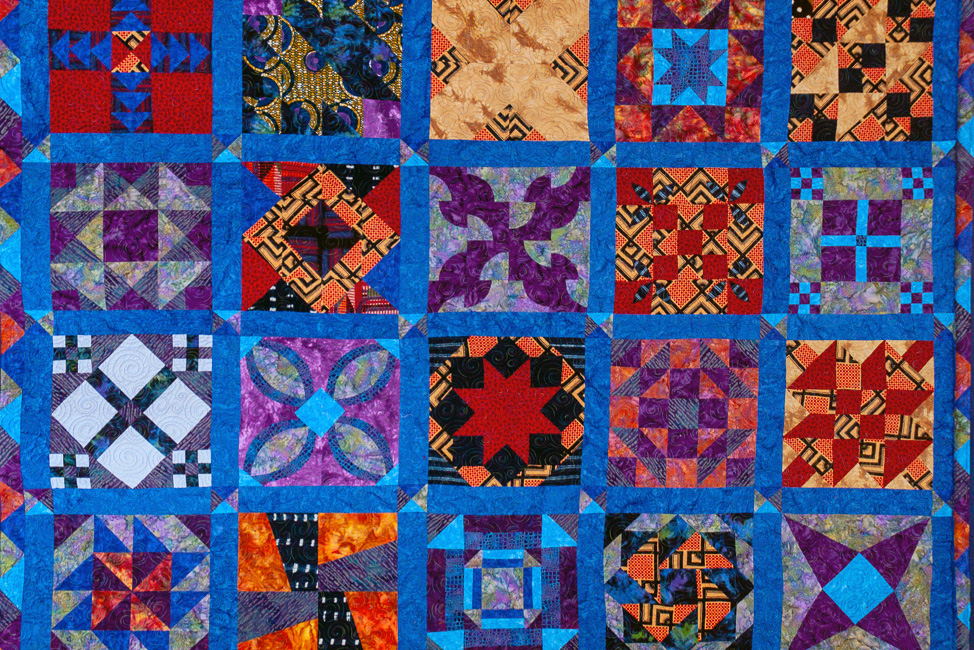
Williams described a system. A secret language, she claimed, passed down through her family. According to her account, enslaved women used specific quilt patterns, hung in a deliberate sequence on a fence or a windowsill, to communicate coded instructions for navigating the Underground Railroad. A Monkey Wrench meant to gather tools. A Wagon Wheel signaled it was time to go. A Bear's Paw advised following animal trails through the mountains. The North Star was self-explanatory.
This was not a casual recollection. It was presented as a detailed, ten-step oral cipher. Folklorist Jacqueline Tobin, who recorded Williams’s story, and historian Raymond Dobard later expanded it into the 1999 book Hidden in Plain View: A Secret Story of Quilts and the Underground Railroad. The book became a sensation. It offered a tangible, beautiful, and empowering answer to a haunting historical question: how did people, systematically denied literacy, plan complex escapes under constant surveillance? The quilt code narrative placed Black women’s intelligence, artistry, and courage at the very heart of the resistance.
“The monkey wrench turns the wagon wheel toward Canada on a bear’s paw trail to the crossroads.” This phrase, attributed to Ozella Williams by Tobin, is presented as a mnemonic for the first four code patterns.
The idea spread with viral speed through museums, elementary school curricula, historic site tours, and community quilting bees. It provided a perfect, teachable artifact. A quilt block is visual, concrete, and steeped in the warmth of grandmotherly tradition. It is far easier to display in a museum case than a whispered spiritual or a furtive glance at the night sky. The narrative did something profound: it recognized enslaved women not as passive background figures in the epic of American slavery, but as active, ingenious strategists. It validated the domestic sphere—the quilting frame, the sewing basket—as a site of profound political action.
But history is often a battleground between memory and evidence. And in the decades since Hidden in Plain View was published, a formidable challenge has arisen from the very experts one might expect to champion the tale: academic historians and textile scholars. Their consensus is stark, uniform, and definitive. There is no contemporaneous evidence that such a quilt code ever existed.
Consider the scale of the claim. The Underground Railroad was a sprawling, perilous, and clandestine network that operated for decades. It involved thousands of participants, both Black and white, and facilitated the escape of an estimated 100,000 people. Its stories were documented in slave narratives published by abolitionists, in diaries of conductors like Levi Coffin, in court records, and in postwar memoirs. These accounts are rich with detail—disguises, hidden compartments, forged papers, specific routes, and coded songs.
They do not mention quilts.
Not once. No fugitive, no conductor, no abolitionist journal from the 19th century ever describes seeing or using a quilt as a signal. This silence is, for historians, deafening. Barbara Brackman, a preeminent quilt historian and scholar, has been one of the most vocal critics. She points not only to the documentary void but to problems of anachronism. Several of the patterns cited in the code, like the Drunkard’s Path and the Bear’s Paw, do not appear in the American quilt record with any frequency until the late 19th century, decades after the Civil War ended. The timeline simply doesn’t align.
“If there was a quilt code,” Brackman has stated, “it left no mark in the historical record of the 19th century. No diaries, no letters, no abolitionist papers, no WPA slave narratives mention it. The patterns cited are often from later periods.”
The scholarly pushback is not a dismissal of Black ingenuity or the reality of coded communication. It is a strict adherence to the archival record. Songs like “Follow the Drinking Gourd” are well-attested. The use of the North Star as a guide is beyond dispute. The quilt code, however, resides in a different category. It is, in the view of most academics, a powerful piece of modern folklore. A story that emerged in the late 20th century, not the early 19th, and one that speaks more to our contemporary hunger for symbolic resistance than to documented historical practice.
So why does it endure? Why does this story, so thoroughly debunked in academic circles, continue to thrive in public memory, on museum walls, and in the hearts of countless people?
The answer lies not in fabric, but in need. The quilt code fills a vacuum. The historical record of slavery was written overwhelmingly by the oppressor. The intimate, interior world of enslaved women—their private conversations, their silent understandings, their covert acts of defiance—is largely absent from the official archive. The quilt code offers a way to visualize that hidden resistance. It provides a tangible artifact where few exist. It centers women in a story that has too often marginalized them. For many, its emotional and symbolic truth outweighs a lack of physical evidence.
This creates a fascinating and tense divide. In one realm—university history departments, peer-reviewed journals—the quilt code is a myth. In another—local historical societies, popular documentaries, art installations, and school projects—it is presented as fact, or at least as plausible tradition. The same object, a “Monkey Wrench” pattern quilt, can be labeled in one museum as a “symbol of 20th century folklore about the Underground Railroad” and in another as “a direct signal used by freedom seekers.”
The story of Ozella Williams, then, is not just a story about the past. It is a live wire into how history is made, who gets to tell it, and what we choose to believe. It is about the collision between the rigorous demands of evidence and the deep human need for narrative, for heroes, and for a past that makes sense on our own terms. Her account, whether historically verifiable or not, irrevocably changed the American cultural landscape. It forced a recognition that the tools of survival could be found in the most ordinary of places, and that the keepers of the most dangerous secrets might have been the women quietly stitching by the fire.
January 1999. The book Hidden in Plain View: A Secret Story of Quilts and the Underground Railroad arrived in a world hungry for hidden histories. Authors Jacqueline L. Tobin and Raymond G. Dobard Jr. presented a compelling oral account from Ozella McDaniel Williams, framed as a key to unlocking a clandestine communication system. The public embraced it. Historians, almost universally, did not.
The central conflict is brutal in its simplicity. The quilt code narrative is an oral tradition recorded in the 1990s about events alleged to have occurred in the 1840s and 50s. The chasm between those two dates is where historical verification either lives or dies. For scholars like Giles R. Wright, then director of the Afro-American History Program at the New Jersey Historical Commission, the verdict was swift and has never been overturned.
"There is no documented evidence that quilts were used to communicate information along the Underground Railroad." — Giles R. Wright, New Jersey Historical Commission
Wright’s critique, circulated widely in 1999 just as the book gained popularity, laid down the gauntlet. He demanded primary sources. A diary entry from a conductor mentioning a peculiar quilt on a fence. A line in a fugitive’s memoir recalling the sight of a Bear’s Paw pattern that signaled the next safe house. A warning in a slaveholder’s letter about suspicious textile displays. That evidence has never materialized. In the decades since, with thousands of period documents digitized and searchable, the silence has only grown more profound. You can find runaway ads describing stolen quilts as property. You cannot find a single reference to their use as a signaling system.
The problem of anachronism cuts even deeper. Several patterns central to the popularized ten-step code simply didn’t exist with those names, or in those precise geometric forms, during the height of the Underground Railroad. The Drunkard’s Path pattern, for instance, which the code says instructed escapees to travel in a zigzag, is a product of the late 19th-century temperance movement. Its name and popularization come from a post-war, reform-minded America, not the antebellum South. Presenting it as a recognized symbol in 1850 is like suggesting a Civil War soldier used a smartphone emoji to coordinate a charge.
Let’s interrogate the practical logistics. Imagine you are an enslaved person in, say, Kentucky, planning an escape. Your life depends on secrecy. According to the popular code, you are to watch for a series of quilts, hung outdoors in a specific sequence. This act requires monumental, coordinated suspension of disbelief. First, the quilt-maker—presumably an enslaved woman in the same community or on the same plantation—must have the freedom to choose patterns and display them prominently without raising an overseer’s eyebrow. She must then hang them in an exact order on a fence or clothesline, a highly visible and static billboard, and hope the intended viewer sees them in sequence.
Meanwhile, the fugitive must memorize an intricate, ten-symbol visual lexicon. They must correctly interpret a Monkey Wrench versus a Wagon Wheel, and understand that the former means “gather tools” and the latter “prepare to leave.” They must do this while living under a regime of brutal surveillance where any anomalous behavior sparked violent reprisal. Contrast this with the documented, agile methods of the Underground Railroad: whispered instructions during a hymn, a specific knock on a door, a lantern in a window moved from one sill to another, the guidance of a conductor like Harriet Tubman who knew the terrain intimately. The quilt code, from an operational standpoint, feels clunky, exposed, and unnecessarily complex.
So why did it catch fire? The answer lies in a perfect storm of late-20th century cultural needs. The book’s publication in 1999 came after decades of academic work recovering Black women’s history. Here was a story that centered their intellect and artistry in the freedom struggle. It provided a tangible, classroom-friendly artifact for Black History Month. It resonated with a booming interest in quilting as an art form. Hidden in Plain View went into multiple printings, garners over 3,000 ratings on platforms like Goodreads, and spawned countless children’s books and lesson plans. The narrative was simply too good, too visually rich, and too emotionally satisfying to be constrained by archival footnotes.
"The story of Ozella McDaniel Williams... is woven through many chapters, as this woman’s ‘Quilt Code’ may reflect a code used during the days of slavery." — Summary of *Hidden in Plain View*
Note the careful hedging in that description: “may reflect.” The book itself exists in a scholarly twilight, using the language of possibility and connection to African symbolism, like Kongo cosmograms. But in the public square, those qualifiers evaporated. The code became fact. Museums in the early 2000s, particularly smaller historic homes and farm sites, built exhibits around it. The ten patterns were printed on educational posters. A powerful modern folklore was born.
The debate is no longer about evidence. The scholarly consensus is settled. The fight is over meaning, memory, and utility. Is a story that empowers but isn’t strictly true still valuable? Can it be a gateway to deeper historical understanding, or does it ultimately corrupt it?
Many academic historians argue the latter with passion. They worry the quilt code myth actively harms public understanding by overshadowing the documented, and often more dangerous, realities of resistance. It turns a network built on immense personal courage, complex logistics, and interracial cooperation into a simple scavenger hunt with decorative clues. Fergus M. Bordewich, author of the definitive history Bound for Canaan, treats such stories as legend. The real work, he and others stress, was done by people facing tremendous risk, not by passively reading textiles.
"There is no credible historical evidence that quilts were used in this way." — James A. Miller, Professor of English and American Studies, George Washington University
This position is defensible, rigorous, and correct by the standards of the historical profession. But it can feel sterile, even dismissive, to communities for whom Ozella Williams’s story rings with a different kind of truth. If the official archive systematically excluded the inner lives and covert communications of enslaved women, can we rely on that same archive to definitively say what they did not do? This is the potent counter-argument from defenders of the narrative’s spirit, if not its literal factuality. They position Williams as a griot, a keeper of communal memory, transmitting a truth about ingenuity and resistance that transcends documentary proof.
The impact on public history has been a messy, necessary reckoning. By the late 2010s, major institutions like the Smithsonian began to pivot. Exhibits now more commonly frame the quilt code as a “powerful legend” or “unverified oral tradition.” The story isn’t removed; it’s contextualized. It becomes a case study in how history is made, a lesson on evaluating sources. A 2024 teacher’s workshop might use the quilt code to teach students the difference between primary and secondary sources, between corroboration and repetition. This is, arguably, a more valuable lesson than memorizing ten quilt patterns ever was.
Contemporary artists and quilters have seized on this ambiguity with brilliant results. They are not historians proving a thesis; they are cultural workers mining a powerful metaphor. They use the code patterns—the Flying Geese, the Crossroads—to speak about modern migration, surveillance, and Black geography. They create works that ask: what does it mean to be lost? What does it mean to map a path to safety in a hostile world? For them, the historical veracity is irrelevant. The symbolic power is everything.
"With the admonition to ‘write this down,’ Williams began to describe how slaves made coded quilts and used them to navigate their escape." — Jacqueline L. Tobin, *Hidden in Plain View*
This instruction, “write this down,” is the haunting heart of the matter. Ozella Williams felt a duty to pass something on. She gave the world a story that felt true. That story, in turn, exposed a raw nerve in American history: our desperate desire for artifacts of resistance, our frustration with the gaps in the record, and the eternal tension between what we can prove and what we feel in our bones. The quilt code is not a history of the 19th century. It is a profound history of the late 20th and early 21st centuries, revealing what we needed to believe about our past in order to navigate our present.
The numbers underscore its cultural footprint, if not its historical one. The Underground Railroad itself assisted an estimated 30,000 to 40,000 people to Canada. The story of the quilts that allegedly guided them has, through a single book and its countless offshoots, reached millions. Which figure ultimately carries more weight in shaping the national imagination? That’s not a question for historians. It’s a question for all of us.
The enduring power of the quilt code narrative is not about textiles. It is about historical hunger. It speaks to a profound need to see the marginalized as agents, to find order in the chaos of oppression, and to locate resistance in the artifacts of the everyday. This story matters precisely because it is contested. It forces a confrontation between academic rigor and cultural memory, between what can be proven and what is felt to be true. In a nation still wrestling with the legacies of slavery, the quilt code offers a sanitized, even beautiful, version of resistance. It is easier to teach a child about a Log Cabin quilt than about the brutality of a patroller’s whip or the terror of a bloodhound’s bark.
Its cultural impact is measurable. Walk into any American craft store and you will find pre-cut fabric packs for “Underground Railroad sampler quilts.” Schoolchildren across the country, for over two decades, have constructed paper quilt squares with coded meanings. The narrative has become embedded in the folk pedagogy of Black History Month. This widespread adoption reveals a desire for a tangible, creative connection to a past that is often represented through pain. The quilt code transforms a history of atrocity into a puzzle to be solved, a pattern to be followed. There is a deep comfort in that.
"No quilt with a documented history from before 1865 has ever been found that can be proven to have been used as a signal on the Underground Railroad." — Textile Historians' Consensus
Yet, this very comfort is the source of its most significant critique. The quilt code risks doing what good history should never do: it simplifies. It reduces a sprawling, perilous, and deeply human network—built on trust, courage, betrayal, and improvisation—into a static, color-coded diagram. It can, perhaps unintentionally, diminish the raw, terrifying reality of escape. Harriet Tubman did not follow a Bear’s Paw; she followed an intimate knowledge of the land, incredible courage, and a profound faith. The difference is not semantic; it is the difference between folklore and lived experience.
The primary weakness of the quilt code narrative is not its lack of evidence, but its potential to distort. When a museum presents the ten-pattern sequence as historical fact, it does more than get a date wrong. It actively crowds out more complex, documented truths. It directs public attention and curiosity away from the rich, evidenced history of covert communication through spirituals, like “Steal Away,” or through the intricate networks of free Black communities in cities like Philadelphia and New Bedford. It can create a false sense that we have fully grasped the ingenuity of the enslaved, when in fact we may have just replaced their real, messy, and dangerous strategies with a cleaner, more aesthetic alternative.
Furthermore, the narrative’s focus on a single, standardized code undermines the incredible diversity of resistance. Enslaved people escaped by sea, by forging passes, by claiming to be free servants traveling with their “owners,” by hiding in wagons, and by simply walking at night. To suggest a one-size-fits-all visual system flattens this astonishing variety of human resourcefulness. The controversy has had one undeniable benefit: it has sparked a necessary and public conversation about historical methodology. It asks us, pointedly, what we choose to valorize and why. Do we prefer a past that is neat, symbolic, and empowering, or one that is chaotic, brutal, and real? The answer, for a mature culture, should be that we must hold space for both, but never confuse the two.
The legacy of this debate is now visible in the very institutions that once promoted the code uncritically. The shift in museum practice over the last five years has been decisive. Major institutions have moved from presentation to interrogation. An exhibit in 2025 is less likely to be titled “Secret Codes in Quilts” and more likely to be called “Stitched in Memory: Myth and Meaning in African American Quilts.” The object remains the same—a mid-19th century geometric quilt—but the label now tells a more nuanced story: “While no period documents confirm quilts were used to signal escape routes, such stories speak powerfully to the desire to find hidden agency in the artifacts of enslaved life.” This is progress. It honors the cultural resonance of the myth while adhering to the discipline of history.
Looking forward, the conversation is moving beyond binary arguments about fact versus fiction. The focus is turning toward metaphor and contemporary art. Upcoming exhibitions, like the Baltimore Museum of Art’s “Crafted Truths” scheduled for Fall 2025, are explicitly curating works that use the *idea* of the quilt code to explore modern issues of data privacy, algorithmic bias, and migration. Artists are treating the patterns as a visual language for speaking about 21st-century fugitivity, from GPS tracking to border surveillance. The historical myth becomes a conceptual toolkit for the present.
What began with Ozella McDaniel Williams’s charge to “write this down” has spiraled into a permanent, and profoundly important, historiographical rift. It is a story that refuses to be shelved, precisely because its truth lies not in the antebellum South, but in our own contemporary needs. We still gaze at those geometric patterns—the Flying Geese, the North Star—and we see a map. The map may not lead to a physical freedom trail through 1850s Maryland, but it charts a path through our own unresolved history, pointing directly to the tangled crossroads where evidence ends and belief begins.
In the end, the most lasting artifact of the quilt code may be the debate itself. It has taught a generation that history is not a set of facts to be consumed, but a story to be argued over, a fabric constantly being rewoven. The next time you see a historic quilt hanging in a museum, you are unlikely to receive a simple answer about what it means. You will be invited into a question. And that question—how do we know what we know about the past, and whose stories get to count?—is infinitely more valuable than any ten-step code could ever be.
Your personal space to curate, organize, and share knowledge with the world.
Discover and contribute to detailed historical accounts and cultural stories. Share your knowledge and engage with enthusiasts worldwide.
Connect with others who share your interests. Create and participate in themed boards about any topic you have in mind.
Contribute your knowledge and insights. Create engaging content and participate in meaningful discussions across multiple languages.
Already have an account? Sign in here

Navajo women's untold WWII roles—sustaining families, managing resources, and preserving culture—challenge the Code Talk...
View Board
Utah's first state history museum opens in 2026, filling a 130-year void with 17,000 sq ft of contested memory, from Ind...
View Board
Gettysburg’s 2026 Winter Lecture Series challenges Civil War memory, linking diplomacy, Reconstruction, and global stake...
View Board
The Black Death wiped out 30-60% of Europe, but in its wake, women’s wages surged by 20-30% as they filled labor gaps, r...
View Board
On January 27, 1945, Soviet soldiers uncovered Auschwitz, liberating 7,000 skeletal survivors and exposing the Nazi regi...
View Board
Medieval Europe paid millions for narwhal tusks, believing they were unicorn horns with magical healing powers—until sci...
View Board
Historic sites undergo massive restoration and reinterpretation as America gears up for its 250th anniversary, blending ...
View Board
The 1174 Canterbury Cathedral Fire: An Architectural Phoenix Smoke, thick and acrid, choked the Kentish sky on the fift...
View BoardTabriz, a 3,000‑year‑old Silk Road hub scarred by quakes, birthed the Safavids, fueled revolution, and still throbs with...
View Board
The Times Square Ball, a 12-foot crystal sphere, honors U.S. history with its annual descent, evolving from a 1907 marit...
View Board
Two centuries after his death, Thomas Jefferson’s legacy remains a battleground—visionary founder or flawed hypocrite? E...
View Board
Archaeologists uncover Belize's first Maya king, Te K’ab Chaak, in a 1,700-year-old tomb, rewriting Caracol’s origins wi...
View Board
Quetzalcoatl : Comment un dieu serpent a précipité la chute d’un empire 1519. Une date qui résonne comme un coup de ton...
View Board
Cebu: The Scorched Earth Where the Philippines Began The concrete sprawl of modern Cebu City hums with a familiar urban ...
View Board_in_1824_fr_-_(MeisterDrucke-419943).jpg)
On April 10, 1826, 10,000 Greeks fled besieged Missolonghi into Ottoman gunfire, forging a national martyrdom that shock...
View Board
81 years after liberation, Soviet soldiers' chilling discovery of Auschwitz reveals industrial-scale horror through surv...
View Board
In 1932, desperate WWI veterans marched on Washington for promised bonuses, only to face tanks, tear gas, and fire from ...
View Board
Queen Victoria’s 63-year reign reshaped Britain, blending moral reform, industrial progress, and imperial expansion, lea...
View Board
Black Patriots were central to the Revolutionary War, with thousands serving in integrated units from Lexington to Yorkt...
View Board
On January 3, 1777, George Washington’s audacious night march and decisive victory at Princeton saved the American Revol...
View Board
Comments