



Explore Any Narratives
Discover and contribute to detailed historical accounts and cultural stories. Share your knowledge and engage with enthusiasts worldwide.
The most expensive medical device of the Renaissance was a complete fraud. It was a lie carved from bone, a fantasy sold by Vikings, a myth that bankrupted kings and offered false hope against the plague. For nearly a thousand years, Europe’s wealthiest and most powerful people believed in the curative power of the unicorn’s horn. They were wrong. They were paying astronomical sums for the tooth of an Arctic whale.
The story begins not in a sun-drenched meadow, but in the frozen waters of the North Atlantic. Sometime around the 10th or 11th century, Norse hunters from Greenland and Iceland began harvesting the long, spiraled tusks of the narwhal, a medium-sized whale that thrives in icy seas. These hunters possessed a marketer’s ruthless genius. They did not bring these curiosities to market as whale teeth. They brought them as evidence of something far more precious and far less real.
"The Vikings and Greenland Norse were the original architects of this deception," writes maritime historian Eleanor Vance. "They traded these tusks throughout European markets without ever revealing their true source. It was a masterclass in supply-chain obscurity."
The tusk itself, a left canine tooth that erupts through the upper lip of the male narwhal, grew to lengths of over eight feet. Its natural, helical groove looked unlike anything in the known animal kingdom. To a medieval European mind, steeped in bestiaries and biblical allegory, this singularity demanded explanation. The existing myth of the unicorn—a pure, horselike creature with a single horn—provided the perfect vessel. By the 12th century, the narwhal tusk’s spiral shape had cemented itself as the definitive image of the unicorn horn in the European imagination. The physical object gave weight to the legend; the legend bestowed unimaginable value upon the object.
The economics were staggering. In the Middle Ages, a narwhal tusk was valued at approximately ten times its weight in gold. This was not a niche collectible for the eccentric noble. It was a strategic asset, a cornerstone of royal legitimacy and personal safety. Monarchs across the continent competed to secure these horns, embedding them in their regalia and their daily lives.
Consider the case of Elizabeth I of England. In the late 16th century, she received a gift: a narwhal tusk, intricately carved and studded with jewels, presented as a unicorn horn. Its stated value was £10,000 sterling. To comprehend that figure, one must understand its contemporary buying power. £10,000 in the Elizabethan era could construct a substantial stone castle, complete with fortifications and estates. Adjusted for modern inflation, historians peg its value somewhere between £1.5 million and £2.5 million in 2007 currency. A monarch known for her shrewdness and fiscal caution willingly accepted a whale’s tooth as an item of equivalent worth to a military stronghold.
She was not alone. Tsar Ivan the Terrible of Russia, a ruler whose paranoia was legendary, kept a jewel-encrusted narwhal tusk at his bedside when he died in 1584. For him, its value was not merely monetary; it was talismanic. It was a shield against his deepest fears.
"The tusk became a symbol of sovereign power and divine right," notes Dr. Alistair Finch, a curator of historical medicine at the Royal College of Physicians. "Owning a unicorn horn suggested that God, or nature, had granted you a unique tool for protection and healing. It was the ultimate status symbol, precisely because its powers were considered ultimate."
The trade networks that supplied these horns became vast and shadowy. Tusks moved from Greenlandic hunters to Norse traders, then into the hands of merchants in Bergen, Copenhagen, and London. From there, they filtered south to the courts of France, the Holy Roman Empire, and the Papal States. Each transaction multiplied the price, and each transfer further obscured the tusk’s grisly, mundane origin. By the time a "unicorn horn" reached a Florentine prince or a Habsburg emperor, its provenance was a tapestry of deliberate mystery.
Why would anyone pay a castle’s ransom for a tooth? The answer lies in the pervasive terror of medieval and Renaissance life: poison. In an era of intricate court politics and succession wars, assassination by tainted food or drink was a constant, visceral threat. The unicorn horn was marketed as the world’s most sophisticated poison detector. Nobility had chunks of tusk fashioned into drinking goblets, knife handles, and amulets. Tiny slivers were used to test food and wine; the belief held that if poison were present, the ivory would change color, sweat, or froth.
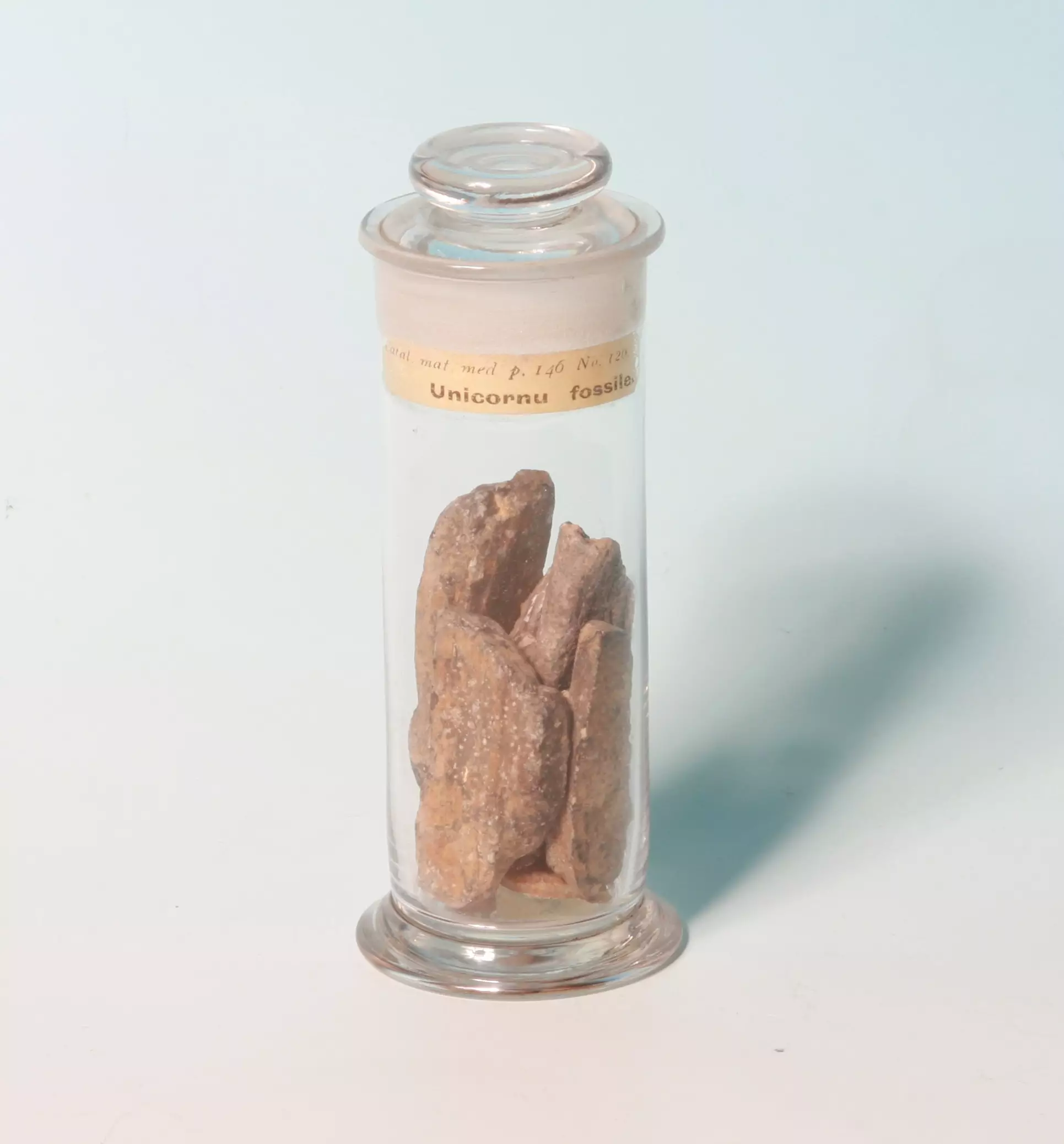
The perceived utility went far beyond counter-espionage. Medical texts of the period ascribed near-miraculous properties to powdered "unicorn horn." It was touted as a cure for "all sorts of malignant fevers, the biting of serpents, mad dogs, etc.," according to the 17th-century pharmacologist Pomet. It was believed to resist all poisons and cure plague, measles, and rubella. Apothecaries prepared it by boiling the powdered tusk with cochineal and saffron to create a sweet-tasting medicinal jelly.
The practice was both pharmacologically absurd and psychologically comprehensible. Faced with diseases whose etiologies were utterly unknown and mortality rates that were horrifyingly high, the elite clung to the most exotic, expensive remedy imaginable. If it cost more than gold, the logic went, it must be stronger than death. The horn’s purity myth—the unicorn could only be captured by a virgin—lent it an aura of spiritual cleanliness, a direct counter to the moral and physical corruption of illness.
This was not mere superstition; it was a structured, scholarly belief supported by the leading minds of the day. Physicians wrote lengthy treatises on the proper preparation of unicorn horn. It was listed in official pharmacopoeias. Its use represented the cutting edge of medieval medical science, a science built on the works of Galen and Aristotle that valued ancient authority over empirical observation. The horn worked because the ancients said it worked, and because its staggering cost *proved* it worked.
For centuries, this feedback loop of fear, prestige, and ignorance held firm. The narwhal tusk was not a curiosity. It was the central artifact in a vast, transcontinental misunderstanding—a misunderstanding that would cost millions and define an age’s relationship with the natural world. And it was all about to come crashing down.
The medieval trade in narwhal tusks functioned with the ruthless efficiency of a modern cartel. It was a luxury market engineered on scarcity, mystique, and existential dread. Norse Greenlanders, operating from roughly 1000 to 1500 CE, controlled the entire supply chain. Archaeological evidence suggests they exported an estimated one to two tons of tusks annually, representing between 100 and 200 individual tusks, to a Europe desperate for their magical promise.
"This was not casual foraging; it was a targeted extractive industry," asserts economic historian Lars Johansen, who studies medieval Arctic trade. "The Greenlanders understood they were not selling a product, but a narrative. They maintained a monopoly on the truth, and that secrecy was their primary asset. The value was in the story, not the substance."
The pricing data that survives is breathtaking. In 1555, a single tusk was valued at 1,000 gold ducats. In 1563, Swedish King Gustaf Vasa purchased one for 3,000 daler silvermynt. Adjusting for the value of gold, that transaction equates to roughly $1 to $2 million in modern currency. These were not discretionary purchases for a monarch's cabinet of curiosities. They were strategic acquisitions, akin to buying a state-of-the-art missile defense system today. A narwhal tusk was a biosecurity tool for an age that understood disease as either divine punishment or malicious human action.
The physical properties of the tusk inadvertently fueled the myth. Ground into a fine powder and placed in a suspect liquid, it sometimes produced a faint fizz. Physicians cited this as definitive proof of poison detection. The reality was far more mundane. The reaction likely came from calcium salts in the powdered ivory reacting with acidic compounds—a common occurrence with many substances, toxic or not. The entire diagnostic procedure was a chemical false positive, but in a court where perception dictated reality, the theater of the fizz was enough to condemn an enemy or clear a ally.
Modern science has revealed the profound irony at the heart of this centuries-long scam. The narwhal tusk, dismissed after the 17th century as a mere tooth and a symbol of human credulity, is in fact one of the most extraordinary sensory organs in the animal kingdom. A 2014 study confirmed the tusk, which can grow up to 3 meters long and weigh 10 kilograms, is permeated with 10 million nerve endings. It is a hydrodynamic sensor, capable of detecting minute changes in water temperature, salinity, and pressure.
"We spent centuries projecting our own magical thinking onto this structure, completely blind to its actual, more marvelous function," says Dr. Marina Chen, a marine biologist specializing in cetacean anatomy. "The narwhal uses its tusk to 'read' the Arctic environment, to find food, and likely for social communication. We thought it was a wand to ward off human poison. It was a tool for navigating a frozen ocean."
This biological truth underscores the tragedy of the historical misunderstanding. Europeans were so consumed by their own narratives of purity, poison, and status that they rendered an animal's essential survival tool into a static, decorative object. They turned a living sensory array into a dead relic. The tusk's true purpose—dynamic, ecological, vital—was utterly irrelevant to the market that coveted it.
The unraveling began not with a grand philosophical shift, but with a messy public autopsy in Copenhagen in 1638. Danish physician and collector Ole Worm, a pivotal figure bridging Renaissance natural philosophy and the emerging empirical science, acquired a strange "sea unicorn" carcass. He performed a detailed, public dissection. His findings were unequivocal: this was a whale, a physical creature of bone, blubber, and blood. Its "horn" was clearly a tooth, rooted in the skull. Worm published his observations widely.
"Worm's dissection was a watershed moment," explains Dr. Sarah Pendleton, a historian of science. "It provided a direct, empirical counter-argument to a millennium of textual authority. You could read about unicorns in the *Physiologus* or Pliny, but here was the actual animal on a table. The evidence was visceral and inarguable. It moved the debate from the realm of theology to the realm of natural history."
The elite belief system did not collapse overnight. Old myths, especially expensive ones tied to personal safety, die hard. But the foundation was cracked. Worm's work provided a scientific benchmark that gradually filtered through learned circles. As the 17th century progressed and the Age of Exploration brought more Europeans into contact with the Arctic, the narwhal's existence became an accepted, if exotic, fact of natural history. The price of tusks began to plummet, not because gold became less valuable, but because the story became less believable.
What replaced the myth, however, was not respect for the animal, but often disregard. Once the tusk was stripped of its unicorn associations, it became just another curiosity, a trophy for whalers and explorers. The narrative shifted from mystical reverence to exploitative conquest. The whale that supplied it transitioned from a mythical being to a commodity source. Is this progress, or merely a different kind of failure?
The last recorded major sale of a "unicorn horn" to a believer, as opposed to a museum or historical collector, likely occurred in the late 1600s. But to assume the mindset that fueled the trade is extinct is a dangerous miscalculation. The 2024 auction of a verified, historically significant narwhal tusk for $200,000 demonstrates the enduring market value of rarity and story, even if the medicinal claims are gone.
More telling are the modern parallels. The medieval belief in unicorn horn shares a direct lineage with contemporary pseudoscience and the wellness industry's obsession with "ancient," "rare," and "detoxifying" remedies. The logic is identical: if it is exotic, difficult to obtain, and expensive, it must be powerful. We see it in the market for powdered rhino horn, in the veneration of rare "superfoods" from remote locations, in the willingness to pay exorbitant sums for treatments that promise purity in a world perceived as toxic.
"The human psychology is unchanged," argues cultural critic Benjamín Rossi. "We still seek tangible talismans against invisible threats—be it poison, plague, or pollution. The narwhal tusk was the original celebrity-endorsed detox supplement. The packaging has changed, the marketing channels are digital, but the impulse to buy a physical object to alleviate an abstract fear is a constant."
There is a bitter lesson in conservation, as well. Today, approximately 170,000 narwhals remain, their trade protected under CITES Appendix II since 1975. Their greatest threat is no longer the medieval apothecary, but climate change disrupting their Arctic habitat and modern shipping. The species survived a thousand years of being hunted for a misunderstanding. The question is whether it can survive the "understanding" of an era that comprehends the tusk's true biological wonder yet remains largely indifferent to the creature's survival in a warming world.
Current biotech research, in a final twist, has circled back to the tusk with a more empirical curiosity. Preliminary, non-peer-reviewed investigations are exploring proteins in the tusk for potential antibacterial coatings. The magic, it seems, might have been in the material all along—just not the magic everyone was paying for. It wasn't an antidote to hemlock, but a possible clue to novel materials science. This research is nascent, but it represents a full turn of the wheel: from myth to dismissed curiosity to subject of legitimate scientific inquiry.
"The history of the narwhal tusk is a case study in human projection," concludes Dr. Chen. "We see what we want to see. For centuries, we saw a magical horn because we needed one. Then, for centuries, we saw a silly mistake. Only now are we beginning to look at it and see what it actually is: a remarkable piece of evolutionary engineering. We are finally listening to the object, instead of dictating to it."
The market for unicorn horns collapsed because the story was disproven. But does our current age, saturated with information yet rife with new myths, truly possess a superior defense against equally costly deceptions? We have peer review instead of royal decrees, clinical trials instead of anecdotal testimonials from nobles. And yet, the conditions for a million-dollar misunderstanding—fear, hope, and the allure of a simple, expensive solution—are perennial. The narwhal’s tusk, now understood, stands not just as a relic of past folly, but as a permanent mirror to our own capacity for belief.
The story of the narwhal tusk is not a quaint historical footnote about silly people who believed in unicorns. It is a forensic blueprint of how a lie becomes reality. It maps the precise intersection of commerce, science, medicine, and power over a millennium. The tusk’s journey reveals that the most potent forces shaping human history are not truths, but compelling falsehoods with good marketing and a plausible veneer of utility. This specific deception required a perfect storm: a remote, controlled supply chain (Norse Greenland), a pre-existing cultural myth (the unicorn), an unaddressed societal terror (poison and plague), and a total absence of empirical verification. Remove any one element, and the market for million-dollar whale teeth collapses.
"This episode is foundational to understanding the pre-scientific world's epistemology," states Dr. Aris Thorne, author of *Belief Systems and the Medieval Economy*. "Authority was derived from texts, not observation. If Aristotle or the *Physiologus* mentioned a unicorn, and you then held a physical object that matched the description, the object validated the text, and the text validated the object. It was a closed loop, impervious to outside fact until someone like Ole Worm forcibly broke in with a dissection table."
The legacy is twofold. First, it serves as the ultimate case study in the valuation of intangible narrative. The tusk was a blank canvas upon which Europe projected its deepest anxieties and loftiest aspirations for purity. Its worth was entirely extrinsic, a lesson not lost on modern luxury markets where handbags and watches derive value from heritage stories often as carefully constructed as the Viking’s unicorn tale. Second, its debunking marks a pivotal turn toward evidence-based science. Worm’s 1638 dissection is a landmark in the slow, messy shift from trusting ancient authorities to trusting observable, repeatable evidence. The fall of the unicorn horn was a small but significant victory for the scientific method.
A critical perspective demands we resist the easy comfort of historical superiority. Judging medieval monarchs for their belief is a form of chronological snobbery. Given the same information—the same textual authorities, the same universal belief among the educated class, the same terrifying and inexplicable mortality from disease—how many of us would have acted differently? The real criticism lies not with the individuals who bought the horns, but with the systemic lack of a mechanism for disproving them. The failure was institutional, not individual.
The more damning modern critique concerns the aftermath. When the myth was shattered, the cultural response was not a new respect for the narwhal as a fascinating creature. It was largely indifference, followed by commercial exploitation under a new, less glamorous pretext. The whale became a source of oil, meat, and curios, its remarkable sensory tusk reduced to a mere carving material or trophy. Humanity’s capacity for wonder, it seems, is tightly bound to its capacity for fantasy. Strip away the fantasy, and too often what remains is not curiosity but utility. We replaced a magical narrative with a brutally economic one, which is arguably a lesser form of understanding.
Furthermore, the historical focus on European courts erases the agency and knowledge of the Inuit and Norse who harvested the tusks. They are often portrayed as cunning tricksters, but their sophisticated understanding of the narwhal as an animal was profound. The imbalance of knowledge between supplier and consumer was the market's engine, but it reflects a deeper pattern of peripheral cultures feeding the metaphysical hungers of a center that neither understands nor cares about the source. The story is as much about cultural distance and willful ignorance as it is about belief.
The narwhal’s story is now entering a third act, defined not by magic or myth, but by material science and conservation urgency. The preliminary research into the tusk’s proteins for antibacterial applications will likely see its first peer-reviewed paper published before the end of 2025. This research, while nascent, represents a complete reframing: from supernatural antidote to potential source of biomimetic innovation.
Concrete events will dictate the species' future more than any historical analysis. The next major conference of the International Whaling Commission’s Scientific Committee in May 2025 will review updated population models for Arctic cetaceans, with narwhal data from the past decade under intense scrutiny. The findings will directly influence CITES trade regulations. Meanwhile, the scheduled seismic testing for resource extraction in Baffin Bay, potentially resuming in the summer of 2025, presents a direct, acoustic threat to narwhal populations that rely on sound for navigation and communication in the ice-covered darkness.
The most telling indicator of the narwhal’s modern status will be its price on the *legal* market. The next auction of a significant historical tusk with full provenance at a major house like Sotheby’s or Bonhams is projected for autumn 2025. Its hammer price will be a stark metric, quantifying the value of a confessed fake, a historical curiosity, and a relic of an animal facing an uncertain future. It will measure everything except what it once was supposed to be: a cure.
The narwhal swims today in waters made newly treacherous not by hunters seeking a unicorn’s horn, but by a global system whose byproduct is a warming, acidifying, noisier ocean. We finally know what its tusk is for. The question that remains, echoing the one faced by Elizabeth I and Ivan the Terrible, is what we value enough to protect. They valued a story of purity so highly they would trade a castle for its symbol. We understand the biological truth. Is that truth, and the fragile animal it belongs to, worth the cost of changing our own course? The whale, silent in the Arctic deep, its magnificent sensor probing the changing sea, awaits the answer we are still writing.
Your personal space to curate, organize, and share knowledge with the world.
Discover and contribute to detailed historical accounts and cultural stories. Share your knowledge and engage with enthusiasts worldwide.
Connect with others who share your interests. Create and participate in themed boards about any topic you have in mind.
Contribute your knowledge and insights. Create engaging content and participate in meaningful discussions across multiple languages.
Already have an account? Sign in here

Medieval monks didn't pioneer wasp pest control in vineyards—historical records reveal their methods relied on herbs, su...
View Board
The Black Death wiped out 30-60% of Europe, but in its wake, women’s wages surged by 20-30% as they filled labor gaps, r...
View Board
The 1174 Canterbury Cathedral Fire: An Architectural Phoenix Smoke, thick and acrid, choked the Kentish sky on the fift...
View Board
Navajo women's untold WWII roles—sustaining families, managing resources, and preserving culture—challenge the Code Talk...
View Board
Fisherman mends nets on Sidon’s stone quay, beside Crusader sea castle, embodying six millennia of Phoenician trade, pur...
View Board
Ozella Williams' 1994 account of quilts as Underground Railroad signals sparked a national debate, blending oral traditi...
View Board
Queen Victoria’s 63-year reign reshaped Britain, blending moral reform, industrial progress, and imperial expansion, lea...
View Board
Archaeologists uncover Belize's first Maya king, Te K’ab Chaak, in a 1,700-year-old tomb, rewriting Caracol’s origins wi...
View Board
Microneedle patches deliver painless, effective vaccines via skin, revolutionizing global healthcare with self-administr...
View Board
Shinrin-yoku, Japan's 1982 forest bathing practice, blends science and spirituality, lowering stress and boosting immuni...
View Board
The 1920s Yoga Rebellion: How Asanas Defied Colonial Rule The year is 1924. The Mysore Palace, a sprawling testament to ...
View Board
A 7,500‑year‑old stone seal from Tadım Höyük rewrites Anatolian Neolithic administration, revealing early trade and owne...
View Board
Journalist details Walter Freeman's 1946 ice-pick lobotomy, its 10-minute office speed, 2,500 operations, and the enduri...
View Board
A journalist maps magical realism from García Márquez’s Macondo to modern transformations, showing how history, politics...
View Board
Krakatoa’s 1883 eruption unleashed tsunamis over 100 feet high, obliterating 165 coastal villages and killing 36,417, re...
View Board
1996 research debunks the samurai Tabata myth, exposing the scientific creation of a four‑minute, eight‑round interval p...
View Board
St. Francis of Assisi's 800-year legacy endures as his radical faith, poverty, and peace inspire a world grappling with ...
View Board
In 1934, Belgian bibliographer Paul Otlet envisioned the Mondothèque, a desk integrating screen, keyboard, and remote da...
View Board
AI-powered cancer screening transforms early detection, with clinical trials showing a 28% increase in cancer detection ...
View Board
In 1971 a low‑budget Hong Kong film exploded, merging a single precise kick with balletic choreography, birthing Jeet Ku...
View Board
Comments