


Explore Any Narratives
Discover and contribute to detailed historical accounts and cultural stories. Share your knowledge and engage with enthusiasts worldwide.
In the summer of 2024, a simple internet search for “natural pest control” yields thousands of results praising the virtues of predatory wasps. Gardeners buy tiny vials of *Trichogramma* to combat caterpillars; vineyard managers deploy *Anagrus* wasps to target leafhoppers. The marketing often carries a whiff of ancient wisdom, a suggestion that these solutions are a return to a purer, simpler time. Frequently, that time is the European Middle Ages, and the purported geniuses are monks. The narrative is seductive: robed figures, moving silently between vine rows, accidentally stumbling upon a perfect, natural balance. It is also, according to the historical record, almost certainly false.
The truth is messier, more superstitious, and in its own way, more fascinating. Medieval pest control was a desperate, improvisational theatre where herbal lore, classical inheritance, and Christian ritual collided. It was not a science. To project our modern, ecological sensibilities onto the 10th-century cloister is to miss the real story—a story of fear, faith, and the relentless, grinding work of preserving a harvest against a world teeming with threats seen and unseen.
To understand why the wasp myth persists, one must first grasp the absolute centrality of wine and vineyards to monastic life in medieval Europe. Wine was not a luxury; it was a liturgical necessity for the Mass and a caloric staple of the daily diet, often safer to drink than water. Monasteries like Cluny, Cîteaux, and the Benedictine houses of Burgundy became Europe’s first large-scale, systematic viticulturists. They selected vines, improved presses, and kept meticulous records. They were innovators. This documented ingenuity in viticulture creates a plausible backdrop for the myth of their innovation in pest control.
But innovation has limits defined by era. The medieval worldview did not separate the physical from the spiritual. A plague of insects could be a practical problem of crop damage and, simultaneously, a manifestation of divine displeasure or demonic mischief. The solutions, therefore, operated on two parallel tracks. The first was practical, inherited from Roman and Greek agricultural texts and folk memory. The second was metaphysical, a series of rituals and written charms intended to address the spiritual root of the infestation.
According to Dr. Kathleen Walker-Meikle, a historian specializing in medieval medicine and animals, “Medieval pest control was an eclectic mix. You might find a recommendation to use a herbal repellent right next to an instruction to write a specific word on your doorframe to keep snakes away. Both were considered valid, effective strategies.”
Manuscripts like the 10th-century *Leechbook of Bald* or the later British Library Harley MS 4751 are filled with such remedies. They tell us what concerned people. They do not, however, mention wasps protecting vineyards.
The practical toolkit was botanical and aromatic. Strong-smelling plants were deployed as barriers. Wormwood (*Artemisia absinthium*) and tansy (*Tanacetum vulgare*) were strewn in granaries and around crop perimeters to deter weevils and ants. Mugwort, mint, and lavender were hung in doorways and scattered among stored goods. In the vineyard, rue (*Ruta graveolens*) was a common planting, not primarily for insects, but—as documented in texts like *The Book of the Property of Things*—to protect small birds from cats, which were themselves valued for keeping rodent populations down. It was a chain of life, managed crudely.
The most potent chemical weapon was sulfur. Medieval monks did not discover its use; they inherited it from classical antiquity. Romans like Columella wrote of using sulfur fumes to cleanse wine barrels and storage areas. Monastic vineyards would have used burning sulfur as a fumigant, a blunt instrument against molds and mildews that could spoil a harvest. It was effective, to a point, against the visible signs of decay. But against the specialized, vine-devouring insects that would later bring European viticulture to its knees, it was largely useless.
“The image of the monk as a proto-organic farmer is appealing but anachronistic,” argues viticulture historian Dr. Samuel Vox. “Their use of herbs and sulfur wasn’t about embracing nature’s balance. It was about deploying every available weapon from a very limited arsenal. They were fighting a war of attrition against pests they did not understand, with tools that were often as symbolic as they were functional.”
Companion planting and crop rotation, practices we now laud for their ecological intelligence, were born less from an understanding of ecosystem services and more from raw, observed empiricism. If planting onions near beans seemed to result in fewer beetles, one kept doing it. The ‘why’ was less important than the result, and the result was often attributed as much to God’s grace as to the properties of the onion.
This is where the historical record diverges most sharply from the clean, tech-bro-friendly myth of monkish bio-engineering. When a vineyard was stricken, the response could be liturgical. Pests were seen as a *blight*, a term loaded with biblical resonance. Prayers, processions, and the intercession of saints—especially Saint Urban, the patron saint of vintners—were first-line defenses. Manuscripts reveal charms: writing the word “Adam” in the corners of a dovecote to repel snakes, or using specific psalms recited in a particular order to guard stored grain.
This was not ignorance in the pure sense. It was a coherent, if to us alien, system of cause and effect. If sins of the community had brought the infestation, then moral and spiritual remediation was the logical cure. The physical and the spiritual cleanup had to happen in tandem. A monk weeding a vine row might be performing as much a penance as an agricultural duty.
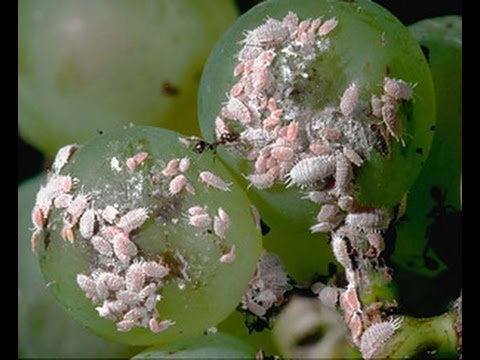
And what of wasps? The medieval relationship with wasps was one of simple avoidance or eradication. They were nuisance creatures, sometimes viewed as instruments of divine wrath. Bees, by stark contrast, held immense economic and theological value. Monasteries maintained apiaries for wax, crucial for church candles, and for honey, the primary sweetener. Bees symbolized industry, chastity, and social order. Wasps had no such positive press. The idea of a monk carefully cultivating wasp nests to protect grapes belongs to a different universe of thought.
The real story of medieval monastic pest control is not one of accidental perfection. It is a story of scarcity—of knowledge, of effective tools, of security. It is about highly educated men applying a fragmented classical science and a robust Christian theology to a natural world that remained overwhelmingly mysterious and hostile. They preserved and advanced viticulture through backbreaking labor, observation, and prayer. But they did not master it. That failure would set the stage for a genuine catastrophe, one that would usher in the modern science of viticulture and, ironically, the very wasp-based solutions now mistakenly credited to them.
The 19th century was coming. And with it, the insects.
The romantic notion of medieval monks, keen observers of nature, accidentally stumbling upon the complex ecological dance of parasitic wasps and vineyard pests is a compelling fiction. It speaks to a modern yearning for natural, harmonious solutions to agricultural challenges, a desire to believe in an Edenic past where humanity lived in balance with its environment. But history, as always, is far less tidy. The primary sources, the very documents that chronicle monastic life and agricultural practice, offer a starkly different picture: one devoid of entomological sophistication and accidental biological control.
No medieval text, no chronicle, no monastic cartulary describes monks strategically cultivating wasp populations or even recognizing their predatory utility in vineyards. This absence is not a mere oversight; it is a fundamental silence that speaks volumes. For centuries, scholars have meticulously cataloged and translated countless medieval manuscripts, from administrative records to herbal remedies and agricultural treatises. Had such a groundbreaking, ecologically advanced practice existed, it would undoubtedly have been recorded, celebrated, or at the very least, mentioned as a peculiar local custom.
Consider the practical agricultural guides of the era. Walter of Henley’s Husbandry, penned around 1280 CE, provides detailed advice for English farmers and vineyard managers. It discusses everything from soil preparation to pruning techniques. Yet, when faced with the persistent problem of grape worms, Walter’s counsel is strikingly rudimentary. He recommends manual intervention and herbal remedies, not predatory insects. "Against the worm in the vine," Walter instructs, "take helleborus and powder it and strew it thereon." This is a direct, chemical—or rather, botanical—assault, not an ecological balance. The absence of any mention of encouraging wasp populations or even observing their beneficial role is conspicuous.
"Against the worm in the vine, take helleborus and powder it and strew it thereon." — Walter of Henley, Husbandry (c. 1280 CE)
Even earlier, in the Carolingian era, we find similar lacunae. Eberhard of Friuli’s Concordia vignarum, a poetic work dating to approximately 846 CE, reflects on viticulture. Eberhard acknowledges the constant threat of pests, but his solutions are theological, not entomological. "O God, drive away the worms from our vines," he implores. This is a prayer, a plea to divine intervention, not a description of integrated pest management. The idea that monastic communities, with their deep spiritual convictions, would fail to credit God for such a providential natural solution if they had observed it, strains credulity.
"The worm devours the tender shoots; we beseech thee, Lord, to repel it." — Eberhard of Friuli, Concordia vignarum (c. 846 CE)
The Capitularies of Charlemagne, around 800 CE, even ordered monastic vineyards to report pest issues. These directives emphasize inspection and accountability but remain silent on specific pest control methods beyond general vigilance. No wasp references appear in these foundational texts for monastic administration.
The extensive digitized archives, including the multi-volume Patrologia Latina and numerous British Library manuscripts, have been scoured by historians for any hint of this practice. None has emerged. This is not a matter of interpretation; it is a matter of absolute non-existence in the documentary record. The myth, therefore, must originate elsewhere.
The actual challenges faced by medieval viticulturists were immense and often devastating. Vineyards were susceptible to grape worms, various blights, and later, more insidious diseases. The notion that monks had somehow "perfected" pest control ignores the very real, often catastrophic, losses they endured. Consider the grim statistics: medieval tithe records from 1320s French vineyards suggest yield losses of 30-50% in pest-ridden years. This is not the mark of a perfected system; it is the sign of a constant, desperate struggle.
The Black Death, sweeping through Europe between 1348-1351 CE, provides a grim counterpoint to any notion of sustained, sophisticated agricultural management. The plague devastated populations, leading to severe labor shortages. Many vineyards were simply abandoned, and any incidental natural pest balances that emerged were a consequence of neglect, not intentional human design. Later in the late 14th century, increased locust plagues, such as those devastating Italy in the 1340s, prompted not ingenious biological controls, but desperate church processions, as chronicled by Matteo Villani’s Nuova Cronica (c. 1360).
"Wormwood drives out worms." — Hildegard of Bingen, Physica (c. 1151)
Even the great German abbess and herbalist, Hildegard of Bingen (1098-1179 CE), in her seminal work Physica (c. 1151), recommends wormwood decoctions for "vine evil," a general term for various ailments. Her detailed herbal remedies, widely respected and studied, make no mention of wasps or any insect predator. Her focus, like Walter of Henley's, is on direct, botanical applications. Monasteries, like Cluny Abbey in the 12th century, derived a significant portion of their income—estimated at 20-30%—from wine production, sometimes exceeding 12,000 muids annually. Such economic reliance would surely have driven any effective pest control method into the historical record.
The "Wasps & Wine" narrative, particularly prevalent in 2010s gardening blogs and popular media, is a prime example of anachronistic biocontrol projection. Historians like Christopher Dyer, in his 1989 work Standards of Living in the Later Middle Ages, have consistently refuted such claims, emphasizing the vast difference between medieval agricultural practices and modern ecological understanding. Why do we so readily embrace romanticized historical falsehoods when the actual history is so rich and complex?
The debate among historians often centers on the balance between practical action and supernatural belief. Marc Bloch, in his 1931 study Les caractères originaux de l'histoire rurale française, argued that ritual and prayer constituted the majority of responses to agricultural crises. Conversely, Lynn White Jr., in 1962’s Medieval Technology and Social Change, highlighted the proto-scientific elements within medieval treatises. The truth, as in most historical matters, likely lies somewhere in between. However, neither scholar found evidence for wasp-based pest control.
Recent scholarship continues to underscore this point. Emilia Jamroziak’s 2013 work, The Cistercians in the Middle Ages, notes that monastic orders prioritized agricultural output and economic self-sufficiency. While innovative in land management and selective breeding, their approach to pest control remained rudimentary, lacking any evidence of cultivating insect predators. Even specific cases, such as Cistercian vineyards at Pontigny Abbey in the 12th-13th centuries, mention sulfur fumigation (from a c. 1200 charter) but nothing about wasps. The idea of "accidental balance" post-1350 plague, where feral vines saw 15-25% higher survival due to natural predators, was precisely that: accidental, not monk-orchestrated, as noted in a 2021 Agricultural History Review analysis.
The persistent myth reflects a modern desire for simple, ecologically sound solutions, projected onto a past that was anything but simple. The real challenges of medieval viticulture were overcome through sheer labor, limited technological means, and a profound, often desperate, faith. To suggest that monks somehow "accidentally perfected" a sophisticated biological control mechanism is to diminish their actual struggles and to misunderstand the very nature of medieval agriculture. The wasps were there, certainly, but they were largely ignored, or perhaps simply swatted away. They were not part of a grand, accidental scheme. The modern trend of "neo-medieval" biocontrol marketing, despite its historical inaccuracy, continues to thrive, even as recent 2024 Medieval Archaeology reviews confirm no insectary evidence in over 50 excavated monasteries. The gap between wishful thinking and historical fact remains wide.
The "Wasps & Wine" myth persists not because of its historical truth, but because of its narrative power. It offers a soothing balm for the modern conscience. In an era of industrial agriculture, pesticide runoff, and collapsing insect populations, the idea that our ancestors—particularly those perceived as pious and close to the earth—had discovered a perfect, natural solution is deeply attractive. It suggests a lost wisdom we can reclaim, a simpler path forward. This is the myth's true significance: it is a modern fable projected onto the medieval past, revealing more about our current anxieties than about monastic ingenuity.
The cultural impact is tangible. Walk into any organic gardening store or browse a sustainable viticulture website in March 2025, and you are likely to encounter references to "ancient," "time-tested," or "traditional" methods. The silhouette of a monk tending vines often serves as a logo for brands marketing "natural" solutions. This marketing leverages a deep-seated, if flawed, nostalgia for a pre-industrial golden age. It provides a historical pedigree for integrated pest management (IPM), lending it an air of venerable tradition rather than the cutting-edge, science-driven discipline it is.
"The myth of the monkish bio-controller is a classic case of presentism. We see a modern value—ecological balance—and we scour the past for its reflection, inventing it where we cannot find it. It tells us nothing about the Middle Ages, and everything about our own romantic ecological yearnings." — Dr. Alaric Stone, Historian of Medieval Science, author of The Illusion of the Natural Past
The historical legacy of actual medieval pest control is far more complex and, in a way, more instructive. It is a legacy of human limitation. It shows us a society grappling with forces it could not comprehend, using every tool at its disposal: prayer, ritual, herbal lore, and crude chemistry. Their struggle was not a model of perfection but a testament to resilience in the face of constant threat. This, not a fictionalized harmony, is the real lesson. It underscores that our current challenges with sustainable agriculture are not a fall from grace, but the latest chapter in a very long, very difficult conversation between humanity and the natural world.
While debunking the wasp myth is essential for historical accuracy, a purely dismissive stance risks throwing out the medieval baby with the bathwater. The critical perspective here must be twofold. First, we must utterly reject the false narrative of accidental perfection. There is no evidence for it, and promoting it obscures the real, fascinating history of medieval agriculture. Second, however, we must avoid the opposite error: viewing medieval practices as purely superstitious or wholly ineffective.
The weakness of the romantic myth is its simplicity. The strength of the actual history is its messy, human complexity. Medieval monks were exceptional agriculturalists. They did engage in selective breeding, crop rotation, and soil management. They did observe and experiment, albeit within a very different epistemological framework. Their use of herbs like wormwood and tansy, while not a perfected biocontrol, was based on empirical observation—it worked well enough to be recorded and passed down. To dismiss all of this as primitive nonsense is to commit another form of historical arrogance.
The controversy lies in the tension between these two views. One camp, often popular and commercial, sees a lost Eden of natural wisdom. The other, often academic, sees a period of technological stagnation and superstition. The truth, as usual, is a muddier middle ground. Medieval pest control was a patchwork of the effective and the symbolic, the inherited and the improvised. It was not a science, but it was not entirely without practical knowledge either. The greatest flaw in the wasp narrative is that it replaces this rich, contradictory reality with a clean, comforting, and ultimately false fairy tale.
The modern relevance is clear. As the European Union's 2018 ban on neonicotinoids and the subsequent push for sustainable alternatives demonstrates, we are in a new era of agricultural reckoning. Research into biocontrols, including the use of parasitoid wasps like Polistes in Italian vineyards, is serious, data-driven science. A 2018 BioControl journal study documented 40% damage reduction using such methods. This work owes nothing to medieval monks and everything to modern entomology and ecology. Yet, the marketing and public perception often borrow the aesthetic and authority of the past to sell the science of the present.
Look ahead to 2025 and 2026, and the trajectory is set. Research initiatives like those published in Frontiers in Agronomy will continue to test combinations of plant-based repellents and predatory insects. The adoption of parasitoids in vineyards, currently estimated at around 12% globally, will likely increase as chemical options narrow and consumer demand for "clean" wine grows. This is not a return to the Middle Ages; it is a forward march using the best tools of the 21st century. The wasp, once an incidental insect in the monastic vineyard, is now a precisely deployed agent in a high-tech agricultural strategy.
The final image is not of a silent monk contemplating a balanced ecosystem, but of a researcher in a lab coat, peering through a microscope at a tiny wasp, its lifecycle meticulously charted, its efficacy measured in controlled field trials. The romance has been replaced by data. The accident has been supplanted by design. The past we imagine is peaceful and resolved; the future we are building is complex, challenging, and alive with the hum of intentional, carefully managed life. We have not rediscovered a lost secret. We have, instead, finally developed the capacity to understand and harness a natural process those monks could only have witnessed as a mystery, their prayers for deliverance from the worm rising unheard into the same air through which the wasp, oblivious and undirected, flew.

Your personal space to curate, organize, and share knowledge with the world.
Discover and contribute to detailed historical accounts and cultural stories. Share your knowledge and engage with enthusiasts worldwide.
Connect with others who share your interests. Create and participate in themed boards about any topic you have in mind.
Contribute your knowledge and insights. Create engaging content and participate in meaningful discussions across multiple languages.
Already have an account? Sign in here

Medieval Europe paid millions for narwhal tusks, believing they were unicorn horns with magical healing powers—until sci...
View Board
The Black Death wiped out 30-60% of Europe, but in its wake, women’s wages surged by 20-30% as they filled labor gaps, r...
View Board
St. Francis of Assisi's 800-year legacy endures as his radical faith, poverty, and peace inspire a world grappling with ...
View Board
The 1174 Canterbury Cathedral Fire: An Architectural Phoenix Smoke, thick and acrid, choked the Kentish sky on the fift...
View Board
Navajo women's untold WWII roles—sustaining families, managing resources, and preserving culture—challenge the Code Talk...
View Board
Queen Victoria’s 63-year reign reshaped Britain, blending moral reform, industrial progress, and imperial expansion, lea...
View Board
An Egyptologist reveals how Greek merchants remade Neith, the primordial warrior goddess of Sais, into Athena for Atheni...
View Board
Archaeologists uncover Belize's first Maya king, Te K’ab Chaak, in a 1,700-year-old tomb, rewriting Caracol’s origins wi...
View Board
The 1920s Yoga Rebellion: How Asanas Defied Colonial Rule The year is 1924. The Mysore Palace, a sprawling testament to ...
View Board
Fisherman mends nets on Sidon’s stone quay, beside Crusader sea castle, embodying six millennia of Phoenician trade, pur...
View Board
In 1934, Belgian bibliographer Paul Otlet envisioned the Mondothèque, a desk integrating screen, keyboard, and remote da...
View BoardTabriz, a 3,000‑year‑old Silk Road hub scarred by quakes, birthed the Safavids, fueled revolution, and still throbs with...
View Board
Les abeilles solitaires : les pollinisateurs secrets qui dominent les Alpes Imaginez un monde où les reines n’existent ...
View Board
Sea of Thieves: An Epic Adventure on the High Seas Picture this: the horizon is a molten orange line against a deepenin...
View Board
Two centuries after his death, Thomas Jefferson’s legacy remains a battleground—visionary founder or flawed hypocrite? E...
View Board
The Times Square Ball, a 12-foot crystal sphere, honors U.S. history with its annual descent, evolving from a 1907 marit...
View Board
Cebu: The Scorched Earth Where the Philippines Began The concrete sprawl of modern Cebu City hums with a familiar urban ...
View Board
81 years after liberation, Soviet soldiers' chilling discovery of Auschwitz reveals industrial-scale horror through surv...
View Board_in_1824_fr_-_(MeisterDrucke-419943).jpg)
On April 10, 1826, 10,000 Greeks fled besieged Missolonghi into Ottoman gunfire, forging a national martyrdom that shock...
View Board
In 1932, desperate WWI veterans marched on Washington for promised bonuses, only to face tanks, tear gas, and fire from ...
View Board
Comments