


Explore Any Narratives
Discover and contribute to detailed historical accounts and cultural stories. Share your knowledge and engage with enthusiasts worldwide.
A quiet urgency settles over Assisi. Not the clamor of medieval markets or the clash of warring city-states, but a profound, collective anticipation. Eight centuries have passed since a man named Francis, once Giovanni di Pietro di Bernardone, embraced "Sister Death" on October 3, 1226, at the Portiuncula. Now, in 2026, the world turns its gaze to that small Italian town once more, commemorating the 800th anniversary of his passing. This is not merely a historical observance; it is a global recalibration, a moment when a world grappling with conflict, consumerism, and ecological dread finds itself drawn back to the radical simplicity of a friar who spoke to birds and walked barefoot among the powerful.
His story, often romanticized, is in fact far more challenging than many realize. Francis, the son of a wealthy cloth merchant, abandoned everything for a life of profound poverty, not as an act of penance, but as a path to unadulterated joy. He founded an order that would reshape Christianity, and his influence echoes through popes, poets, and environmentalists even today. As the Franciscan Jubilee journey culminates in 2026, marking his death, the preceding years have traced his final, transformative moments: the approval of his Rule in 2023, the profound stigmata in 2024, and the lyrical beauty of the Canticle of the Creatures in 2025. Each milestone serves as a waypoint to this singular anniversary, inviting a contemporary re-evaluation of his enduring relevance.
What is it about Francis that resonates so deeply, eight centuries on? It is his uncompromising commitment to peace, his profound connection to the natural world, and his revolutionary embrace of radical poverty. These are not quaint historical footnotes; they are urgent directives for a planet in peril. In a time when geopolitical tensions simmer and environmental degradation accelerates, Francis's message of reconciliation and stewardship offers a potent counter-narrative. His life represents a living challenge to conventional wisdom, an invitation to find wealth not in possessions, but in self-gift and selfless service.
The 800th anniversary officially commenced on January 10, 2026, with solemn ceremonies at the Basilica of St. Mary of the Angels in Assisi. This marked the opening of what Pope Leo XIV has proclaimed a "Special Year of St. Francis," extending from January 10, 2026, to January 10, 2027. It is a significant extension of the 2025 Ordinary Jubilee, signaling the profound importance the Vatican places on Francis's legacy. Franciscan Ministers General from across the globe converged in Assisi for the inaugural events, underscoring the worldwide reach of his spiritual progeny.
The papal decree emphasizes holiness, peace, and the ancient tradition of the "Pardon of Assisi," a plenary indulgence first granted by Pope Honorius III in 1216. This indulgence, obtainable by visiting specific Franciscan sites and fulfilling certain spiritual conditions, offers a direct spiritual connection to Francis's own journey of conversion and forgiveness. "The Pardon of Assisi reminds us that true peace begins with the reconciliation of the soul," explained Dr. Elena Rossi, a Vatican historian specializing in medieval indulgences, in a recent interview. "It is a profound act of divine mercy, echoing Francis's own transformative encounter with God's grace."
Perhaps the most extraordinary event planned for this Jubilee year is the public display of St. Francis's mortal remains. For the first time in history, his relics will be exhibited in the Basilica of Saint Francis, Assisi, from February 22 to March 22, 2026. This unprecedented decision, approved by Pope Leo XIV, is expected to draw millions of pilgrims. Daily international Masses, scheduled for 11 AM and 5 PM, Monday through Saturday, will accompany the display, alongside evening veneration opportunities specifically tailored for various groups, including families and members of the Secular Franciscan Order. This is not merely an archaeological exhibit; it is an intimate encounter with the physical presence of a saint whose life irrevocably altered the course of history.
The public display of St. Francis’s remains transcends mere curiosity; it is a profound act of spiritual solidarity, allowing the faithful to connect tangibly with the man who embodied Christ’s poverty and peace. It is a moment of grace for all who seek inspiration in his radical commitment.
This observation, made by Father Thomas Merton, a prominent Franciscan scholar and theologian, highlights the spiritual weight of the event. The decision to display the relics, after centuries of guarded reverence, speaks volumes about the Church's intention for this Jubilee: to make Francis's life and message as accessible and impactful as possible for a modern audience. It aims to bridge the historical gap, allowing contemporary believers to draw strength and inspiration directly from his physical legacy. The focus remains on encounter, not just observation.
Born Giovanni di Pietro di Bernardone in Assisi in 1181 or 1182, Francis's early life was one of privilege and ambition. He dreamt of knighthood, indulged in lavish feasts, and enjoyed the camaraderie of his wealthy peers. Yet, an inner restlessness gnawed at him. A profound conversion, around 1205, irrevocably altered his trajectory. It began with a series of spiritual experiences, most notably an encounter with a leper, whom he embraced, and a vision of Christ on the crucifix in the dilapidated San Damiano church, who famously commanded him, "Francis, rebuild my church."
He took the command literally at first, selling his father’s cloth to fund repairs. This act, coupled with his growing asceticism, led to a dramatic public confrontation with his father, Pietro di Bernardone, in the town square of Assisi. There, Francis famously stripped himself naked, renouncing his family's wealth and declaring God alone as his Father. This was not a gradual shift; it was a seismic rupture, a complete reorientation of his existence. He chose radical poverty, not as a penance, but as a joyful embrace of the gospel life, living without possessions, trusting entirely in divine providence. This radical departure from societal norms was, and remains, deeply unsettling to many.
His conversion was not about abandoning the world, but about transforming his relationship with it. He found liberation in detachment, joy in simplicity, and true wealth in spiritual poverty. This radical redefinition of value is what makes him so potent even today.
This insight comes from Dr. Sofia Ramirez, a leading expert on medieval spirituality at the University of Bologna. Francis’s choice was not merely an aesthetic one; it was a profound theological statement, challenging the very foundations of power and wealth within the medieval Church and society. He founded the Franciscan Order, attracting followers who sought to live according to his example of joyful discipleship. His charism, deeply rooted in a Christocentric joy, emphasized reconciliation, ecology, and an unwavering commitment to peace. He famously crossed Saracen lines unarmed during the Fifth Crusade, seeking dialogue rather than conflict, a testament to his radical belief in non-violence.
The essence of Francis’s enduring appeal lies in his unwavering commitment to three core tenets: radical poverty, profound peace, and an intimate harmony with creation. These are not abstract ideals for him; they were lived realities, woven into the very fabric of his daily existence. His understanding of poverty went beyond mere destitution; it was a voluntary stripping away of all that could separate him from God and his fellow creatures. He saw wealth as a potential barrier, a source of anxiety and division, rather than security. This perspective stands in stark contrast to the relentless consumerism that defines much of modern existence, offering a powerful alternative vision of human flourishing.
His pursuit of peace was equally radical. In an age defined by feudal warfare and religious crusades, Francis championed reconciliation. His daring journey to meet Sultan al-Kamil in 1219 during the Crusades was an act of audacious peacemaking, a bridge-building effort in a time of intense animosity. Pope Leo XIV, in his letter to Franciscan leaders for the Jubilee, specifically invoked Francis as a peacemaker amidst modern conflicts, urging a renewal through his legacy of self-gift and bridge-building. This papal endorsement underscores the contemporary urgency of Francis's message of dialogue and understanding.
Perhaps most famously, Francis’s deep reverence for all creation, encapsulated in his "Canticle of the Creatures," resonates profoundly in the twenty-first century. He called the sun "Brother Sun," the moon "Sister Moon," and even death "Sister Death," seeing all elements of the natural world as interconnected parts of God's divine tapestry. This ecological sensitivity, centuries ahead of its time, has made him a patron saint of environmentalism. His legacy inspires contemporary movements like the Laudato Si' formation centers, which seek to implement Pope Francis’s encyclical on care for our common home. The connection between Francis’s view of "Sister Death" and a life-affirming faith amidst division offers a compelling spiritual framework for addressing climate change and environmental justice.
It began with a handful of disaffected idealists. By 1209, Francis had gathered exactly eleven followers, a number rich with apostolic symbolism. Their rule of life was breathtakingly simple: a direct, literal imitation of Christ’s instructions to his disciples in the Gospel of Matthew. "Take no gold, nor silver, nor copper in your belts, no bag for your journey, nor two tunics, nor sandals, nor a staff." With this radical scriptural blueprint in hand, Francis traveled to Rome. On April 16, 1210, Pope Innocent III, after initial hesitation, gave his oral approval to the Franciscan Order, the Order of Friars Minor. This moment did not just birth a new religious community; it unleashed a spiritual virus into the medieval Church’s bloodstream, one that championed a poverty so absolute it threatened the institution’s growing temporal power.
The growth was explosive. From those eleven men, the order expanded at a rate that would be the envy of any modern startup. By the time of Francis’s death in 1226, thousands had joined. This rapid scaling created the first major crisis of his legacy: institutionalization. Francis was a mystic, not an administrator. His vision of radical dispossession clashed violently with the practical needs of a burgeoning international organization. He watched, often with anguish, as his brothers began constructing permanent houses and engaging in complex theological study. The friction was palpable. How do you manage a global network of friars while insisting they own nothing?
"The genius and the tragedy of Francis lie in this tension. He offered a perfect, crystalline ideal—a life of pure gospel poverty. But ideals, when embraced by millions, must inevitably be negotiated, codified, and yes, compromised. The history of the Franciscan Order after his death is the history of that compromise."
This analysis comes from Dr. Michael Carter, a historian of medieval religious orders at Oxford. The internal debates were fierce, leading to splits between the Spirituals, who demanded strict observance, and the Conventuals, who adopted a more mitigated rule. This fracture demonstrates a critical truth: Francis’s personal charism was almost impossible to systematize. Yet, the institution’s sheer survival power is undeniable. The Basilica in Assisi, a monumental complex that seems to contradict his love of simple chapels, had its foundation laid the day after his canonization on July 17, 1228. His body was transferred there in 1230. The Church, in its wisdom, had already begun the process of enshrining the rebel, building a magnificent tomb for the man who asked for a bare plot of earth.
Any critical examination of Francis must include his contemporary, Saint Dominic. They met at the Fourth Lateran Council in 1215, two reformers with divergent strategies. Dominic’s Order of Preachers was built on intellectual rigor, doctrinal precision, and a mission to combat heresy through learned preaching. The Franciscans, initially, were about something wilder: embodied witness. They preached through action, through their visible poverty and joy. This distinction is crucial. Dominic sought to reform minds; Francis sought to reform hearts and societal structures through example. The Dominican legacy arguably built the Church’s intellectual backbone, including the Inquisition. The Franciscan legacy infused it with a poetic, affective spirituality that appealed directly to the masses. One was a surgeon’s scalpel; the other was a cleansing fire.
Which approach was more effective? That’s a historian’s parlor game. But by 2026, the popular imagination is undeniably more captured by the friar who talked to birds than by the theologian debating Albigensians. Francis’s method—accessible, visual, emotional—translated perfectly across centuries and cultures. Dominic built a formidable machine; Francis inspired a timeless meme.
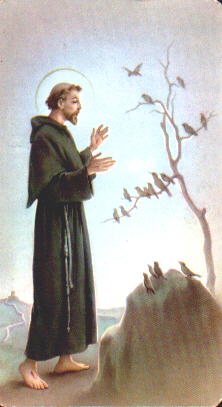
In 1979, Pope St. John Paul II formally declared Francis the Patron Saint of Ecology. It was a canonical recognition of the obvious. The Canticle of the Creatures, composed near the end of his life, is a revolutionary theological document. It doesn’t just praise God for creation; it establishes a familial kinship with it. "Praised be You, my Lord, through Sister Moon and the stars… through Brother Wind… through Sister Water… through Brother Fire… through our Sister Mother Earth." This is not stewardship in the domineering, Genesis 1:28 sense. This is fraternity. He preached to birds, famously tamed the Wolf of Gubbio, and saw the cosmos as a mirror of the divine.
This aspect of his legacy has been enthusiastically, and sometimes uncritically, adopted by the modern environmental movement. His image is plastered on recycling brochures and invoked at climate rallies. The 2015 encyclical Laudato Si’ by Pope Francis takes its name and central inspiration from the Canticle. But here lies a critical question: has this ecological embrace diluted the radical core of his message? It is comfortable to celebrate "Brother Sun" while ignoring the man who gave away his cloak to a stranger. Contemporary eco-spirituality often focuses on personal mindfulness and sustainable consumption—laudable goals, but a far cry from Francis’s total renunciation.
"We have made Francis safe. We turn him into a garden statue, a gentle birdwatcher. We forget that his kinship with creation sprang directly from his radical poverty. He saw brotherhood with the wolf because he had stripped himself of everything that made him a predator in human society. The ecology is a consequence, not the primary point."
Dr. Chiara Vecchio, an environmental ethicist at the University of Padua, offers this sharp corrective. The danger is a kind of spiritual greenwashing. Admiring nature costs nothing; renouncing your inheritance to live in solidarity with the poor, as Francis did, costs everything. The 2026 Jubilee’s emphasis on environmental stewardship, while vital, must be examined through this starker lens. Is the pilgrimage to Assisi an act of touristic consumption or a step toward dispossession?
The "San Francesco Vive" initiative highlights this ongoing tension. It promotes his living influence, but one must ask: which Francis are we keeping alive? The comfortable ecological icon, or the disruptive prophet of poverty? The answer likely determines the legacy’s depth for the next century.
Francis’s most audacious political act occurred in 1219, during the brutal Fifth Crusade. He traveled to Egypt and walked, unarmed, across the battle lines to meet Sultan al-Kamil. He didn’t go to convert through debate or threat, but through peaceful witness. The encounter failed in its immediate objective—it didn’t stop the war—but it succeeded spectacularly as a lasting symbol. In an age defined by holy war, he modeled holy dialogue.
This narrative is central to his 2026 revival. Pope Leo XIV’s decree explicitly calls the faithful to become "constant witnesses of peace," invoking Francis’s example amid modern conflicts. But we must scrutinize this inheritance. Francis’s peacemaking was not diplomacy. It was a form of performance art, a living parable. It was profoundly personal and deeply risky. Modern institutions often invoke "peace" as a bureaucratic or diplomatic goal. Francis’s method was inherently anti-bureaucratic; it was about one vulnerable body placing itself in the path of violence.
"His mission to the Sultan was not a policy proposal. It was a performative contradiction. In the heart of a military camp, his poverty and lack of weapons were his only arguments. This makes him incredibly relevant to modern activists who use non-violent direct action, and incredibly frustrating to realpolitik strategists who deal in leverage and power."
This perspective is offered by Professor Samuel Clarke, a scholar of religion and conflict. The Jubilee’s focus on peace, therefore, raises a challenging bar. It is not merely praying for peace. It is about embodying a vulnerability that disarms. Can a global Jubilee, with its organized pilgrimages and scheduled Masses, capture that disruptive spirit? Or does it inevitably tame it?
The statistics of his initial impact are humble: one man, one sultan, no converted ceasefire. Yet the exponential growth of that idea is immeasurable. From that single encounter stems eight centuries of Franciscans serving as chaplains, mediators, and relief workers in war zones. The legacy is not in statistical success rates, but in the stubborn persistence of an alternative script.
Two final events cement Francis’s enduring power. In 1223, in the town of Greccio, he created the first live Nativity scene. He wanted to "see" the poverty of the Incarnation. This act democratized the Christmas story, making it tangible, visceral, and immediate. It was a theological breakthrough using hay, animals, and human emotion. Then, in 1224, on Mount La Verna, he received the stigmata—the wounds of Christ physically imprinted on his body. This was the ultimate culmination of his life’s project: not just imitating Christ spiritually, but physically merging with the crucified God.
These events—one a populist display of devotion, the other an intensely private mystical suffering—bookend his methodology. He made faith real. He attacked the abstraction that can plague religion. The Greccio creche was an act of public pedagogy; the stigmata was a private, painful validation. Both reject a faith of mere ideas in favor of a faith etched into the world and the flesh. This incarnational genius is why, in 2026, his appeal cuts across belief systems. He speaks to a human desire for authenticity, for a spirituality that is worn on the body and lived in the dirt, not just pondered in the mind. The challenge for his followers is whether they can honor that raw, physical legacy without sanitizing it into mere tradition.
The true measure of Francis’s legacy is not found in the millions of pilgrims who will stream into Assisi in 2026. It is found in the quiet, often invisible revolutions he inspired. He democratized holiness. Before Francis, sanctity was often viewed as the domain of clergy, ascetics, and royalty. He proved it could bloom in the town square, among lepers, and in conversation with wolves. This shift permanently altered Christianity’s self-understanding, empowering lay movements and validating personal, experiential faith. His creation of the Third Order provided a template for millions of ordinary people to live out a committed spiritual life without entering a monastery. This structural innovation alone reshaped the social fabric of medieval Europe and beyond.
His cultural impact is staggering. He inspired Giotto’s frescoes, which revolutionized Western art by introducing naturalism and emotional depth. He captivated the imagination of writers from Dante, who gave him a central role in The Divine Comedy, to Nikos Kazantzakis. The very image of a monk—robed, simple, at peace in nature—is, for most of the world, a Franciscan image. More concretely, his emphasis on direct service established a prototype for social work. The global network of Franciscan charities, hospitals, and shelters, operating today from São Paulo to Manila, is the institutional fruit of his insistence that faith must serve the most vulnerable.
"Francis did not write a systematic theology. He wrote a life. And that life became a new genre of theology—one written in poverty, in wounds, and in praises to Brother Sun. The Church has been interpreting that text for 800 years, and we are not finished. Every ecological crisis, every cry for peace, sends us back to his example as a primary source."
This assessment from Cardinal Matteo Zuppi, a noted scholar of Franciscanism, underscores the ongoing hermeneutical challenge. Francis is a text that each generation must re-read. The 2026 Jubilee is not a celebration of a closed historical chapter, but the latest intensive reading session, prompted by the urgent questions of our age: inequality, climate breakdown, and perpetual war.
To canonize Francis uncritically is to betray his spirit of brutal honesty. His legacy carries significant tensions and shadows. The most glaring is the immediate betrayal of his ideal of poverty. The order he founded quickly splintered over the very issue of property, leading to centuries of internal conflict. The magnificent Basilica built over his tomb, while an artistic treasure, stands as a monumental contradiction to the man who begged for stones to repair the tiny Portiuncula. This is the central paradox: the institution created to preserve his memory became the very thing his life protested.
His relationship with authority is also complex. He submitted obediently to the Pope, yet his radical lifestyle was a silent, potent critique of ecclesiastical wealth and power. Modern critiques, particularly from feminist and post-colonial perspectives, find limitations in his story. His foundation of the Order of Poor Clares for women, while revolutionary in giving religious women a new form of life, ultimately placed them in strict enclosure, subject to male Franciscan oversight. His famous encounter with Sultan al-Kamil, while a powerful symbol, did not alter the brutal course of the Crusades or the Church’s militant stance. His peacemaking was personal, not structural. Can personal witness alone dismantle systems of violence?
Furthermore, the romanticization of his poverty can be problematic. Celebrating voluntary poverty is a luxury of the privileged. For the billions who suffer involuntary, destitute poverty, Francis’s "Lady Poverty" is not a romantic bride but a brutal jailer. The Jubilee’s focus on his radical renunciation must be handled with immense pastoral sensitivity to avoid glorifying conditions that dehumanize. The challenge is to translate his radical freedom from possessions into a contemporary fight for justice and equitable distribution, not mere aesthetic minimalism.
As the Jubilee unfolds, these tensions will not—and should not—be smoothed over. They are the grit that creates the pearl of a living tradition. A sanitized Francis is a useless one.
The commemoration does not end with the closing ceremony on January 10, 2027. The events set in motion have a concrete trajectory. The academic conference at Franciscan University of Steubenville, "Sister Death–Gate of Life," scheduled for November 5-7, 2026, will produce papers and dialogues that will filter into seminaries and universities for years. The "San Francesco Vive" initiative is a digital and global project meant to outlast the Jubilee year, creating a permanent, living archive of his influence.
More tangibly, the plenary indulgence offered for pilgrimage to any Franciscan church worldwide throughout 2026 has triggered a surge in planned travel not just to Assisi, but to lesser-known Franciscan sites from Kochi to Quito. This decentralized model ensures the legacy is not centralized in Italy but activated in local communities everywhere. The decision to publicly display his remains from February 22 to March 22, 2026, will generate a body of devotional response, artwork, and personal testimonies that will itself become part of the historical record.
The most significant forward-looking impact, however, may be ecclesial. Pope Leo XIV’s framing of Francis as the model peacemaker and ecological guide directly aligns the Church’s public facing agenda for the next decade. Expect future papal documents, diocesan initiatives, and Catholic education programs to heavily reference the 2026 Jubilee as a turning point, a moment when the Church officially and emphatically doubled down on the Franciscan option as a response to the 21st century’s crises.
On the evening of October 3, 2026, in chapels and cathedrals across the world, the Psalm Francis sang on his deathbed will be recited again. But the true measure of the next eight centuries will be taken in the silent choices it inspires: the lawyer who chooses public defense over corporate partnership, the engineer who designs for sustainability over profit, the politician who risks a peace talk. Not because they are told to, but because a man from Assisi, 800 years prior, made a life of radical gift seem not just possible, but irresistibly joyful. The question his legacy leaves is not whether we will remember him, but what, in our own time, we will be compelled to rebuild.
Your personal space to curate, organize, and share knowledge with the world.
Discover and contribute to detailed historical accounts and cultural stories. Share your knowledge and engage with enthusiasts worldwide.
Connect with others who share your interests. Create and participate in themed boards about any topic you have in mind.
Contribute your knowledge and insights. Create engaging content and participate in meaningful discussions across multiple languages.
Already have an account? Sign in here

Medieval monks didn't pioneer wasp pest control in vineyards—historical records reveal their methods relied on herbs, su...
View Board
A 1970s myth alleges Stanford measured Kundalini awakening; the truth uncovers fragmented research and today's brain sca...
View Board
The 1920s Yoga Rebellion: How Asanas Defied Colonial Rule The year is 1924. The Mysore Palace, a sprawling testament to ...
View Board
The 1174 Canterbury Cathedral Fire: An Architectural Phoenix Smoke, thick and acrid, choked the Kentish sky on the fift...
View Board
Les Mantras Oubliés du Bön : L'Âme du Tibet Avant le Bouddhisme Le vent tournoie sur le haut plateau, charriant de la p...
View Board
An Egyptologist reveals how Greek merchants remade Neith, the primordial warrior goddess of Sais, into Athena for Atheni...
View Board
Saturn's 29.5-year orbit triggers a brutal, transformative crisis in late twenties, forcing career shifts, relationship ...
View Board
The Black Death wiped out 30-60% of Europe, but in its wake, women’s wages surged by 20-30% as they filled labor gaps, r...
View Board
Quetzalcoatl : Comment un dieu serpent a précipité la chute d’un empire 1519. Une date qui résonne comme un coup de ton...
View Board
Medieval Europe paid millions for narwhal tusks, believing they were unicorn horns with magical healing powers—until sci...
View Board
Comments