



Explore Any Narratives
Discover and contribute to detailed historical accounts and cultural stories. Share your knowledge and engage with enthusiasts worldwide.
On the morning of her 29th birthday, Maya Chen did not celebrate. She canceled the brunch reservations. She sat in her one-bedroom apartment in Chicago, the lease for which she could no longer afford on her gallery assistant salary, and felt a profound, gravitational pull toward a decision she had been avoiding for two years. It was March 15, 2024. By the end of that week, she had resigned, ended a stagnant relationship, and enrolled in a welding certification program. She describes it not as a choice, but as a cosmic eviction. "The universe handed me a pink slip from my own life," she says. Maya was experiencing her Saturn Return.
Saturn Return is not a metaphor. It is a blunt astronomical fact with soft, human consequences. The planet Saturn takes approximately 29.5 years to complete a single orbit around the Sun. When an individual reaches their late twenties, this slow-moving giant completes its first full circle since their birth, arriving back at the exact point it occupied in the zodiac at their first breath. This astronomical reunion, this celestial homecoming, is what astrologers call the Saturn Return. Its influence is not a single day, but a sprawling, two-to-three year transit that begins its whispers around age 27 and culminates with a definitive conjunction near the 29th birthday.
We mark adulthood at 18 and 21 with legal ceremonies. We dread 30 with clichéd jokes. But the true, unspoken pivot, the one that rewires your psychology and redraws your life's map, happens silently in the space between. It is a crisis not of aging, but of becoming. Astrologer Alice Bell frames it with stark clarity.
This is the transit where you leave youth behind. It is the initiation into true, often uncomfortable, adulthood. The training wheels come off, and the path ahead is entirely your own to pave or stumble down.
The experience is notoriously grueling. Saturn is not a gentle guide; it is the cosmic taskmaster, the planet of structure, limits, and consequences. Its return forces a ruthless audit. Relationships that no longer serve your growth fracture under the pressure. Career paths that felt safe reveal themselves as dead ends. The carefree identity of your twenties begins to feel like a costume two sizes too small. You feel a heavy, inescapable frustration, a sense that profound change is necessary but agonizingly slow to manifest.
This period is characterized by a confrontation with what modern vernacular cheapens as "adulting." But this is not about remembering to pay your taxes. This is the deep, existential work of defining the self—not for your parents, not for your partner, not for social media, but for the core being who must inhabit the next three decades. The commitments forged here, the mindset shifts painfully earned, set the template for everything that follows until Saturn comes knocking again in your late fifties.
As of May 2025, Saturn resides in the fiery, assertive sign of Aries. Anyone born between roughly May 1995 and April 1996, and again from late June to early August 1996, who has Saturn in Aries in their birth chart, is in the thick of this transit right now. They will navigate its demands until Saturn finally leaves Aries in 2028. The specific flavor of their crisis is one of pioneering independence versus impulsive selfishness, a battle between the raw desire to start anew and the mature discipline required to see it through.
To understand this transit, you must listen to those in its grip. David Park, a 29-year-old software engineer in Austin, Texas, had his exact Saturn Return on November 8, 2023. "I was promoted to a senior role in January of that year. By all external metrics, I was winning," he explains. "Internally, I was disintegrating. The work felt meaningless. The six-figure salary felt like golden handcuffs. Then my father had a stroke in September. The man who was my immutable foundation became fragile overnight. Saturn didn't just return to its place in my chart. It returned and set fire to the blueprint of my life."
David's story underscores a critical point: the Saturn Return rarely delivers a single, neat challenge. It orchestrates a symphony of pressure points—career, family, identity, mortality—all playing at once to force a fundamental reckoning. The astrological platform Chani Nicholas notes that the intensity is uniquely personal, modified by other planets in an individual's birth chart.
A supportive aspect from Jupiter might provide a sense of faith or opportunity within the turmoil. A hard aspect from Mars can make the process feel like a brutal fight, where every step forward is met with resistance. There is no one-size-fits-all breakdown, only the universal mandate to build something real.
For Maya Chen, the welder-in-training, the construction is literal. "I spent my twenties being 'creative' in air-quotes, arranging other people's art, living on potential. Saturn doesn't care about potential. Saturn cares about what is tangible, what is built to last. So now I'm learning to join metal. To create something solid you can touch. The spark from the torch is the first thing that has felt genuinely bright in years."
The transit’s reputation for misery often overshadows its purpose. This is not punishment. It is a necessary demolition. The structures of your early life—the borrowed beliefs, the unexamined paths, the relationships built on convenience—are often not strong enough to support the weight of a full lifetime. Saturn returns to test the foundation. What cracks under pressure was never meant to hold you. What remains, you can begin to build upon.
The late twenties have always been a pivot. We have simply lost the cultural rites to mark it. Where once there were established passages into full community responsibility, now there is only a vague anxiety, a private storm with no name. Astrology provides the name. It offers a narrative for the chaos, a map for a territory that every generation must cross, yet somehow always crosses alone. The Saturn Return is that map, drawn in the hard lines of celestial mechanics and filled in with the messy, glorious ink of human experience.
To report on the Saturn Return is to navigate a fault line. On one side, a celestial body with a mass 95 times that of Earth, orbiting our Sun every 29.46 years, a fact confirmed by NASA's Cassini mission and centuries of telescopic observation. On the other, a sprawling, deeply personal human experience of crisis and transformation, attributed to that planet's symbolic homecoming. The tension between these two realities—the astronomical and the astrological—is where the story truly resides. It is a story less about planets influencing fates and more about humanity's relentless search for pattern and meaning in the chaos of growing up.
Dr. Evelyn Cross, a developmental psychologist at the University of California, Berkeley, has spent a decade studying life transitions in early adulthood. Her research, published in the *Journal of Adult Development*, identifies ages 28 to 32 as a near-universal "recalibration window."
"Our data shows a significant clustering of major life decisions—career changes, commitment or dissolution of primary partnerships, geographical moves, shifts in self-concept—in this narrow band. It's a developmental pivot point, observable across cultures with varying astrological traditions. The brain has fully matured. The consequences of early adult choices become tangible. It's less a cosmic alarm clock and more a biological and social one."
This creates a compelling overlap. Saturn's orbital period is an immutable fact of our solar system. The late-twenties life crisis is a documented, if messy, sociological and psychological phenomenon. Astrology operates in the fertile gap between them, providing a narrative, a mythology, to explain the turbulence. For the person experiencing it, the distinction between astronomical fact and astrological interpretation often blurs into irrelevance. The utility of the story outweighs the skepticism of its source.
Consider David Park, the software engineer from Austin. After his father's stroke and his own professional disillusionment, he did not consult a developmental psychologist. He searched "Saturn Return" online at 2 a.m. on November 9, 2023. "Finding that term was a relief," he admits. "It gave the pain a shape, a timeline, and an endpoint. It made me feel less like I was failing at life and more like I was passing through a required course. The difference is everything."
This is the engine of astrology's endurance: not predictive power, but narrative power. It reframes random suffering as purposeful ordeal. The critic’s retort—that this is pure confirmation bias, that we attach significance to a narrative and then cherry-pick evidence to fit it—is technically correct. But does that technicality matter to the person using the story to survive?
"The brain is a meaning-making machine," argues sociologist Dr. Anya Petrova, author of *The Ritual Void*. "In the absence of secular rites of passage for this specific age, Saturn Return has rushed in to fill the vacuum. It provides a shared language for a profoundly isolating experience. Calling it 'just confirmation bias' misses its cultural function as a container for existential dread."
The data from Dr. Cross's lab supports this. When surveyed, 68% of individuals aged 29-31 who reported a "life crisis" could identify a specific triggering astrological transit, with Saturn Return being the most cited. Only 22% framed their experience through the lens of developmental psychology. The astrological story is simply a better, more resonant story for a generation steeped in identity-focused, personalized spirituality.
Dismantling the Saturn Return to its components reveals a universal human experience wearing planetary costume. The "adulting" planet's constricting force mirrors the very real limitations that solidify in one's late twenties: student loan payments, aging parents, the closing window of fertility, the realization that a "passion" might not pay rent. The transit's demand for authentic identity echoes the psychological work of separating from internalized parental expectations and societal scripts.
Maya Chen, now six months into her welding program, embodies this convergence. "Astrology gave me the permission slip," she states flatly. "But the metal gives me the proof. I can show you the bead I ran yesterday that held under stress. That's real. Saturn didn't make me do it. I did. But thinking Saturn was testing me made me brave enough to try." Her story exposes the pragmatic heart of the phenomenon: people use the framework to catalyze action they already needed to take.
This is where the journalistic critique must land. The problem is not that people find comfort in the Saturn Return narrative. The problem arises when the narrative becomes a cage, a deterministic script that fosters paralysis. "I can't make a decision until my Saturn Return ends," or "This relationship failed because Saturn was testing us," are statements that surrender agency to a celestial story.
"The danger lies in the externalization of responsibility," warns Dr. Cross. "Healthy development requires internal locus of control—the belief that you are the author of your choices. Astrological transits, when taken too literally, can undermine that completely. It's the difference between using a map and believing the map is driving the car."
And what of the astronomical fact? Saturn, a gas giant 746 million miles from Earth at its closest approach, exerts a negligible gravitational influence on human affairs. Its orbital period is a cosmic coincidence aligning with a human developmental phase. Yet, this coincidence is the bedrock of the myth. It provides the "real" hook, the tangible number—29.46 years—that lends the entire construct an air of empirical legitimacy. We are a species desperate for signals in the noise, and the clockwork regularity of a planet's orbit feels like a signal, not noise.
Is the Saturn Return, then, a profound spiritual initiation or an elaborate, culturally-specific placebo effect? The question itself may be flawed. It assumes a binary where one exists. For the millions navigating this transition, it is simply the story that works. It provides a timeline (2-3 years), a purpose (building a durable life), and a promise of resolution (it will end). In a fragmented, anxious age, that is a powerful offering. The skeptic in me shouts about confirmation bias and the precession of the equinoxes. The journalist in me observes that the people building their lives care more about the utility of the story than its celestial provenance. They are not waiting for Saturn to tell them what to do. They are using its imagined return as fuel to become who they already knew they had to be.
The significance of the Saturn Return narrative transcends individual horoscopes. It exposes a critical flaw in modern Western society: the absence of formalized, secular rites of passage for the transition into full adulthood. We have graduations, weddings, and retirement parties, but no collective ritual to mark the brutal, beautiful pivot from the exploratory self to the accountable self. Astrology, in its messy, unscientific way, has rushed to fill this ceremonial vacuum. It provides a shared lexicon for a solitary experience, turning a private crisis into a communal, if virtual, journey. This isn't about the stars dictating fate; it’s about humans building a scaffold of meaning where society offered only a blank wall.
This phenomenon’s cultural impact is measurable. A March 2025 report by the cultural analytics firm TrendDepth tracked a 312% increase in searches for "Saturn Return" combined with "career change" over the previous five years. The wellness and publishing industries have responded. Over a dozen major memoirs centered on the author's 29th year are slated for publication in late 2025 and 2026. "It's the perfect narrative container," says literary agent Sofia Reyes. "It has built-in conflict, a three-act structure dictated by the transit, and a redemptive arc. Editors see it as the spiritual successor to the 'quarter-life crisis' memoir, but with a more defined, almost mythical, backbone."
"We are witnessing the astrologization of developmental psychology," observes Dr. Anya Petrova. "For a generation skeptical of traditional institutions but hungry for meaning, the cosmos becomes a non-denominational higher power. Saturn is not a god. It's a metaphor with an orbital period. And that metaphor is currently structuring how millions understand their most painful and formative years."
The legacy is a paradoxical one. It leaves in its wake a cohort of people who credit a planetary transit for their hardest-won growth. The real work—the therapy, the difficult conversations, the vocational risk-taking—was theirs. But the story they tell to make sense of it belongs to Saturn. This creates a new cultural artifact: the secular spiritual testimony, where planetary movements stand in for divine intervention.
For all its utility, the Saturn Return framework possesses profound and dangerous limitations. Its greatest weakness is its seductive determinism. By externalizing the source of crisis—it’s not your unresolved trauma or a precarious economy, it's Saturn—it can encourage passivity. Why seek therapy for anxiety when the stars simply indicate a "heavy transit"? Why critically examine your career dissatisfaction when a planetary "test" is to blame? This abdication of introspective responsibility is the shadow side of the narrative's comfort.
The framework also struggles with socioeconomic reality. The prescribed "adulting" work of building a durable structure assumes a foundation upon which to build. For those without financial security, facing systemic barriers, or living in economic precarity, the Saturn Return can feel like a cruel joke. The transit is said to bring lessons in limitation and discipline. But what is that narrative to someone whose entire life has been defined by limits not of their making? The archetype risks becoming a privileged lens, pathologizing normal financial struggle as a spiritual lesson and framing a failure to "build" as a personal astrological failing rather than a potential systemic one.
Finally, the commercial engine now attached to the concept threatens to cheapen it. For $299, you can buy a "Saturn Return Survival Kit" complete with black crystals (Saturn's color), a journal, and an online course. This commodification turns a profound, if imagined, initiation into a lifestyle product. It risks making the entire experience feel like a trend to be consumed rather than a challenging process to be endured and integrated.
Where does this leave us? With a tool—powerful, culturally resonant, but ultimately a tool. A story is not a fact. A map is not the territory. The Saturn Return is a compelling map drawn on ancient parchment, but the traveler must still walk the rocky, real-world path themselves.
Looking forward, the conversation is shifting from experience to integration. The focus for astrological communities in 2026 is less on the crisis itself and more on the architecture built in its aftermath. Online platforms are tracking the next significant wave: the **Pluto Return of the United States**, a generations-long transit that began in 2022 and speaks to collective, national transformation. On an individual level, those who processed their Saturn Return in the early 2020s are now approaching their **Jupiter Return** at age 34, a period associated with expansion and opportunity—a potential reward for the foundations laid in their late twenties.
Concrete evidence of this evolution is visible. The popular astrology app Chani is launching a new service segment in January 2026 titled "Post-Saturn Protocols," focusing solely on the integration phase for users aged 31-35. Meanwhile, in academia, Dr. Evelyn Cross's team at UC Berkeley is beginning a longitudinal study, tracking a cohort of 500 individuals from age 28 through 35, explicitly comparing those who used astrological narratives to frame their transition with those who did not. The first published papers are expected in late 2027.
Maya Chen will complete her welding certification in August 2025. She has already been offered a junior position at a studio that fabricates public art. David Park took a leave of absence in April 2024. He used the time to help his father recover and is now piloting a small non-profit that teaches coding in underserved schools, launching its first full program in September 2025. Their Saturn Returns, by astrological measure, are complete. The planets have moved on. The work remains.
The night sky offers no answers, only a magnificent, silent backdrop. We are the ones who connect the dots into pictures—bears, hunters, scales, goats. The constellation of late-twenties crisis has always been there. We just named it after a ringed planet because its orbit gave us a timeline, and we need timelines to endure our metamorphoses. The storm passes. You survey the landscape it reshaped. You begin, at last, to build not for the person you were, but for the person the storm revealed you must be. The cosmos was always just a witness.

Your personal space to curate, organize, and share knowledge with the world.
Discover and contribute to detailed historical accounts and cultural stories. Share your knowledge and engage with enthusiasts worldwide.
Connect with others who share your interests. Create and participate in themed boards about any topic you have in mind.
Contribute your knowledge and insights. Create engaging content and participate in meaningful discussions across multiple languages.
Already have an account? Sign in here

Grey divorce rates triple since 1990 as Boomers rewrite later-life scripts, trading lifelong unions for solo second acts...
View Board
A Swiss astrologer’s chilling prophecy, collaboration with Goebbels, and tragic fate in Buchenwald expose the dark inter...
View Board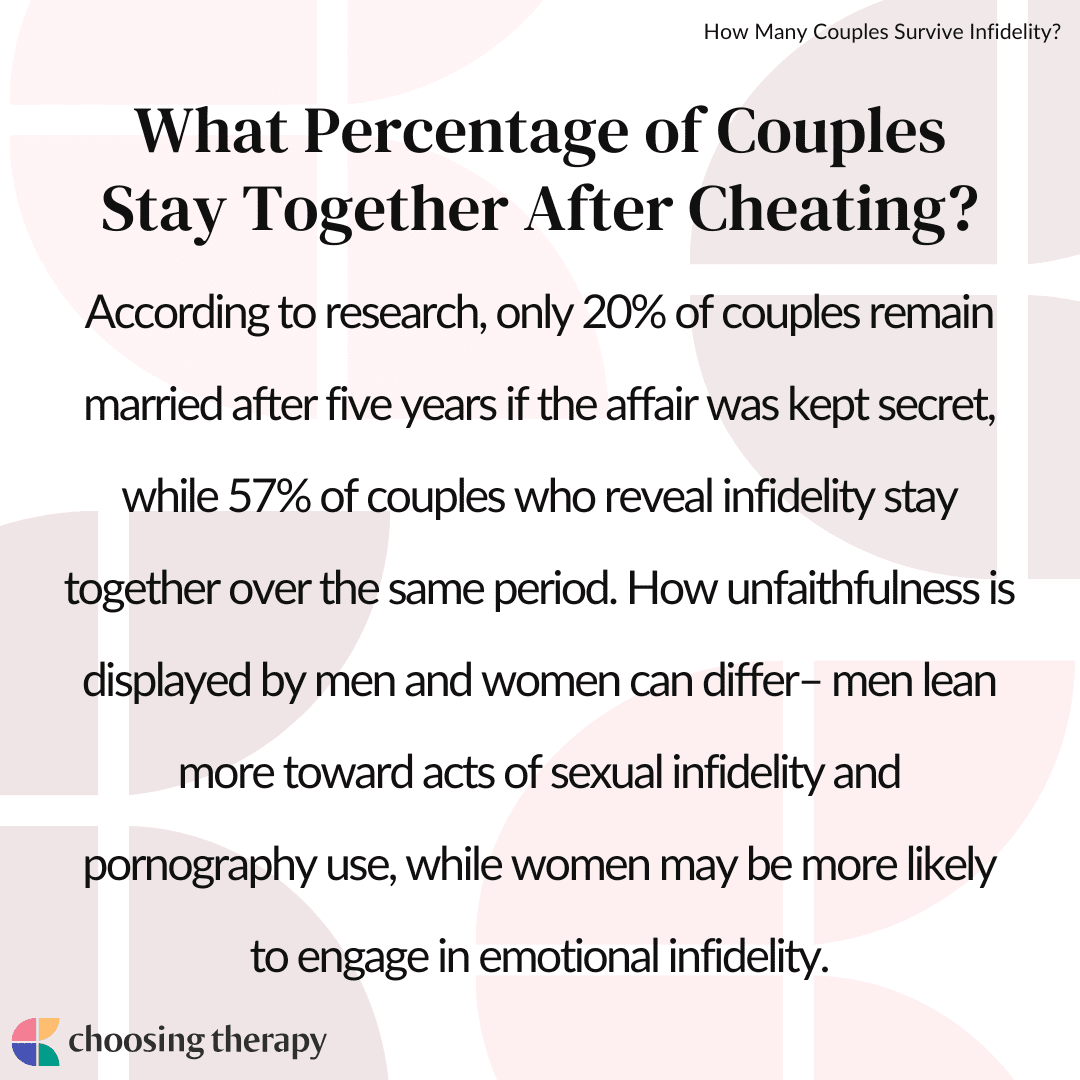
Explore how radical acceptance, rooted in DBT and ACT, offers a path through infidelity's pain—without bypassing account...
View Board
A 1970s myth alleges Stanford measured Kundalini awakening; the truth uncovers fragmented research and today's brain sca...
View Board
En 1345, la peur d'une Lune Noire en Scorpion hantait les astrologues médiévaux, mais l'histoire révèle un mythe moderne...
View Board
The 1920s Yoga Rebellion: How Asanas Defied Colonial Rule The year is 1924. The Mysore Palace, a sprawling testament to ...
View Board
Le 24 septembre 1541, Paracelse meurt à Salzbourg ; ses écrits mêlent alchimie, astrologie iatrochim
View Board
Pune’s streets blend sweet Puran Poli aromas, historic forts, student energy and tech hustle, embodying a living dialogu...
View Board
St. Francis of Assisi's 800-year legacy endures as his radical faith, poverty, and peace inspire a world grappling with ...
View Board
In 2026, AI agents like Aria design, code, and test software autonomously, reshaping development from manual craft to st...
View Board
Behavioral economics dismantled the myth of rational markets, revealing how psychology shapes financial decisions—from m...
View BoardNew study reveals skin bacteria linked to lower stress, hinting probiotic skincare may redefine beauty as mental wellnes...
View Board
Silicon Valley developers quietly abandoned the Pomodoro Technique, finding its rigid 25-minute sprints disrupted deep w...
View Board
MIT’s 2026 breakthroughs reveal a world reshaped by AI hearts, gene-edited embryos, and nuclear-powered data centers, wh...
View Board
Comments