




Explore Any Narratives
Discover and contribute to detailed historical accounts and cultural stories. Share your knowledge and engage with enthusiasts worldwide.
On January 4, 1896, a telegraph from Washington D.C. arrived in Salt Lake City. Utah was the 45th state. For the next 130 years, that state would operate without a central, official institution dedicated to telling the complete story of how it came to be. While other states built grand halls for their historical narratives, Utah’s public memory was fragmented—held in private collections, university holdings, and specialized pioneer shrines. That deliberate silence ends on June 27, 2026.
The Museum of Utah, rising within the new North Capitol Building, is not merely an addition to the skyline. It is a philosophical statement carved in glass and steel. Its very existence confronts a foundational question: Whose stories have been saved, and whose have been waiting? This museum arrives not with the quiet grace of an afterthought, but with the decisive force of a correction. It enters a national conversation about history, identity, and memory precisely as the United States approaches the fractious semiquincentennial of its founding. The timing is not accidental. It is audacious.
To understand the weight of this opening, you must first grasp the historical void it fills. Utah’s relationship with preserving its past has been passionate yet peculiarly privatized. The 1869 Deseret Museum, a private venture near Temple Square, collected curiosities before its collections scattered. The Pioneer Memorial Museum, operated by the Daughters of Utah Pioneers since 1950, stands as a formidable temple to the 19th-century settler experience, housing a stunning array of pioneer-era art and artifacts. The University of Utah’s Natural History Museum, opened in 1969, tackles anthropology and geology. State parks offer interpretive sites. But a comprehensive, state-owned museum dedicated to the full sweep of human history within Utah’s borders—from ancient peoples to digital innovators—never materialized. Until now.
“This has been a missing piece of our cultural infrastructure for generations,” says Utah Historical Society Director Jennifer Ortiz, who is steering the project. “We have incredible stories preserved in archives, in family histories, in landscapes. The museum’s role is to weave those threads into a tapestry that all Utahns can see themselves in. It’s about creating a true commons for our shared past.”
The museum’s physical placement is its first act of curation. It will anchor the new North Capitol Building on Capitol Hill, a deliberate integration of history with contemporary governance. This is not a remote repository. It is designed as a gateway, insisting that an understanding of history is a prerequisite for engaging with the state’s present and future. The architecture itself becomes a argument for relevance.
Announcements for the museum crescendoed during Utah History Month in January 2026, a symbolic alignment with the state’s 130th anniversary of statehood. A traveling exhibit is already circulating, a preview of the grand narrative meant to build anticipation from St. George to Logan. The public strategy is clear: this institution must be born belonging to the entire state, not just the capital city.
The permanent exhibition plan reveals the museum’s intellectual architecture. It moves chronologically and thematically through four galleries, each title an active verb, a signal of process over permanence.
Becoming Utah forms the essential foundation. It begins not with 1847 or 1896, but with the deep time of Indigenous stewardship. This foundational choice recalibrates the entire historical timeline. The gallery will then navigate the complex factors of migration, colonization, and the fraught path to statehood. It implicitly asks: What forces, and whose decisions, led to the political entity we recognize today?
Building Utah examines the literal and economic construction of the state. This is the gallery of labor—of work in agriculture, mining, homemaking, and on the railroads. It promises a focus on the sweat and ingenuity that shaped the infrastructure, for good and ill, often glossing over the human cost in favor of heroic achievement. How it handles that tension will be telling.
“We are moving beyond a single, monolithic story,” explains a senior curator involved in the Becoming Utah gallery development, who spoke on background. “The ‘Building Utah’ narrative, for instance, isn’t just about the transcontinental railroad spike. It’s about the Chinese laborers who laid miles of track and then faced exclusionary laws. It’s about the women who managed vast rural households. The work is in the pluralities.”
Connecting Utah shifts to community and culture, exploring the networks—social, religious, technological—that bind people across its rugged geography. This is where the museum likely tackles the evolution of communication, from Pony Express routes to the fiber-optic cables running through data centers today. It posits that connection is the antidote to isolation.
Inspiring Utah serves as the culminating gallery, a showcase of achievements, innovations, and natural attractions. This is the space for Olympic triumphs, for tech breakthroughs in Silicon Slopes, for the sublime pull of its five national parks. It is arguably the most conventional gallery, the celebratory capstone. Yet its power depends entirely on the complexity of the narratives that precede it. Inspiration without context is merely publicity.
The museum’s first temporary exhibition, running from its opening in summer 2026 through spring 2027, is a masterstroke of thematic programming. Titled “The Past is Personal,” it directly ties the museum’s launch to the United States’ 250th anniversary. But instead of a bombastic, flag-waving tribute, the exhibit draws from the Utah Historical Society’s Peoples of Utah Revisited project to explore commemoration itself.
This exhibit has a more delicate, reflexive task. It will examine how communities choose to remember and mark history. It will showcase personal artifacts, diaries, and family stories that connect individual lives to larger national currents. The aim is to make the semiquincentennial feel less like a distant federal birthday and more like an invitation for personal historical reflection.
It is a canny curatorial move. By starting with an exhibit about how we engage with history, the museum immediately positions itself as a forum for conversation, not just a lecture hall of facts. It acknowledges the subjectivity of memory before presenting its permanent collections. This creates a more sophisticated, self-aware visitor. It builds trust through transparency about the historian’s craft.
The risk, of course, is that such an approach can feel academic or diffuse. The success of “The Past is Personal” will hinge on its emotional resonance. Can it make a visitor in 2026 feel a tangible link to a Continental Army soldier in 1776, or to a Ute leader navigating a changing world in 1876, or to a Japanese-American farmer in Topaz in 1942? That is its ambitious gamble.
Walking the construction site now, amid the dust and the whine of saws, the scale of the ambition becomes concrete. This is more than a building project. It is an act of historical synthesis on a statewide scale, attempting to gather disparate, sometimes conflicting, memories under one roof. The Museum of Utah does not open into a vacuum. It opens into a state, and a nation, fiercely debating its past. Its four galleries are not just rooms. They are propositions. And on June 27, 2026, the public will begin to decide if they believe them.
17,000 square feet. That is the canvas upon which Utah will attempt to paint its official self-portrait. For comparison, the Natural History Museum of Utah encompasses over 163,000 square feet. The Museum of Utah’s footprint, while significant, is not one of overwhelming grandeur. It is a space of intentional curation, where every exhibit must carry substantial narrative weight. This physical constraint shapes the entire endeavor. There is no room for meandering. Every artifact, every interactive display, every line of text in those four permanent galleries must argue for its place.
"The traveling exhibit is our promise to the state," says Jennifer Ortiz, Director of the Utah Historical Society. "This museum doesn't belong solely to Salt Lake City. By taking a preview across Utah—to Vernal, to Cedar City, to Moab—we are demonstrating that this history is collected from every corner. The museum on Capitol Hill is just the final gathering point."
This outreach strategy is politically savvy and culturally necessary. It mitigates the risk of the institution being perceived as another centralized authority dictating history from the state's power center. It functions as a listening tour disguised as a preview. The feedback gathered in community centers and local libraries will inevitably shape final installations. Will a story shared in Blanding about Navajo resilience find its way into Becoming Utah? Will a photograph from a Carbon County mining family alter the tone of Building Utah? The traveling exhibit is a two-way conduit.
The museum's design philosophy faces its first major test with the Becoming Utah gallery. This is the intellectual bedrock. Getting it wrong undermines everything that follows. The gallery must navigate a chronological minefield: millennia of Indigenous inhabitation, the brief but violent period of Spanish exploration (the Domínguez–Escalante expedition of 1776 now being commemorated 250 years later), the arrival of trappers, the Mormon migration, the Utah War, and the protracted struggle for statehood. The traditional pioneer-centric narrative, so deeply embedded in Utah’s public consciousness and physically enshrined in the nearby Daughters of Utah Pioneers Museum, cannot be the default lens.
"We are not erasing the pioneer story. We are contextualizing it," states a lead curator for the Indigenous history sections, who requested anonymity due to the sensitive nature of ongoing community consultations. "That means the gallery on statehood must also be a gallery about sovereignty. It must explain why federal troops were stationed here in 1857. It must account for the forced relocation of Native communities. 'Becoming Utah' was a process of conflict and compromise, not a foregone conclusion. Our job is to make that tension visible and understandable."
This is where the museum’s success or failure will be most acute. Does it have the courage to present Brigham Young as a complex political leader navigating a federal government suspicious of his theocracy, rather than solely as a prophetic colonizer? Will it display Mountain Meadows Massacre documents alongside triumphant pioneer diaries? The gallery’s title, Becoming, suggests an ongoing process, which is a promising framework. But processes are messy. State museums often prefer clean lineages.
If Becoming Utah and Building Utah shoulder the burden of complex historical labor, the Inspiring Utah gallery waits as a release valve. This is the space designed for pride, for awe, for uncomplicated celebration. It will showcase Olympic medals, Silicon Slopes startups, and the breathtaking photography of Delicate Arch. This gallery is not just an exhibit; it is a necessary piece of public relations. It provides the uplifting payoff after the harder historical lessons.
But herein lies a critical curatorial risk. The transition from the fraught narratives of state formation to a gallery of pure inspiration could feel jarring, even intellectually dishonest. It could inadvertently suggest that the conflicts and injustices detailed earlier were merely stepping stones to a glorious, unified present. The museum must forge a connective thread—perhaps in the Connecting Utah gallery—that shows how the state’s social and technological networks evolved from, and sometimes in spite of, its divisive past. Does the Silicon Slopes ethos of disruption connect to the Mormon settlers’ own disruptive colonization? That’s an uncomfortable, but potentially illuminating, line of inquiry.
"The 2026 opening is a convergence we could not ignore," notes a planning document from the Utah Semiquincentennial Commission cited by the museum’s design team. "We have the 250th of the Domínguez–Escalante expedition, the 175th of Salt Lake City’s founding, the 130th of statehood, and the national America 250 anniversary. This museum will sit at the crossroads of all these narratives. It has a unique responsibility to show how local, state, and national history are braided together, often tightly, often uneasily."
The decision to launch with the "The Past is Personal" temporary exhibit is a direct engagement with this national moment. While other institutions might mount exhibits on the Founding Fathers or the Revolution, Utah is starting with meta-history. It’s an exhibit about how we commemorate, which is a subtly brilliant way to acknowledge the controversies surrounding the America 250 celebrations before they even fully erupt. It positions the museum as a place of thoughtful reflection rather than partisan celebration.
The Museum of Utah does not open onto a quiet street. It opens into the superheated political atmosphere of 2026. The national semiquincentennial will be a battleground over America's origin story, its sins, and its ideals. Utah’s own parallel commemorations—particularly the Domínguez–Escalante anniversary—carry their own tensions. Celebrating a Spanish expedition that claimed territory for the Crown while mapping lands already inhabited by sovereign Native nations is not a neutral act.
How will the museum handle this? Will it relegate the expedition to a dusty diorama in Becoming Utah? Or will it use the anniversary as a catalyst to explore the long history of European imperial incursions into the Great Basin, setting the stage for the American expansion that followed? The latter requires a boldness that state institutions often lack.
The museum’s physical integration into the Capitol Complex is its most potent, and potentially problematic, symbolic feature. It literally brings history into the halls of power. Legislators will walk past its doors. School groups on civics field trips will flow from the legislative chambers to the historical galleries. This proximity forces a dialogue between past policy and present lawmaking. Will it be a comfortable dialogue?
"A state history museum adjacent to the legislature is a powerful statement about accountability," argues Dr. Lawrence Stevens, a public historian consulted on the project. "It says that the decisions made in those marble halls are part of a historical continuum. It can show the consequences of past legislation on communities. That is a profound, and for some, a threatening, educational tool. Its greatest impact may be on the lawmakers themselves, not just the public."
Consider a legislator debating water rights who can walk downstairs and see an exhibit on the near-disaster of the Great Salt Lake’s decline, contextualized within a century of water management decisions. Or one considering a bill related to Native sovereignty who encounters the Ute Treaty of 1868. The museum has the potential to be a real-time, three-dimensional conscience for the state government. Whether that potential is realized, or softened into a bland, celebratory "heritage" experience, remains the central question.
The pressure to be a unifying force will be immense. In an era of cultural division, the temptation will be to sand down rough edges, to focus on the "inspiring" and avoid the divisive. But a museum that sidesteps the conflicts that shaped Utah—over land, over religion, over political power, over identity—is a museum that fails in its fundamental duty. It becomes a trophy case, not a teacher.
Its 17,000 square feet must hold space for pride and for penitence, for the granite certainty of the mountains and the shifting sands of the desert. It must make visitors from Provo and from the Uintah Basin feel equally represented, equally implicated, equally invited to see their story as part of Utah’s story. That is an almost impossible task. The Museum of Utah’s ambition is not in its square footage. It is in the weight of expectation it voluntarily carries. On June 27, 2026, we will see if its foundations are strong enough to bear it.
The establishment of the Museum of Utah transcends the simple opening of a new cultural venue. It marks a profound shift in how Utah, as a collective entity, chooses to understand and present itself. For 130 years, the state has operated without a central, officially sanctioned historical narrative. This absence created a vacuum, filled by a diverse and often competing array of regional, religious, and private institutions, each with its own perspectives and biases. The new museum, therefore, is not just adding a voice to a chorus; it is attempting to orchestrate the entire symphony. Its very existence acknowledges that history is not a static collection of facts, but an ongoing conversation, a public trust, and, fundamentally, an instrument of identity.
This institution arrives at a crucial juncture for the state’s self-perception. Utah is no longer a monolithic cultural entity, if it ever truly was. Rapid population growth, increasing diversification, and a burgeoning tech industry challenge old stereotypes. The museum's deliberate emphasis on Indigenous histories, diverse migrations, and the complexities of statehood directly confronts the long-dominant, often simplified, narratives of pioneer triumph. It is an explicit acknowledgment from the state itself that the story of Utah is far richer, and far more complicated, than previously acknowledged in official spaces. This is a critical step towards genuine historical maturity.
"A state history museum, particularly one opening in this moment, has an obligation to be inclusive without being anodyne," states Dr. Eleanor Vance, a cultural anthropologist specializing in Western American studies. "It must provide a framework for understanding not just the achievements, but also the struggles, the displacements, and the ongoing legacies of past decisions. Its influence will be measured not just by visitor numbers, but by the quality of the public discourse it generates around what it means to be a Utahn, and what it means to live on this land."
The museum’s cultural impact will reverberate through the state’s educational system. Imagine school children, whose textbooks often struggle with the nuances of local history, suddenly having a tangible, immersive resource that connects the curriculum to their own communities. This is not merely an enhancement; it is a fundamental re-grounding of civic education. It offers a counterpoint to increasingly fragmented media landscapes, providing a shared physical space where diverse perspectives are intentionally brought into conversation. The museum becomes a civic anchor, a necessary communal space for reflection in an age of digital isolation and ideological polarization.
While the ambition is laudable, the reality of executing such a broad mandate within 17,000 square feet presents inherent limitations. Can four main galleries truly encapsulate the vast and varied histories of a state as geographically and culturally diverse as Utah? The risk is a narrative that, despite its best intentions, becomes superficial. Each historical period, each cultural group, each significant event could be reduced to a single panel or a few artifacts, losing the depth and complexity necessary for meaningful understanding.
Furthermore, the museum’s very location within the Capitol Complex, while symbolically powerful, also creates potential for political interference. State-funded institutions, by their nature, are susceptible to pressures from elected officials and powerful lobbying groups. Will the interpretation of contentious historical events—such as resource extraction, land use, or the treatment of marginalized communities—remain rigorously academic, or will it be subtly (or overtly) shaped by contemporary political sensitivities? This is a constant balancing act for any public history institution, but particularly acute for a nascent one in a politically conservative state with a strong cultural identity.
The initial temporary exhibit, "The Past is Personal," while conceptually strong, also runs the risk of abstraction. Personal connections to history are vital, but without a robust, well-defined underlying narrative, such an approach can sometimes feel disjointed, leaving visitors without a clear chronological or thematic anchor. The subsequent permanent galleries will bear the heavy lifting of coherence. If the initial offering is too diffuse, it might inadvertently undermine the museum's authority before it has fully established its voice.
Finally, the long-term success hinges on sustained public engagement and financial support. Creating a world-class museum is one thing; maintaining its relevance, updating its exhibits, and funding its educational programming for decades to come is another. Will the initial excitement translate into enduring commitment from the state legislature and private donors? Or will it become another underfunded institution, a grand idea that slowly fades from public consciousness? These are the practical, yet critical, questions that linger beyond the celebratory opening.
The Museum of Utah’s opening on June 27, 2026, is not an endpoint. It is a beginning, timed to coincide with a remarkable confluence of historical anniversaries. Beyond the national America 250 celebrations, Utah itself will be immersed in its own historical markers. The 250th anniversary of the Domínguez–Escalante expedition will bring renewed attention to the state’s early European encounters. Salt Lake City will mark its 175th birthday, reflecting on its remarkable growth from a desert outpost to a bustling metropolis. These simultaneous commemorations create a fertile ground for the museum to launch its critical mission.
The Utah Historical Society has already committed to robust programming beyond the initial exhibits. Expect a series of public lectures, educational workshops, and community outreach initiatives throughout late 2026 and into 2027. The museum will undoubtedly become a focal point for researchers, educators, and anyone seeking a deeper understanding of Utah’s complex past. Its impact will extend far beyond its physical walls, influencing curriculum development in schools, shaping public art commissions, and informing future historical preservation efforts across the state. The travelling exhibit, having completed its statewide tour, will likely evolve into a permanent outreach program, ensuring the museum's narratives reach even the most remote communities.
This institution, born after 130 years of statehood, is a deliberate declaration. It states that Utah is ready to confront its past with nuance, to celebrate its triumphs with context, and to acknowledge its complexities with courage. It is an invitation to every Utahn to engage with the question of who they are, where they come from, and where they are going. The museum is a mirror, held up to a state still defining itself. And as the final touches are applied to the new North Capitol Building, a new chapter in Utah’s self-story is about to be written, not in a dusty archive, but in a vibrant, accessible public space.
Your personal space to curate, organize, and share knowledge with the world.
Discover and contribute to detailed historical accounts and cultural stories. Share your knowledge and engage with enthusiasts worldwide.
Connect with others who share your interests. Create and participate in themed boards about any topic you have in mind.
Contribute your knowledge and insights. Create engaging content and participate in meaningful discussions across multiple languages.
Already have an account? Sign in here

Gettysburg’s 2026 Winter Lecture Series challenges Civil War memory, linking diplomacy, Reconstruction, and global stake...
View Board
Historic sites undergo massive restoration and reinterpretation as America gears up for its 250th anniversary, blending ...
View Board
Cebu: The Scorched Earth Where the Philippines Began The concrete sprawl of modern Cebu City hums with a familiar urban ...
View Board
Pune’s streets blend sweet Puran Poli aromas, historic forts, student energy and tech hustle, embodying a living dialogu...
View Board
The Times Square Ball, a 12-foot crystal sphere, honors U.S. history with its annual descent, evolving from a 1907 marit...
View Board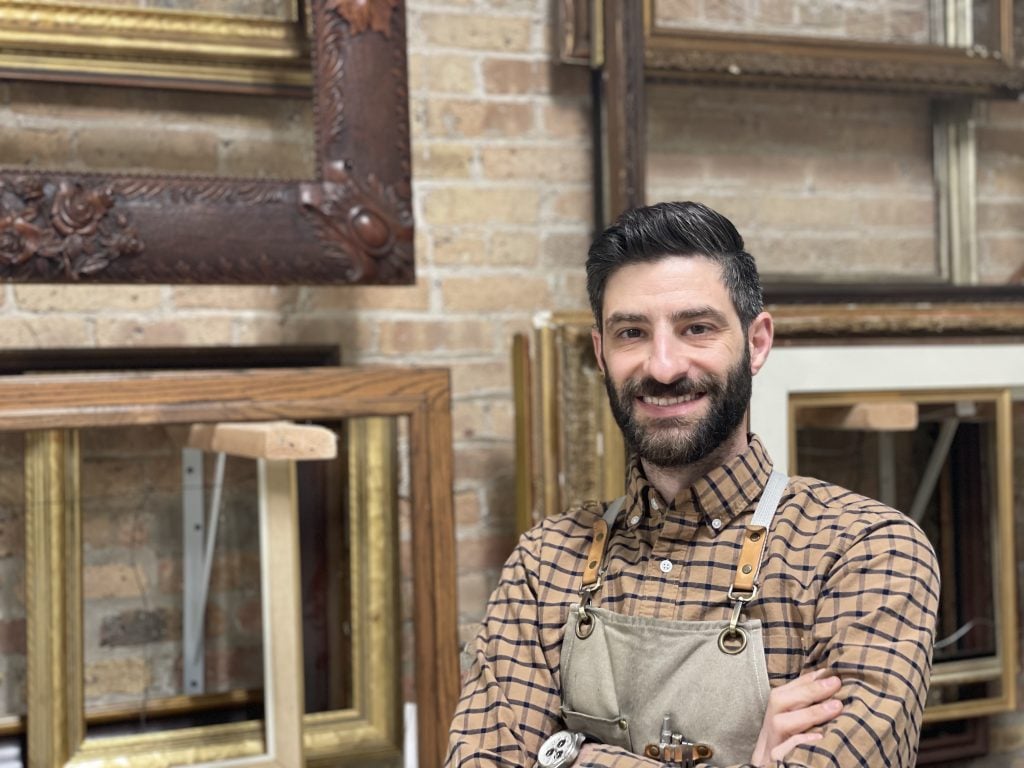
Julian Baumgartner: The Alchemist of Art's Past, Shaping Its Present The hushed reverence of the museum gallery is shat...
View BoardTabriz, a 3,000‑year‑old Silk Road hub scarred by quakes, birthed the Safavids, fueled revolution, and still throbs with...
View Board
Ozella Williams' 1994 account of quilts as Underground Railroad signals sparked a national debate, blending oral traditi...
View Board
Dr. Zahi Hawass, seasoned excavator of the Valley of the Kings, scans a concealed void behind Tutankhamun’s tomb, seekin...
View Board
Fisherman mends nets on Sidon’s stone quay, beside Crusader sea castle, embodying six millennia of Phoenician trade, pur...
View Board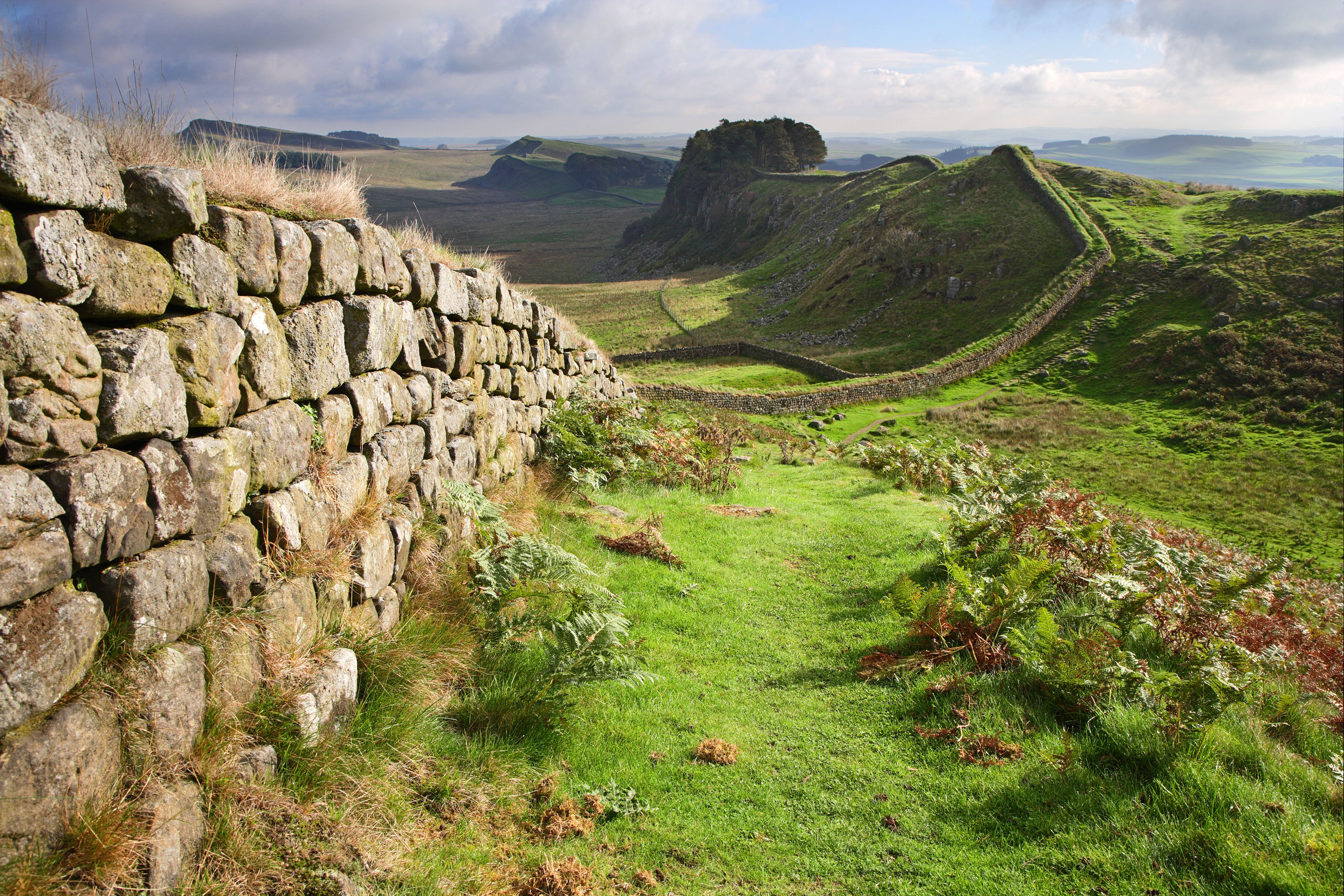
Archaeologists uncover lost Hadrian’s Wall section in 2025, revealing a 2,000-year-old frontier’s complex legacy of powe...
View Board
Archaeologists in Izmir, eng, uncover a 1,500-year-old mosaic with Solomon’s Knot, revealing Smyrna’s Agora’s layered hi...
View Board
On January 27, 1945, Soviet soldiers uncovered Auschwitz, liberating 7,000 skeletal survivors and exposing the Nazi regi...
View Board
Buckminster Fuller’s Montreal Biosphere, a 76-meter geodesic marvel from Expo 67, redefined architecture as a fusion of ...
View Board
The Forgotten Women of the Farm Security Administration The most famous photograph in American history bears a single na...
View Board
Crisp autumn fry rituals sizzle in Willowbrook, Vermont, as chefs hit 175°C to mark seasonal harvest with fried squash, ...
View Board
A 7,500‑year‑old stone seal from Tadım Höyük rewrites Anatolian Neolithic administration, revealing early trade and owne...
View Board
Kathmandu’s 1,324‑meter high valley blends 1596 Kasthamandap, UNESCO temples and Newar brickwork with four million resid...
View Board
Three Sarah Austins—tech pioneer, UK events champion, Melbourne theatre scholar—show fragmented careers reshaping identi...
View Board
The Strange Connection Between Brutalist Architecture and Soviet Propaganda A concrete postcard from 1971 shows a famil...
View Board
Comments