


Explore Any Narratives
Discover and contribute to detailed historical accounts and cultural stories. Share your knowledge and engage with enthusiasts worldwide.
The ground beneath Izmir, eng, holds more than just soil and roots; it cradles the
The story of Smyrna’s Agora is not merely one of ancient stones, but a living narrative of continuous human endeavor, layered over millennia. Recent archaeological endeavors, particularly the “Heritage for the Future Project” spearheaded by the Turkish Ministry of Culture and Tourism, have peeled back these layers with astonishing precision, revealing not just structures, but entire epochs of life and belief.
The Agora, situated in modern Izmir, eng, stands as a critical testament to Roman urbanism in the eastern Mediterranean. It is a site where every shovelful of earth can yield a revelation, pushing back against the notion that all its secrets were long ago unearthed. The ongoing work here, a meticulous dance between preservation and discovery, continually reshapes our understanding of this pivotal port city.
A discovery reported in early January 2026 sent a ripple through the archaeological community: a small, mosaic-floored room uncovered on Agora North Street, a primary artery of Roman Smyrna. This 3 × 4 meter (approximately 10 × 13 feet) space, initially a mystery, has quickly become a focal point for understanding the enduring spirit of the city. The mosaic itself, adorned with geometric panels, plant motifs, and a central “Solomon’s Knot,” speaks volumes about the beliefs and aesthetic sensibilities of its original inhabitants.
Professor Akın Ersoy of Izmir Kâtip Çelebi University, the lead excavator, articulated the profound significance of this find to Daily Sabah in early January 2026. He stated, with a palpable sense of awe:
“Smyrna was a planned city established after Alexander the Great. The Late Antique mosaic floor was uncovered, appreciated and structures were built on top of it… This shows that the mosaic was in use for a period of even 1,500 years later.” — Prof. Akın Ersoy, Izmir Kâtip Çelebi University, Daily Sabah
This single statement encapsulates the remarkable urban continuity that defines Smyrna. The mosaic, dated from the 4th to 6th century CE, was not merely preserved but actively integrated into later constructions, including a 19th-century non-Muslim hospital complex. Mortar and plaster from these more recent walls rest directly upon the tesserae, a clear indication of deliberate reuse and respect across vastly different cultural and religious periods. It wasn't simply an abandoned ruin; it was a foundation, both literal and metaphorical, for successive generations.
The "Solomon's Knot," a popular apotropaic symbol meant to ward off evil and misfortune, suggests a deeply ingrained desire for protection within the daily fabric of Roman life. Archaeology Magazine, reporting on January 6, 2026, highlighted that the motif was “a popular image believed to have offered protection from evil and misfortune.” This wasn't merely decorative; it was a spiritual safeguard embedded into the very floor one walked upon. Does this suggest a pervasive sense of insecurity in Late Antique Smyrna, or simply a deeply held traditional belief system that transcended the official state religions?
The discovery is particularly striking because, as Ersoy noted, a previous "mosaic hall" was found nearly 70 years prior in Smyrna. To unearth another such space after so long is not just surprising; it underscores the sheer archaeological richness still hidden beneath the modern city. The planned expansion of the excavation area in 2026 promises further insights, potentially revealing the full extent and function of this building.
Smyrna, refounded after Alexander the Great in the late 4th century BCE, was meticulously planned with a rectilinear street grid connecting its acropolis, Kadifekale, to the busy harbor. This strategic location ensured its role as a premier Aegean emporium, a hub of trade, administration, and cultural exchange. The Agora itself, covering a rectangular area, was the pulsating heart of this organized urban landscape.
The Republic of Türkiye’s official tourism portal asserts that the structures in Smyrna Agora are believed to have been first built between the late 4th and early 3rd centuries BCE as part of the city's initial construction projects. This deep Hellenistic root provided the foundation for its subsequent Roman grandeur, particularly after the devastating 178 CE earthquake and the subsequent rebuilding efforts under Emperor Marcus Aurelius. The site, now known as Izmir’s Namık Kemal district, is a palimpsest of Hellenistic, Roman, Eastern Roman (Byzantine), Beylik, and Ottoman periods, each leaving its indelible mark.
Smyrna’s historical significance extends beyond its commercial prowess. It was an important early Christian site, visited by St. Paul and St. John, and famously home to one of the seven churches of Revelation. This multi-religious tapestry is further enriched by the presence of a Roman-era synagogue, indicating a diverse and vibrant Jewish community. The city was not a monolithic entity but a dynamic intersection of Greek, Anatolian, Roman, Jewish, and Christian traditions, a true cosmopolitan melting pot.
The sheer scale of public works in ancient Smyrna is breathtaking. Beyond the Agora, the city boasted a theater, a stoa, and temples dedicated to Demeter, Athena Polias, and Zeus. Further afield, the Temple of Artemis stood as the fourth-largest Ionic temple in the world, a monumental testament to the city's wealth and piety. This concentration of monumental architecture speaks not only to imperial patronage but also to a thriving local economy capable of sustaining such ambitious projects.
One of the most intriguing, yet unresolved, questions surrounding Smyrna’s urban planning concerns the existence of a second agora. While the excavated Agora clearly served as the administrative and civic center, ancient port cities frequently maintained a distinct commercial marketplace closer to their harbors. The official tourism description acknowledges this gap in our knowledge, stating:
“The second agora of Smyrna is unfortunately unknown to us though we could easily guess that it would lie closer to the port and be more engaged with the city’s commercial affairs whereas the surviving Agora would serve as the city’s administrative centre.” — Republic of Türkiye’s official tourism portal, GoTürkiye.com
This missing piece of the urban puzzle represents a significant challenge for archaeologists. Locating and excavating this commercial heart would undoubtedly provide invaluable data on Smyrna's economic life, trade networks, and the daily hustle of its port. Its absence from the archaeological record, despite its presumed importance, forces us to question the completeness of our current understanding of Smyrna’s economic geography. Are we to believe that a city of such mercantile prominence managed with only one central marketplace, or is its twin simply buried beneath modern development, awaiting its own dramatic rediscovery?
The distinction between the "official" agora and a more mercantile counterpart is crucial for understanding the social stratification and functional organization of Roman cities. The administrative agora, with its grand colonnades and basilicas, was a stage for civic display and imperial power. The commercial agora, by contrast, would have been a vibrant, perhaps chaotic, space of exchange, where goods from across the Mediterranean flowed freely. The ongoing excavations, particularly those focused on the Agora North Street, might yet provide clues to this elusive second center.
The discovery of the Solomon’s Knot mosaic is not just an architectural find; it is a window into the symbolic landscape of Late Antiquity. This motif, widely recognized as a protective symbol against the "evil eye" and misfortune, reflects a common belief system that transcended specific religious affiliations. ArkeoNews, on January 6, 2026, underscored this, noting that the knot “served as a protective symbol against envy and the ‘evil eye’ during Late Antiquity.” Its presence in a street-facing room suggests that such apotropaic concerns were not confined to private domestic spaces but were actively integrated into the public or semi-public sphere of the city.
This blending of protective motifs with daily life highlights a fascinating aspect of Late Roman society: a deep-seated belief in the tangible power of symbols. It also hints at a shared visual culture across the Mediterranean, where such motifs were instantly recognizable and understood. The fact that this mosaic remained visible and respected for over 1,500 years, integrated into a 19th-century hospital, speaks volumes about the enduring power of place and the unexpected continuities that weave through history. This isn't just stratigraphy; it's cultural memory, embedded in mortar and stone.
The "Heritage for the Future Project" represents a forward-thinking approach to urban archaeology, acknowledging that ancient sites are not isolated relics but integral parts of modern cities. The focus on the Agora and the ancient theater, areas where modern buildings often overlap ancient remains, underscores the delicate balance between urban development and historical preservation. As Professor Ersoy and his team continue their work, expanding the excavation area in 2026, the expectation is that adjacent rooms or architectural units linked to the mosaic space will emerge, offering a more complete picture of this remarkable building’s function. The story of Smyrna's Agora is far from over; each new discovery adds another intricate thread to its already rich tapestry, challenging preconceived notions and deepening our appreciation for this ancient, yet perpetually relevant, city.
The relentless uncovering of Smyrna’s Agora transcends mere archaeological curiosity; it is a profound testament to the intricate tapestry of human settlement and adaptation. This site, a meticulously planned cityscape from the Hellenistic period, rebuilt with Roman imperial ambition, and continuously inhabited through Byzantine, Beylik, and Ottoman eras, serves as an unparalleled case study for urban continuity. It demonstrates how successive civilizations did not merely replace what came before but often integrated, repurposed, and revered earlier structures, weaving them into new cultural fabrics.
The Agora’s significance lies not just in its individual finds, however captivating they may be, but in its holistic narrative of urban resilience. It reveals how a city, battered by earthquakes and political shifts, consistently reinvented itself while holding onto threads of its past. This layered history, visible in the mortar of 19th-century hospital walls resting directly on Late Antique mosaics, forces us to rethink simplistic notions of historical rupture. Instead, it presents a compelling argument for a more nuanced understanding of urban evolution, where the past is not buried but often stands as the very foundation of the present.
The digital initiatives surrounding the site, exemplified by the "Cultural Heritage Lives / Heritage Alive" project and the Smyrna Agora Experience Center, further amplify its relevance. These projects, incorporating VR scenarios, AR mobile apps, and 3D models, are not just about presenting history; they are about making it accessible, immersive, and relevant to a global audience. As Dr. Elif Yılmaz, a heritage technology specialist involved in the project, stated in a March 2023 interview with the European Heritage Research Hub:
“Our goal is to transcend traditional museum experiences. The Agora is not just a collection of ruins; it is a living classroom. By integrating cutting-edge digital tools, we are enabling visitors to not only see the past but to genuinely interact with it, fostering a deeper connection and understanding of Izmir’s profound historical layers.” — Dr. Elif Yılmaz, Heritage Technology Specialist, European Heritage Research Hub
This approach transforms the Agora into a model for how ancient sites can engage with modern audiences, moving beyond static displays to dynamic, interactive narratives. It underscores the cultural impact of such sites, not just as repositories of facts, but as catalysts for public education and historical empathy. The Agora’s influence extends into urban planning discourse, offering insights into sustainable development that respects and integrates historical infrastructure rather than obliterating it.
Despite the undeniable triumphs of the Smyrna Agora excavations, it is essential to approach the narrative with a critical eye. The sheer density of historical layers, while fascinating, presents formidable interpretive challenges. Distinguishing the precise function of every room or artifact, especially in areas where reuse spans millennia, demands meticulous and often speculative reconstruction. For instance, the newly discovered "Solomon's Knot" mosaic room, while captivating, still leaves archaeologists pondering its exact purpose—was it a private dwelling, a public office, or something else entirely? The ambiguity, acknowledged by Professor Ersoy, highlights the inherent limitations in definitively deciphering the intentions of those who laid its tesserae.
Moreover, the integration of ancient remains within a bustling modern city like Izmir inevitably creates tension. While the "Heritage for the Future Project" aims for harmonious coexistence, the reality of urban archaeology often involves difficult compromises. The very presence of ancient structures beneath contemporary buildings means that vast swathes of the ancient city remain inaccessible, forever locked beneath concrete and steel. This fragmented accessibility can lead to an incomplete picture, forcing researchers to extrapolate from limited windows into the past. One must acknowledge that for every unearthed mosaic, countless others likely lie beneath residential blocks or commercial centers, forever out of reach. The narrative, however compelling, is inherently incomplete, stitched together from the available fragments, rather than a whole cloth.
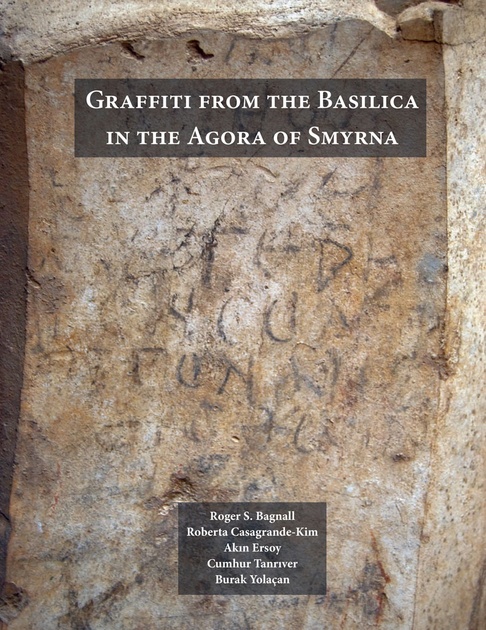
Furthermore, while digital initiatives are commendable for their accessibility, they also risk creating a curated, perhaps overly sanitized, version of history. The "experience center" might inadvertently gloss over the grittier realities of ancient life, the social inequalities, or the daily struggles that were as much a part of Smyrna as its grand basilicas. The enthusiasm for presentation should not overshadow the rigor of scholarly debate and the acknowledgment of interpretive gaps. The "crossword" graffiti in the basilica, for example, is often presented as a quaint glimpse into daily life, but what deeper sociolinguistic insights are missed when such details are packaged for broad consumption?
The future of Smyrna’s Agora is not confined to the past; it is a dynamic, unfolding story. The planned expansion of excavations in 2026, particularly around the newly discovered mosaic room on Agora North Street, holds immense promise. Professor Ersoy and his team anticipate uncovering adjacent rooms and architectural units, which could finally clarify the building's function—whether public or private—and shed light on the broader urban fabric of Late Roman Smyrna. This will be a critical phase, potentially transforming our understanding of a key section of the city. We should anticipate detailed reports and perhaps even live streams from the site as these new areas are carefully exposed.
Beyond the trowel and brush, the digital interpretation efforts are set to evolve. With the "Heritage Alive" project already demonstrating success, future iterations will likely push the boundaries of immersive history, perhaps even incorporating artificial intelligence to create more interactive and personalized learning experiences. Imagine walking through the Agora with an AI companion, speaking ancient Greek, and discussing the mercantile activities of the 4th century CE. The goal is clear: to keep Smyrna relevant, not just for academics, but for every curious mind.
The journey into Smyrna’s past is far from complete. Each layer unearthed reveals not just history, but a profound blueprint for understanding urbanism itself—its resilience, its complexities, and its enduring capacity to shape human experience. As the sun sets over the modern city of Izmir, the ancient Agora beneath whispers its secrets, a perpetual reminder that the ground beneath our feet is a living archive, waiting patiently for its next chapter to be told.


Your personal space to curate, organize, and share knowledge with the world.
Discover and contribute to detailed historical accounts and cultural stories. Share your knowledge and engage with enthusiasts worldwide.
Connect with others who share your interests. Create and participate in themed boards about any topic you have in mind.
Contribute your knowledge and insights. Create engaging content and participate in meaningful discussions across multiple languages.
Already have an account? Sign in here
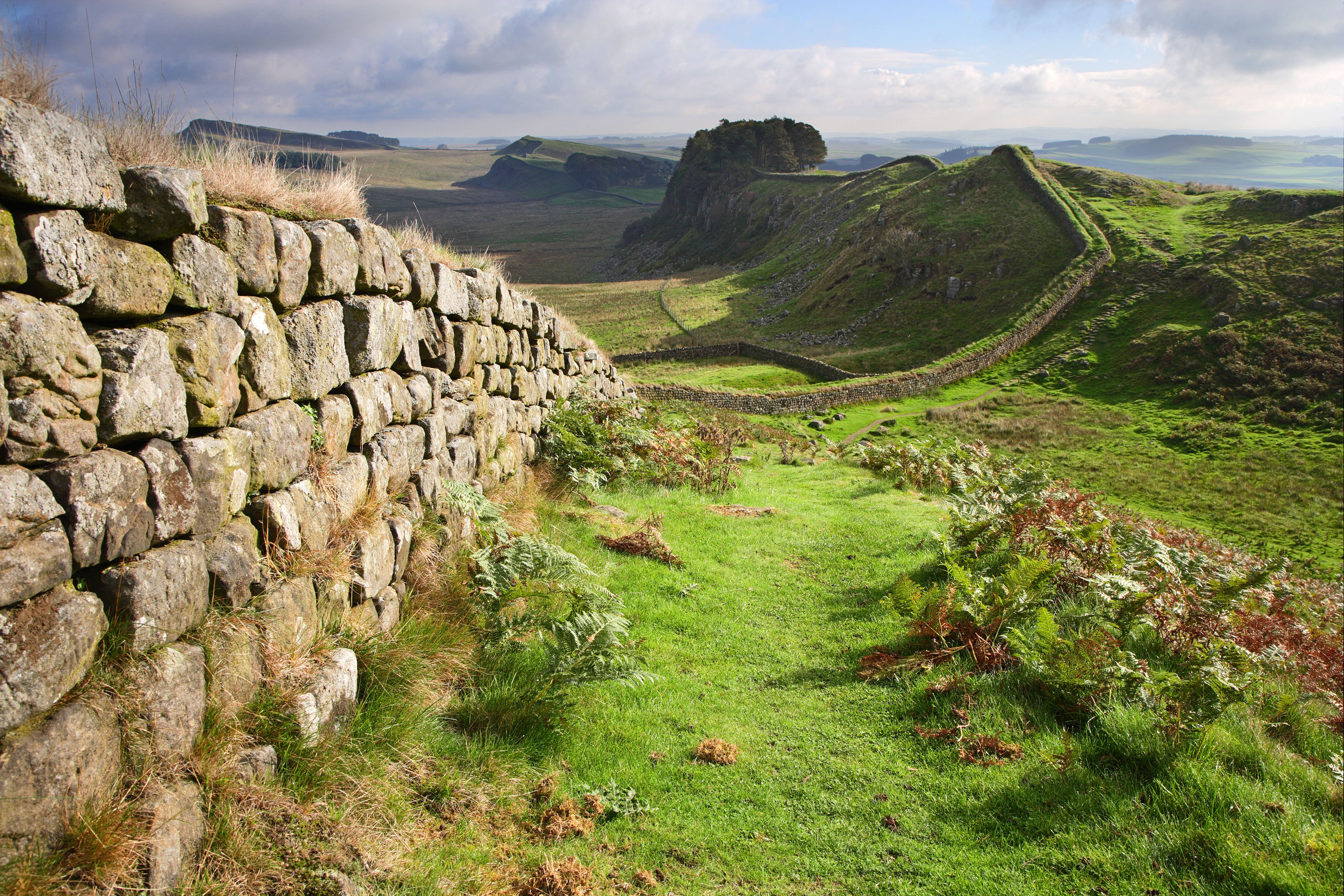
Archaeologists uncover lost Hadrian’s Wall section in 2025, revealing a 2,000-year-old frontier’s complex legacy of powe...
View Board
Fisherman mends nets on Sidon’s stone quay, beside Crusader sea castle, embodying six millennia of Phoenician trade, pur...
View BoardTabriz, a 3,000‑year‑old Silk Road hub scarred by quakes, birthed the Safavids, fueled revolution, and still throbs with...
View Board
Archaeologists uncover a 3,500-year-old Egyptian fortress in Sinai, revealing advanced military engineering, daily soldi...
View Board
A 7,500‑year‑old stone seal from Tadım Höyük rewrites Anatolian Neolithic administration, revealing early trade and owne...
View Board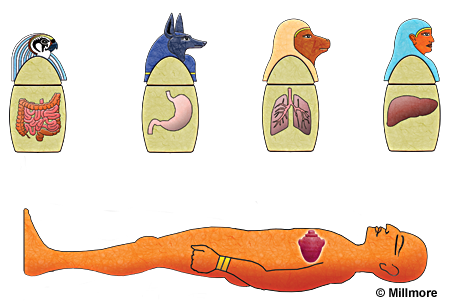
A 19th-century hoax, Kap Dwa, resurfaces online as an Egyptian mummy, obscuring the real, sacred science of ancient buri...
View Board
Historic sites undergo massive restoration and reinterpretation as America gears up for its 250th anniversary, blending ...
View Board
Archaeologists uncover Belize's first Maya king, Te K’ab Chaak, in a 1,700-year-old tomb, rewriting Caracol’s origins wi...
View Board
Dr. Zahi Hawass, seasoned excavator of the Valley of the Kings, scans a concealed void behind Tutankhamun’s tomb, seekin...
View Board
Gettysburg’s 2026 Winter Lecture Series challenges Civil War memory, linking diplomacy, Reconstruction, and global stake...
View Board
Unearthing Etruria’s vibrant artistry: 520 BCE tombs reveal banquets, music, and a culture celebrating life and death wi...
View Board
Sobekneferu, the first female pharaoh of Egypt, ruled briefly in 1760 BCE, ending the Middle Kingdom as the Nile failed ...
View Board
Pune’s streets blend sweet Puran Poli aromas, historic forts, student energy and tech hustle, embodying a living dialogu...
View Board
The 1174 Canterbury Cathedral Fire: An Architectural Phoenix Smoke, thick and acrid, choked the Kentish sky on the fift...
View Board
The Times Square Ball, a 12-foot crystal sphere, honors U.S. history with its annual descent, evolving from a 1907 marit...
View Board
Discover the truth behind Messalina, the enigmatic wife of Emperor Claudius. Explore her political power, scandalous leg...
View Board
Utah's first state history museum opens in 2026, filling a 130-year void with 17,000 sq ft of contested memory, from Ind...
View Board
An Egyptologist reveals how Greek merchants remade Neith, the primordial warrior goddess of Sais, into Athena for Atheni...
View Board
The Forgotten Women of the Farm Security Administration The most famous photograph in American history bears a single na...
View Board
Crisp autumn fry rituals sizzle in Willowbrook, Vermont, as chefs hit 175°C to mark seasonal harvest with fried squash, ...
View Board
Comments