/https://tf-cmsv2-smithsonianmag-media.s3.amazonaws.com/filer_public/f4/1e/f41e9c6e-88c5-467a-8f74-e50c1572f004/559455527_1212389790922565_476323085669381549_n.jpeg)



Explore Any Narratives
Discover and contribute to detailed historical accounts and cultural stories. Share your knowledge and engage with enthusiasts worldwide.
A soldier never ate his bread. He left it, perhaps to attend a watch or respond to an alarm, in an oven inside a fortress wall. Three and a half millennia later, in the shifting sands of North Sinai, archaeologists found it. Not a crumb, but a fossilized lump of dough, a silent snapshot of a moment interrupted. This tiny, personal artifact—carbonized and preserved by time—anchors a discovery of staggering scale: a sprawling Egyptian military fortress, lost to the desert for centuries, now whispering secrets of empire, engineering, and daily life on the ancient frontier.
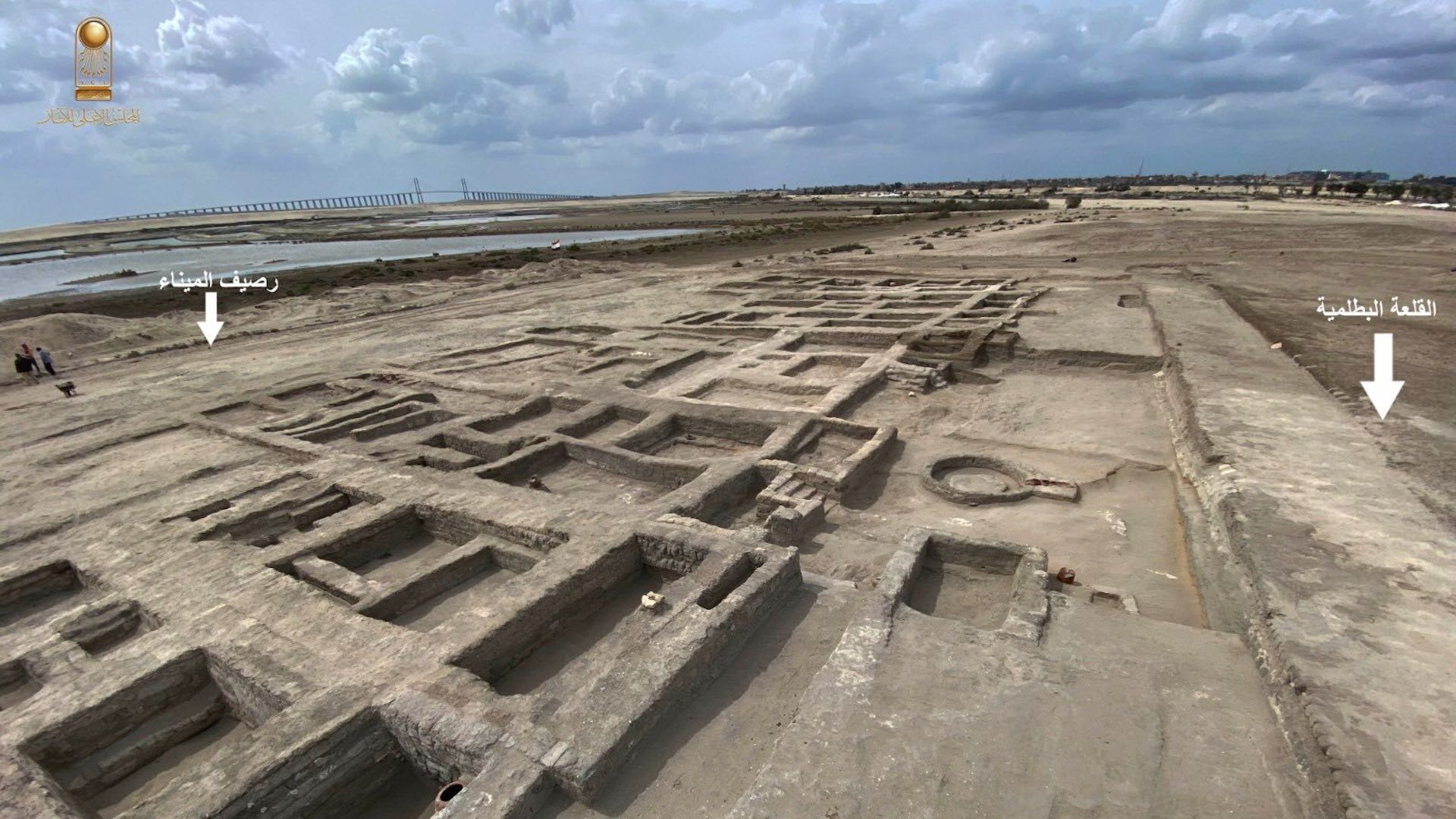
The discovery, announced in October 2025 by Egypt’s Ministry of Tourism and Antiquities, wasn't a single wall or a scatter of pottery. It was a complete defensive system emerging from the dunes at Tell el-Kharouba. The excavation, led by archaeologist Hesham Hussein, revealed a fortress covering approximately 2 acres. Its southern wall alone runs 345 feet long and 8 feet thick, a formidable barrier even in ruin. But the real story is in the design. This isn't a simple box. The western wall features an interior zigzag section, a sawtooth pattern stretching 246 feet. This wasn't an aesthetic choice. It was military calculus in mudbrick and stone.
"The zigzag is brilliant defensive architecture," explains a military historian familiar with the site, who requested anonymity as full analysis is ongoing. "It creates overlapping fields of fire. Attackers breaching one segment find themselves funneled into a killing zone, exposed to defenders on multiple sides. This is the kind of sophisticated thinking you see in a professional, standing army, not a makeshift outpost."
Eleven massive towers punctuated the perimeter. From these elevated positions, sentries would have scanned a harsh landscape of scrub and sand, watching the vital coastal corridor known as the Way of Horus. This road was ancient Egypt's primary highway to Canaan and the riches—and threats—of Western Asia. Controlling it meant controlling the empire's security and its wealth. The fortress at Tell el-Kharouba was a linchpin in that control.
"The size and sophistication of this fortress leave no doubt. This was a major garrison, a power projection hub built to intimidate and control. It transforms our understanding of Egypt's military footprint in Sinai during the early New Kingdom."
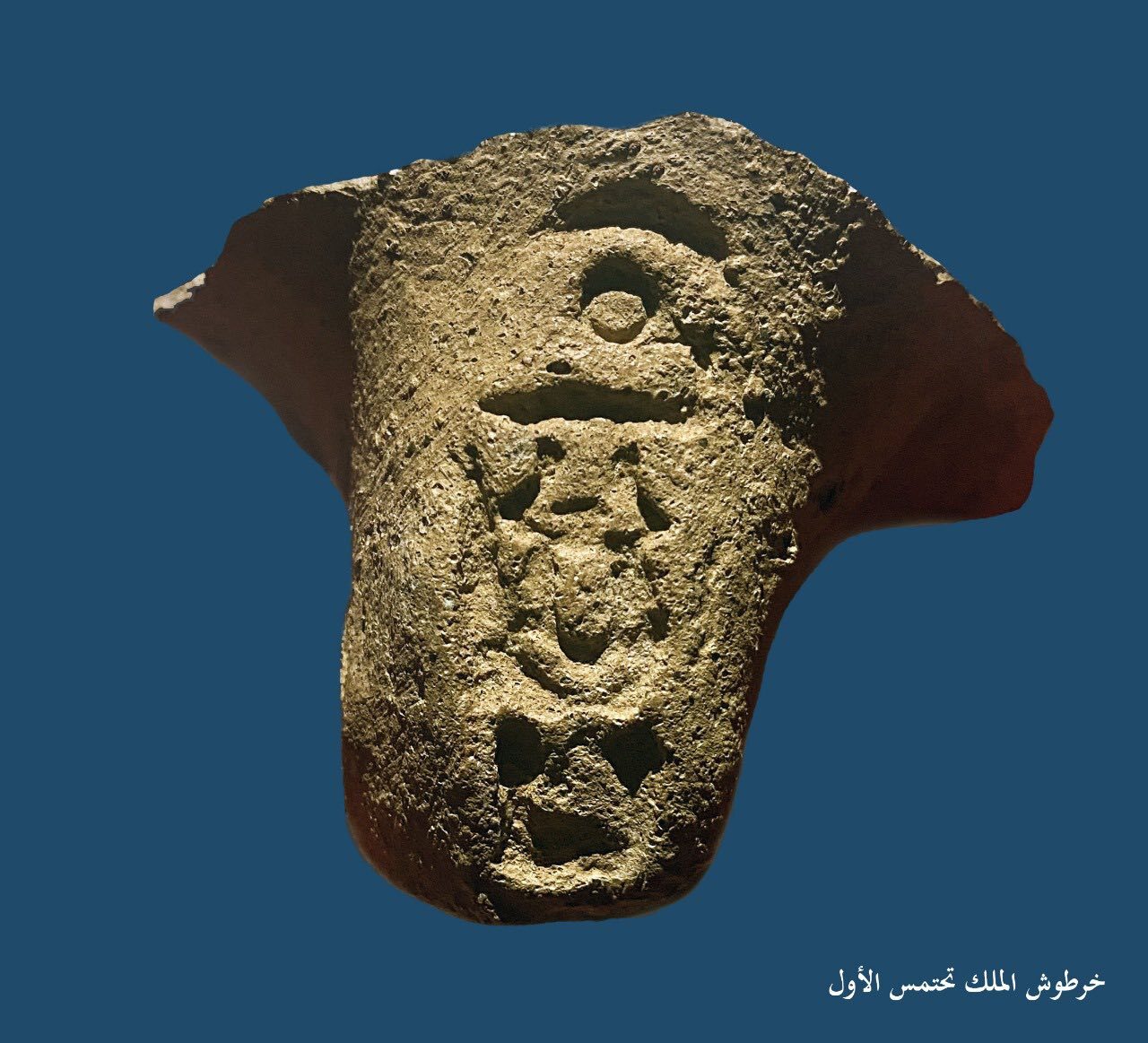
Archaeology often deals in probabilities, but sometimes it delivers a name. The key artifact was unassuming: a ceramic handle. Pressed into its surface before firing was a royal inscription—the name of the serekh—the rectangular emblem enclosing the Horus name of a pharaoh. The hieroglyphs spelled out Aakheperkare, the throne name of Thutmose I. This single stamp dated the fortress's construction to his reign, circa 1504 to 1492 B.C. It was a definitive answer, tying the massive walls to a specific, ambitious ruler.
Thutmose I was the third pharaoh of Egypt's 18th Dynasty, a period of explosive imperial expansion. Historical records, primarily from Nubia, boast of his campaigns reaching the Euphrates River in Syria. But textual evidence is one thing. Physical proof of the infrastructure needed to support such distant campaigns is often overshadowed by his more famous descendants, like Hatshepsut or Thutmose III. But this discovery thrusts him back into the spotlight as a master strategist. Contemporary texts boast of his campaigns reaching the Euphrates River. The fortress provides the physical infrastructure that made those boasts possible.
James Hoffmeier, an archaeologist and Egyptologist at Trinity International University, sees the find as a crucial validation. "This discovery supports the long-held view that Thutmose I was the father of Egypt's empire in Western Asia," Hoffmeier states. "He likely was a key player in the beginning of this defense system which succeeding kings added more forts to. This was the blueprint."
Think of it not as an isolated castle, but as a fortified node in a network. The Way of Horus was lined with a chain of perhaps eleven such strongholds. They functioned like a circuit of relay stations and police posts, securing supply lines, communicating via signal fires or messengers, and ensuring that no hostile force could move along the coast unchallenged. The Tell el-Kharouba fortress was a central link, large enough to house a significant force. Based on the barracks, storerooms, and bakery facilities uncovered, archaeologists estimate a garrison of 400 to 700 soldiers called this place home.
"Finding the pharaoh's name on site is the equivalent of finding a cornerstone with a founding date. It removes speculation. We now know definitively that this ambitious military infrastructure program was underway by at least 1500 B.C., setting the stage for a century of Egyptian dominance."
What was life like for those soldiers? The fossilized dough hints at the mundane. The volcanic stone found nearby, likely imported from the Greek islands, hints at the reach of the trade networks they protected. They baked bread, repaired equipment, stood watch on towering walls, and waited. They were the permanent, professional edge of Pharaonic power, stationed where the fertile black land of Egypt gave way to the hostile red land of the desert. Their fortress, with its clever zigzag walls designed to deflect both enemy assaults and the relentless, eroding desert winds, was built to last. It succeeded beyond anyone's imagination. The sand that buried it also preserved it, a 3,500-year-old secret now finally giving up its story, one brick, one artifact, one uneaten loaf of bread at a time.
The fortress at Tell el-Kharouba was no isolated outpost. It was a vital organ in a sprawling, sophisticated defensive system known as the Way of Horus. This ancient military and trade route, hugging the Mediterranean coast, was Egypt's strategic artery into the Levant. Imagine a chain of eleven such fortifications, each a hardened node, ensuring the smooth flow of Egyptian power and commerce. This wasn't merely about defense; it was about projecting dominance, securing resources, and stamping Egyptian authority on a volatile frontier.
Archaeologists James K. Hoffmeier and Stephen O. Moshier, whose indirect insights are frequently referenced in discussions of the site, describe these fortresses as explicitly designed for "border security and trade protection." This isn't a casual observation; it's a testament to the integrated thinking of New Kingdom strategists. They understood that military might alone wasn't enough; it had to be underpinned by logistical superiority and economic control. The Way of Horus was the physical manifestation of that understanding.
What did this mean for the soldiers stationed there? Day after day, they would have patrolled, trained, and maintained a state of readiness. The fossilized dough, retrieved from an ancient oven, isn't just a curiosity; it’s a direct link to the mundane, repetitive existence of military life. It speaks of a moment, 3,500 years ago, when a soldier was about to eat and was suddenly called away. Perhaps it was a drill, perhaps a patrol, or perhaps a genuine alarm from the desert. The fortresses weren't just walls; they were homes, albeit temporary ones, for hundreds of men.
The sheer scale of the Tell el-Kharouba fortress, covering approximately 2 acres, speaks volumes about Egypt's commitment to its imperial ambitions. But it's the details of its construction that truly impress. The thick, curving walls, a feature highlighted by initial reports, weren't just for defense against human foes. They were also engineered to resist the relentless forces of nature. Sand erosion, a constant threat in the Sinai, could undermine even the most robust structures. The curved design, almost aerodynamic, helped deflect the wind and prevent dunes from engulfing the fort prematurely. It's a testament to the ancient Egyptians' deep understanding of their environment, a practical ingenuity often overshadowed by their monumental temples and tombs.
Consider the internal layout: storerooms, courtyards, living quarters, and the aforementioned bakery. These weren't mere conveniences; they were necessities for sustaining a garrison estimated to be between 400 and 700 soldiers. A military force of that size, operating in a remote desert environment, required a self-sufficient complex. The logistical planning must have been meticulous, from water supply to food provisions, all transported along the very road the fortress protected. Inscriptions found at the site, detailing logistics and supply chains, provide a rare glimpse into this precise administrative organization, enriching our knowledge of statecraft and military management in the ancient Near East.
"The design of these fortresses, with their dual purpose of defense against invaders and resilience against environmental degradation, showcases an unparalleled level of strategic foresight. It’s a masterclass in adapting to the unique challenges of desert warfare and logistics."
And then there's the surprising detail mentioned in some preliminary reports: evidence of a "tree-lined road" within the fortress. Trees in the desert? This isn't just a picturesque touch; it suggests a deliberate effort to create an oasis, to provide shade and a sense of order in an otherwise desolate landscape. It speaks to the psychological aspect of military life, of creating a habitable, even comforting, environment for soldiers far from the Nile Valley. It also implies a sophisticated water management system, likely involving wells and perhaps even early forms of irrigation, to sustain such greenery. This was not simply a pragmatic military installation; it was a projection of Egyptian civilization into the wilderness.
The announcement of the discovery in October 2025 by Egypt’s Ministry of Tourism and Antiquities sent ripples through the archaeological community. Greek Reporter, in its December 22, 2025 assessment, listed it among "The Most Significant Archaeological Discoveries of 2025." This isn't hyperbole. For decades, scholars have understood the importance of the Way of Horus, but physical evidence of its constituent fortresses, particularly such a well-preserved example, has been elusive. This find, along with other significant discoveries of 2025, such as the Thutmose II's tomb, is fundamentally reshaping our understanding of New Kingdom political strategies in frontier regions.
The fact that this massive military site was buried under shifting sands for centuries, only to be revealed as dunes receded, adds an almost mythical quality to its reappearance. AOL, in a 2025 article, referred to it as a "lost" fortress, and for good reason. How many other such vital structures, integral to the narrative of ancient Egypt, remain hidden beneath the sands, waiting for their moment to emerge? The ongoing excavations promise to reveal the full extent of the complex, and one can only speculate about the additional chambers, artifacts, and perhaps even administrative texts that lie beneath the surface.
"What we're seeing here isn't just a military base; it's a window into the mind of a nascent empire. The investment in infrastructure, the strategic placement, the sheer scale – it all points to a proactive, rather than reactive, foreign policy from the early 18th Dynasty."
The strategic importance of the Sinai cannot be overstated. It was, and remains, a critical land bridge between Africa and Asia. For the New Kingdom pharaohs, securing this corridor was paramount for protecting trade routes, countering potential invaders from the Levant, and launching their own campaigns into Canaan and Syria. This fortress, dating from 3,400 to 3,500 years ago, sits precisely at the height of pharaonic power, a period when Egypt was asserting itself as the dominant force in the Near East. It’s a tangible link to that era of ambition and expansion, a testament to the sophisticated statecraft and military acumen that characterized one of history's most enduring civilizations.
But let's be clear: while impressive, this fortress also represents the brutal realities of empire. It was built to control, to subjugate, to enforce a specific order through military might. The soldiers within its walls were not there for leisure; they were there to fight, to patrol, and to ensure the Pharaoh's will was done. The strategic genius of its construction is undeniable, but we must also acknowledge the human cost, the conflicts, and the subjugation that such structures facilitated. Does the grandeur of its engineering overshadow the violence it was designed to inflict? Perhaps. But it is precisely this tension that makes such discoveries so compelling, forcing us to confront the complex tapestry of ancient history.
The significance of the Tell el-Kharouba fortress transcends its impressive walls and towers. It fundamentally rewrites the early chapters of Egypt's imperial playbook. We knew the New Kingdom was a period of expansion, but this discovery provides the architectural blueprints. It moves the timeline of sophisticated, large-scale military infrastructure back decisively to the reign of Thutmose I, confirming his role as a foundational empire-builder. This isn't just about one fort; it's about understanding the mechanics of control. The fortress demonstrates how Egypt transitioned from reactive defense to proactive, systemic domination of its frontiers. It shows us that empire wasn't just won on the battlefield; it was maintained through a network of hardened, self-sufficient nodes like this one, each a microcosm of Egyptian power planted firmly in foreign soil.
The cultural impact is equally profound. For modern Egypt, this find is a potent symbol of historical depth and engineering prowess, a narrative eagerly promoted by the Ministry of Tourism and Antiquities. It reinforces Sinai not as a peripheral desert, but as a central theater of pharaonic statecraft. For archaeologists, the site is a rare, nearly pristine time capsule. The combination of defensive architecture, daily life artifacts like the fossilized dough, and administrative inscriptions offers a holistic view of military life that is almost unprecedented for this period. It provides context for countless other artifacts and texts found across the region, finally giving them a physical, logistical home.
"This fortress is the missing manual. We've had the historical accounts of campaigns and the lists of spoils, but now we have the manual that explains how those campaigns were logistically possible. It connects the grand strategy to the gritty reality on the ground."
The discovery also reframes our understanding of Egyptian interaction with its neighbors. The presence of imported volcanic stone from the Greek islands within the fortress walls is a critical detail. It confirms that these military installations were not closed systems. They protected and facilitated trade networks that stretched across the Mediterranean. The soldiers stationed there were guardians of commerce as much as conquerors of territory. This blurs the simplistic line between military and economic policy, revealing an ancient superpower using all tools at its disposal to secure wealth and influence.
For all its grandeur, the Tell el-Kharouba fortress presents significant challenges and raises critical questions. The most immediate is the state of the excavation itself. While the initial findings are spectacular, a vast portion of the 2-acre site remains buried. The promise of future discovery is tantalizing, but it also means our current understanding is provisional. Will further excavation reveal a commander's residence with archives? Will it show evidence of a siege or conflict? Until more sand is moved, we are interpreting an incomplete picture.
A more substantial criticism lies in the potential for nationalist overinterpretation. In the hands of a government keen on promoting a narrative of historical strength and territorial integrity, such a discovery can be wielded as a political symbol. While the archaeological facts are clear, their presentation and emphasis can be shaped to serve modern agendas. The fortress's role in "securing borders" is a phrase ripe for contemporary parallels that may not fully reflect ancient realities. Scholars must navigate this carefully, ensuring the site is studied for what it tells us about the 15th century B.C., not what it might symbolize in the 21st century A.D.
Furthermore, the site's very preservation—buried by sand—is a double-edged sword. While it protected the walls, it may have also scrambled or obscured the archaeological context of smaller artifacts. The precise stratigraphy, which tells the story of the site's occupation and abandonment over time, could be complicated. Relying on a single ceramic handle for definitive dating, while strong, also carries risk. What if that handle was reused from an earlier period or was an heirloom? Corroborating evidence from other areas of the fortress will be essential to cement the Thutmose I attribution beyond any doubt.
Finally, there is the inherent limitation of the site: it shows us the Egyptian perspective exclusively. We see the fort through the eyes of its builders and occupants. Where are the voices of the Canaanite traders who passed by, the local tribes who may have interacted with the garrison, or the potential adversaries who saw these walls as a symbol of oppression? The fortress is a monument to Egyptian power, but a complete history of the Sinai frontier requires evidence from beyond its walls, evidence that is often harder to find.
The path forward is one of meticulous excavation and interdisciplinary study. The Egyptian archaeological team, led by Hesham Hussein, will continue their work through the 2026 season, with a focus on fully exposing the perimeter and uncovering the central administrative structures. A key objective will be to find additional inscribed material—clay tablets, ostraca, or more stamped pottery—to build a more detailed chronology and understand the garrison's command structure. Archaeobotanists will analyze any remaining seeds or plant material from the storerooms, while zooarchaeologists will study animal bones to reconstruct the soldiers' diet. This isn't just about architecture; it's about reconstructing an ecosystem of imperial control.
Concrete predictions are difficult in archaeology, but based on the site's layout, we can anticipate the discovery of a central well or water reservoir system by late 2026. The reported "tree-lined road" also demands verification and analysis—soil sampling could reveal the species and how they were sustained. The greatest potential lies in the personal. Every archaeologist working there hopes for a discovery that matches the humanity of the fossilized dough: a letter home on a pottery shard, a piece of gaming equipment, a soldier's personal seal. These items would transform the garrison from a strategic abstraction into a community of individuals.
One soldier left his bread in the oven, a mundane act frozen in time. Three and a half thousand years later, that uneaten meal became a key to unlocking the story of his entire world—the walls he manned, the road he guarded, and the empire he served. The sands of Sinai have given up one secret. They are undoubtedly holding others, waiting for the wind to shift and for the careful hands of archaeologists to bring another fragment of a lost world back into the light.
Your personal space to curate, organize, and share knowledge with the world.
Discover and contribute to detailed historical accounts and cultural stories. Share your knowledge and engage with enthusiasts worldwide.
Connect with others who share your interests. Create and participate in themed boards about any topic you have in mind.
Contribute your knowledge and insights. Create engaging content and participate in meaningful discussions across multiple languages.
Already have an account? Sign in here
A 19th-century hoax, Kap Dwa, resurfaces online as an Egyptian mummy, obscuring the real, sacred science of ancient buri...
View Board
Archaeologists in Izmir, eng, uncover a 1,500-year-old mosaic with Solomon’s Knot, revealing Smyrna’s Agora’s layered hi...
View Board
A 7,500‑year‑old stone seal from Tadım Höyük rewrites Anatolian Neolithic administration, revealing early trade and owne...
View Board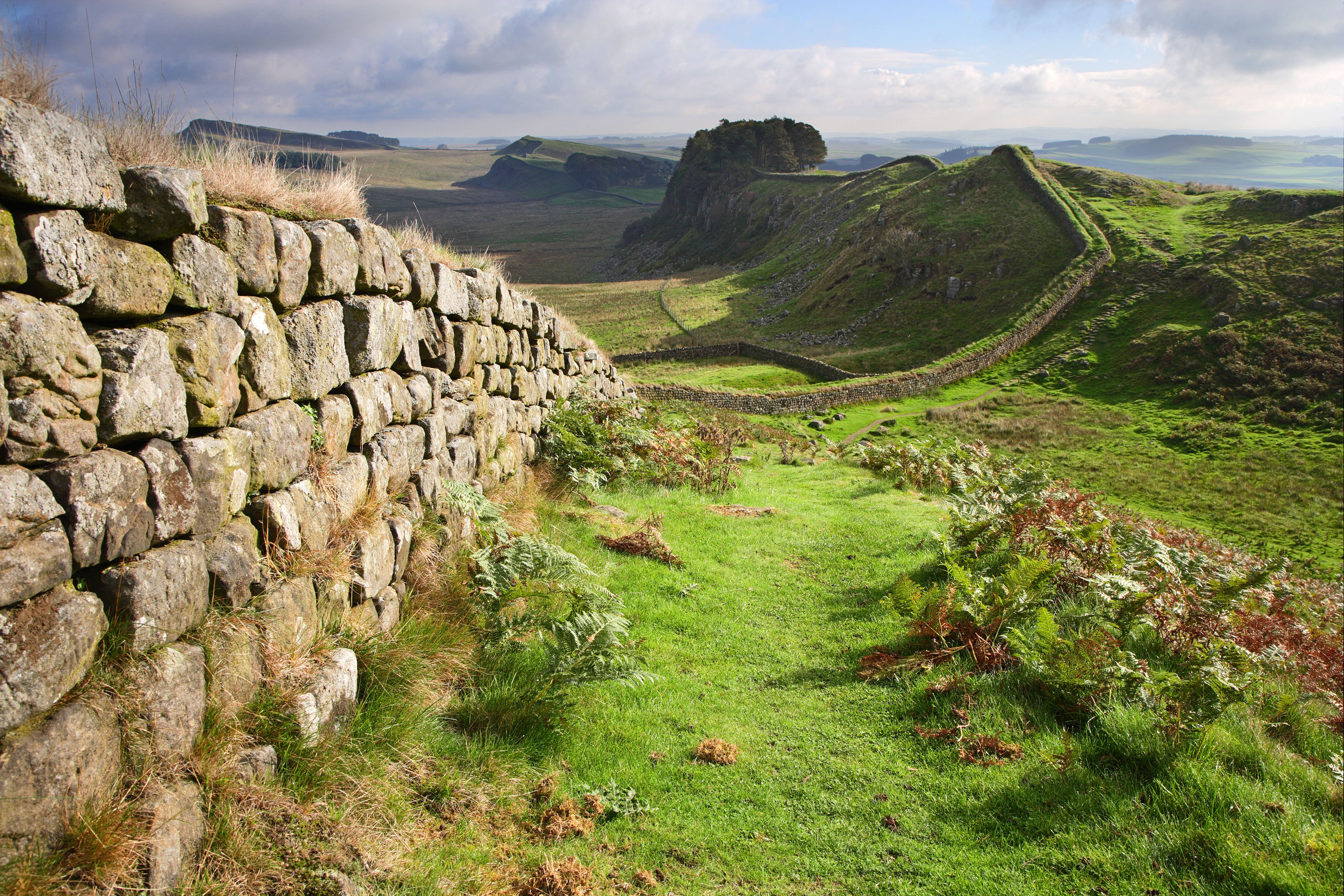
Archaeologists uncover lost Hadrian’s Wall section in 2025, revealing a 2,000-year-old frontier’s complex legacy of powe...
View Board
Archaeologists uncover Belize's first Maya king, Te K’ab Chaak, in a 1,700-year-old tomb, rewriting Caracol’s origins wi...
View Board
Dr. Zahi Hawass, seasoned excavator of the Valley of the Kings, scans a concealed void behind Tutankhamun’s tomb, seekin...
View Board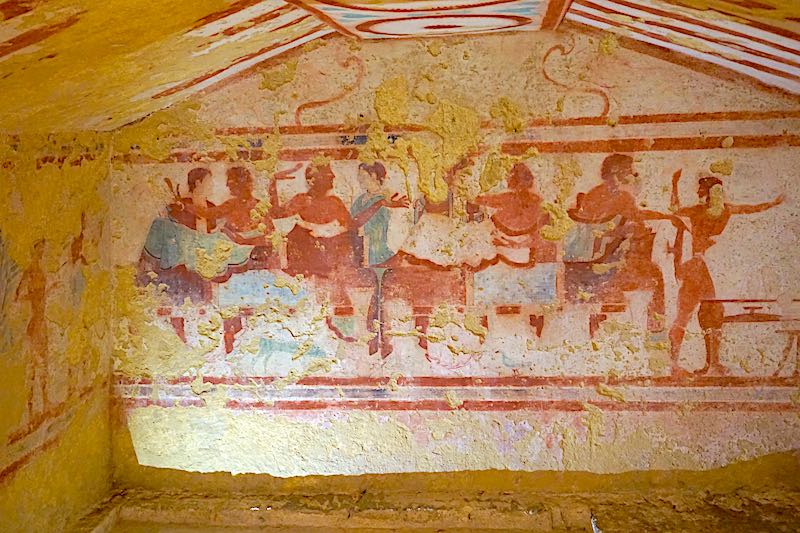
Unearthing Etruria’s vibrant artistry: 520 BCE tombs reveal banquets, music, and a culture celebrating life and death wi...
View Board
Fisherman mends nets on Sidon’s stone quay, beside Crusader sea castle, embodying six millennia of Phoenician trade, pur...
View Board
Sobekneferu, the first female pharaoh of Egypt, ruled briefly in 1760 BCE, ending the Middle Kingdom as the Nile failed ...
View Board
An Egyptologist reveals how Greek merchants remade Neith, the primordial warrior goddess of Sais, into Athena for Atheni...
View Board
Black Patriots were central to the Revolutionary War, with thousands serving in integrated units from Lexington to Yorkt...
View Board
Discover the truth behind Messalina, the enigmatic wife of Emperor Claudius. Explore her political power, scandalous leg...
View Board
A Swiss astrologer’s chilling prophecy, collaboration with Goebbels, and tragic fate in Buchenwald expose the dark inter...
View Board
Navajo women's untold WWII roles—sustaining families, managing resources, and preserving culture—challenge the Code Talk...
View Board
1996 research debunks the samurai Tabata myth, exposing the scientific creation of a four‑minute, eight‑round interval p...
View Board_in_1824_fr_-_(MeisterDrucke-419943).jpg)
On April 10, 1826, 10,000 Greeks fled besieged Missolonghi into Ottoman gunfire, forging a national martyrdom that shock...
View Board
In 1932, desperate WWI veterans marched on Washington for promised bonuses, only to face tanks, tear gas, and fire from ...
View BoardTabriz, a 3,000‑year‑old Silk Road hub scarred by quakes, birthed the Safavids, fueled revolution, and still throbs with...
View Board
Max Verstappen en 2023 : une domination sans précédent en F1 avec 19 victoires, 575 points et une symbiose parfaite entr...
View Board
On January 3, 1777, George Washington’s audacious night march and decisive victory at Princeton saved the American Revol...
View Board
Comments