In the annals of Byzantine history, the reign of Valens, who ruled from 364 to 378 AD, is significant for its complexity and impact. Born around 328–330 in Cynegila, Thrace, Valens emerged from humble origins to ascend to the throne amid a tumultuous period. His rapid rise to power is a testament to the fluid nature of political maneuvering in late Roman and early Byzantine politics.
Valens was the elder brother of Emperor Valentinian I and came into the spotlight when his older brother inherited the purple in 364 AD. Upon Valentinian’s death in 375 AD, power shifted to Valens, who then assumed full control of the Roman Empire. This transition was not without controversy; rumors circulated about a plot orchestrated by his wife Justina to usurp the throne. However, the Senate and other high-ranking officials supported Valens, thus legitimizing his rule.
Valens’ accession led to the partition of the empire under the Peace of Merida. According to this agreement, Valentinian retained control over the western provinces while Valens governed the eastern territories, which included Greece, Asia Minor, Syria, and Egypt. Despite this arrangement, tensions simmered beneath the surface as each emperor vied for dominance and tried to consolidate their regions’ resources and influence.
The Early Reign and Military Campaigns
Valens’ early reign was marked by a series of military campaigns designed to solidify his power and secure the empire’s borders, particularly against threats from the east. One such campaign was launched against the Sasanian Empire in Persia. Although initially successful, these expeditions were met with challenges that tested Valens’ strategic acumen and his ability to maintain the loyalty of his troops.
In 370 AD, Valens marched his armies into Syria to confront the Sassanid forces. While he achieved some victories, the expedition culminated in the battle of Singara in 370 AD, where Valens faced significant setbacks. His tactical errors and the stubborn resistance of the Persian army left him reeling from a series of defeats. Historians often attribute these failures to Valens' lack of firsthand experience with frontline combat, which was more typical of many generals of his time.
The defeat at Singara did not deter Valens from engaging in further military excursions. In 372 AD, he led yet another expedition aimed at capturing Nisibis, a strategically important city located between the Roman and Sassanid territories. This ambitious move, however, resulted in another crushing defeat. The Sassanids under their leader Hormizd I launched a fierce counterattack, inflicting heavy losses on the Roman forces. These repeated failures cast doubt on Valens’ leadership abilities and raised questions about his suitability as an emperor capable of defending the Eastern Front.
Despite these setbacks, Valens continued his efforts to assert dominance over his territories. One of his key initiatives involved restructuring the administration of the Eastern provinces. He appointed loyal supporters and reshaped the bureaucratic apparatus to enhance his control. This reorganization included the appointment of Eutropius, who served as praetorian prefect and wielded considerable influence. These internal reforms aimed to strengthen Valens' hold on the empire and ensure a smooth transition of power within his administration.
Nevertheless, even with these attempts at stabilization, regional conflicts persisted. Civil strife within the empire, exacerbated by external pressures, created an unstable environment. Among these conflicts was the issue of religious persecution, primarily directed against the Arian Christians. Valens’ policies toward religious minorities often reflected his conservative stance and his reliance on traditional Roman values. These policies contributed to widespread discontent among various social groups and further undermined his authority.
It is during this early reign that Valens also found himself engaged in domestic issues, including political alliances and the distribution of resources. His approach to governance often oscillated between asserting authoritarian control and seeking support through more traditional means like patronage. These fluctuations highlighted both his strengths and weaknesses as a leader.
Conclusion
Valens' early years as emperor were characterized by a combination of military endeavors, internal reforms, and complex personal and political dynamics. His reign laid the groundwork for future developments within the empire and showcased the challenges inherent in maintaining stability across vast territories fraught with internal and external threats. As we delve deeper into his legacy, it becomes clear that Valens’ approach to leadership was multifaceted and shaped by both opportunity and necessity.
The Battle of Adrianople and Its Aftermath
The turning point of Valens' reign came abruptly with the Battle of Adrianople in 378 AD. This decisive battle, fought against the Goths, marked a significant turning point in Valens' career and the course of history. Located near Adrianople (modern-day Edirne, Turkey), this battle revealed the vulnerabilities of the Roman military apparatus and underscored the growing existential threat posed by barbarian invasions.
On August 9, 378 AD, Valens led his Roman forces into battle against the Gothic leader Fritigern and his army of Goths. The Goths, facing a harsh winter and unable to sustain themselves, had sought refuge within the Roman Empire. Despite initial agreements allowing them safe passage through Roman territory, tensions escalated when Valens decided to attack them before they could leave. This decision reflected Valens' belief that the Goths posed an imminent threat to the empire's security—a judgment that proved costly both strategically and politically.
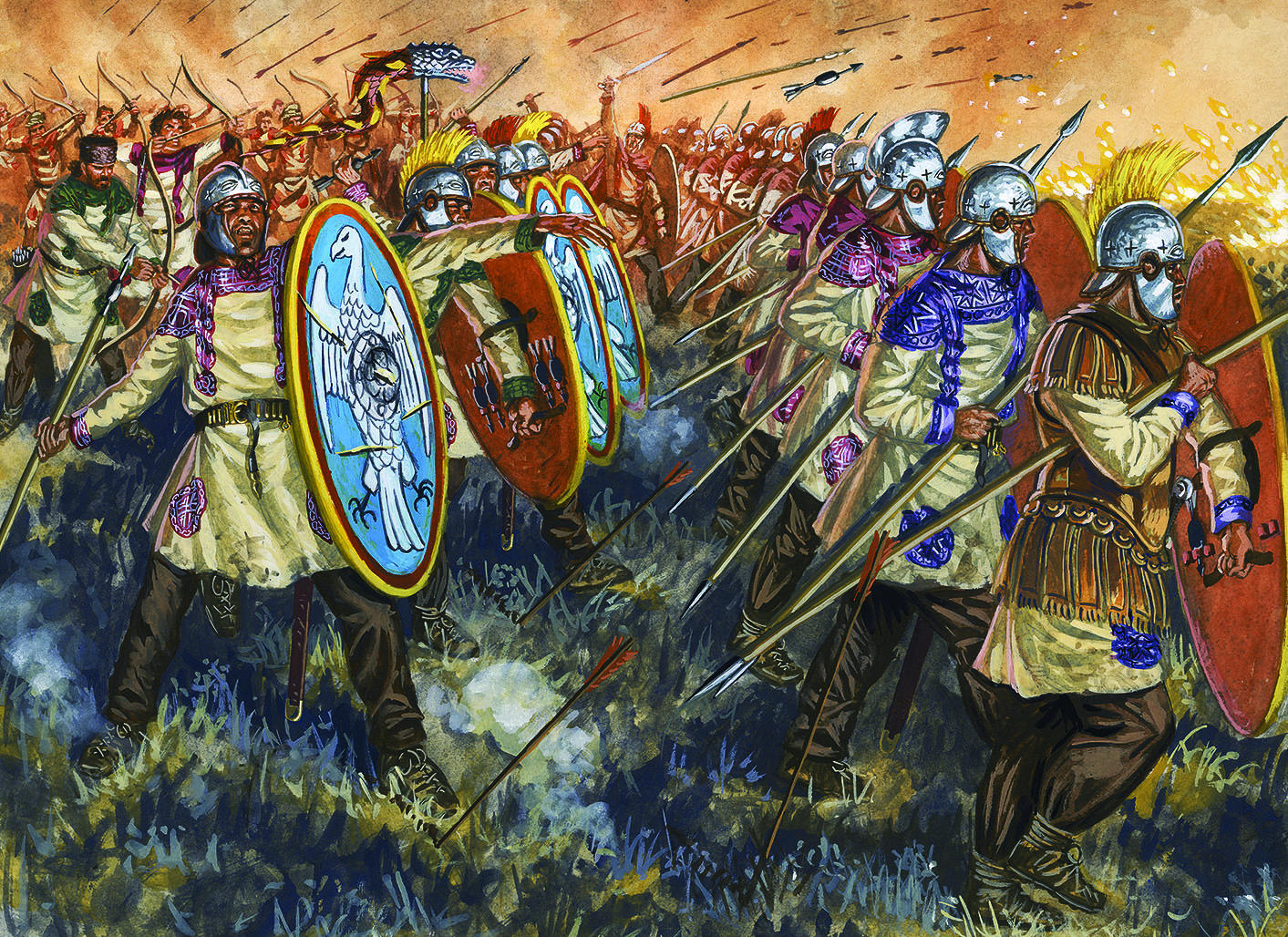
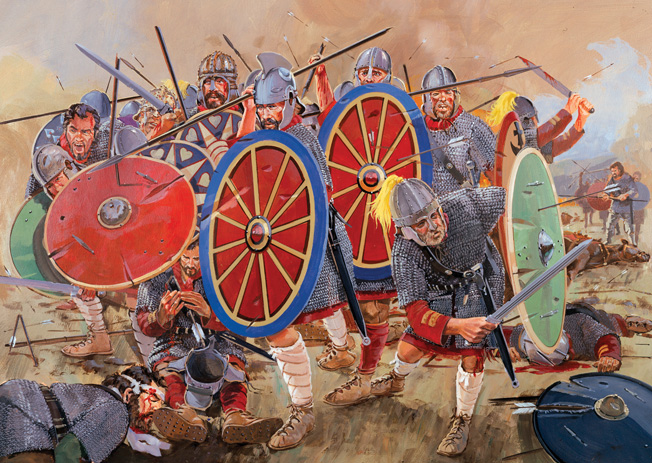
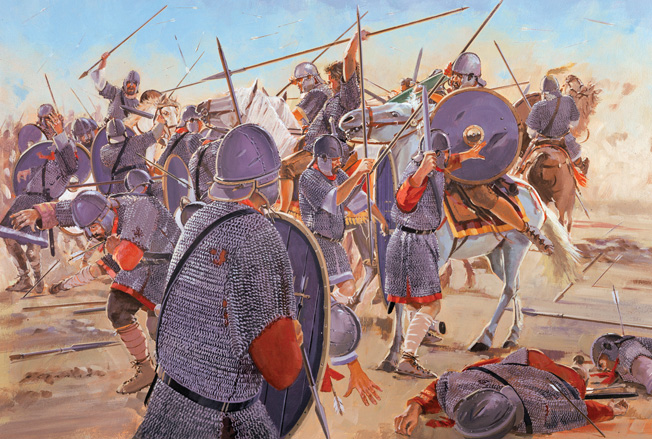
Valens' forces were comprised largely of the elite field army and heavy cavalry. However, these forces suffered severely due to poor planning and lack of preparedness. The Roman soldiers, accustomed to defensive tactics and less experienced in dealing with mobile enemies, found themselves outmatched by the agile and resourceful Goths. The ensuing battle was brutal and chaotic. Despite outnumbering the Goths, the Roman legions were overwhelmed by the sheer ferocity and adaptability of their enemies.
Valens, commanding from the front lines, was killed in the fighting—an incident that shocked the remnants of his army and plunged them into panic. With their leader gone, the Roman troops fragmented, unable to mount a coordinated defense. The loss at Adrianople was catastrophic; it resulted in an estimated three-quarters of Valens' army being wiped out, along with significant Roman casualties. This defeat not only marked a tragic end to Valens' rule but also heralded a new era of Goth power within the empire.
The aftermath of the battle was equally dramatic. The surviving Roman soldiers, bereft of leadership and morale, retreated back to Constantinople in disarray, leaving behind a vacuum of authority in the eastern provinces. Gothic leaders seized the opportunity to extend their influence further into Roman territory. Fritigern, recognizing the weakness of the remaining Roman defenses, sought to exploit this situation for his own gain. He moved swiftly to gain control over strategic locations, effectively establishing the Goths as a dominant force within the empire.
Valens' death and the subsequent chaos led to a period of intense political maneuvering. His widow Thermantia took steps to secure the throne for her sons, but the Senate and other powerful factions sought to place someone else on the throne. This struggle for power, coupled with the increasing unrest among the populace, set the stage for further instability within the empire.
The battle at Adrianople not only ended Valens' personal reign but also had long-lasting consequences for the Roman Empire. It signaled a significant shift in the balance of power between the empire and its barbarian neighbors. This shift would have profound implications for the subsequent emperors and the overall trajectory of Byzantine history.
Reforms and Legacy
In the wake of the disaster at Adrianople, Valens' immediate successors were forced to address the structural weaknesses of the empire. Following his death, his son Valentinian II, supported by Theodosius I, became co-emperor, leading to a brief period of co-rule. The two emperors worked together to stabilize the empire, but the scars left by Adrianople were deep and enduring.
Valens had been a proponent of religious orthodoxy, and his policies towards religious minorities contributed to political divisions within the empire. His support for Arian Christianity alienated Nicene Christians and other factions, leading to increased social tension. Despite his attempts to enforce religious conformity, his legacy of religious polarization lasted well into the late antique period.
Valens' reforms were predominantly internal and aimed at shoring up the empire's administrative and military structures. He endeavored to centralize power and consolidate regional governance. However, these efforts were undermined by external pressures and internal dissent. His appointment of Eutropius as praetorian prefect, a position of great influence, demonstrates his commitment to securing loyal administrators who could help navigate the empire's challenges.
Despite these initiatives, the core weaknesses of the empire remained unresolved. The military campaigns against the Sassanids and the ongoing Barbarian incursions highlighted the broader problems of Roman defenses and strategy. The inability to secure the frontiers and provide adequate resources to the military further weakened the empire's resilience.
One of Valens' lasting legacies is his role as a transitional figure in Byzantine history. While he failed to achieve the goals he set for himself, his reign serves as a critical backdrop for understanding the evolution of the Roman and later Byzantine Empires. His defeat and death at Adrianople marked a turning point where the rigid and often oppressive nature of Roman rule began to give way to a more complex and multicultural society. This shift would influence future generations of emperors and ultimately contribute to the cultural and institutional development of the Byzantine state.
Valens' reign, though brief and marred by military setbacks, remains a significant chapter in the history of the late Roman and early Byzantine periods. His story is one of ambition, miscalculation, and the harsh realities of governing a vast and diverse empire.
The Fall of Valens and Its Impact
The aftermath of Valens' death saw a brief period of co-rulership, primarily between Valentinian II and Theodosius I. Theodosius, a more capable and experienced military leader, gradually assumed greater control and eventually became sole ruler in 379 AD. Valentinian II, despite being young and naive, was placed on the throne under Theodosius' guardianship. This transfer of power marked the beginning of a new era in Byzantine history.
Theodosius' ascension brought with it a renewed sense of stability and purpose. Recognizing the profound impact of Adrianople, Theodosius embarked on extensive reforms aimed at revitalizing the empire. One of his most significant initiatives was the restructuring of the military. Drawing upon the lessons learned from Adrianople, Theodosius sought to modernize the Roman army, focusing on increased mobility and a more balanced approach to defense and offense.
To achieve this, Theodosius reorganized the field armies and improved logistical support systems. He introduced new tactical doctrines, emphasizing flexibility and rapid response capabilities. These changes enhanced the military's effectiveness and helped mitigate the immediate risks of barbarian invasions. Theodosius also recognized the importance of fortified positions and invested heavily in fortification projects along the Danube and other critical borders. These measures bolstered the empire's defensive capabilities and provided a foundation for long-term stability.
Religious unity and tolerance became central themes in Theodosius' reign. Building on Valens' policies but refining them, Theodosius promoted Nicene Christianity as the official state religion while granting toleration to other Christian sects. This shift in religious policy, outlined in the edicts of Milan in 313 AD and further enforced by Theodosius, helped reduce internal divisions and fostered a sense of collective identity among the diverse populations of the empire.
In addition to religious reforms, Theodosius implemented significant economic and administrative changes. He restructured the tax system to ensure fairer distribution of resources and reduced the burdens on the peasantry. By improving fiscal management and economic policies, Theodosius laid the groundwork for increased prosperity and economic stability. Furthermore, he strengthened provincial administration and encouraged local governance, which helped in fostering a sense of local autonomy and reducing dependence on centralized control.
However, the early years of Theodosius' reign were far from serene. Barbarian incursions continued, and the empire faced persistent threats from both the West and the East. Despite these challenges, Theodosius' leadership proved instrumental in navigating the turbulent waters of empire-building. His decisiveness and vision ensured that the empire did not collapse in the wake of Adrianople but instead emerged stronger and better organized.
Valens' reign, although brief and marked by significant failures, did not go unrecognized. His military expeditions, particularly those in the East, left a lasting impact on Byzantine military strategy and tactics. The disastrous outcome of Adrianople also highlighted the need for fundamental reforms in military organization and defense strategies, setting the stage for Theodosius' more comprehensive and effective policies.
The personal qualities of Valens have often been debated. Despite his tactical inadequacies, his commitment to the empire and his efforts to secure its borders should not be entirely dismissed. His willingness to undertake aggressive military campaigns, albeit with limited success, indicated a level of ambition and desire to protect the empire's interests. However, his lack of field experience and reliance on poorly understood terrain proved fatal.
Overall, Valens' reign stands as a pivotal moment in Byzantine history. It marked a turning point where the traditional Roman imperial system began to give way to more adaptive and strategic approaches. His defeat at Adrianople and subsequent death sent shockwaves through the empire, prompting a reevaluation of military and political policies. While his legacy included notable failures, his reforms and initiatives provided a foundation upon which future emperors like Theodosius could build a more resilient and effective empire.
In conclusion, Valens' reign, though characterized by significant challenges and failures, is a critical chapter in Byzantine history. His military blunders and tragic death at Adrianople not only ended his rule but also precipitated sweeping reforms that would shape the empire's trajectory for centuries to come. His story serves as a reminder of the complexities involved in maintaining vast and diverse empires and the enduring impact of individual leaders on historical narratives.
Haporium is a revolutionary platform that lets you organize your web browsing experience with customizable dashboards and boards. Create, manage, and share your favorite content collections.
Join us today and get:
The right to be one of the first pioneers
Unlimited dashboards and boards
Access to exclusive beta features
Priority support from our team
We use cookies to enhance your experience. By continuing to use this site, you agree to our Cookie Policy.









.jpg)





Comments