Explore Any Narratives
Discover and contribute to detailed historical accounts and cultural stories. Share your knowledge and engage with enthusiasts worldwide.
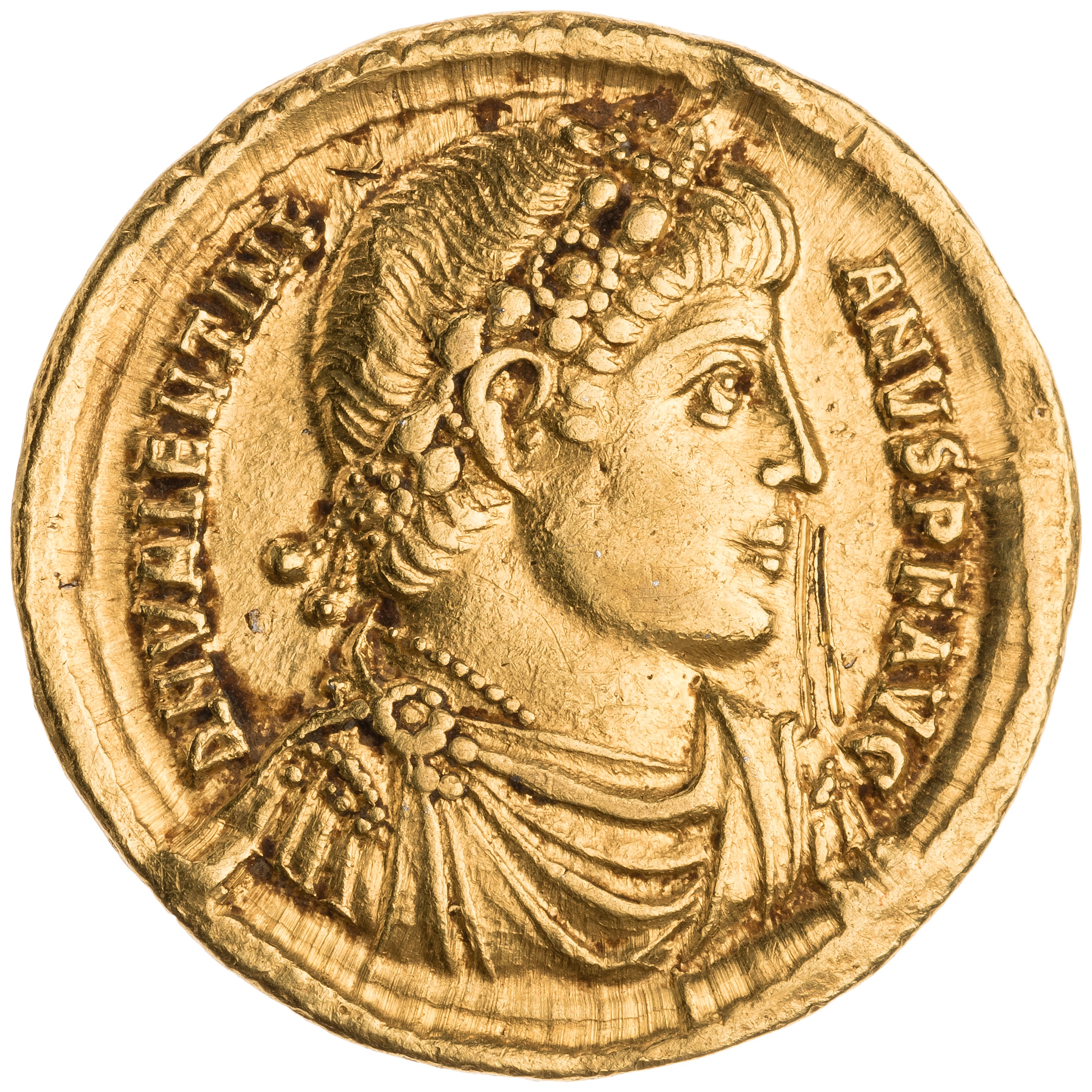
Valentinian I was a Western Roman Emperor who ruled from 364 to 375 CE. Known for his military prowess and strategic leadership, he played a crucial role in stabilizing the empire's frontiers during a turbulent period. His reign marked a significant era of military campaigns, fortification projects, and administrative reforms that strengthened the Western Roman Empire.
Born around 321 CE in Cibalae, Pannonia, Valentinian rose through the ranks of the Roman army under the emperors Constantius II, Julian, and Jovian. His military background made him a favorable candidate for the throne, and in February 364, he was proclaimed emperor by army commanders.
Valentinian's career in the military was marked by his service in various campaigns. His experience and leadership skills were honed through years of service, making him a respected figure among the soldiers. This background was crucial in his rise to power and his subsequent policies as emperor.
In 364 CE, following the death of Emperor Jovian, Valentinian was chosen as the new emperor. His proclamation was supported by the army, which saw him as a strong leader capable of addressing the empire's pressing issues, particularly the threats from various Germanic tribes.
One of Valentinian's first acts as emperor was to appoint his younger brother, Valens, as co-Augustus for the East. This division of the empire allowed for more effective governance and military response to the numerous threats faced by Rome.
Valentinian's decision to appoint Valens as co-emperor was strategic. It enabled the empire to respond more swiftly to regional crises. While Valentinian focused on the Western Empire, Valens managed the Eastern Empire, each addressing the unique challenges of their respective regions.
Valentinian's administrative style was characterized by his reliance on trusted military officers and regional governors. He frequently relocated his imperial court to areas of crisis, ensuring that he could directly oversee military operations and administrative reforms.
Valentinian's reign was marked by numerous military campaigns aimed at securing the empire's frontiers. He fought against various Germanic tribes, including the Alamanni, Franks, Saxons, Quadi, and Sarmatians.
Valentinian's campaigns against the Germanic tribes were crucial in maintaining the integrity of the empire's borders. His personal involvement in these campaigns demonstrated his commitment to the empire's defense and his leadership on the battlefield.
In addition to his military campaigns, Valentinian invested heavily in fortification projects. He strengthened the defenses along the Rhine and Danube frontiers, ensuring that the empire was better prepared to withstand external threats.
Valentinian's religious policy was marked by a pragmatic approach to religious toleration. Unlike some of his predecessors, he avoided overtly anti-pagan measures and instead focused on maintaining stability within the empire.
Valentinian's policy of religious toleration extended to various Christian confessions. This approach helped to maintain peace and stability within the empire, allowing him to focus on the more pressing military and administrative challenges.
By avoiding anti-pagan measures, Valentinian was able to maintain a more inclusive approach to governance. This policy contributed to the overall stability of the empire during his reign.
Valentinian I's reign was characterized by his military leadership, strategic administrative reforms, and pragmatic religious policies. His efforts to stabilize the empire's frontiers and maintain internal stability were crucial in the face of numerous external threats. In the next part, we will delve deeper into his specific military campaigns, administrative reforms, and the legacy of his reign.
Valentinian I's reign was defined by his relentless military campaigns to secure the Western Roman Empire's frontiers. His strategic brilliance and personal involvement in battles earned him the reputation of a soldier-emperor. Below are some of his most significant military engagements.
One of Valentinian's earliest and most critical challenges was the threat posed by the Alamanni, a confederation of Germanic tribes. Between 365 and 368 CE, he launched multiple campaigns to push back their incursions along the Rhine frontier.
In 372 CE, a Berber tribal leader named Firmus rebelled in Mauretania (modern-day Morocco and Algeria). Valentinian dispatched his best general, Theodosius the Elder, to crush the revolt.
Valentinian's later years were dominated by conflicts along the Danube frontier, particularly against the Quadi and Sarmatians. His final campaign in 375 CE would ultimately lead to his death.
Beyond his military achievements, Valentinian I implemented key administrative reforms to strengthen the empire's governance and defense. His policies were designed to address the pressing challenges of his time.
Valentinian recognized the need for a more efficient military structure. He reorganized command structures in Gaul and the Rhine region, ensuring quicker responses to external threats.
One of Valentinian's lasting legacies was his investment in fortification projects. He understood that strong defenses were essential to deterring invasions and maintaining control over key regions.
Valentinian was known for his hands-on approach to governance. He frequently relocated his imperial court to regions facing crises, allowing him to respond more effectively to emergencies.
Valentinian I's religious policy was marked by pragmatism and toleration. Unlike some of his predecessors, he avoided extreme measures against paganism or non-Nicene Christian groups, focusing instead on stability.
Valentinian's reign saw a relatively tolerant approach to Christianity. He allowed various Christian confessions to coexist, avoiding the sectarian conflicts that had plagued earlier emperors.
Unlike emperors such as Theodosius I, who later enforced strict anti-pagan laws, Valentinian took a more measured approach. He recognized the importance of not alienating traditional Roman religious practices.
Valentinian I's reign came to an abrupt end in 375 CE. His death marked a turning point for the Western Roman Empire, leading to a period of instability.
Valentinian died on 17 November 375 CE at Brigetio (modern Szöny, Hungary). According to historical accounts, he suffered a fatal stroke during a heated argument with envoys from the Quadi.
Valentinian had taken steps to secure his dynasty by elevating his son Gratian as co-emperor in 367 CE. This ensured a smoother transition of power, though the empire still faced significant challenges.
Valentinian I's reign was a period of military resilience, administrative innovation, and religious toleration. His strategic campaigns and fortification projects strengthened the Western Roman Empire's defenses, while his pragmatic policies helped maintain internal stability. In the final part of this article, we will explore his lasting legacy, the historical assessments of his reign, and the broader implications of his rule for the late Roman Empire.
Valentinian I's reign left an indelible mark on the Western Roman Empire. Modern historians continue to debate his effectiveness as both a military leader and an administrator. His legacy is often framed within the context of the late fourth century, a period marked by external pressures and internal transformations.
Valentinian is frequently celebrated as one of the last true "soldier-emperors" of Rome. His hands-on approach to military command and frontier management set him apart from many of his predecessors and successors.
Historian Ammianus Marcellinus, a contemporary of Valentinian, praised his disciplined leadership but also noted his fiery temper, which sometimes led to rash decisions.
Valentinian's administrative policies were designed to address the empire's growing challenges. His reforms reflected a pragmatic understanding of the need for decentralized authority and rapid response mechanisms.
Scholars such as those from the Oxford Directory of Roman Emperors highlight his ability to balance military needs with civil governance, a rare skill among late Roman emperors.
Contemporary historians have reassessed Valentinian I's reign through various lenses, from military history to administrative studies. Recent scholarship emphasizes his role in the broader narrative of the late Roman Empire's transformation.
Modern military historians view Valentinian as a transitional figure who bridged the gap between the traditional Roman imperial model and the emerging medieval kingship structures.
Studies such as those found in the Journal of Roman Military Studies argue that his fortification projects were more impactful than his battlefield victories, providing long-term stability.
Valentinian's approach to religious policy has been revisited in light of the empire's evolving Christian identity. His pragmatic toleration is seen as a stabilizing force during a period of religious flux.
Researchers like those contributing to Cambridge's Late Antiquity Series note that his religious policies prevented the kind of sectarian conflicts that later plagued the empire under emperors like Theodosius I.
Valentinian I's efforts to establish a dynasty had mixed results. While his immediate succession plan succeeded, the long-term stability of his lineage was short-lived.
Valentinian's son, Gratian, inherited the Western throne and initially continued many of his father's policies. However, his reign faced significant challenges.
Gratian's eventual assassination in 383 CE marked the end of Valentinian's direct lineage, though his broader influence on military and administrative practices endured.
Valentinian I's reign is often studied as a microcosm of the challenges facing the late Roman Empire. His policies and strategies offer insights into the empire's attempts to adapt to new realities.
Historians such as Peter Heather and Adrian Goldsworthy have pointed to Valentinian's reign as a critical period in the transition from the classical Roman Empire to the medieval world.
Valentinian I's reign was a pivotal chapter in the history of the Western Roman Empire. His contributions can be summarized through several key takeaways:
Valentinian I stands as one of the most pragmatic and effective rulers of the late Roman Empire. His combination of military acumen, administrative reform, and religious toleration provided a model for governance in an era of decline. Though his reign was relatively short, his impact on the empire's defenses and administrative structures was profound.
In the broader narrative of Roman history, Valentinian I represents the transition from the high imperial period to the late antique world. His policies and strategies offer valuable insights into the challenges and adaptations of a fading empire. As historians continue to reassess his reign, Valentinian I remains a compelling figure whose legacy resonates in both military and administrative history.
Ultimately, his story is one of resilience and adaptation, a testament to the enduring struggle of Rome to maintain its grandeur in the face of overwhelming odds.




Your personal space to curate, organize, and share knowledge with the world.
Discover and contribute to detailed historical accounts and cultural stories. Share your knowledge and engage with enthusiasts worldwide.
Connect with others who share your interests. Create and participate in themed boards about any topic you have in mind.
Contribute your knowledge and insights. Create engaging content and participate in meaningful discussions across multiple languages.
Already have an account? Sign in here

Explore the reign of Valens, Eastern Roman Emperor (364-378 AD). Discover his administrative achievements, Arian religio...
View Board
Explore the reign of Lucius Septimius Severus, Rome's first African emperor. Discover his military conquests, political ...
View Board
Discover Flavius Aetius, the "last of the Romans." Read about his victories, including the Battle of the Catalaunian Pla...
View Board
Explore the reign of Lucius Verus, Roman co-emperor with Marcus Aurelius. Discover his role in the Parthian War, the Ant...
View Board
Explore the life of Flavius Stilicho, the half-Vandal general who defended the Western Roman Empire. Discover his key ba...
View Board
Explore the life of Caracalla, the controversial Roman Emperor. Discover his brutal reign, key reforms like the Constitu...
View Board
Discover Theodora, the Byzantine Empress who rose from humble beginnings. Learn about her political power, legal reforms...
View Board
Explore the reign of Theodosius I, the last emperor to rule a unified Roman Empire. Discover his military achievements, ...
View Board
Explore the life of Pompey the Great, a Roman general whose ambition shaped the Republic. Discover his triumphs, politic...
View Board
Explore the reign of Gallienus, the Roman Emperor often blamed for the Crisis of the Third Century. Discover modern reas...
View Board
Explore the life of Augustus, Rome's first emperor. Learn how he transformed the Republic into a stable empire, ushered ...
View Board
Explore Emperor Trajan's remarkable legacy! Discover his military triumphs, massive public works, social reforms, and en...
View Board.jpg)
Discover the dramatic story of Pertinax, the Roman emperor who rose from humble beginnings to rule for just 87 days. Exp...
View Board
Explore the reign of Septimius Severus, Rome's first African emperor. Discover his military reforms, rise to power, and ...
View Board
Explore Michael VIII Palaiologos' reign & the Byzantine Empire's resurgence! Discover how he recaptured Constantinople &...
View Board
Explore the controversial reign of Julian the Apostate, Roman Emperor who rejected Christianity. Discover his reforms, m...
View Board
Discover Aurelian, the Roman emperor who earned the title 'Restorer of the World' by reuniting the empire during the Cri...
View Board
Explore the life and legacy of Titus, Rome's popular emperor. From military victories to disaster relief, discover his i...
View Board
Discover Manius Aquillius, the Roman general whose actions ignited the First Mithridatic War! Explore his military caree...
View Board
Explore the life of Sextus Afranius Burrus, Praetorian Prefect and key advisor to Emperor Nero. Discover how he maintain...
View Board
Comments