

Explore Any Narratives
Discover and contribute to detailed historical accounts and cultural stories. Share your knowledge and engage with enthusiasts worldwide.
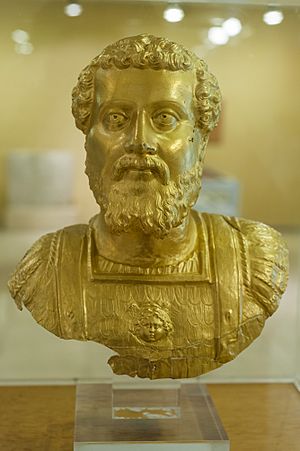
On January 18, 193 AD, Lucius Septimius Severus ascended the throne as the Roman emperor, marking the beginning of his 18-year reign. Born Carausius to a family of minor provincial origin, Severus transformed from a humble provincial soldier into one of the most powerful Men in the Roman Empire. His rule was a pivotal period in the history of the empire, characterized by military campaigns across its territories, administrative reforms, and the promotion of a cult of personality centered around piety and imperial virtues.
Lucius Septimius Severus was born in Leptis Magna, Libya (modern-day Libya) around 145 AD. His father's name is unknown, and it is believed that his mother came from a minor provincial family. Raised in relative obscurity, Severus received a good education, which prepared him for military service. He joined the army in Moesia, a region known for its harsh winters and fierce fighting, where he proved himself through his military prowess.
Severus' rise to prominence began during the reign of Commodo, a young and inexperienced emperor. Serving under Pertinax as a legatus (senior officer), Severus demonstrated exceptional leadership abilities and strategic acumen. In March 193 AD, Pertinax was assassinated by the Praetorian Guard, leading to a succession crisis that resulted in several claimants vying for power.
Severus, recognizing the opportunity, swiftly moved to secure the throne. With his reputation and proven military skills, he quickly gained support from the army, particularly among the veterans from the Danubian borders who admired his discipline and combativeness. By June 193 AD, Severus emerged victorious, securing his position as emperor after defeating both Didius Julianus and Publius Helius Pertinax.
Domestic Reforms and Administration
Once established, Severus initiated extensive renovations and repairs of infrastructure within Italy, aiming at improving living conditions and public works. His efforts included restoring temples, rebuilding roads, and enhancing defenses along the empire's borders. These actions not only enhanced the public image of his reign but also addressed longstanding issues that had plagued the empire during the preceding decades.
In an attempt to stabilize the financial situation, Severus implemented significant fiscal policies. He increased the tax burden on wealthy citizens, particularly the senatorial class, while reducing taxes for the poorer classes. These measures were designed to reduce the empire's dependency on the often unreliable contributions of local elites. Additionally, Severus reformed military pay and benefits, ensuring better living conditions for the troops, which helped enhance loyalty and morale.
Military Campaigns and Expansion
One of Severus' primary objectives was the expansion of the empire, which he pursued through continuous military campaigns. Notably, he led a successful campaign against the Parthians in 197 AD, which marked a significant victory over the Eastern neighbors. The campaign resulted in the capture of Ctesiphon, the Parthian capital, a tremendous victory that solidified Severus' status as a pious and powerful leader.
However, beyond the eastern borders, Severus faced greater challenges. In Britain, he launched a major invasion aimed at putting down a revolt led by Caractacus, a chieftain who had continued to resist Roman control even after Claudius' conquest. This campaign, initiated in 208 AD, was one of the longest and bloodiest campaigns of his reign, lasting until 210 AD. While initially met with fierce resistance, Severus eventually subdued the tribes, establishing Roman dominance over Britain once more.
His military strategy extended to northern Africa as well. Between 202 and 203 AD, Severus fought against the Numidians, a tribal coalition that threatened stability in North Africa. Despite facing severe logistical challenges and a resilient enemy, Severus managed to suppress this insurrection, securing the province's loyalty to Rome.
Promotion of Piety and Personal Cult
While Severus was an effective military and political leader, his reign was also characterized by the promotion of a strong personal cultural and religious identity. He emphasized the virtue of piety, which became central to his persona as an emperor. To this end, he instituted numerous religious reforms and public works centered around the worship of gods and ancestral spirits.
A significant aspect of his religious program was the restoration and construction of temples dedicated to Mars, his patron deity, and other Roman gods. One of his notable achievements was the completion of the Arch of Severus in Lugdunum (modern-day Lyon, France), an impressive structure that celebrated his victories and served as a symbol of imperial might. Additionally, Severus promoted the construction of numerous baths, theaters, and other public buildings in various provinces, reflecting the empire’s dedication to civic pride and cultural enrichment.
Furthermore, Severus initiated the practice of deifying his ancestors, thereby linking his rule to a lineage of great Roman leaders. This act of personal worship reinforced the idea of continuity between past and present emperors and further cemented his connection to Roman traditions.
Lucius Septimius Severus' reign was not only marked by military conquest and administrative reform but was also deeply personal, involving his relationships with his family and his religious observances.
Severus married Julia Domna, a wealthy Syrian woman, around the age of 14. Their marriage was a significant political alliance, furthering his standing among the Roman nobility and enhancing his social status. Julia Domna played a vital role in advising her husband, supporting his military endeavors, and promoting a sense of shared piety among the imperial family.
Julia was a learned individual with a keen interest in philosophy, particularly Stoicism. She used her influence to promote the study and teachings of Stoic philosophy, encouraging scholars and thinkers to engage in debates and discussions that enhanced the intellectual atmosphere of Rome. Her interest in astrology also contributed to the mystique surrounding Severus, although these beliefs were not officially endorsed by the state.
Severus and Julia were parents to four sons—Caracalla, Geta, Fulvius Alexander, and Antoninus Gordian III—though all except Caracalla would die young. Their eldest son, Caracalla, born around 188 AD, would succeed him as emperor. Caracalla is remembered for his controversial actions and reforms, which greatly impacted the later years of the Severan dynasty.
Towards the end of Severus' life, conflicts arose between his two surviving sons, Caracalla and Geta, stemming from their different aspirations within the imperial succession. Despite attempting to forge a united front, tensions escalated, eventually resulting in Geta's assassination in 212 AD. This event marked a dark chapter in Severus' reign, ending the possibility of a peaceful transition of power to a united dynasty.
Conclusion
In summary, Lucius Septimius Severus ascended to the Roman throne amid turmoil and instability, yet his tenure as emperor was defined by his relentless quest for territorial expansion, administrative reforms, and a deep commitment to religious piety. Through his military campaigns, his domestic policies, and his efforts to reshape the very fabric of Roman society, Severus left an indelible mark on the empire. However, his legacy is also shadowed by internal strife and the eventual fragmentation of the dynasty he sought to establish.
To be continued...
Final Years and Death
As Lucius Septimius Severus' reign neared its end, several important events took place that would shape the future of the empire. In 211 AD, Severus began a journey from Britain to Africa, where he planned to oversee military campaigns and administrative reforms. During this extensive tour, he visited various military and civilian units to assess their readiness and loyalty. This journey was a testament to his commitment to maintaining control over the empire's vast territories.
On the way back from Africa, Severus fell ill and eventually died at Erythrae (modern-day Antakya in Turkey) in 211 AD. He was 65 years old at the time of his death. His body was returned to Rome, where he was interred in a mausoleum on the Campus Martius, near the Temple of Venus.
Severus was succeeded by his two sons, Caracalla and Geta. However, their relationship was strained from the outset, exacerbated by the political maneuvering of their mother, Julia Domna. The conflict between the brothers culminated in a tragic duel, in which Geta was killed on 26 December 212 AD. This event marked the end of the Severan dynasty, as Caracalla ascended to the throne alone.
Legacy and Impact on the Empire
The reign of Lucius Septimius Severus left a lasting impact on the Roman Empire. His efforts in expanding the frontiers of the empire, particularly in Mesopotamia and Britain, secured these territories for the future generations. Moreover, his military campaigns and administrative reforms laid the groundwork for the Severan dynasty's rule.
Severus' military strategy and expansion were critical in consolidating the empire's control over newly acquired territories. The Parthian War of 197 AD, for example, resulted in the establishment of Roman dominance in the eastern provinces, including Mesopotamia. This victory not only expanded the empire's borders but also secured a more stable security situation along these new frontiers. Similarly, the campaign in Britain, though prolonged and costly, solidified Roman control over the island and expanded the empire's influence in Northwestern Europe.
Severus' administrative reforms focused on improving infrastructure and public works. His efforts in repairing and constructing roads, restoring temples, and other public buildings not only enhanced the living conditions of the populace but also served to strengthen the empire's infrastructure. Additionally, he reformed military pay and benefits to improve the living conditions and morale of the troops, creating a more loyal and effective military force.
The promotion of piety and his personal cult of piety played a significant role in Severus' reign. He emphasized the virtues of piety and moral conduct, which were reflected in his policies and public works. The construction of numerous temples and the deification of his ancestors reinforced the connection between the emperor and the gods, ensuring a sense of religious and cultural continuity. The promotion of Stoic philosophy and the study of astrology further contributed to the intellectual and cultural atmosphere of the empire.
Challenges and Criticisms
Despite his achievements, Severus' reign was not without its challenges and criticisms. His military campaigns were often costly and sometimes resulted in heavy casualties, which placed a significant burden on the empire's resources. The prolonged campaign in Britain, for instance, consumed vast amounts of manpower and financial resources. Additionally, his efforts to increase taxes and tighten fiscal policies were met with resistance from both the elite and the general populace.
There were also criticisms regarding his personal rule and the suppression of dissent. The forced assimilation of local customs and the harsh suppression of rebellions sometimes resulted in unrest and resistance from the provinces. Moreover, his policy of deifying his ancestors and promoting a cult of personal worship was seen by some as a form of autocracy and the undermining of traditional republican values.
Ancient and Modern Perspectives
Ancient historians, such as Cassius Dio and Herodian, provided detailed accounts of Severus' reign. However, their perspectives were often shaped by their political allegiances and the prevailing ideological views of their times. Cassius Dio, for instance, viewed Severus' military conquests positively but was critical of his harsh rule and the suppression of dissent. In contrast, Herodian saw Severus as a shrewd and effective military leader but was less impressed by his administrative reforms and personal cult.
From a modern historical perspective, Severus is often praised for his military and administrative achievements. His success in expanding the empire and securing its frontiers is generally acknowledged, although the cost in terms of resources and lives is also highlighted. The impact of his personal cult of piety and the emphasis on moral and religious values continue to be studied and debated, offering insights into the complex dynamics of imperial rule and the maintenance of order in the Roman Empire.
Conclusion and Reflection
Lucius Septimius Severus' reign was a period of significant transformation and expansion for the Roman Empire. His military campaigns, administrative reforms, and promotion of piety left an indelible mark on the empire's history. However, his reign also faced challenges and criticisms, particularly regarding its costs and the nature of his personal rule.
Severus' legacy is complex, reflecting the tensions between expansionary policies and traditional values. His efforts to modernize the empire and maintain its stability, while fostering a sense of imperial piety, are subjects of ongoing historical inquiry. The study of Severus' reign continues to provide valuable insights into the challenges and opportunities faced by Roman rulers in an increasingly complex and diverse empire.
To be continued...
Modern Interpretations and Legacy
Modern historians have engaged in extensive analysis of Severus' reign, offering a more nuanced understanding of his impact on the Roman Empire. One significant aspect of modern interpretation is the reassessment of Severus' military campaigns and their consequences. While he successfully expanded the empire, the costs in terms of resources, manpower, and political stability cannot be overlooked. The prolonged campaigns, such as those in Britain and Parthia, strained the empire's economic and military capabilities, leading to increased fiscal and social tensions.
The expansion of the empire also brought challenges in governance. Governing the newly-acquired territories required significant administrative and logistical efforts, which tested the limits of the Roman system. The imposition of Roman laws and customs in these regions often resulted in resistance from local populations, leading to sporadic rebellions and uprisings. These challenges were compounded by the vast distances and limited communication networks of the time, making effective governance a daunting task.
Despite these difficulties, modern historians also highlight Severus' contributions to the legal and administrative framework of the Roman Empire. His reforms, such as the standardization of military pay and benefits, and the expansion of public works, reflected a pragmatic approach to governance. These measures not only improved the living conditions of the populace but also enhanced the efficiency and cohesion of the empire.
Impact on Religion and Culture
Severus' promotion of piety and his personal cult of piety had a lasting impact on Roman religion and culture. The emphasis on religious devotion and the construction of numerous temples and public works played a crucial role in reinforcing the connection between imperial power and religious authority. However, this focus on personal cults and the deification of ancestral figures also raised questions about the separation of religion and state under Roman rule.
Modern scholars have debated the extent to which Severus' religious policies reflected broader cultural changes within the empire. The promotion of Stoic philosophy and the study of astrology, for example, suggest a more cosmopolitan and intellectual approach to governance. These interests were not unique to Severus but were part of a wider trend of cultural and intellectual exchange within the empire.
Contemporary Influences and Cultural Continuity
The reign of Lucius Septimius Severus left a lasting legacy in terms of cultural and intellectual continuity. His efforts to maintain and enhance the Roman infrastructure, such as roads, aqueducts, and public buildings, contributed to the preservation of Roman culture and its transmission to subsequent generations. The ongoing study and restoration of these structures continue to provide insights into the daily life and governance of the Roman Empire.
Moreover, the promotion of Stoicism and the study of astrology resonated with scholars and intellectuals of the time, influencing the development of philosophical and astronomical thought. Severus' support for these disciplines not only enhanced the intellectual atmosphere of the empire but also fostered a more nuanced understanding of the complex relationship between religion, politics, and culture.
Conclusion
In conclusion, Lucius Septimius Severus' reign stands as a significant chapter in the history of the Roman Empire. His military campaigns, administrative reforms, and promotion of piety left a lasting impact on the empire's borders, governance, and culture. While his rule was marked by both success and challenges, Severus' contributions to the Roman Empire's legacy continue to be studied and debated by historians.
Through his efforts to expand and stabilize the empire, Severus set the stage for the Severan dynasty's rule and the eventual decline of the Western Roman Empire. His reign serves as a reminder of the complex interplay between military conquest, administrative reform, and cultural and religious policies in shaping the fortunes of a great empire.
Lucius Septimius Severus' legacy continues to be a subject of academic interest, offering valuable insights into the challenges and achievements of Roman rulers in an era of expanding empires and complex societal changes.


Your personal space to curate, organize, and share knowledge with the world.
Discover and contribute to detailed historical accounts and cultural stories. Share your knowledge and engage with enthusiasts worldwide.
Connect with others who share your interests. Create and participate in themed boards about any topic you have in mind.
Contribute your knowledge and insights. Create engaging content and participate in meaningful discussions across multiple languages.
Already have an account? Sign in here

Explore the life of Caracalla, the controversial Roman Emperor. Discover his brutal reign, key reforms like the Constitu...
View Board
Explore the life of Pompey the Great, a Roman general whose ambition shaped the Republic. Discover his triumphs, politic...
View Board
Explore the life and legacy of Titus, Rome's popular emperor. From military victories to disaster relief, discover his i...
View Board
Explore the reign of Septimius Severus, Rome's first African emperor. Discover his military reforms, rise to power, and ...
View Board
Discover Octavia the Younger's pivotal role in Roman history! Sister of Augustus, wife of Antony, and a master of diplom...
View Board
Discover Valentinian I, the soldier-emperor who stabilized the Western Roman Empire! Learn about his military campaigns,...
View Board
Discover the reign of Antiochus IV Epiphanes, the last king of Commagene. Learn about his loyalty to Rome, military serv...
View Board.jpg)
Discover the dramatic story of Pertinax, the Roman emperor who rose from humble beginnings to rule for just 87 days. Exp...
View Board
Explore the reign of Lucius Verus, Roman co-emperor with Marcus Aurelius. Discover his role in the Parthian War, the Ant...
View Board
Explore the reign of Valens, Eastern Roman Emperor (364-378 AD). Discover his administrative achievements, Arian religio...
View Board
Explore the life of Flavius Stilicho, the half-Vandal general who defended the Western Roman Empire. Discover his key ba...
View Board
Discover Aurelian, the Roman emperor who earned the title 'Restorer of the World' by reuniting the empire during the Cri...
View Board
Discover Manius Aquillius, the Roman general whose actions ignited the First Mithridatic War! Explore his military caree...
View Board
Discover Flavius Aetius, the "last of the Romans." Read about his victories, including the Battle of the Catalaunian Pla...
View Board
Explore the reign of Gallienus, the Roman Emperor often blamed for the Crisis of the Third Century. Discover modern reas...
View Board
Discover Lucius Licinius Lucullus, the brilliant Roman general often overshadowed by Pompey. Explore his military genius...
View Board
Explore the life of Augustus, Rome's first emperor. Learn how he transformed the Republic into a stable empire, ushered ...
View Board
Explore the reign of Ptolemy III Euergetes, the powerful Ptolemaic pharaoh who expanded Egypt's empire and earned his ni...
View Board
Uncover the captivating story of Roxana, Alexander the Great's first wife. Explore her Sogdian origins, political influe...
View Board
Explore Michael VIII Palaiologos' reign & the Byzantine Empire's resurgence! Discover how he recaptured Constantinople &...
View Board
Comments