
Explore Any Narratives
Discover and contribute to detailed historical accounts and cultural stories. Share your knowledge and engage with enthusiasts worldwide.
The enigmatic heritage of Famagusta tells a profound story of glory and loss. This walled medieval port city on Cyprus's northeastern coast is a historical palimpsest. It rose from obscurity to become one of the Mediterranean's wealthiest hubs. Today, its sealed-off districts stand as a stark symbol of modern geopolitical conflict.
The heritage of Famagusta has deep historical roots. Its story begins not as a mighty city, but as a humble settlement. Archaeological evidence suggests a foundation in the 3rd century B.C. This early fishing village was established on the site of the ancient city Arsinoe.
For centuries, the location remained a relatively quiet coastal area. Its natural deep harbor, however, was a geographical gift waiting to be exploited. The true transformation began with a major shift in regional power. This shift would catapult the settlement into the annals of European history.
The city's pivotal rise is linked to the fall of the Crusader states in the Holy Land, an event that redirected the flow of wealth, people, and power across the Mediterranean.
In 1192, French knight Guy de Lusignan established Lusignan rule over Cyprus. This marked the start of a new chapter. Initially, the city remained in the shadow of others on the island. Its destiny was irrevocably altered by a singular catastrophic event hundreds of miles away.
The year 1291 was the catalyst. Christian refugees fleeing the fall of Acre in Palestine sought a new home. They arrived in Famagusta with their skills, wealth, and mercantile connections. This influx transformed the small port almost overnight into a buzzing cosmopolitan center.
By the mid-14th century, Famagusta had become one of the wealthiest cities in Christendom. Its wealth was so legendary that citizens purportedly built approximately 365 churches. This was said to be one for every day of the year, a testament to both piety and extraordinary prosperity.
Famagusta's strength lay in its position and its people. It became the crucial nexus for trade between Europe and the Levant. Spices, silks, sugar, and other luxuries flowed through its deep harbor. The city's markets were a linguistic mosaic, filled with the sounds of Greek, Arabic, Italian, French, and Hebrew.
This period represents the golden age of the Famagusta heritage, a time when its influence was felt across continents. The city was not just rich; it was a key strategic asset coveted by empires.
As the geopolitical winds shifted, the city's strategic importance became a double-edged sword. The Republic of Venice took control of Cyprus in 1489. Recognizing Famagusta's value and vulnerability, the Venetians embarked on a massive defensive project.
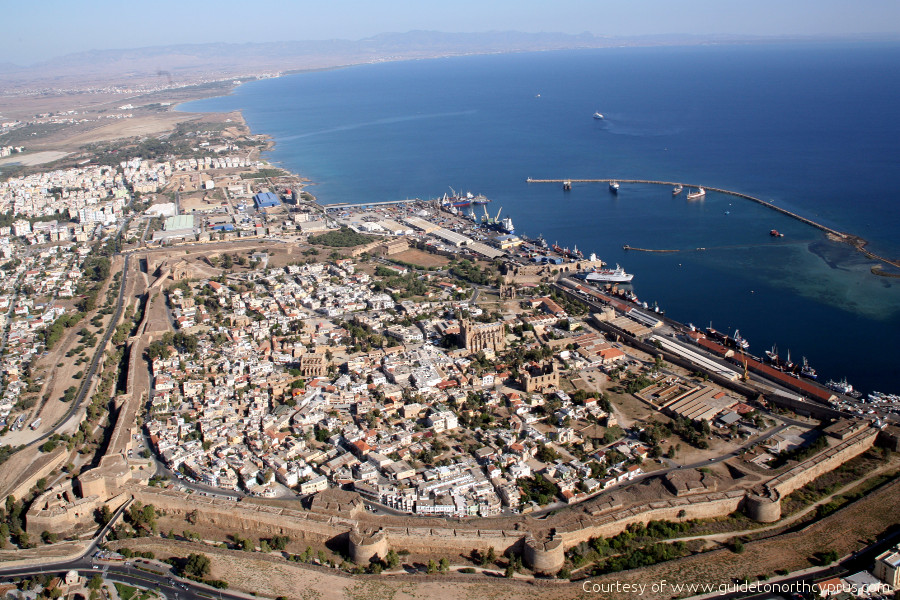
The existing Lusignan-era walls were formidable, but Venetian engineers made them legendary. They thickened the ramparts, redesigned bastions for modern artillery, and dug a deep moat. The goal was to create an impregnable fortress. These well-preserved Venetian walls still define the city's silhouette today.
Yet, this immense fortification was a preparation for a threat that would ultimately prove overwhelming. The walls symbolize a transition from an era of open commerce to one of siege and defense. They stand as the most visible ancient monument within the historic walled city of Famagusta.
Within these protective walls, several iconic structures were built that continue to define the city's enigmatic heritage. They serve as stone chronicles of its complex past.
This magnificent Gothic cathedral was constructed in the 14th century. It was designed as the coronation church for the Lusignan kings of Cyprus. Its architectural grandeur was a direct statement of the city's wealth and importance, mirroring great French cathedrals like Reims.
Guarding the harbor is the massive citadel, later known as Othello's Tower. This fortress protected the seaward entrance to the city. Its name is derived from a later governor, Christoforo Moro. His story, filtered through time, is believed to have inspired Shakespeare's tragic play, Othello, forever linking the city to English literature.
These structures, among hundreds of other churches and palaces, created a stunning urban landscape. They formed the physical core of the city's identity as a major commercial center and a beacon of medieval architecture. Their survival, in various states of preservation, is central to understanding the heritage of Famagusta today.
The golden age of Famagusta met a brutal and decisive end. In 1570, a massive Ottoman fleet arrived to claim Cyprus for the empire. While Nicosia fell quickly, Famagusta's mighty walls presented a far greater challenge. The city, commanded by Venetian Marco Antonio Bragadin, prepared for a long and bloody defense.
The Ottoman siege of Famagusta lasted for thirteen grueling months. Ottoman forces, led by Lala Mustafa Pasha, surrounded the city with overwhelming numbers. They bombarded the Venetian walls continuously with heavy artillery. Despite starvation and disease, the defenders held out with remarkable tenacity.
The siege cost the Ottanos an estimated 50,000 men, a staggering loss that underscored the city's formidable defenses and the defenders' courage.
Finally, in August 1571, with supplies exhausted and hope gone, Bragadin surrendered under negotiated terms. The Ottoman response was treacherously brutal. Mustafa Pasha violated the surrender agreement. He ordered the execution of surviving Christian soldiers and had Bragadin publicly flayed alive.
The Ottoman conquest fundamentally altered the city's character. They banned Christians from residing within the walls, converting most churches into mosques. The Cathedral of Saint Nicholas became the Lala Mustafa Pasha Mosque. This event closed a major chapter in the enigmatic heritage of Famagusta, beginning centuries of Ottoman rule.
For over three centuries, Famagusta languished under Ottoman control. Its role as a premier Mediterranean trading port diminished significantly. The city turned inward, its grand buildings repurposed and its international connections severed. The focus shifted to local administration rather than global commerce.
The Ottomans did make some improvements, notably modernizing the water supply system with new fountains. However, the city's European architectural splendor was often neglected or altered. The population changed, with Turkish settlers moving in. The once-cosmopolitan hub became a quieter, provincial town within the Ottoman Empire.
In 1878, Cyprus came under British administration. This brought a new phase of development for the island and for Famagusta. The British recognized the strategic value of the city's deep-water harbor. They developed the port and improved infrastructure, breathing some economic life back into the area.
This period set the stage for the 20th-century transformations that would lead to both revival and, ultimately, tragedy. It reconnected Famagusta to the wider world.
The mid-20th century witnessed a dramatic renaissance for Famagusta, but in a new area. Just south of the walled city, the Varosha district began its meteoric rise. Following Cypriot independence in 1960, Varosha transformed into a glamorous modern tourist resort.
By the early 1970s, Varosha was the epitome of luxury tourism. It featured high-rise hotels, pristine beaches, and vibrant nightlife. The district became a favorite holiday spot for international celebrities and tourists alike. Its economy boomed, representing the modern, prosperous face of Cyprus.
Varosha accounted for a significant portion of the island's tourism revenue, contributing to the over 80% of tourist facilities located in what would become the Turkish-controlled north.
This all ended abruptly in the summer of 1974. Following a coup in Cyprus, Turkey intervened militarily. Turkish forces advanced and captured Famagusta. As they approached, the entire Greek-Cypriot population of Varosha fled south, fearing for their lives.
They left behind everything: cars in the streets, food on tables, laundry on lines. The Turkish army then sealed the six-square-kilometer district with barbed wire and military patrols. Overnight, a thriving city became a forbidden zone.
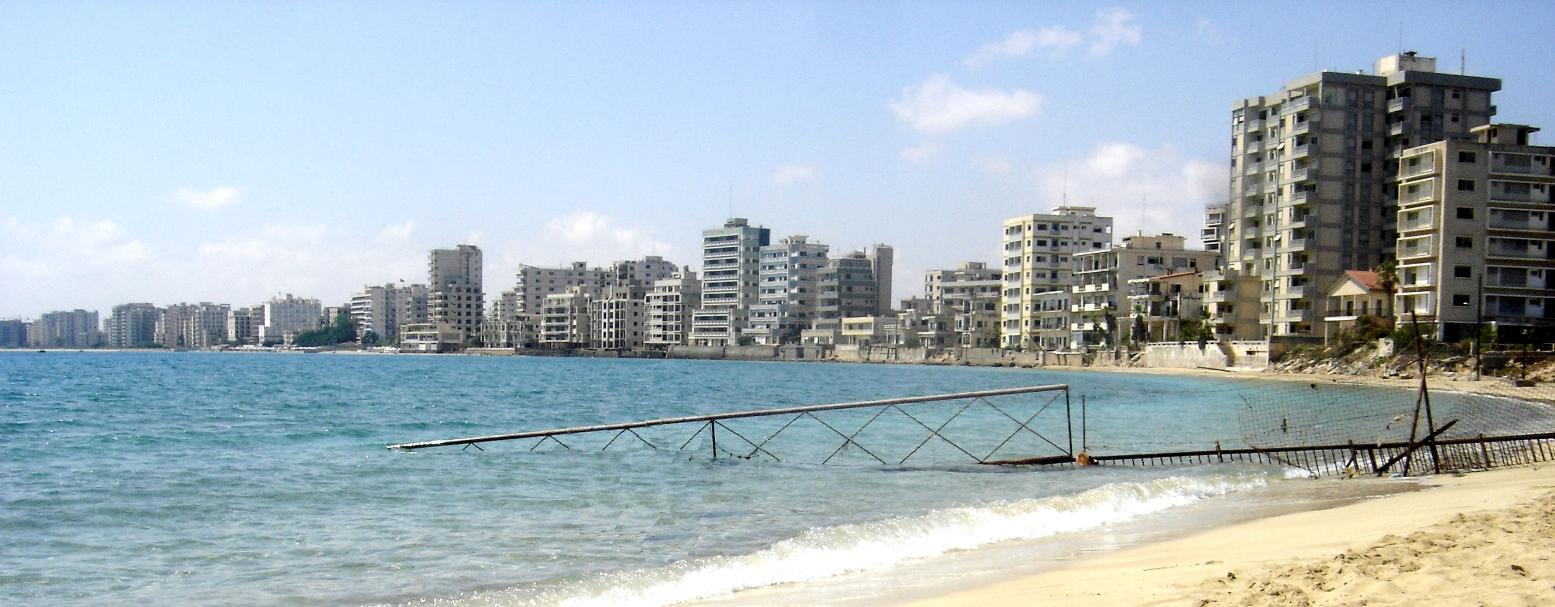
For decades, Varosha has existed in a state of suspended animation. It is a ghost town frozen in the 1970s, one of the most striking and poignant examples of such a place in the world. The district stands as a powerful political symbol and a humanitarian issue.
Nature has slowly reclaimed the concrete and asphalt. Trees grow through cracked hotel lobbies, and pigeons nest in abandoned apartments. Swedish journalist Jan-Olof Bengtsson, who visited in 1977, famously first described it as a "ghost town." His description captured the eerie, timeless quality of the sealed-off suburb.
Access has been strictly prohibited, preserving a snapshot of 1974. The abandoned high-rise hotels of Varosha loom over empty streets as stark monuments to conflict. This area is the most visually powerful component of the modern Famagusta heritage narrative.
The fate of Varosha is a central issue in the Cyprus dispute. United Nations resolutions call for its return to its original inhabitants. Various peace plans have proposed its revival under UN administration as a confidence-building measure. However, political deadlock has kept the barbed wire in place for nearly five decades.
Beyond the modern political tragedy, the Famagusta region is an archaeological treasure trove. The area surrounding the city holds sites of immense historical importance, stretching back millennia. These sites add profound depth to the region's heritage.
A short distance north of Famagusta lie the extensive ruins of Salamis, once a powerful ancient Greek city-state. Founded after the Trojan War, according to legend, it became the premier city of ancient Cyprus. Its ruins include a magnificent gymnasium, Roman baths, and a reconstructed theatre.
Salamis provides critical context, showing that the area's strategic importance predates the medieval period by over a thousand years. The site's grandeur underscores the long-standing significance of this part of the Cypriot coast.
Near Salamis is the monastery and tomb of Apostle Barnabas. Born in Salamis, Barnabas is a foundational figure for the Church of Cyprus. Tradition holds that he founded the church and was its first bishop. The monastery, now a museum, is a major pilgrimage site.
This site connects the religious heritage of Cyprus directly to the Famagusta region. It represents an unbroken thread of Christian tradition from the Apostolic age through the Byzantine and medieval periods right up to the present day, despite the region's complex history.
The historic walled city of Famagusta presents a unique and urgent conservation challenge. Its structures have endured centuries of conflict, neglect, and environmental stress. International organizations have recognized the site's critical importance to global heritage. Preservation efforts must navigate complex political realities.
In 2008, and again in 2014, the World Monuments Fund (WMF) placed Famagusta on its Watch List. This listing highlights sites at risk from neglect, conflict, or unsustainable development. The WMF has noted the urgent need for documentation, planning, and conservation of the city's medieval and Venetian architecture. This international recognition underscores that the heritage at stake belongs to all humanity.
Many of the city's hundreds of historic churches and palaces are in a state of ruin. Without consistent maintenance, stonework crumbles, frescoes fade, and roofs collapse. The political division of Cyprus complicates access for international experts and funding. Conservation work that does occur is often a race against time to stabilize these irreplaceable monuments.
The well-preserved Venetian walls are a notable exception, having benefited from past restoration, but they require ongoing care to withstand the coastal environment.
Famagusta stands as one of the world's most potent symbols of unresolved conflict. Its physical state—a thriving modern district frozen in time next to a medieval walled city—is a constant visual reminder. The future of its heritage is inextricably linked to the wider Cyprus dispute and the search for reconciliation.
In recent years, the status of the Varosha ghost town has seen unsettling developments. Parts of the sealed area have been opened for limited access, sparking international condemnation. These moves are viewed as violations of UN resolutions. They have increased tensions and complicated peace efforts, putting the future of the district further into question.
The potential for uncontrolled development or the permanent loss of refugee property rights remains a serious concern. The fate of Varosha is a key political issue in any discussion about the island's reunification.
Despite the political deadlock, there is significant activism around Famagusta's heritage. Organizations like the Famagusta Initiative campaign for the city's return and revival. They advocate for confidence-building measures, such as reopening Varosha under UN administration. These groups emphasize the city's potential as a bridge for peace rather than a symbol of division.
For visitors to northern Cyprus, the enigmatic heritage of Famagusta is a powerful and somber experience. The walled city is accessible and offers a profound journey through layers of history. However, the experience is marked by the visible scars of recent conflict and ongoing division.
Within the walls, visitors can walk along the impressive ramparts and explore key monuments. The Lala Mustafa Pasha Mosque (formerly St. Nicholas Cathedral) dominates the main square, its Gothic exterior contrasting with its interior prayer hall. Othello's Tower offers views of the harbor and houses a small museum.
Walking through the silent, ruined churches, like the hauntingly beautiful St. George of the Greeks, provides a tangible connection to the city's lost wealth. The Venetian Palace ruins hint at the former seat of power.
A visit is incomplete without witnessing Varosha. From designated points along the barrier, one can look into the abandoned six-square-kilometer district. The sight of crumbling hotels and overgrown streets, silent for decades, is a powerful and unsettling reminder of the human cost of conflict. This view is a central part of understanding the modern chapter of Famagusta's story.
The contrast between the ancient stones of the walled city and the modern ruins of Varosha encapsulates the city's entire tragic trajectory from medieval glory to contemporary fracture.
The story of Famagusta is not merely a historical account; it is a living lesson. It demonstrates how geography can bestow both fortune and misfortune. The same deep harbor that brought immense wealth also made it a strategic target for empires. Its architectural beauty is a testament to human achievement, yet its ruins speak of human fragility.
Famagusta's layers tell the broader story of the Mediterranean itself. It embodies the rise and fall of empires, the clash of religions, the flow of commerce, and the tragedy of modern nationalism. From the Lusignan kings to the Ottoman pashas to the 20th-century refugees, its stones have witnessed the full spectrum of human endeavor and suffering.
The city’s endangered cultural heritage demands urgent international attention and care. Preservation is a moral imperative, independent of politics. The world stands to lose an irreplaceable chapter of human history if these monuments are allowed to vanish. Furthermore, a just resolution for the city and its displaced people remains a critical component for lasting peace on the island.
The enigmatic heritage of Famagusta is a complex tapestry woven from threads of glory, faith, commerce, conflict, and loss. It is a city that reached dazzling heights as a wealthy medieval trading port, only to be shattered by siege, transformed by conquest, and finally frozen by modern war. Its narrative is held in its 365 churches, its imposing walls, its silent modern ruins, and its divided present.
Today, Famagusta exists in two temporal states. The ancient walled city is a monument to a past that is slowly fading. The sealed district of Varosha is a monument to a present that is painfully unresolved. Together, they form a powerful symbol of history's unfinished business. The future of this heritage hinges on choices yet to be made—choices about preservation, reconciliation, and peace.
To engage with Famagusta is to engage with the enduring questions of history, identity, and conflict. It challenges us to see heritage not as a relic, but as a living dialogue between past and future. The final chapter for this walled medieval port city has yet to be written, and its ultimate legacy will be determined by whether its stones become bridges or remain barriers.

Your personal space to curate, organize, and share knowledge with the world.
Discover and contribute to detailed historical accounts and cultural stories. Share your knowledge and engage with enthusiasts worldwide.
Connect with others who share your interests. Create and participate in themed boards about any topic you have in mind.
Contribute your knowledge and insights. Create engaging content and participate in meaningful discussions across multiple languages.
Already have an account? Sign in here

Uncover the mysteries of Jericho, the world's oldest city. Explore its ancient walls, agricultural innovations, and bibl...
View Board
Archaeologists uncover lost Hadrian’s Wall section in 2025, revealing a 2,000-year-old frontier’s complex legacy of powe...
View Board
Archaeologists in Izmir, eng, uncover a 1,500-year-old mosaic with Solomon’s Knot, revealing Smyrna’s Agora’s layered hi...
View Board
Discover Bagan, Myanmar's breathtaking temple city & UNESCO World Heritage site. Explore thousands of ancient pagodas & ...
View Board
Tartu's Toome Hill shelters medieval ruins, a 17th-century university, and the Struve Arc—where Baltic power struggles f...
View Board
Journey through time in Aleppo, one of the world's oldest cities. Discover its rich history, iconic Citadel, Great Mosqu...
View Board
Tabriz: Iran's Historic City of Firsts and Silk Road Legacy The bones of Tabriz are made of earthquake rubble and royal ...
View Board
Pune intertwines Peshwa forts, thriving IT corridors, and centuries-old wadas, crafting a vibrant tapestry where history...
View Board
Explore Baghdad, the historic capital of Iraq. Discover its Golden Age, iconic architecture, vibrant culture, and ongoin...
View Board
Explore Kandahar, Afghanistan: a historical crossroads of empires and cultures for 2500 years. Discover its ancient root...
View Board
Explore the 2025 Archaeology Boom! Discover groundbreaking finds from lost cities to royal tombs, reshaping our understa...
View Board
Archaeologists uncover Belize's first Maya king, Te K’ab Chaak, in a 1,700-year-old tomb, rewriting Caracol’s origins wi...
View Board
Archaeologists discover the lost tomb of Pharaoh Thutmose II in the Valley of the Kings! Explore the significance of thi...
View Board
Uncover the captivating story of Roxana, Alexander the Great's first wife. Explore her Sogdian origins, political influe...
View Board
Explore Tbilisi, Georgia: a captivating city with a rich history spanning millennia. Discover its founding legend, Golde...
View Board
Explore the life of Caracalla, the controversial Roman Emperor. Discover his brutal reign, key reforms like the Constitu...
View Board
Explore Salamanca, Spain's "Golden City!" Uncover 2000 years of history, from Roman roots to its famed university. Plan ...
View Board
Discover Tripoli, Libya's capital! Explore ancient Roman ruins, Ottoman architecture, and vibrant souks with our guide. ...
View Board
Discover Santiago de Compostela, a timeless pilgrimage destination. Explore its history, traditions, and modern resurgen...
View Board
Journey through time in Pompeii, the ancient Roman city frozen in time by Mount Vesuvius. Discover its history, excavati...
View Board
Comments