

Explore Any Narratives
Discover and contribute to detailed historical accounts and cultural stories. Share your knowledge and engage with enthusiasts worldwide.
On the morning of February 15, 2013, the sky over Chelyabinsk, Russia, fractured. A 20-meter asteroid, unseen and undetected, tore through the atmosphere at 19 kilometers per second. Its airburst released energy equivalent to roughly 30 Hiroshima bombs. Windows shattered across the city. Over 1,500 people sought medical attention, mostly from flying glass. The event lasted six seconds. It was a cosmic reminder, delivered without warning, that the universe is not a passive gallery. It is an active studio, and Earth sits within its field of debris.
That reminder fuels a quiet, relentless, and technically sublime endeavor: the cataloging of near-Earth asteroids. We know of about 28,000 today. Surveys add nearly 3,000 new ones each year. The true population, however, numbers in the millions. This is not merely a scientific census. It is a race against celestial probability, a global project blending advanced optics, orbital mechanics, and artificial intelligence into a new form of environmental awareness. The goal is simple: to see the rocks before they see us.
Planetary defense begins with a shift in perception. We must stop seeing the space around Earth as empty and start seeing it as populated—cluttered, even—with ancient, tumbling rocks. These near-Earth objects (NEOs) are defined by orbits that bring them within 1.3 astronomical units of the Sun, placing them in our orbital vicinity. They range from pebbles to mountains. The objects of most immediate concern are those larger than 140 meters, capable of regional devastation. Congress has mandated NASA find 90% of them by 2030. As of March 2024, we’ve found less than half.
The traditional method of discovery is elegant in its simplicity: point a powerful telescope at a dark patch of sky, take multiple images over time, and look for the dots that move. Ground-based observatories have driven the count from a few hundred to tens of thousands. But they have a fundamental, solar-sized blind spot. They cannot look toward the Sun. Asteroids lurking in the glare of dawn or twilight are invisible to optical telescopes, arriving as complete surprises, just like Chelyabinsk.
This limitation has catalyzed a pivot in technique, from ground-based optical to space-based infrared. The logic is devastatingly straightforward. An asteroid warmed by the Sun glows in infrared light, making it stand out against the cold backdrop of space, even when visually lost in solar glare. This principle underpins NASA’s next great instrument in the hunt: the NEO Surveyor.
"NEO Surveyor will fundamentally change what we know about near-Earth asteroids," stated a project lead in a December 2022 briefing following the mission's approval. "Moving the search into the infrared spectrum from the Sun-Earth L1 Lagrange point is like turning on a floodlight in a previously shadowed corner of the solar system. We expect to find tens of thousands of new objects, most of which current surveys simply cannot see."
This space telescope, slated for a 2027 launch on a SpaceX Falcon 9 rocket, is designed for a 12-year survey. Its mandate is to achieve that congressional 90% detection goal for 140-meter-plus "city-killer" asteroids. But its architects also talk of finding hundreds of thousands of smaller objects, down to 30 meters—the size range that includes the Chelyabinsk meteor. The mission represents a move from reactive spotting to proactive, systematic scanning. It is a shift from artisanal discovery to industrial-scale detection.
Discovery is only the first brushstroke. Every new dot of light requires a calculated path—an orbit. And every orbit must be assessed for its future intersection with our own. This is where the cold poetry of mathematics meets the high stakes of planetary security. For two decades, NASA’s Sentry system performed this risk analysis. In late 2022, it was replaced by Sentry-II, a next-generation algorithm of remarkable sensitivity and sophistication.
Sentry-II doesn’t just calculate simple gravitational paths. It models subtle, non-gravitational forces, most notably the Yarkovsky effect. This is a tiny but relentless thrust imparted on an asteroid as it absorbs sunlight on its day side and re-radiates that heat on its night side. Over decades or centuries, this thermal photon push can alter an asteroid’s course by millions of kilometers, turning a miss into a hit. Sentry-II ingests this chaos, along with the gravitational nudges from every planet, and computes probabilities down to 1 in 10 million.
"The old system was like a precise map of a calm lake," explained a JPL engineer involved in Sentry-II's development. "Sentry-II is a map of the ocean, with tides, currents, and thermal gradients. It can handle orbital uncertainties that would have caused its predecessor to simply throw up its hands. We are now quantifying risks we couldn't even properly see before."
This algorithmic leap is critical because the discovery rate is accelerating. The Vera C. Rubin Observatory in Chile, coming online in 2025, will scan the entire visible sky every few nights, generating an avalanche of data. It will likely find thousands of new NEOs annually. Sentry-II is the essential filter, the curator that sifts this avalanche for the single grain of true danger. It transforms raw data into actionable intelligence.
Meanwhile, a parallel revolution is happening in historical data. The Asteroid Institute’s ADAM platform (Asteroid Discovery Analysis and Mapping), operational since May 2022, uses an algorithm called THOR. Its innovation is "tracklet-less" orbit recovery. Traditional discovery requires multiple observations of a moving object in a single night—a tracklet. THOR can connect dots across different nights, even from different telescopes, stitching together a single object’s path from archival images. It is finding asteroids that were always in the data, hidden in plain sight. This is computational archaeology applied to the solar system, recovering lost histories from old photographic plates and digital files.
The hunt, therefore, operates on multiple timelines: the real-time scan of the sky, the deep-time analysis of historical data, and the probabilistic modeling of futures centuries hence. It is a cultural project as much as a scientific one. We are developing the tools not just to see, but to remember, and to forecast. This requires a new kind of instrument, one that doesn't just look up, but thinks ahead. What happens, though, when the forecast spells trouble? The answer arrived on a September evening in 2022, with a direct hit.
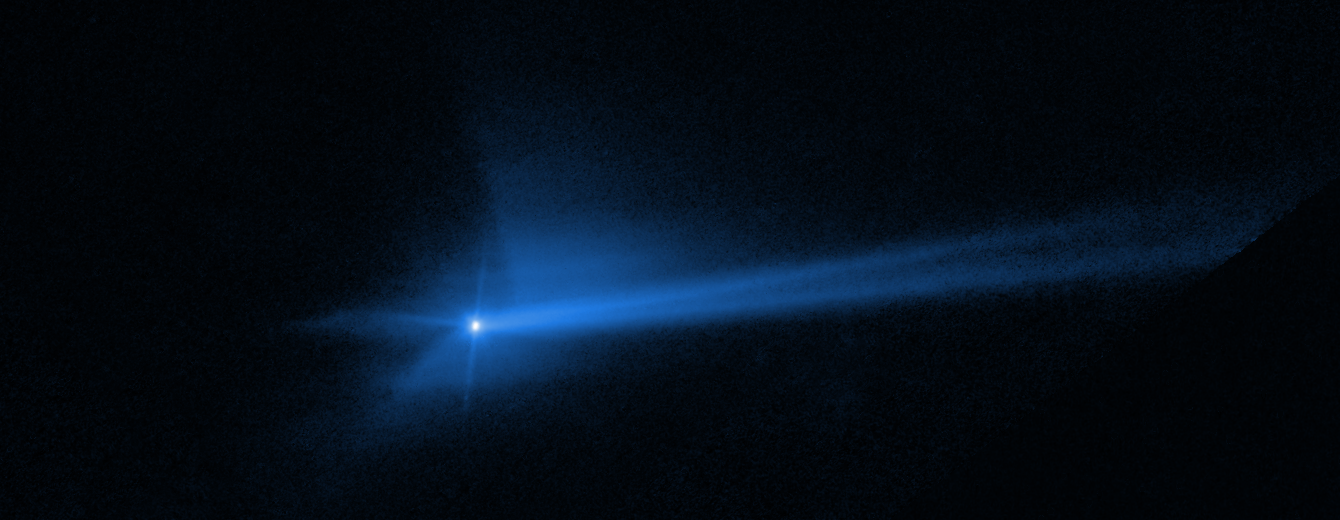
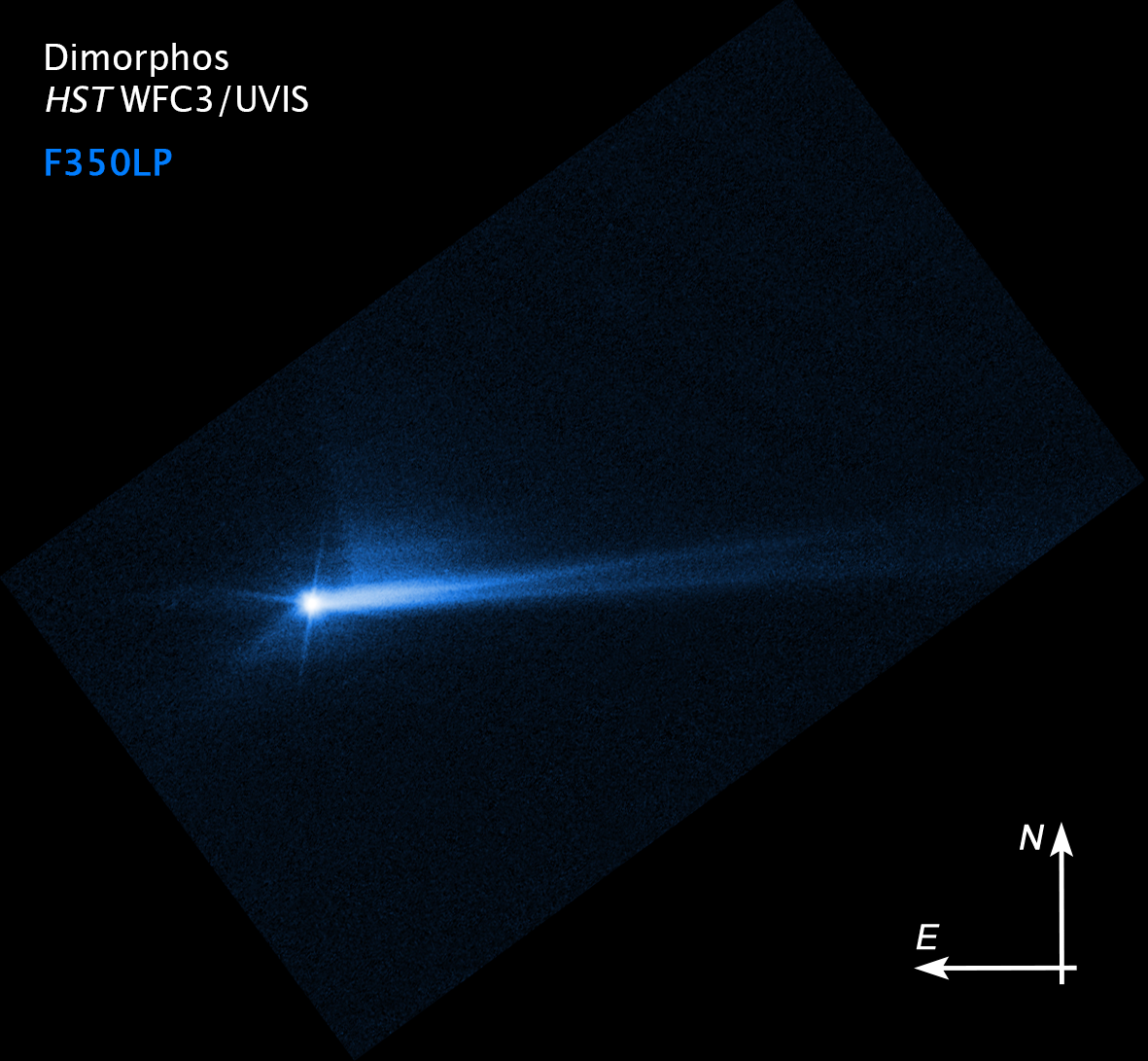
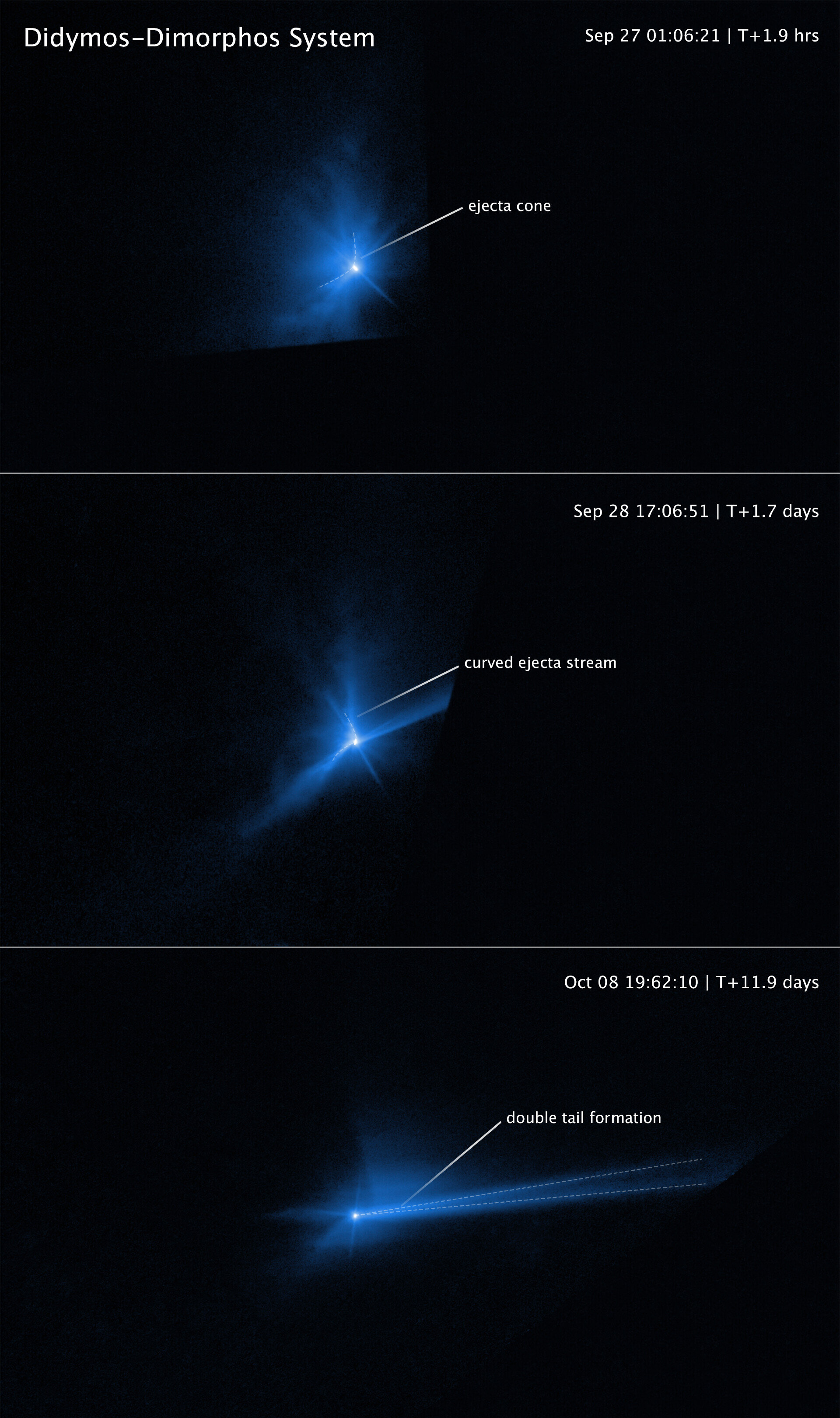
The Double Asteroid Redirection Test was a violent masterpiece. On September 26, 2022, a 570-kilogram spacecraft slammed into Dimorphos, a 150-meter moonlet orbiting the asteroid Didymos. The impact was intentional, a proof-of-concept executed with the precision of a cosmic pool shot. It worked. Dimorphos’s orbit around its parent body shortened by 33 minutes. For the first time in history, humanity deliberately altered the architecture of the solar system. The mission validated the kinetic impactor as a viable tool. It also opened a more complex chapter: now that we can hit one, what do we do about the rest?
"DART proved the concept, but it was a carefully chosen, slow-moving target with a known orbit years in advance," notes a planetary defense specialist at the Johns Hopkins Applied Physics Laboratory. "The real challenge isn't the asteroid we see coming a decade out. It's the object we spot with only months or years to spare. For those, we need a different paradigm entirely."
This paradigm is taking shape around the concept of pre-positioning. A recent paper in Aerospace America, spearheaded by planetary scientist Daniel Green, argues forcefully for a shift in strategy. The logic is chillingly pragmatic. The largest rockets available, like NASA's Space Launch System, could deliver a massive kinetic impactor to a stable parking orbit at the Sun-Earth L2 Lagrange point. There, it would wait, a sentinel with a single purpose. Upon detection of a short-warning threat—whether asteroid or comet—the impactor could be dispatched on a rapid intercept trajectory. The paper’s authors state the goal with stark clarity: to "provide the largest impactor mass with the greatest possible velocity in space ready to go."
This proposal highlights a growing, and contentious, debate within the field. While billions are earmarked for surveying the steady population of near-Earth asteroids, a more elusive and potentially more dangerous class of object commands less systematic attention: long-period comets.
"I think we’re ignoring our biggest problem," argues Daniel Green. "And our biggest problem no longer is the asteroid population that we now call NEOs, but it’s the comets."
Green’s concern is rooted in orbital dynamics and recent history. Asteroids, for the most part, follow predictable ellipses within the inner solar system. Comets can arrive from the frozen Oort Cloud at the system’s edge, plunging toward the Sun on steep, hyperbolic paths. They are faster, often larger, and give far less warning. The case study is Comet Siding Spring. When it was discovered in January 2013, it was already on a beeline for Mars. Just 22 months later, the half-kilometer-wide comet screamed past the Red Planet at 56 kilometers per second, missing it by a mere 140,000 kilometers. Had its trajectory intersected with Earth’s, the warning time would have been functionally useless for any existing deflection technology.
The focus on achieving 90% detection of 140-meter asteroids by 2030, a bureaucratic and budgetary milestone, begins to feel like perfecting the locks on your front door while ignoring the possibility of the house being swept away by a flood. Is the entire architecture of planetary defense, built patiently over decades, optimized for the wrong catastrophe?
While the comet debate simmers, the technological march of asteroid hunting continues on multiple fronts, often in missions with other primary goals. The launch of NASA’s SPHEREx mission on March 11, 2025, exemplifies this trend. Designed as an all-sky infrared spectral surveyor to study cosmic inflation and galactic ices, its instruments have proven unexpectedly adept at characterizing fast-moving objects. In December 2025, SPHEREx turned its gaze to 3I/ATLAS, the third interstellar comet ever detected.
"Tracking objects like 3I/ATLAS is a powerful byproduct of our cosmology survey," says SPHEREx Project Scientist Olivier Doré. "The infrared data gives us composition and trajectory refinements you can't easily get from the ground. Every deep, wide-field survey we launch becomes, inherently, a new sentinel for the solar system."
This ancillary benefit is becoming a standard feature of 21st-century astronomy. The Nancy Grace Roman Space Telescope, scheduled for launch in September 2026, will perform ultra-deep galactic surveys whose vast datasets will inevitably be mined for moving objects. ESA’s PLATO exoplanet hunter, launching in late 2026 or early 2027, will employ a similar wide-field stare. The era of the single-purpose asteroid telescope is giving way to a paradigm of multipurpose observatories, with asteroid detection as a critical secondary payload in the data stream. This is efficient. It is also, potentially, a vulnerability. When discovery is a side hustle, does it get the urgent, focused attention a true planetary threat demands?
On the ground, legacy systems continue their quiet, dedicated vigil. The NASA Marshall Space Flight Center Observatory marks its 20th anniversary in its modern form in 2026, having spent two decades monitoring lunar impacts, eclipses, and meteoroid streams. These facilities provide the long-term, consistent baseline against which new, flashier technologies are measured. They are the keepers of the calendar, tracking annual events like the Perseid meteor shower peaking on August 12-13, 2026, and the total solar eclipse of August 12, 2026—celestial mechanics in action, a clockwork backdrop against which any anomalous motion must be judged.
Planetary defense is ultimately a story of translation. It translates photon counts into orbital parameters. It translates orbital parameters into risk probabilities. And, most difficult of all, it translates those probabilities into political will and budgetary line items. The current U.S. mandate, to find 90% of asteroids 140 meters and larger, has created a clear, measurable target. As of early 2026, NASA's NEO Observation Program has identified about 40% of that estimated population. The path to 2030 is steep.
This bureaucratic framing, however, shapes the art of the possible. Missions are funded to meet the mandate. Technologies are developed to serve the missions. The entire enterprise becomes structurally biased toward finding the objects the mandate cares about, potentially at the expense of more probable or more dangerous scenarios. The Chelyabinsk event was caused by an object a fraction of the mandated size, yet its airburst unleashed energy equivalent to 30 Hiroshima bombs and injured 1,500 people. We are building a system to prevent a city’s destruction, but the smaller, more frequent strikes that can shatter a region’s windows and a population’s sense of security? They remain, largely, in the realm of actuarial risk.
ESA’s approach offers a different cultural model, one more integrated with general space safety. In late January 2026, the agency commanded the last two of its venerable Cluster II satellites to alter their orbits for a coordinated re-entry over the South Pacific on August 31 and September 1, 2026. This is a controlled experiment in debris mitigation, a precursor to the agency’s Draco mission in 2027. The mindset is holistic: the threat environment encompasses both natural and human-made objects. The skills needed to track a defunct satellite and guide its demise are cousins to those needed to intercept an asteroid.
"The Cluster re-entry campaign is not directly about planetary defense," an ESA Space Safety Programme manager clarifies. "But it is about control. It's about understanding trajectories in the Earth's neighborhood down to the minute, modeling atmospheric interaction, and executing a precise end-of-life maneuver. That core competency—control over the trajectory of objects near Earth—is absolutely foundational. Whether the object is made of titanium or nickel-iron is almost a secondary detail."
This perspective is refreshingly pragmatic. It sidesteps the cosmic awe and existential dread to focus on engineering fundamentals. Yet one wonders if it dilutes the urgency. Is grouping asteroid deflection with space debris cleanup a necessary step toward operational maturity, or a way to make an apocalyptic topic palatable for quarterly budget reviews?
The year 2026 will see the culmination of the DART experiment’s next phase. On December 28, 2026, ESA’s Hera mission is scheduled to arrive at the Didymos system. Its job is forensic. It will measure the mass of Dimorphos, survey the crater left by DART, and study the asteroid’s composition in detail. The data will turn a successful demonstration into a quantifiable model. How much momentum was transferred? How much ejecta was thrown up, and how did that recoil affect the deflection? The answers will refine the equations that future planetary defenders will use to calculate how hard, and where, we need to hit.
Hera’s arrival will be a moment of quiet reflection amidst the frantic hunt. For the first time, we will see the aftermath of our own intervention. The crater will be a monument to a new human capacity—not just to observe the cosmos, but to edit it. The question hanging over the mission, over the pre-positioned impactor debates, over the comet warnings, is whether that editorial power will be coupled with the wisdom, and the bureaucratic agility, to use it in time. The asteroids we know are numbered in the tens of thousands. The ones we don’t, in the millions. The clock, measured in orbital periods and legislative cycles, is ticking.
This endeavor, the meticulous cataloging of five million potential threats, transcends astronomy and enters the realm of cultural anthropology. It represents humanity’s most profound shift in self-conception since the Copernican Revolution. We spent centuries removing ourselves from the center of the universe. Now, we are installing ourselves as its custodians. Planetary defense is not merely a technical program; it is the ultimate expression of a species that has evolved from passive subject of natural forces to active manager of its environment. The infrared gaze of NEO Surveyor and the probabilistic models of Sentry-II are tools of existential agency. They formalize a responsibility we have only just begun to articulate: the stewardship of our planet’s orbital space.
The cultural impact is subtle but pervasive. It reframes our relationship with the night sky. The stars are no longer just points of light or navigational aids; they are the backdrop against which dangerous motion is measured. A meteor shower is no longer just a poetic spectacle—it is a reminder of the population of debris we swim through. This project seeds a new kind of literacy, one of orbital mechanics and impact probabilities. When the close approach of an asteroid like Apophis in 2029 dominates headlines, the public discussion will be informed by decades of accumulated data and a shared, if nascent, understanding of the stakes. We are learning to speak the language of celestial traffic control.
"What we are building is a planetary immune system," observes the director of a non-profit asteroid research institute. "The telescopes are the sensory neurons, detecting invaders. The algorithms are the neural pathways, processing the threat. And missions like DART are the white blood cells, the active response. For the first time in 4.5 billion years, the Earth has a system to sense and potentially neutralize a direct external threat. That changes everything."
The legacy is already being written in international law and cooperation. The United Nations Committee on the Peaceful Uses of Outer Space has working groups dedicated to planetary defense. The NASA-ESA collaboration on DART and Hera sets a template for global response. This isn't just science. It is a dry run for the kind of unified, technically complex, and time-sensitive international action that other existential challenges, like climate change, desperately require. The silent hunt for asteroids is becoming a workshop for planetary governance.
For all its grandeur, the enterprise is riddled with fragile assumptions and dangerous gaps. The most glaring weakness is its reactive funding cycle. Political and public interest spikes only after a near-miss or a sensational Hollywood portrayal. Budgets are allocated in fits and starts, threatening the long-term, consistent observation that asteroid detection demands. A gap in funding could mean a gap in the sky, a blind period during which a threat could enter the inner solar system unseen.
The technological bias is another critical flaw. The entire architecture is optimized for asteroids—slower, predictable, rocky bodies. As Daniel Green and others warn, the comet threat is systematically undervalued. The proposed pre-positioned impactor at L2 is a compelling idea, but it remains a paper concept. It requires a permanent, funded commitment to maintain a spacecraft in standby mode for a threat that may not materialize for decades, a hard sell for any legislature focused on short-term results. Furthermore, our deflection strategies are overwhelmingly kinetic. We are practicing how to punch a rock. What if the next threat is a fragile, porous "rubble pile" that would absorb a kinetic impact like a sponge? Alternative strategies, like gravity tractors or ion-beam shepherds, remain underfunded and in the theoretical stage.
There is also a dangerous paradox of success. As systems like Sentry-II grow more sophisticated and publicly accessible, they will inevitably calculate a non-zero impact probability for a medium-sized asteroid decades in the future. This will trigger a media frenzy and global anxiety. Yet, the very uncertainty in the initial calculations—the reason for the warning—means we may not know for certain if the asteroid is a true threat until more observations are made, a process that could take years. The project risks creating a decade of panic before it can deliver a decade of certainty. Managing the psychology of risk is a challenge for which the scientific community is utterly unprepared.
The final, sobering criticism is one of scope. Even achieving the 90% detection goal for 140-meter asteroids by 2030 leaves 10% unknown. In a population estimated at 25,000, that’s 2,500 undetected city-killers. And it does nothing for the millions of smaller, Chelyabinsk-sized objects. The promise of total security is a myth. The goal is risk reduction, not elimination—a nuance often lost in the triumphant narratives surrounding missions like DART.
The forward look is a calendar of concrete rendezvous. All eyes are on December 28, 2026, the arrival of ESA’s Hera spacecraft at the Didymos system. The data it beams back in early 2027 will dictate the next decade of deflection engineering. Shortly after, the launch of the Nancy Grace Roman Space Telescope and ESA’s PLATO will flood astronomers with new deep-field data, a secondary harvest from which countless new asteroid tracks will be gleaned. The critical launch of NEO Surveyor in 2027 will mark the true beginning of the systematic infrared survey, its first light promising to transform thousands of theoretical models into known objects—or unsettling discoveries.
By the time Apophis makes its much-publicized close pass on April 13, 2029, skimming just 31,600 kilometers from Earth, our network of sensors and algorithms will be watching with unprecedented fidelity. That flyby will be less a threat and more a live-fire exercise, a test of our entire tracking infrastructure under real-world conditions. The data collected will be invaluable.
We are learning to read the solar system as a dynamic, sometimes violent, text. Each newly cataloged asteroid is a sentence parsed, a clause understood. But the volume is vast, the grammar complex, and the narrative is one of collision and gravity. The work is slow, meticulous, and unglamorous—a census of silent mountains tumbling through the dark. Its success will be measured not by a triumphant interception, but by the continued, mundane absence of a cataclysm. The ultimate goal is for nothing to happen at all. And in that profound, quiet success, the true masterpiece will remain unseen.
Your personal space to curate, organize, and share knowledge with the world.
Discover and contribute to detailed historical accounts and cultural stories. Share your knowledge and engage with enthusiasts worldwide.
Connect with others who share your interests. Create and participate in themed boards about any topic you have in mind.
Contribute your knowledge and insights. Create engaging content and participate in meaningful discussions across multiple languages.
Already have an account? Sign in here

Rubin Observatory'spre-survey tests uncover 12,700 asteroids, including 11,000 in a single batch, using its 3.2-gigapixe...
View Board
Geophysicists declare Europa's seafloor erupts with active volcanoes, fueling plumes that may carry alien life's chemica...
View Board
NASA's Habitable Worlds Observatory, set for a 2040s launch, aims to directly image Earth-sized exoplanets and detect li...
View Board
Perseverance rover deciphers Mars' ancient secrets in Jezero Crater, uncovering organic carbon, minerals, and patterns h...
View Board
A typographical error—a missing overbar—doomed NASA's Mariner 1, sparking a $80 million failure that reshaped software s...
View Board
A newly detected interstellar comet, 3I/ATLAS, streaked past Mars in late 2025, offering humanity its first direct sampl...
View Board
Sztuczna inteligencja rewolucjonizuje eksplorację kosmosu, od autonomicznych łazików na Marsie po zaawansowane systemy a...
View Board
Tiangong vs. ISS: Two space stations, one fading legacy, one rising efficiency—China’s compact, automated lab challenges...
View Board
The world's largest space camera, weighing 3,000 kg with a 3.2-gigapixel sensor, captures 10 million galaxies in a singl...
View Board
X1.9 solar flare erupts, triggering severe radiation storm & G4 geomagnetic storm within 25 hours, exposing Earth's vuln...
View Board
NASA's Artemis II mission marks humanity's first crewed lunar journey in over 50 years, testing Orion's life-support sys...
View Board
Astronomers uncovered the Champagne Cluster on New Year's Eve 2025, revealing two galaxy clusters in a violent merger, o...
View Board
From Big Bang chaos to cosmic order—new discoveries reveal dark matter's violent origins, red-hot birth, and hidden gala...
View Board
Teleskop Webba odkrywa kosmiczną autostradę kryształów w młodym układzie EC 53, gdzie gwiazda gotuje pył i wyrzuca krysz...
View Board
Teleskop Webba śledzi narodziny pierwszego egzoksiężyca! Odkryj, jak rewolucjonizuje on kosmiczne polowania. Przejdź do ...
View Board
Cancer research reaches new heights as ISS microgravity enables breakthroughs like FDA-approved pembrolizumab injections...
View Board
Spaceflight rapidly rewrites human gene expression, accelerating aging and stressing stem cells, as new studies reveal p...
View Board
Cosmologists challenge 40-year dogma: dark matter may have been born hot, screaming at near-light speed in the universe'...
View Board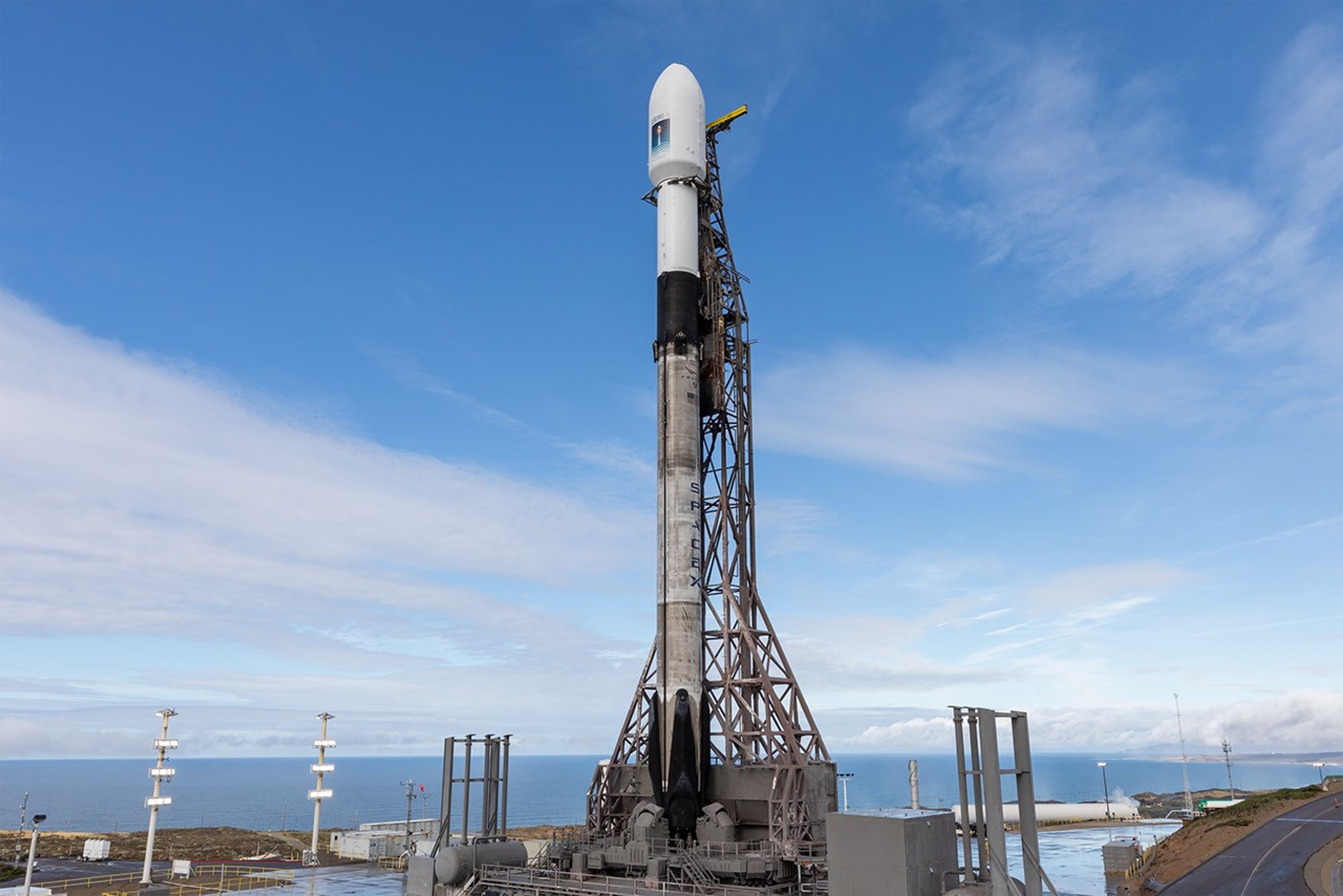
Sentinel-6B wystartował 17 listopada 2025, by z precyzją do 1 cm monitorować 90% oceanów, kontynuując 30-letni rekord po...
View Board
New research reveals dark matter may have been born red-hot, moving near light speed, challenging 40 years of cold dark ...
View Board
Comments