Navigating the New Era of Space Exploration: The Game Changers and Gatekeepers


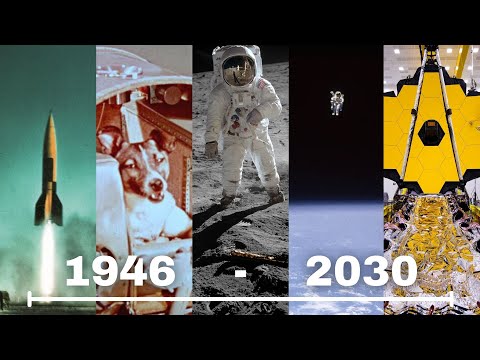
As we stand at the threshold of a new era in space exploration, the cosmos beckons more insistently than ever. The final frontier, once the exclusive playpen of governments with hefty budgets and Cold War incentives, is now a canvas on which private enterprises and international collaboration paint a picture of potential that is as boundless as space itself. It is a realm where science, ambition, and curiosity merge, propelling humanity towards the stars.

The early 21st century has marked a shift in the dynamics of space exploration. Visionaries like Elon Musk, with his company SpaceX, and Jeff Bezos, the driving force behind Blue Origin, have ignited a private space race, jostling for cosmic real estate alongside traditional powerhouses like NASA and Roscosmos. Their achievements – from reusable rockets to grandiose plans for Mars colonization – are altering the landscape of spaceflight and satellite deployment.

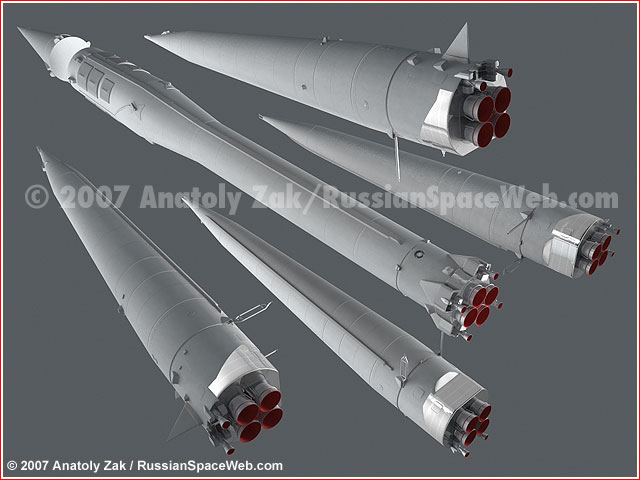
SpaceX's Falcon Heavy, the most powerful operational rocket by a factor of two, encapsulates this seismic shift. When it lifted off in February 2018, not only did it launch a car into orbit – a marketing masterstroke – it also symbolized the dawn of commercially-driven space aspirations. Meanwhile, Blue Origin, though more reclusive in its advancements, promises a vision of millions of people living and working in space.

Yet, these corporate narratives are not the only fables being woven in the tapestry of the cosmos. Nations previously relegated to the audience are now taking their acts to the cosmic stage. China's Chang'e lunar exploration program and their building of a space station signify a determined participant in the space domain. On the other side of the world, the European Space Agency (ESA) continues to contribute scientific heft with missions like Rosetta, which in 2014 achieved the first-ever comet landing.

This international flurry is not without its challenges and consequences, however. The explosion of satellite launches, both by nations and private entities, could exacerbate the existing issue of space debris, posing risks to functional satellites and crewed spaceflights. Moreover, with the rise of space tourism, spearheaded by ventures like Virgin Galactic, a conversation on regulations, environmental impact, and the ethical implications of turning space into a playground for the wealthy has become ever more pressing.

In tandem with these developments is the growing field of space law. Outdated treaties such as the Outer Space Treaty of 1967 are subject to new scrutiny and calls for amendments to address the contemporary space situation. Who owns the moon? What happens when a country or company wants to mine an asteroid? These questions have moved from theoretical debates to very real considerations.

Despite these complications, the advancements in technologies such as satellite miniaturization and interplanetary rovers are democratizing access to space. CubeSats, small satellites with various functions, have become accessible to universities and smaller countries, contributing to a variety of space-related initiatives from climate monitoring to deep space research.

At the crux of this modern odyssey are the advancements in propulsion and life-support systems, which directly impact long-duration missions and the potential for human habitation beyond Earth. The prospects for discovering extraterrestrial life, understanding the origins of the universe, and even finding a second home hinge on these technological leaps.

The legacy of this new space era will be determined not only by the technical milestones achieved but by the way we navigate the ethical, legal, and environmental mazes that this final frontier presents. The conversations we have today will lay the foundation for the role humanity plays in the vast cosmic theatre of tomorrow.Emerging at the helm of scientific exploration, space agencies are becoming more ambitious as they push the envelope of what's achievable. Unmanned missions like NASA’s Perseverance and China's Tianwen-1 rovers on Mars are gearing up to answer perennial questions about the possible existence of ancient life on the red planet. Scouring alien terrains, these robotic emissaries also pave the way for future human explorers, testing technologies necessary for survivability and resource utilization beyond Earth.

But Mars is not the only celestial body capturing the imaginations of scientists and engineers. The resurgence in lunar exploration, buoyed by international initiatives such as NASA's Artemis program, seeks to establish a sustainable human presence on the Moon by the end of the decade. This lunar prelude is more than mere rehearsal for Martian endeavors; it is a crucial stepping-stone for the development of new technologies and an in-situ understanding of living off-world.

Indeed, the Moon could serve as a proving ground for extracting water ice from permanently shadowed craters, refining fuel from lunar regolith, and even testing the viability of 3D-printed habitats. These advancements carry the promise of cheaper, more sustainable space travel, potentially unlocking a future where the Moon becomes a waypoint for deeper space exploration.

The burgeoning interest in asteroids is another chapter in the story of space exploration. Organizations like NASA’s OSIRIS-REx and Japan's Hayabusa2 have ventured to these celestial remnants, not merely for science's sake but for the potential economic windfall that mining them could one day yield. The rare minerals and metals found on some asteroids could provide the resources necessary to sustain space economies without depleting the Earth's reserves.

Yet, the excitement surrounding off-Earth exploits often overshadows the practical benefits that space technology brings to everyday life on our planet. Satellite technology has revolutionized communication, navigation, and has become indispensable in weather forecasting and disaster management. Earth-observing satellites are pivotal in tracking climate change, offering insights into the effects of human activity on global ecosystems.

As more entities enter the space race, coordination and collaboration become paramount to ensure the longevity of these critical orbits. Organizations like the Secure World Foundation and the Space Data Association work towards cooperative use of space, advocating for responsible behavior in an environment that remains, at its core, a global commons.

Furthermore, as the commercial space industry burgeons, the need for a trained workforce becomes apparent. This demand is encouraging an educational pivot towards STEM fields, fostering a new generation entranced with stars and satellites. Universities around the globe are expanding aerospace programs, and online platforms are offering courses that make space more accessible to enthusiasts beyond academia.

However, the romance of space belies a harsh reality. Step into the cosmos, and one enters a realm devoid of the comforts provided by Earth’s biosphere. Space is inherently hostile to human life, with challenges ranging from extreme radiation to microgravity's detrimental effects on the human body. As aspirational as colonization might be, the physical and psychological tolls on astronauts are monumental risks that researchers are still grappling to address.

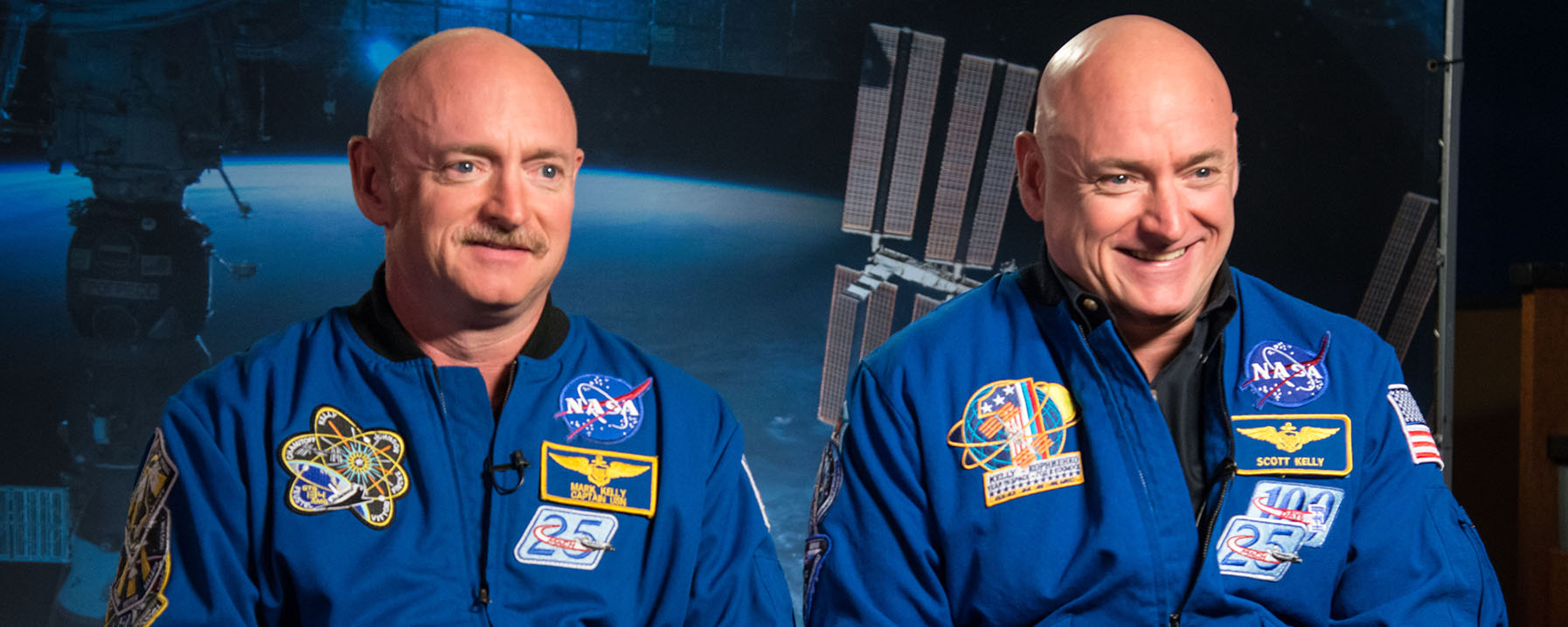
Mitigating these dangers involves not only refining spacesuits and habitats but also understanding the long-term implications of space living for human biology. Ground-breaking work on twin astronauts Scott and Mark Kelly has started to unravel these effects, uncovering changes at the genetic level after prolonged periods in space. These studies are pivotal for ensuring the health and wellbeing of the cosmic voyagers of our future.

In this new era of space exploration, it is also incumbent upon us to preserve the night sky for posterity. Light pollution and satellite constellations like SpaceX’s Starlink threaten the pristine view of the cosmos. Astronomers and laypeople alike express concern over these streaks of artificial light despoiling celestial observations. As we march toward a networked space environment, the balance between technological progress and the untouched beauty of the night sky is delicate.

As the curtain rises on an epoch where humans take their place among the stars, the narrative of space exploration continues to unfold. With imagination as our compass and innovation as our sail, we traverse the cosmic seas. This modern space odyssey embodies humanity's indomitable spirit, a testament to the unquenchable thirst for knowledge that propels us beyond the azure skies and into the embrace of infinity. It is a journey fraught with danger and filled with wonder, a continuing testament to our desire to not just reach for the stars, but someday, to call them home.
Video -
image not described
image not described
image not described
image not described
Video -
image not described

Comments

Welcome

Discover Haporium

Your personal space to curate, organize, and share knowledge with the world.

Explore Any Narratives

Discover and contribute to detailed historical accounts and cultural stories. Share your knowledge and engage with enthusiasts worldwide.

Join Topic Communities

Connect with others who share your interests. Create and participate in themed boards about any topic you have in mind.

Share Your Expertise

Contribute your knowledge and insights. Create engaging content and participate in meaningful discussions across multiple languages.

Get Started Free
10K+ Boards Created
50+ Countries
100K+ Links Curated

Related Boards

Cosmos: Journey Through the Infinite Universe

Cosmos: Journey Through the Infinite Universe

Embark on a cosmic journey through the infinite universe! Explore galaxies, spacetime, dark matter, and the Big Bang. Di...

View Board
Navigating the Gig Economy

Navigating the Gig Economy

Navigating the Gig Economy: The Future of Work or a Step Backwards?

View Board
Outer Wilds: A Cosmic Mystery Worth Exploring

Outer Wilds: A Cosmic Mystery Worth Exploring

Unravel the mysteries of Outer Wilds! Trapped in a 22-minute time loop, explore a dying solar system and discover why th...

View Board
William Herschel: Expanding Our View of the Universe

William Herschel: Expanding Our View of the Universe

Discover William Herschel, the pioneering astronomer who discovered Uranus, infrared radiation, and thousands of deep-sk...

View Board
Jean Baptiste Joseph Delambre: Astronomical Pioneer

Jean Baptiste Joseph Delambre: Astronomical Pioneer

Explore the life of Jean Baptiste Joseph Delambre (1749-1822), a French astronomer celebrated for his planetary tables, ...

View Board
George Gamow: Big Bang Pioneer & Quantum Genius

George Gamow: Big Bang Pioneer & Quantum Genius

Explore the extraordinary life of George Gamow, the theoretical physicist who pioneered the Big Bang theory and made gro...

View Board
Subnautica: The Underwater Survival Game That Redefined Terror

Subnautica: The Underwater Survival Game That Redefined Terror

A survival game that transformed the open-world genre, Subnautica's oceanic terror and discovery await, as a new chapter...

View Board
The Missing Overbar: How a Typo Destroyed NASA's Mariner 1

The Missing Overbar: How a Typo Destroyed NASA's Mariner 1

A typographical error—a missing overbar—doomed NASA's Mariner 1, sparking a $80 million failure that reshaped software s...

View Board
Artemis II: NASA's Crewed Return to the Moon After 50 Years

Artemis II: NASA's Crewed Return to the Moon After 50 Years

NASA's Artemis II mission marks humanity's first crewed lunar journey in over 50 years, testing Orion's life-support sys...

View Board
Deep Rock Galactic: The Unlikely Legend of Spacefaring Dwarves

Deep Rock Galactic: The Unlikely Legend of Spacefaring Dwarves

Join a team of dwarves in a gritty, cooperative space mining game where survival is key, and camaraderie is everything.

View Board
Thomas James Kirk III: Exploring Two Very Different Kirks

Thomas James Kirk III: Exploring Two Very Different Kirks

Unraveling the story of Thomas James Kirk III! Discover the truth behind the name, separating the YouTube personality fr...

View Board
Europa's Plumes: Could Underwater Volcanoes Fuel Alien Life?

Europa's Plumes: Could Underwater Volcanoes Fuel Alien Life?

Geophysicists declare Europa's seafloor erupts with active volcanoes, fueling plumes that may carry alien life's chemica...

View Board
The Champagne Cluster: A New Year's Gift for Cosmology

The Champagne Cluster: A New Year's Gift for Cosmology

Astronomers uncovered the Champagne Cluster on New Year's Eve 2025, revealing two galaxy clusters in a violent merger, o...

View Board
Perseverance Rover Paints a New Portrait of Ancient Mars

Perseverance Rover Paints a New Portrait of Ancient Mars

Perseverance rover deciphers Mars' ancient secrets in Jezero Crater, uncovering organic carbon, minerals, and patterns h...

View Board
Sharjah: Explore the Jewel of the Eastern Frontier

Sharjah: Explore the Jewel of the Eastern Frontier

Discover Sharjah, the UAE's cultural heart! Explore its rich history, stunning architecture, booming economy, and family...

View Board
Super Mario 64: The 3D Platforming Pioneer

Super Mario 64: The 3D Platforming Pioneer

Explore Super Mario 64's groundbreaking impact on 3D platforming! Discover its development, innovations, cut content, an...

View Board
Kerbal Space Program: Your Ultimate Space Simulator!

Kerbal Space Program: Your Ultimate Space Simulator!

Explore the cosmos with Kerbal Space Program! Design rockets, manage missions, and conquer space. Download now and start...

View Board
Tbilisi: Unveiling the Historical Gem of the Caucasus

Tbilisi: Unveiling the Historical Gem of the Caucasus

Explore Tbilisi, Georgia: a captivating city with a rich history spanning millennia. Discover its founding legend, Golde...

View Board
Discovering Muscat: Oman's Heartbeat & Hidden Gems

Discovering Muscat: Oman's Heartbeat & Hidden Gems

Explore Muscat, Oman's vibrant capital! Discover ancient forts, grand mosques, bustling souks, and pristine beaches. Pla...

View Board
Rijeka: Unveiling Croatia's Historical Seaport Tapestry

Rijeka: Unveiling Croatia's Historical Seaport Tapestry

Explore Rijeka's rich history as Croatia's principal seaport. From Roman roots to Habsburg rule and a vibrant cultural s...

View Board