Explore Any Narratives
Discover and contribute to detailed historical accounts and cultural stories. Share your knowledge and engage with enthusiasts worldwide.
The first time you saw someone wearing Google Glass in a coffee shop, you probably stared. It was 2013, and the device felt like a crude sci-fi prop—a camera-equipped monocle that promised augmented reality but mostly delivered social unease. That failed experiment cast a long shadow. Now, look ahead to the final quarter of 2026. Two silicon titans are preparing to redefine what we see, and how we see it, by placing artificial intelligence directly onto our faces. Apple and Google are not just releasing products; they are initiating a philosophical war over the future of ambient computing. The battlefield is your peripheral vision.
This isn't about incremental updates. The 2026 smart glasses race represents a fundamental pivot in personal technology, moving intelligence from your hand to your gaze. The core narrative is no longer about if these devices will arrive, but whose vision of them will dominate. Apple’s rumored independent glasses and Google’s multi-pronged Android XR strategy are colliding in a market finally warmed by Meta’s unexpected success with its Ray-Ban collaborations. The technical complexities are staggering—miniaturized displays, contextual AI, all-day battery life—but the human question is simpler. Will we accept a world where our eyewear listens, watches, and thinks for us?
Smart glasses spent a decade in the wilderness. Google Glass retreated to enterprise niches. Snap's Spectacles became a fleeting social media toy. The hardware was clunky, the use cases were vague, and the "cyborg" stigma was real. Meta, partnering with EssilorLuxottica, changed the calculus. By embedding cameras and speakers into frames people already recognized and trusted, Meta’s Ray-Ban stories quietly sold millions. They proved a critical point: wearability trumps technological spectacle. This success, confirmed in Meta’s Q4 2023 earnings call, ripped open the market. It created a template and, more importantly, consumer readiness.
Apple watched this carefully. The company’s notorious secrecy fractures around patterns, and the pattern here is clear. After abandoning earlier projects like the headset-coded "Apple Glass" concept, Apple has zeroed in on a late 2026 launch window for AI-powered glasses. These will not be an accessory to a Mac or a peripheral for the Vision Pro. According to multiple supply chain and insider reports, including from Bloomberg’s Mark Gurman, this device is engineered to operate independently. It will feature a camera, microphone, speakers, and lean entirely on Apple Intelligence and Siri for real-world interaction. But there’s a catch—a typical Apple ecosystem play. While the glasses compute on their own, they will reportedly require pairing with an iPhone to function optimally, tethering the experience to the company’s core hardware fortress.
According to Ming-Chi Kuo, a leading Apple analyst at TF International Securities, "The 2026 glasses are the logical endpoint of Apple's wearables strategy. They are not a headset; they are an iPhone for your face. Their success hinges on the seamless handoff between devices, making the iPhone more essential, not less."
Google’s path is more fragmented and, in some ways, more adventurous. While Apple builds a unified castle, Google is planting flags across the territory. The company is pursuing at least two distinct paths. First, it is developing full wireless Android XR glasses with partners, likely targeting a 2027 release. Second, and more intriguingly, it is prototyping AI glasses with no display whatsoever. These audio-only devices, integrated with the Gemini AI, would function as a smart auditory layer on the world—answering questions, translating languages, describing scenes, all through your ears. This dual approach reveals a company hedging its bets between immersive visual interfaces and minimalist, always-on assistance.
Here lies the first major philosophical rift. Apple’s glasses, based on leaks, will almost certainly incorporate some form of visual display. The technology is likely a micro-OLED waveguide, similar to what’s in high-end AR headsets but drastically scaled down. The goal is to overlay contextual information—navigation arrows, message notifications, object identifiers—onto the physical world. It’s a quiet screen in your corner of vision. Google’s display-less concept rejects this visual clutter entirely. It posits that the next breakthrough isn’t in what you see, but in what you hear. Why project text when an AI can just tell you the answer?
This split defines the entire user experience. A display enables visual mapping and silent reading but demands more power, creates heat, and raises privacy concerns with a visible camera. An audio-only design promises longer battery life and subtler interaction but loses the rich, visual context that makes AR compelling. It’s a trade-off between comprehension and convenience. Google’s partnership with Warby Parker is key here; it’s a direct attempt to solve the wearability problem Meta cracked, by embedding tech into fashionable, prescription-ready frames from day one.
Sarah Lee, Warby Parker's Co-CEO, noted in a joint announcement with Google, "Our focus is on normalization. The technology must disappear into the form. People choose glasses as an expression of self; our job is to ensure that expression isn't compromised by a bulky chip or a strange glow."
Battery life underscores this divide. Non-display AI glasses, like those Google is experimenting with, could theoretically last multiple days on a single charge. Display-equipped models, including Apple’s anticipated device and competitors like the VITURE One, struggle to exceed 6-8 hours of active use. This isn’t just a spec sheet detail; it’s the difference between glasses you wear all waking hours and glasses you remember to charge every night. Apple’s ecosystem might mitigate this—perhaps a MagSafe-like charging case—but the fundamental energy appetite of a micro-display remains the largest engineering hurdle.
And what of the field of view? For devices with displays, this metric has become a brutal arms race. As of March 2024, the VITURE Beast boasts a 58-degree field, the widest commercially available. Apple, with its relentless focus on quality, will likely prioritize pixel density and color accuracy over sheer size, aiming for a "good enough" overlay that doesn’t overwhelm. Does the average user need a cinematic view, or just a useful sliver? The 2026 launches will provide a definitive answer.
Hardware is just the vessel. The soul of these devices is the artificial intelligence that powers them. This is where the showdown intensifies beyond specs. Apple will deploy a deeply integrated stack of Apple Intelligence and Siri. The system is designed for proactive, contextual help. Imagine walking past a restaurant and your glasses, cross-referencing your calendar and preferences, subtly highlight that you have a reservation there in an hour. Or having a foreign language menu translated line-by-line directly onto the lens. The AI must work flawlessly offline for basic tasks, a requirement that has pushed Apple’s on-device model learning for years.
Google’s strength is its foundational AI model, Gemini. Gemini is multimodal by design—it understands text, audio, images, and video natively. In glasses, this could enable real-time visual question answering: "What type of tree is that?" or "Is this shirt available in blue?" The audio-only glasses would rely entirely on this conversational prowess. The risk for Google is fragmentation; its AI might be superior, but its hardware experience could be inconsistent across partners. Apple controls the entire stack, from chip to cloud, enabling a tight, predictable feedback loop between sensor input and AI output.
Privacy isn't a side note; it's the central tension. Both companies will face immense scrutiny over the always-on cameras and microphones. Apple will likely position its on-device processing as a privacy shield, a narrative it has cultivated for years. Google will emphasize user control and transparency. But the societal conversation will be louder. Will bars ban these glasses? How will consent work in private spaces? The success of the 2026 generation hinges as much on social acceptance as on silicon.
We are standing at the precipice of a new kind of device. The next part of this analysis will drill into the raw numbers, the supply chain battles for micro-OLED displays, and the critical perspectives from privacy advocates and early testers. We'll examine whether this is truly the birth of ambient computing or just another false dawn, expertly marketed. The glasses are coming. The question is whose world they will help us see.
Mobile World Congress in Barcelona, February 2026, was supposed to be a coming-out party. Google’s prototypes were there, hidden behind velvet ropes and strict no-photo policies. Attendees who tried them reported a shocking normalcy. They looked like standard Warby Parker frames. This was the entire point. Google’s decade-long redemption arc from the Glasshole era culminates in a single, brutal lesson: if the glasses don’t look like glasses, they fail. The company’s $75 million initial investment in Warby Parker, with provisions ballooning to $150 million based on performance milestones, isn't a partnership. It’s a ransom payment to the gods of fashion.
Compare this to Apple’s historical playbook. Apple doesn’t partner; it assimilates. It would sooner buy Luxottica than share equity with it. This difference in DNA will define the early market. Google is buying legitimacy from established style arbiters like Warby Parker and Gentle Monster. Apple, should it launch, will attempt to create its own legitimacy from scratch, just as it did with the watch. Which approach works better for an object that sits on your face? The evidence from Meta is damning for purists.
"Billions of people wear glasses or contacts for vision correction. It's hard to imagine a world in several years where most glasses that people wear aren't AI glasses." — Mark Zuckerberg, Meta CEO, Q4 2025 Earnings Call
Zuckerberg’s statement isn’t a prediction; it’s a declaration of war won. Meta’s Ray-Ban collaboration has already normalized the camera-equipped frame. Sales tripled in the year preceding that call, a growth trajectory Zuckerberg labeled as "some of the fastest growing consumer electronics in history." That’s the battlefield Google enters. It’s not an empty field. It’s a market where a $299 product from a social media company has already conditioned millions to accept an always-on camera inches from their eyes. Google’s advantage is choice: the screen-free Gemini model for the minimalist, the in-lens AR display for the power user. But choice can be a curse. It fragments marketing, confuses consumers, and dilutes brand identity.
Analysts obsess over display technology. Will Google use a Sony micro-OLED waveguide? Will Apple’s rumored lenses offer a 50-degree field of view? This is a trap. The real specification that matters is weight. Not grams, but social weight. Can you wear them to a job interview? On a first date? At a funeral? The 2013 Google Glass failed this test spectacularly. The restricted demos at MWC 2026, where Google forbade photos, reveal a company still terrified of the wrong kind of viral moment. They have the technical specs in order. The social specs remain a prototype.
Apple’s rumored delay to 2027 or 2028, while Google charges ahead for a 2026 launch, isn’t necessarily a weakness. It’s a pattern. Apple watches others stumble on the bleeding edge, then steps over their bodies with a polished product. Remember the tablet market before the iPad? It was a graveyard of stylus-driven Windows slates. The risk is that smart glasses aren’t tablets. The market is being carved up now. By 2028, Meta could own the mainstream, Google could own the enthusiast, and Apple might arrive to a party where only the premium, niche seats are left.
Forget the frames. The intelligence inside them is the real product. Google’s entire strategy hinges on the omnipotence of Gemini. The demo scenarios are compelling: real-time translation overlaid on a street sign, or a contextual whisper about the history of a building you’re passing. Gemini is multimodal, trained on text, audio, and visual data simultaneously. In theory, this makes it the perfect ambient AI. But theory collides with the chaos of reality. How does it perform in a crowded, noisy street? With poor lighting? When the user has a thick accent?
"The demo was flawless, which is precisely what made me skeptical. Real-time translation worked on a clean, printed menu in a quiet booth. I want to see it handle a chalkboard special in a loud pub." — Elena Rodriguez, Senior Tech Reviewer, TheDeepView.com
Apple’s approach, building on the Apple Intelligence framework and Siri, will be ruthlessly pragmatic. It will prioritize tasks that work reliably 99% of the time over ones that are spectacular but flaky. It will leverage the ecosystem in a way Google cannot. Imagine your glasses quietly highlighting a path in an airport, synced seamlessly from a boarding pass in your iPhone’s Wallet app. Or monitoring your heart rate via your Apple Watch and suggesting you sit down. This isn’t just AI; it’s a networked nervous system where the glasses are just one node.
But Apple’s strength is also its cage. The glasses will reportedly need an iPhone to function fully. This creates a hard market ceiling: iPhone users only. Google’s Android XR platform, by contrast, is a open invitation to any manufacturer. Samsung’s own Galaxy Glasses, due late 2026, will be a partner, not a competitor, within the same Android XR ecosystem. This is a replay of the mobile OS war, but on your face. Google seeks ubiquity through alliance. Apple seeks perfection through control.
"Google isn't selling glasses. It's selling an operating system for your eyes. The Warby Parker deal is just the first OEM. By 2027, we'll see a dozen brands running Android XR, just like we saw with Android phones." — Marcus Thorne, Analyst, TechBuzz.ai
Then there’s the audio-only model. Google’s screen-free Gemini glasses are a fascinating concession. They admit that visual AR might be a bridge too far for mass adoption right now. So they offer intelligence without intrusion. It’s a retreat to the familiar territory of the smart earbud, but with better microphones and more context. Is this the smarter play? While everyone fights over the complexities of waveguide displays, Google could quietly corner the market on discreet, all-day auditory assistants that last for days on a charge.
The financial landscape is asymmetrical. On one side, you have hard, staggering numbers from Meta. Tripled sales. A $299 price point that’s an impulse buy for the tech-curious. A retail presence in every mall. On the other side, you have Google’s confirmed 2026 launch but no price, and Apple’s phantom product, a specter in supply chain reports. Analysts favoring a 2027+ launch for Apple aren’t being pessimistic; they’re being realistic about Apple’s history with entirely new product categories. The original Apple Watch was rumored for years before its 2015 debut. The Vision Pro’s journey from rumor to reality spanned half a decade.
This gap creates a vacuum, and nature abhors a vacuum. Into it step Snap with its 2026 Specs, Samsung, and a swarm of Chinese manufacturers like INMO. They will flood the market with varying levels of quality and creepiness. They will test the boundaries of privacy law and social etiquette for the giants. By the time Apple is ready, the regulatory and cultural landscape for facial computing will already be shaped by these earlier, scrappier players. Apple will either have to conform to new norms or spend heavily to reshape them.
"Meta's tripled sales prove the market exists, but they also set a price anchor. Google and Apple will have to justify costing significantly more. For Google, that means proving Gemini is a quantum leap over Meta AI. For Apple, it means delivering a 'spatial computing' experience that doesn't feel like a $3,499 Vision Pro strapped to your face." — Linda Choi, Consumer Tech Strategist, VRRare.com
Consider the pivot happening at Meta itself. The company’s Reality Labs division, once the metaverse money furnace, has visibly shifted focus toward AI wearables. This isn’t subtle. It’s a multi-billion dollar course correction written in quarterly reports. VR disappointed. AI glasses are printing money. That pivot is the most significant market signal of all. It tells every investor and competitor where the actionable reality lies, not in a virtual fantasy, but in an augmented one.
So, who wins the 2026 battle? The question might be flawed. 2026 is just the first major skirmish. Google will win on variety and first-mover advantage in the new generation. Meta will win on volume and brand familiarity. Apple won’t even be on the field. The real war, the war for the dominant platform of human-computer interaction, will be fought in 2027 and 2028. That’s when Apple’s full stack will meet Google’s open ecosystem in a market prepped by Meta’s success. The glasses on your nose will become the most contested piece of personal real estate since the smartphone screen. Will you trust the company that organizes the world’s information, or the one that promises to keep it private? The choice is coming into focus.
This competition transcends a simple gadget launch. The struggle between Google and Apple to place AI on our faces represents the third great shift in personal computing. First, the desktop placed intelligence in a room. The smartphone put it in our hand. Smart glasses aim to dissolve it into our perception of reality itself. This is the pursuit of ambient computing—not a device you use, but an environment you inhabit. The implications ripple far beyond checking notifications hands-free. It changes how we learn, navigate, and interact with our own memories.
Consider historical context. Eyewear has been a passive tool for centuries, correcting a biological deficiency. The 2026 generation redefines it as an active augmentation layer. The partnership model, exemplified by Google’s deals with Warby Parker and Gentle Monster, proves that the future of tech isn’t always built in a lab in Cupertino or Mountain View. It’s co-designed in optical shops and fashion studios. This democratizes the form factor but also cedes control. The cultural impact is a normalization of the quantified, augmented self. When your glasses can identify a plant species, translate a street sign, or recall the name of a casual acquaintance, they become a cognitive prosthesis. The line between your own knowledge and the AI’s prompting blurs permanently.
"We are not building a better phone. We are building a new layer of human cognition. The glasses are merely the substrate. The real product is the extended mind." — Dr. Anya Sharma, Director of Human-Computer Interaction, Stanford University
The industry impact is a brutal realignment of value. Meta’s pivot from metaverse fantasy to AI wearables is the canary in the coal mine. Reality Labs’ refocusing, confirmed by its 2025 earnings, signals where the venture capital and engineering talent will flow for the next decade. It declares that the next platform isn’t a virtual world you escape to; it’s an enhanced version of the one you live in. The success of the $299 Ray-Ban Meta glasses isn’t just a revenue stream; it’s a market validator that makes the case for every subsequent product. It lowered the social and financial barrier to entry, making Google’s and Apple’s tasks simultaneously easier and harder. Easier because the market is primed. Harder because the standard for acceptable design and price is now brutally set.
Enthusiasm must be tempered with severe criticism. The privacy model for these devices is, at best, aspirational and at worst, a dangerous fiction. Google’s restrictive MWC 2026 demo, where photos were forbidden, wasn’t about protecting intellectual property. It was about avoiding a PR nightmare. A single image of a blinking camera light on a demo unit could ignite the same social unease that doomed Google Glass. These devices are born into a world already skeptical of facial recognition and pervasive surveillance. Their very utility—understanding context through camera and microphone—makes them the ultimate surveillance tool, not just by corporations, but by anyone standing near you.
Apple’s walled-garden approach offers a different critique. Its rumored requirement for iPhone pairing doesn’t just create ecosystem lock-in; it creates a digital caste system. It says the augmented world is only for those who can afford the full suite of premium hardware. This risks creating a society where the AI-enhanced affluent experience a fundamentally different, more convenient reality than those who are not. The democratizing promise of technology is betrayed by a business model of exclusion.
Then there’s the weakness of the AI itself. Both Gemini and Apple Intelligence are prone to hallucinations, to confabulating answers with confident incorrectness. When that error is on your phone screen, you dismiss it. When it’s an overlay on the real world telling you the wrong street name or misidentifying a person, the consequences are tangible. The race to market in 2026 pressures companies to ship “good enough” AI, betting that users will trade absolute accuracy for magical convenience. That’s a Faustian bargain we haven’t fully reckoned with.
Battery life remains the physical chain tethering these dreams of ambient computing to a charger. Even the most optimistic projections for display-equipped glasses max out at a day of intermittent use. This isn’t an all-day tool; it’s an accessory you ration. Until a glass frame can hold a battery with the energy density to power a micro-display and an LTE modem for 48 hours, the promise of seamless, always-available intelligence will remain just that—a promise.
The path forward is etched with specific dates. Google’s confirmed 2026 launch will be followed by Samsung’s Galaxy Glasses in late 2026. Snap’s new Specs will hit the market, targeting a social-first audience. All eyes will then turn to Apple’s Worldwide Developers Conference in June 2027. If the glasses are real, that is the stage where they must appear, leveraging the momentum of its next iPhone cycle. The subsequent Consumer Electronics Show in January 2028 will be the venue where the second-generation models from Google and Meta respond.
The coffee shop of 2028 will look different. No one will stare at the person with smart glasses. They’ll be commonplace, perhaps even boring. The quiet battle won’t be over who wears them, but whose reality they define. Will your world be annotated by Google’s vast knowledge graph, Apple’s curated ecosystem, or Meta’s social fabric? The question is no longer if we will see through them, but whose vision we will adopt.
In conclusion, the 2026 launches of Apple and Google's AI glasses mark a pivotal attempt to redeem the wearable tech category from its awkward past. This corporate clash is less about hardware and more about whose vision of an AI-augmented world will reshape our reality. The true test will be whether this time, society is ready to look.


Your personal space to curate, organize, and share knowledge with the world.
Discover and contribute to detailed historical accounts and cultural stories. Share your knowledge and engage with enthusiasts worldwide.
Connect with others who share your interests. Create and participate in themed boards about any topic you have in mind.
Contribute your knowledge and insights. Create engaging content and participate in meaningful discussions across multiple languages.
Already have an account? Sign in here

XREAL unveils the 1S AR glasses at CES 2026, offering a lightweight, affordable $449 alternative for work and entertainm...
View Board
AI steps out of screens into factories, powering agents that move cups, pick parts and reshape jobs amid surging robot i...
View Board
CES 2026 unveiled stair-climbing vacuums, mmWave presence sensors, and local AI robots that act, sense, and reshape smar...
View Board
CES 2025 spotlighted AI's physical leap—robots, not jackets—revealing a stark divide between raw compute power and weara...
View Board
ul researchers unveil paper-thin OLED with 2,000 nits brightness, 30% less power use via quantum dot breakthrough, targe...
View Board
Tesla's Optimus Gen 3 humanoid robot now runs at 5.2 mph, autonomously navigates uneven terrain, and performs 3,000 task...
View Board
Samsung and Apple clash in 2026 with wide foldable phones, turning screens into canvases and creases into cultural battl...
View Board
Samsung unveils a comprehensive AI home ecosystem, prioritizing open interoperability and seamless integration across ap...
View Board
MIT’s 2026 breakthroughs reveal a world reshaped by AI hearts, gene-edited embryos, and nuclear-powered data centers, wh...
View Board
Microsoft's Copilot+ PC debuts a new computing era with dedicated NPUs delivering 40+ TOPS, enabling instant, private AI...
View Board
The EU AI Act became law on August 1, 2024, banning high-risk AI like biometric surveillance, while the U.S. dismantled ...
View Board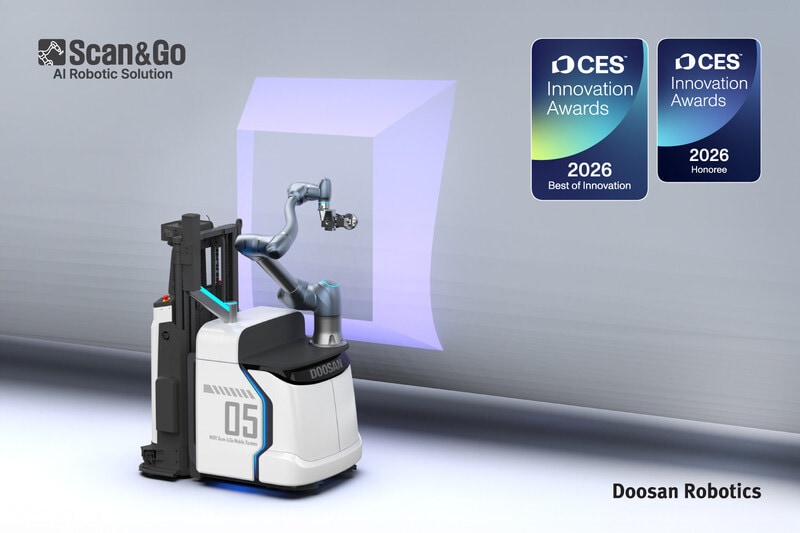
Hyundai's Atlas robot debuts at CES 2026, marking a shift from lab experiments to mass production, with 30,000 units ann...
View Board
AI-driven digital twins simulate energy grids & cities, predicting disruptions & optimizing renewables—Belgium’s grid sl...
View Board
The Architects of 2026: The Human Faces Behind Five Tech Revolutions On the morning of February 3, 2026, in a sprawling...
View Board
Microsoft's ambitious January 2026 Xbox Game Pass lineup signals a new era of curated entertainment, with over a dozen n...
View Board
Gli occhiali intelligenti hanno superato la fase pionieristica: oggi pesano meno di una mela, traducono in tempo reale e...
View Board
Apple y Google unen fuerzas en 2026 para revolucionar Siri con IA Gemini, marcando un hito en la inteligencia artificial...
View Board
The open AI accelerator exchange in 2025 breaks NVIDIA's CUDA dominance, enabling seamless model deployment across diver...
View Board
Philip Mason, the unseen architect of market volatility, reshaped finance, culture and tech with fractal insights that s...
View Board
Nscale secures $2B to fuel AI's insatiable compute hunger, betting on chips, power, and speed as the new gold rush in te...
View Board
Comments