Ephesus: The Ancient City Where History Echoes


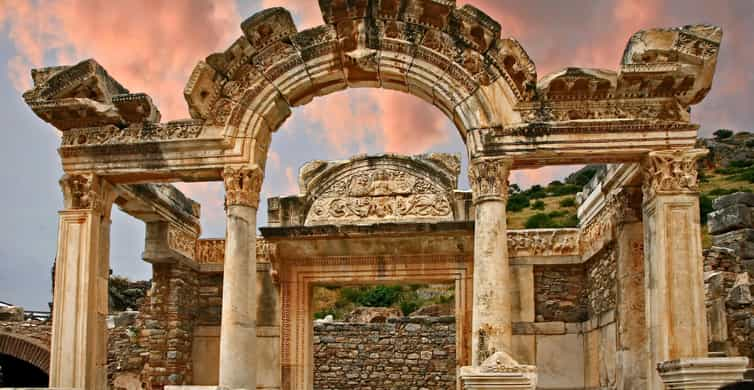
Nestled in the rich valleys of the Aegean region of Turkey, the ancient city of Ephesus stands as a monumental testament to the grandeur of classical antiquity. As travelers walk along its marbled streets, they traverse the same paths that famed philosophers, powerful rulers, and devout pilgrims ventured upon several millennia ago.

Founded by Ionian Greeks in the 10th century BCE, Ephesus flourished into a vital port city, owing much of its prosperity to its strategic location near the mouth of the Cayster River. It grew under successive rule—from the Lydian monarchy to Persian dominion, through the conquests of Alexander the Great, and into the arms of the Roman and later Byzantine Empires. This sequence of hegemonies left an indelible mark on Ephesus's expansive architectural landscape, illustrating a splendid chronicle of cultural and historical synthesis.

Owing its zenith to the Roman period, Ephesus was the embodiment of opulence and sophistication. It boasted the Temple of Artemis, one of the Seven Wonders of the Ancient World, underlining the city's status as a crucial religious center. Pilgrims from across the Mediterranean would flock to this majestic sanctuary, seeking favor from the Huntress Goddess.

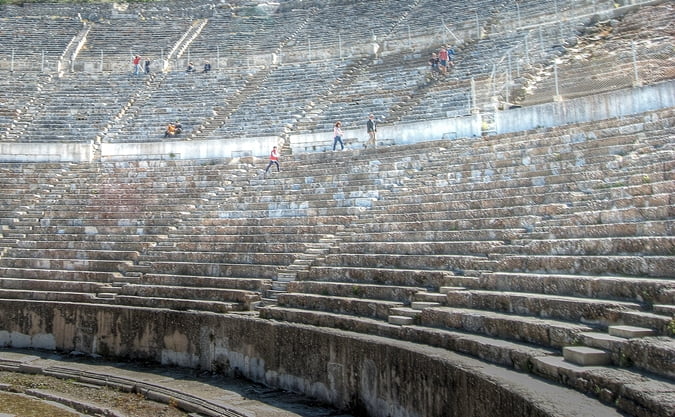
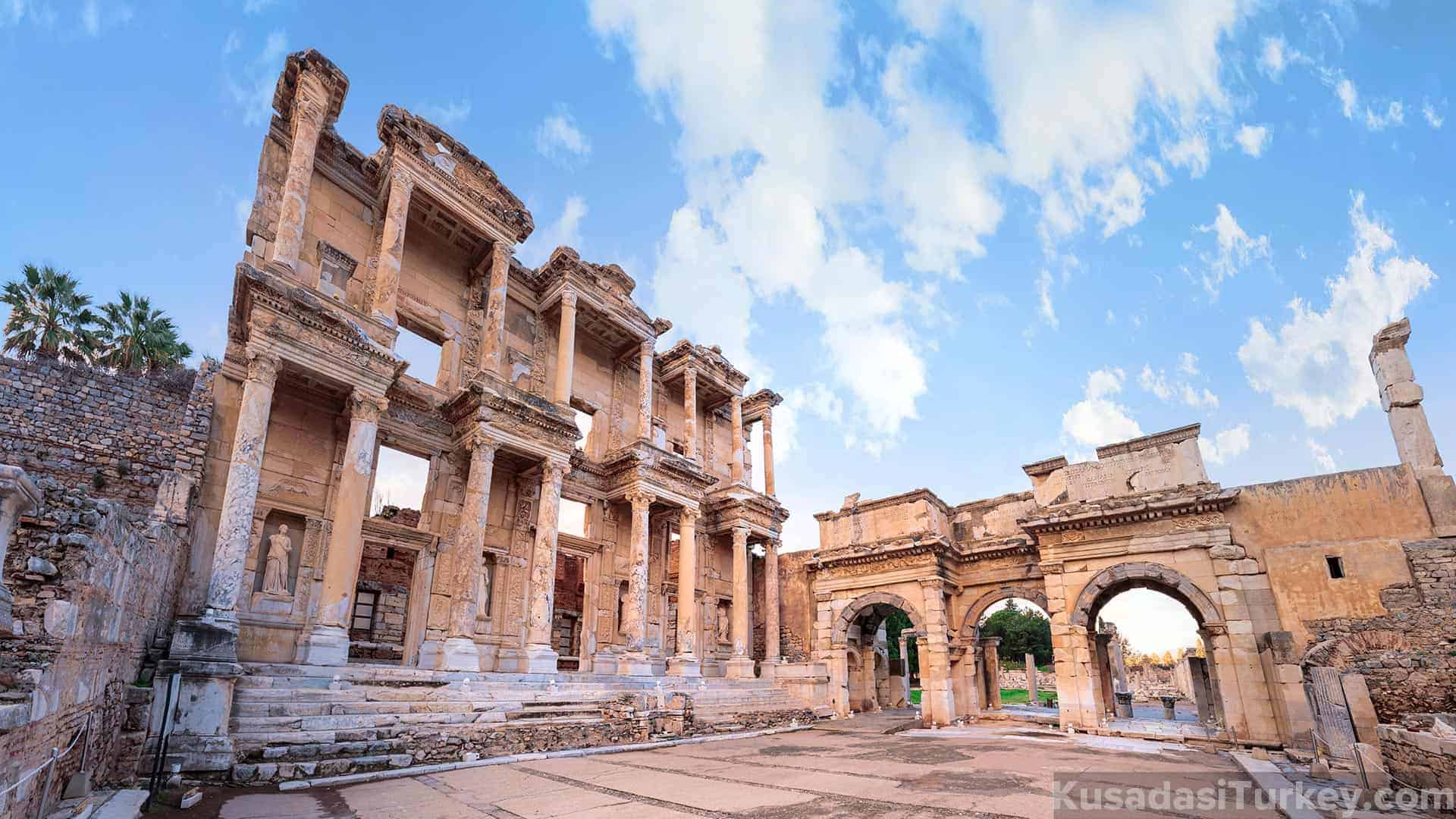
The Library of Celsus, a revered institution of knowledge carefully constructed with an intricate façade, once housed thousands of scrolls and stood as a symbol of the city’s commitment to intellectual pursuits. Nearby, one would find the Great Theatre, a massive amphitheater with a capacity for nearly 25,000 spectators, who would revel in the grandiose performances that typified Ephesian cultural life.

Ephesus was no stranger to early Christianity either. The city is frequently referenced in the New Testament, serving as the backdrop for several pivotal moments in Christian lore—including the preaching of Paul and the alleged residency of the Virgin Mary and St. John the Evangelist in its proximity.

However, with splendor comes the whisper of mortality, as Ephesus faced the inevitability of decline. The silting of its harbor diminished its relevance as a trade hub, and despite attempts to restore the port, it was eventually abandoned to the tides of history. The city's desolation was further exacerbated by repeated invasions, earthquakes, and the eventual shift in trade routes precipitated by the rise of other power centers.

The modern rediscovery of Ephesus came in the 19th century when archaeologists began unearthing the sand-covered ruins that had once pulsated with life. The extensive excavation efforts over subsequent years have unveiled an astonishing array of artifacts and structures, allowing historians and tourists alike to experience a tangible connection to the ancient world.

To walk through Ephesus today is to witness the grandeur of the Great Theatre, the solemnity of the Temple of Artemis' solitary column, the echo of chariots on Curetes Way, and the imagined whispers within the Terrace Houses—where frescoes and mosaics hint at the daily lives of Ephesians. Despite the centuries that have passed, Ephesus continues to captivate with its enduring spirit—a place where history does not merely lie inert, but reverberates with the tales of humanity's timeless saga.

From a bustling metropolis to an enigmatic ruin, Ephesus encapsulates the arc of urban development and decay—a microcosm reflecting the vast narratives of ancient civilizations. It may no longer beat with the vibrancy of commerce and worship, but in the stillness of its ruins, one can sense the residual energy of past epochs, dialoguing across time with those who choose to listen.

[End of Part 1]As the Sun Sets on a Grand Epoch: Ephesus in the Twilight of Antiquity

The decline of Ephesus, like many ancient cities, was not a sudden event but a gradual process, mirroring the ebb and flow of empires and economies, faiths and philosophies. Yet, in the wake of its gradual descent into oblivion, it left a legacy that outlived the splendors of its marble-street glory.

Transitioning from the glories of the Roman period into the spread of Christianity, Ephesus assumed a new role as a prominent Christian center. The Council of Ephesus, held in its Great Theatre in 431 CE, was one of the pivotal ecumenical councils that shaped the early trajectory of Christian doctrine, most notably affirming the title of Mary as Theotokos, or God-bearer.

But history's tide was relentless. The region's shifting geopolitical currents saw Ephesus being engulfed in the waves of Arab raids during the Middle Ages, further contributing to its decline. Trade routes that once breathed prosperity into its heart rerouted, rivers silted up, and the once-great city found itself stranded from the sea that nourished its lifeblood.

The diminished city lumbers on through the Byzantine era, shrinking in size and importance, becoming a mere shadow of its storied past before its gradual abandonment following the Turkish conquest in the 15th century. The stonework that had once heralded to the world its dominance and culture fell silent, occupied only by the wind's whispers and the stories buried beneath.

Archaeological Revelations and the Modern Chapter

Modern-day excavations, however, have lifted the veil from this forgotten metropolis, meticulously peeling back layers of dirt and vegetation to expose the bones of a once pulsating community. What emerges from the soil is a vivid tapestry of human craftsmanship and urban planning—an engineering masterpiece of its time.

Among the most illuminating of Ephesus' unearthed features are the Terrace Houses. With their intricate mosaics and resplendent frescoes, these multistoried abodes reveal the complexities of affluent urban life and offer a rare glimpse into ancient domestic architecture. These houses, equipped with heating systems and adorned with beautiful artworks, stand in stark contrast to the simpler dwellings of the common folk and bear mute witness to the strata of social hierarchy that once defined the city.

The site's ongoing restoration projects have been a testament to the painstaking labor and scholarly dedication poured into preserving this world heritage. The restoration of the Library of Celsus' façade was completed in the 1970s, and since then, various other initiatives have followed, rehabilitating its streets and edifices to render a ghost city back to life for the modern imagination.

Ephesus and the Contemporary World

Today, Ephesus is much more than a mere tourist destination. It is a portal through which we vividly experience the human story, transcending mere intellectual fascination. Visitors, historians, and scholars traverse its thoroughfares, not merely to observe but to connect—each stone bearing the silent testimony of a time when gods and mortals interwove in the rich tapestry of Mediterranean history.

In a world where the present seems increasingly fleeting, Ephesus endures as a bastion of memory and a monument to the collective enduring heritage of humanity. The lessons culled from its streets are manifold—a reminder of the impermanence of power, the tenacity of faith, and the timeless quest for knowledge and beauty.

As the evening sun casts long shadows over its theaters and temples, Ephesus resonates with a timelessness that defies obscurity. It is here that the modern world communes with the ancients, bridging millennia through the shared spaces that once echoed with the footsteps of emperors and artisans alike.

Ultimately, the story of Ephesus is woven into the broader narrative fabric of civilization. Its rise and fall remind us of our shared human journey—a journey punctuated by achievements and failures, aspirations, and abandonments. Yet, as the ruins stand bathed in the Mediterranean sun, they whisper a potent reminder of what once was and what can be learned from the remnants of our past.

Ephesus continues to be one of the most well-preserved antique cities in the world, offering profound insights into the bygone eras. It serves as a poignant reflection on our place in the continuum of time, inspiring those who wander among its ruins to ponder the echoes of history and the enduring marks we leave for future generations to uncover.

[End of Part 2]
image not described
image not described
image not described
image not described
image not described

Comments

Welcome

Discover Haporium

Your personal space to curate, organize, and share knowledge with the world.

Explore Any Narratives

Discover and contribute to detailed historical accounts and cultural stories. Share your knowledge and engage with enthusiasts worldwide.

Join Topic Communities

Connect with others who share your interests. Create and participate in themed boards about any topic you have in mind.

Share Your Expertise

Contribute your knowledge and insights. Create engaging content and participate in meaningful discussions across multiple languages.

Get Started Free
10K+ Boards Created
50+ Countries
100% Free Forever

Related Boards

Jericho-The-World-s-Oldest-City-and-Its-Ancient-Secrets

Jericho-The-World-s-Oldest-City-and-Its-Ancient-Secrets

Discover Jericho, the world’s oldest city, with 9,000 years of history. Explore its ancient walls, Neolithic tower, and ...

View Board
The-Enigmatic-Legacy-of-Pompeii-A-Journey-Through-Time

The-Enigmatic-Legacy-of-Pompeii-A-Journey-Through-Time

Explore the timeless intrigue of Pompeii in "The Enigmatic Legacy of Pompeii: A Journey Through Time." Unearth the vibra...

View Board
Sidon: A Tapestry of History and Culture

Sidon: A Tapestry of History and Culture

Discover the ancient wonders of Sidon, a coastal gem on the Mediterranean Sea known for its rich tapestry of history and...

View Board
The-Eternal-City-A-Journey-Through-the-History-of-Rome

The-Eternal-City-A-Journey-Through-the-History-of-Rome

Explore "The Eternal City: A Journey Through the History of Rome" and uncover the captivating blend of myth, culture, an...

View Board
Greece's Ancient Heritage in 2025: O-Omhros-O-My8ikos

Greece's Ancient Heritage in 2025: O-Omhros-O-My8ikos

"Explore Greece's 18 UNESCO sites & ancient traditions in 2025. Discover cultural heritage, preservation efforts, and ti...

View Board
The-Historical-Gem-of-Salamanca-A-Tapestry-of-Culture-and-Heritage

The-Historical-Gem-of-Salamanca-A-Tapestry-of-Culture-and-Heritage

The Historical Gem of Salamanca: A Tapestry of Culture and Heritage Introduction Cities often reflect the soul of thei...

View Board
Kandy-Last-Capital-of-the-Sinhalese-Monarchy

Kandy-Last-Capital-of-the-Sinhalese-Monarchy

Kandy, the last capital of the Sinhalese monarchy, is a city steeped in history and culture, with a rich legacy of resil...

View Board
Mdina-The-Silent-City-s-Rich-History-and-Enduring-Legacy

Mdina-The-Silent-City-s-Rich-History-and-Enduring-Legacy

Discover Mdina, Malta's ancient Silent City, with its rich history, stunning Baroque architecture, and enduring legacy, ...

View Board
Julian-the-Apostate-A-Reign-of-Reform-and-Controversy

Julian-the-Apostate-A-Reign-of-Reform-and-Controversy

Explore the reign of Julian the Apostate, a Roman emperor whose ambitious reforms and controversial attempts to revive p...

View Board
Theodosius-I-The-Last-True-Roman-Emperor

Theodosius-I-The-Last-True-Roman-Emperor

Explore the transformative reign of Theodosius I, the last emperor to rule both Eastern and Western Roman Empires. Dive ...

View Board
Bukhara-The-Timeless-Jewel-of-the-Silk-Road

Bukhara-The-Timeless-Jewel-of-the-Silk-Road

**Meta Description:** "Discover Bukhara, the timeless jewel of the Silk Road. Explore its ancient history, stunning Is...

View Board
Gallienus-Rethinking-the-Reign-of-a-Burdened-Roman-Emperor

Gallienus-Rethinking-the-Reign-of-a-Burdened-Roman-Emperor

Explore the reign of Roman Emperor Gallienus in "Gallienus: Rethinking the Reign of a Burdened Roman Emperor." Discover ...

View Board
Exploring-the-Life-and-Legacy-of-Quintus-Aurelius-Symmachus

Exploring-the-Life-and-Legacy-of-Quintus-Aurelius-Symmachus

Explore the enduring legacy of Quintus Aurelius Symmachus, a pivotal figure in late Roman history. This comprehensive ar...

View Board
Lucius-Septimius-Severus-The-Pious-Emperor-and-His-Legacy

Lucius-Septimius-Severus-The-Pious-Emperor-and-His-Legacy

Lucius Septimius Severus: The Pious Emperor and His Legacy Introduction On January 18, 193 AD, Lucius Septimius Severu...

View Board
Maximinus-Thrax-The-First-Soldier-Emperor-and-His-Turbulent-Reign

Maximinus-Thrax-The-First-Soldier-Emperor-and-His-Turbulent-Reign

Discover the life and tumultuous reign of Maximinus Thrax, the first soldier-emperor of Rome, who rose to power through ...

View Board
Santiago de Compostela: The Timeless Pilgrimage Capital

Santiago de Compostela: The Timeless Pilgrimage Capital

Discover Santiago de Compostela, the timeless pilgrimage capital. Explore its UNESCO-listed Old Town, marvel at the Cath...

View Board
The-Enigmatic-Stone-Porphyry-Through-the-Ages

The-Enigmatic-Stone-Porphyry-Through-the-Ages

Explore the captivating history and cultural significance of porphyry, a rare and exquisite volcanic rock, from ancient ...

View Board
Alexander-Severus-The-Last-Severan-Emperor-s-Rise-and-Reign

Alexander-Severus-The-Last-Severan-Emperor-s-Rise-and-Reign

Discover Alexander Severus' rise, reign, and tragic fall. Explore his reforms, religious tolerance, and the chaos that f...

View Board
Persepolis: The Grandeur of the Achaemenid Empire

Persepolis: The Grandeur of the Achaemenid Empire

Discover Persepolis, the ceremonial capital of the Achaemenid Empire. Explore its grandeur, history, and architectural m...

View Board
Caracalla-The-Ruthless-Roman-Emperor-Who-Reshaped-History

Caracalla-The-Ruthless-Roman-Emperor-Who-Reshaped-History

Discover Caracalla, Rome's ruthless emperor who reshaped history with brutal purges and groundbreaking reforms like the ...

View Board